On this day, 25 May, 2018—what would have been my dad’s 113th birthday—I’d like to remember one of the few times he and I actually went to the movies together. This time we went to see, first-run, the warrior epic Taras Bulba (United Artists, 1962; screenplay by blacklisted writer Waldo Salt) on the recommendation of my girlfriend Tamara’s mother, who emigrated from Lviv after the war and was a booster for All Things Ukrainian. (A survivor of Axis bombings—she had that in common with my mom.) Our Minneapolis neighborhood was made up mostly of first- and second-generation Ukrainians, Italians, Guatemalans, Poles, Irish, and of course Filipinos, Catholics all. Of course the Lutherans surrounded us but being mostly Swedes, they had their own heritage too. And at Christmas, all that pepparkakor…num.
As for Franz Waxman’s “Ride of the Cossacks”, there’s a rather thrilling ostinato toward the end.
A pretty inspired choice for your Proms, John. It isn’t played too often (there’s more Ben Hur out there than Taras Bulba); my guess is because most conductors just can’t hear the “kinetic” qualities in this piece of music or they interpret it as more “memetic”, and so what comes out when they conduct sounds just awful, artificial… But you, my bonny lad, got it right. I’m starting to recognize your ear more and more, and it’s a wondrous thing.
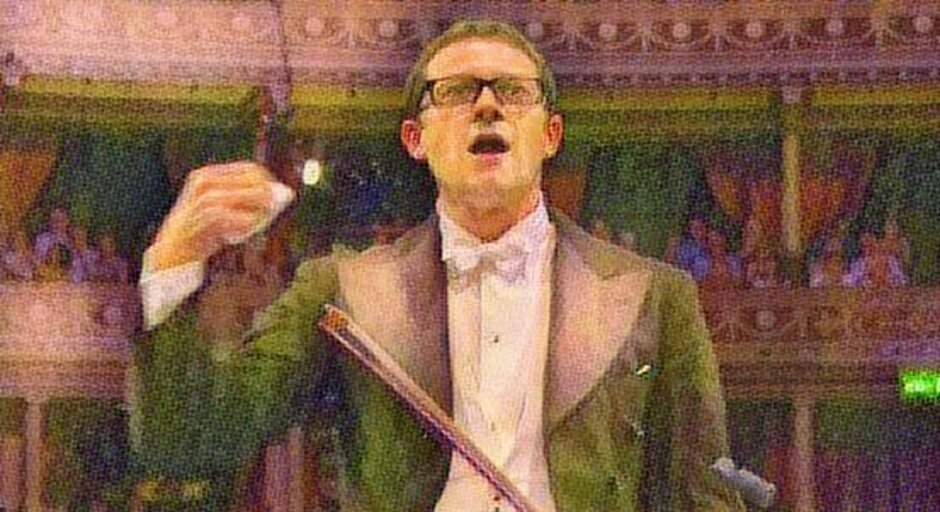
Wishing you two clean and ready handkerchiefs every concert day, John.
John’s striving for “The Hollywood Sound” may be a new thing for his popular audience in England, but over here it’s been part of our musical history since before the Second World War. In 1939 violinist Felix Slatkin and his wife, cellist Eleanor Aller Slatkin, founded the Hollywood String Quartet. Their uniquely American style of playing strings quickly won the HSQ recognition and praise from critics around the world when they essayed works from the Classic Repertoire.
Said the Gramophone Classical Music Guide of their 1951 recording of Arnold Schoenberg‘s piece: “This was the first ever recording of ‘Verklärte Nacht‘ in its original sextet form and it remains unsurpassed.”
In the liner notes of one of their other recordings, Paul Shure remembered: “Dynamics were a very big part of our work. Our discussions were always about dynamics and a little bit about tempi, and nothing else. We played with vibrato except where there was a particular effect to be had—no dead left hands were allowed.” This sounds so similar to what JWO concertmaster John Mills said in the web series Sarah’s Music: “John asks us, the strings, to play with so much vibrato that people’s family photos should fall off the TV sets. We’re effectively trying to recreate the sound of the studio orchestra.”
Steiner’s suite (written score here) is clearly patched together from various melodies in the film Casablanca, including the Nazi drinking song “Die Wacht am Rhein” (Schneckenburger/Wilhelm, 1853); “La Marseillaise” (de Lisle, 1792); and, of course, “As Time Goes By” (Herman Hupfeld, 1931). And is that a little of Steiner’s own King Kong? The Warner Bros Pictures music theme at the beginning is entirely Steiner’s composition. (Most of the) orchestration by Steiner’s frequent collaborator, Murray Cutter.
I feel a raging, yearning, unchaste tenderness for my beloved John Wilson when he conducts schmaltzy pieces like this, which sort of makes up, as I say, for the times his fatuous pronouncements exasperate me. Above John: Steiner’s Casablanca Suite.
Glück, das mir verblieb,
rück zu mir, mein treues Lieb.
Abend sinkt im Hag
bist mir Licht und Tag.
Bange pochet Herz an Herz
Hoffnung schwingt sich himmelwärts.

Wie wahr, ein traurig Lied.
Das Lied vom treuen Lieb,
das sterben muss.

Ich kenne das Lied.
Ich hört es oft in jungen,
in schöneren Tagen.
Es hat noch eine Strophe—
weiß ich sie noch?

Naht auch Sorge trüb,
rück zu mir, mein treues Lieb.
Neig dein blaß Gesicht
Sterben trennt uns nicht.
Mußt du einmal von mir gehn,
glaub, es gibt ein Auferstehn.
Another MGM musical, pre-Freed Unit. Music by Bob Wright, Chet Forrest and Herbert Stothart (adapted from “Chanson” by Rudolf Friml); lyrics by Bob Wright and Chet Forrest, who would go on to adapt the music of Rimsky-Korsakov for the 1953 Broadway musical Kismet.
Two years earlier Allan Jones made a big splash as Kitty Carlisle‘s tenor squeeze in the Marx Brothers romp A Night At the Opera.Here he is in a clip on my YT channel movie-romancing a reluctant Jeanette MacDonald, who was smack in the middle of a fraught but passionate affair with a baritone with a thrilling voice and a black temper—Nelson Eddy, who, upon learning that Jones was putting the real-life moves on MacDonald, crashed the cast party of Firefly, collared Jones and beat him to a bloody pulp. Now that’s love.
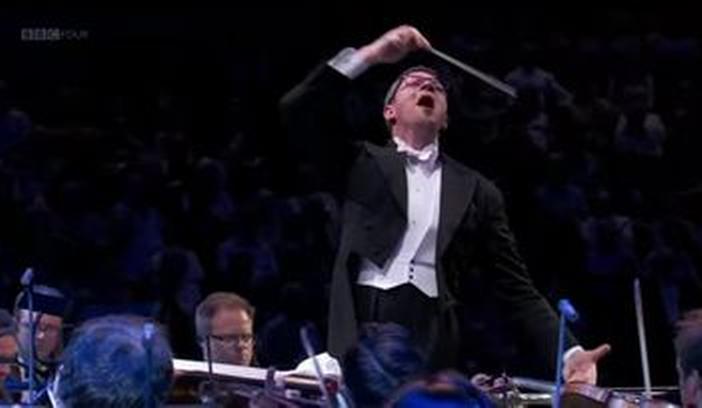
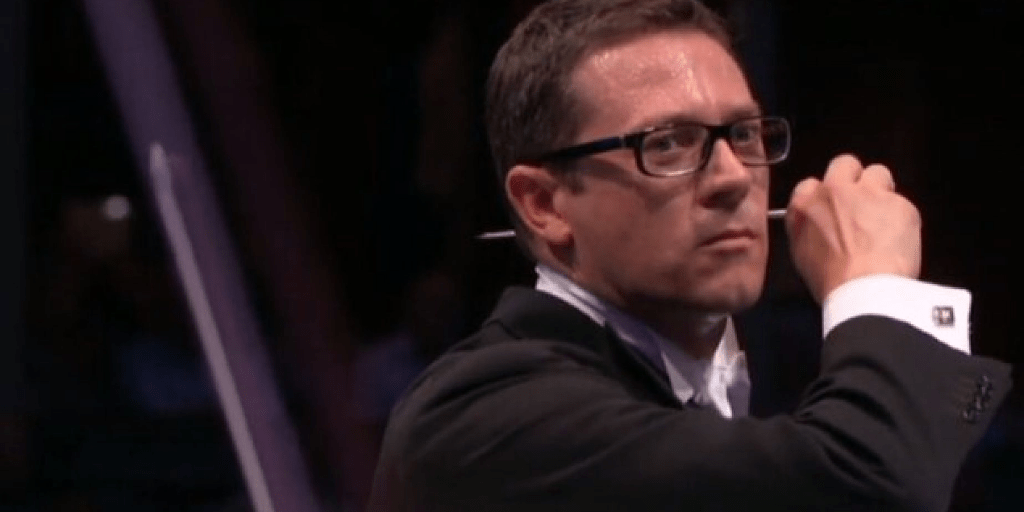
Played the violin part in this in my junior high school orchestra. Liked it more than Bach. Above: “Donkey Serenade” by Oscar-winning MGM musical director, Herbert Stothart. Stothart, recently deceased, was paid tribute to by incoming MGM musical director Johnny Green in his 1954 MGM Jubilee Overture, the signature tune of my beloved John Wilson and his Orchestra.

 Wishing you two clean and ready handkerchiefs every concert day, John.

 Played the violin part in this in my junior high school orchestra. Liked it more than Bach. Above: “
 "I'll Be Dead Before You Break My Heart"