From 2021: About 15 or so years ago, I was somebody’s plus-one on an industry pass to go to a preview of the showbiz biopic Beyond the Sea, which was being shown in a really good theater with an above-average sound system. I wasn’t a particular fan of Bobby Darin or even of Kevin Spacey (for all that he is the definitive Jamie Tyrone of our generation and frankly I don’t care about anything else); actually I just wanted to find out how cheesy the production could get. Well honestly, it did start off pretty cheesily, every element that should’ve contributed some genuine worth—like, you know, the lead acting, the directing, design, (makeup! prosthesis!) etc—was utter bad-phony, not good-phony, bullcrap…and then they struck up the soundtrack orchestra…
If I could’ve exclaimed “Holy mackerel!” out loud the moment that gorgeous snap hit my ears I would’ve exclaimed it out loud, but you don’t do that at an industry screening, so I exclaimed it in my mind. I hadn’t heard a commitment like that coming from a track orchestra in a very long time. This was no session, no pick-up crew, this was one tight unit, and they were hitting the musical values like nobody’s business. I vowed to remember the name of this bright new conductor-arranger—which of course I promptly forgot (There are a lot of John Wilsons in the world, as Anthony Burgess would be the first to tell you) and didn’t remember again until last May. Recorded by my darling and his O for the Warner Bros film at Pinewood Studios, 2003. A 2006 Grammy nominee in the Best Compilation Soundtrack Album for Motion Picture, Television or Other Visual Media category (composers Charles Trenet-Jack Lawrence, arranger Dick Behrke, producer Phil Ramone). Available on Rhino Records, that notorious niche label, and I really must find out who at Warners moved it to that catalog.
From 2021: The flick Holly Does Hollywood is fictional, of course, a fictional movie in the world of a real movie called Body Double, which was conceived and executed by the man who in an ideal world would be king of Hollywood, Brian De Palma.
De Palma’s affectionately knowing, utterly non-patronizing visit to pornland is a bit of a fantasy, of course. No flick I ever did or saw had a budget big enough to afford a mirror ball, let alone an MGM-size dance floor (though Damiano’s later movies came close). But scale aside, De Palma understood the thing that kept nearly all of us, cast and crew, jazzed while we were being pushed to get out product, and that is: When you are making a porn movie, you are making a movie.
Now, every so often I’d remember this. I’d be in the middle of a take, and like a klieg wash switching on I’d suddenly become very aware of everything around me: the lights, the mikes, the crew, the director, the luxuriously gorgeous surroundings (half my films were done in those sumptuous private homes in Marin County), the smooth-skinned, sweet-smelling people touching me, the amused audience (most of the homeowners would hang around watching us film)—and the realization would thrill me so perceptibly I would be open to the moment and I’d like to think it showed up in my performance.
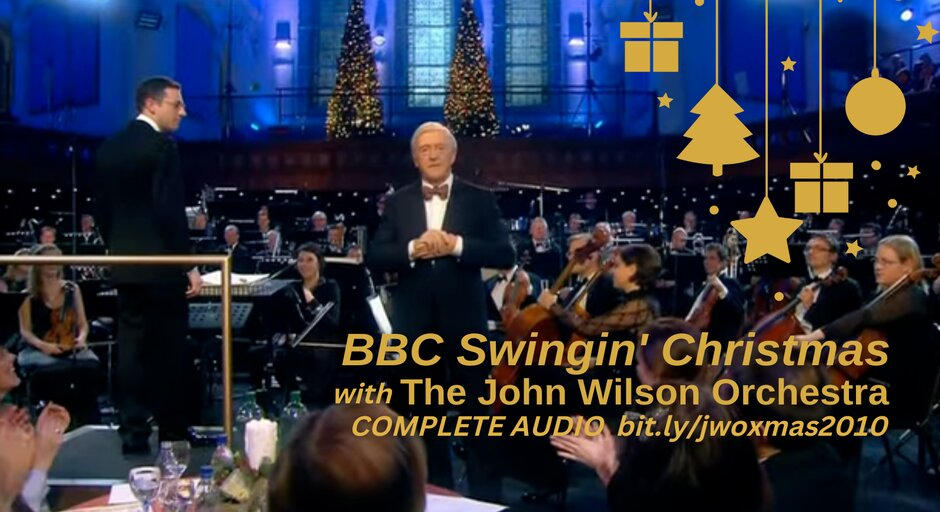
Which is the same jazzed-up open-to-the-momentness I thought I saw in John Wilsonone evening when I was trawling online for classic show tunes and stumbled onto my bonny in a 2012 BBC-TV clip, commanding the podium in the middle of the Royal Albert, surrounded by an orchestra of eighty and an audience of 6,000, conducting a hot piece of Jule Styne and shimmying like a brazen hussy. And when I say shimmying like a brazen hussy, understand: I’m the brazen hussy he was shimmying like. I fell in love with him on sight—just like the songs and movies go, an arrow went straight to my heart—because I recognized him. I got his number, so to speak.
Above Melanie Griffith and Craig Wasson: The Liverpool group Frankie Goes to Hollywood, who made their initial splash in 1984 (dig it) with the best stroke song ever written, “Relax”. Of course it was banned by the BBC.
I don’t mean to read a lot into this, maybe he did start out with a migraine or a toothache. More probably, I think he’s thinking differently (that is, more “seriously”) about things nowadays. Eight years have passed between those two appearances, after all, and I’m sure he’s gone through a number of internal changes during that time and made some interesting decisions which we will all, in time, learn about. It would be a sad thing if it’s John himself who thinks it now “unseemly” for him to shimmy in public anymore (I’m not the only one to have noticed his gorgeous limey shimmy), but it would be a sadder thing if John might be taking the nudge-nudge hints and advice of others to heart.
There has been much discussion here about the music that gets the show going, some of which has addressed the ‘Mont Blanc’ of Broadway overtures, that to The King and I.
Above Ken Watanabe and Kelli O’Hara in 2015 Broadway’s sexy production of The King and I, my beloved Brit John Wilson conducts his John Wilson Orchestra in the Albert Hall in the Overture.
Amusingly, orchestrator Robert Russell Bennett tagged it ‘Le roi et moi’. One can only imagine whom the ‘roi’ is meant to be. However, those of you who have come across the French will also be familiar perhaps with this expression, typically seen in a famous cartoon set in a restaurant where a waiter is dealing with a complaint from a diner: ‘Le client est roi: le patron est dieu’ [The customer is king; the boss is god].
Anyway, like Mont Blanc, there are different ways up it (and back down again), which vary according to how much snow and ice or wind or wet or hot weather have to be negotiated. A lot of versions of score, arrangement and style of performance can be heard, and they are all interesting. At this present moment, however, I am quite taken with Lesko’s 1977 recording, under Milt Rosenstock’s supervision, of a truly involving reading of the overture. Their approach is intensely ‘musical’ and it triumphs for that reason, whatever differences there may be in substance compared with other performances.
How do I judge this? I put myself in the shoes of someone who has turned up to the theatre and knows the name of the show (this is now frequently projected onto a drop curtain at the start, to help the slow-witted) and nothing else. The King and Iis a very sensible title, presenting two ideas: royalty and an anonymous first-person narrator. Royalty is far away from the experience of most people, but it is recognised as being an ‘absolute’ beyond which further progress cannot be expected: ergo, a ‘King’ doesn’t usually have much to strive for, no goal to reach, and thus tends to make for a bad protagonist (unless you’re watching them fall!). Therefore, subconsciously the audience is already rooting for the unidentified ‘I’. (Incidentally, the heroine narrator of Rebecca is only identified by that single letter, and there are other examples.)
What then follows is something that appears to be an ‘overture’ in the Broadway manner, comprising a list of big tunes from the upcoming entertainment. Subconsciously, though, it can also be read as a programmatic tone-poem offering a summary of the events leading up to the start of the drama proper. My hypothetical punter might understand it as follows:
1) The Hammer-Blows of Fate fall and send everything flying—these are the two musical ideas out of which the rest of the overture (and score) is constructed 2) Melancholic love arises, moving slowly, chordally, perhaps recalling a lost romance, maybe a death 3) Sudden change of mood interrupts this and jerks us into youthful, childlike chirpiness, which jars 4) An abrupt relapse follows into deeper desires, barely grasped, but insistent, driven by powerfully expressed longing, yearning 5) Gently undulating movements surge forward in the bass and high strings, with a long tune bobbing rhythmically through them, rather like a sea voyage 6) Triple-time acceleration of the ‘journey’ then propels us along faster, where the steady treading of chords and the opening scales have been brought much closer together, yet without quite actually joining, before the music culminates in— 7) Arrival at the destination, announced by a more emphatic restatement of the opening grand chords. Curtain up on ship arriving in Bangkok Harbour.
Or something like that.
To be perfectly honest, the Prelude to Tristan und Isolde does the same thing. The whole is held together by the orchestration, which is phenomenal. Furthermore, in the same way as one does not need to ‘know’ what Wagner’s four-note rising and falling and rising chromatic motifs ‘mean’ in order to ‘feel’ their tidal effect, nor to feel in one’s very marrow what those ‘tides’ relate to in oneself, it is immaterial what specific incidents have brought ‘I’ to this place. A closer musical theatre example might be for some the overture to The Mikado, perhaps; in terms of musical complexity it is less challenging although it certainly seems to begin similarly, but the emotional depth of R&H far exceeds that of the skilful D’Oyly Carte parodists. Crucially, Rodgers draws on the big guns of the past to learn from them; Sullivan plunders his predecessors in order to send them up.
Here, because of the terseness of the musical argument, the best performances are those which are most involved in the ‘music’ to the exclusion of any ‘intrusive phrasing’. I mean by this, musical phrasing which seems to articulate the sense of the ‘text’: Particularly when dealing with a very familiar score, any approach at conducting ‘the big tune’ runs the risk of simply luring the audience into ‘singing-along’: and how they do. In fact, once they feel they have ‘permission’ to do this, there is no knowing when the audience might feel moved to accompany ANY member of the cast in whatever they have to sing. I have lost count of the number of productions I’ve seen where this occurs. However, I have also paid careful attention to when it does NOT happen.
In this single example, then, an excellent rendition of the overture—or prelude—to The King and I. Some people may find this approach at analysis unnecessarily fussy if not a tad precious; on the other hand, there might be some mileage in it.
~Julian Eaves, Composer from Musical Theatre Orchestrations
Anthony Burgess, my Number One Language Guy, was on Dick Cavett’s talk show late one evening during my first year at music school. The host had brought up the oft-told story of how Burgess, when in his 40s, was diagnosed with a brain tumor and told he would be dead in a year; consequently he returned home to England (he’d been in the civil service in Brunei) and was seized by a mania of writing that resulted in his completing a half dozen intriguing novels, all of which are still in print. Oh, and he didn’t die in a year. Referring to his name at birth—he was christened John Wilson, Anthony being his Catholic confirmation name and Burgess being his mother’s maiden name—Burgess quipped, “We John Wilsons, we can be busy little beavers when we need to be.”
Dick Cavett and Anthony Burgess on my old B&W portable, a US knockoff made by the same company that cornered the 70s East Coast market in prepackaged noodle soup, Pho King. Above the interlocutors: A full audio recording of Burgess’s ’71 appearance on Cavett (the first half-hour) wherein he does an Ovaltine commercial as Shakespeare would have truly sounded. And here’s a downloadable copy of his most famous work, A Clockwork Orange.
Which is a remark that came to mind when I fell in love with John—my John, John Wilson the Conductor—and read how he spent 15 years transcribing the “lost” scores of MGM musicals, toting his Sibelius-programmed laptop around, listening to tracks in off moments, plugging in those thirds and fourths and damned glissandos as he heard them, passing on pub crawling or watching the telly to keep working on this gorgeous music…
From June 2023. Sorry for my shaky handwriting but while listening to this I had a fantasy that gave me the giggles: John being interviewed by my favorite ohne palones—prime purveyors of the gay-gypsy-theatrical patois called polari—Julian and Sandy. Played of course by the inimitable Hugh Paddick and Kenneth Williams on Round the Horne. (This more-than-usual musical episode of Kenneth Horne’s 1967 radio show also includes Rambling Syd Rumpo, the Fraser Hayes 4 singing off-key not on purpose, and the screamingly funny takeoff sketch, “Young Horne with a Man”.)
Now John, John / Glorious John, I know that you know, and I know that you know that I know, that my long-distance lovemaking to you is being observed by a few; not many, just a few. So this rundown is for them, love:
Here are the main points I took away from this podcast: “What I do try to do as a conductor is carry my sound around with me… It’s almost—I don’t really feel comfortable talking about because you know music is basically a doing thing and not a talking thing… My deepest musical creed is wrapped up with how an orchestra sounds…” Which pretty much confirms what I’ve suspected all this time about him.
John, fire of my loins, I respect your process.
Now, as heard on Monty Python:
Fantasia on “Greensleeves” Ralph Vaughan Williams, composer Barbirolli Conducts English String Music RCA, 1963 first issue The Sinfonia of London John Barbirolli, conductor
EXTRA! Here are 2 interviews with John from BBC 2 Radio: one (8 min long) from 24 April 2016 with Michael Ball, and one (4 min long) from 4 November 2013 with Steve Wright.
“June Is Bustin’ Out All Over“ from Carousel (20th Century Fox, 1956) Richard Rodgers, Oscar Hammerstein II Rodgers & Hammerstein at the Movies Warner Classics, 2011
An impressive list of orchestrators went into the making of this film musical number, including Nelson Riddle, Earle Hagen (“Harlem Nocturne” for Ray Noble in 1940; then That Girl Theme; The Dick Van Dyke Show Theme; and The Andy Griffith Show Theme, with Herb Spencer) and John Williams; you can hear the layers and layers of gorgeous sound in bonny John Wilson and his Orchestra’s rendition.
This clip is from the BBC Proms at the Royal Albert Hall, 2010, but really, listen instead to the cut above from The JWO’s 2011 recording. It’s really ravishing.
From 2019: For those of you who know that, as well as being a retired porn actress, I also write porn for pleasure (actually genteel erotica but you know and I know it’s porn, lady porn, but PORN), Full Dress being a riff on my old boss Rouben Mamoulian’s classic The Song of Songs—you know, the one where Marlene Dietrich has a rich would-be composer for a husband and a young, sensitive, bespectacled conductor for a lover, inspiring them both to artistic heights through her Mighty Marlene Power. Oh, baby. This is the movie that inspired me to emulate you in my youth.
But just so you don’t go on thinking this is some kind of fanblog (really, I’m not a fan*, just crazy in love with the bloke below) I thought I’d spend a posting to tell you all how I got my first gig in pictures.
This happened in San Francisco—in the 70saparadise for the sexually adventurous—and coming after the time I worked as classic film director Rouben Mamoulian‘s amanuensis, which was after the time I posed nude for a blind sculptor in St-Paul-de-Vence, which was after the time I danced topless in a mob-run bar in Red Hook, which was after the time I was the night solfeggist at ASCAP…
Soanyway. One lovely summer evening about six weeks after I hit the city I went with a (legit) actress friend to a house party up on Potrero Hill, mostly because she enticed me with the information that the party would be featuring a hot tub. (Am such a pushover for hot tubs.) Well, at the party there was this cute but obvious older guy from London (trimmed ginger beard, open shirt, bead bracelet—no one goes California like the English) named Paul, who owned the house and who invited me seulement for a session of coke+quaaludes and a nice soak later, after all the other guests have left. Then he gave me his card. (This was only the second time a man ever gave me his business card before we had sex, and it wouldn’t be the last)…
*No, really, I’m in love with John but he plows through Gershwin like a bull moose and treats Bernstein like Bernstein’s Saruman and he’s Frodo. How could any red-blooded American woman countenance such effrontery to our national treasures?**
Of course there’s no “h” in the actual title but I’m putting it in anyway to alert singers to the long vowel because the money-grubbing whore who wrote the lyrics to this Broadway musical standard didn’t give two shits for singers.
Above: After some silliness, the boys deliver a splendid rendition of the Frederick Loewe standard, “They Call the Wind Mariah” from Paint Your Wagon (Broadway, 1951)
I, however, have a lot of affection and admiration for Berlin-born-and-trained composer Frederick Loewe, who wrote the most tuneful, singable melodies on Broadway, up there with Richard Rodgers and Jerome Kern. Loewe was right not to want to have anything to do with the big-screen disaster, Paint Your Wagon, which plowed on without him (Paramount, 1969), messing up Josh Logan, Paddy Chayefsky(!), Jean Seberg, Lee Marvin, Clint Eastwood, et al, in its trail…
The only way to read the 1969 film (and I don’t recommend watching it for pleasure ever ever ever, not even for yummy Clint) is to look at it like a late-60s hippie festival, complete with trees, mud, and crazy sex. (You know, like Woodstock…) The absolutely unreal pluralism of the background characters—Jews, Italians, whites (but no blacks), Chinese dressed in brocade with their wives(!?) all living in this dirty mining camp (a dirty mining camp where men politely doff their hats to white women) peacefully together—is another hippie fantasy, with a dollop of Chayefsky the liberal (of Marty and Network fame) added.
The one good thing in this pile of offal is the song, “They Call the Wind Mariah”, sung incongruously by Harve Presnell; but beautifully and hauntingly here by, of all people, the Smothers Brothers, the shining jokester-balladeer heroes of my youth. (Adding to their luster: as wartime US Army brats, they spent part of their childhood in the Philippines.)
Here’s hoping you haven’t watched/heard Paint Your Wagon. If you have, and the Andre Previn interpolations made you (like me) sick*, here are two lovely selections from the pen of Frederick Loewe, rendered by my bonny John Wilson and his various orchestras:
For the Big Band medley: “Skyliner” – Barnet / Charlie Barnet; “Take the A Train” – Billy Strayhorn and vocalist Joya Sherrill / Duke Ellington; “Let’s Dance” – Gregory Stone (based on von Weber’s “Invitation to the Dance”, orchestrated by Hector Berlioz) / Benny Goodman; “I’ve Got My Love to Keep Me Warm” – Irving Berlin / Ray Noble; “Begin the Beguine” – Cole Porter / Artie Shaw; “I’m Getting Sentimental Over You” – Ned Washington and George Bassman / Tommy Dorsey; “Midnight Sun” – Hampton and Sonny Burke / Lionel Hampton; “You Made Me Love You” – Monaco and McCarthy / Harry James; “Moonlight Serenade” – Miller / Glenn Miller; “Peanut Vendor” – Moisés Simons / Stan Kenton; “Woodchoppers Ball” – Joe Bishop / Woody Herman; “One O’Clock Jump” – Count Basie / Count Basie.
This is the kind of music ID-ing I used to do when I was 18 and a night solfeggist at ASCAP, John.
Composer Andrew Cottee is the show’s orchestrator-arranger.
John’s pop fans in Britain have nothing to worry about—all the goodness of The John Wilson Orchestra (1994-2019) is now squeezed into his new/old/new group, the Sinfonia of London in their brand-new “Hollywood’s Greatest Hits” tour. Thank Kennedy Street Productions, who brought Barry Manilow and Gladys Knight to UK’s shores, for this shrewd spectacular run aimed at the 2023 Holiday Season. Now we’ll hear the rest of the movie music John’s been transcribing all these years.
From 2018: It actually would hurt me, John Wilson my beloved, if you ever believed I think of you the way MacFarlane thinks of you—as more or less part of his gig rather than as who you are, which is to say John Wilson. Something I’d like to throttle him for but’ll probably go on watching the pre-2013 Family Guy anyway. Nothing personal against your chum.
No, I lie, it’s personal.
About 13, 14 years ago the best friend of the son of my (now ex-) friend died unexpectedly in New York, and it was a shock to everyone. My own son, who was the same age, was a big, big fan of his—more than a fan, in fact, he practically worshipped this young actor—and was in tears that day. I texted my friend and we shared our shock and grief. Daniel Day-Lewis stopped an interview, sobbing, “I didn’t know him, I have a strong impression I would have liked him very much…and so looked forward to the work he would do in the future.” I’d so like to have witnessed this young man’s progress on screen and stage through the years myself. He was the new Brando—better than Brando, in fact, as he not only acted and directed but wrote as well. And he wasn’t even thirty. He was handsome and vigorous, he had a beautiful speaking voice. He was the most committed actor I’d seen on screen since Nicholson in Five Easy Pieces.
So there he was dead in NY. On the streets of Beverly Hills, some roving celebrity reporter from one of the gossip shows was out and about getting sound bits for his show, and came across Rob Lowe and MacFarlane. After some genial exchange of bullshit the rover blurted, Did you hear the news from New York? and without a pause went right into giving them the news. Lowe dropped his mask, truly stunned for a moment, and turned human, while MacFarlane drawled almost offhandedly, “We-ell, this is disconcerting…” And at that moment I started to genuinely dislike the calculating little creep. MacFarlane’s an almost supernaturally gifted dealmaker, Stewie’s a pretty inspired animated character, and the guy seems to have a genuine fondness for the old styles…but that just isn’t enough for my scorecard. If you could say that there’s such a thing as a Seth MacFarlane Tolerance Level, mine’s pretty low I guess.
Anyway, I’m less ironical and more earnest than one would assume at first. And I tend to take things like that hard. Not exactly an asset around here.
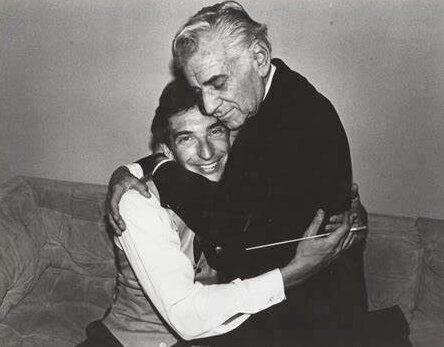
A few postings ago (“On Conductor John Wilson’s Full Dress and The First Porn Movie I Ever Did, 1”) I said, “I’m in love with John but he plows through Gershwin like a bull moose and treats Bernstein like Bernstein’s Saruman and he’s Frodo.” Well…he was pretty respectful in his “Highlights from Candide” Proms show in 2015, and I have faith that somehow, somewhere during The Bernstein Year (2018) my bonny got through “The Age of Anxiety” with a clear conscience. But the crowning glory of my beloved John Wilson, Conductor’s relationship with composer Leonard Bernstein is supposed to be, by his own estimation, West Side Story, which he claims he’s conducted “a lo’, I’ve done a few complete productions of it”—so he should know what it’s all about, at least musically, right?
But first, let’s get that other business out of the way concerning John’s WSS attempt of 2018. I HATE HATE HATE to see The Race Card being played. Usually I try to avoid having to address the issue but sometimes it’s right in your face. If you don’t know what I’m talking about you can read about it here. Then read about the outcome here.
Know what I think? In the past few years I’ve begun to believe, and I’m probably coming late to this, that when Orwell was writing about Big Brother, he was really talking about the BBC. This is probably sooo evident to a lot of people, but I’ve been paying steady attention to the BBC for only about the last ten years and I’ve watched it devolve in ways previously unimaginable to me, so highly did I once esteem this radio/TV/internet broadcaster. So when I tell you I suspect that it was the Beeb behind that inane shuffling of sopranos and no one else, I do have a basis. (But not to go into that now. I’ll get to it when I talk in detail about Oklahoma!—and The Race Card—again.)
To get back to John, The John Wilson Orchestra, and West Side Story at the Royal Albert Hall, BBC Proms, 2018. Why the story above tells another possible story: One – soprano announces her withdrawal from the BBC Proms (that is, her reneging on her contract with the BBC) in April; two – five months later in August the new soprano is announced, a blatantly bogus attempt at more politically-correct casting, but anyway; three – at the same time, and only then, the show’s musical format is, for the first time in wide advertising, properly described as the official concert version. Which, let’s face it, makes the racial makeup of any of the singers totally irrelevant. Do you hear me squawking over Kim Criswell doing “Bali Ha’i”?
So in all this hoo-ha there’s John, who has absolutely nothing to do with the matter but nonetheless possibly, probably feels just a bit tainted by it, and who goes to his beloved orchestra with a “Gentlemen, ladies, let’s rise above this, shall we?” attitude, and a “Let’s give it all we’ve got!” kind of gungho-ness I last saw in Back to Bataan.
Because that’s how it came out in the music. Listening to the concert online, I got that same unsettling feeling you get some nights when you suspect your boyfriend’s unusually poundy lovemaking isn’t actually directed at you. It was almost unbearable to take. Mister Grumble even left the room. Before leaving he pointed an accusing finger at me. “This is your John Wilson,” he intoned darkly. “He’s not mine,” I declared. “He belongs to England!” But I couldn’t quite get the Vivien Leigh delivery so that bit just died.
But you know, I think that’s the crux of the matter, my beloved John being English and a Geordie and therefore too pigheaded to truly understand the American idiom. That, and Big Brother Beeb breathing down your neck, can cramp anyone’s sense of freedom, freedom of course being the American idiom.
I’m assuming, of course, that John, vaunted musicologist that he is, truly wants to understand the American idiom.
Of the 2013 concert, said Joshua Kosman in the SF Chronicle: “One of the great revelations of Thursday’s dynamic concert performance by Michael Tilson Thomas and the San Francisco Symphony was just how remarkable the score sounds in isolation… Bernstein’s creation stood more or less alone as a compendium of all the musical references swirling around in that great musical clearinghouse that was his mind.”
The indication “burlesque strip style” was actually written on the music right around 4:00. Both Ramin and Ginzler cut their teeth writing swing arrangements; lead trumpet in the original Gypsy pit was Dick Perry, late of the Tommy Dorsey Orchestra. Solo trumpet Mike Lovatt here lays it down fine. Some people obviously know something about burlycue. Composer Jule Styne was pleased with this overture’s orchestration.
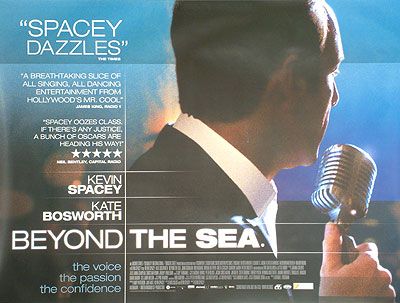 Above Spacey: “Beyond the Sea” as only my beloved John could do it.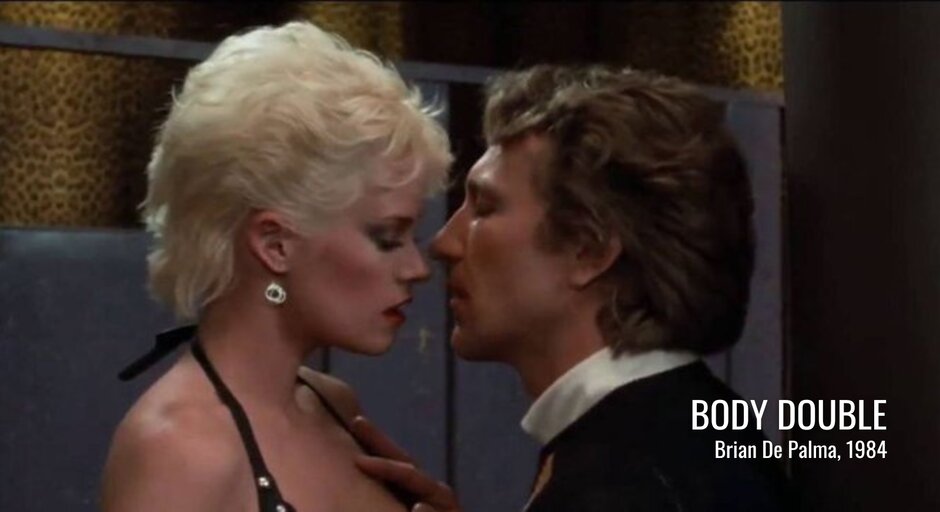
 Above Ken Watanabe and Kelli O’Hara in 2015 Broadway’s sexy production of The King and I, my beloved Brit John Wilson conducts his John Wilson Orchestra in the Albert Hall in the
  Dick Cavett and Anthony Burgess on my old B&W portable, a US knockoff made by the same company that cornered the 70s East Coast market in prepackaged noodle soup, Pho King. Above the interlocutors:

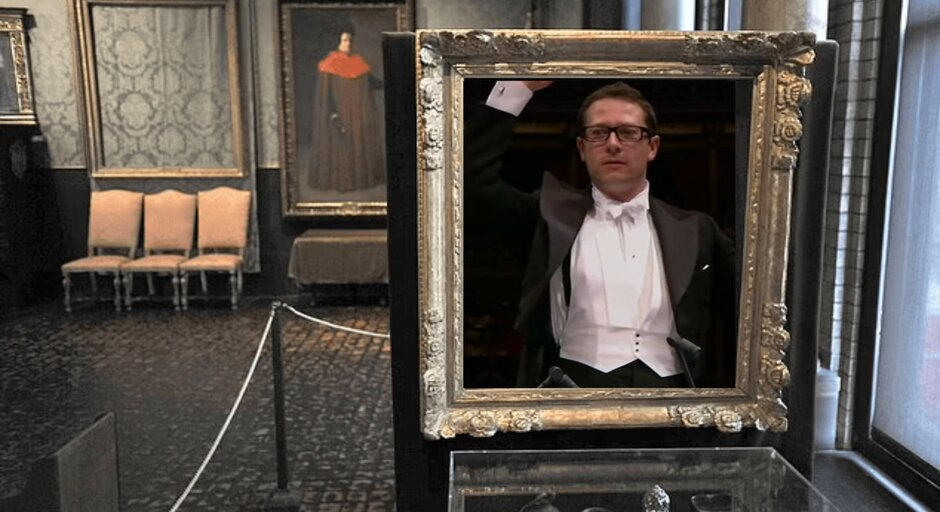 Above John’s arousingly exposed suspender:



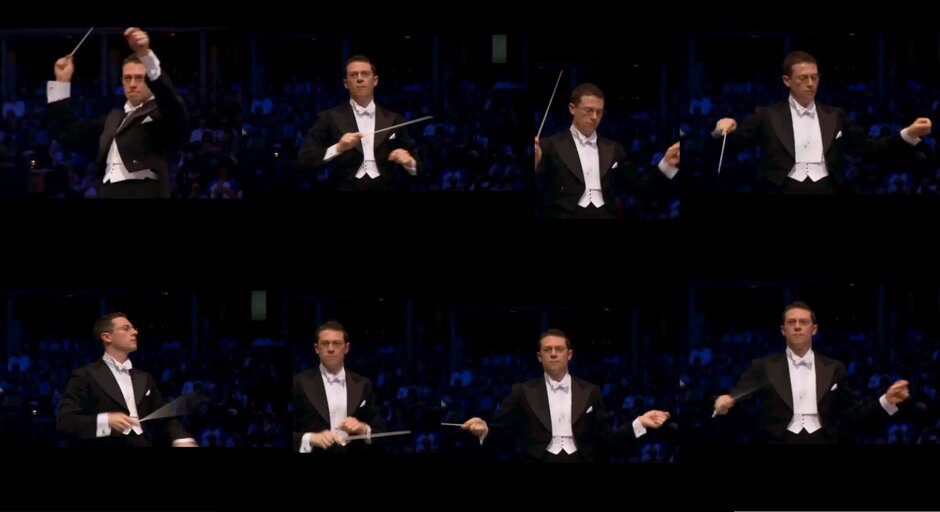 Above the man of my desire:
  "I'll Be Dead Before You Break My Heart"