If you could, my bonny John Wilson, imagine me wearing a maria clara (like great-grandmother Aberin below) and you wearing a barong, I’d be singing you this song:
Sa buhay ko’y labis
Ang hirap at pasakit, ng pusong umiibig
Mandi’y wala ng langit
At ng lumigaya, hinango mo sa dusa
Tanging ikaw sinta, ang aking pag-asa.

Dahil sa iyo, nais kong mabuhay
Dahil sa iyo, hanggang mamatay
Dapat mong tantuin, wala ng ibang giliw
Puso ko’y tanungin, ikaw at ikaw rin

Dahil sa iyo, ako’y lumigaya
Pagmamahal, ay alayan ka
Kung tunay man ako, ay alipinin mo
Ang lahat sa buhay ko, dahil sa iyo
“Dahil Sa Iyo” Mike Velarde Jr music (1938), Tom Spinoza, lyrics Cora and Santos Beloy, vocalists Tri-World Records (1964)
My mother’s lola, my great-grandmother, the spitting image of my mother the way Georgiana Drew is the spitting image of Drew Barrymore and I’m the spitting image of my dad. I have no documentation for my assertion—my gran’s house and possessions were completely destroyed during the Japanese Occupation. But whenever we came across this picture in the media—in an article in Time, for example—my mom would always point her out and tell me the story of how my great-grandfather came over from Ireland and, upon discovering he was meeting fellow Catholics in a sea of Asians, stayed, changed his name from O’Brien to Abérin, and married the local beauty. How Van Camp found her is anybody’s guess.
John’s pop fans in Britain have nothing to worry about—all the goodness of The John Wilson Orchestra (1994-2019) is now squeezed into his new/old/new group, the Sinfonia of London in their brand-new “Hollywood’s Greatest Hits” tour. Thank Kennedy Street Productions, who brought Barry Manilow and Gladys Knight to UK’s shores, for this shrewd spectacular run aimed at the 2023 Holiday Season. Now we’ll hear the rest of the movie music John’s been transcribing all these years.
Sarah Millican first. Tried listening to this fast-talking comedienne from nearby South Shields the middle of 2019 but could not keep up with her pace or her accent. Later I started watching old episodes of Auf Wiedersehn Pet, The Likely Lads, Byker Grove (which starred BGT presenters Ant & Dec when they were kids), and now one of my favorite shows ever on television, Our Friends In the North (all episodes here) etc etc but they’re just so…masculine, you know? Which I suspect probably pretty much characterizes Geordie culture anyway… So I started alternating watching that show with When the Boat Comes In, which was more successful for me, as the estimable Northumbria-born actress Jean Heywood provided a good model of what a feminine northeast accent sounds like. After her it was a snap to follow Millican.
Second, The Orville, Seth MacFarlane’s Star Trek-like TV series. Like the 70s folksinger says, “I’m a stoner, I’m a trekker, I’m a young sky walker…” So yeh, I’d be interested in watching this show just to see if it measures up to the standards of my youth. Unfortunately, none of MacFarlane’s (post-Family Guy) projects ever sound interesting enough for me to overcome my intense personal dislike for him. So…maybe later. I did, however, listen to the show’s theme music, which was written by Andrew Cottee, the same young man who wrote some arrangements for The John Wilson Orchestra over in England. The theme does everything expected of it.
Third, Get Carter, starring Michael Caine and the City of Newcastle. Made this movie last on my list because it deserves two paragraphs, being the British noir classic that it is…
Sidebar: As we all now know from film school, existentialism is the engine of noir, which means that petty details like Michael Caine speaking in a thick Cockney accent* when his character’s supposed to be from Newcastle-upon-Tyne oughtn’t to matter to the sophisticated auditor. But I had a problem. I’m sorry. Three years ago I wouldn’t have cared, one Brit being the same as any other. Then I fell in love with John Wilson, a Low Fell lad, and individuality suddenly became a very important thing to me.
The Movie Overall: Not quite sure why the filmmakers transplanted novelist Ted Lewis’s story from his original setting in Lincolnshire (Lewis’s birthplace), to Tyneside, but since it’s the classic story of the Anti-Hero’s Revenge, which works anytime, anyplace, it does fine here. Michael Caine’s a little podgy but quick with his reflexes and still a treat for the ladies. Lots of sex and violence, lots of local atmosphere, local faces, and landmarks like Tyne Bridge, the Newcastle Racecourse and, of course, the carpark across the Tyne River.
The Carpark in Gateshead Scene: By a stroke of luck Get Carter was just streamed on Criterion so I watched the entire movie, then to make sure, watched the carpark scene twice more in order to understand why it so sticks in the mind. Because it does, you know, even though I’m not a fan of movies like this. I guess it’s because there’s rather a high elegance to this scene that contrasts with all the mundaneness and phony poshness around it… Very arty, but a genuine statement. Or maybe it’s just because I like watching Michael Caine get all riled up.
The now torn-down carpark at Trinity Square in Gateshead in this famous scene was a dreary piece of English Brutalist architecture that, according to its creator, was never meant to stand the test of time anyway. That’s the theme to The Orville above.
*I understand that a stage version of Get Carter was recently performed in Newcastle, with Carter’s accent vocalized accurately.
I was twelve when The Forsyte Saga was first shown on American TV and I thought it was the coolest series ever.* It was about a large, rich and, though unconnected, influential family living in late-capitalist England circa 1879, who keep getting into pretty heated conflicts with each other—which at the bottom are really about, more or less, the value of art and the inner life vs commerce—all the while being beautifully attired and beautifully well-spoken. Hearing this royal fanfare “Halcyon Days” that opened the show was enough to get me all excited with anticipation on a Sunday night, but it wasn’t until last year around May when I finally discovered the composer of the piece, Eric Coates, plus the rest of this ravishing movement, when I fell in love with conductor John Wilson and developed a raging need to get close to the music he’s close to.
Above: Above Soames played by Eric Porter—The Man of Property, Noted Art Collector, and about as Mr Wrong as you can get—who mistook his wife for a soulless mannequin and, in novelist John Galsworthy’s sardonic words, “asserted his marital rights and acted like a man” in this scene, in which the BBC made shocking good use of Nyree Dawn Porter’s lovely embonpoint: My gorgeous, wondrous John Wilson leads the BBC Philharmonic in Coates’s “Halcyon Days”.
My beloved John conducted this 29 March, 2022 in Salford, as part of a program devoted exclusively to the music of prolific BBC composer, Eric Coates. It was glorious.
*In fact it got me to read the entire cycle of nine novels the series was based on; finished them when I was thirteen. Dinny Cherrell’s my favorite character.
A grand movie score by the prolific Eric Coates, very inspiring and very English. This is the kind of piece that cues you to proudly fly the Union Jack, which predictably some chap did, right in the middle of the Royal Albert Hall. I’m guessing this is some sort of tradition. The 2007 BBC Proms included the famous climactic shots from The Dam Busters—you know, the movie George Lucas ripped off when he did Star Wars. Not the Death Star down there, though, it’s the Eder Dam in the heart of Nazi Germany.
From 2018: It actually would hurt me, John Wilson my beloved, if you ever believed I think of you the way MacFarlane thinks of you—as more or less part of his gig rather than as who you are, which is to say John Wilson. Something I’d like to throttle him for but’ll probably go on watching the pre-2013 Family Guy anyway. Nothing personal against your chum.
No, I lie, it’s personal.
About 13, 14 years ago the best friend of the son of my (now ex-) friend died unexpectedly in New York, and it was a shock to everyone. My own son, who was the same age, was a big, big fan of his—more than a fan, in fact, he practically worshipped this young actor—and was in tears that day. I texted my friend and we shared our shock and grief. Daniel Day-Lewis stopped an interview, sobbing, “I didn’t know him, I have a strong impression I would have liked him very much…and so looked forward to the work he would do in the future.” I’d so like to have witnessed this young man’s progress on screen and stage through the years myself. He was the new Brando—better than Brando, in fact, as he not only acted and directed but wrote as well. And he wasn’t even thirty. He was handsome and vigorous, he had a beautiful speaking voice. He was the most committed actor I’d seen on screen since Nicholson in Five Easy Pieces.
So there he was dead in NY. On the streets of Beverly Hills, some roving celebrity reporter from one of the gossip shows was out and about getting sound bits for his show, and came across Rob Lowe and MacFarlane. After some genial exchange of bullshit the rover blurted, Did you hear the news from New York? and without a pause went right into giving them the news. Lowe dropped his mask, truly stunned for a moment, and turned human, while MacFarlane drawled almost offhandedly, “We-ell, this is disconcerting…” And at that moment I started to genuinely dislike the calculating little creep. MacFarlane’s an almost supernaturally gifted dealmaker, Stewie’s a pretty inspired animated character, and the guy seems to have a genuine fondness for the old styles…but that just isn’t enough for my scorecard. If you could say that there’s such a thing as a Seth MacFarlane Tolerance Level, mine’s pretty low I guess.
Anyway, I’m less ironical and more earnest than one would assume at first. And I tend to take things like that hard. Not exactly an asset around here.
“There are very few pieces I can say I’ve been waiting all my life to conduct, and this is one of them. In my, kind of, college years or whenever that was, I got the Simon Rattle LP and I kind of wore out the groove of those records and had to buy ‘em on CD…
“Of course it’s known for the hit tunes that have been extracted from it, but it’s much more than that… And I would even say that the most interesting music in the opera is the ariosos, the small pieces which link everything together and the incidental music… It’s really very ambitious… It’s George Gershwin at his most inventive, and as Gershwin was arguably the greatest tunesmith of the twentieth century, you’re looking at melodic material from the very very top drawer…”
Thanks to LA producer/theatre & film critic Myron Meisel for his commiseration on the goat, and for his comments on Gershwin and my old boss, Porgy & Bess‘s original director (1935) Rouben Mamoulian, on Facebook, which I answered there.
…being wildly applauded in this photo of opening night. Lest we forget, it was The Old Man who directed the very first production of P&B. (Oh, he never let me forget it.) That’s him behind Gershwin in the goggle glasses.
Of Porgy and Bess’s premiere, composer-critic Virgil Thomson wrote: “Gershwin’s lack of understanding of all the major problems of form, of continuity, and of serious or direct expression is not surprising in view of the impurity of his musical sources and his frank acceptance of the same. The material is straight from the melting pot. At best it is a piquant but highly unsavory stirring-up together of Israel, Africa and the Gaelic Isles… I do not like fake folklore, nor bittersweet harmony, nor six-part choruses, nor fidgety accompaniments, nor gefilte-fish orchestration.”* The 1934 production ran for 124 performances—for opera, a huge success, but by Broadway standards, a flop.
*Which is why I make it a point to never, ever listen to one note of anything by Virgil Thompson (although I’d heard 4 Saints in 3 Acts long before learning what an anti-semitic little stinker Thompson was, didn’t like it anyway)
At around the same time of life the oh-so-kissable John Wilson was a wee bairn in Gateshead falling out of his high chair in excitement over the brand-new BBC news theme, I was in my playpen in the living room of the old one-bedroom apartment in South Minneapolis jumping up and down in excitement to the theme of Captain Kangaroo on TV.
The program: “The Devil’s Galop” (Dick Barton Special Agent,Monty Python) / Charles Williams; “Portrait of a Flirt” / Robert Farnon; “The Lion and Albert” (comic verse) / Marriott Edgar; March from “Little Suite” (Dr Finlay’s Casebook) / Trevor Duncan; “Barwick Green” (The Archers) / Arthur Wood; “The Typewriter” (The News Quiz) / Leroy Anderson; “Roses of Picardy” / Haydn Wood; “Calling All Workers” (Music While You Work) / Eric Coates; “By the Sleepy Lagoon” (Desert Island Discs) / Eric Coates; “A Canadian in Mayfair” / Angela Morley; “In a Party Mood” / Jack Strachey; “Sailing By” (The Shipping Forecast) / Ronald Binge; “Charmaine” (Monty Python) / Erno Rapee; “Puffin’ Billy” (Captain Kangaroo!!!) at 47:00 / Edward White; “Birdsongs at Eventide” / Eric Coates; “The Dam Busters” March (from the 1954 film) / Eric Coates. Janis Kelly, soprano. Roy Hudd, host.
Before I go into more of my bonny’s musical missteps that have done their part to perturb me to no end, I think it’s only fair to first share the best clips available of John Wilson’s own 24-year-old orchestra—cannily named, as I have mentioned, The John Wilson Orchestra—which, out of over 200(!) on YT in ten years, come down to really only about 4, maybe 5 of these “best clips” between 2009-2019.
This is from their 2012 show The Broadway Sound (@43:50) at the BBC Proms in the Royal Albert Hall in London, which seats 5200, with standing room for 1300 on the ground floor (tickets for which go for only 6L and for which people camp out overnight at the box office like it was Winterland). This is pertinent, because it seems like The JWO only does its best work when it can blast the roof off a barn.
I had the old Ben Bagley recording and the 1983 Broadway revival recording (conducted by John Mauceri) of the Rodgers & Hart show On Your Toes—which of course includes the climactic ballet “Slaughter on Tenth Avenue”—but both producer Bagley as well as musical theater preservationist Mauceri put on disc the 1936 Robert Russell Bennett orchestration rather than the 1954 one by Don Walker. Our John, being John (I’m starting to get into his “ear”), chose the Walker score to play in the Royal Albert—which of course makes the most of those two “false” endings—and for once he was entirely correct.
A few postings ago (“On Conductor John Wilson’s Full Dress and The First Porn Movie I Ever Did, 1”) I said, “I’m in love with John but he plows through Gershwin like a bull moose and treats Bernstein like Bernstein’s Saruman and he’s Frodo.” Well…he was pretty respectful in his “Highlights from Candide” Proms show in 2015, and I have faith that somehow, somewhere during The Bernstein Year (2018) my bonny got through “The Age of Anxiety” with a clear conscience. But the crowning glory of my beloved John Wilson, Conductor’s relationship with composer Leonard Bernstein is supposed to be, by his own estimation, West Side Story, which he claims he’s conducted “a lo’, I’ve done a few complete productions of it”—so he should know what it’s all about, at least musically, right?
But first, let’s get that other business out of the way concerning John’s WSS attempt of 2018. I HATE HATE HATE to see The Race Card being played. Usually I try to avoid having to address the issue but sometimes it’s right in your face. If you don’t know what I’m talking about you can read about it here. Then read about the outcome here.
Know what I think? In the past few years I’ve begun to believe, and I’m probably coming late to this, that when Orwell was writing about Big Brother, he was really talking about the BBC. This is probably sooo evident to a lot of people, but I’ve been paying steady attention to the BBC for only about the last ten years and I’ve watched it devolve in ways previously unimaginable to me, so highly did I once esteem this radio/TV/internet broadcaster. So when I tell you I suspect that it was the Beeb behind that inane shuffling of sopranos and no one else, I do have a basis. (But not to go into that now. I’ll get to it when I talk in detail about Oklahoma!—and The Race Card—again.)
To get back to John, The John Wilson Orchestra, and West Side Story at the Royal Albert Hall, BBC Proms, 2018. Why the story above tells another possible story: One – soprano announces her withdrawal from the BBC Proms (that is, her reneging on her contract with the BBC) in April; two – five months later in August the new soprano is announced, a blatantly bogus attempt at more politically-correct casting, but anyway; three – at the same time, and only then, the show’s musical format is, for the first time in wide advertising, properly described as the official concert version. Which, let’s face it, makes the racial makeup of any of the singers totally irrelevant. Do you hear me squawking over Kim Criswell doing “Bali Ha’i”?
So in all this hoo-ha there’s John, who has absolutely nothing to do with the matter but nonetheless possibly, probably feels just a bit tainted by it, and who goes to his beloved orchestra with a “Gentlemen, ladies, let’s rise above this, shall we?” attitude, and a “Let’s give it all we’ve got!” kind of gungho-ness I last saw in Back to Bataan.
Because that’s how it came out in the music. Listening to the concert online, I got that same unsettling feeling you get some nights when you suspect your boyfriend’s unusually poundy lovemaking isn’t actually directed at you. It was almost unbearable to take. Mister Grumble even left the room. Before leaving he pointed an accusing finger at me. “This is your John Wilson,” he intoned darkly. “He’s not mine,” I declared. “He belongs to England!” But I couldn’t quite get the Vivien Leigh delivery so that bit just died.
But you know, I think that’s the crux of the matter, my beloved John being English and a Geordie and therefore too pigheaded to truly understand the American idiom. That, and Big Brother Beeb breathing down your neck, can cramp anyone’s sense of freedom, freedom of course being the American idiom.
I’m assuming, of course, that John, vaunted musicologist that he is, truly wants to understand the American idiom.
Of the 2013 concert, said Joshua Kosman in the SF Chronicle: “One of the great revelations of Thursday’s dynamic concert performance by Michael Tilson Thomas and the San Francisco Symphony was just how remarkable the score sounds in isolation… Bernstein’s creation stood more or less alone as a compendium of all the musical references swirling around in that great musical clearinghouse that was his mind.”
The indication “burlesque strip style” was actually written on the music right around 4:00. Both Ramin and Ginzler cut their teeth writing swing arrangements; lead trumpet in the original Gypsy pit was Dick Perry, late of the Tommy Dorsey Orchestra. Solo trumpet Mike Lovatt here lays it down fine. Some people obviously know something about burlycue. Composer Jule Styne was pleased with this overture’s orchestration.
My bonny John at 7:55: “The music is of such importance it actually unlocks some of the questions as to what people are meant to be doing and thinking on stage. I’ve done West Side Story a lo’, I’ve done a few complete productions of it and whenever you are unsure of how to turn something dramatically you look in the score and the subito or the hairpin will actually give you the direction of what’s happening on the stage in every bar.”
John honey, I know you were trying in your stumbling way to tie in the Wagnerian theory of stage action indicated by the music, but here in America our musicals have called these things called books…
And at 5:45: “He was writing these musicals to make some money… Because, you know, he had a wife and she wanted to live in a certain amount of style and he wanted, uh, some kind of security and…between 1943 with Oklahoma and 1965, 68, you have a fifteen-year period [sic] when there was greaaat money to be made on the Broadway stage, and he made no secret about it, you know… He wrote Wonderful Town in three weeks because he wanted to cash in…”
John, I know it was just a businessmen’s matinee, but couldn’t you have put some of your own genuine ideas into your talk?
From 2020: Completely bummed out that John’s 21 January concert with the LSO at the Barbican was completely canceled, so here’s my bonny lad at the 2012 BBC Proms with his eponymous orchestra in a really classy (for once) semi-staged concert of the complete 1956 Broadway musical, My Fair Lady, book and lyrics by Alan Jay Lerner and music by Frederick Loewe; orchestration (for the movie score) by Andre Previn, orchestration enhancement by John Wilson. Cast: Anthony Andrews, James Fleet, Alun Armstrong, Julian Ovenden etc, and as Eliza, Annalene Beechey.
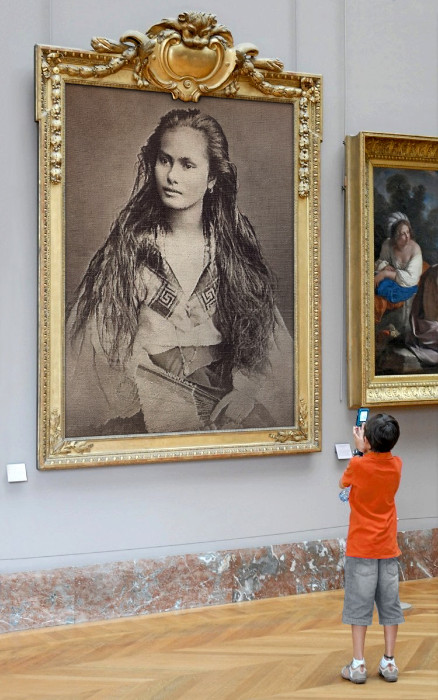 My mother’s lola, my great-grandmother, the spitting image of my mother the way Georgiana Drew is the spitting image of Drew Barrymore and I’m the spitting image of my dad. I have no documentation for my assertion—my gran’s house and possessions were completely destroyed during the Japanese Occupation. But whenever we came across this picture in the media—in an article in Time, for example—my mom would always point her out and tell me the story of how my great-grandfather came over from Ireland and, upon discovering he was meeting fellow Catholics in a sea of Asians, stayed, changed his name from O’Brien to Abérin, and married the local beauty. How Van Camp found her is anybody’s guess.

 Above: Above Soames played by Eric Porter—The Man of Property, Noted Art Collector, and about as Mr Wrong as you can get—who mistook his wife for a soulless mannequin and, in novelist John Galsworthy’s sardonic words, “asserted his marital rights and acted like a man” in this scene, in which the BBC made shocking good use of Nyree Dawn Porter’s lovely embonpoint: My gorgeous, wondrous John Wilson leads the BBC Philharmonic in Coates’s
  I thoroughly enjoy watching John conduct the works of Eric Coates as he seems to have taken a personal delight in this particular composer—
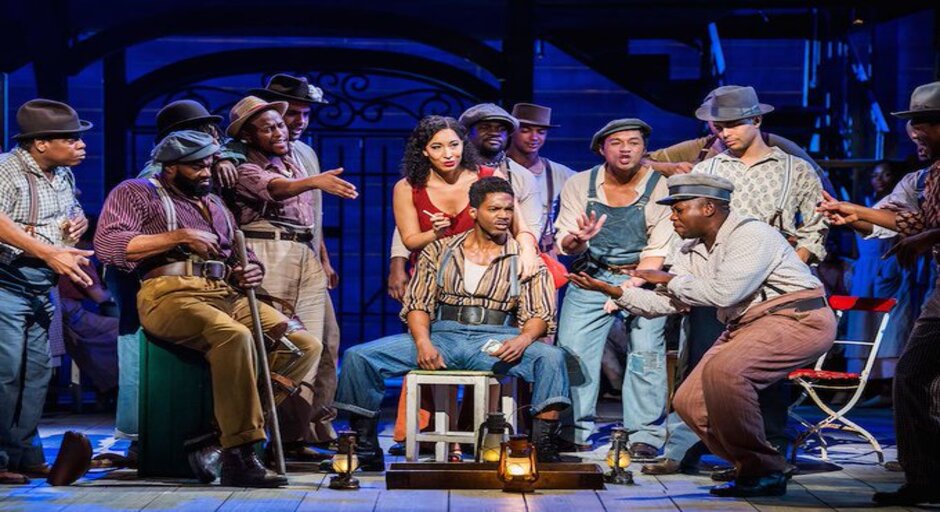 Above: Nadine Benjamin sings
  Of Porgy and Bess’s premiere, composer-critic Virgil Thomson wrote: “Gershwin’s lack of understanding of all the major problems of form, of continuity, and of serious or direct expression is not surprising in view of the impurity of his musical sources and his frank acceptance of the same. The material is straight from the melting pot. At best it is a piquant but highly unsavory stirring-up together of Israel, Africa and the Gaelic Isles… I do not like fake folklore, nor bittersweet harmony, nor six-part choruses, nor fidgety accompaniments, nor
  I will never understand the English tradition of drag. Now, the American tradition of drag, like future husband
 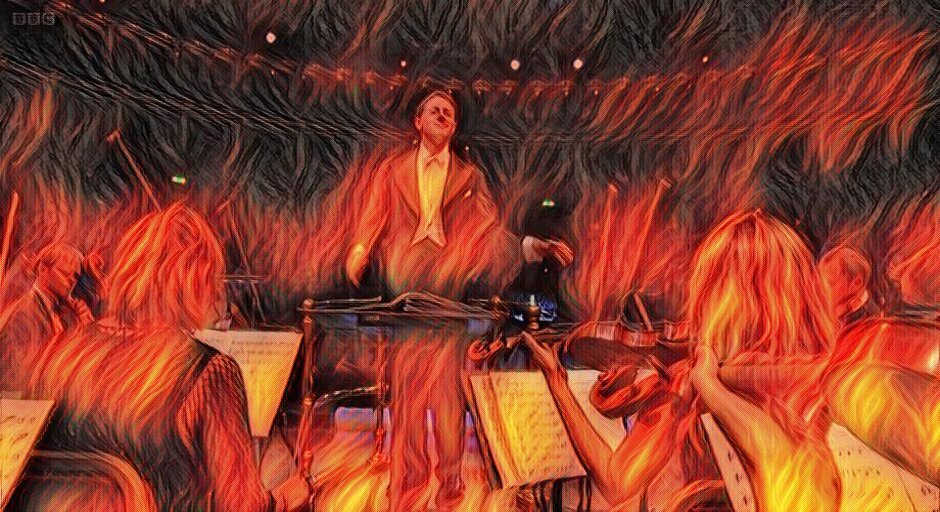 John my love, if conducting this incredibly hot number (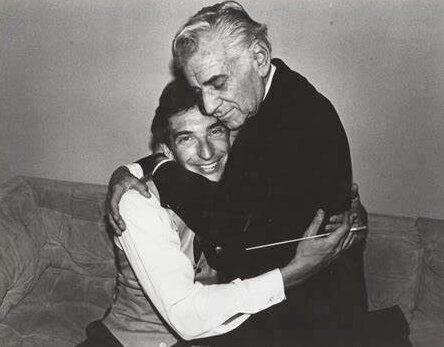
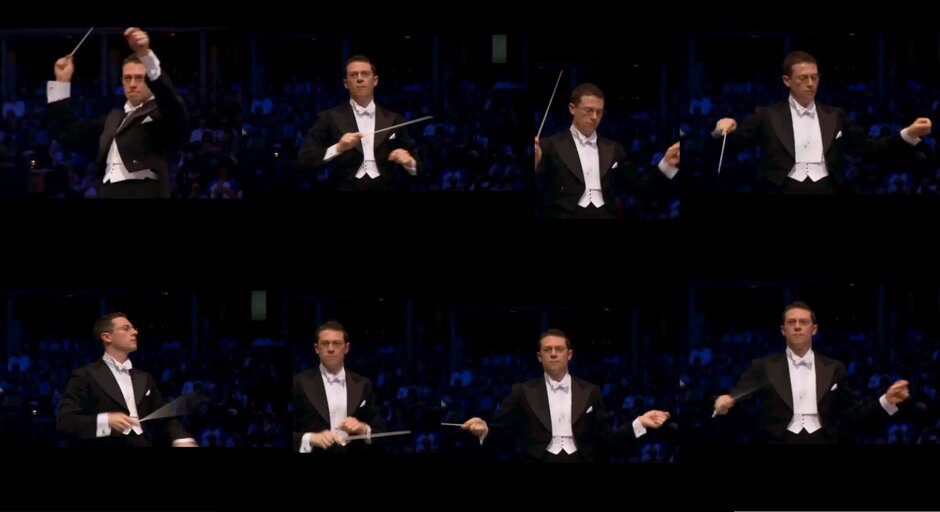 Above the man of my desire:
  Stephen Maddock, CEO of the City of Birmingham Symphony Orchestra, who manages to insert the word
 "I'll Be Dead Before You Break My Heart"