The first song ever taught to me I think when I was five. My mother sang it to me in English, just once, and I pretty much got it. Here’s the Mabuhay Singers doing the somewhat tedious all-English version I remember growing up, and below is the fantastic Filipino post-punk rock group The Dawn doing it in Tagalog.
Fernando Amorsolo y Cueto (1892 – 1972) was a portraitist and painter of rural Philippine landscapes. This is one of his many, many depictions of rice planting and it’s the one I think hung in our house when I was little, next to the shield of bolo knives, the oversized mahogany fork and spoon set, and the pictures of Pope John XXIII and John F Kennedy. If you’re an American-born pinoy, you’ll know what I mean.
…including a complete concert performance of Trial By Jury which I sang in, in a fully-staged Equity-waiver production, the year before my sweet Geordie lad was born.
Hastily conceived as a one-act filler for an evening’s entertainment with Offenbach’s La Périchole, Trial By Jury quickly established itself as the real hit of the production. Although this was not Gilbert & Sullivan’s first collaboration, it was the work that established the partnership for good. The first performance of Trial By Jury was on 25 March, 1875.
From Bachtrack.com: The Orchestra of the Age of Enlightenment has always gone its own way, choosing its own repertoire and collaborators and pioneering a now established framework for ‘historically informed’ performance. So what would happen when its players alighted upon WS Gilbert and Arthur Sullivan, alongside the vivacious and intrepid John Wilson, king of 20th-century popular repertoire? Wilson drew miraculous playing from the OAE, which seemed completely at home among the clouds of meringue and piles of whipped cream that Gilbert & Sullivan offer their audiences. The overture to The Gondoliers is rather boilerplate stuff, lacking Sullivan’s flair for pastiche and relentless tunefulness we find in say, Iolanthe, whose wispy opening enchanted later. But Wilson offered us a generous cone of creamy gelato, coaxing sumptuous and effulgent warmth from the OAE strings… ~Benjamin Poore
With 2 meals a day included it came out to $33 a week. You read that right. A place in Greenwich Village, breakfast and dinner, for thirty-three dollars a week. Try to imagine the mischief I got into with all the money I had left over from my weekly paycheck from my first job as a solfeggist at ASCAP, that it’s summer in NYC, it’s 1973, I’m eighteen, cute as a button and old enough to drink, and gorgeous men are everywhere. And imagine too that I’m singing a song (in my heart and sometimes aloud while bounding down the street) that every American girl of my generation inspired by Julie Andrews sang:
I have confidence in confidence alone
Besides which you see I have con-fi-dence in meeeeeeeeeeeeeeeeeee
On this day, 25 May, 2018—what would have been my dad’s 113th birthday—I’d like to remember one of the few times he and I actually went to the movies together. This time we went to see, first-run, the warrior epic Taras Bulba (United Artists, 1962; screenplay by blacklisted writer Waldo Salt) on the recommendation of my girlfriend Tamara’s mother, who emigrated from Lviv after the war and was a booster for All Things Ukrainian. (A survivor of Axis bombings—she had that in common with my mom.) Our Minneapolis neighborhood was made up mostly of first- and second-generation Ukrainians, Italians, Guatemalans, Poles, Irish, and of course Filipinos, Catholics all. Of course the Lutherans surrounded us but being mostly Swedes, they had their own heritage too. And at Christmas, all that pepparkakor…num.
As for Franz Waxman’s “Ride of the Cossacks”, there’s a rather thrilling ostinato toward the end.
A pretty inspired choice for your Proms, John. It isn’t played too often (there’s more Ben Hur out there than Taras Bulba); my guess is because most conductors just can’t hear the “kinetic” qualities in this piece of music or they interpret it as more “memetic”, and so what comes out when they conduct sounds just awful, artificial… But you, my bonny lad, got it right. I’m starting to recognize your ear more and more, and it’s a wondrous thing.
Wishing you two clean and ready handkerchiefs every concert day, John.
A popular song by Steve Allen published in 1956, “This Could Be the Start of Something Big“. Originally, the song was written as part of the score of The Bachelor, a 1954 television musical production notable for the early appearances of legendary dancer Carol Haney and Jayne Mansfield (Mariska “SVU” Hargitay’s mom). In 1956 “This Could Be the Start” replaced the original opening theme to Allen’s NBC talk show, Tonight Starring Steve Allen, until Allen left the show in 1957 to be replaced by Jack Paar (and “Everything’s Coming Up Roses“). It became something of a personal theme song for him, being used as the opening to his other talk/variety shows, as well as during the opening of both the CBS and syndicated versions of I’ve Got a Secret during his time as host.
Another MGM musical, pre-Freed Unit. Music by Bob Wright, Chet Forrest and Herbert Stothart (adapted from “Chanson” by Rudolf Friml); lyrics by Bob Wright and Chet Forrest, who would go on to adapt the music of Rimsky-Korsakov for the 1953 Broadway musical Kismet.
Two years earlier Allan Jones made a big splash as Kitty Carlisle‘s tenor squeeze in the Marx Brothers romp A Night At the Opera.Here he is in a clip on my YT channel movie-romancing a reluctant Jeanette MacDonald, who was smack in the middle of a fraught but passionate affair with a baritone with a thrilling voice and a black temper—Nelson Eddy, who, upon learning that Jones was putting the real-life moves on MacDonald, crashed the cast party of Firefly, collared Jones and beat him to a bloody pulp. Now that’s love.
Played the violin part in this in my junior high school orchestra. Liked it more than Bach. Above: “Donkey Serenade” by Oscar-winning MGM musical director, Herbert Stothart. Stothart, recently deceased, was paid tribute to by incoming MGM musical director Johnny Green in his 1954 MGM Jubilee Overture, the signature tune of my beloved John Wilson and his Orchestra.
 Fernando Amorsolo y Cueto (1892 – 1972) was a portraitist and painter of rural Philippine landscapes. This is one of his many, many depictions of rice planting and it’s the one I think hung in our house when I was little, next to the shield of bolo knives, the oversized mahogany fork and spoon set, and the pictures of Pope John XXIII and John F Kennedy. If you’re an American-born pinoy, you’ll know what I mean.
 Above my bonny John and members of the Trial by Jury cast:
 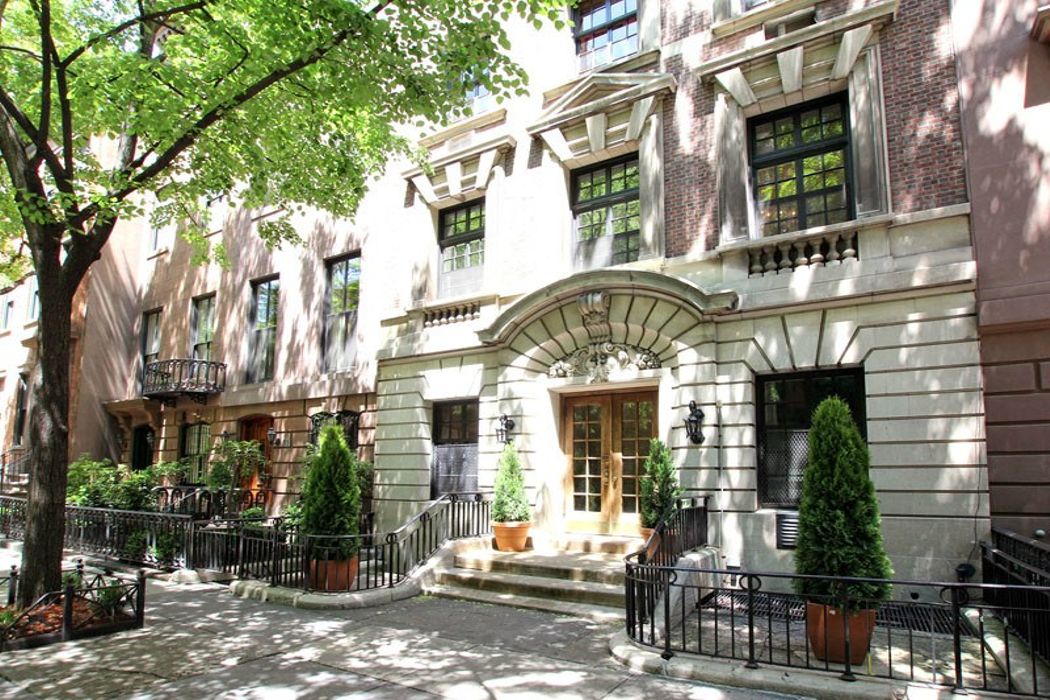 Above my old abode:
 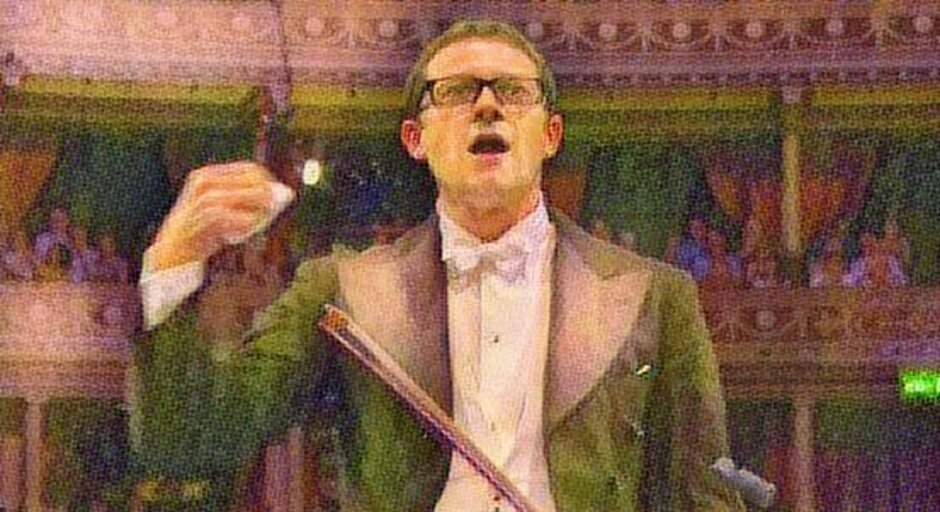 Wishing you two clean and ready handkerchiefs every concert day, John.
 Played the violin part in this in my junior high school orchestra. Liked it more than Bach. Above: “
 "I'll Be Dead Before You Break My Heart"