Before I go into more of my bonny’s musical missteps that have done their part to perturb me to no end, I think it’s only fair to first share the best clips available of John Wilson’s own 24-year-old orchestra—cannily named, as I have mentioned, The John Wilson Orchestra—which, out of over 200(!) on YT in ten years, come down to really only about 4, maybe 5 of these “best clips” between 2009-2019.
This is from their 2012 show The Broadway Sound (@43:50) at the BBC Proms in the Royal Albert Hall in London, which seats 5200, with standing room for 1300 on the ground floor (tickets for which go for only 6L and for which people camp out overnight at the box office like it was Winterland). This is pertinent, because it seems like The JWO only does its best work when it can blast the roof off a barn.
I had the old Ben Bagley recording and the 1983 Broadway revival recording (conducted by John Mauceri) of the Rodgers & Hart show On Your Toes—which of course includes the climactic ballet “Slaughter on Tenth Avenue”—but both producer Bagley as well as musical theater preservationist Mauceri put on disc the 1936 Robert Russell Bennett orchestration rather than the 1954 one by Don Walker. Our John, being John (I’m starting to get into his “ear”), chose the Walker score to play in the Royal Albert—which of course makes the most of those two “false” endings—and for once he was entirely correct.
The indication “burlesque strip style” was actually written on the music right around 4:00. Both Ramin and Ginzler cut their teeth writing swing arrangements; lead trumpet in the original Gypsy pit was Dick Perry, late of the Tommy Dorsey Orchestra. Solo trumpet Mike Lovatt here lays it down fine. Some people obviously know something about burlycue. Composer Jule Styne was pleased with this overture’s orchestration.
From 2020: Completely bummed out that John’s 21 January concert with the LSO at the Barbican was completely canceled, so here’s my bonny lad at the 2012 BBC Proms with his eponymous orchestra in a really classy (for once) semi-staged concert of the complete 1956 Broadway musical, My Fair Lady, book and lyrics by Alan Jay Lerner and music by Frederick Loewe; orchestration (for the movie score) by Andre Previn, orchestration enhancement by John Wilson. Cast: Anthony Andrews, James Fleet, Alun Armstrong, Julian Ovenden etc, and as Eliza, Annalene Beechey.
John and O don’t always perform semi-staged fully-voiced musicals badly at their BBC Proms appearances at the Royal Albert Hall—their 2012 My Fair Lady was pretty much all right, no shenanigans there (pronounced The Guardian, “John Wilson’s adapted score—which borrows from Andre Previn’s movie arrangement—adds a sparkle to even the most drearily expository songs: the flutes somehow sound cheekier, the brass ruder, the strings zingier”). And in fact their 2014 Kiss Me Kate was as it was meant to be: big, sexy and playful. Winsome John even gets a speaking part!
Now, we all know about “Too Darn Hot” with its descriptions of nice normal congress (“I’d like to sup with my baby tonight / Play the pup with my baby tonight”) and “Tom, Dick or Harry” with its lyrics “I’m a maid mad to marry and would take double quick / Any Tom, Dick or Harry, any Tom, Harry or Dick” and the lilting refrain “A-dick-a-dick dick dick, a-dick-a-dick dick dick”…
But did you ever stop to think about the song “Always True to You in My Fashion”? Which was one of my party pieces years and years ago (alternating with “I Cain’t Say No” from Oklahoma). I’ve given it some thought and what I worked out is this: Lois isn’t just your ordinary sex supplier—no, she specializes in those extra-special somethings that make a man (well, certain men) happy and willing to pay top dollar for them. Not to mention that in every verse she pretty much announces her rates for rough stuff, plus a type of sex play I could never get into:
There’s a madman known as Mac Who is planning to attack If his mad attack means a Cadillac, okay!…
I would never curl my lip To a dazzling diamond clip If a clip meant “Let ‘er rip!” I’d not say nay…
There’s an oilman known as Tex Who is keen to give me checks And his checks I fear Means that sex is here to stay…
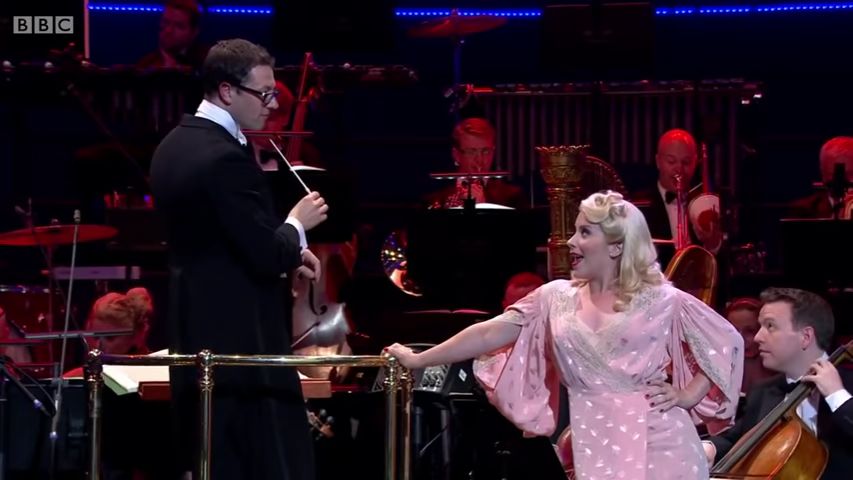
…ending always with the last line, “But I’m always true to you darling in my fashion / Yes I’m always true to you darling in my way.” Which to me is the number-one indication she keeps it hot with her boyfriend because with him it’s, like I said, nice normal congress. You know, vanilla. But with her clients? As you may recall I was in The Business, where scenarios abound. (Remember Basingstoke?) All this to say it amuses me to no end to watch Lois size up within two seconds The Conductor, cunningly portrayed by my beloved John Wilson. Because I know exactly what’s going on in her head, in descending order:
Happy 2021, my darling Low Fell Lad Made Good. I just tried getting on your management’s website for you (johnwilsonconductordotcom) to check for your January gigs when I was sent to the sinister Your connection is not private page, which perturbs me a bit as it sounds like the server might’ve been hacked.
[Sorry, have to go be with Mister Grumble for a while. More later, promise.]
[2 Jan 2021 14:20] Later. I’m back, dear. Glad to see that fixed, for now. Mister Grumble and I had a date to listen to what I just found on YT: the 1978 NYE Grateful Dead concert from The Closing of Winterland—you know, the one where [legendary band manager] Bill Graham glides down to the stage on a giant lit joint (as I described it to my blind angel which he recognized at once)—and really, it was a great night, or so the Mister tells me. The Mister is the one who turned me on to The Dead, back at our old commune in San Francisco.
But here I go rambling on about American things when I’m sure what you really want to hear is how you made out in 2020. Well honey, as you know, you did fine with your recordings on the Chandos label: Your 2 Korngolds, the symphony and the violin concerto, your Respighi, and the French dudes. I’m sorry you couldn’t conduct Tchaikovsky in Chile (sharing the same time zone with you would have been pretty cosmic), but you did “save” The Turn of the Screw at Wilton’s Music Hall, and that’s très chic.
[making dinner now, Bavarian-style pork chops with sauerkraut and boiled potatoes; I’ll come back to wrap this up as soon as I can, promise]
[6 Jan 2021 14:21] Okay, now that I’ve served all your wonderful fans around the world, let me have my say.
The BBC Proms 2017 semi-staged production of Oklahoma! pissed off 3 people I care about even though one of them is dead: Mister Grumble, a proud Oklahoman, who hated to see this nuanced Sooner tale turn into some weird English panto; original 1943 director Rouben Mamoulian, who even though dead howled in his grave at your dismissive use of his name in promos, oh, and for perpetuating a “mistruth” about him and his artistic relationship with Agnes de Mille; and me for two things: one, your use of the Robert Russell Bennett orchestration (which was never meant to play to a room the size of the Albert) instead of the film orchestration (by Bennett+Courage+Sendry+Deutsch) which, if I remember rightly, you actually used in your 2010 show for the last number, “Oklahoma!”, and it was gorgeous; and two—Marcus Brigstocke as Ali Hakim!!!??? Who the hell at the BBC was responsible for thatwhitewashing? And why didn’t the UK press call the Beeb on it? (I mean, if you’re all going to be hoity-toity over Maria in West Side Story…) Now, I can lay the former at your door but maybe not the latter, as the Beeb seems to have gone off its rocker on its own… But c’mon.
But let that pass. What really impresses me about my lust for you is that it started me on the road to thinking about The Old Man again. And actually, really, I should thank you for that. Mamoulian ought to be remembered—not for being a cranky old has-been, but for having directed some classic pictures and classic stage musicals like, you know, Oklahoma! I knew him. Our minds matched. That there was some weird man-woman friction going on between us toward the end makes no difference. It fries me how little regard he gets nowadays, even in the film buff world.
But now my love, here’s the last item and I hope I can finish it before I have to go in to make dinner.
Okay. Here’s the connection between you and Mamoulian, and it has nothing to do with you as a musician. It has to do with that damn full dress of yours, which has aroused such a surprising fetish in me I’m exploring it in a special place.
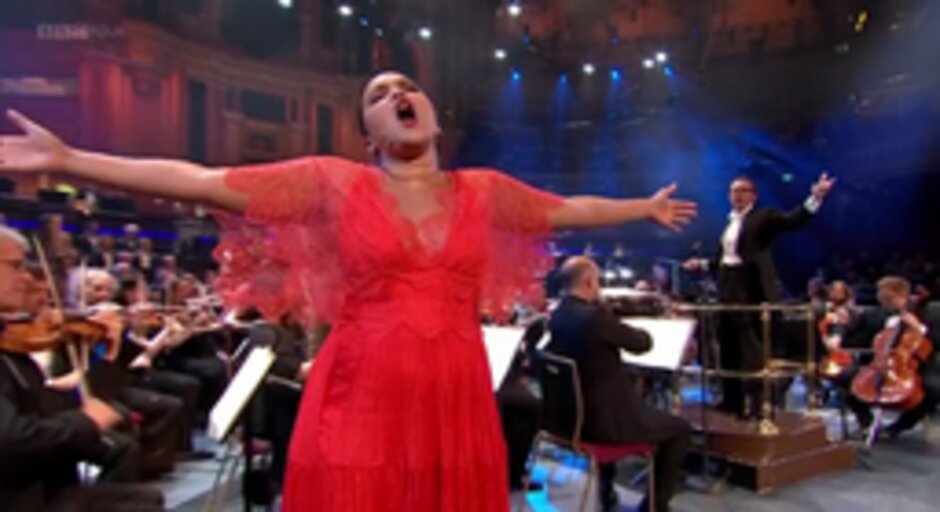
There were some particularly strong singers in the BBC Proms concert at the Royal Albert back in 2011 I take pleasure in remembering, on this gray Monday two days before The Inauguration. “Serenade” from The Student Prince was one of my mother’s favorite numbers, she just thrilled to it, especially when Mario Lanza was singing. “Can’t Help Singing” was in my Deanna Durbin Songbook when I was a teenager. “The Man That Got Away” was sung at my friend’s funeral—the friend who left me all his Andre Previn records—by his grieving lover. And then there’s “Secret Love”.
Disappointing to hear that John won’t be doing Britten’s The Turn of the Screw at Wilton’s Music Hall in London this month. So, to cheer everybody up, here’s the full 2-hour program of my John and The John Wilson Orchestra at the Proms, 2013. That’s Jane Monheit, John, and Matt Ford below.
SONG MEDLEY (YT): – “An Affair to Remember” (from the 1957 film; 20th Century Fox) / Harry Warren, Leo McCarey (the film’s director), Harold Damson – “Something’s Gotta Give” (from Daddy Long Legs; 20th Century Fox, 1955) / Johnny Mercer – “Young at Heart” (from the 1955 film; Warner Bros) / Johnny Richards, Carolyn Leigh – “It’s Magic” (from Romance On the High Seas; Warner Bros, 1948) / Jule Styne, Sammy Cahn – “The Tender Trap” (from the 1955 film; MGM) / Jimmy Van Heusen, Sammy Cahn – “My Foolish Heart” (from the 1949 film; Samuel Goldwyn/RKO) / Ned Washington, Victor Young – “Three Coins in the Fountain” (from the 1954 film; 20th Century Fox) / Jule Styne, Sammy Cahn – “Love is a Many-Splendored Thing” (from the 1955 film; 20th Century Fox) / Sammy Fain, Paul Francis Webster – “That’s Amore” (from The Caddy; Paramount, 1953) / Harry Warren, Jack Brooks – “Que Sera, Sera” (from The Man Who Knew Too Much; Paramount, 1956 / Jay Livingston, Ray Evans – “All the Way” (from The Joker is Wild, 1957; Paramount) / Jimmy Van Heusen, Sammy Cahn
A Place In the Sun (suite from the 1951 film; Paramount) / Franz Waxman
Well, John, this isn’t a Joan Crawford movie so there’s no gold cigarette case but as I’m still in love with you and want to give you nice things, I’ll give you my honest appraisals, which is something I’ve been doing all along anyway (I hope you’ll agree) and not throwing myself into Long Island Sound for your sake. So let’s do this organized, going down the numbers in the program one by one because, as you recall, I used to work at ASCAP:
“We’re In the Money” (from Gold Diggers of 1933) / Harry Warren, Al Dubin Count on you to include the lyrics in pig Latin.
“The Desert Song” (from the 1953 film) / Sigmund Romberg, Oscar Hammerstein II Meh. I think the only reason you worked this in is because Kim Criswell’s singing a Romberg song in your 5 January concert in Stockholm, “Softly, As In a Morning Sunrise”, which is a hot, HOT number. In fact I can’t believe you’re going to stand on the same stage when she sings that song and not get incinerated. But that’s just you I guess.
The Treasure of the Sierra Madre (suite; from the 1948 film) / Max Steiner God, I forgot how repetitive Max Steiner can be when he’s not cribbing from Herman Hupfeld.
The Old Man and the Sea (suite, 1st movement; from the 1958 film) / Dmitri Tiomkin One movement, mercifully short.
“Seventy-Six Trombones” (YT) (from The Music Man, 1962) / Meredith Willson I lost a bet to Mister Grumble that you would never, never, EVER do this number, ever. (Because, you know, it’s so OBVIOUS.) But…yeah, it was okay. No Andre Rieu though.
“Blues in the Night” (from Blues In the Night, 1941) / Harold Arlen, Johnny Mercer A low-voiced woman should sing this. Preferably a woman who’s been there.
Auntie Mame (main title; from the 1958 film) / Bronislav Kaper You know, I’d forgotten how much I like this sweet waltz.
“The Man That Got Away” (from A Star is Born, 1954) / Harold Arlen, Ira Gershwin [in an obvious nod to the movie’s latest remake] Of all your singers, Louise Dearman is the only one who could’ve carried these two numbers in this room particularly, and whatever luck or good judgment (and I’m nuts about you dear, but I’m never completely confident about your judgment in these matters) brought her there I’m glad.
“Get Me to the Church On Time” (from My Fair Lady, 1962) / Frederick Loewe, Alan Jay Lerner A little harkening back to your 2012 Proms triumph, eh?
25-MINUTE INTERVAL Proms Plus Talk: a discussion of some of the great film scores being played tonight [Hah! In a pig’s eye] with Matthew Sweet, David Benedict and Pamela Hutchinson
Gypsy (overture; from the 1962 film) / Jule Styne, arr Ramin and Ginzler I still have the clip of you conducting this at the 2012 Proms (the other one). This one is sooo much hotter.
Now, Voyager (suite; from the 1942 film) / Max Steiner John, I’m afraid I really didn’t give this number a fair hearing the first time so I’m going to listen to it again and compare it to your Chandos 2022 recording. But you know, I almost missed the old dear telling Katie Derham that YOU wrote this arrangement because the Mountview kids down on the floor were leading a cheer [@1:05:00].
“The Deadwood Stage” (from Calamity Jane, 1953) / Sammy Fain, Paul Francis Webster [a Doris Day tribute] O-kay! A FULL number from a musical, complete with chorus—this is the very thing that made your name. All is forgiven.
“It’s Magic” (from Romance On the High Seas [correction, BBC: “On”, not “In”], 1948) / Jule Styne, Sammy Cahn [again, a Doris Day tribute] What in the name of heaven possessed whoever decided to include the worst song Jule Styne ever wrote? Redeemable only—only—if Bugs Bunny (YT) sings it.
A Streetcar Named Desire (main title; from the 1951 film) / Alex North Oh, you’re going to have fun with this one when you have to give sexy program notes to the audience from the podium, like you did in Brighton.
“The Days of Wine and Roses” (YT) (from the 1962 film) Henry Mancini arr Nelson Riddle, Johnny Mercer Nelson Riddle!? You used the freakin’ Nelson Riddle arrangement?? What are you trying to do, send love signals to Seth MacFarlane?
“Tomorrow” (from The Constant Nymph) / Erich Wolfgang Korngold You had this and your Prince Charming from Cendrillon, Kate Lindsey, up your sleeve! What a nice surprise.
ENCORE “I Could Have Danced All Night” (from My Fair Lady, 1962) / Frederick Loewe, Alan Jay Lerner Every soprano in the world wants to hear this song done right. She passes.
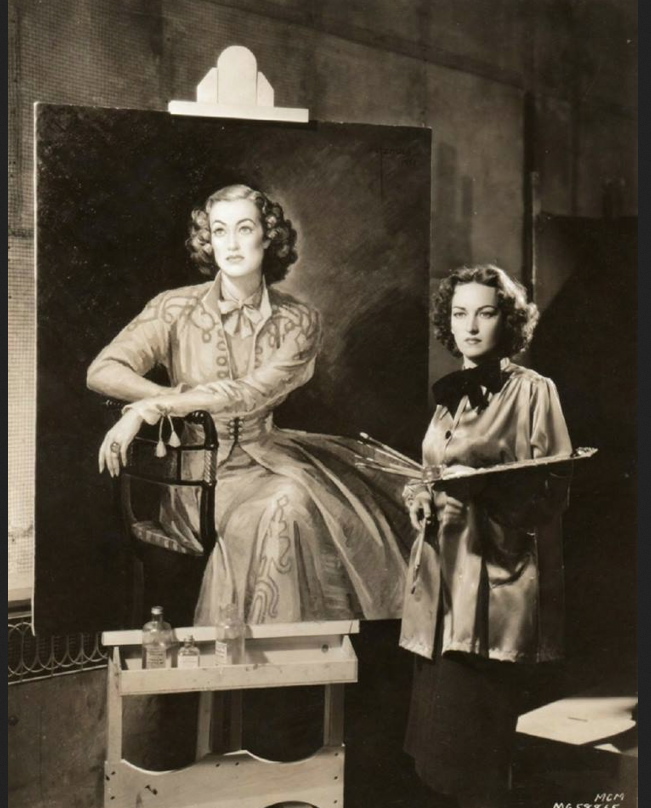
Azadia Newman Mamoulian next to her painting of Joan Crawford for The Last of Mrs Cheney (1937). Azadia’s famous portrait of Laura (that is to say, her portrait of Gene Tierney portraying the character, Laura) hung in the Mamoulians’ bedroom. How she got Crawford to resemble herself rather than the other way around, is a feat of illusionry I still marvel at. Above: My beloved John conducts the Sinfonia of London in Raksin’s Laura, orchestrated by the composer.
“You know I directed Laura,” said Mr Mamoulian to me matter-of-factly one day as we sat in his alcove-cum-study.
Now, I had seen the movie Laura several times—on TV and in the art house—and I remembered practically all the credits, which included one for Otto Preminger, Director…but no Mamoulian. But here was The Old Man sitting knee to knee with me, announcing right out that he was (what’s the Variety word?) the helmer of that glamorous but nutsy picture with Gene Tierney.
So what did I do? I was twenty-three. I was on a job. I nodded.
He sat back, took a couple of puffs from that awful cigar of his and smiled wistfully. “You know, Gene introduced me to my wife.”
“Oh, that’s wonderful,” I said. That would be Azadia, who Mamoulian called Zayde (a giggle, as zayde means grandfather in Yiddish); she was a woman I never saw except once. She was always in the Other Room.
For their show at the 2011 BBC Proms, called Hooray for Hollywood, John and The JWO begin here with an overall satisfying medley of tunes from the picture—inconveniently called the “Hooray for Hollywood” overture—tunes selected, arranged and orchestrated by my self-satisfied darling himself. Starting with John’s cribbing from Ray Heindorf’s execrable arrangement (that hard downbeat!) of the Gershwin brothers’ 1919 “Swanee” (Jolson turning in his grave), it does get better: “Lullaby of Broadway” by Al Dubin and Harry Warren, very nifty and swingy; Rudy Friml and Herb Stothart’s 1924 “Indian Love Call”, a lot more lyrical and moving (he included the birds and the waterfall!) than you remember it (especially when leader Andrew Haveron takes the soulful melody); Jerry Kern and Yip Harburg’s glorious 1944 “Can’t Help Singing” (written for Deanna Durbin); Kern and Ira Gershwin’s 1944 “Long Ago and Far Away” (Howard McGill on tenor sax and Matthew Regan on piano—I’ve never heard it played any lovelier): Frank Loesser’s 1950 “Guys and Dolls” done in Big Swing style; then, in a weird leap, “Chim-Chim-Cheree” by the Sherman brothers, 1963 (for which our John cribs 2 bars from Shostakovich’s Jazz Waltz No 2); and ending with “Hooray for Hollywood” from 1937 by Richard Whiting (who wrote “On the Good Ship Lollipop”) and Johnny Mercer.
Hooray for Hollywood
Where you're terrific if you're even good
Where anyone at all from Shirley Temple
to Aimee Semple
is equally understood
Go out and try your luck
you might be Donald Duck
Hooray for Hollywood
Dates are of composition, not the date of the movie. Because it contains John’s own actually-pretty-good arrangement it’s one of my favorite numbers of The JWO (although I would’ve swapped the timpani for a little chord coloring at the beginning of the “Swanee” melody). He seems to have nailed down the Andre Previn sound in his strings, which is okay by me. Plus extra points @7:40, where my self-satisfied darling shimmies like a brazen hussy yet again.
Steiner’s suite (written score here) is clearly patched together from various melodies in the film Casablanca, including the Nazi drinking song “Die Wacht am Rhein” (Schneckenburger/Wilhelm, 1853); “La Marseillaise” (de Lisle, 1792); and, of course, “As Time Goes By” (Herman Hupfeld, 1931). And is that a little of Steiner’s own King Kong? The Warner Bros Pictures music theme at the beginning is entirely Steiner’s composition. (Most of the) orchestration by Steiner’s frequent collaborator, Murray Cutter.
I feel a raging, yearning, unchaste tenderness for my beloved John Wilson when he conducts schmaltzy pieces like this, which sort of makes up, as I say, for the times his fatuous pronouncements exasperate me. Above John: Steiner’s Casablanca Suite.
 John my love, if conducting this incredibly hot number (audio here; video on my YT channel here) didn’t get you laid that night, I worry about your generation. Above John: The audio recording of the complete show, The Broadway Sound.
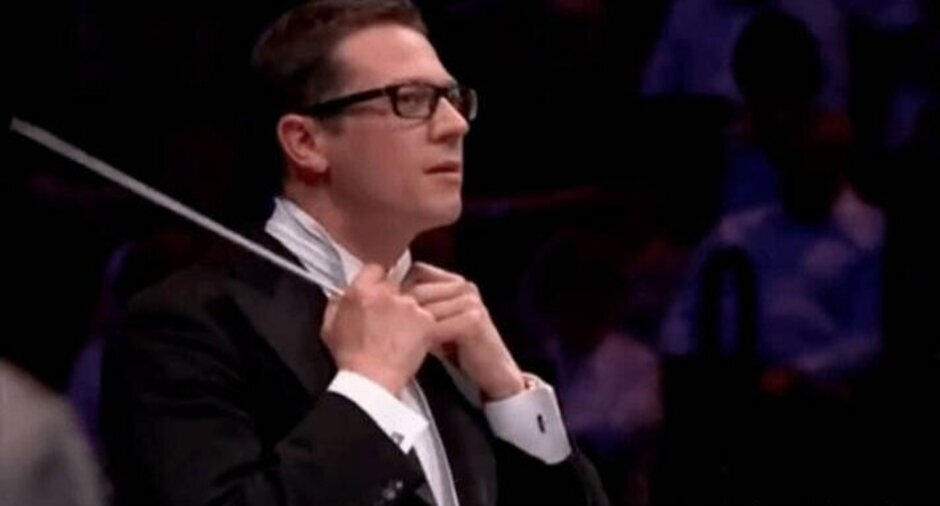
 Above the man of my desire:
 Above John conducting his dream swing band in sweat-soaked silk shirt:

 Dates are of composition, not the date of the movie. Because it contains John’s own actually-pretty-good arrangement it’s one of my favorite numbers of The JWO (although I would’ve swapped the timpani for a little chord coloring at the beginning of the “Swanee” melody). He seems to have nailed down the Andre Previn sound in his strings, which is okay by me. Plus extra points @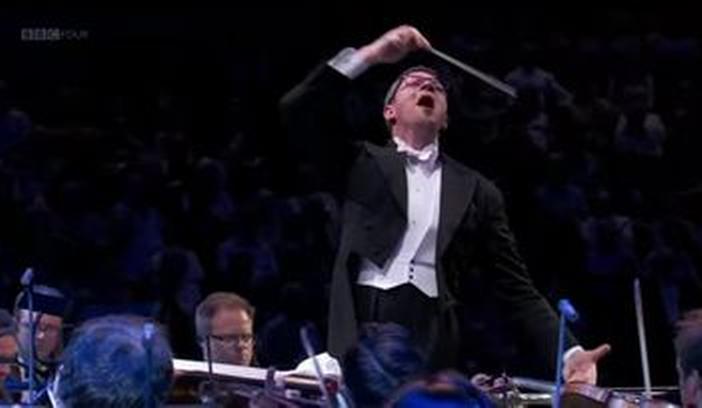
 "I'll Be Dead Before You Break My Heart"