To My Beloved English Conductor John Wilson, Who Shares His May 25th Birthday with My Dad; Or, Don’t Call Me a Person Of Color, I’m a Product Of Empire, 1

A POE. I like that.

“I Shall Return.” The Invasion of Lingayen Gulf (Paglusob sa Golpo ng Lingayen), was an amphibious operation in World War Two led by General Douglas MacArthur, 6-9 January 1945

My father—who was born near the beach where, thirty-nine and a half years later, MacArthur returned as he said he would (Lingayen Gulf, meeting place of the provinces Pangasinan and La Union)—made it to the US early in his adult life. How he actually made the journey has always intrigued me since no one in the family ever talked about it.

After looking at a Google map, I figured that if the Gulf were big enough to accommodate battleships in wartime, it would’ve been big enough to harbor smaller vessels in peacetime, like tramp steamers. Tramp steamers were easy to sign on to then, and even as late as the 1970s you could hop on, do a lot of dirty heavy work, then hop off at the first stop and hop on the next steamer going further. The trick back then was knowing the comings and goings of such short-run vessels which, as this was in the old days before comprehensive shipping news, you pretty much had to do by going in person right to the docks to find out.

There were two directions my dad could’ve taken, east or west. West would’ve meant hopping from steamer to steamer, wending his way through the islands and peninsulas of Indochina. East meant making his way down the coast of Luzon facing the China Sea, into Manila Bay, where if he lucked out he could sign on to one of the much larger, international, Pacific-crossing tramp steamers, like the Queenmoor out of Newcastle, UK. I’m inclined to think that’s the route he chose. Because, thanks to the Thomasite teachers sent by our American conquerors, Dad had one invaluable asset: He could speak the English language.

In either case, it still might’ve taken him as long as 6-8 months to reach San Francisco, which my mother told me was his first place of residence. So it happened that my father, Cenon Merto “Sam” Ramos, started his American life in the most evocative city in America—the home of fog, hills, sourdough, hashish, Dashiell Hammett, Harry Bridges, Gracie Allen, Mission Dolores, earthquakes, Chinatown, Manilatown, the DiMaggio boys, and the San Francisco Symphony Orchestra (period recording of Alfred Hertz conducting the SFSO in Wagner’s Parsifal here).

It was 1927. Dad was 22. 


FULL DRESS // A gifted mesmerist—a sinister composer—a naive young conductor from the north…inspired by an episode from the life of Rachmaninoff // DOWNLOAD FREE BOOK POSTER

To My Beloved English Conductor John Wilson, Who Shares His May 25th Birthday with My Dad; Or, Don’t Call Me a Person Of Color, I’m a Product Of Empire, 2

The picture below is of the fourth anniversary banquet of the local Asinganian Club, November 1941, just two weeks before Pearl Harbor. That’s my dad, extreme right under the picture, when he still had hair.

Asinganian, I have to explain, means “of Pangasinan”, which is the province my father comes from—but it can be extended to also mean “of La Union”, meaning from the province above Pangasinan, called La Union, which is where my mother was born. Think of these provinces as the Lancashire and Yorkshire of the Philippines, John.

Note the date: 27 November 1941, two weeks before Pearl Harbor. Also note the flags: The Philippines was a US Commonwealth (which made us technically US nationals) and didn’t achieve independence until 4 July, 1946

There were about 100 Filipino-American clubs in the US around this time; this is the way Filipino immigrants socialized, and it was pretty successful. Even years later my mom could tell you the names and phone numbers of Filipinos in Calgary, Denver, Manila etc, just because they were Filipino and exchanged visiting cards with her at some party thrown at one of the many, many dances of the Moveable Filipino Club for manongs+manangs and their white/pinoy spouses/children in Minneapolis. It was quite a network while it lasted.

But don’t get the idea that my father and my mother met through some stateside Filipino club, because at the time she was still in the Philippines, getting occupied and bombed on. (See “The Pure Joy of St Trinian’s and The Inn of the Sixth Happiness by Malcolm Arnold“.) We never talked about that part of her life at home, but after my father died I eventually managed to get some extremely unsettling details from my various cousins.

But aside from that, as it turned out, after the war Mom and Dad had met through the penpal ads that were in the back of the regular issues of the Asinganian Club newsletter, which circulated not only in the States but the Philippines. After my dad’s first marriage in the mid-1940s to a white, probably Irish, woman named Margaret—I’m going to imagine her name was Margaret—failed to work out (see “25 May—Two Birthdays: My Dad’s and My Beloved English Conductor John Wilson’s) my dad, like so many other young guys working far from home in a strange new place, was counseled to take “a wife from the old country”. But where to find one? The immigration quotas of the 1920s-1940s were not favorable to single, marriageable Filipino men: the percentage during that time was never more than 2 marriageable females for every 98 marriageable males. But if you were a citizen (by then, my dad was already a total US citizen and the Philippines was a separate sovereign nation), you could travel to the islands, choose a wife, and bring her back as your dependent. A lot of American soldiers did this after the war.

What I didn’t learn until the second wave of cousins passed through our house in the period after my father’s death, was that my mom wasn’t the only by-mail bride he was courting.

EXTRA! As a San Francisco treat, here’s Dennis Hagerty between showings at the Castro Theatre playing our city theme, “San Francisco, Open Your Golden Gate” from the 1936 MGM classic movie with Jeannette MacDonald and Clark Gable, San Francisco.


FULL DRESS // A gifted mesmerist—a sinister composer—a naive young conductor from the north…inspired by an episode from the life of Rachmaninoff // DOWNLOAD FREE BOOK POSTER

To My Beloved English Conductor John Wilson, Who Shares His May 25th Birthday with My Dad; Or, Don’t Call Me a Person Of Color, I’m a Product Of Empire, 3

I mentioned in “A Special Letter to My Beloved John Wilson, After His Appearance with the Sinfonia of London at The Glasshouse, Gateshead UK, 11 November 2023” a railroad tycoon who changed my father’s fortune after they met in St Louis (where my father moved to in order to marry his white fiancee and where he stayed after they broke up). Here’s his name: Winfield Stevens, Sr. He owned a short line (87 miles) called the Minneapolis, Northfield & Southern Railway, which terminated in southern Minnesota in Northfield, a town notable for having waged a short bloody gun battle repelling the James-Younger gang, when those famous outlaws attempted to hold up the First National Bank back in 1876. This is annually celebrated in Northfield’s Defeat of Jesse James Days, complete with souvenir mugs and recreations on Main Street; there’s also on YouTube a swell western starring Robert Duvall as Jesse and dumb old Cliff Robertson as Cole Younger.


How Mr Stevens and my father initially met I’m not quite sure, although I think at this time my dad had gotten into domestic service, maybe even through his white wife (and possibly career housekeeper) Margaret… Because from the first Mr Stevens, liking the cut of his jib so to speak, employed my dad as an all-around house servant—major domo, valet, cook, chauffeur. In those days it was a prestige thing for a successful American (i.e. white) businessman to have an Oriental houseboy, like Sammee Tong in Bachelor Father. This is real Scott Fitzgerald country.

Then when the old man died his son and heir, Winfield Stevens Jr, took over the railroad business and added to that his own Buick dealership. Mr Stevens Jr, being more of a family man, didn’t need a valet, so he got a job for dad with the MN&S in the yard so Dad could join the railroad union and start racking up benefits. He also paid Dad off the books to cook for his family on Sundays (which is when I would see my father dress for work in his crisp, clean white short-sleeved shirt and black bow tie); and during the hunting season he would cook for Mr Stevens and his railroad cronies wherever they were shooting. These two, three times a year Dad would come home with a side of venison or a brace of pheasants which, I don’t know how he did it, he managed to cook pretty tastily. Probably it was the soy sauce, garlic and vinegar.

I went on one of these trips with my dad a couple times in ’63 when I was eight. It was fun, sleeping in the top bunk of a compartment all alone (dad slept with the men on the other side) in a railroad-car-turned-hunting-cabin, being so deep in the woods. And you can’t beat the Minnesota woodland, old and mysterious and full of Chippewa lore.

EXTRA! The Kingston Trio sing a rousing “The Ballad of Jesse James”.


FULL DRESS // A gifted mesmerist—a sinister composer—a naive young conductor from the north…inspired by an episode from the life of Rachmaninoff // DOWNLOAD FREE BOOK POSTER

To My Beloved English Conductor John Wilson, Who Shares His May 25th Birthday with My Dad; Or, Don’t Call Me a Person Of Color, I’m a Product Of Empire, 4

So it’s 1951. There’s my dad in a clean prosperous city, Minneapolis, with a good job and good prospects, without a wife, not getting any younger, and going through a sort of anxious “last chance to have a family” phase.

His only hope for matrimony lay in the three—count ’em—three penpal relationships he started after he and Margaret the Irish-American housekeeper called it quits in St Louis and he followed his new boss, starting out in Mpls in a one-bedroom in a big old building near 38th & Chicago where the George Floyd memorial is now, and where my mother, then I four years later, were brought home to.

The Jai Alai Building in Manila—home of young marrieds, Filipino swells, and the WWII Japanese secret police.

Now, as I recall it, there were a couple of cousins on my dad’s side from Manila, spinster sisters, who came around to the house after dad died to: one, pay their respects; and two, make sure they were still getting their remittances. (Dad supported a lot of cousins in his lifetime.) Relieved at mother’s assurances that the checks would keep on coming, the two sisters—let’s call them Patti and Laverne—sat me down privately one evening during…I guess it was Dad’s wake, more or less…to tell me the saga of the Three Penpals and My Father’s Quest for Ms Right.

My dad had her letters and her picture—like I said, she was as pretty as a movie star. And as Patti and Laverne reported back to my father, she was educated and from a good family in the professional class (her father, my lolo, my grandfather, José de la Peña a municipal judge; her mother, my lola, my grandmother, Cristina Abérin a schoolteacher). Domestic talents—nil, but look at that punim! They couldn’t have done a better job if they’d been selling Edward Rochester on Bertha Mason.

But more on that later. Let’s just say it worked like the plot of a Mamoulian musical, a fairy tale where all the women are either witches or princesses and there’s always that Magick Choice of Three

So, according to Patti and Laverne’s scorecard, candidates one and two struck out but candidate three, my mother, was the bride for my dad. He wrote and proposed to her, she answered yes, except he’d have to meet her family first. Cut to scene of my dad landing in Manila where he hasn’t set foot in 24 years. Dad spends the rest of the dry season making the rounds of the de la Peñas, being inspected and generally approved of; my dad was always a simple, up-front guy and people got to like him very easily.

O, let us be married, too long we have tarried! But what shall we do for a church? was the question, as my father, a divorcé (remember Margaret?) didn’t qualify for a church wedding. Before too long someone in the family suggested the Jai Alai Building in Manila, the Art Deco showcase where the local smart set had their do’s and where the Japanese in World War Two had their secret police headquarters.

But the inside is nice and my parents’ wedding even made the society page. They described my dad as an “American businessman”.

EXTRA! For those of you who’ve read this to the end, here’s the danceable jukebox version of “Dahil Sa Iyo” I grew up listening to.


FULL DRESS // A gifted mesmerist—a sinister composer—a naive young conductor from the north…inspired by an episode from the life of Rachmaninoff // DOWNLOAD FREE BOOK POSTER

Ocean’s Kingdom, A 2011 Ballet Score by Paul McCartney, Co-Arranged and Conducted by John Wilson; Plus Howard Goodall and The Philippine Rondalla Serenata

From August, 2020: Like his coeval Pete Townshend, Paul McCartney never learned to read/write music, but like Townshend, that certainly didn’t stop him. Composer-arranger David Bennett talks about this in his latest YT podcast, “How Much Music Theory Did The Beatles Know?”

“‘The Beatles didn’t read or write sheet music, so surely they didn’t understand music theory…?’ Well, no. Reading sheet music is only part of what it means to understand music theory,” says Bennett. Which gets me fascinated enough to want to ask my beloved John Wilson how he and McCartney were able to musically communicate when they did Ocean’s Kingdom together…

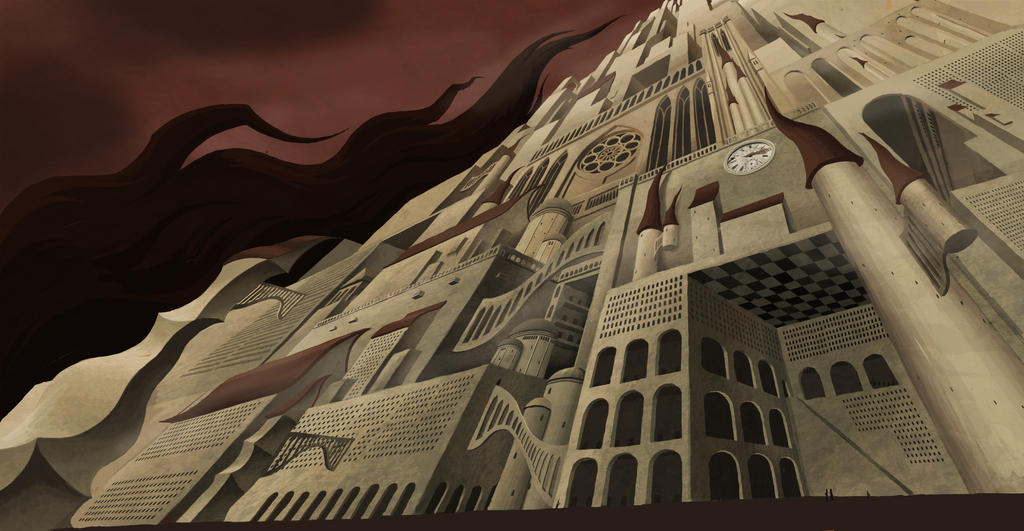
gormenghast_castle_by_malex096-d65uust-1I prefer this second movement of Ocean’s Kingdom but the entire piece is worthwhile.


And just so you don’t think I’m always down on bonny John, who was himself brilliantly educated at the Royal College of Music, here’s his orchestration, written in 2002 when he was 30, of Howard Goodall’s score for the TV movie The Gathering Storm, a bit Elgarish. And here’s the orchestration he wrote when he was 28, of Richard Rodney Bennett’s music for the TV mini-series fantasy Gormenghast, which won the Ivor Novello Award for Best Film Score in 2000.

EXTRA! My favorite Beatle tune, just for my beloved conductor reverb and all: “I Feel Fine”

EXTRA EXTRA! The Philippine Rondalla Serenata* play that toe-tapping Beatles standard, “Ob-la-di, Ob-la-da” in traditional Philippine rondalla style

*Dedicated to showcasing the musical talent of blind and visually impaired musicians in the Philippines—here’s their Facebook page


The complete OCEAN’S KINGDOM is available on YT here


FULL DRESS // A gifted mesmerist—a sinister composer—a naive young conductor from the north…inspired by an episode from the life of Rachmaninoff // DOWNLOAD FREE BOOK POSTER

“We John Wilsons, we can be busy little beavers when we need to be” ~ Novelist-Composer Anthony Burgess (Dick Cavett, ABC-TV 1971)

Anthony Burgess, my Number One Language Guy, was on Dick Cavett’s talk show late one evening during my first year at music school. The host had brought up the oft-told story of how Burgess, when in his 40s, was diagnosed with a brain tumor and told he would be dead in a year; consequently he returned home to England (he’d been in the civil service in Brunei) and was seized by a mania of writing that resulted in his completing a half dozen intriguing novels, all of which are still in print. Oh, and he didn’t die in a year. Referring to his name at birth—he was christened John Wilson, Anthony being his Catholic confirmation name and Burgess being his mother’s maiden name—Burgess quipped, “We John Wilsons, we can be busy little beavers when we need to be.”

Burgess and Cavett 940x512Dick Cavett and Anthony Burgess on my old B&W portable, a US knockoff made by the same company that cornered the 70s East Coast market in prepackaged noodle soup, Pho King. Above the interlocutors: A full audio recording of Burgess’s ’71 appearance on Cavett (the first half-hour) wherein he does an Ovaltine commercial as Shakespeare would have truly sounded. And here’s a downloadable copy of his most famous work, A Clockwork Orange.


Which is a remark that came to mind when I fell in love with John—my John, John Wilson the Conductorand read how he spent 15 years transcribing the “lost” scores of MGM musicals, toting his Sibelius-programmed laptop around, listening to tracks in off moments, plugging in those thirds and fourths and damned glissandos as he heard them, passing on pub crawling or watching the telly to keep working on this gorgeous music…

First fruit of my beloved’s efforts: The MGM Jubilee Overture, which was performed for its 50th anniversary by The John Wilson Orchestra at the Royal Festival Hall in 2004. (More information on the Overture plus tune credits here.)

FULL DRESS // A gifted mesmerist—a sinister composer—a naive young conductor from the north…inspired by an episode from the life of Rachmaninoff // DOWNLOAD FREE BOOK POSTER

My 2019 Amazon Review of Waving, Not Drowning by Lev Parikian; Plus My Beloved John Wilson and His Sinfonia of London Play Kenneth Fuchs’s Yummy Cloud Slant

There must be 17 people in the entire world for whom this book has any relevance. I am not one of them.*

John Mills, John Wilson, Kenneth Fuchs rehearsing the Sinfonia of London in Fuchs’s Cloud Slant. And if you think I’m hanging around enjoying too much of a good thing, read the first three words of Chapter 1 of Lenny Bruce’s How to Talk Dirty and Influence People.

I, however, have fallen hopelessly in love with an English, middle-ranking orchestra conductor, and this book was on his Facebook Likes List, and since nowadays I will follow (almost) anywhere my beloved John Wilson leads me, here we are. Why else would I not only purchase, but listen to, 58 Fanfares Played by the Onyx Brass and Geraldo’s Greatest Dance Hits—which nonetheless I have come to adore?

What the argument of the esteemed late fictional dirigent, “Barrington Orwell” speaking through his still-living amanuensis, Lev Parikian—son of the noted violinist Manoung Parikian—seems to be is that the career of an orchestral conductor is not a happy one. It is of course a hazardous profession, notorious for causing insanity, emotional instability, ruined health and, in at least one case I read about in Slipped Discwhen a woman in Brighton rushed the stage during a performance of Rodgers & Hammerstein and stabbed the conductor with a no. 2 Dixon-Ticonderoga shrieking, “You have desecrated the music of my people!”—homicide. But Orwell, or Sir Barry if you prefer, so reverences the lofty position he himself holds that he places the blame for dirigental woes everywhere but on the dirigent himself: on the uncooperative/disrespectful weather; or concertmaster; or soloist; or composer; or entire orchestra—choose one. Or all. I’m surprised he didn’t bring up Bernstein vs the BBCSO, but maybe the English were right on that one.

Unfortunately, in no way has this slight volume helped me better grasp the mind of my beloved, although it managed to identify his type. When not on the podium he wears neither Armani nor Hugo Boss but rather attires himself in jeans, trainers, horn-rimmed glasses and, because of his preternaturally long arms, blue bespoke shirts. I think he’s about 11 stone. Apparently off the podium he’s a combination of The Scholar and Mister Shouty-Scary. On the podium, in full formal dress, he is a god.

Which brings me to the theory of which I am the author: The conductor exists not for the orchestra, not for the composer living or dead (Good grief! Whoever had that idea?), but for the audience. Whether from a box at the opera or from the floor at the Royal Albert, the conductor is the friend, philosopher and guide we require and as such (except for that dishy second-desk violinist with the golden locks) ought to be our sole focus. Yes, it is a weighty role that demands an enormous amount of conviction and honest purpose in those foolhardy enough to accept it. But remember that it is We, the People, aka The Audience, who ultimately hold a conductor’s success or failure in our own sweaty hands.

*And by the way, I got that Stevie Smith reference. I have my own Stevie reference in my memoir, Mamoulian In Mind

FULL DRESS // A gifted mesmerist—a sinister composer—a naive young conductor from the north…inspired by an episode from the life of Rachmaninoff // DOWNLOAD FREE BOOK POSTER

Ralph Vaughan Williams’s “Greensleeves” Conducted by Sir John Barbirolli and Some Natter Between My Beloved John Wilson and Edward Seckerson; Plus Monty Python, Round the Horne and Polari

From June 2023. Sorry for my shaky handwriting but while listening to this I had a fantasy that gave me the giggles: John being interviewed by my favorite ohne palones—prime purveyors of the gay-gypsy-theatrical patois called polariJulian and Sandy. Played of course by the inimitable Hugh Paddick and Kenneth Williams on Round the Horne. (This more-than-usual musical episode of Kenneth Horne’s 1967 radio show also includes Rambling Syd Rumpo, the Fraser Hayes 4 singing off-key not on purpose, and the screamingly funny takeoff sketch, “Young Horne with a Man”.)


Now John, John / Glorious John, I know that you know, and I know that you know that I know, that my long-distance lovemaking to you is being observed by a few; not many, just a few. So this rundown is for them, love:

In this very-recently posted pod chat with London-based culture maven Edward Seckerson, John talks about his idol, conductor Sir John Barbirolli; von Karajan; Leonard Bernstein; French romantic music of the early 20th century; conducting at Glyndebourne; reviving the Sinfonia of London; winning that BBC thingie for his Korngold Symphony (and confirming what I surmised in my review re his “austere” sound vs “chocolate sauce”); his other Korngold recording, the violin concerto, also with son vieil ami Andrew Haveron; Richard Rodney Bennett‘s compositional journey of self-discovery; and what we’re all waiting for, what’s up with The John Wilson Orchestra (seems like that psychic flash I had in April 2020 has proven true).

Here are the main points I took away from this podcast: “What I do try to do as a conductor is carry my sound around with me… It’s almost—I don’t really feel comfortable talking about because you know music is basically a doing thing and not a talking thing… My deepest musical creed is wrapped up with how an orchestra sounds…” Which pretty much confirms what I’ve suspected all this time about him.

John, fire of my loins, I respect your process.

Now, as heard on Monty Python:

Fantasia on “Greensleeves”
Ralph Vaughan Williams, composer
Barbirolli Conducts English String Music
RCA, 1963 first issue
The Sinfonia of London
John Barbirolli, conductor

23 JUNE 2020 UPDATE: Here’s Barbirolli again from that same album conducting Ralph Vaughan Williams’s Fantasia from a Theme by Thomas Tallis, which my beloved John Wilson will be conducting The Phiharmonia Orchestra in, in an online concert on 17 July.

EXTRA! Here are 2 interviews with John from BBC 2 Radio: one (8 min long) from 24 April 2016 with Michael Ball, and one (4 min long) from 4 November 2013 with Steve Wright.


FULL DRESS // A gifted mesmerist—a sinister composer—a naive young conductor from the north…inspired by an episode from the life of Rachmaninoff // DOWNLOAD FREE BOOK POSTER

On My Beloved English Conductor John Wilson—Rachmaninoff’s 2nd Piano Concerto—Sehnsucht—and Why I Write

From July 2023: I write in order to have a place in which to report on three things—connection, association, and context. Otherwise I’d just talk to God, and She knows these things already.

MY BELOVED JOHN WILSON

If you passed him on the street you wouldn’t look twice. He doesn’t have the most scintillating intellect, either… But his qualities as a musician have stirred and inspired me and sometimes when he conducts I feel so close to him I can almost smell his hair. This Sunday he’s going to be conducting Rach’s Piano 2 and I’m going to go to pieces.


Find the entire film BRIEF ENCOUNTER on my YT channel here


And if Eileen Joyce’s rendition isn’t enough for you, here’re two from Anna Fedorova at the Concertgebouw:

From Jeremy Paxman’s 1998 The English: A Portrait of a People:

Take David Lean’s 1945 tale of forbidden love, Brief Encounter. The couple meet in the tearoom of a railway station, where she is waiting for the steam train home after a day’s shopping. A speck of coal dirt gets caught in her eye and, without a word of introduction, the gallant local doctor steps forward and removes it. The following eighty minutes of this beautifully written movie depict their deepening love and guilt each feels about it. …

As Rachmaninov’s Second Piano Concerto comes and goes in the background, their affair unfolds, measured out in cups of tea in the waiting room of Milford station. … Being English, Celia Johnson feels no animosity towards her husband, whom she considers “kindly and unemotional”. Trevor Howard, equally trapped in a dry marriage, also expresses no hostility towards his wife and children. But the two of them are in the force of a passion they can hardly control. “We must be sensible,” is the constant refrain. “If we control ourselves, there’s still time.” In the end, despite all the protestations of undying devotion, the romance remains unconsummated…

What does this most popular of English films tell us about the English?


FULL DRESS // A gifted mesmerist—a sinister composer—a naive young conductor from the north…inspired by an episode from the life of Rachmaninoff // DOWNLOAD FREE BOOK POSTER

Rachel Bloom Sings Her Hugo-Nominated Love Song to Her Favorite Spec-Fic Author, “Fuck Me, Ray Bradbury”


I love this girl, a kindred spirit. Discovered her through her small-screen series, Crazy Ex-Girlfriend (2015-2019). Came for the Filipinos, stayed for the Jews and the music. Oy, the songs! [Explicit “JAP Battle” version here, with dance moves. I got almost all the Jewish references, by the way, the rest I looked up.]

Click here for this VERY dirty, very funny picture of Rachel going all penilingual on spec-fic legend Ray Bradbury (a friend of my old boss Mamoulian, by the way).

Simply note that there’s nothing subtle about Rachel’s devotion to one particular maestro of the pen. And you think I’m the only crazy one out there.

The comedy short Fuck Me, Ray Bradbury was nominated in 2011 for a Hugo Award—you know, from the prestigious World Science Fiction Society, so this isn’t just any old piece of porn. So laugh your ass off, or shut up.


FULL DRESS // A gifted mesmerist—a sinister composer—a naive young conductor from the north…inspired by an episode from the life of Rachmaninoff // DOWNLOAD FREE BOOK POSTER

For the 6th Anniversary of When I Fell In Love With John Wilson: The Waltz You Will Get to Know VERY Well at Glyndebourne This Summer, John

Celebrating May 4th! Before you overdose on Franz Lehár, my bonny conductor, I want you to keep in your thoughts the woman who longs for the taste of you and the touch of you and the scent of your hair and your sweat, before I go and paint a mustache on Danielle de Niese.

Above the lovers: Renee Fleming and Dmitri Hvorostovsky sing the most famous love waltz of them all, “Lippen schweigen” from Die lustige Witwe, or The Merry Widow (1905).


FULL DRESS // A gifted mesmerist—a sinister composer—a naive young conductor from the north…inspired by an episode from the life of Rachmaninoff // DOWNLOAD FREE BOOK POSTER

Anne Brontë and Monty Python

What shocking secret did teenage Jane learn on her wedding day! cried out the back of the Scholastic paperback on sale at school when I was 11, which got me to pony up the ninety-five cents to buy Charlotte’s Jane Eyre and find out. What merciless revenge did Heathcliff wreak on his in-laws! got another ninety-five cents out of me to buy Emily’s Wuthering Heights when I was 15. But it wasn’t until I was 19 when a sketch on Monty Python proclaimed Arthur Huntingdon’s shameless conduct against his wife that I was stoked to read Anne’s The Tenant of Wildfell Hall. It was worth the wait, I was finally old enough to appreciate it. The guy was scum.


From season 3, episode 9 (starting at 2:38) of Monty Python’s Flying Circus, the Housing Development Sketch*:

A modern construction site where various fictional characters from 19th century English literature are at work: a saucy dairymaid from Thackeray’s Barry Lyndon mixes cement; a crinolined lady from Trollope’s Barchester Towers carries a shovel; the beadle from Dickens’s Oliver Twist pushes a wheelbarrow; farmers from Hardy’s Tess of the d’Urbervilles lay bricks.

Voice Over (Michael Palin): This new housing development in Bristol is one of the most interesting in the country. It’s using a variety of new techniques: shockproof curtain walling, a central high voltage, self-generated electricity source, and extruded acrylic fiberglass fitments. It’s also the first major housing project in Britain to be built entirely by characters from 19th century English literature!

In a half-finished concrete shell, a little girl in a shabby dress is working on top of a ladder.

VO: Here, Little Nell from The Old Curiosity Shop fits new nylon syphons into the asbestos-lined ceilings— (shot of electrical wiring) But here’s the electrical system which has attracted the most attention! (cut to Arthur Huntingdon in blue safety helmet studying blueprint) Arthur Huntingdon, who Helen Graham married as a young girl, and whose shameless conduct eventually drove her back to her brother Lawrence in Anne Brontë’s The Tenant of Wildfell Hall, describes why it’s unique.

Huntingdon (Eric Idle): Because sir, it is self-generating. Because we have harnessed here in this box the very forces of life itself. The very forces that will send Helen running back to beg forgiveness!

*Postwar council-housing building scandals were a major issue in England in the 60s-70s. Check out the seminal BBC series, Our Friends In the North.


FULL DRESS // A gifted mesmerist—a sinister composer—a naive young conductor from the north…inspired by an episode from the life of Rachmaninoff // DOWNLOAD FREE BOOK POSTER

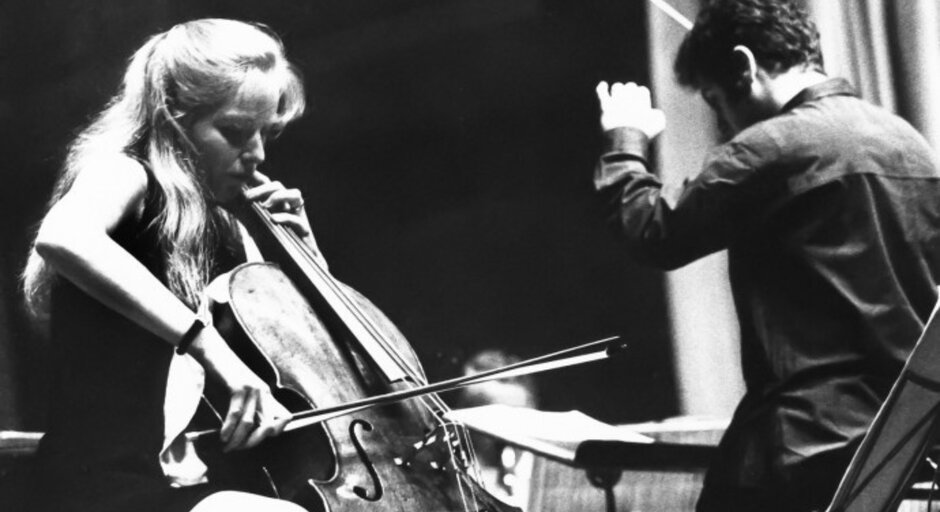
Elgar’s Cello Concerto in E minor: Jacqueline Du Pré, Cellist with Daniel Barenboim Conducting the London Philharmonic

Edward Elgar’s Cello Concerto in E minor, his last notable work, is a cornerstone of the solo cello repertoire. Elgar composed it in the aftermath of the First World War, when his music had already gone out of fashion with the concert-going public. The piece didn’t achieve wide popularity until the 1960s, when a recording by Jacqueline du Pré caught the public imagination and became a bestseller. This film recording is from a 1967 program from the BBC.

du pre, barenboim
Jacqueline Du Pré (1945-1987) and her husband Daniel Barenboim—the most romantic, tragic musical love story of my generation


FULL DRESS // A gifted mesmerist—a sinister composer—a naive young conductor from the north…inspired by an episode from the life of Rachmaninoff // DOWNLOAD FREE BOOK POSTER

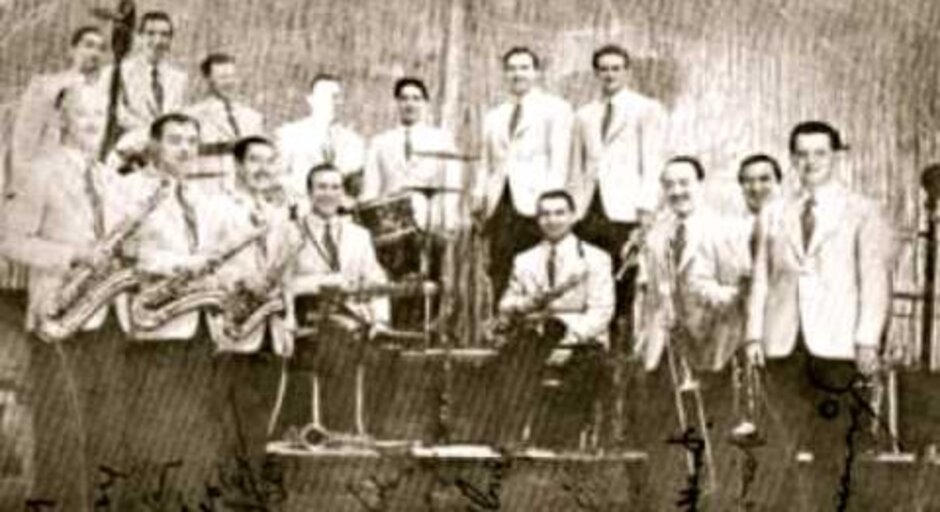
Pete Townshend’s Dad Cliff and The Squadronaires Perform “Rock’n’Roll Boogie”, 1956

From November 2018: Who I Am: A Memoir by English progressive rock composer Pete Townshend of the Who (Harper, 2012).

The Squadronaires.jpgThe Squadronaires, “Rock’n’Roll Boogie”, 1956.

“In 1945 popular music had a serious purpose: to defy postwar depression and revitalize the romantic and hopeful aspirations of an exhausted people. My infancy was steeped in awareness of the mystery and romance of my father’s music, which was so important to him and Mum that it seemed the centre of the universe. There was laughter and optimism: the war was over. The music Dad played was called Swing. It was what people wanted to hear. I was there. …”

“As the son of a clarinettist and saxophonist in the Squadronaires, the prototypical British Swing band, I had been nourished by my love for that music, a love I would betray for a new passion: rock‘n’roll, the music that came to destroy it.”


FULL DRESS // A gifted mesmerist—a sinister composer—a naive young conductor from the north…inspired by an episode from the life of Rachmaninoff // DOWNLOAD FREE BOOK POSTER