This is what the greatest film composer of the 20th century looks like conducting the London Symphony Orchestra in the Royal Albert Hall (2:24). From Alfred Hitchcock’s The Man Who Knew Too Much (Paramount, 1956). This is a chorale entitled “The Storm Clouds Cantata” arranged by Herrmann and composed by Australian Arthur Benjamin specifically for the movie.
On this day, 25 May, 2018—what would have been my dad’s 113th birthday—I’d like to remember one of the few times he and I actually went to the movies together. This time we went to see, first-run, the warrior epic Taras Bulba (United Artists, 1962; screenplay by blacklisted writer Waldo Salt) on the recommendation of my girlfriend Tamara’s mother, who emigrated from Lviv after the war and was a booster for All Things Ukrainian. (A survivor of Axis bombings—she had that in common with my mom.) Our Minneapolis neighborhood was made up mostly of first- and second-generation Ukrainians, Italians, Guatemalans, Poles, Irish, and of course Filipinos, Catholics all. Of course the Lutherans surrounded us but being mostly Swedes, they had their own heritage too. And at Christmas, all that pepparkakor…num.
As for Franz Waxman’s “Ride of the Cossacks”, there’s a rather thrilling ostinato toward the end.
A pretty inspired choice for your Proms, John. It isn’t played too often (there’s more Ben Hur out there than Taras Bulba); my guess is because most conductors just can’t hear the “kinetic” qualities in this piece of music or they interpret it as more “memetic”, and so what comes out when they conduct sounds just awful, artificial… But you, my bonny lad, got it right. I’m starting to recognize your ear more and more, and it’s a wondrous thing.
Wishing you two clean and ready handkerchiefs every concert day, John.
John’s striving for “The Hollywood Sound” may be a new thing for his popular audience in England, but over here it’s been part of our musical history since before the Second World War. In 1939 violinist Felix Slatkin and his wife, cellist Eleanor Aller Slatkin, founded the Hollywood String Quartet. Their uniquely American style of playing strings quickly won the HSQ recognition and praise from critics around the world when they essayed works from the Classic Repertoire.
Said the Gramophone Classical Music Guide of their 1951 recording of Arnold Schoenberg‘s piece: “This was the first ever recording of ‘Verklärte Nacht‘ in its original sextet form and it remains unsurpassed.”
In the liner notes of one of their other recordings, Paul Shure remembered: “Dynamics were a very big part of our work. Our discussions were always about dynamics and a little bit about tempi, and nothing else. We played with vibrato except where there was a particular effect to be had—no dead left hands were allowed.” This sounds so similar to what JWO concertmaster John Mills said in the web series Sarah’s Music: “John asks us, the strings, to play with so much vibrato that people’s family photos should fall off the TV sets. We’re effectively trying to recreate the sound of the studio orchestra.”
The Queen of Broadway Bernadette Peters entices conductor John Mauceri with her many, many assets, courtesy of Leonard Bernstein and the great lyric team of Adolph Green and Betty Comden. “I Can Cook, Too” from On the Town. Fun starts here at 4:45.
I'm a pot of joy for a hungry boy,
Baby, I'm cookin' with gas.
Oh, I'm a gumdrop,
A sweet lollipop,
A brook trout right out of the brook,
And what's more, baby, I can cook!
Above Peters and Mauceri: Nancy Walker from the original Broadway cast sings this showstopping number.
Steiner’s suite (written score here) is clearly patched together from various melodies in the film Casablanca, including the Nazi drinking song “Die Wacht am Rhein” (Schneckenburger/Wilhelm, 1853); “La Marseillaise” (de Lisle, 1792); and, of course, “As Time Goes By” (Herman Hupfeld, 1931). And is that a little of Steiner’s own King Kong? The Warner Bros Pictures music theme at the beginning is entirely Steiner’s composition. (Most of the) orchestration by Steiner’s frequent collaborator, Murray Cutter.
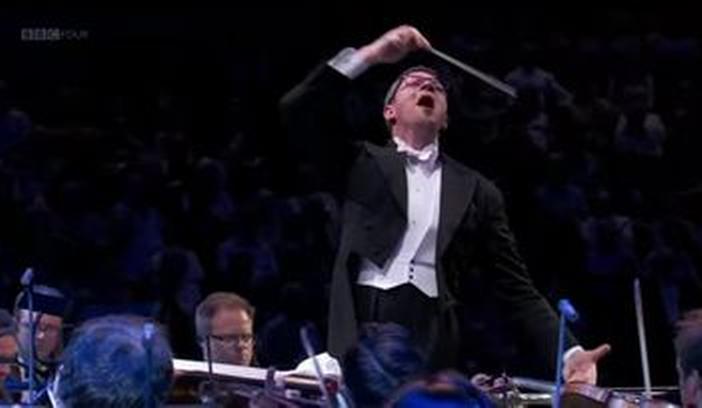
I feel a raging, yearning, unchaste tenderness for my beloved John Wilson when he conducts schmaltzy pieces like this, which sort of makes up, as I say, for the times his fatuous pronouncements exasperate me. Above John: Steiner’s Casablanca Suite.
Glück, das mir verblieb,
rück zu mir, mein treues Lieb.
Abend sinkt im Hag
bist mir Licht und Tag.
Bange pochet Herz an Herz
Hoffnung schwingt sich himmelwärts.

Wie wahr, ein traurig Lied.
Das Lied vom treuen Lieb,
das sterben muss.

Ich kenne das Lied.
Ich hört es oft in jungen,
in schöneren Tagen.
Es hat noch eine Strophe—
weiß ich sie noch?

Naht auch Sorge trüb,
rück zu mir, mein treues Lieb.
Neig dein blaß Gesicht
Sterben trennt uns nicht.
Mußt du einmal von mir gehn,
glaub, es gibt ein Auferstehn.
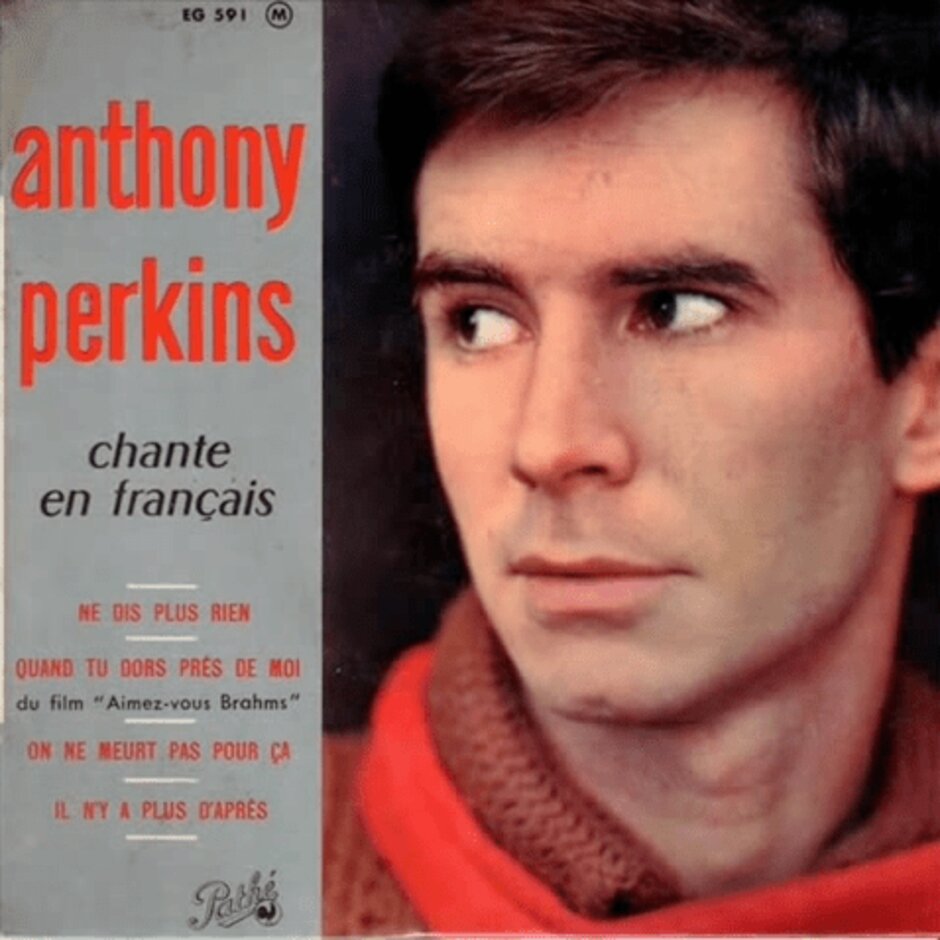
Straight, gay, sexually messed up by his mother, I still had a major crush on Anthony Perkins when I was a girl; no time more than when he was cast as the fumbling young lover of soignee Parisienne Ingrid Bergman in Goodbye Again (United Artists, 1961) the film version of Francoise Sagan’s novel Aimez-vous Brahms? (Though that he turned her down in real life just kills me.)
“Quand Tu Dors” is, of course, taken from the 3rd movement of Johannes Brahms’s Third Symphony, and you’ll recognize it when you hear it. That’s Herbert Von Karajan and the Berlin Philharmonic.
In 1944, Frank Loesser wrote “Baby, It’s Cold Outside” for his wife, Lynn Garland, and himself (Loesser often introduced himself as the “evil of two Loessers”) to sing at their housewarming party at the Navarro Hotel in New York. They sang the song to indicate to guests that it was time to leave.
Garland wrote that after the first performance, “We become instant parlor room stars. We got invited to all the best parties for years on the basis of ‘Baby’. It was our ticket to caviar and truffles. Parties were built around our being the closing act.” In 1948, after years of performing the song, Loesser sold it to MGM for the 1949 romantic comedy Neptune’s Daughter. Garland was furious. She wrote, “I felt as betrayed as if I’d caught him in bed with another woman.”
This picture’s from the 90s. WhenIlivedhereinthe70s, the boutique was a kosher grocery that stayed open till 11pm. Above: Ella!
From the 1925 revue Garrick Gaieties. The song was introduced in the Gaieties by Sterling Holloway (eventually a Rocky andBullwinkle stalwart) and June Cochran.
No Strings opened on Broadway in 1962 and ran for 580 performances. Rodgers got the idea for casting a black actress in the star role after seeing model-turned-actress Diahann Carroll on The Tonight Show, feeling that the casting spoke for itself and any specific references to race in the play were unnecessary. “Rather than shrinking from the issue of race,” said Rodgers, “such an approach would demonstrate our respect for the audience’s ability to accept our theme free from rhetoric or sermons.” The script was by Samuel A. Taylor, who wrote the play Sabrina Fair and adapted the book D’entre les morts by Boileau-Narcejac for the Hitchcock film, Vertigo.
Considered too risky by Broadway investors, the first production was almost entirely financed by Rodgers himself. Following out-of-town engagements in Detroit, Toronto, Cleveland and New Haven, No Strings finally opened at the 54th Street Theater on 15 March 1962. It was generally welcomed by the New York critics; at season’s end, it was nominated for nine Tony Awards, winning three: for Joe Layton as choreographer, for Diahann Carroll as Best Actress in a Musical, and for Rodgers for his score.
Upon seeing the 2003 No Strings revival at Encores! The New York Times‘s Ben Brantley wrote: “The revelation of No Strings is that one of songwriting’s greatest collaborators had it in him to fly high on his own. And fly high he did. No Strings deserves to be better known than it is. The music is youthful and jazzy, almost a throwback to the Rodgers of Rodgers & Hart. The lyrics range, frankly, from serviceable to as good as they get. The relationship between the two leading characters at the heart of this musical is in the fine tradition of the attracting opposites found in all the Rodgers & Hammerstein shows, and the emotional stakes are as real today as they were in 1962.”
As the title hints, there’s no string section in this pit. In fact there’s no pit: The musicians are all on stage, playing and occasionally making appearances in the story. The orchestrator Ralph Burns eventually did record an orchestration with strings for his own band, but I haven’t heard it.
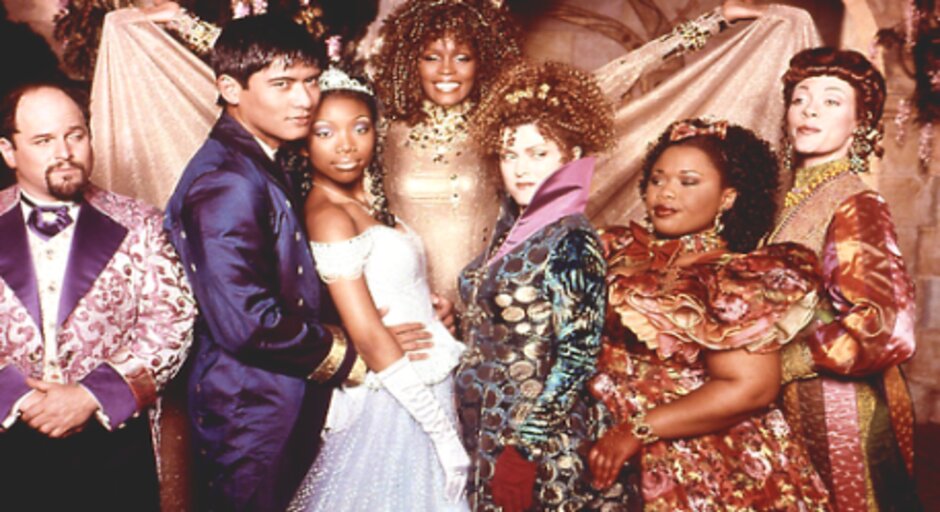
Not my favorite version of all the R&H Cinderellas (this is my favorite version—I mean come on, it’s Julie Andrews) but this one boasts, as I mentioned, the gorgeous pinoy Paolo Montalban singing “The Sweetest Sounds” from No Strings as well as the Queen of Broadway, Bernadette Peters, singing great another interpolated Rodgers song, “Falling in Love with Love“. Nifty score arrangement by Doug Besterman.
The sweetest sounds I'll ever hear
Are still inside my head
The kindest words I'll ever know
Are waiting to be said
Music by Felipe de Leon, libretto by Guillermo Tolentino. Noli Me Tangere is based on Dr. Jose Rizal’s 1887 classic novel of the same name. It follows the story of Juan Crisóstomo Ibarra y Magsalin, who returns home to the Philippines after pursuing scholarly studies in Europe. He plans to open a school and marry his sweetheart, Maria Clara (where we get the name of the dress I’d love to make and wear again), but Padre Damaso, arch-enemy of the Ibarras, sets out to thwart Crisostomo’s plans, creating the dramatic—and very operatic—storyline of forbidden love, betrayal, and revenge. “Awit ng Gabi ni Sisa” is one of the great soprano mad scenes in opera.
From the 2011 University of the Philippines production. Info on Cebuana coloratura Mendezona can be found at her website here.
A popular song by Steve Allen published in 1956, “This Could Be the Start of Something Big“. Originally, the song was written as part of the score of The Bachelor, a 1954 television musical production notable for the early appearances of legendary dancer Carol Haney and Jayne Mansfield (Mariska “SVU” Hargitay’s mom). In 1956 “This Could Be the Start” replaced the original opening theme to Allen’s NBC talk show, Tonight Starring Steve Allen, until Allen left the show in 1957 to be replaced by Jack Paar (and “Everything’s Coming Up Roses“). It became something of a personal theme song for him, being used as the opening to his other talk/variety shows, as well as during the opening of both the CBS and syndicated versions of I’ve Got a Secret during his time as host.

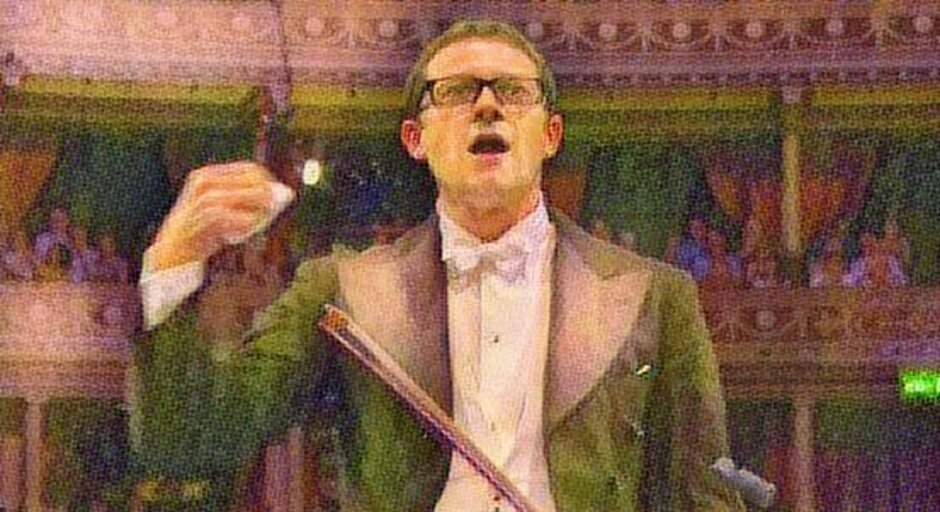 Wishing you two clean and ready handkerchiefs every concert day, John.
 Above Peters and Mauceri: Nancy Walker from the original Broadway cast sings

 This picture’s from the 90s. When I lived here in the 70s, the boutique was a kosher grocery that stayed open till 11pm. Above: Ella!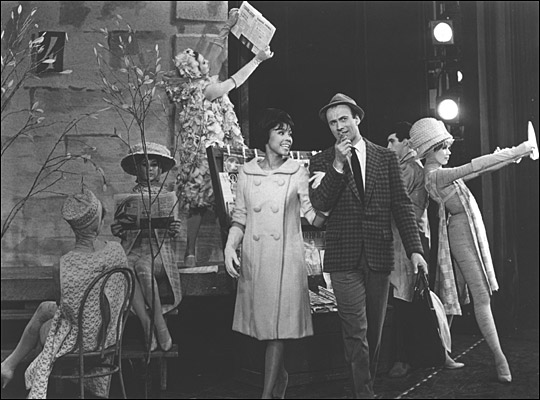


 "I'll Be Dead Before You Break My Heart"