How cultured is Susie Myerson? In episode 2 of season 2 we see Susie explore the strange new world (to her) that is the Weissman apartment, getting into the bathroom cabinet and using Rose’s fancy soap; getting into Midge’s drawers and secret stash (she finds the tape measure and uses it on herself, plus she finds the jointLenny Bruce gave Midge and smokes it); reading the kids’ books (she cries over Charlotte’s Web)…and when she encounters Abe’s baby grand, what does she do? Not only does she play it, she tunes it! Susie plays the very familiar rondo from Beethoven’s Piano Sonata in C minor, the movement of a piece that once upon a time was the mark of a cultured person (back when cultured people were encouraged to be able to play, at least, a little piano).
Does this mean Susie can read music? Or did she pick up this passage by ear? Are these 8 bars possibly the only piece of piano work she knows?
The other piece of similar fame, by the way, isMozart’s Sonata K545, which toddler Esther plays in episode 7 of season 5. I mention it in another posting.
But back to Susie and a couple more musical observations. She obviously has a good ear. She chided Jackie at the Gaslight in another episode for his lousy musical taste (ocarinas!?). She is enchanted by the flute.
So what was Susie’s major at Pembroke? And on what basis did she get her scholarship? She doesn’t strike me as a music student. In season 3 she avers that she never heard of Strindberg, and I believe her—yet as a sophomore she knew enough of theater to dress for a costume party as Lady Macbeth. Now that was an interesting choice. Did Hedy her lover teach her about The Scottish Play, as she “taught” Gordon her husband about Shirley Jackson’s “The Lottery”?
(Remember, they got into a fight after this party. Was Susie’s costume actually directed at Hedy?)
Pembroke had and has a strong showing in Liberal Arts (a former president of Lincoln Center is an alumna) and it’s possible she went in with an undeclared major, leaving her with enough free time to hang out in the post-war beatnik clubs of Providence.
To sum up, however “cultured” or “uncultured”, Susie is and was a thoroughly real-to-life fascinating and attractive woman. I see in her what Hedy saw.
And as a reward for those of you who read this to the end, here’s Valentina Lisitsa playing that Beethoven sonata.
Nobody learns Latin in school anymore, says Cleese. But God, this is a funny exchange and still resonates with anyone who ever studied with a maniacally strict grammarian.
I am sitting beside the shade of my favorite Brit and Number One Language Guy, fellow state-educated Catholic Anthony Burgess (a sourpuss in life, a bit of a giggle in death), and we’re both enjoying a hearty snort over this scene. But John Cleese is cutting it out of the musical!
Centurion: What’s this then? “Romanes eunt domus”? People called Romanes they go to the house? Brian: It says, “Romans go home!” Centurion: No it doesn’t. What’s Latin for Roman? Come on! Brian: Romanus? Centurion: Goes like? Brian: Annus? Centurion: Vocative plural of annus is— Brian: Anni? Centurion: Romani. (corrects graffito) “Eunt”? What is “eunt”? Brian: Go! Centurion: Conjugate the verb “to go”. Brian: Uh…”ire”, uh…”eo”…”it”…”imus”…”itis”…”eunt”… Centurion: So “eunt” is—? Brian: Ah, uh, third person plural…uh, present indicative. Uh, “they go”. Centurion: (pulling him up by his hair) But “Romans go home” is an order, so you must use the…? Brian: (howls in pain) The imperative! Centurion: Which is—? Brian: Um—”I”! “I”! Centurion: How many Romans? Brian: Aaah! “I”! Plural. Plural. “Ite”. “Ite”. Centurion: “Ite”. (correcting graffito) “Domus”? Nominative? (reads) “Go home”? This is motion towards. Isn’t it, boy? (pulls out sword and puts it to Brian’s throat) Brian: (shrieking) Aaah, dative, sir! No, not dative! Not the dative, sir! No! Ah! Aaah, the…accusative! Accusative!! Aah!!! “Domum”, sir! “Ad domum”! Centurion: Except that “domus” takes the…? Brian: The locative, sir! Centurion: Which is…? Brian: “Domum”. Centurion: “Domum”. (corrects graffito) “-um”. Understand? Brian: Yes, sir. Centurion: Now, write it out a hundred times. Brian: Yes, sir. Thank you, sir. Hail Caesar, sir. Centurion: Hail Caesar. If it’s not done by sunrise, I’ll cut your balls off.
Here’s another new film clip on my YT page, a mashup of Steve’s one and only featured film appearance (in the movie Crashing, written and directed by Gary Walkow, 2007) and the Swingle Singers rendition of Mozart’s Turkish March. Last time I looked, this vid made it into Funny Or Die.
To all the randy fellow fans of The Marvelous Mrs Maisel (Amazon, 2017-2023): Are you ‘shipping this couple so bad like me? Here, by the way, are the two essentials for getting to know the real Lenny:
Lenny Bruce at Carnegie Hall (full audio, February 1961) THE VERY CONCERT RECREATED IN SEASON 4 EPISODE 8 by the wonderful and deeply sexy Luke Kirby (whose portrayal, by the way, won the approval of Bruce’s daughter Kitty) [https://bit.ly/lennybruce2]
Above Rachel Brosnahan playing struggling stand-up comic Midge Maisel and Luke Kirby portraying the once long ago very real Lenny Bruce: Real Lenny performing the actual concert at Carnegie Hall, 1961.
Price’s infatuation intensified, regarding Coral as “the Great Barrier Reef—beautiful, exotic and dangerous. I was like a bird dog!”
“I remember he electrocuted me on my birthday,” Browne recalled when she performed her death scene with Price. Ironically her acting isn’t very good in this scene because she doesn’t look even remotely terrified of her murderer. Instead, she prefers gazing into his eyes instead of screaming in fear.
After the day’s filming, Price once again approached Diana Rigg for advice. “I said to Diana, ‘I understand it’s Ms Browne’s birthday. What could I get her?’ And Diana said, ‘Well, you know what she wants. You!”
And from then on,” added Rigg, “they never looked back. I think they fell into bed and I think it was a wildly sexual relationship. Incredibly sexual. I remember Coral saying that they worked out their combined ages were 120-something, and when you saw these absolutely shagged out people on the set, it was really quite funny. And that was the start of it.”
Another doddle for the weekend. Mason’s book, The Cats In Our Lives, which he wrote and illustrated, was open on display on my boss Mamoulian‘s library lectern the day I started to work for him.
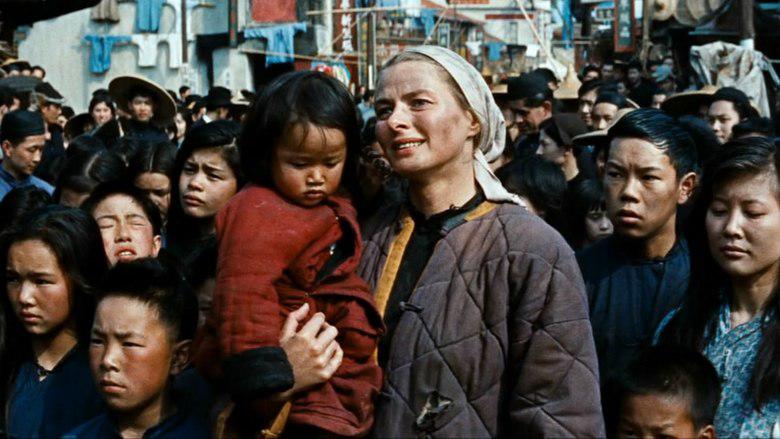
There must be something in the English character that enables the better artists among them to depict situations of unassuming, steady bravery with superior deftness, which is probably why their World War II pictures are better than ours. One of them, The Inn of the Sixth Happiness (20th Century Fox, 1958), doesn’t technically qualify either as a UK picture—Fox produced it; or as a WWII picture—it’s set during the Sino-Japanese War of 1938; but it does have unarmed peasantry scattering to the hills under Japanese gunfire, which is a theme that ran through my mother’s life starting with Pearl Harbor and ending in March, 1945 when American troops marched through the rubble-strewn streets of Manila, hunky victorious good guys. My mother’s first teenage romance was with a private in the 31st Infantry Regiment named Kelly, come to think of it.
Now, when I refer to better artists of English character I don’t mean the film’s producer, director, writer (American, American, American), or stars (Swedish, Austrian). But it’s because of: one, the true-life heroine the story was based on; two, the location shooting; three, the non-lead casting; and four and most importantly, the music, that I think of Sixth Happiness as an English film. The true-life heroine of the story was English-born, not to mention the film has Snowdonia standing in for the daunting terrain around Yangcheng and pretty near the entire Chinese heritage population of Liverpool standing in for Chinese nationals, with supporting roles portrayed by stalwarts of UK stage and screen. This is the first thing I ever saw Burt Kwouk in.
But to the music. This is not Malcolm Arnold’s finest score—Bridge On the River Kwai (Columbia, 1957) really is a superior composition—but it rates higher with me becauuuse, you guessed it, The Inn of the Sixth Happiness has a gorgeous Love Theme, which you can hear below as the Royal Academy of Music performed the suite back in 2014. You’ll also hear the bright, high fanfare brass that Arnold used in a few other of his movies, River Kwai and the one below, for examples. Also, I’m starting to develop a theory to satisfy myself that certain intervals, played with conviction, are the real sinews of English music: they make for that sound of “rightness”, which you can take one way or another, depending on the mood—or your mood, for that matter. Sixth Happiness has plenty of those.
Besides the satisfying fanfare brass, Sixth Happiness shares with the satirical The Belles of St Trinian’s (British Lion, 1954) a bit in the score where there’s a song meant to be sung by children—in Sixth Happiness it’s “This Old Man”; in St Trinian’s it’s the school’s hilarious “Battle Cry”. I’m not posting the lyrics here, so click on the link in red to listen to those cheerfully bloodthirsty oaths. But can you imagine what a liberating tonic this ferocious roar from the depths of The Untamed Female Soul was to a little girl in the Catholic part of Minneapolis, watching this on Saturday matinee TV (a tonic, incidentally, I would not imbibe again till I heard Bernadine Dorhn mouth off a few years later)—?
Here’s the BBCCO doing the St Trinian’s suite at the Proms (Timothy West, narrator) bringing back almost all the familiar, funny-music leitmotifs to smile at, like George Cole’s character’s “Flash Harry”, a loping, rattling kind of tune (although lamentably there’s no sign of Joyce Grenfell’s scurrying “Ruby Gates”) before returning to that ghoulish school pageant march, lyrics I believe provided by Arnold himself.
In contrast, “This Old Man” is meant to be a “found” song, purportedly a children’s counting song, heard on the playground since the 19th century, and in a way that’s right, as the first time I heard “This Old Man” was on the playground—but only because it had become a hit on US radio first in 1959. It’s still impossible for me not to hear “This Old Man” and not think of the climactic scene in Sixth Happiness: the hundred children crossing the Yellow River into safe territory, ragged and exhausted but alive, marching into the unoccupied city to cheering crowds, loudly singing this song. Invariably it brings tears to my eyes, immigrants’ daughter that I am, and I remember the first time I watched—and heard—this film on TV with my mother, my mind nearly forming the question I never asked her, not then, not ever: “What happened to you in the war, mom?” Because the music was so ravishing, the love story was so satisfying, and my mother just wanted to enjoy an Ingrid Bergman film.
The screenshot below doesn’t show where the laughs begin. The screenshot below shows the setup for the BIG REVEAL—leading to the longest studio laugh on American TV.
If you remember viewing it first-run, as I did, you will recall that thrill of being in on the “joke”. And you will most definitely know that—as perfectly and wittily as it is tied to its time and place—this joke will never land ever, ever again.
A few notes on episode 1, season 3: This was filmed just before the classic MI:OS, when G Morris was making the transition from LA disc jockey to actor. M Dillard was already a familiar face on television at this time. The episode was written by the comedy team of B Persky and S Denoff, who went on to create the TV show That Girl.
Earle Hagen’s Dick Van Dyke and Lionel Newman(!)’s Dobie Gillis themes have got to be in my opinion the swingiest, finger-poppingest themes in the history of TV, topping even Mancini’s Peter Gunn, because of their superior melody lines. The version above is just okay, but I would looove to hear the snap and slide my beloved John Wilsonwould put into either of these short pieces like he did with his 2006 Grammy-nominated “Beyond the Sea“. Quel dommage, he’s on to finer things now, my bonny is.
By the way, I owe my interest in swing to London-based composer / Royal College alum (1991-93) / YT maven David Bruce—in particular his lecture on swing theory, which set my head back on straight. Thanks, David!
From MusicalCriticism.com, 2010: Although the BBC Proms are renowned for bringing many of the world’s greatest classical artists to London for a two-month-long festival, the concert that drew the most attention last year was—quite unexpectedly—a programme of songs from the classic MGM musicals of the 1930s, ’40s and ’50s. The man behind it all was John Wilson, the Newcastle[sic]-born conductor who has spent years reconstructing many of these great scores—which include The Wizard of Oz, Singin’ in the Rain and An American in Paris—so that they can be performed again in their original orchestrations.
Yet Wilson has many strings to his bow. He’s the Principal Conductor of the Northern Sinfonia, which is based at Gateshead‘s gorgeous modern concert hall, The Sage; he regularly conducts the Royal Liverpool Philharmonic, City of Birmingham Symphony and Philharmonia orchestras; he’s a regular on Friday Night is Music Night; he orchestrated Sir Richard Rodney Bennett’s score for a BBC production of Gormenghast, for which he won the Ivor Novello Award for Best Film Score; and he was in charge of the music for Beyond the Sea, Kevin Spacey’s biopic about Bobby Darin.
Wilson’s current engagement is a new departure: he’s making his debut with Opera North in a new production of Gilbert and Sullivan’s little-known Ruddigore. It’s the first time he’s performed with an opera company, but it’s clear that he’s a theatre animal, and the critics have been raving about the production—Tim Ashley in The Guardian has even given it five stars out of five, and described it as “one of the great Gilbert and Sullivan stagings” I caught up with Wilson in between performances to ask him about his approach to the piece, and also about his future plans.
“I grew up with it, and I’ve always loved it,” says the conductor when I ask him why he’s now conducting Gilbert and Sullivan. “I did a lot of it when I was a kid, with local amateur groups. I’ve always thought of it as the starting point of modern American musical theatre. You’d have to have a wooden heart not to be affected by Sullivan’s music.”
We all know the big G&S hits like The Mikado and The Pirates of Penzance—so why is Ruddigore less well-known? “It’s tricky to stage,” Wilson replies. “The ghost scene in the second act didn’t work on the first night of the original production. Also, the first act is very sombre in a lot of respects. But I think it’s got some of Sullivan’s best music in it. Just after The Mikado, Gilbert and Sullivan were at the height of their powers. The ghost music is some of Sullivan’s best music for the theatre, in my opinion. And Mad Margaret’s aria is one of the most ravishing things he ever wrote.
“Opera North’s production has been very careful to avoid the accretions that have occurred over the years—that’s the case both for Jo Davies the director, and I. We’ve gone back to the original text, and I think it comes up fresh as paint.”
Why has the production been such a success? “We’ve had absolute faith in the text. One of the earliest questions people kept asking was, ‘Who have you got to update the book?’ And Jo Davies said she would no sooner get someone in to rewrite Gilbert than she would to rewrite Oscar Wilde. It just needs to be well directed, well sung and well played.
“We’ve spent a lot of time in rehearsals on the text. People think of Oklahoma! as the first musical in which the songs propel the narrative, but all the way through Ruddigore the songs are completely interwoven with the drama. And I think that a crucial part of the success of this production has been getting the text across to the audience. That’s helped us to communicate the clarity of thought behind the text, too.”
What’s the challenge of conducting this piece? “It’s not straightforward in any way, shape or form. It’s an incredibly tricky piece. Apart from the technical things like keeping the robust quality of the music in a slow 6/8, the most important and difficult thing is making sure that every single word of the text is heard. Everything has to be spot on; it’s not just a case of getting the tempi and balance right. A couple of the reviews hinted that they thought the patter songs were a notch too slow, but then in the same breath they commented that you could hear every word of them. That might be because we’ve hit on tempi that allow us to convey the text!
“There again, in our favour with Sullivan, everything’s beautifully scored. You can always hear the orchestra—he never overscores. I think that’s the crucial thing. And the lightness of touch, obviously. It needs to be well articulated and well defined, and you need to get the sparkle into it.”
I ask Wilson whether doing a G&S piece with an opera company results in a more ‘operatic’ performance than might otherwise be the case. “I think what you have to aim for is a sort of middle ground,” he responds. “A lot of these roles weren’t written for opera singers—they were meant for what we might call ‘musical comedians’. We’ve tried to sing it legitimately, but in certain of the numbers, the text takes precedence over the music. That’s something we’ve worked on together. The dramatic impact of the song mustn’t suffer just because you want to show off your lyric baritone. I have to say, the cast is so young and talented, as well as very flexible. They’ve risen to all of these challenges, and we’ve not had any stylistic issues. They’ve taken it all on board!
“It’s my first time working with an opera company—I’ve done musicals all my life, and concert performances, but I’ve never done an operatic piece in the theatre. It feels like I’m suddenly working in 3D rather than 2D!” He also says he enjoys going to the opera enormously, and ‘skips off to a dress rehearsal’ whenever he can. Would he come back? “If they invite me, sure thing!”
John Wilson’s portfolio involves orchestration, arranging and conducting. What does he think of as his main activity? “I enjoy doing all music—I’ve never made the kinds of divisions that many people seem to have to make. I’m doing Szymanowski and Rachmaninov in the next couple of months, and then I’m doing Rodgers and Hammerstein with Kim Criswell and Brent Barrett with the CBSO.
“If I had to fill in my profession on a form, I would put ‘conductor’. But I’m a musician first and foremost. It’s a bit like having several rooms in the same house: I’ve always written arrangements and reconstructions, and I think that’s a service, really, for a lot of this music because it wouldn’t exist otherwise. It’s music that I love: the MGM music that I did at the Proms last year [2009] is music that I’ve loved all my life. It’s a labour of love.”
And why was that Prom quite so successful? “It’s a combination of a few things, I think. People are familiar with the general outline of the repertoire—they know the tunes and they’ve seen the films, so they’re aware of it. And it worked perfectly in that setting. It was scheduled on the television on a Saturday night at a time when people were in, and they stayed tuned in. We had about 80,000 letters in total after the concert, from people all over the country.
“The thing that particularly came across was how good the orchestra was, and how much the players seemed to be enjoying themselves. It was a very serious orchestra, filled with star players from all over Britain and Europe. I think that such a virtuoso orchestra playing music which was written for the finest musicians in the world at the time could never not have an impact. The fact that it had a bigger impact than I thought it might was a pleasant surprise. I received fan letters every day for the rest of the year about it, and I’m still receiving them.”
The public is clearly dying to hear more of both this repertoire and these performers, and evidently Wilson is only too happy to oblige. “We have a UK tour with my orchestra in November, which I’m looking forward to. We want to make recordings, and we have plans for that. We’ve also got invitations to festivals for the rest of the year, so we’re certainly capitalising on it.”
Wilson has also just become co-Principal Conductor of the Northern Sinfonia in Gateshead. ‘They’ve divided the post up into several parts, with Thomas Zehetmair as the Music Director. In addition to light music concerts, I’ll be doing programmes of straightforward symphonic repertoire. There’s an audience for all kinds of music up there, so I want to put various aspects of my talents to use.”
Last summer, the Sinfonia put on a magnificent concert of My Fair Lady starring the veteran actor Anthony Andrews as Henry Higgins. Happily, it’s the start of more to come: “We did two performances—an afternoon and an evening—and we played the entire score from beginning to end, with ne’er a cut in sight. It’s part of a series we’ve started up there, in which we do semi-staged performances of classic musicals where we play every note of the score in the original orchestration. We’re doing Show Boat in July, and the plan is to do one every year.”
But in spite of Wilson’s growing success and fame, music is a lifelong passion rather than the means for becoming a celebrity. “I’m not terribly ambitious. I’ve always loved music and I was very lucky to be encouraged as a kid. I didn’t have any form of training until I was in my teens, but my mother gave me a very basic introduction to the piano, and I was encouraged by my music teachers at school. I started playing for amateur theatricals, and then someone became sick and couldn’t conduct, so I did it. I did some pantomimes, where you have to do orchestrations for the forces at your disposal. It all started from there, really!
“I then went to the Royal College of Music as a percussionist, because that’s what I studied at school, then I changed to composition and conducting. I formed an orchestra while I was at college, and that was the beginning of forming the John Wilson Orchestra. By that time, I’d done quite a lot of conducting in the north, doing amateur shows and G&S. Then I studied conducting at college, and I’d always had a genuine passion for light music. So whilst I might have been pigeonholed for several years as a conductor of light music, it did mean I was pigeonholed for something, and that gave me the chance to have a career.“
Last November, he closed the BBC Concert Orchestra’s year-long celebration of British light music with a complete performance of Johnny Mercer and Andre Previn’s The Good Companions that was performed in Watford and broadcast on Radio 3. “I love that piece!” he enthuses. “It was a real labour of love for me—it took me a year to put it back together. In 1974, the show was re-scored for amateur uses. They took all the lovely woodwind doubles out, as well as one of the trumpet parts, and they added violas. I knew that this wasn’t the original orchestration because of a note in the vocal score, and because there are things you can hear on the original cast album that weren’t in the score that was available. I spent forever trying to track down the original full scores, and it seemed like they didn’t exist.
“When I eventually received in the post a big box of materials marked ‘Original West End Parts’, I couldn’t believe my luck. And they were about 80% complete. So I spent a year making an edition from them, filling in the gaps and making sure that it was immaculately laid out. We put it together in an incredibly short space of time, and it didn’t turn out too badly—I was quite pleased with it.”
Any plans to do more? “I’m doing one of the Ivor Novello shows next year. I don’t know which one, but I’m going to restore one of them. Again, I’m hoping that something of Glamorous Night or The Dancing Years survives in its original orchestration. They were all simplified for the road companies, and one wants to do the originals. That was the great thing about The Good Companions—you had Angela Morley and Herb Spencer doing the orchestrations, and they were geniuses.”
When I ask Wilson what his favourite repertoire is, he responds: “My favourite thing is the variety—I’d just get bored if I did the same thing all the time. Of course, I love all of the 1950s Hollywood studio orchestra stuff, because the execution is so impressive, as well as the writing and the construction of it all. You have to take your hat off to Alfred Newman and the 20th Century Fox studio orchestra. You’re never going to get any better than that—ever.
Can he really have no ambitions at all? “I have lots of personal ambitions—I’d love to increase my knowledge and capabilities—but in terms of “career”, I just tend to sit and pray that the phone will ring! But I’m very proactive about creating things that I want to do—I’m doing the whole of Singin’ in the Rain at the Royal Festival Hall in November with the Philharmonia. I do it simply because I love the music. My success, such as it is, is a result of wanting to recreate great pieces of music that have been lost.”
To close, we talk about what he would like to be remembered for: “I hope I live a bit longer first! But if I had any legacy, it would be for making light music the serious business that it used to be.” ~Dominic McHugh
Here’s a sweet little doddle while I work on a few involved postings (not all of them to do with my bonny John Wilson). Cabin Pressure is one of the funniest, most cleverly-written work sitcoms on BBC Radio and it doesn’t hurt that two stage/screen veterans with the most gorgeous voices and perfect comedic delivery are top of the compact cast list. I’m sharing this episode because it starts off with a demanding conductor and a paranoid bassoonist on board the tiny chartered airplane—and as always, of course, Glinka’s overture to the opera Ruslan and Ludmila.
Stephanie Cole, creator John Finnemore, Roger Allam, and Benedict Cumberbatch perform Cabin Pressure for a live BBC studio audience.
The audience didn’t even need the words to get the humor in this bit, so well-known is this song from The King and I (Broadway 1951, film 1956). From somewhere in the mid-50s on Jack’s TV show.
Season 1, episode 15, 1982. Said Donna Bowman of the AV Club: “You’ll Never Walk Alone” [in the episode] took me totally aback. I can’t think of very many sitcom moments that hit that exact tone. I kept waiting for the punchline, and there’s no doubt that we’re intended to smile at the parade of patrons mumbling along under Diane’s leadership, but Carla’s reception of the gesture transforms it into the sincere expression of support that was intended. When we see her continue up the stairs, the camera following her through the window, it’s a moment that reassures the audience in a very specific way. We know Carla’s children’s welfare is actually really important, the moment says. Carla’s, too. These people are trying to do a good thing. We’re going to let them do it. You can imagine a million jokes that would undercut that message for the sake of a laugh. But they don’t come. It’s like a Good Housekeeping seal of approval for our emotions: “Invest with confidence.”


 Above Rachel Brosnahan playing struggling stand-up comic Midge Maisel and Luke Kirby portraying the once long ago very real Lenny Bruce: Real Lenny performing the actual concert
 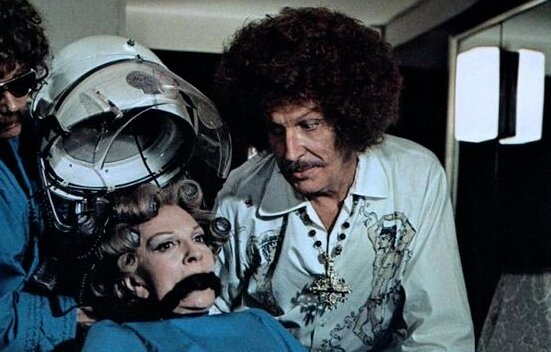 Above Diana Rigg, Coral Browne and Vincent Price:
 Above: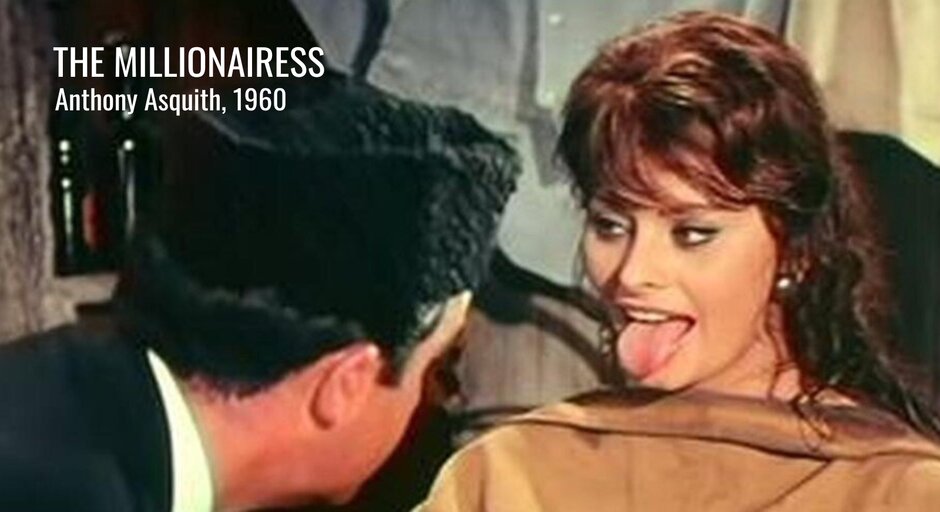
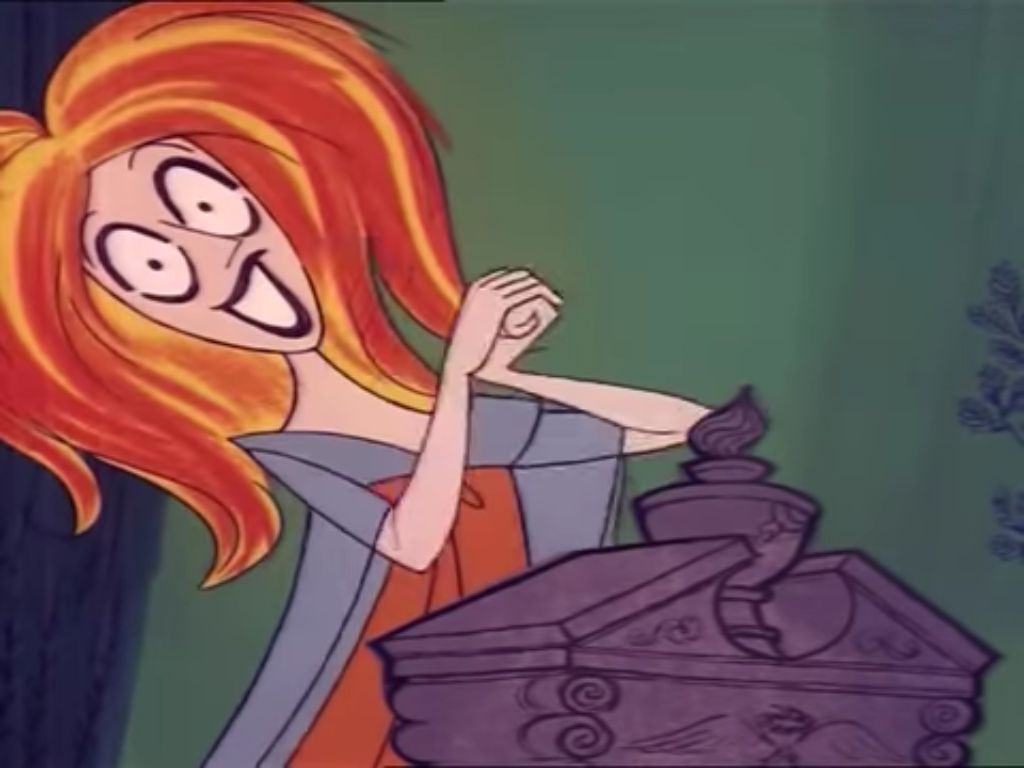 Above Mad Meg:
  Stephanie Cole, creator John Finnemore, Roger Allam, and Benedict Cumberbatch perform Cabin Pressure for a live BBC studio audience.


 "I'll Be Dead Before You Break My Heart"