The Tippett Quartet Play Bernard Herrmann’s Psycho at Kings Place, London, 2011

Most people* seem to discount the idea that Bernard Herrmann’s score for Psycho is actually a near-perfect work for strings (given that it was written exclusively for strings anyway) and that, given the right setting, is a very listenable chamber piece that doesn’t need to reference the film. Here’s the Tippett Quartet performing this arrangement by Richard Birchall at Kings Place, 2011.

Tippett Quartet PsychoJohn Mills, Jeremy Isaac, Lydia Lowndes-Northcott, and Bozidar Vukotic: the London-based Tippett Quartet.

* Like Mister Grumble. This is the second-most heated debate** between us: whether or not movie music (for narrative films not musicals) can be considered truly concert-worthy.

** (The most heated debate between us is whether Oswald did it or not. This one gets us both really het up, as one of us has a slight connection with the actual case.)

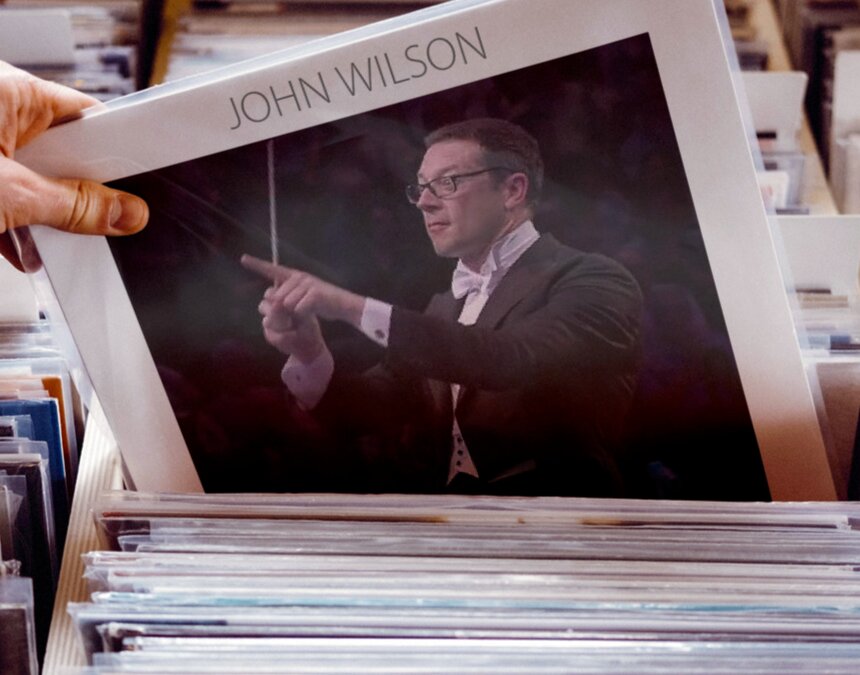
The leader of the Tippitt Quartet (circa 2011), John Mills, is also the leader of The John Wilson Orchestra to date.


FULL DRESS // A gifted mesmerist—a sinister composer—a naive young conductor from the north…inspired by an episode from the life of Rachmaninoff // DOWNLOAD FREE BOOK POSTER

Conductor John Wilson and His Eponymous Orchestra Take Their Show Hooray for Hollywood to Glasgow, 2011

From GlasgowTheatreBlog.com, 2011: Hooray for Hollywood follows on from the phenomenally successful appearances at the last two BBC Prom seasons and a festive season TV special. It was a whirlwind chronology of the golden age of movie musicals from the 1930s to the end of the studio musicals in the 1960s. Below, the program (YT clips in red):

PART ONE OF HOORAY FOR HOLLYWOOD

PART TWO OF HOORAY FOR HOLLYWOOD


COMPLETE downloadable audio of the BBC Proms 2011 concert John Wilson and The John Wilson Orchestra Hooray for Hollywood here / complete video on YT here


JOHN MY BELOVED SPEAKS!

“During my childhood in the 1970s and 1980s the BBC would regularly screen the Metro-Goldwyn-Mayer film musicals on a Saturday afternoon. I was instantly attracted to the sound of the MGM Studio Orchestra and, even then, knew that one day I must conduct an orchestra like that! As my musical experience broadened, I was able to analyse what made that special sound. That the Hollywood studio orchestras had vast string sections is a popular myth—the epic soundtrack for Gone with the Wind was recorded with only eight first violins.) It was this sound that I had in my mind when, in 1994, I formed the John Wilson Orchestra for a Concert at the Bloomsbury Theatre. In 2000 our debut performance at the Queen Elizabeth Hall paid tribute to the great American composers and arrangers of the past century—Nelson Riddle, Billy May, Johnny Mandel, Paul Weston and others. This led to an invitation to play next door at the Royal Festival Hall and—as part of a concert devoted to the screen composers of Hollywood’s Golden Age—I included a handful of well known songs from the MGM musical films.

“I knew that MGM had been taken over by Turner Classic Movies which had, in turn, been acquired by Warner Bros. I’d read that Warner Bros presided over meticulously preserved archives and that every note of music for their films survived intact. So I wrote informing them of my forthcoming concert, asking if I might have access to some of the MGM scores. I received a reply by return informing me that, while all of the available music materials for Warner films were preserved in the archives of the University of Southern California, the full scores and orchestral parts for all of the MGM productions were destroyed in 1969—for no reason other than that they took up too much space and a new car park was needed. Every note of music for every MGM film was gone—used as landfill for a Californian golf course.

“Well, not quite. For copyright reasons, MGM was obliged to hang on to some sort of musical documentation—a record of who composed what, so that royalties could be apportioned correctly. So it was with great excitement that I travelled to Hollywood to spend a week inspecting what the USC archives call The MGM Conductor Books. For every production—musical or otherwise—a short score, or “piano-conductor” score, would be prepared, from which the music director could conduct. These were condensed versions of the full scores and contained most of the information necessary for recording purposes and for fitting the music to the picture. Full scores seem to have been considered too unwieldy: too many page turns that could be picked up by the microphones.

“The MGM conductor books exist in varying degrees of completeness; for example, The Wizard of Oz is sketched mainly on two staves with scant indication of harmony (and virtually no instrumentation), whereas Seven Brides for Seven Brothers is laid out over six staves like a miniature full score. Easter Parade and Gigi are all but lost—only a third of each score survives; High Society is 95 percent complete and has the most lucid sketches. In general, the piano-conductor scores for the later musicals seem to contain more information than their earlier counterparts; a state of affairs brought about by Johnny Green, who was appointed Head of Music Department in 1950 and who insisted on the highest standards of music copying and preparation.

“The conductor books are all beautifully copied by a handful of top-class copyists who must have been on permanent contract at MGM for at least 20 years. While these documents have provided the basis for my reconstructions, most of the real work is done by listening over and over again to the soundtracks. I once spent an entire Sunday reconstructing four seconds of music from the cyclone scene in The Wizard of Oz. There are many things the conductor doesn’t give you, inner parts buried deep in the orchestra—also, only rarely did the vocal or choral parts make it into the conductor books.

“Reconstructing these scores is a chore, but a joyous one. The songs are all in the top class, written by the greatest tunesmiths of the day. The arrangements are, in my opinion, the finest ever made in the field of musical comedy. The performances on the original soundtracks are just about the best you’ll ever hear. The unbeatable playing of the musicians in the MGM Studio Orchestra is a constant inspiration, not only to me, but also to the musicians of my own orchestra.”


FULL DRESS // A gifted mesmerist—a sinister composer—a naive young conductor from the north…inspired by an episode from the life of Rachmaninoff // DOWNLOAD FREE BOOK POSTER

Conductor John Wilson and Rodgers & Hammerstein; Sting Sings His Newcastle United Football Anthem, “Bringing the Pride Back Home”

From 2019: I started collecting these Moments after getting right annoyed, not when I first heard my beloved Geordie lad John Wilson cheerfully dismissing Oscar Hammerstein II’s lyrics as being “needless”, not after the 2010 BBC Proms (an R+H tribute) or even the 2017 BBC Proms (Oklahoma! for God’s sake), but later on when I read about John in Brighton trying to conduct a sing-along with his concert audience in “You’ll Never Walk Alone” the way Liverpool soccer club fans like to sing it when they’re winning—a song cue I HATE HATE HATE and would like to strangle the group responsible, Gerry and the Pacemakers, for.

John Wilson Crush SunderlandAbove John: Wallsend-born Sting sings his 1998 reggae-inspired song for Newcastle United, “Bringing the Pride Back Home” Now tell me, why is the whole world staring? / Must be the shirt I’m wearing / Black and white army…


The rule for bringing up a Rodgers & Hammerstein song in a Moment is simple: You sing it spontaneously—knowing the words and understanding and conveying its sentimental message—at the right moment. You have to read the moment, John. In the Jack Benny scene the humor is clear because everybody knows the words to “Getting to Know You” and everybody knows about Jack’s musical vanity vs his excessive courtliness toward pretty talented women; in the Cheers scene, Diane’s song cue is truly meant to comfort and inspire, and so makes for a genuine moment for characters and audience together; in 3rd Rock, well, “Oklahoma!” is just the ultimate rouser. You don’t even have to sing it well. (So a much better sing-along song actually.)

So it kind of heartens me, John, that you won’t be going back to mangling The Great American Songbook for awhile. Here’s hoping you take a long vacation in Bermuda, my Tyneside darling. Get a tan, get laid. And when you come back, commit yourself to the orchestral repertoire you do best.


FULL DRESS // A gifted mesmerist—a sinister composer—a naive young conductor from the north…inspired by an episode from the life of Rachmaninoff // DOWNLOAD FREE BOOK POSTER

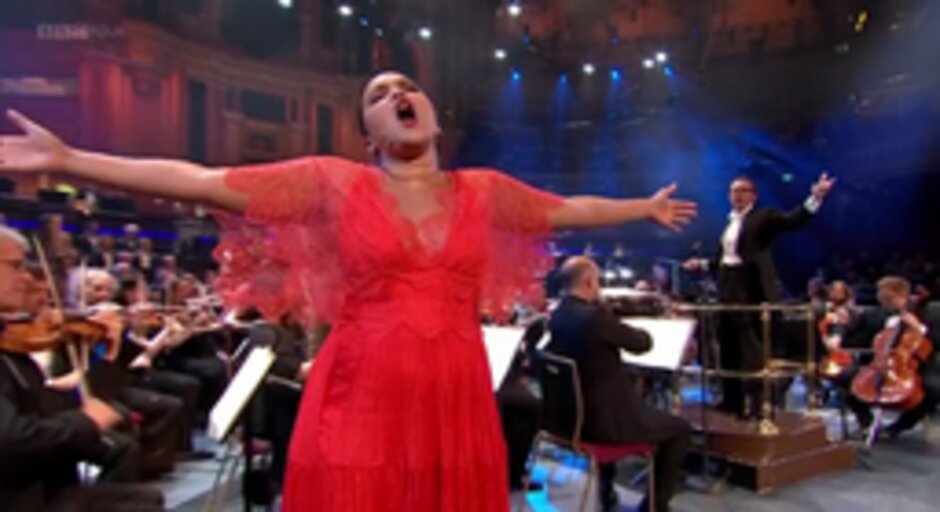
John Wilson and The John Wilson Orchestra at the BBC Proms, the Royal Albert Hall, 9 August 2019: The Complete Concert of The Warner Bros Story Including “The Sea Hawk”

Well, John, this isn’t a Joan Crawford movie so there’s no gold cigarette case but as I’m still in love with you and want to give you nice things, I’ll give you my honest appraisals, which is something I’ve been doing all along anyway (I hope you’ll agree) and not throwing myself into Long Island Sound for your sake. So let’s do this organized, going down the numbers in the program one by one because, as you recall, I used to work at ASCAP:

john-proms-2019


The entire 2019 BBC Proms concert “The Warner Bros Story” with The John Wilson Orchestra is available here


  • “We’re In the Money” (from Gold Diggers of 1933) / Harry Warren, Al Dubin Count on you to include the lyrics in pig Latin.
  • “The Desert Song” (from the 1953 film) / Sigmund Romberg, Oscar Hammerstein II Meh. I think the only reason you worked this in is because Kim Criswell’s singing a Romberg song in your 5 January concert in Stockholm, “Softly, As In a Morning Sunrise”, which is a hot, HOT number. In fact I can’t believe you’re going to stand on the same stage when she sings that song and not get incinerated. But that’s just you I guess.
  • The Treasure of the Sierra Madre (suite; from the 1948 film) / Max Steiner God, I forgot how repetitive Max Steiner can be when he’s not cribbing from Herman Hupfeld.
  • The Old Man and the Sea (suite, 1st movement; from the 1958 film) / Dmitri Tiomkin One movement, mercifully short.
  • “Seventy-Six Trombones” (YT) (from The Music Man, 1962)  / Meredith Willson I lost a bet to Mister Grumble that you would never, never, EVER do this number, ever. (Because, you know, it’s so OBVIOUS.) But…yeah, it was okay. No Andre Rieu though.
  • “Blues in the Night” (from Blues In the Night, 1941) / Harold Arlen, Johnny Mercer A low-voiced woman should sing this. Preferably a woman who’s been there.
  • Auntie Mame (main title; from the 1958 film) / Bronislav Kaper You know, I’d forgotten how much I like this sweet waltz.
  • “Gotta Have Me Go with You” (YT) (from A Star is Born, 1954) / Harold Arlen, Ira Gershwin See below.
  • “The Man That Got Away” (from A Star is Born, 1954) / Harold Arlen, Ira Gershwin [in an obvious nod to the movie’s latest remake] Of all your singers, Louise Dearman is the only one who could’ve carried these two numbers in this room particularly, and whatever luck or good judgment (and I’m nuts about you dear, but I’m never completely confident about your judgment in these matters) brought her there I’m glad.
  • “Get Me to the Church On Time” (from My Fair Lady, 1962) / Frederick Loewe, Alan Jay Lerner A little harkening back to your 2012 Proms triumph, eh?
  • 25-MINUTE INTERVAL Proms Plus Talk: a discussion of some of the great film scores being played tonight [Hah! In a pig’s eye] with Matthew Sweet, David Benedict and Pamela Hutchinson
  • Gypsy (overture; from the 1962 film) / Jule Styne, arr Ramin and Ginzler I still have the clip of you conducting this at the 2012 Proms (the other one). This one is sooo much hotter.
  • Now, Voyager (suite; from the 1942 film) / Max Steiner John, I’m afraid I really didn’t give this number a fair hearing the first time so I’m going to listen to it again and compare it to your Chandos 2022 recording. But you know, I almost missed the old dear telling Katie Derham that YOU wrote this arrangement because the Mountview kids down on the floor were leading a cheer [@1:05:00].
  • “The Deadwood Stage” (from Calamity Jane, 1953) / Sammy Fain, Paul Francis Webster [a Doris Day tribute] O-kay! A FULL number from a musical, complete with chorus—this is the very thing that made your name. All is forgiven.
  • “It’s Magic” (from Romance On the High Seas [correction, BBC: “On”, not “In”], 1948) / Jule Styne, Sammy Cahn [again, a Doris Day tribute] What in the name of heaven possessed whoever decided to include the worst song Jule Styne ever wrote? Redeemable only—only—if Bugs Bunny (YT) sings it.
  • A Streetcar Named Desire (main title; from the 1951 film) / Alex North Oh, you’re going to have fun with this one when you have to give sexy program notes to the audience from the podium, like you did in Brighton.
  • If Ever I Would Leave You” (from Camelot, 1967) / Frederick Loewe, Alan Jay Lerner Sure. Okay. Ladies need swoony time.
  • “The Days of Wine and Roses” (YT) (from the 1962 film) Henry Mancini arr Nelson Riddle, Johnny Mercer Nelson Riddle!? You used the freakin’ Nelson Riddle arrangement?? What are you trying to do, send love signals to Seth MacFarlane?
  • “Tomorrow” (from The Constant Nymph) / Erich Wolfgang Korngold You had this and your Prince Charming from Cendrillon, Kate Lindsey, up your sleeve! What a nice surprise.
  • ENCORE “I Could Have Danced All Night” (from My Fair Lady, 1962) / Frederick Loewe, Alan Jay Lerner Every soprano in the world wants to hear this song done right. She passes.
  • ENCORE “Harry’s Wondrous World” (from the Harry Potter series of films, 2002-2012) It’s unavoidable, you’re going to do John Williams somewhere. And I know the BBCCO had the scores in their basement because you conducted this with them back in 2007.

Mikaela Bennett, Louise Dearman, Kate Lindsey, Matt Ford, singers. Maida Vale Singers, chorus. Christopher Dee, choral director. Petroc Trelawny, presenter (afternoon show).


FULL DRESS // A gifted mesmerist—a sinister composer—a naive young conductor from the north…inspired by an episode from the life of Rachmaninoff // DOWNLOAD FREE BOOK POSTER

John Wilson Conducts Oklahoma at the 2017 BBC Proms, Rouben Mamoulian Howls In Protest from His Grave, 2

John my bonny, if we ever sit down someday and have a natter like two old friends I’d tell you how much in common you have with The Old Man, which you’d better take as a compliment, because Rouben Mamoulian was a genius. I didn’t think so when I worked for him, but then I was only 23 and he was 81, and the only movie I knew of his—besides The Mark of Zorro with Basil Rathbone and Tyrone Power, which I remember from TV as a kid—was Queen Christina, the result of cinema art-house hopping in New York in the mid-70s, and which had a special place in my half-lesbian heart on account of The Divine Garbo.

CXG Oklahoma

The most subtle reference ever to Agnes De Mille that was clearly about Agnes De Mille without having to mention her name was on Crazy Ex-Girlfriend, season 4 episode 2: “So now they’re randomly doing ballet?” “I guess so, it’s hard to follow.” (Hip-hop follows.) “That’s not even the correct dance language for this piece.” Bay Area-born Vincent Rodriguez III is the hunk in the red neckerchief who plays Josh Chan, heroine Rebecca Bunch’s pinoy love interest. Above: The 2019 Broadway revival version of the title song from Oklahoma! re-orchestrated by the estimable Daniel Kluger; vocal coach was Barbara Maier Gustern. COMPLETE ALBUM at: “Barbara Maier Gustern’s Triumph; Plus an Appreciation of Oklahoma-Born Playwright/Scenarist Lynn Riggs, and Why I Won’t Be Listening to John Wilson’s Chandos-Produced Oklahoma!”


But like I said earlier, I was already familiar with the fact that Mamoulian had directed Carousel and Oklahoma! on Broadway. So when he finally started to chat me up more familiarly, after a few weeks of my just coming in every weekday morning and answering his phone, opening his mail—unpaid bills, media people from all over wanting interviews, a few lines from old friends like Armina Marshall…Paul Horgan…Pamela Mason…Ray Bradbury—balancing his checkbook, reassuring Zayde on the intercom over and over that Henry their handyman hadn’t gone home yet etc etc, and basically fooling around during the many dull spots in the day (which is how I ended up playing the Waltz from Carousel to myself on the actual legendary Richard Rodgers piano), it was easy to follow The Old Man’s train of thought because I already knew a lot about the original production of Oklahoma!

“You know, Agnes…” he started right off the bat one day, and we both immediately understood who he was referring to: Agnes De Mille, the choreographer for the original 1943 production.

I sat up attentively, pen in hand, ready to take dictation. My main duty for Mamoulian was supposed to have been as amanuensis for his memoirs, after all. At least that’s what the temp agency had told me. Although they didn’t say amanuensis.

“No, put your pen down and listen!” he ordered. He was, in the weeks and months to come, going to say that a lot.

So I did. [more later]

Part 1 “The Rodgers Piano” here.
Part 2 “The Eugene O’Neill Story” here.


FULL DRESS // A gifted mesmerist—a sinister composer—a naive young conductor from the north…inspired by an episode from the life of Rachmaninoff // DOWNLOAD FREE BOOK POSTER

“The Bad and the Beautiful” by David Raksin, Arranged by Angela Morley, and Performed by The John Wilson Orchestra Conducted by My Beloved John Wilson

My bonny John was 30 when he recorded, with the orchestra that bears his name, this achingly tender theme.

I saw The Bad and the Beautiful (MGM, 1952) for the first time in New York when I was 20, at one of those great cinema art houses, the Little Carnegie I think. Anyone remember that fabulous nosh pit in the lobby of the Little Carnegie? It was set up to resemble an outdoor Parisian cafe, complete with wrought tables and chairs, painted scenery, etc… Here after the show my date treated me to a glass of cabernet and a flaky meat pasty, the leftovers of which the waiter wrapped up for me in a square of foil he molded into the shape of a swan.

The Bad and the Beautiful 2What do you do when you’re a passionate actress still in love with a wounding bastard who’s a screen genius? You make the damn movie.
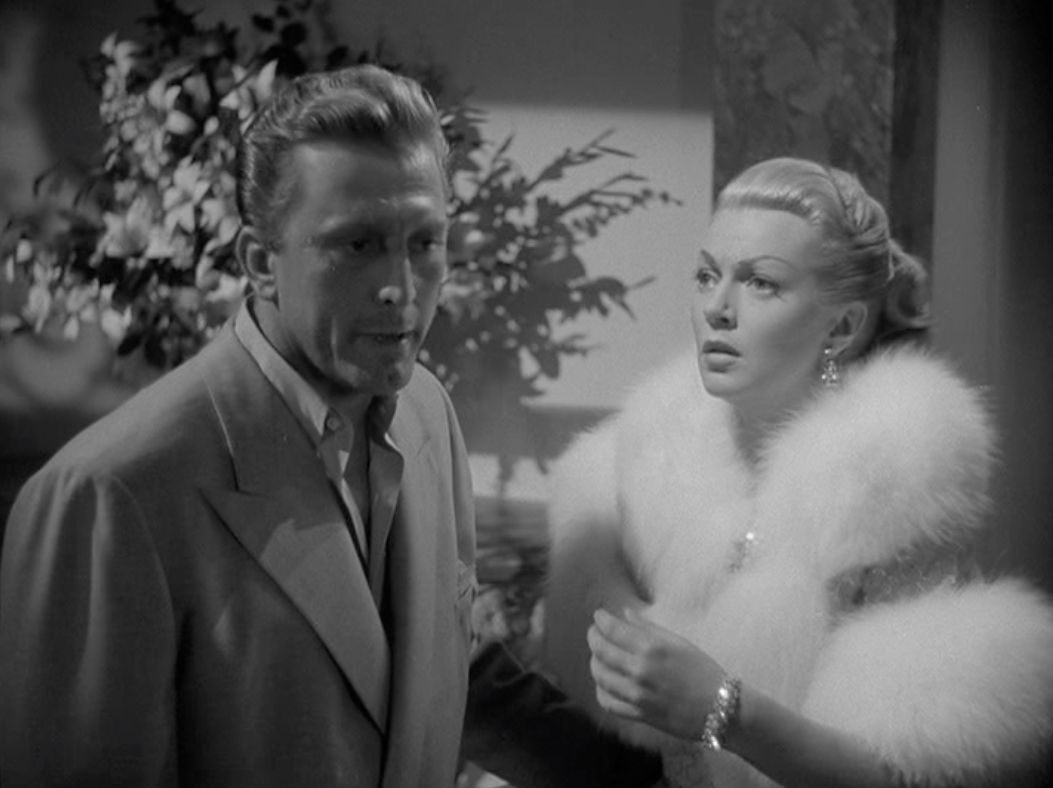
As for Bad+Beautiful: Cast headed by Lana Turner, Kirk Douglas, Gloria Grahame, Dick Powell, Barry Sullivan, Gilbert Roland, Walter Pigeon. Vincent Minnelli helmed. MGM, 1952 (trailer here). 5 Oscar wins. To feel the full effect, get your heart stomped on by a Hollywood louse before viewing.

The Bad and the Beautiful
Soft Lights and Sweet Music, album
Classic Angela Morley Arrangements
The John Wilson Orchestra
John Wilson, conductor
Vocalion, 2002

*Oscar-winning transsexual composer-arranger Angela Morley (1924-2009) has quite a story herself, which maybe I’ll get to in another posting. For now, here’s a 1977 article in the Independent that should whet your interest.


THE BAD AND THE BEAUTIFUL in its entirety is available here


FULL DRESS // A gifted mesmerist—a sinister composer—a naive young conductor from the north…inspired by an episode from the life of Rachmaninoff // DOWNLOAD FREE BOOK POSTER

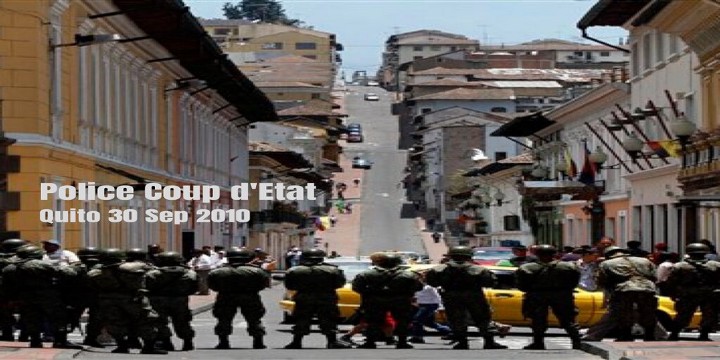
A Brief Memory of John Wilson and Orchestra Doing Rodgers & Hammerstein at the Proms and the Coup d’Etat Attempt in Ecuador with Mister Grumble, 2010

I’m all right, Mister Grumble’s all right. We’ve lived through an East Village tenement fire, an armed coup d’etat attempt in South America and the San Francisco Earthquake of ‘89, so this [fill in current disaster] is nothing.

Quito Coup

Ah, the coup. The coup—actually the attempted coup—was part of the CIA’s plan to oust popular Ecuadorian leftist president Rafael Correa by inciting the federal police in Quito to violently demonstrate for a pay raise. Normal TV broadcasts suspended, the government broke in on a rerun of Las Zuquillo, damn; on the phone the American Embassy told us not to worry, if the borders closed they’d send a car to fetch us; and we (the downstairs neighbors—Jewish Cuban refugees—and I, Mister Grumble having entirely lost his sight by then) spent the rest of the day watching for tanks to come rolling down the Autopista Rumiñahui, a major road into the city, which got Mister Grumble all reminiscent of the time in ’68 when Soviet tanks rolled down the streets of Prague, resulting in Army Intelligence sending him into Czechoslavakia. (His mission—which turned out fatal for everyone but my sweet baby—was declassified so I guess I can tell the story, but not now.)

But listen: Some weeks before the coup, while Mister Grumble was going blind, I was desperately looking for some entertainment we could both enjoy and found online BBC Radio on Demand—this was back in the days when there was Radio 4, Radio 4 Extra and Radio 7…now all gone. It was on, I think, 23 August 2010 they advertised on their news feed a live broadcast that evening of an all-Rodgers & Hammerstein concert at the Royal Albert Hall, to be headed by a “brilliant young conductor” named John Wilson. “The music of Rodgers & Hammerstein as you’ve never heard it before!” promised the Beeb. And oh, I was hungry for a little bit of America, of home.

“Do you want to hear it?” I called to Mister Grumble across our atypically vast living room.

“Where’s it coming from?”

“England,” I told him.

“Are you kidding!?” he answered with a derisive laugh. And that was that.

A few years later I finally found the whole show online. To my chagrin, I found it absolutely undistinguished—except for this excessively fabulous number that almost completely redeems my beloved John.

Oh, the coup ended that night—troops loyal to Correa busted him out of the barracks where he was being held prisoner. It made great TV.


FULL DRESS // A gifted mesmerist—a sinister composer—a naive young conductor from the north…inspired by an episode from the life of Rachmaninoff // DOWNLOAD FREE BOOK POSTER

At the End of the Year 2018: While I Still Have Conductor John Wilson In My Head

I’m still finding it mighty strange that John was born on the same day as my father’s final birthday, in 1972—on the 25th of May, which would make them both Geminis—but somehow it starts to make sense: There’s John of the BBC and Eric Coates and Ralph Vaughan Williams and the tra-la-boomy-boom that makes up English music; and then there’s John of the big-shouldered swaggering sweating bombastic vibrant American tune book. One (when he plays it well) makes me want to cook him a nice lamb stew with pearl onions swimming in the rich gravy; the other (again, when he plays it well, which is almost always) makes me want to—well, I was in The Business, you know, use your imagination.

John Wilson Album
Low Fell Lad Makes Good. Above: the Arlen-Kohler standard “Get Happy” was written for Ruth Etting but popularized by Judy Garland in the film, Summer Stock (MGM, 1951).


Only don’t be too sure which is which. Like I said, John almost always plays the music of his own country and heritage well, with a deep feeling that’s irresistible; whereas when he works out the great American tunes it turns out more often to be hit-and-miss, with many many many more misses than hits.

But oh! When he does hit!

When bonny John and his orchestra play “Get Happy” or “The Trolley Song” or “June Is Bustin’ Out All Over” or the MGM Jubilee Overture—or the absolute best of the lot, “Slaughter On Tenth Avenue“—it’s total heaven, and I’m not the only one to say this. Subtlety is not this lad’s forte when it comes to the American popular repertoire. But when John goes big, bright, busy and loud when the number actually calls for it, screams out for it, it’s so damn satisfying when he does it and does it brilliantly that I want to—how can I put this?—do something for my darling in gratitude…make him a nice meal…fatten him up a little… (Ess, kind, ess!)

For right now, though, I’ll settle for a natter on a quiet afternoon with you John, rather not in London, maybe when you get up to Gateshead again, mi amor, back to The Angel of the North


FULL DRESS // A gifted mesmerist—a sinister composer—a naive young conductor from the north…inspired by an episode from the life of Rachmaninoff // DOWNLOAD FREE BOOK POSTER

My Beloved John Wilson and The John Wilson Orchestra Bring Their Show That’s Entertainment—A Celebration of MGM Musicals to the Shaw Theatre in North London, 2008

From Playbill.com, 2008: Conductor, arranger and musical scholar[!] John Wilson will bring his 58-piece orchestra to the Shaw Theatre August 20-23 for That’s Entertainment!, an evening of music and song that celebrates the great MGM musicals.


The John Wilson Orchestra will perform original orchestrations and scores, many of which have been newly reconstructed by Wilson himself, to pay tribute to some of America’s greatest composers and songwriters, including George Gershwin, Irving Berlin, Cole Porter, Harry Warren, Jerome Kern and Richard Rodgers as well as the great Hollywood arrangers Conrad Salinger, Johnny Green and Nelson Riddle. The evening will feature music and songs from some of Hollywood’s best-loved MGM musicals: High Society, Singin’ in the Rain, An American in Paris, Ziegfeld Follies, Meet Me in St. Louis and The Wizard of Oz. Special guest vocalists are Matt Ford, Rachel Weston and Gary Williams.

As a conductor, Wilson works regularly with the Hallé, City of Birmingham Symphony, Royal Liverpool Philharmonic, BBC Scottish and BBC Concert orchestras. He is a frequent guest conductor in Europe: Recent visits have taken him to the RTE Concert Orchestra in Dublin, and to Scandinavia, Iceland and Bulgaria. Last year he made his Australian debut in Melbourne and Adelaide and his London Philharmonic debut at the Royal Festival Hall. He is also a musical arranger for film, radio and TV, where his credits include orchestrating Sir Richard Rodney Bennett’s score for the BBC production of Gormenghast, which won the Ivor Novello Award for Best Film Score; Howard Goodall’s score for the BBC/HBO film The Gathering Storm about Winston Churchill; and the soundtrack for Kevin Spacey’s Beyond The Sea biopic of singer Bobby Darin, which gained my brilliant, bonny John a Grammy nomination. He has also worked with Sir Paul McCartney and has orchestrated and conducted several of Sir Paul’s compositions with the London Symphony Orchestra.

He has also reconstructed the orchestrations of the major MGM musicals High Society, Singin’ in the Rain, The Band Wagon, and An American in Paris. In January he gave the first European performances of his orchestrations of The Wizard of Oz with the Royal Liverpool Philharmonic, synchronized with the film.


FULL DRESS // A gifted mesmerist—a sinister composer—a naive young conductor from the north…inspired by an episode from the life of Rachmaninoff // DOWNLOAD FREE BOOK POSTER

Second Rhapsody by George Gershwin: Wayne Marshall Piano, John Mauceri Conductor, with the Hollywood Bowl Orchestra; Plus Rhapsody In Blue and the Gershwin Brothers’ Pulitzer-Prize Winning Musical Of Thee I Sing

Premiered at Symphony Hall, Boston, on 29 January 1932, with the Boston Symphony Orchestra; Serge Koussevitzky, Conductor and George Gershwin, Piano.

Gershwin Second Rhapsody
George Gershwin
NBC-Radio Studios (with pickup orchestra?)

In November 1930, George and Ira Gershwin arrived in Hollywood to write the score for their first movie, Delicious. Besides the songs, George was asked to compose an instrumental piece to underscore a sequence where the film’s immigrant heroine wanders through a somewhat menacing Manhattan. In the end, only six minutes of what was originally entitled “Rhapsody In Rivets” was used but George, never wanting good work to go to waste, believed that his score deserved an additional life as his next work for the concert hall. Upon his return to New York, while also working on the score for Of Thee I Sing (which was to win the Pulitzer Prize in 1932; charming setup and title song at 33:00) he completed the Second Rhapsody and prepared it for its Boston debut under the baton of Serge Koussevitzky (Leonard Bernstein’s mentor and first lover).

Wayne Marshall Conductor
Pictured above is Lancashire-born conductor/organist/pianist Wayne Marshall, 57—with credits as Chief Conductor of WDR Funkhausorchester; Organist and Associate Artist of the Bridgewater Hall, Manchester; Principal Guest Conductor of Orchestra Sinfonica di Milano Giuseppe Verdi; and as an acclaimed interpreter of George Gershwin and Leonard Bernstein. His 2nd Rhapsody was snatched from the internet so here’s his Rhapsody in Blue with the Orchestre national d’Île-de-France.


Gershwin Second Rhapsody
Michael Tilson Thomas
The Los Angeles Philharmonic Orchestra

The form most commonly heard today is a re-orchestrated version created fourteen years after Gershwin’s death. Since this version is the only one offered by the publisher, it has been almost impossible for orchestras to perform the piece as Gershwin envisioned it. However, the 1931 recording (above) of a run-through of the music, with Gershwin playing the solos and conducting the orchestra, gives some idea of the original version. Michael Tilson Thomas has been a promulgator of Gershwin’s original 1931 version. He sought out the original manuscript in the library as the basis of his 1985 recording and for his later performances.

My bonny John Wilson’s latest CD release, The Best of The John Wilson Orchestra, recycles some of the song hits from his BBC Proms shows—but it also includes his never-heard-before version of Gershwin’s Second (here called “New York”) Rhapsody. A bit ham-fisted all around.


FULL DRESS // A gifted mesmerist—a sinister composer—a naive young conductor from the north…inspired by an episode from the life of Rachmaninoff // DOWNLOAD FREE BOOK POSTER

Lessons in Love, an Album of Songs by Lance Ellington, Played by The John Wilson Orchestra and Conducted by John Wilson

Between 2000 and 2005 John recorded 8 albums for the venerable jazz/swing/dance band label Vocalion. Whereas four months ago I had none, I now have 6 of them. I have that awful Orchestral Jazz he did with Richard Rodney Bennett; his 2 albums of Angela Morley’s work; his Paul Weston and his Geraldo (see “Geraldo Among the Filipinos, 1963); and I just ordered Dance Date.

There are two other albums I haven’t gotten yet: One is with a pleasant but unimaginative crooner named Gary Williams (who I suspect was the chap who enabled John to increase the size of his orchestra—“He just turned up one day at my door with a pot of money and said, ‘Will you put together a great big orchestra for me to sing to?’ And that was the start of it,” said my blinky winsome John in a 2011 interview at the BFI) but it doesn’t sound interesting enough to drop fifteen bucks on.

But this one, Lessons In Love, sounds perfectly gorgeous, the little I heard—it’s classic Songbook stuff—and I’m dying to have it. It’s Lance Ellington’s strong clear vocals and fundamental John Wilson Orchestra through and through. Trouble is, it apparently went through a limited pressing so available copies run from 115 American bucks upward. How can a record only 13 years old be a collector’s item already??

Lance Ellington (listen to his “It Don’t Mean a Thing If it Ain’t Got That Swing” from the show Ellington Sings Ellington) is the son of English bandleader/singer Ray (no relation to Duke) Ellington, who I know only as that weird singer on The Goon Show who mangled my favorite Charles Trenet song, “Boum”, even though I yelled at him through the computer screen not to do it. Lance is great, though. He teamed up with John and Orchestra for their 2014 Cole Porter album doing the song “Now You Has Jazz” and that album won the Echo Klassik Music Without Borders Prize. (My beloved’s big smile at 4:23.)

Lance Ellington


FULL DRESS // A gifted mesmerist—a sinister composer—a naive young conductor from the north…inspired by an episode from the life of Rachmaninoff // DOWNLOAD FREE BOOK POSTER

John Wilson and The John Wilson Orchestra at the BBC Proms, the Royal Albert Hall, 29 August 2011: The Complete Concert of Hooray for Hollywood Including the Overture Arranged by John

For their show at the 2011 BBC Proms, called Hooray for Hollywood, John and The JWO begin here with an overall satisfying medley of tunes from the picture—inconveniently called the “Hooray for Hollywood” overture—tunes selected, arranged and orchestrated by my self-satisfied darling himself. Starting with John’s cribbing from Ray Heindorf’s execrable arrangement (that hard downbeat!) of the Gershwin brothers’ 1919 “Swanee” (Jolson turning in his grave), it does get better: “Lullaby of Broadway” by Al Dubin and Harry Warren, very nifty and swingy; Rudy Friml and Herb Stothart’s 1924 “Indian Love Call”, a lot more lyrical and moving (he included the birds and the waterfall!) than you remember it (especially when leader Andrew Haveron takes the soulful melody); Jerry Kern and Yip Harburg’s glorious 1944 “Can’t Help Singing” (written for Deanna Durbin); Kern and Ira Gershwin’s 1944 “Long Ago and Far Away” (Howard McGill on tenor sax and Matthew Regan on piano—I’ve never heard it played any lovelier): Frank Loesser’s 1950 “Guys and Dolls” done in Big Swing style; then, in a weird leap, “Chim-Chim-Cheree” by the Sherman brothers, 1963 (for which our John cribs 2 bars from Shostakovich’s Jazz Waltz No 2); and ending with “Hooray for Hollywood” from 1937 by Richard Whiting (who wrote “On the Good Ship Lollipop”) and Johnny Mercer.

Hooray for Hollywood
Where you're terrific if you're even good
Where anyone at all from Shirley Temple
to Aimee Semple
is equally understood
Go out and try your luck
you might be Donald Duck
Hooray for Hollywood

The John Wilson Orchestra 2019Dates are of composition, not the date of the movie. Because it contains John’s own actually-pretty-good arrangement it’s one of my favorite numbers of The JWO (although I would’ve swapped the timpani for a little chord coloring at the beginning of the “Swanee” melody).  He seems to have nailed down the Andre Previn sound in his strings, which is okay by me. Plus extra points @7:40, where my self-satisfied darling shimmies like a brazen hussy yet again.


The entire 2011 BBC Proms concert Hooray for Hollywood with The John Wilson Orchestra is available here


FULL DRESS // A gifted mesmerist—a sinister composer—a naive young conductor from the north…inspired by an episode from the life of Rachmaninoff // DOWNLOAD FREE BOOK POSTER

The Story So Far, with Conductor John Wilson

From August, 2018. Cantara, former ASCAP solfeggist and 70s porn actress turned memoirist, has fallen hopelessly in love with a man at the other end of the world, an English, middle-ranking orchestra conductor—who plays, on the side, Golden Age of Hollywood music and The Great American Songbook—by the name of John Wilson.

The Queen of Heaven has her eye on you, John

Not because he’s a fellow creator (he doesn’t create, but reconstructs, orchestrates and arranges the music of others)—not because of his looks (he’s peaky, scrawny, blinky; his gray-green eyes lack luster; he’s got a facial tic, pores like craters, lousy posture, enormous feet, the limbs of a stick insect and the hands of a hod carrier; his nose is an equilateral triangle; his famous cleft chin, supposedly his best feature, always looks slightly askew; his ultra-short mousy hair can’t conceal the fact he’s already going gray; he sweats like a stevedore on the podium; and for the past few years he’s taken to wearing geek glasses)—and certainly not for his intellect (his fatuous pronouncement about the needlessness of lyrics in The Great American Songbook makes me want to smack the back of his head like the whippersnapper he is and send him home with a note).

So what is it about him?* I’ve only been aware of his existence since 30 April and in love with him since 4 May, 2018; since then my feelings have been an insane mixture of tenderness, gratitude, annoyance, and lust. The tenderness I understand: I’ve spent enough time in Hollywood to understand the position he’s in… As far as gratitude, here’s his concert version of “The Trolley Song” using the original 1944 orchestration(!)— thank you thank you thank you, John. Even the raging lust I get.

But whenever John gets himself in the way of the music it drives me nuts. It’s crystal clear to me the times he does this because I’m in love with him, dammit, and because he’s a musician I pay attention to the music. Truth to tell, the only times John really gets himself in the way are when he’s conducting his own hand-picked group which is dedicated mostly to music from Golden Hollywood & The Great American Songbook, and cannily named The John Wilson Orchestra.


Listen to John’s new orchestra the SINFONIA OF LONDON here


Whether he gets himself in the way indeliberately or on purpose I cannot entirely tell, but I’m starting to. With a little patience he isn’t that hard to read, my bonny John Wilson. After countless times listening to his recordings and broadcasts; pouring over his interviews; watching him conduct (in video clips, mainly from the annual BBC Proms); watching him conduct other orchestras besides his own (ditto); and, most important, learning to separate the showman from the musician, I’m starting to understand his type of intelligence and his musical capability, which is actually pretty sizeable. His ear (the way he hears things, not his purported perfect pitch) is intriguing and his industriousness is admirable. I am definitely not buying into the PR excess—he is not “a superstar”, “a guru”, “charismatic”, “legendary”, “a conducting icon” or, God help us, as proclaimed by the BBC, “the nation’s favorite” (!!!). But his musicianship at times is kiiind of brilliant.

* Update 10 August 2019: I’ve just read up on what it is about him, and now I’ve got science to back me up. It’s John’s fault.


FULL DRESS // A gifted mesmerist—a sinister composer—a naive young conductor from the north…inspired by an episode from the life of Rachmaninoff // DOWNLOAD FREE BOOK POSTER

The Story So Far: Or, Conductor John Wilson—His Limits

Anyroad, like a good Dr Watson I have compiled a list:


Listen to John’s new orchestra the SINFONIA OF LONDON here


JOHN WILSON – HIS LIMITS (Updated September 2021)


Knowledge of/affinity for/talent with:

All the rest is just Cantara trying to sort out where bonny John fits into her inner life. Which as it turns out is in every nook, every cranny


FULL DRESS // A gifted mesmerist—a sinister composer—a naive young conductor from the north…inspired by an episode from the life of Rachmaninoff // DOWNLOAD FREE BOOK POSTER