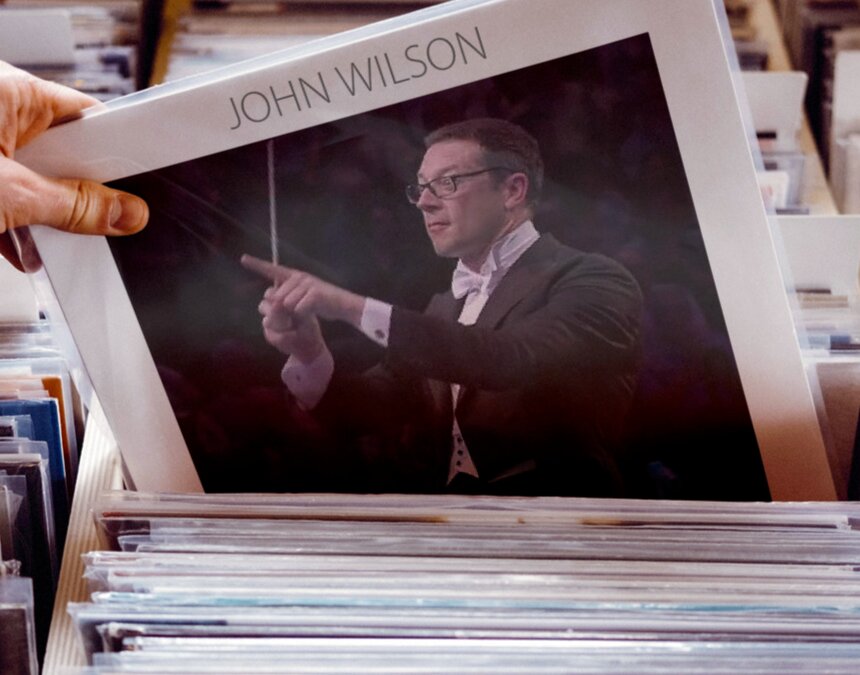
John Wilson and The John Wilson Orchestra at the BBC Proms, the Royal Albert Hall, 26 August 2013: The Complete Concert of Hollywood Rhapsody Including “Casablanca”

Disappointing to hear that John won’t be doing Britten’s The Turn of the Screw at Wilton’s Music Hall in London this month. So, to cheer everybody up, here’s the full 2-hour program of my John and The John Wilson Orchestra at the Proms, 2013. That’s Jane Monheit, John, and Matt Ford below.


Catch the entire Hollywood Rhapsody at the BBC 2013 Proms here


And what the hell, here are ALL the other, complete JOHN WILSON AT THE BBC PROMS available on my blog:


John Wilson Orchestra BBC Proms 2011 (Monheit, Ford)

The full program of 2013 (with remarks as they come to me):


FULL DRESS // A gifted mesmerist—a sinister composer—a naive young conductor from the north…inspired by an episode from the life of Rachmaninoff // DOWNLOAD FREE BOOK POSTER

Conductor John Wilson and His Eponymous Orchestra Take Their Show Hooray for Hollywood to Glasgow, 2011

From GlasgowTheatreBlog.com, 2011: Hooray for Hollywood follows on from the phenomenally successful appearances at the last two BBC Prom seasons and a festive season TV special. It was a whirlwind chronology of the golden age of movie musicals from the 1930s to the end of the studio musicals in the 1960s. Below, the program (YT clips in red):

PART ONE OF HOORAY FOR HOLLYWOOD

PART TWO OF HOORAY FOR HOLLYWOOD


COMPLETE downloadable audio of the BBC Proms 2011 concert John Wilson and The John Wilson Orchestra Hooray for Hollywood here / complete video on YT here


JOHN MY BELOVED SPEAKS!

“During my childhood in the 1970s and 1980s the BBC would regularly screen the Metro-Goldwyn-Mayer film musicals on a Saturday afternoon. I was instantly attracted to the sound of the MGM Studio Orchestra and, even then, knew that one day I must conduct an orchestra like that! As my musical experience broadened, I was able to analyse what made that special sound. That the Hollywood studio orchestras had vast string sections is a popular myth—the epic soundtrack for Gone with the Wind was recorded with only eight first violins.) It was this sound that I had in my mind when, in 1994, I formed the John Wilson Orchestra for a Concert at the Bloomsbury Theatre. In 2000 our debut performance at the Queen Elizabeth Hall paid tribute to the great American composers and arrangers of the past century—Nelson Riddle, Billy May, Johnny Mandel, Paul Weston and others. This led to an invitation to play next door at the Royal Festival Hall and—as part of a concert devoted to the screen composers of Hollywood’s Golden Age—I included a handful of well known songs from the MGM musical films.

“I knew that MGM had been taken over by Turner Classic Movies which had, in turn, been acquired by Warner Bros. I’d read that Warner Bros presided over meticulously preserved archives and that every note of music for their films survived intact. So I wrote informing them of my forthcoming concert, asking if I might have access to some of the MGM scores. I received a reply by return informing me that, while all of the available music materials for Warner films were preserved in the archives of the University of Southern California, the full scores and orchestral parts for all of the MGM productions were destroyed in 1969—for no reason other than that they took up too much space and a new car park was needed. Every note of music for every MGM film was gone—used as landfill for a Californian golf course.

“Well, not quite. For copyright reasons, MGM was obliged to hang on to some sort of musical documentation—a record of who composed what, so that royalties could be apportioned correctly. So it was with great excitement that I travelled to Hollywood to spend a week inspecting what the USC archives call The MGM Conductor Books. For every production—musical or otherwise—a short score, or “piano-conductor” score, would be prepared, from which the music director could conduct. These were condensed versions of the full scores and contained most of the information necessary for recording purposes and for fitting the music to the picture. Full scores seem to have been considered too unwieldy: too many page turns that could be picked up by the microphones.

“The MGM conductor books exist in varying degrees of completeness; for example, The Wizard of Oz is sketched mainly on two staves with scant indication of harmony (and virtually no instrumentation), whereas Seven Brides for Seven Brothers is laid out over six staves like a miniature full score. Easter Parade and Gigi are all but lost—only a third of each score survives; High Society is 95 percent complete and has the most lucid sketches. In general, the piano-conductor scores for the later musicals seem to contain more information than their earlier counterparts; a state of affairs brought about by Johnny Green, who was appointed Head of Music Department in 1950 and who insisted on the highest standards of music copying and preparation.

“The conductor books are all beautifully copied by a handful of top-class copyists who must have been on permanent contract at MGM for at least 20 years. While these documents have provided the basis for my reconstructions, most of the real work is done by listening over and over again to the soundtracks. I once spent an entire Sunday reconstructing four seconds of music from the cyclone scene in The Wizard of Oz. There are many things the conductor doesn’t give you, inner parts buried deep in the orchestra—also, only rarely did the vocal or choral parts make it into the conductor books.

“Reconstructing these scores is a chore, but a joyous one. The songs are all in the top class, written by the greatest tunesmiths of the day. The arrangements are, in my opinion, the finest ever made in the field of musical comedy. The performances on the original soundtracks are just about the best you’ll ever hear. The unbeatable playing of the musicians in the MGM Studio Orchestra is a constant inspiration, not only to me, but also to the musicians of my own orchestra.”


FULL DRESS // A gifted mesmerist—a sinister composer—a naive young conductor from the north…inspired by an episode from the life of Rachmaninoff // DOWNLOAD FREE BOOK POSTER

Conductor John Wilson and Rodgers & Hammerstein; Sting Sings His Newcastle United Football Anthem, “Bringing the Pride Back Home”

From 2019: I started collecting these Moments after getting right annoyed, not when I first heard my beloved Geordie lad John Wilson cheerfully dismissing Oscar Hammerstein II’s lyrics as being “needless”, not after the 2010 BBC Proms (an R+H tribute) or even the 2017 BBC Proms (Oklahoma! for God’s sake), but later on when I read about John in Brighton trying to conduct a sing-along with his concert audience in “You’ll Never Walk Alone” the way Liverpool soccer club fans like to sing it when they’re winning—a song cue I HATE HATE HATE and would like to strangle the group responsible, Gerry and the Pacemakers, for.

John Wilson Crush SunderlandAbove John: Wallsend-born Sting sings his 1998 reggae-inspired song for Newcastle United, “Bringing the Pride Back Home” Now tell me, why is the whole world staring? / Must be the shirt I’m wearing / Black and white army…


The rule for bringing up a Rodgers & Hammerstein song in a Moment is simple: You sing it spontaneously—knowing the words and understanding and conveying its sentimental message—at the right moment. You have to read the moment, John. In the Jack Benny scene the humor is clear because everybody knows the words to “Getting to Know You” and everybody knows about Jack’s musical vanity vs his excessive courtliness toward pretty talented women; in the Cheers scene, Diane’s song cue is truly meant to comfort and inspire, and so makes for a genuine moment for characters and audience together; in 3rd Rock, well, “Oklahoma!” is just the ultimate rouser. You don’t even have to sing it well. (So a much better sing-along song actually.)

So it kind of heartens me, John, that you won’t be going back to mangling The Great American Songbook for awhile. Here’s hoping you take a long vacation in Bermuda, my Tyneside darling. Get a tan, get laid. And when you come back, commit yourself to the orchestral repertoire you do best.


FULL DRESS // A gifted mesmerist—a sinister composer—a naive young conductor from the north…inspired by an episode from the life of Rachmaninoff // DOWNLOAD FREE BOOK POSTER

A Great American Songbook Song for My Beloved John Wilson, Conductor: “All the Things You Are” by Jerome Kern & Oscar Hammerstein II from Very Warm for May (1939)

Everything I want to sing to you, John Wilson, Conductor, flame of my heart, my bonny, my love. The most beautiful song ever written (verse starts at 48:50), sung in the classiest concert of The Great American Songbook ever televised, Broadway Originals (PBS, 1993) available here on my YT channel, played by the Boston Pops and conducted by the sweetest musical theater restorer-preservationist who ever lived, John McGlinn, who discovered Kern’s “lost” score and died far too young at 55. Hosted by the most glamorous hostess on the Eastern Seaboard, Kitty Carlisle Hart (here warbling to Allan Jones in A Night at the Opera). Orchestration of this Jerome Kern classic by Robert Russell Bennett. Milton Babbitt, that champion of musical theater and Stephen Sondheim’s teacher, wrote an illuminating tonal analysis of this song; Sondheim talks about it here.

all-the-things-you-are (1)Above the cast of Broadway Originals, first broadcast 23 August 1990) : “All the Things You Are” sung by all (Rebecca Luker, Jason Graae, Davis Gaines, Paige O’Hara, Judy Kaye, Kim Criswell, Brent Barrett, Chris Groenendaal, Shelley Freydont, and Gary Pierce). Boston Pops Orchestra and Chorus conducted by John McGlinn. And here’s the complete audio recording of this concert.

You are the promised kiss of springtime
That makes the lonely winter seem long
You are the breathless hush of evening
That trembles on the brink of a lovely song
You are the angel glow that lights a star
The dearest things I know are what you are

FULL DRESS // A gifted mesmerist—a sinister composer—a naive young conductor from the north…inspired by an episode from the life of Rachmaninoff // DOWNLOAD FREE BOOK POSTER

A Great American Songbook Song for My Beloved John Wilson, Conductor: Cole Porter’s “Begin the Beguine” from Jubilee (1935) Sung and Played by Pete Townshend

BBC’s resident singer/interviewer Clare Teal welcomes Proms stalwart and all-around “shouty scary” (her description) conductor John Wilson to the studio to talk about his new CD album Cole Porter in Hollywood and his orchestra’s 2014 tour, as well as spin a few swing platters, none of which we hear in entirety. Toward the end of the interview John Wilson Orchestra drummer Matt Skelton rips through “Begin the Beguine”.

John and ClaireClare Teal and Conductor John Wilson, 28 September 2014. Above John and Clare: Pete Townshend sings “Begin the Beguine“.

“Begin the Beguine” is a song written by Cole Porter (a song is music with WORDS John, you know?) who composed it at the piano in the bar of the Ritz Hotel in Paris. The beguine comes from the Caribbean; it’s a combination of French ballroom dance and Latin folk dance and was popular in Paris at the time Porter was writing.

The song is notable for its 108-measure length, departing drastically from the conventional thirty-two-bar form. Where a typical standard popular song of its time was written in a fairly strict 32-measure form consisting of two or three eight-measure subjects generally arranged in the form A-A-B-A or A-B-A-C, “Begin the Beguine” employs the form A-A-B-A-C1-C2 with each phrase being sixteen measures in length rather than the usual eight. The final C2 section is stretched beyond its 16 measures an additional twelve bars for a total of 28 measures, with the twelve additional measures providing a sense of finality to the long form. The slight differences in each of the A sections, along with the song’s long phrases and final elongated C2 section at the end, give it unique character and complexity. The fact that the song’s individual parts hold up melodically and harmonically over such a long form also attests to Porter’s talent and ability as a songwriter.

Porter reportedly once said of the song, “I can never remember it—if I want to play I need to see the music in front of me!” Alec Wilder described it in his book American Popular Song: The Great Innovators 1900-1950 as “a maverick, an unprecedented experiment and one which, to this day, after hearing it hundreds of times, I cannot sing or whistle or play from start to finish without the printed music”.

Pete Townshend
Begin the Beguine
Cole Porter, words+music
Another Scoop (1987)
Pete Townshend Catalog

When they begin the beguine
It brings back the sound of music so tender
It brings back a night of tropical splendor
It brings back a memory ever green

I'm with you once more under the stars
And down by the shore an orchestra's playing
And even the palms seem to be swaying
When they begin the beguine

To live it again is past all endeavor
Except when that tune clutches my heart
And there we are, swearing to love forever
And promising never, never to part

What moments divine, what rapture serene
Til clouds came along to disperse the joys we had tasted
And now when I hear people curse the chance that was wasted
I know but too well what they mean

So don't let them begin the beguine
Let the love that was once a fire remain an ember
Let it sleep like the dead desire I only remember
When they begin the beguine

Oh yes, let them begin the beguine, make them play
'Til the stars that were there before return above you
'Til you whisper to me once more
Darling, I love you

And we suddenly know what heaven we're in
When they begin the beguine

FULL DRESS // A gifted mesmerist—a sinister composer—a naive young conductor from the north…inspired by an episode from the life of Rachmaninoff // DOWNLOAD FREE BOOK POSTER

Silly Sexy Love Songs: Doris Day (1922 – 2019) Sings “Move Over, Darling”

An incredibly hot, hot sexy song, and incredible that Day’s own son Terry Melcher (the Manson Family’s original target) co-wrote it for her. If this doesn’t get you hankering for the one person you want to go to bed with, you’re just not paying attention.

Doris Day.jpg

Music and lyrics by Joe Lubin, Hal Kanter and Terry Melcher; arranged by composer Jack Nitzsche (of One Flew Over the Cuckoo’s Nest fame). Sung by Doris Day and chorus with West Coast session singers The Blossoms, featuring Darlene Love(!!!), Fanita James, and Jean King.


FULL DRESS // A gifted mesmerist—a sinister composer—a naive young conductor from the north…inspired by an episode from the life of Rachmaninoff // DOWNLOAD FREE BOOK POSTER

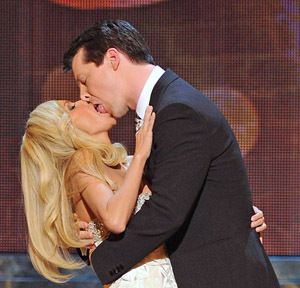
Sean Hayes and Kristin Chenoweth’s Deep-Tongue Kiss at the 2010 Tonys and the Songs of Burt Bacharach

You all remember the flap behind this. But that kiss at the Tonys (starts at :40) was awfully convincing. Hey, my hormones percolated…

kristen-chenoweth-sean-hayes.jpgAbove that hot kiss Sean Hayes sings the title song. No Jerry Ohrbach, but the kid’s got pipes.


But to get on with this posting. One of the nominees at the 64th Tony Awards was the revival of Promises, Promises with a score by Burt Bacharach, including some of his interpolated standards (like “A House is Not a Home” and “I Say a Little Prayer”, neither of which were in the original production), so I’m thinking that this bootleg vidcomp from an actual performance would be a good introduction to the work of this (as my beloved John Wilson, Conductor might deem him) “top-drawer American tunesmith”.

The connection to my posting on Milhaud above? Bacharach was a student of Darius Milhaud, and you can hear what he retained from the modernist master in his distinctive, almost Latin, rhythms—think of Eddy Mitchell’s “Always Something There to Remind Me” or Dusty Springfield‘s “Twenty-four Hours from Tulsa”.


FULL DRESS // A gifted mesmerist—a sinister composer—a naive young conductor from the north…inspired by an episode from the life of Rachmaninoff // DOWNLOAD FREE BOOK POSTER

The Nat King Cole Trio Does “Blame It On My Youth” by Oscar Levant and Edward Heyman (1934)

You wouldn’t look at him to think that Levant, the eternal loafer/boy genius, was a fine tunesmith as well, would you? But here’s his plaintive standard sung by one of the most identifiable singers in American music. From After Midnight, Capitol Records.

If I cried a little bit
When first I learned the truth
Don't blame it on my heart
Blame it on my youth

King Cole Trio
Oscar Moore, guitar and Joe Comfort, double bass. The creamy Nat Cole at the piano.


FULL DRESS // A gifted mesmerist—a sinister composer—a naive young conductor from the north…inspired by an episode from the life of Rachmaninoff // DOWNLOAD FREE BOOK POSTER

At the End of the Year 2018: While I Still Have Conductor John Wilson In My Head

I’m still finding it mighty strange that John was born on the same day as my father’s final birthday, in 1972—on the 25th of May, which would make them both Geminis—but somehow it starts to make sense: There’s John of the BBC and Eric Coates and Ralph Vaughan Williams and the tra-la-boomy-boom that makes up English music; and then there’s John of the big-shouldered swaggering sweating bombastic vibrant American tune book. One (when he plays it well) makes me want to cook him a nice lamb stew with pearl onions swimming in the rich gravy; the other (again, when he plays it well, which is almost always) makes me want to—well, I was in The Business, you know, use your imagination.

John Wilson Album
Low Fell Lad Makes Good. Above: the Arlen-Kohler standard “Get Happy” was written for Ruth Etting but popularized by Judy Garland in the film, Summer Stock (MGM, 1951).


Only don’t be too sure which is which. Like I said, John almost always plays the music of his own country and heritage well, with a deep feeling that’s irresistible; whereas when he works out the great American tunes it turns out more often to be hit-and-miss, with many many many more misses than hits.

But oh! When he does hit!

When bonny John and his orchestra play “Get Happy” or “The Trolley Song” or “June Is Bustin’ Out All Over” or the MGM Jubilee Overture—or the absolute best of the lot, “Slaughter On Tenth Avenue“—it’s total heaven, and I’m not the only one to say this. Subtlety is not this lad’s forte when it comes to the American popular repertoire. But when John goes big, bright, busy and loud when the number actually calls for it, screams out for it, it’s so damn satisfying when he does it and does it brilliantly that I want to—how can I put this?—do something for my darling in gratitude…make him a nice meal…fatten him up a little… (Ess, kind, ess!)

For right now, though, I’ll settle for a natter on a quiet afternoon with you John, rather not in London, maybe when you get up to Gateshead again, mi amor, back to The Angel of the North


FULL DRESS // A gifted mesmerist—a sinister composer—a naive young conductor from the north…inspired by an episode from the life of Rachmaninoff // DOWNLOAD FREE BOOK POSTER

Lessons in Love, an Album of Songs by Lance Ellington, Played by The John Wilson Orchestra and Conducted by John Wilson

Between 2000 and 2005 John recorded 8 albums for the venerable jazz/swing/dance band label Vocalion. Whereas four months ago I had none, I now have 6 of them. I have that awful Orchestral Jazz he did with Richard Rodney Bennett; his 2 albums of Angela Morley’s work; his Paul Weston and his Geraldo (see “Geraldo Among the Filipinos, 1963); and I just ordered Dance Date.

There are two other albums I haven’t gotten yet: One is with a pleasant but unimaginative crooner named Gary Williams (who I suspect was the chap who enabled John to increase the size of his orchestra—“He just turned up one day at my door with a pot of money and said, ‘Will you put together a great big orchestra for me to sing to?’ And that was the start of it,” said my blinky winsome John in a 2011 interview at the BFI) but it doesn’t sound interesting enough to drop fifteen bucks on.

But this one, Lessons In Love, sounds perfectly gorgeous, the little I heard—it’s classic Songbook stuff—and I’m dying to have it. It’s Lance Ellington’s strong clear vocals and fundamental John Wilson Orchestra through and through. Trouble is, it apparently went through a limited pressing so available copies run from 115 American bucks upward. How can a record only 13 years old be a collector’s item already??

Lance Ellington (listen to his “It Don’t Mean a Thing If it Ain’t Got That Swing” from the show Ellington Sings Ellington) is the son of English bandleader/singer Ray (no relation to Duke) Ellington, who I know only as that weird singer on The Goon Show who mangled my favorite Charles Trenet song, “Boum”, even though I yelled at him through the computer screen not to do it. Lance is great, though. He teamed up with John and Orchestra for their 2014 Cole Porter album doing the song “Now You Has Jazz” and that album won the Echo Klassik Music Without Borders Prize. (My beloved’s big smile at 4:23.)

Lance Ellington


FULL DRESS // A gifted mesmerist—a sinister composer—a naive young conductor from the north…inspired by an episode from the life of Rachmaninoff // DOWNLOAD FREE BOOK POSTER

Seven of Nine Sings “It Can’t Be Wrong” from the 1942 Movie Now, Voyager

Trekdom’s favorite de-Borged hottie Seven of Nine sings the entire number “It Can’t Be Wrong” by Max Steiner, lyrics by Kim Gannon. Music was culled from the classic Now, Voyager. 


Addendum 29 September 2019: Friend Kurt Thometz, owner of Jumel Terrace Books in Harlem, sent me the link to the chicken version of this song, a Warner Bros classic cartoon of course


FULL DRESS // A gifted mesmerist—a sinister composer—a naive young conductor from the north…inspired by an episode from the life of Rachmaninoff // DOWNLOAD FREE BOOK POSTER

Frank Sinatra Sings “It Can’t Be Wrong” from Now, Voyager (1942) and Sends His Moose to Love Up Herb Caen

But before Seven of Nine on Star Trek: Voyager, the real Sinatra made a big hit of this tune.

Frank Sinatra, 1945
Could you say no to this boy? Above Frankie, his hit: “It Can’t Be Wrong” by Max Steiner (after Now, Voyager), lyrics by Kim Gannon.

From legendary San Francisco journalist Herb Caens column, 1995:

Fast forward through World War II to Al Williams’ Papagayo Room in the Fairmont Hotel. It’s 2 a.m. Al’s place is the hangout on the late shift. Mexican food in the middle of the night? We were young and indestructible. Frank was on his own now and headlining at (again) the Golden Gate. The critics weren’t impressed with “Frankie,” as they called him, to his disgust, but the schoolgirls were cutting classes to catch his shows and I was giving him sincere plugs. At the Papagayo Room on his closing night, a burly broken-nosed guy in a polo coat came to my table and said, “You Caen?” When I nodded warily, he slipped me a small package, said, “Frank says t’anks” and disappeared. The package contained a solid gold Dunhill lighter. It was the first but not the last time I would be reminded of Sinatra’s penchant for extravagant gifts…


FULL DRESS // A gifted mesmerist—a sinister composer—a naive young conductor from the north…inspired by an episode from the life of Rachmaninoff // DOWNLOAD FREE BOOK POSTER

“Baby, It’s Cold Outside”, the Oscar-Winning Song by Frank Loesser Sung by Esther Williams, Ricardo Montalban, Betty Garrett, and Red Skelton

In 1944, Frank Loesser wrote “Baby, It’s Cold Outside” for his wife, Lynn Garland, and himself (Loesser often introduced himself as the “evil of two Loessers”) to sing at their housewarming party at the Navarro Hotel in New York. They sang the song to indicate to guests that it was time to leave.

Garland wrote that after the first performance, “We become instant parlor room stars. We got invited to all the best parties for years on the basis of ‘Baby’. It was our ticket to caviar and truffles. Parties were built around our being the closing act.” In 1948, after years of performing the song, Loesser sold it to MGM for the 1949 romantic comedy Neptune’s Daughter. Garland was furious. She wrote, “I felt as betrayed as if I’d caught him in bed with another woman.”

Baby, It's Cold Outside

Above Esther and gropey but charming Ricardo: “Baby, It’s Cold Outside”

In the film Neptune’s Daughter, “Baby, It’s Cold Outside” was sung by Esther Williams and Ricardo Montalbán, then by Betty Garrett and Red Skelton, who reversed the roles. The song won the 1949 Academy Award.


FULL DRESS // A gifted mesmerist—a sinister composer—a naive young conductor from the north…inspired by an episode from the life of Rachmaninoff // DOWNLOAD FREE BOOK POSTER

My New York: 13 Essex Street, The Lower East Side, 1976

Here in the same neighborhood on 13 Essex Street was my second apartment in New York; fourth floor walkup, one bedroom, tub in kitchen, $85 a month.

And tell me what street
Compares with Mott Street in July

“Manhattan”
music by Richard Rodgers
lyrics by Lorenz Hart
sung by Ruth Tester
and Allan Gould, 1929

13 Essex StreetThis picture’s from the 90s. When I lived here in the 70s, the boutique was a kosher grocery that stayed open till 11pm. Above: Ella!

From the 1925 revue Garrick Gaieties. The song was introduced in the Gaieties by Sterling Holloway (eventually a Rocky and Bullwinkle stalwart) and June Cochran.


FULL DRESS // A gifted mesmerist—a sinister composer—a naive young conductor from the north…inspired by an episode from the life of Rachmaninoff // DOWNLOAD FREE BOOK POSTER