Mannix (1967-1975) was a long-running private-eye American TV show from the dynamo team of Geller-Link-Levinson. It was popular for several reasons, one being Mike Connors’s Hirsute Sex Appeal (here pictured); not to mention the show’s viscerally satisfying action scenes (Mister Beefcake gets beaten up a lot); its swingy, sexy theme composed by none other than Lalo “Mission: Impossible” Schifrin; and, not least, for Joe Mannix’s lovely secretary, Peggy Fair.
Peggy Fair (Gail Fisher) was a character very much in the tradition of capable cool-headed female helpmeets to the main investigator guy (think Della Street or Effie Perrine). In the mid-60s there was a bouquet of gorgeous black actresses in regular roles on prime time: Fisher; Diahann Carroll starring as Julia; and of course, Nichelle Nichols as Uhura in Star Trek. Not to mention there were frequent small-screen guest appearances by stage stars like Ruby Dee and Diana Sands and TV stalwarts like Mimi Dillard. And you know, looking back, I think I noticed these actresses particularly because they all reminded me of one particular black girl I had a crush on from her photos and her work, who’d died in the mid-60s only a few years after her historic stage triumph:
Remembering the TV show Mannix also brings me back to something I quickly realized after moving to the Golden State: When you come to California, more sooner than later you will run into an Armenian. Heck, one of my first secretarial jobs in LA was for Tbilisi-born Rouben Mamoulian. Connors (1925-2017), who was born Krekor Ohanian in Armenian-strong Fresno, claimed to be a distant cousin of William Saroyan, author of The Time of Your Life and The Human Comedy, among other classic dramas of mid-20th century America.
Saroyan once made a memorable statement, “Wheresoever two Armenians meet, there is Armenia.” Which is something I’d like to apply to Filipinos as well.
Disappointing to hear that John won’t be doing Britten’s The Turn of the Screw at Wilton’s Music Hall in London this month. So, to cheer everybody up, here’s the full 2-hour program of my John and The John Wilson Orchestra at the Proms, 2013. That’s Jane Monheit, John, and Matt Ford below.
SONG MEDLEY (YT): – “An Affair to Remember” (from the 1957 film; 20th Century Fox) / Harry Warren, Leo McCarey (the film’s director), Harold Damson – “Something’s Gotta Give” (from Daddy Long Legs; 20th Century Fox, 1955) / Johnny Mercer – “Young at Heart” (from the 1955 film; Warner Bros) / Johnny Richards, Carolyn Leigh – “It’s Magic” (from Romance On the High Seas; Warner Bros, 1948) / Jule Styne, Sammy Cahn – “The Tender Trap” (from the 1955 film; MGM) / Jimmy Van Heusen, Sammy Cahn – “My Foolish Heart” (from the 1949 film; Samuel Goldwyn/RKO) / Ned Washington, Victor Young – “Three Coins in the Fountain” (from the 1954 film; 20th Century Fox) / Jule Styne, Sammy Cahn – “Love is a Many-Splendored Thing” (from the 1955 film; 20th Century Fox) / Sammy Fain, Paul Francis Webster – “That’s Amore” (from The Caddy; Paramount, 1953) / Harry Warren, Jack Brooks – “Que Sera, Sera” (from The Man Who Knew Too Much; Paramount, 1956 / Jay Livingston, Ray Evans – “All the Way” (from The Joker is Wild, 1957; Paramount) / Jimmy Van Heusen, Sammy Cahn
A Place In the Sun (suite from the 1951 film; Paramount) / Franz Waxman
Self-taught French composer Emmanuel Chabrier wrote this enduringly scrumptious piece in the early 1880s, the orchestration sounding more like something post-WWI. Yet it was composed during the height of La Belle Epoque. This was the last piece (a reduction, of course) I ever played on the violin in my junior high school orchestra, before switching a couple years later, at 16, to Voice at the University of Minnesota.
Lastly, a word about the strings in the fourth movement. Yup, there was that “John Wilson Orchestra shimmer”, that famous wrist vibrato anyone who’s ever picked up a fiddle recognizes and has to have come to terms with fairly early in training. We used to wonder if it made our playing actually sound better, and it depends. The Russians and Mittel Europeans used it a lot a hundred years ago. Some call this type of playing now “period playing”. My old boss, Rouben Mamoulian, called this style of playing “crying violins”. He claimed it was his idea to use it in the musical Love Me Tonight, in the “Isn’t It Romantic” sequence.
John my bonny, if we ever sit down someday and have a natter like two old friends I’d tell you how much in common you have with The Old Man, which you’d better take as a compliment, because Rouben Mamoulian was a genius. I didn’t think so when I worked for him, but then I was only 23 and he was 81, and the only movie I knew of his—besides The Mark of Zorro with Basil Rathbone and Tyrone Power, which I remember from TV as a kid—was Queen Christina, the result of cinema art-house hopping in New York in the mid-70s, and which had a special place in my half-lesbian heart on account of The Divine Garbo.
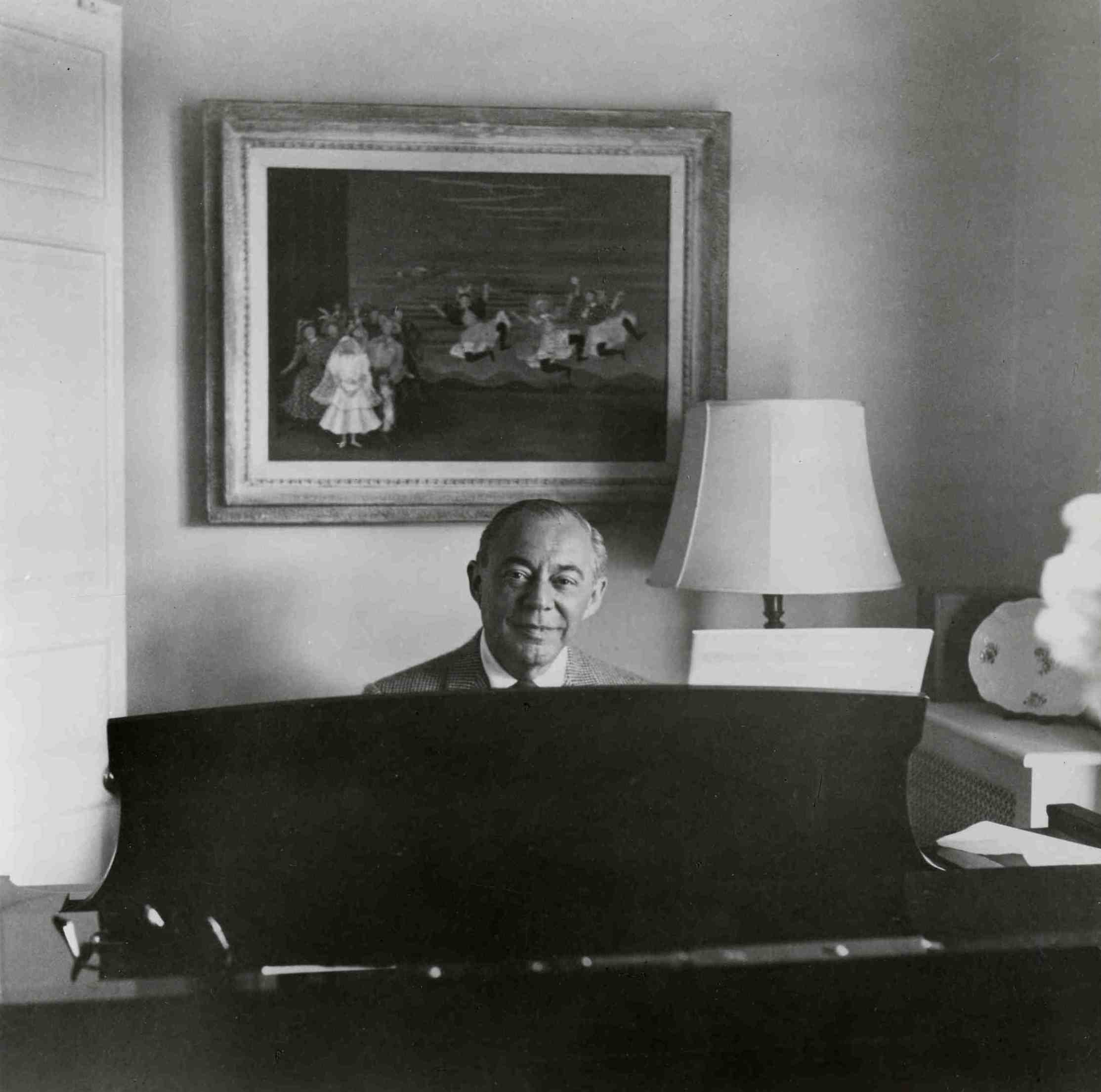
But like I said earlier, I was already familiar with the fact that Mamoulian had directed Carousel and Oklahoma! on Broadway. So when he finally started to chat me up more familiarly, after a few weeks of my just coming in every weekday morning and answering his phone, opening his mail—unpaid bills, media people from all over wanting interviews, a few lines from old friends like Armina Marshall…Paul Horgan…Pamela Mason…Ray Bradbury—balancing his checkbook, reassuring Zayde on the intercom over and over that Henry their handyman hadn’t gone home yet etc etc, and basically fooling around during the many dull spots in the day (which is how I ended up playing the Waltz from Carousel to myself on the actual legendary Richard Rodgers piano), it was easy to follow The Old Man’s train of thought because I already knew a lot about the original production of Oklahoma!
“You know, Agnes…” he started right off the bat one day, and we both immediately understood who he was referring to: Agnes De Mille, the choreographer for the original 1943 production.
I sat up attentively, pen in hand, ready to take dictation. My main duty for Mamoulian was supposed to have been as amanuensis for his memoirs, after all. At least that’s what the temp agency had told me. Although they didn’t say amanuensis.
“No, put your pen down and listen!” he ordered. He was, in the weeks and months to come, going to say that a lot.
25 May, 2019. This afternoon someone in Glyndebourne will be cutting my beloved John Wilson’s cake into tiny little slices, and so I wish them all well at the gathering.
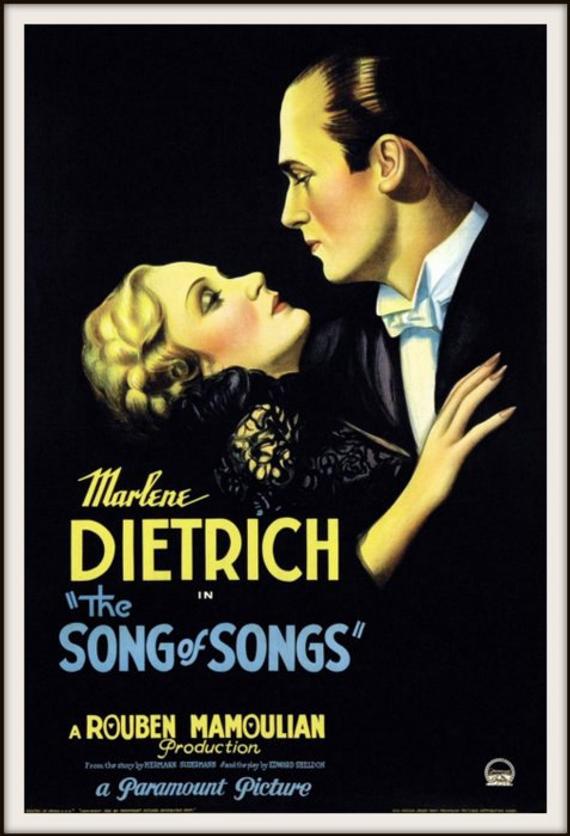
La Dietrich inspires a handsome young English orchestra conductor to artistic heights with her transfiguring and deeply sexual love in this erotically frank Pre-Code movie from Paramount. If only you understood dirty German, my bonny…
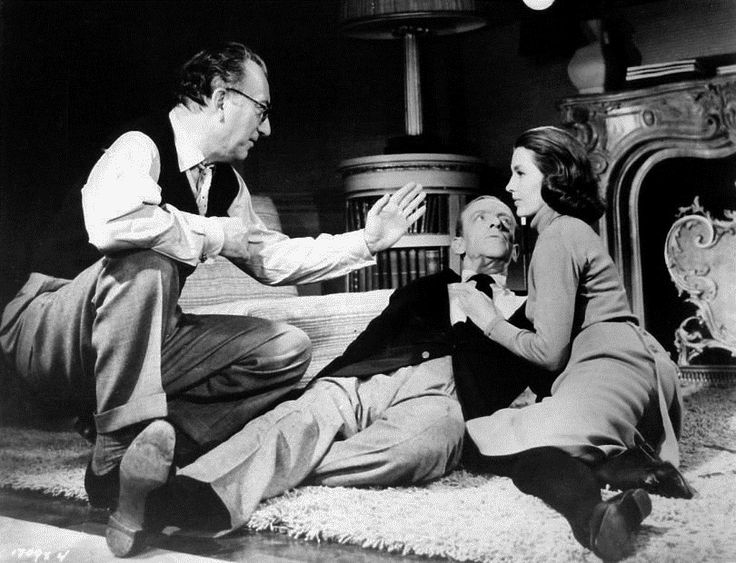
In winter 1979, Charisse and her husband, singer Tony Martin (“Temptation”) lived in a house up the hill from The Old Man on Schuyler Road in Beverly Hills in tranquil retirement. However, at the top of the hill also lived the Shah of Iran’s 86 year-old mother, and came the revolution Iranian students from all over the Southland marched up Schuyler Road to demonstrate outside her house, indulging in a little vandalism on the way. Mamoulian was, of course, furious, and his lovely wife Zayde, who never left her bedroom, buzzed me on the intercom to fume over the “criminals” (her word) who toppled their sovereign letter receptacle. The Old Man’s second concern—after his own mailbox, of course—was the mailbox of his good friend and former leading lady, and I was dispatched to phone them at once. Happily, the protesters had missed theirs.
It was a late morning about six weeks into my work assignment and The Old Man hadn’t arisen yet, so there I was in the salon with nothing to do except quietly wait for his appearance and his orders for the day (which letters to answer, which bills to pay, which people to call, etc) before getting down to the primary purpose of my being there, which was, in the agency’s words, “to assist Mr Mamoulian in the writing of his memoirs”. None of that memoir writing actually did transpire in the nearly nine months I was with him, other things did, but let’s not jump ahead. Unsupervised, I was forbidden to handle/read books from his voluminous library, but you know what? He never expressly told me not to play the piano, that big black shiny intriguing baby grand in the middle of the room, and I couldn’t resist. Could you?
There wasn’t a sound coming from any part of the house, although I could faintly hear Henry the daily handyman moving his wheelbarrow out in the yard. I’d had enough of examining in painstaking detail the boring watercolors and Russian icons on the wall. I sat down on the bench.
Sense memory kicking in… At that point it was the closest I had gotten to this humongous piece of furniture. I remember the smooth feel of the wood as I ran my fingers on it, gently lifting up the fall board to get to the keys. The piano was a Steinway. That is, I remember it as a Steinway, because I don’t remember it not being a Steinway. I put the fingers of my right hand down in place and began, ever so softly, to tap out the first tune that came into my mind, which happened to be the waltz from Carousel. Three, four bars in I thought I heard a rustle from the back of the house and stopped cold, put the fall board down and stood up.
This was the first time my eye was caught by something on the right side of the music rack, some sort of writing actually carved into the wood of the music shelf that lay flat in the cabinet of the piano near the tuning wrench. It was in cursive—and it was a name:
Richard Rodgers
It still gives me goosebumps to remember I actually did that. When The Old Man finally did get up an hour later, I was sitting back at my desk in his alcove-cum-office, pretending to read one of the cheap Hollywood magazines I brought to pass the time, although my mind was still on the bars I’d played and where the bars were going musically, and I think I was humming. I must’ve been humming. Because as he came into the alcove I heard Mamoulian exclaim, “Hey, that’s from Carousel.”
I looked up. Caught! I was about to apologize when he spoke again, this time it seemed almost wistfully. “You know, I directed that.”
I said softly, as if it were an apology, “I know.”
At that moment our relationship started to take a different turn.
From 22 December 2019. 41 years ago in Beverly Hills I was sitting in the alcove-cum-office that I shared with my boss, The Old Man, Rouben Mamoulian. It was late afternoon, the Friday before Christmas weekend, and I was eager to get back home to my boyfriend Sol and our little room behind Musso & Frank. But there were a few more things to do before I could leave.
The Old Man reached behind him on his desk for a volume that had a paper bookmark in it and asked me to read aloud. I found the place and began; it was a poem I’d never read before, called “Fern Hill”:
Now as I was young and easy under the apple boughs
About the lilting house and happy as the grass was green,
The night above the dingle starry,
Time let me hail and climb
Golden in the heydays of his eyes,
And honoured among wagons I was prince of the apple towns
And once below a time I lordly had the trees and leaves
Trail with daisies and barley
Down the rivers of the windfall light.

And as I was green and carefree, famous among the barns
About the happy yard and singing as the farm was home,
In the sun that is young once only,
Time let me play and be
Golden in the mercy of his means,
And green and golden I was huntsman and herdsman, the calves
Sang to my horn, the foxes on the hills barked clear and cold,
And the sabbath rang slowly
In the pebbles of the holy streams.

All the sun long it was running, it was lovely, the hay
Fields high as the house, the tunes from the chimneys, it was air
And playing, lovely and watery
And fire green as grass.
And nightly under the simple stars
As I rode to sleep the owls were bearing the farm away,
All the moon long I heard, blessed among stables, the nightjars
Flying with the ricks, and the horses
Flashing into the dark.

And then to awake, and the farm, like a wanderer white
With the dew, come back, the cock on his shoulder: it was all
Shining, it was Adam and maiden,
The sky gathered again
And the sun grew round that very day.
So it must have been after the birth of the simple light
In the first, spinning place, the spellbound horses walking warm
Out of the whinnying green stable
On to the fields of praise.

And honoured among foxes and pheasants by the gay house
Under the new made clouds and happy as the heart was long,
In the sun born over and over,
I ran my heedless ways,
My wishes raced through the house high hay
And nothing I cared, at my sky blue trades, that time allows
In all his tuneful turning so few and such morning songs
Before the children green and golden
Follow him out of grace,

Nothing I cared, in the lamb white days, that time would take me
Up to the swallow thronged loft by the shadow of my hand,
In the moon that is always rising,
Nor that riding to sleep
I should hear him fly with the high fields
And wake to the farm forever fled from the childless land.
Oh as I was young and easy in the mercy of his means,
Time held me green and dying
Though I sang in my chains like the sea.
After I read the entire poem out loud he sat back in his chair with a dreamy look and, pointing to a passage, asked me to read it again.
And then to awake, and the farm, like a wanderer white
With the dew, come back, the cock on his shoulder: it was all
Shining, it was Adam and maiden...
And here he sat up and whispered fiercely, “A cock on his shoulder…” And here he leaned over and, laying a hand on my knee, directly looked into my face and said urgently, “Yes, yes! That is what it was like! When I was a boy in Armenia…” And I want to tell you his eyes were glistening a little bit when he said that but I’m afraid to be mocked for cheap sentiment. But yes, yes, The Old Man had tears in his eyes when I read him “Fern Hill”.
So that was his Christmas present to me (plus a few extra dollars Christmas bonus) and it’s a Christmas present I want to give to you, John, not just because I’m in love with you and want to give you nice things, but because I want you to know something about the man you made such a careless remark about and why I’ll be spending some time upholding his memory and reputation.
Everyone else, a very Merry Christmas and Other Assorted Holiday Cheer.
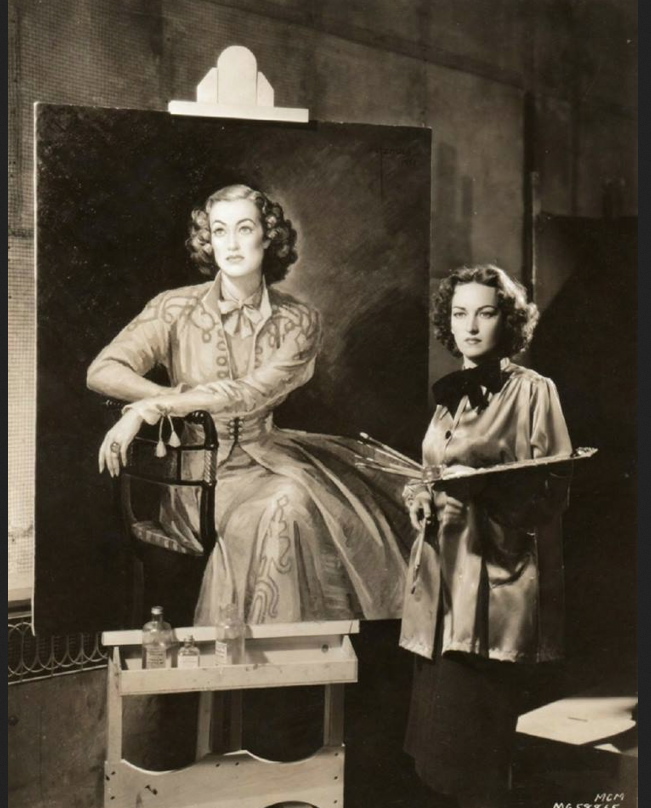
Azadia Newman Mamoulian next to her painting of Joan Crawford for The Last of Mrs Cheney (1937). Azadia’s famous portrait of Laura (that is to say, her portrait of Gene Tierney portraying the character, Laura) hung in the Mamoulians’ bedroom. How she got Crawford to resemble herself rather than the other way around, is a feat of illusionry I still marvel at. Above: My beloved John conducts the Sinfonia of London in Raksin’s Laura, orchestrated by the composer.
“You know I directed Laura,” said Mr Mamoulian to me matter-of-factly one day as we sat in his alcove-cum-study.
Now, I had seen the movie Laura several times—on TV and in the art house—and I remembered practically all the credits, which included one for Otto Preminger, Director…but no Mamoulian. But here was The Old Man sitting knee to knee with me, announcing right out that he was (what’s the Variety word?) the helmer of that glamorous but nutsy picture with Gene Tierney.
So what did I do? I was twenty-three. I was on a job. I nodded.
He sat back, took a couple of puffs from that awful cigar of his and smiled wistfully. “You know, Gene introduced me to my wife.”
“Oh, that’s wonderful,” I said. That would be Azadia, who Mamoulian called Zayde (a giggle, as zayde means grandfather in Yiddish); she was a woman I never saw except once. She was always in the Other Room.
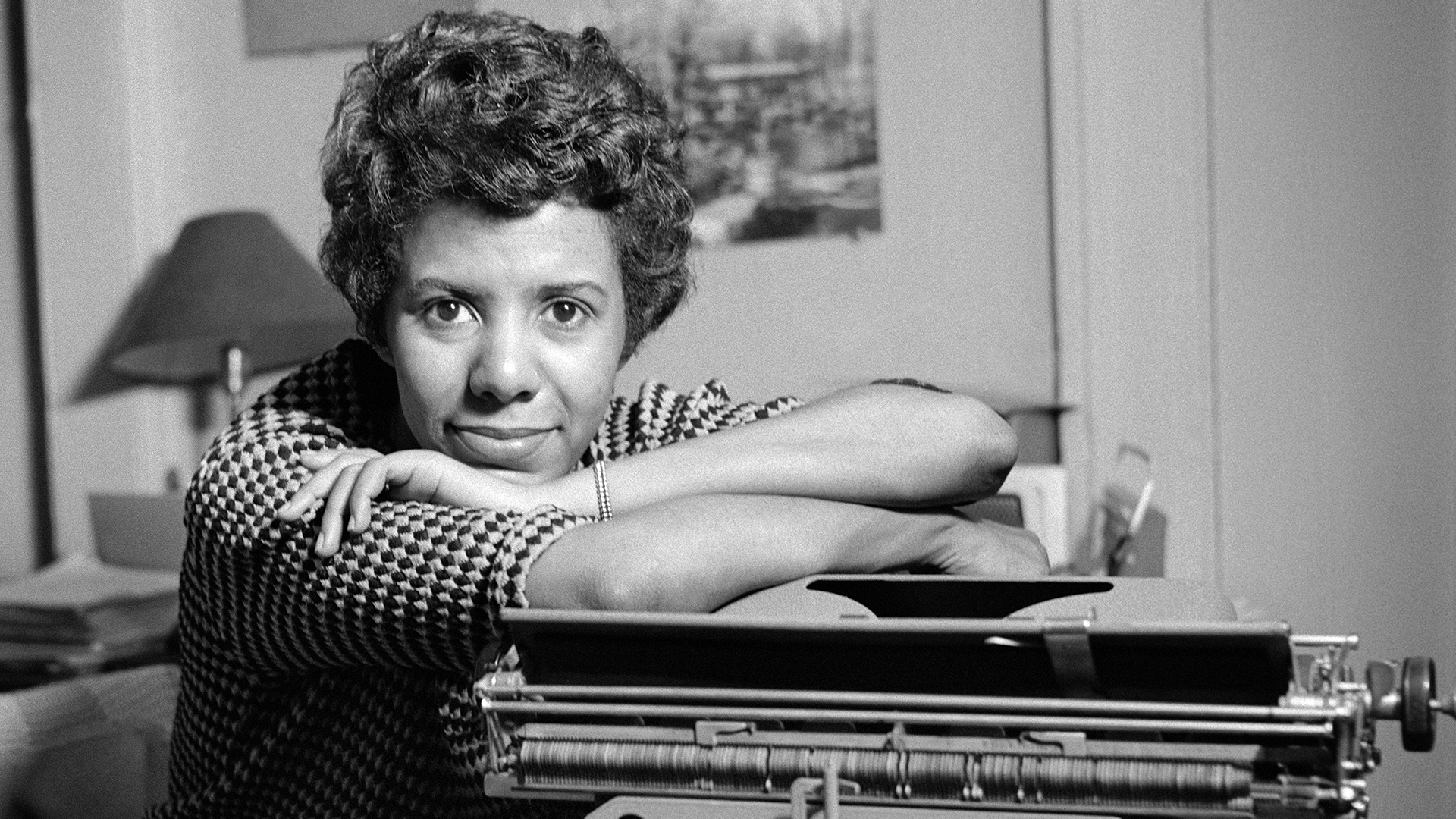 Above sweet Lorraine Hansberry (1930-1965), playwright, author of the seminal American stage drama, A Raisin In the Sun: Lalo Schifrin’s tuneful syncopated 6/8 that’s the theme for Mannix, played by his orchestra.




 "I'll Be Dead Before You Break My Heart"