Aaron Copland and His Influence on Games Composer Michael Giacchino, Among Others

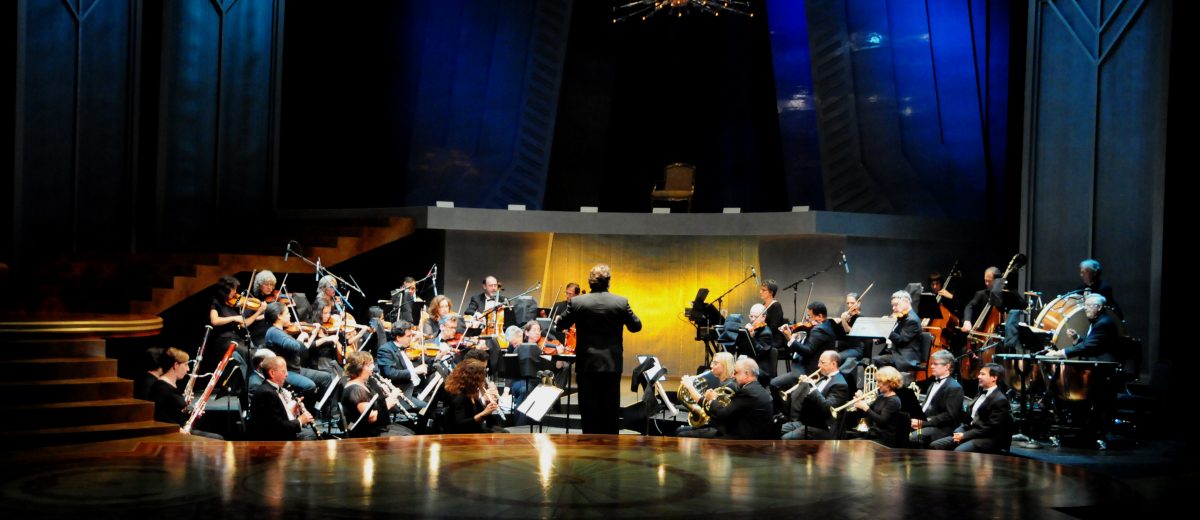
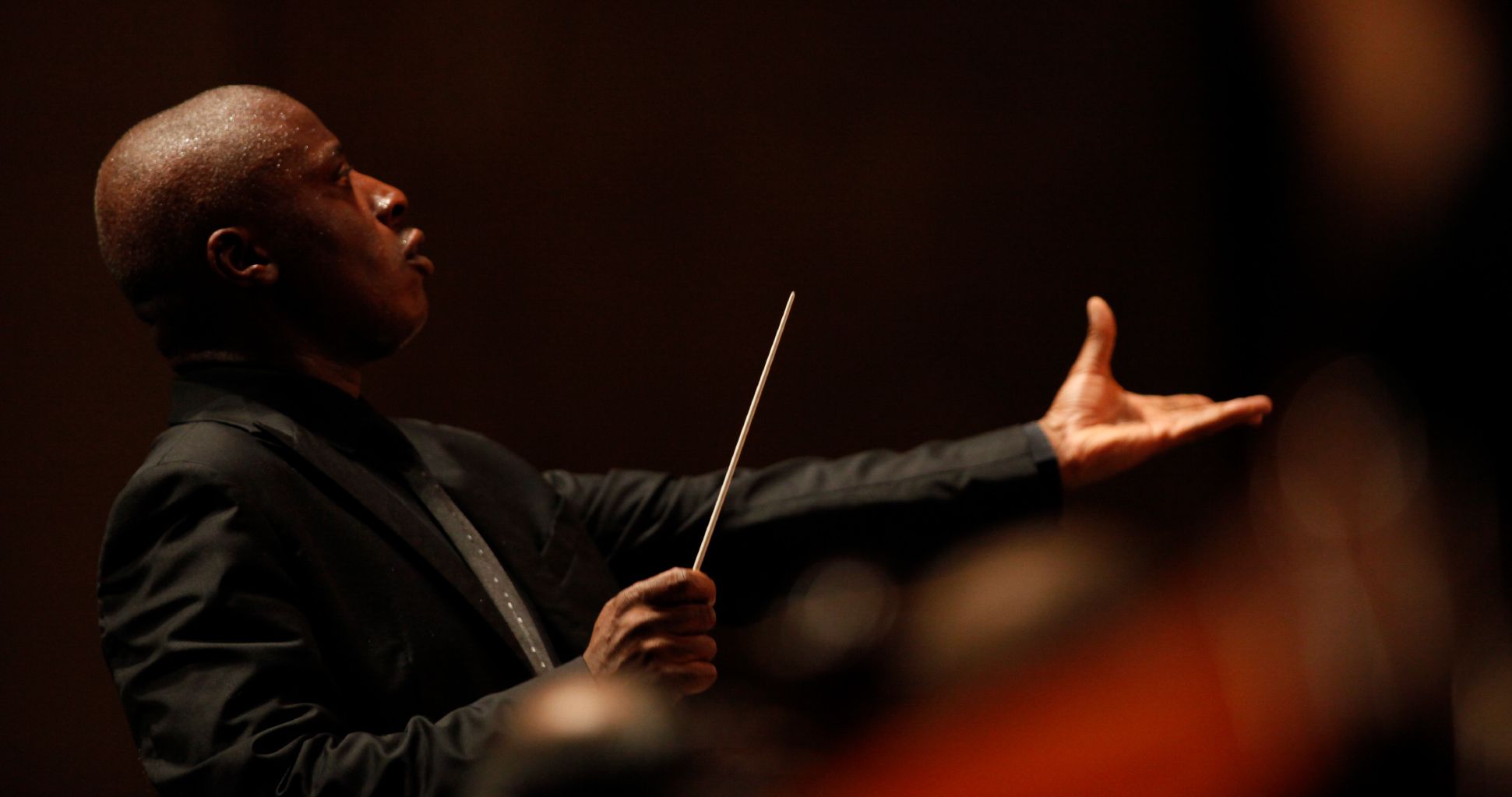
Encouraged by Maestro Mauceri, I now look for the musical influences on games composers, hence my “Coplandesque” remark on FB about Michael Giacchino’s Medal of Honor theme below. Listen to my beloved and desired English conductor John Wilson helm the BBC Philharmonic in Copland works every American knows: “Fanfare for the Common Man” (commission, 1942) and the “Simple Gifts” part of the ballet Appalachian Spring. And just for good measure! “Hoedown” from the ballet Billy the Kid ’cause I enjoy a good steak.

Somewhere in my blog (“My First Music: The Pure Joy of St Trinian’s and The Inn of the Sixth Happiness by Malcolm Arnold“) I wrote about particular chords and intervals that, to me, give music a particularly “English” sound—well, I’m coming around to understand that Copland, far from being a lazy minimalist, was actually one of the founders of the “American” sound (along with Joplin, Dvorak, Gershwin, Schoenberg and, of course, Copland’s pupil Bernstein). I’m so glad my bonny John “gets” it. His Copland almost makes up for his 2017 butchery of Oklahoma! at the Royal Albert. As for Copland’s influence, listen for it in certain tunes of Jerry Goldsmith and, as I said above, games composer Michael Giacchino.


John Mauceri’s THE WAR ON MUSIC: RECLAIMING THE TWENTIETH CENTURY (Yale, 2022) can be downloaded here


Medal of Honor

Again, Giacchino’s Coplandesque theme for the game Medal of Honor: https://bit.ly/giacchino1


FULL DRESS // A gifted mesmerist—a sinister composer—a naive young conductor from the north…inspired by an episode from the life of Rachmaninoff // DOWNLOAD FREE BOOK POSTER

“In Truth”, A Piano Concerto by Lucas Richman; UK Arts Funding Cuts in the 80s; Felix Slatkin and the Hollywood Sound; and My Beloved John Wilson’s Interview with CBSO Conductor Michael Seal

Lucas Richman is a FB friend I share with Michael Seal because Richman’s brother Orien produced my old (ex-)friend Steve Gyllenhaal‘s last directorial effort, but also because I heard “In Truth”. If you love the kind of music my beloved John is famous for conducting, you will loooove this sensually and emotionally satisfying concerto.

Lucas Richman Conducting Amadeus

Got to run out to pick up my heart pills so I’ll finish my train of thought about John’s musical upbringing in the 80s a little later. Meanwhile here’s my posting, from 2018, about the very thing Andrew Haveron introduced John to: “The Hollywood String Quartet and the Hollywood Sound“.

And here’s John’s interview with conductor Seal.


FULL DRESS // A gifted mesmerist—a sinister composer—a naive young conductor from the north…inspired by an episode from the life of Rachmaninoff // DOWNLOAD FREE BOOK POSTER

Leonard Bernstein Hears Korngold’s Symphony in F-sharp for the First Time

I created this posting just for John Wilson, Conductor fans (and as a lagniappe for the lad himself). By the way, the third movement is the one you want if you want to hear violinist Andrew Haveron shine:

In 1988, I brought a recording of Erich Wolfgang Korngold’s Symphony in F-sharp to Leonard Bernstein’s country home in Fairfield, Connecticut. It was a rare event to have dinner with him and no one else. After dinner, I asked if he would be willing to hear something I had discovered and found particularly interesting.


Erich Korngold

I played the first movement of the symphony. Bernstein only knew that it was a symphony and therefore might have expected it to be in four movements. After intently listening to the twelve-minute movement, he had no idea who the composer was, but he liked the music enough to ask to hear the second movement. And so it went, after each movement I gave him a chance to beg off. The symphony’s third movement—its emotional climax—inspired him to jump to the piano and repeat its opening motif and the devastating substitution in its harmonic structure that happens twenty seconds into it. After the last movement, I told him who had composed it. I also told him that though the piece was completed in 1952, its concert premiere did not take place until 1972, fifteen years after the composer’s death.

On first hearing, Bernstein thought the symphony should have ended with the third movement, which would have made it a very tragic symphony indeed. I suspect he heard it in terms of Mahler, which is appropriate enough. He had not predicted—or perhaps wanted—its upbeat finale that takes the gentle second theme of the first movement and transforms it into a positive march, albeit with a dark warning before its conclusion.

Be that as it may…I am sure that he would have turned his attention to Korngold had he not passed away in 1990. Ironically, one of his mentors, Dimitri Mitroupoulos, had stated in 1959 that he had finally found “the perfect modern work” and planned to perform the Korngold the next season with the New York Philharmonic, but his death intervened.

from For the Love of Music:
A Conductor’s Guide to the Art of Listening
by John Mauceri (Knopf, 2019)


FULL DRESS // A gifted mesmerist—a sinister composer—a naive young conductor from the north…inspired by an episode from the life of Rachmaninoff // DOWNLOAD FREE BOOK POSTER

The True Heir to Leonard Bernstein, Michael Tilson Thomas in a 2012 TED Talk: “Music and Emotion Through Time”

Excerpt: What happens when the music stops? Where does it go? What’s left? What sticks with people at the end of a performance? Is it a melody or a rhythm or a mood or an attitude? And how might that change their lives? To me this is the intimate, personal side of music. It’s the “passing on” part, the “why” part of it. And to me that’s the most essential of all…

Above: The Quintet from West Side Story, conducted by MTT in concert with the SFSO.

Now that we have unlimited access to music, what does stick with us? Well, let me share with you a story of what I mean by really sticking with us. I was visiting a cousin of mine in an old-age home, and I spied a very shaky old man making his way across the room on a walker. He came over to a piano that was there, and he balanced himself and began playing something like this. [plays notes on piano] And he said something like, “Me…boy…symphony…Beethoven…” And I suddenly got it and I said, “Friend, by any chance are you trying to play this?” [plays Beethoven concerto] And then he said, [excitedly] “Yes, yes, I was a little boy. The symphony, Isaac Stern, the concerto, I heard it.” And I thought, My God, how much must this music mean to this man, that he would get himself out of bed, across the room, to recover the memory of this music! That after everything in his life is sloughing away, still means so much to him…

Well, that’s why I take every performance so seriously, why it matters to me so much. I never know who might be there, who might be absorbing it, and what will happen to it in their life.


FULL DRESS // A gifted mesmerist—a sinister composer—a naive young conductor from the north…inspired by an episode from the life of Rachmaninoff // DOWNLOAD FREE BOOK POSTER

Second Rhapsody by George Gershwin: Wayne Marshall Piano, John Mauceri Conductor, with the Hollywood Bowl Orchestra; Plus Rhapsody In Blue and the Gershwin Brothers’ Pulitzer-Prize Winning Musical Of Thee I Sing

Premiered at Symphony Hall, Boston, on 29 January 1932, with the Boston Symphony Orchestra; Serge Koussevitzky, Conductor and George Gershwin, Piano.

Gershwin Second Rhapsody
George Gershwin
NBC-Radio Studios (with pickup orchestra?)

In November 1930, George and Ira Gershwin arrived in Hollywood to write the score for their first movie, Delicious. Besides the songs, George was asked to compose an instrumental piece to underscore a sequence where the film’s immigrant heroine wanders through a somewhat menacing Manhattan. In the end, only six minutes of what was originally entitled “Rhapsody In Rivets” was used but George, never wanting good work to go to waste, believed that his score deserved an additional life as his next work for the concert hall. Upon his return to New York, while also working on the score for Of Thee I Sing (which was to win the Pulitzer Prize in 1932; charming setup and title song at 33:00) he completed the Second Rhapsody and prepared it for its Boston debut under the baton of Serge Koussevitzky (Leonard Bernstein’s mentor and first lover).

Wayne Marshall Conductor
Pictured above is Lancashire-born conductor/organist/pianist Wayne Marshall, 57—with credits as Chief Conductor of WDR Funkhausorchester; Organist and Associate Artist of the Bridgewater Hall, Manchester; Principal Guest Conductor of Orchestra Sinfonica di Milano Giuseppe Verdi; and as an acclaimed interpreter of George Gershwin and Leonard Bernstein. His 2nd Rhapsody was snatched from the internet so here’s his Rhapsody in Blue with the Orchestre national d’Île-de-France.


Gershwin Second Rhapsody
Michael Tilson Thomas
The Los Angeles Philharmonic Orchestra

The form most commonly heard today is a re-orchestrated version created fourteen years after Gershwin’s death. Since this version is the only one offered by the publisher, it has been almost impossible for orchestras to perform the piece as Gershwin envisioned it. However, the 1931 recording (above) of a run-through of the music, with Gershwin playing the solos and conducting the orchestra, gives some idea of the original version. Michael Tilson Thomas has been a promulgator of Gershwin’s original 1931 version. He sought out the original manuscript in the library as the basis of his 1985 recording and for his later performances.

My bonny John Wilson’s latest CD release, The Best of The John Wilson Orchestra, recycles some of the song hits from his BBC Proms shows—but it also includes his never-heard-before version of Gershwin’s Second (here called “New York”) Rhapsody. A bit ham-fisted all around.


FULL DRESS // A gifted mesmerist—a sinister composer—a naive young conductor from the north…inspired by an episode from the life of Rachmaninoff // DOWNLOAD FREE BOOK POSTER

Two “Summertimes” from The Gershwins’ Porgy and Bess, One Conducted by John Wilson, 2018

…The other conducted by John Mauceri in 2006 with the Nashville Symphony & Chorus, in a production based (in part) on the original score markings of composer George Gershwin:

“For those who are familiar with the score, the very opening will seem slower. It is clear from Gershwin’s metronome markings and from the articulations in the orchestral parts that he intended the opening to be moderately fast (marked ‘Risoluto e Ben Marcato’ in the composer’s hand), exposing its inner syncopation and then accelerating. ‘Summertime’ is faster than we are accustomed. It is not a sad song, after all, and ‘A Woman is a Sometime Thing’ is slower. In fact, these two ‘lullabies’ by the mother and the father of their nameless child, are at the same metronome marking. In other words, Gershwin wanted to link the daddy and the mommy to each other by the speed of their music, even if their words and styles are quite (humorously) different.” On Porgy & Bess ©John Mauceri

john-wilson-conducts-porgy-and-bess

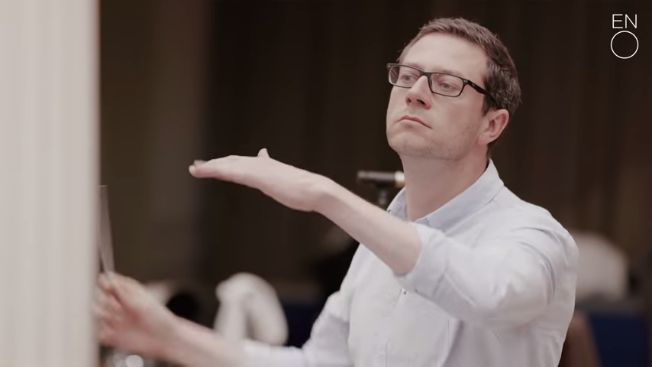
Anthony Tommasini in his New York Times review of the English National Opera’s production of Porgy and Bess described my bonny as the “excellent John Wilson, who led a performance that had sweep, shape and vitality, as well as rarer qualities: precision and restraint”. Here’s our John from this past summer rehearsing “Summertime“. Performances of ENO’s Porgy and Bess run to 17 November.

More about Gershwin and Porgy & Bess:


FULL DRESS // A gifted mesmerist—a sinister composer—a naive young conductor from the north…inspired by an episode from the life of Rachmaninoff // DOWNLOAD FREE BOOK POSTER

Get-a-Room Sexy with Bernadette Peters and Conductor John Mauceri

The Queen of Broadway Bernadette Peters entices conductor John Mauceri with her many, many assets, courtesy of Leonard Bernstein and the great lyric team of Adolph Green and Betty Comden. “I Can Cook, Too” from On the Town. Fun starts here at 4:45.

I'm a pot of joy for a hungry boy,
Baby, I'm cookin' with gas.
Oh, I'm a gumdrop,
A sweet lollipop,
A brook trout right out of the brook,
And what's more, baby, I can cook!

Peters MausceriAbove Peters and Mauceri: Nancy Walker from the original Broadway cast sings this showstopping number.

FULL DRESS // A gifted mesmerist—a sinister composer—a naive young conductor from the north…inspired by an episode from the life of Rachmaninoff // DOWNLOAD FREE BOOK POSTER

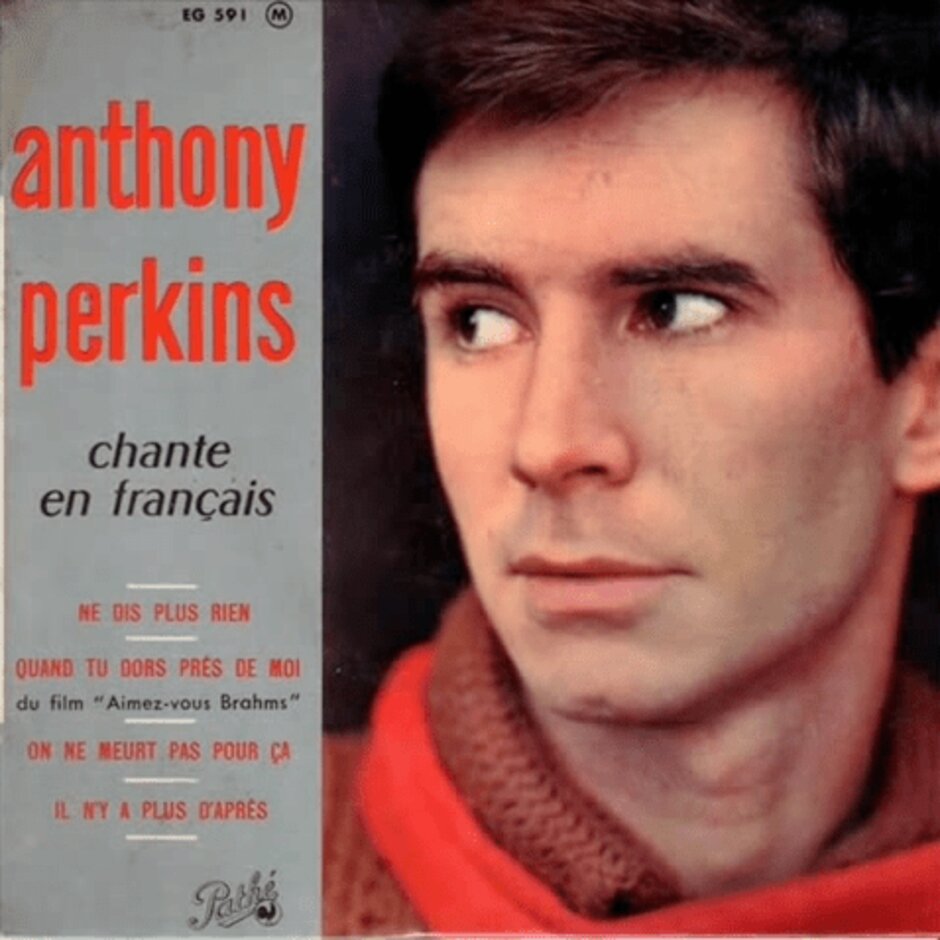
“Quand Tu Dors Près De Moi” from the Film Aimez-Vous Brahms? Sung by Tony Perkins

Straight, gay, sexually messed up by his mother, I still had a major crush on Anthony Perkins when I was a girl; no time more than when he was cast as the fumbling young lover of soignee Parisienne Ingrid Bergman in Goodbye Again (United Artists, 1961) the film version of Francoise Sagan’s novel Aimez-vous Brahms? (Though that he turned her down in real life just kills me.)

quand-tu-dors-precc80s-de-moi (1)

“Quand Tu Dors” is, of course, taken from the 3rd movement of Johannes Brahms’s Third Symphony, and you’ll recognize it when you hear it. That’s Herbert Von Karajan and the Berlin Philharmonic.


FULL DRESS // A gifted mesmerist—a sinister composer—a naive young conductor from the north…inspired by an episode from the life of Rachmaninoff // DOWNLOAD FREE BOOK POSTER