The Silent Musician by Mark Wigglesworth, Richard Wagner, Cosmic Sex, and My Beloved Conductor John Wilson

From 2021: In an earlier post I mentioned that, since May a couple years ago, I’ve been reading books by orchestra conductors on conducting, in order to better glimpse into the unfamiliar heart and mind of my beloved John Wilson. That classic tome written by Richard Wagner was far out, of course, and going back to some of Leonard Bernstein‘s early writings was deeply nostalgic.

But it was my treatment of a book my bonny conductor had on his public Facebook Likes list that done me in—a thin, and thinly humorous, volume written by a coeval of John’s who let out his dirigental insecurities in a tirade of snark that I answered in kind in a long, 4-star Amazon review that I thought was hilarious, which it was, although apparently only to me. I did this to get John’s attention. I got it. John did not like what I wrote. Hence, he learned how to spell my name ab-so-lute-ly correctly.

Now, Mark Wigglesworth has a 30-year career conducting a number of the great operas and a number of the great symphony cycles, to much acclaim. If there is one thing that John’s friend’s book made evident, in its perverted way, it’s the importance of a conductor being holistically grounded, and Wigglesworth is, as we used to say in the 70s, a grounded guy. Not surprising for someone who has Alan Watts on his bookshelf; and since the English-born psychedelic Zen guru of San Francisco is one of my guiding lights too, it was a deep pleasure to read The Silent Musician, Wigglesworth’s musings on his inner/outer artistic journey as a conductor. Wigglesworth, from Sussex, is an acclaimed interpreter of Gustav Mahler as well as Wagner, two creative heavyweights who positively require those who would approach their work to have had a fair look first into their own personal psychological-spiritual makeup. Consider Daniel Barenboim—one artist on the world stage I respect the hell out of—and his own moral / philosophical / logistical grapplings with the Architect of Bayreuth (download his “Wagner and Ideology” here) and let me just say, if Barenboim figured it out I’m satisfied).

Speaking of Wagner, a few years ago Wigglesworth conducted the overture to a Wagner opera I’ll bet you’ve never heard of: Das Liebesverbot, or, The Ban on Love. I only know about this one because I took the mandatory survey course at music school at the university and never ran into it again till now. So this is the first and only thing I’ve ever heard from this opera:

Overture to Das Liebesverbot (1836)
Richard Wagner
Mark Wigglesworth, conductor
BBC Orchestra Wales

Or will ever hear, ever again. Just a bit…Mediterranean, wouldn’t you say?

But what amazes me more is the libretto, because Wagner—get this—chose for his source material the scuzziest, meanest sex comedy ever written, which is, of course, Measure by Measure by William Shakespeare. Yes, at the end hypocrisy is vanquished and everyone gets laid, but eeeeuuwww…

Now, think on the twenty-three year psychological-spiritual journey from Das Liebesverbot to this:

“Mild und leise” from Tristan and Isolde (1859)
Richard Wagner
Daniel Barenboim, conductor
Waltraud Meier, soprano
Beyreuth, 1995

I’m sorry, but when I hear that tune I want to see John’s dear face.

The rest of you, behold Hedy Lamarr and Aribert Mog in Ecstasy (Elektafilm, 1933).


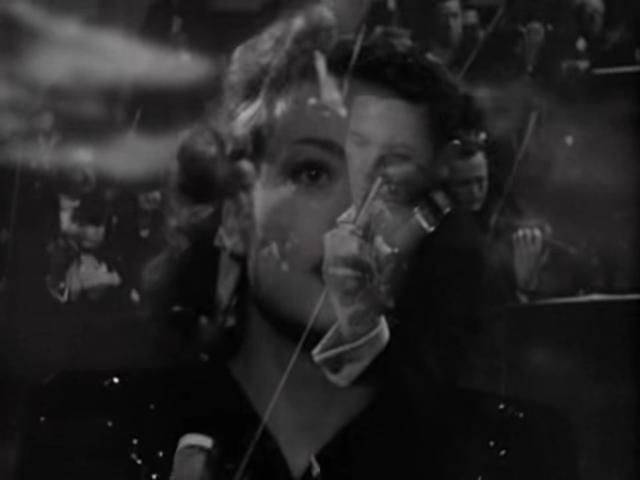
FULL DRESS // A gifted mesmerist—a sinister composer—a naive young conductor from the north…inspired by an episode from the life of Rachmaninoff // DOWNLOAD FREE BOOK POSTER

Directed by My Old Boss, Rouben Mamoulian: Applause, Starring Helen Morgan (Paramount, 1929)

From 2019. Legendary torch singer Helen Morgan (she was the original mulatto Julie in Jerome Kern‘s Showboat) was only 28 when she played the washed-up headliner mother of a chorus girl in this early, early talkie (1929!) which benefits from an excellent sound recording. Filmed over at the Astoria Studio in Queens. Note Mamoulian’s penchant for symbolism: Morgan’s poster like the Holy Madonna hovering over her daughter and daughter’s sweetheart; the rolled-up curtain on the bannister posing as Death. When I saw this shot it hit me then what an artist The Old Man actually was.

Don’t mind the arrows, they’re part of a seminar I’m writing on the works of Mamoulian.

The entire film APPLAUSE is available on my YT channel here


FULL DRESS // A gifted mesmerist—a sinister composer—a naive young conductor from the north…inspired by an episode from the life of Rachmaninoff // DOWNLOAD FREE BOOK POSTER

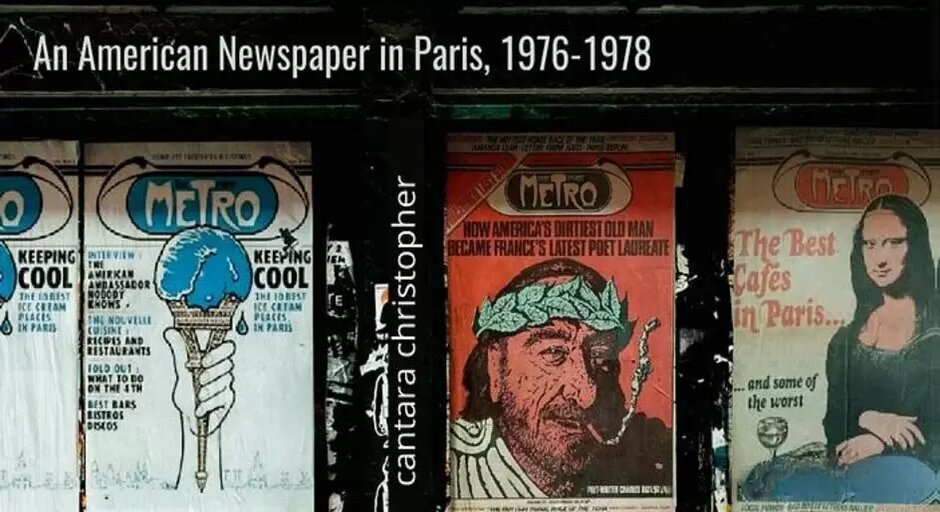
An American Newspaper in Paris, 1976-78

From 2018. On the streets of Paris I sold the coolest American newspaper ever published in Europe


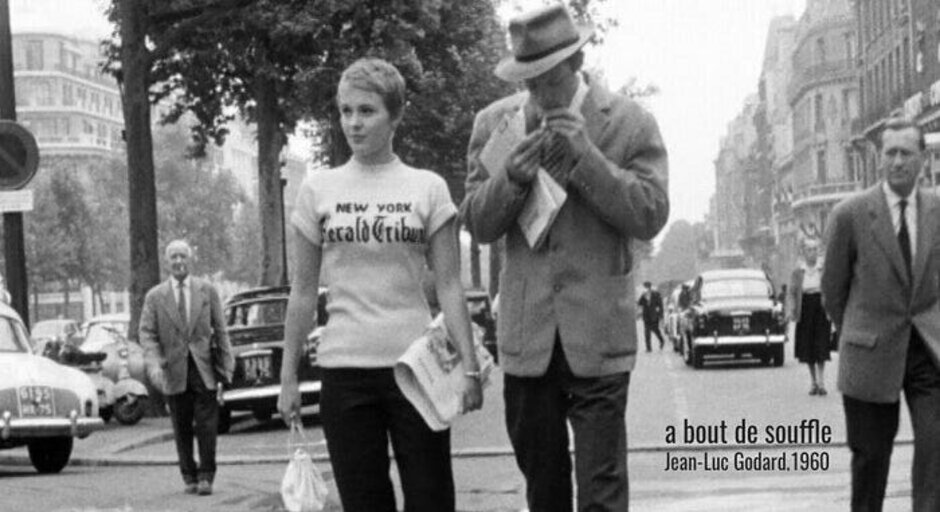
Like Jean Seberg in Jean-Luc Godard’s Breathless, I spent some time in my early 20s sauntering up and down the Champs-Élysées in a sexy logo T-shirt hawking an English-language publication. Not the venerable Herald-Tribune, though: a new bi-weekly started by American journalists, called The Paris Metro.


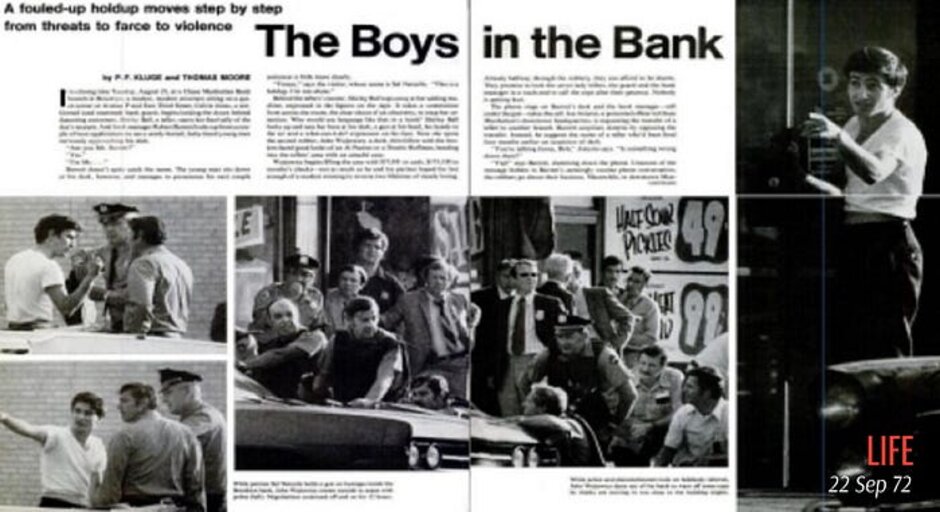
The founding publisher-editor of The Metro was a young guy in his 30s named Tom Moore. Five years earlier Tom had been the leg man for a shared-byline story about a spectacular bank robbery in Brooklyn. The story was published in Life Magazine…


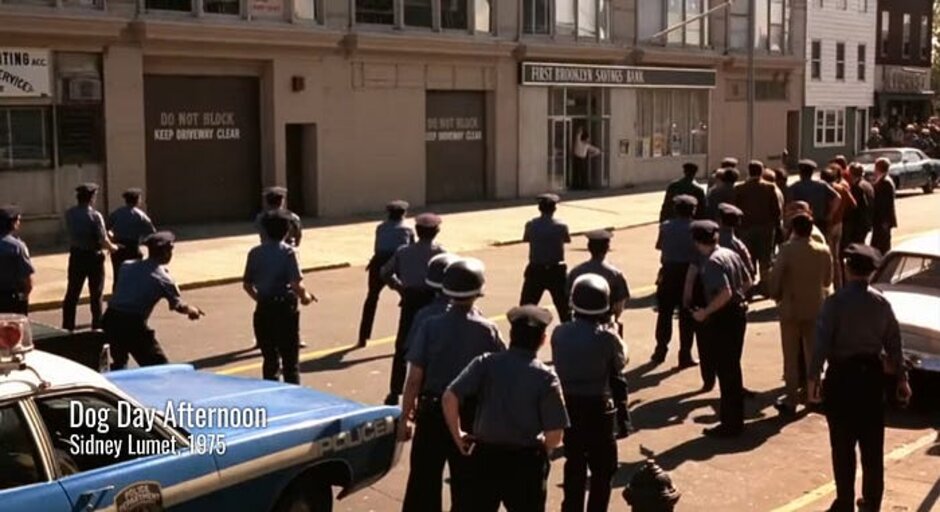
…and was quickly sold to Sidney Lumet’s production company, who came out with this classic movie, three years later:

Here’s the incredible, famous scene where Al Pacino, the greatest American actor of our generation, starts the gawking crowd in a ferocious anti-cop chant. Which was referred to by John Travolta in Saturday Night Fever. If you ever wondered what that was all about: “Attica! Attica!”

With his cut of the proceeds from the sale, Tom traveled to Paris to realize his teenage dream: to enjoy the good life in Paris with a beautiful French woman by his side, and to write about it.

With a couple of journalist cohorts, he founded a city magazine for Paris, a tabloid bi-weekly they launched in June, 1976. It was a good time for city magazines, which in the 70s were cropping up like mushrooms — Boston’s Phoenix, Chicago’s Reader, LA’s Weekly, etc. The ones that lasted were able to last by working the winning three-pronged combination: 1) comprehensive arts and culture coverage; 2) informed, relevant political pieces; 3) sexy classified ads.

Armed with that formula and a close group of writer friends, The Metro was launched in a quiet neighborhood of Paris, the 4th arrondissement.

Art director Christina de Liagre, in The Paris Metro 40th Anniversary Issue (Freelance Ink Books 2016), recalls:

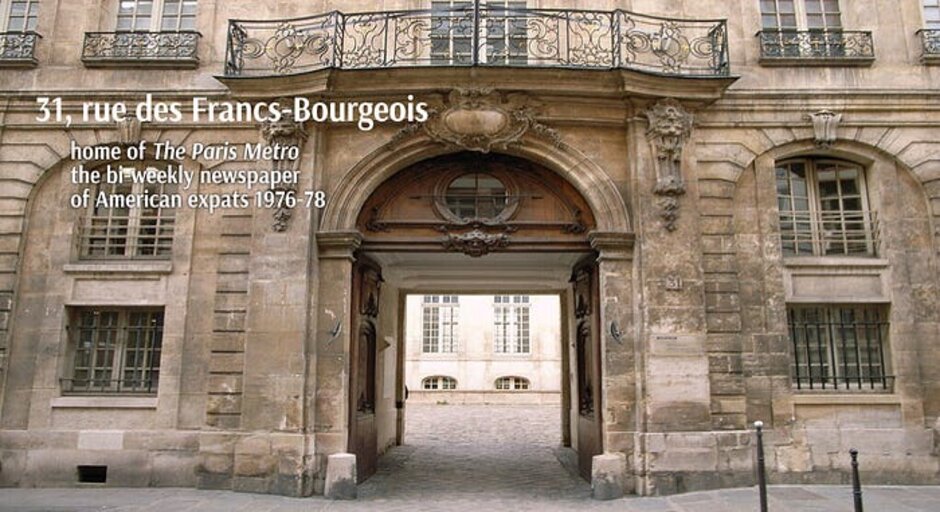
Having the rue Pavée, the rue Rosiers and other streets in the Marais’ Jewish quarter in The Metro’s back yard was one of the real pleasures of our outpost at 31, rue des Francs-Bourgeois, where the renovated l’Hôtel d’Albret currently houses the Direction des Affaires Culturelles of La Mairie de Paris.

Inside that courtyard we street hawkers congregated to receive bundles of the latest issue, right off the press. We paid cost for each copy (2.5F) which we would sell for 5F. On a good day selling I made 100F (about US$20 at the time), which all went to restaurant meals — cheap, but fantastic. Because, you know, Paris.

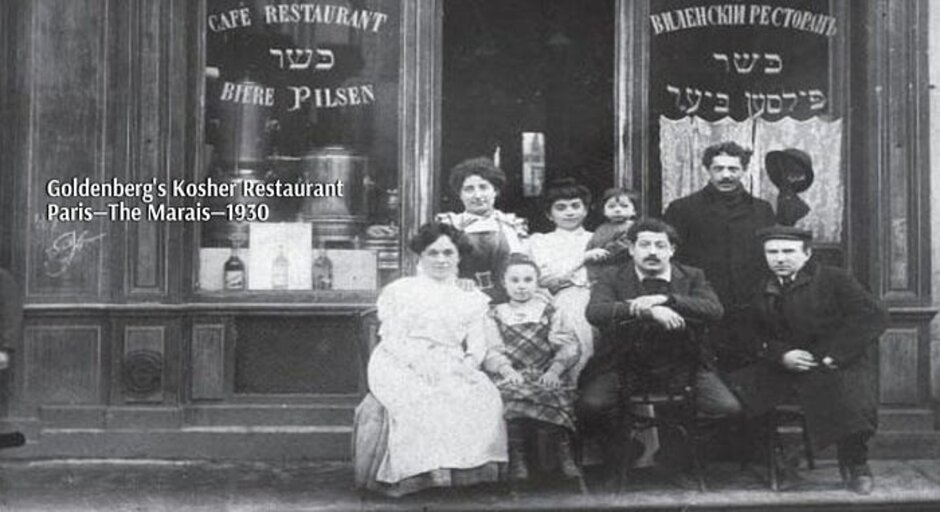
Not yet gentrified, as it is today, the Jewish Quarter had a texture of life that other neighborhoods lacked. The surrounding Marais had been dormant for decades and we were in town to wake it up! Remember naked co-ed nights at the Hamman Saint-Paul, now sadly converted into a clothing store? And meals at Goldenberg’s where the owner Jo would often sit down to reminisce [sic!] about the July 1942 roundup of the Jews. Now racks of “Morpho” jeans have replaced Jo’s famous chopped liver in a boutique called Le Temps des Cerises.


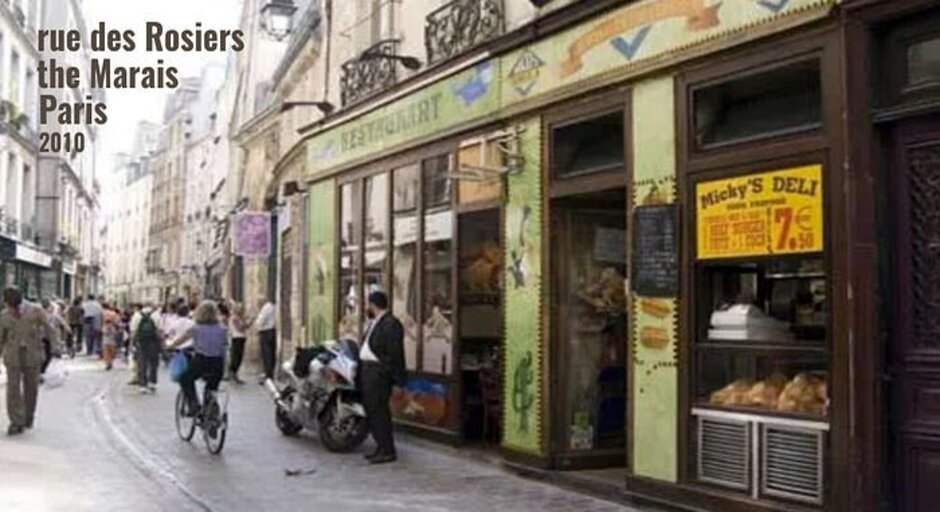
Goldenberg’s was a little pricey for me, but I hung out often on the main street, the rue des Rosiers, with its tabacs and its slightly cheaper (but just as good) delis:


I usually hung out in the city until late in the evening, not forgetting to pack up in time to catch the last train to Neuilly, where I was staying with my American girlfriend and her French snobby-but-sexy artist boyfriend. Nights I missed the train I usually managed to share a bed with someone, courtesy of The Metro’s classifieds (which in its day worked better than Tinder).

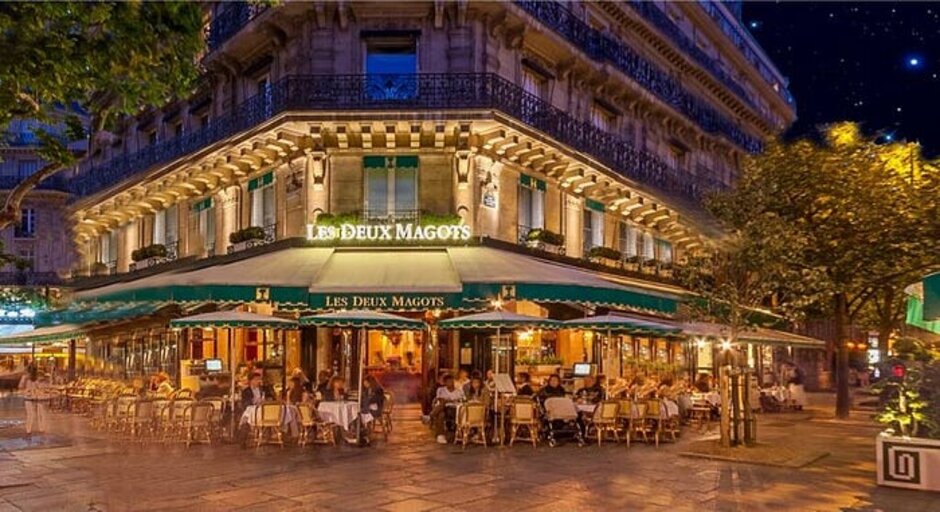
Staying over in town gave me time to saunter up and down the 4th, down the Boulevards Saint-Michel and Saint-Germain des Prés and maybe sell a few extra copies. I did better at Les Deux Magots in the evenings than in the daytime, probably because the view of a braless mignonne asienne selling tabloids in a tight logo T-shirt struck customers as part of the romantic atmosphere.


I never actually did get to sit inside Les Deux Magots, but one evening I had enough on me to get a beer and a meal at the only place in town that knew how to make southwest chili, a place in the 5th called Top Banana. In keeping with their name, they always arranged banana slices, like flower petals, on top of their bowls.

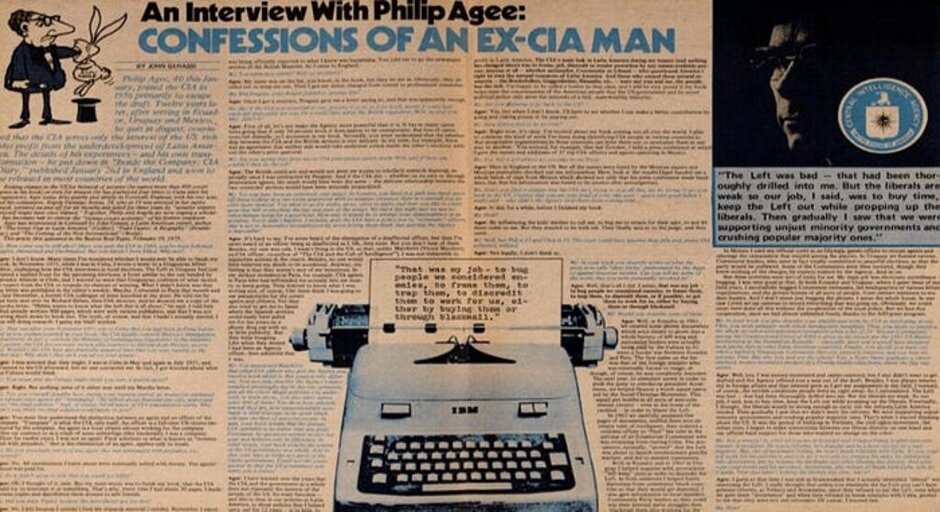
It was here that I encountered the author of Inside the CIA, which was a newly published tell-all book about the nefarious doings of the intelligence agency in South America.


Philip Agee was sitting at the bar with Tom, Harry, and a couple of other hot-to-trot (young, white, male) staff journalists, conversing with great animation. There were other (young, white, male) journos in Top Banana, sitting at a table close by, but they were stringers, not staff writers, and therefore relegated to a distant group, who could only look over longingly at the elect seated at the bar.

Knowing my place, I sat with the stringers. We got along fine, laughing and joking and downing one Stella Artois after another… After a bit, one of the guys, Doug I think was his name, pulled me close and whispered, “Hey, go find out what they’re talking about.” I suppose, being a cute harmless girl, the guys thought I could inveigle my way into their conversation just long enough to find out.

So I mosied over there. No one at the bar paid any attention to me, so I sat at Agee’s elbow patiently gazing up at him, like a starstruck fan waiting for an autograph. Finally he turned to actually look straight down at me.

“Um,” I started pretty shyly, “the guys over there would like to know if you have anything you’d like to share with them…any advice…?”

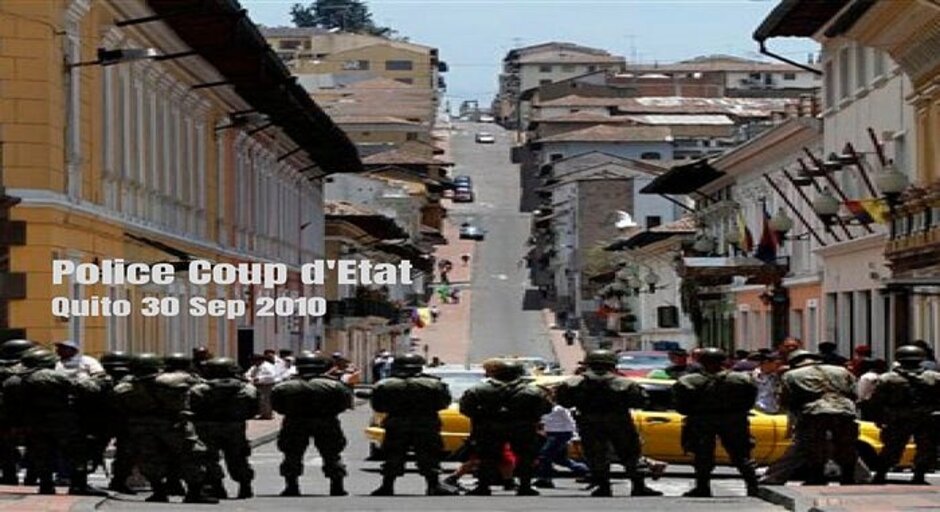
“Yeah!” he snorted. “Don’t go to Ecuador!”

Advice, I’m sorry to say, I failed to heed when my husband and I traveled there on our own special mission, thirty-three years later. But that’s another story.


FULL DRESS // A gifted mesmerist—a sinister composer—a naive young conductor from the north…inspired by an episode from the life of Rachmaninoff // DOWNLOAD FREE BOOK POSTER

To My Beloved English Conductor John Wilson, Who Shares His May 25th Birthday with My Dad; Or, Don’t Call Me a Person Of Color, I’m a Product Of Empire, 3

I mentioned in “A Special Letter to My Beloved John Wilson, After His Appearance with the Sinfonia of London at The Glasshouse, Gateshead UK, 11 November 2023” a railroad tycoon who changed my father’s fortune after they met in St Louis (where my father moved to in order to marry his white fiancee and where he stayed after they broke up). Here’s his name: Winfield Stevens, Sr. He owned a short line (87 miles) called the Minneapolis, Northfield & Southern Railway, which terminated in southern Minnesota in Northfield, a town notable for having waged a short bloody gun battle repelling the James-Younger gang, when those famous outlaws attempted to hold up the First National Bank back in 1876. This is annually celebrated in Northfield’s Defeat of Jesse James Days, complete with souvenir mugs and recreations on Main Street; there’s also on YouTube a swell western starring Robert Duvall as Jesse and dumb old Cliff Robertson as Cole Younger.


How Mr Stevens and my father initially met I’m not quite sure, although I think at this time my dad had gotten into domestic service, maybe even through his white wife (and possibly career housekeeper) Margaret… Because from the first Mr Stevens, liking the cut of his jib so to speak, employed my dad as an all-around house servant—major domo, valet, cook, chauffeur. In those days it was a prestige thing for a successful American (i.e. white) businessman to have an Oriental houseboy, like Sammee Tong in Bachelor Father. This is real Scott Fitzgerald country.

Then when the old man died his son and heir, Winfield Stevens Jr, took over the railroad business and added to that his own Buick dealership. Mr Stevens Jr, being more of a family man, didn’t need a valet, so he got a job for dad with the MN&S in the yard so Dad could join the railroad union and start racking up benefits. He also paid Dad off the books to cook for his family on Sundays (which is when I would see my father dress for work in his crisp, clean white short-sleeved shirt and black bow tie); and during the hunting season he would cook for Mr Stevens and his railroad cronies wherever they were shooting. These two, three times a year Dad would come home with a side of venison or a brace of pheasants which, I don’t know how he did it, he managed to cook pretty tastily. Probably it was the soy sauce, garlic and vinegar.

I went on one of these trips with my dad a couple times in ’63 when I was eight. It was fun, sleeping in the top bunk of a compartment all alone (dad slept with the men on the other side) in a railroad-car-turned-hunting-cabin, being so deep in the woods. And you can’t beat the Minnesota woodland, old and mysterious and full of Chippewa lore.

EXTRA! The Kingston Trio sing a rousing “The Ballad of Jesse James”.


FULL DRESS // A gifted mesmerist—a sinister composer—a naive young conductor from the north…inspired by an episode from the life of Rachmaninoff // DOWNLOAD FREE BOOK POSTER

On My Beloved English Conductor John Wilson—Rachmaninoff’s 2nd Piano Concerto—Sehnsucht—and Why I Write

From July 2023: I write in order to have a place in which to report on three things—connection, association, and context. Otherwise I’d just talk to God, and She knows these things already.

MY BELOVED JOHN WILSON

If you passed him on the street you wouldn’t look twice. He doesn’t have the most scintillating intellect, either… But his qualities as a musician have stirred and inspired me and sometimes when he conducts I feel so close to him I can almost smell his hair. This Sunday he’s going to be conducting Rach’s Piano 2 and I’m going to go to pieces.


Find the entire film BRIEF ENCOUNTER on my YT channel here


And if Eileen Joyce’s rendition isn’t enough for you, here’re two from Anna Fedorova at the Concertgebouw:

From Jeremy Paxman’s 1998 The English: A Portrait of a People:

Take David Lean’s 1945 tale of forbidden love, Brief Encounter. The couple meet in the tearoom of a railway station, where she is waiting for the steam train home after a day’s shopping. A speck of coal dirt gets caught in her eye and, without a word of introduction, the gallant local doctor steps forward and removes it. The following eighty minutes of this beautifully written movie depict their deepening love and guilt each feels about it. …

As Rachmaninov’s Second Piano Concerto comes and goes in the background, their affair unfolds, measured out in cups of tea in the waiting room of Milford station. … Being English, Celia Johnson feels no animosity towards her husband, whom she considers “kindly and unemotional”. Trevor Howard, equally trapped in a dry marriage, also expresses no hostility towards his wife and children. But the two of them are in the force of a passion they can hardly control. “We must be sensible,” is the constant refrain. “If we control ourselves, there’s still time.” In the end, despite all the protestations of undying devotion, the romance remains unconsummated…

What does this most popular of English films tell us about the English?


FULL DRESS // A gifted mesmerist—a sinister composer—a naive young conductor from the north…inspired by an episode from the life of Rachmaninoff // DOWNLOAD FREE BOOK POSTER

Erich Wolfgang Korngold’s Symphony in F-sharp—John Wilson Conducting the Sinfonia of London (Chandos, 2019)

I was an admirer of Korngold ever since I played violin in The Snowman in the orchestra in junior high (reduced score of course; here’s the full score of the Entr’acte), then as a solfeggist at ASCAP in NY around the time RCA was coming out with Charles Gerhardt‘s definitive recordings of Captain Blood, The Sea Hawk, Robin Hood, etc. Then years later in San Francisco I inherited a friend’s collection of Andre Previn and the London Symphony Orchestra, which included Korngold’s Symphony in F-sharp.

Maybe it was from associating the Previn recording with my friend’s death, but I grew to detest the sound of late Korngold. He began to sound false to me—the result, I reasoned, of all those corrupting years in Hollywood. And Previn was his perfect interpreter, of course, two Hollywood minds as one, you might say. Doesn’t, in fact, the first movement sound like a medley of The Ten Best TV Cop Show Themes and Their Underscorings? And then the ringer in the Adagio: The Private Life of Elizabeth and Essex (John Wilson+Sinfonia of London), so recognizable from the movie.

Elizabeth and Essex Warners 1939
Bette Davis portrays Queen Elizabeth, Errol Flynn her faithful but ambitious lover in this sumptuous costume drama. Warner Bros, 1939


The complete THE PRIVATES LIVES OF ELIZABETH AND ESSEX is available to watch here


And so I was content to continue in this apprehension, until Chandos came out last week with a new recording of Korngold’s symphony, played by the newly re-formed Sinfonia of London and conducted by—wait for it—John Wilson. By now, I think I’ve made my feelings clear about John just a little. Whenever he gets really irritating though there’s one thing that I do: I make myself remember the times my bonny lad has absolutely astonished me. The first time was fourteen, fifteen years ago in a screening room in LA when the band from nowhere just ripped into that hack hit “Beyond the Sea” and made it truly soar. The second time was a few years later when I heard the sound, THE EXACT SOUND!!!, of that ultra-Judy number from Meet Me In St Louis“The Trolley Song”, only bigger, more vibrant, more—present.

This is the third time. Who would have thought that a smaller, tighter orchestra, conducted by someone coming in without preconceptions but with a determination to follow through with the composer’s intent, could make a composition sound like an entirely different composition? John said somewhere once that he endeavors to give each musical piece he “takes on board” its correct coloring (which I might believe if he weren’t so maddeningly inconsistent) but here he does the remarkable: Where Previn colors all over the place, trying to make the music into something it’s not, John colors very little. Rather it sounds like, as I say, he actually worked out the composer’s intent to carry him through, and it’s pretty clear that Korngold meant for Symphony in F-sharp to take its rightful place in the Great Central European Repertoire, with its traditional wealth of tonal expressiveness.

So why oh why do some people insist this piece is movie trash? Is it because of that handful of notes from E+E? I swear to God I didn’t hear any other filmic callbacks, and I’m pretty good at catching tunes. But so what if there were? Korngold, unlike the majority of movie composers, retained legal possession of his studio work, which gave him the freedom to rework any of his past themes and phrases as he saw fit. He certainly wasn’t thinking of the flicks once he returned to Europe. Maybe his attachment to these notes was purely sentimental. We’ll never know. It’s a mystery, and I choose to believe that John, consummate musician, respects that mystery.

Anyway John, my signal, my flame, as you’ve done with so many other composers, thanks for leading me back to Erich Korngold. It’s a wonderful recording, a keeper, now the standard against which I’m judging every Korngold Symphony in F-sharp out there (and there are a lot of them, not just Previn’s, as you know), and I would’ve bought it even if I weren’t crazy in love with you.

I Moderato
II Scherzo Allegro
III Adagio Lento
IV Allegro Finale

NOTES for Korngold: Symphony in F (Chandos, 2019) can be found here.


FULL DRESS // A gifted mesmerist—a sinister composer—a naive young conductor from the north…inspired by an episode from the life of Rachmaninoff // DOWNLOAD FREE BOOK POSTER

“They Call the Wind Mariah” by Lerner + Loewe Sung by the Smothers Brothers, Rescuing a Fine Song from the Smelliest, Most Offensive Movie Musical Ever

Of course there’s no “h” in the actual title but I’m putting it in anyway to alert singers to the long vowel because the money-grubbing whore who wrote the lyrics to this Broadway musical standard didn’t give two shits for singers.

Above: After some silliness, the boys deliver a splendid rendition of the Frederick Loewe standard, “They Call the Wind Mariah” from Paint Your Wagon (Broadway, 1951)

I, however, have a lot of affection and admiration for Berlin-born-and-trained composer Frederick Loewe, who wrote the most tuneful, singable melodies on Broadway, up there with Richard Rodgers and Jerome Kern. Loewe was right not to want to have anything to do with the big-screen disaster, Paint Your Wagon, which plowed on without him (Paramount, 1969), messing up Josh Logan, Paddy Chayefsky(!), Jean Seberg, Lee Marvin, Clint Eastwood, et al, in its trail…

The only way to read the 1969 film (and I don’t recommend watching it for pleasure ever ever ever, not even for yummy Clint) is to look at it like a late-60s hippie festival, complete with trees, mud, and crazy sex. (You know, like Woodstock…) The absolutely unreal pluralism of the background characters—Jews, Italians, whites (but no blacks), Chinese dressed in brocade with their wives(!?) all living in this dirty mining camp (a dirty mining camp where men politely doff their hats to white women) peacefully together—is another hippie fantasy, with a dollop of Chayefsky the liberal (of Marty and Network fame) added.

The one good thing in this pile of offal is the song, “They Call the Wind Mariah”, sung incongruously by Harve Presnell; but beautifully and hauntingly here by, of all people, the Smothers Brothers, the shining jokester-balladeer heroes of my youth. (Adding to their luster: as wartime US Army brats, they spent part of their childhood in the Philippines.)

Here’s hoping you haven’t watched/heard Paint Your Wagon. If you have, and the Andre Previn interpolations made you (like me) sick*, here are two lovely selections from the pen of Frederick Loewe, rendered by my bonny John Wilson and his various orchestras:

*…And that blustering Hollywood chickenshit should’ve punched Woody Allen in the nose.


FULL DRESS // A gifted mesmerist—a sinister composer—a naive young conductor from the north…inspired by an episode from the life of Rachmaninoff // DOWNLOAD FREE BOOK POSTER

Peter Sellers in The World of Henry Orient with Some Elmer Bernstein Thrown In, Just for My Beloved John Wilson, Conductor for His Winding Down After Concertizing

From 2021.

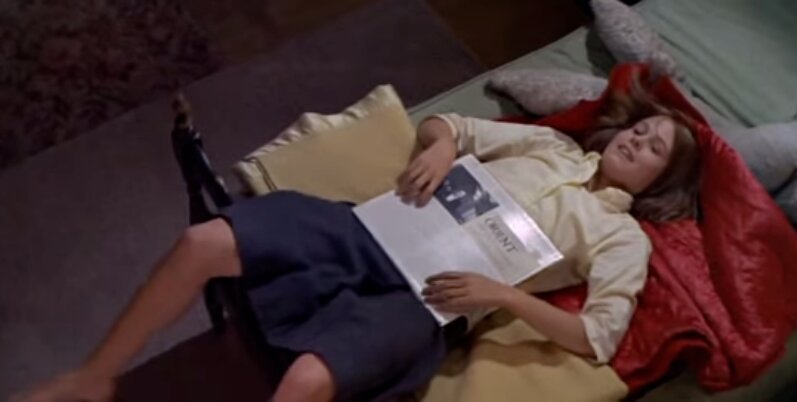
Val: I love him anyway. I adore him! You can tell the whole world if you want to that I, Valerie Campbell Boyd, love and adore the great and beautiful and wonderful Henry Orient, world without end, amen. (to Marian Gilbert, shows album cover with Orient’s face) Isn’t he absolutely divine?

Marian: He really is cute…but I thought you said he needed practice.

Val: Oh Gilbert, have you no soul? Of course he needs practice. Especially on the scales. (moans) But this is LOVE, Gil! (sinks back on bed holding album) Oh, my dreamy dream of dreams! My beautiful, adorable, oriental Henry! How can I prove to you that I’m yours?

Val's in Love.jpgNovelist/screenwriter Nora Johnson had an intense teenage crush on Oscar Levant, hence the cute name for Valerie’s true love. From The World of Henry Orient (United Artists, 1964), starring Peter Sellers. The enormously inventive and amusing Elmer Bernstein score is represented here by the sweet Main Title above.


The entire film THE WORLD OF HENRY ORIENT is available to watch here


FULL DRESS // A gifted mesmerist—a sinister composer—a naive young conductor from the north…inspired by an episode from the life of Rachmaninoff // DOWNLOAD FREE BOOK POSTER

Paris Trout with Dennis Hopper and Barbara Hershey, Directed by Stephen Gyllenhaal 1991, Plus Trash Talk from Some Under-Educated White Girls


From 2019: Search the term “bottle+rape+scene+dennis+hopper” and you’ll likely be sent to this entire film, my ex-friend Steve Gyllenhaal’s second feature directorial effort (at 42) and Hopper’s purportedly favorite role. Bottle rape at 42:00. There’s a creepy, dreamy, nasty edge in almost all the sex scenes of Steve’s movies, something I think he picked up from David Lynch in imitation of the form—but not the substance—of Lynch’s genius sex-weirdness… Steve, you might remember, directed the 20th episode of the 2nd season of Twin Peaks. But no, nothing of Lynch’s great vision rubbed off on Stephen; ever a journeyman, he was (and I say was, he’s no longer doing feature films, he’s making his bread shooting TED talks nowadays) more in the same bag with those mediocre, cold “auteurs” of his era John Carpenter and David Cronenberg.

If we were still talking I’d probably bring it up, but as he seems to have gone permanently off the rails with his bizarre blog (now defunct) and his equally bizarre 2012 Kickstarter(!) campaign I figure it would be pointless now.

UPDATE 11 Nov 19: Looks like Steve’s getting me in hot water again. Check out these now-archived bizarre reactions to this posting in the Hollywood Babylon group on Facebook. These females and their insulting, sexist, racist remarks impressed me so much I used their names in my latest porn novel.

UPDATE 11 Dec 2023: Lookee what I found still hanging around the internet! A full-scale takedown of me (a rehash of that takedown on the old Gawker) on a fan website dedicated to Jake Gyllenhaal—remember him?—from 2009 called OhNoTheyDidn’t, now archived here. Smelly unclean stuff. And you wonder why I dislike under-educated white girls. The book (really an academic paper, more or less) under discussion is A Poet from Hollywood: Love, Insanity, Stephen Gyllenhaal, and the Creative Process which I wrote in 2012.


FULL DRESS // A gifted mesmerist—a sinister composer—a naive young conductor from the north…inspired by an episode from the life of Rachmaninoff // DOWNLOAD FREE BOOK POSTER

The Music of Humoresque (Jean Negulesco dir, Warner Bros 1946): Lalo, Waxman, Wagner etc; Plus My Persistent Desire for BBC Conductor John Wilson

This is Joan Crawford at her witchiest, which could only be brought out by operatically tragic love. Of course it’s over a musician.

It also has Oscar Levant. Oscar Levant! Novelist Nora Johnson’s object of primal teenage lust!

And it’s just a gorgeously-shot movie (by Ernest Haller, a good friend of Crawford).


The entire film HUMORESQUE (1940) is available to watch here


Fourthly, the music (see below)…

Humoresque

Above: “City Montage” from Humoresque by Franz Waxman. John Musto, Russell Warner arrangers; Andrew Litton conducts the London Symphony Orchestra.


I’ll add links as I find them and like them one of these days:

  • Antonín Dvorák / Humoresque, op 101 no 7 in G-flat major
  • Howard Dietz+Arthur Schwartz / I Guess I’ll Have To Change My Plan
  • Richard Rodgers+Lorenz Hart / My Heart Stood Still
  • Cole Porter / You Do Something to Me
  • Cole Porter / What Is This Thing Called Love?
  • James F Hanley / Zing! Went The Strings Of My Heart
  • Al Dubin+Harry Warren / Don’t Say Good-Night
  • George+Ira Gershwin / Embraceable You
  • George Gershwin / Prelude II
  • George Gershwin / Prelude III
  • Frederic Chopin / Etude in G-flat major op 10 no 5
  • Frederic Chopin / Ballade No 4 in F minor op 52
  • Richard Wagner / Liebestod from Tristan und Isolde
  • Georges Bizet, Franz Waxman arr / Carmen Fantasie
  • Edouard Lalo / Symphonie espagnole in D minor op 21
  • Felix Mendelssohn / Violin Concerto in E minor op 64
  • Franz von Suppé / Poet and Peasant Overture
  • Pablo de Sarasate / Zigeunerweisen (Gypsy Airs) op 20
  • Pyotr Ilyich Tchaikovsky / Violin Concerto in D major op 35
  • Henryk Wieniawski / Violin Concerto No 2 in D minor op 22
  • César Franck / Sonata for Violin and Piano in A major
  • Edvard Grieg / Piano Concerto in A minor op 16
  • Sergei Prokofiev / Piano Concerto No 3 in C major op 26
  • Dmitri Shostakovich / Polka from the ballet The Golden Age op 22
  • Johannes Brahms / Waltz in A-flat major op 39 no 15
  • Johann Sebastian Bach / Sonata No 1 in G minor BWV 1001
  • Nikolai Rimsky-Korsakov / Flight of the Bumblebee

FULL DRESS // A gifted mesmerist—a sinister composer—a naive young conductor from the north…inspired by an episode from the life of Rachmaninoff // DOWNLOAD FREE BOOK POSTER

Edward Herrmann (21 July 1943 – 31 December 2014) and Stephen Sondheim’s Love Theme for the Film, Reds (Paramount, 1981)

You once asked me about the Little Flower. Still miss you, tender comrade.

Above: The Love Theme “Goodbye for Now” from the 1981 film “Reds, composed by Stephen Sondheim.


And here’s a lovely memory from the November 2016 Vanity Fair.


FULL DRESS // A gifted mesmerist—a sinister composer—a naive young conductor from the north…inspired by an episode from the life of Rachmaninoff // DOWNLOAD FREE BOOK POSTER

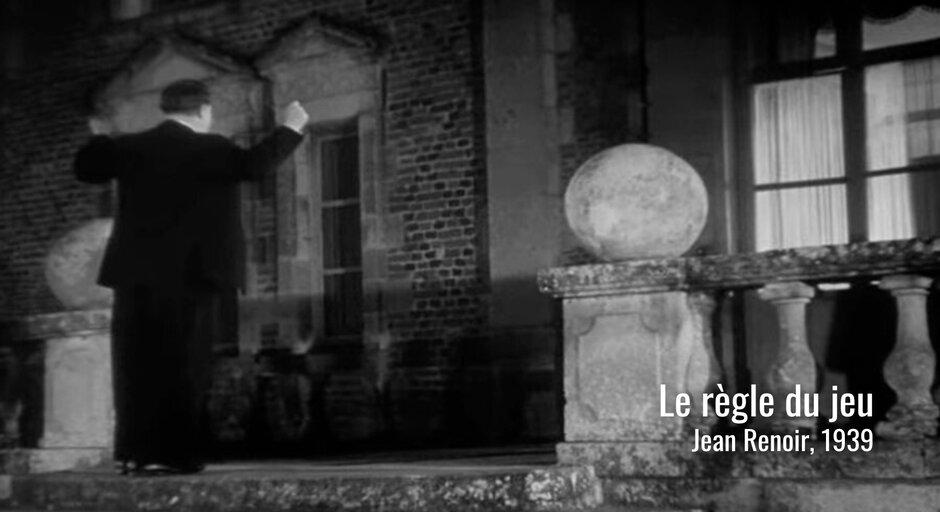
La règle du jeu (Jean Renoir, 1939)


The entire film RULES OF THE GAME is available here


FULL DRESS // A gifted mesmerist—a sinister composer—a naive young conductor from the north…inspired by an episode from the life of Rachmaninoff // DOWNLOAD FREE BOOK POSTER

Pre-Code Thrillers and The First Porn Movie I Ever Did, 2

I booked my first acting gig as a result of getting into a bondage game with that producer from England with the hot tub. Pau—sorry, think I’ll call him Basingstoke* from now on—and I were fooling around in his sex dungeon when he asked me if the place was giving me any story ideas. This is how movies are born.

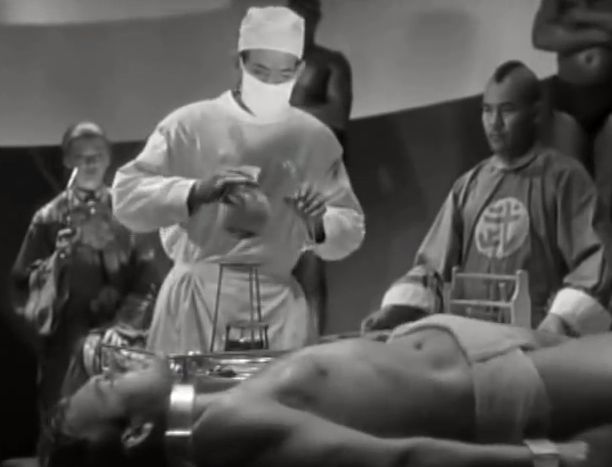
I told him it reminded me of one of my favorite flicks from the golden pre-Code days, The Mask of Fu Manchu (MGM, 1932), starring Boris Karloff as Fu Manchu and Myrna Loy as his “ugly and insignificant” daughter, Fah Lo See. With Karen Morley, Charles Starrett, etc etc and a cast of literally hundreds of male extras of various types. Was especially partial to the oiled and muscular mamelukes.


“Torturing Terence” from THE MASK OF FU MANCHU is available on my YT channel here / The entire film is available to watch here


mask of fu manchuFah Lo See watches with lust-crazed eyes as her dad turns the handsome English adventurer into her zombie love slave. She promises to be gentle, John.

Part 1 “Full Dress” here.
Part 3 “Sausalito Hot Tub” here.
Part 4 “Lovelace” here.

*All in affection, Paul.


FULL DRESS // A gifted mesmerist—a sinister composer—a naive young conductor from the north…inspired by an episode from the life of Rachmaninoff // DOWNLOAD FREE BOOK POSTER

Billy Wilder & IAL Diamond’s The Private Life of Sherlock Holmes, Scored by Miklós Rózsa (Mirisch, 1970)

I have a lot of toasty warm affection for this underrated movie (which I saw second-run in Minneapolis the summer before I started music school), not least because of Hungarian-born Miklós Rózsa‘s score, which he based on his Violin Concerto, op 24.

the private life of sherlock holmes bw
Robert Stephens as the great detective and Genevieve Page as his latest client. Yes, that’s Sherlock Holmes embracing a beautiful, nude, warm and willing woman while heroically subduing his id.


This is Austrian-born Wilder and Romanian-born Diamond at their best, examining—through impish Hollywood eyes, of course—that weird combination of emotional reticence and superciliousness that makes English men just sooo attractive. Their great detective, however, turns out in the end (not to give anything away) to be a lonely man, unsophisticated, profoundly vulnerable, and something of a loser. Stephens’s highly original performance makes his my favorite Holmes of all.


The entire film THE PRIVATE LIFE OF SHERLOCK HOLMES is available here


FULL DRESS // A gifted mesmerist—a sinister composer—a naive young conductor from the north…inspired by an episode from the life of Rachmaninoff // DOWNLOAD FREE BOOK POSTER