“Leopold! Leopold!”

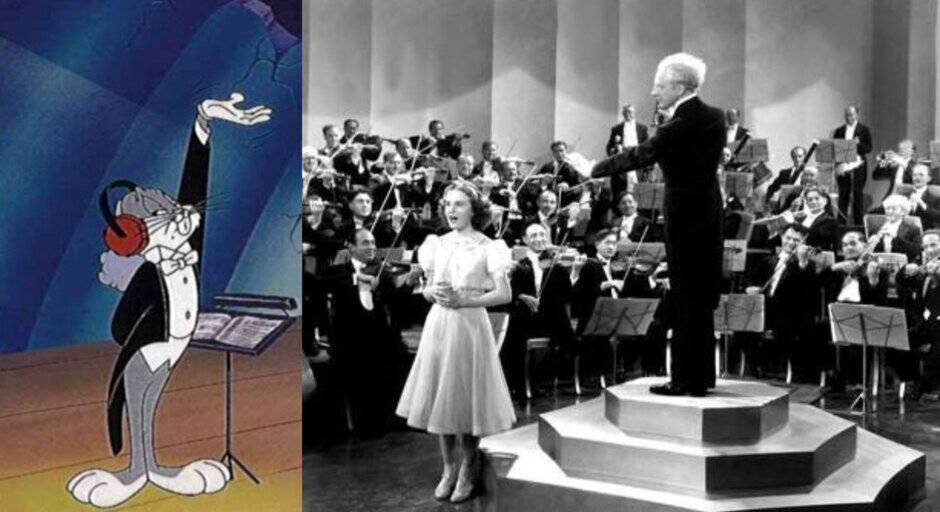
Here’s Stokowski, international maestro (and, like my beloved John Wilson, a graduate of the Royal College of Music) in my second favorite Deanna Durbin movie: 100 Men and a Girl. Directed by Henry Koster. Universal, 1937. Andre Previn‘s great-uncle Charles Previn, musical director, arranger, composer and conductor at Universal, won an Oscar for his score for 100 Men and a Girl. While at Universal, Previn accumulated over 225 films to his credit, including most of Deanna Durbin’s films.

The bass-baritone in the Bugs Bunny classic “Long-Haired Hare” (Warner Bros 1949), where the title of this posting comes from, is voiced by bass-baritone SF native (and, like my son, a former pupil at Mission High School) Nicolai Shutorev.


FULL DRESS // A gifted mesmerist—a sinister composer—a naive young conductor from the north…inspired by an episode from the life of Rachmaninoff // DOWNLOAD FREE BOOK POSTER

My First Music: Friday Night Is Music Night with the BBC Concert Orchestra, Conducted by the Oh-So-Kissable John Wilson, August 2005

At around the same time of life the oh-so-kissable John Wilson was a wee bairn in Gateshead falling out of his high chair in excitement over the brand-new BBC news theme, I was in my playpen in the living room of the old one-bedroom apartment in South Minneapolis jumping up and down in excitement to the theme of Captain Kangaroo on TV.

Now here we are with my darling 33-year-old (in 2005) lad on the podium in the first televised broadcast of this longtime radio fixture, and I get to find out the titles of all those excerpts and show themes I’ve heard on the Beeb for years. The sign-in music, incidentally, is Charles Williams‘s “High Adventure.”

A Little Light MusicI will never understand the English tradition of drag. Now, the American tradition of drag, like future husband Mister Grumble doing his Twiggy impersonation at a gay revue in Dallas back in 1964—THAT’s hot. Above John and his admirer: Audio of the entire Friday Night Is Music Night program, “A Little Light Music”.


The program: “The Devil’s Galop” (Dick Barton Special Agent, Monty Python) / Charles Williams; “Portrait of a Flirt” / Robert Farnon; “The Lion and Albert” (comic verse) / Marriott Edgar; March from “Little Suite” (Dr Finlay’s Casebook) / Trevor Duncan; “Barwick Green” (The Archers) / Arthur Wood; “The Typewriter” (The News Quiz) / Leroy Anderson; “Roses of Picardy” / Haydn Wood; “Calling All Workers” (Music While You Work) / Eric Coates; “By the Sleepy Lagoon” (Desert Island Discs) / Eric Coates; “A Canadian in Mayfair” / Angela Morley; “In a Party Mood” / Jack Strachey; “Sailing By” (The Shipping Forecast) / Ronald Binge; “Charmaine” (Monty Python) / Erno Rapee; “Puffin’ Billy” (Captain Kangaroo!!!) at 47:00 / Edward White; “Birdsongs at Eventide” / Eric Coates; “The Dam Busters” March (from the 1954 film) / Eric Coates. Janis Kelly, soprano. Roy Hudd, host.


FULL DRESS // A gifted mesmerist—a sinister composer—a naive young conductor from the north…inspired by an episode from the life of Rachmaninoff // DOWNLOAD FREE BOOK POSTER

Stephen Sondheim, Earl Wrightson, and Irwin Kostal, Leonard Bernstein’s Legendary Orchestrator, On American Musical Theatre, WCBS, 15 October 1961

In an episode of this television series (available on my YT channel here), originally broadcast exclusively in New York City, Sondheim speaks before a workshop of NYC high school students, discussing the genesis of such songs as “Small World”, “I Feel Pretty”, and “One Hand, One Heart,” which are performed by Martha Wright and Ralph Curtis.

This show also includes question and answer period with Irwin Kostal, arranger and conductor for West Side Story. Hosted by Earl Wrightson. Produced by Ned Cramer. Directed by Neal Finn.

  • Everything’s Coming Up Roses – The CBS Orchestra
  • Small World – Martha Wright
  • Maria – Ralph Curtis
  • I Feel Pretty – Martha Wright
  • Tonight (Balcony Scene) – Ralph Curtis and Martha Wright
  • One Hand, One Heart – Ralph Curtis and Martha Wright
  • Mambo – The CBS Orchestra
  • Cool (Fugue) – The CBS Orchestra
  • Everything’s Coming Up Roses (reprise) – The CBS Orchestra

Sondheim, Wrightson, KostalAbove: Lyricist-Composer Stephen Sondheim, Baritone/Host Earl Wrightson, Orchestrator-Conductor Irwin Kostal. Again, here’s the clip on YT that provides a rare glimpse into the creative life of Sondheim and Kostal.


Here’s an excerpt transcription:

Mr Kostal, what is the difference between an orchestrator and an arranger?

It refers specifically to what you find on the music. When a composer composes a piece of music, we hope that it’s a complete piece of music, and when a man like Mr Bernstein composes the music (short laugh) it is. So all you do, you just discuss with him what he’d like to hear, flutes, violins…and you follow exactly what is written on the paper. This is what I call orchestration. Now, I get to do very little of that kind of work…because nowadays composers don’t bother with too much detail…

Steve [Sondheim] here is the kind of man we need because he’s studying music, and believe me that is a rarity on Broadway, because most composers don’t… At one time in history, composers actually did their own orchestration. They had the time in those days…but also, they could do it. For instance, Victor Herbert was a tremendous orchestrator. On one television show I did recently I actually used Mr Herbert’s scores as he wrote them in 1916—I couldn’t do ‘em any better. He knew what he was doing. Kurt Weill was the last one to do this. George Gershwin never did it on Broadway, but he—after he became a successful songwriter—studied music and learned how to orchestrate so that by the time he did Porgy and Bess he was able to do a very good job on the orchestrations.

Now, in arranging—if the composer does not do his job properly, the orchestrator has to come in and finish the job for him. Now, you’d be surprised how many times I do Broadway shows where I get roughly a one-line melody, a lead sheet, and I have to add the bass line, the harmony, the chords, and if it goes on for four minutes or a routine I have to think of things for the flutes to play and the violins to play etcetera, and it becomes a hefty job and I really feel like I am a composer’s partner when I do this*… You know, the more you do of this sort of work, the less the composer likes it. Because he’s kind of mad at you because he didn’t do it himself, I think anyway. And it serves him right. He should do it himself. I think he should go to school himself and learn. We have too many lead sheets—sure, the melody is the most important thing in music, but too many of our composers have decided to write only the melody. They have separated melody from music. Now, the art of melody writing is not a separate art from music, it’s a part of music. And when they have written this top line and leave the rest to me, they’ve got to be dissatisfied because they didn’t do it themselves. Let them get down to their business and go to school and learn to write!

[*I wonder who’s he’s talking about. Shinbone Alley’s George Kleinsinger? Fiorello’s Jerry Bock? Surely not The Music Man’s Meredith Willson—Willson went to Juilliard.]


FULL DRESS // A gifted mesmerist—a sinister composer—a naive young conductor from the north…inspired by an episode from the life of Rachmaninoff // DOWNLOAD FREE BOOK POSTER

Lovelace the Film, Or How to Give Penilingism a Bad Name and The First Porn Movie I Ever Did, 4

I only caught this flick on Prime because Peter was in it, and Peter’s the only Gyllenhaal I think I’d actually enjoy having a beer with even now. The last time we met in New York he had just done Jarhead. Maggie was six months pregnant and being fussed over by her mother, Stephen was in the men’s room on his Blackberry talking to his analyst, and Jake was skulking outside the restaurant—we were at Balthazar—wearing a hoodie and hiding in the shadows. It was that kind of family.

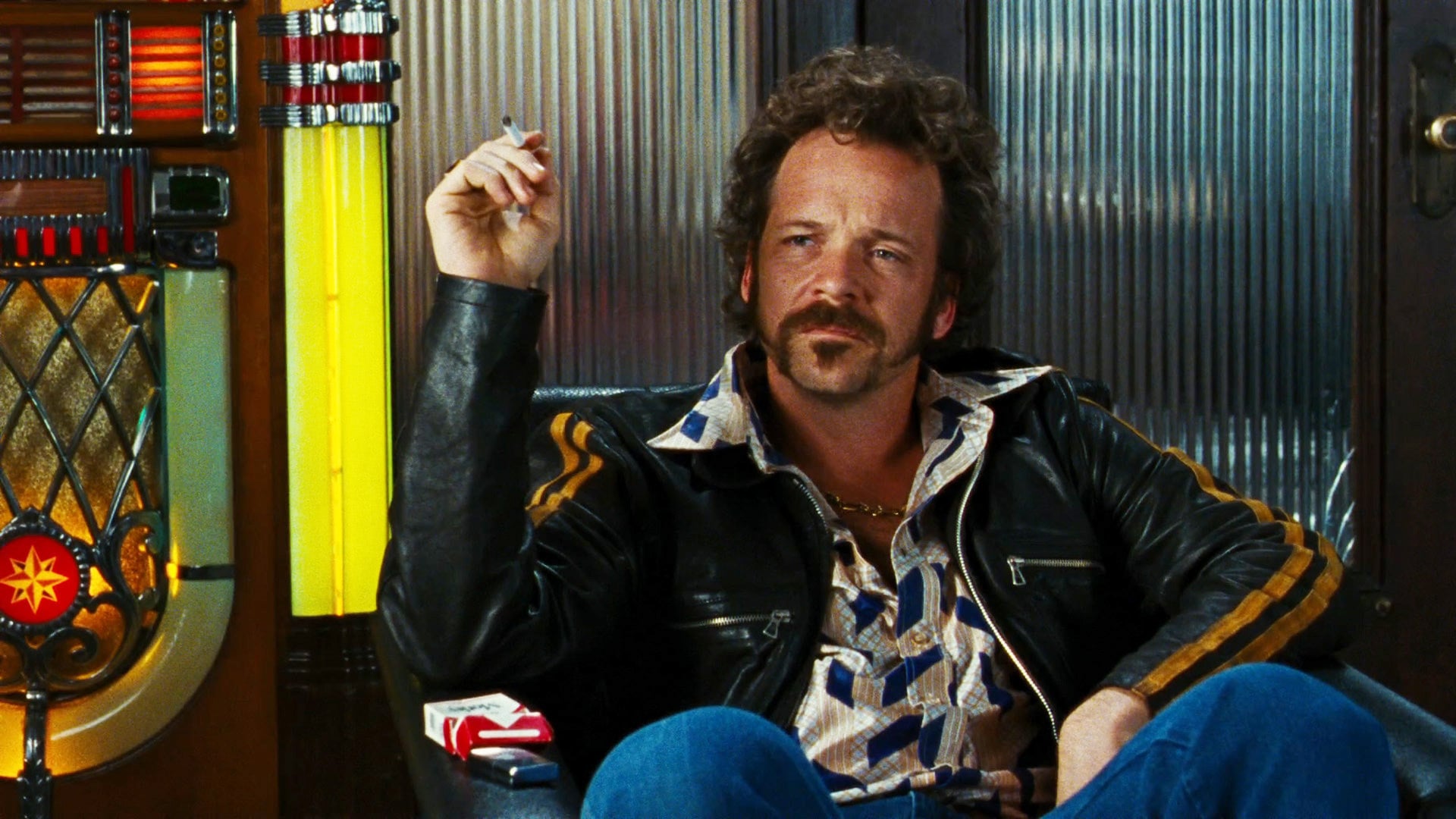
Peter Sarsgaard in LovelaceYes, teenage Cantara made out in early 70s Minneapolis with males who looked and dressed exactly like this. Peter Sarsgaard in Lovelace (2013).


One of the first things Peter did, after we were introduced and he gave first Mister Grumble then me a firm friendly handshake, was try to engage us in a conversation about Melungeons. “You know,” he told us mock-confidentially, “Elvis was a Melungeon.” I evinced surprise and interest—I’d never heard the term before, ever—and Peter obviously was about to launch into a carefully-considered patter about Melungeons, when Maggie came over to fetch him. He smiled at us a dazzling smile, excused himself and trotted off with her.

So for now, enough of Peter and on to the movie he was in: Lovelace, a 2013 indie based on the book Ordeal by Linda Boreman aka Linda Lovelace, which is chiefly about her experience making the influential porn classic Deep Throat (1972). As a movie it doesn’t play too badly; some hack wrote the script, but the same politically savvy gay filmmakers who produced/directed The Life and Times of Harvey Milk, Howl, The Celluloid Closet, etc evidently had a lot of artistic control over this project. So there’s quite a lot of fooling around with the narrative structure and other arty bullshit like that, but it’s not enough to hide the fact that there’s really no core idea or message. Not to mention there’s not a lot of entertainment value, either… Nope, in this package there’s absolutely nothing clever, insightful, sensitive, or aesthetically satisfying—all screen values, incidentally, which would NOT be out of place in a porn movie.

Peter was good, but Peter’s always good at playing soft-spoken villains. What really interested me was Hank Azaria’s portrayal of one of my directors, Gerard Damiano. A small role but well-executed. Mr Damiano himself was soft spoken, I remember, and very patient. His was the last word on the set. Everyone respected him. He also paid me a compliment I immediately put into my mental jewelry box, and there it’s stayed ever since…

Part 1 “Full Dress” here.
Part 2 “Zombie Love Slave” here.
Part 3 “Hot Tub” here.
Part 5 to come…

EXTRA! Here’s Peter in the miniseries Wormwood, with a free link to HP Albarelli’s fascinating, terrifying book about Dr Frank Olson and the CIA

EXTRA EXTRA! Here’s my rendering “Penilingism” on DeviantArt


FULL DRESS // A gifted mesmerist—a sinister composer—a naive young conductor from the north…inspired by an episode from the life of Rachmaninoff // DOWNLOAD FREE BOOK POSTER

My First Music: Geraldo Among the Filipinos, 1963

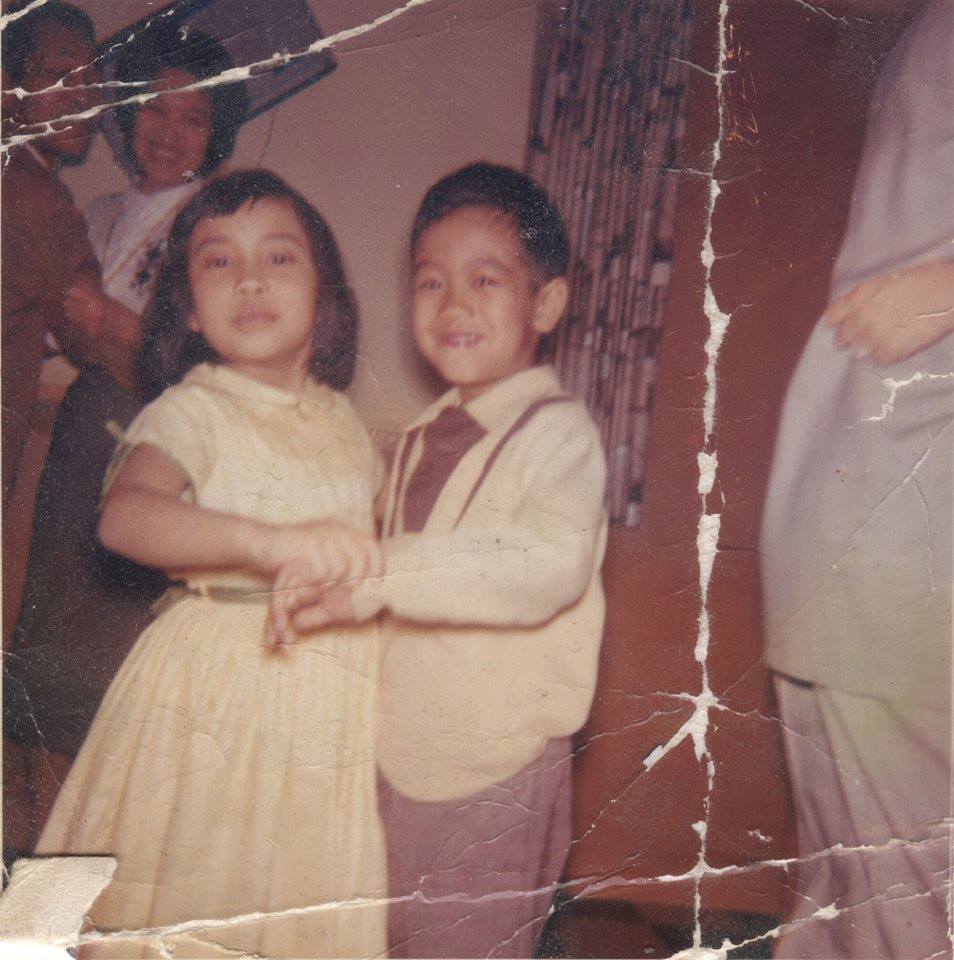
God, Danny Sibolboro was such a weenie. Taken December 1963 at one of the many, many dances of the Moveable Filipino Club, Minneapolis, Minnesota. Geraldo was playing. Filipinos love Geraldo.

Cantara Dancing with Danny Sibolboro

Hit the Road to Dreamland
Harold Arlen, Johnny Mercer (1943)
Shall We Dance?
Big Band Arrangements of Geraldo
John Wilson Orchestra
John Wilson, conductor
Vocalion, 2002


FULL DRESS // A gifted mesmerist—a sinister composer—a naive young conductor from the north…inspired by an episode from the life of Rachmaninoff // DOWNLOAD FREE BOOK POSTER

Before the Oscars, 2023

So, Michael Levine, you tell me your chum Marin Alsop says “There’s finally a movie about a female conductor and she’s a sociopathic narcissist”? So freakin what? Tell her to tighten up her Adagietto.

Did she even see the film?  I did. You know what I saw? Something NONE of you gwilo morons (“unidentified Asiatic country”—sheesh!) saw—the portrait of our revered Jose Rizal high on that wall. Even before I heard the Tagalog, I knew Lydia was finally in a good place. 

The Spanish couldn’t break us. The Yanks couldn’t break us. The Japs couldn’t break us. The corporations will not break us.

YOUR WILLFUL IGNORANCE OF OUR EXISTENCE WILL NOT BREAK US.

So, now there’s a big movie that has—gasp!—Asians in it! My God, who are these people? Are they even human? Can we make some big money out of them?

I hope Everything does win Best Picture. Render unto Caesar what is Caesar’s and all that.

Not that I don’t wish James Hong well. James Hong and I are both native-born Minneapolitans. My family used to eat at his family’s restaurant.

Whether Tár wins as best picture or not makes no difference at all to me. Lydia’s story is my own mental story and no one, ever in my life has ever seen that story or cared to understand that story. Any points I want to address about the movie I give to my own beloved conductor John Wilson as a gift of love and teshuvah and to no one else. 

My husband is blind, we’re living in filth and poverty, I’ve been hospitalized twice for congestive heart failure and still have to do the grinding housework of two people—but I swear before Urduja, guardian warrior spirit of my father’s province, before I go out I’m bringing you gwilo morons to your knees.

Now back to work.


FULL DRESS // A gifted mesmerist—a sinister composer—a naive young conductor from the north…inspired by an episode from the life of Rachmaninoff // DOWNLOAD FREE BOOK POSTER

“Bird Songs at Eventide” by Eric Coates, Sung by Kathryn Rudge, Just for My Bonny 2022 Gramophone Award Winner, John Wilson

John, white-hot flame of my heart: In celebration of your latest award, I’m serenading you tonight with a song I know you know, because you’ve played it and I’ve sung it, and somewhere in that magical Music Room out there, you and I are playing and singing it together.


Listen to John’s new orchestra the SINFONIA OF LONDON here


My John Wins Another AwardAbove John, his award, and a Chandos exec: Eric Coates’s enduring 1926 sheet music hit, “Bird Songs at Eventide” sung by Liverpool-born mezzo Kathryn Rudge, played by RAM professor James Baillieu.

Here also are the lyrics, which were written by the father of your old housemate:

Over the quiet hills 
Slowly the shadows fall; 
Far down the echoing vale 
Birds softly call; 
Slowly the golden sun 
Sinks in the dreaming west; 
Bird songs at eventide 
Call me to rest.

Love, though the hours of day 
Sadness of heart may bring, 
When twilight comes again 
Sorrows take wing; 
For when the dusk of dreams 
Comes with the falling dew, 
Bird songs at eventide 
Call me to you.

~Harry Rodney Bennett (1890-1948), writing as Royden Barrie

FULL DRESS // A gifted mesmerist—a sinister composer—a naive young conductor from the north…inspired by an episode from the life of Rachmaninoff // DOWNLOAD FREE BOOK POSTER

25 May—Two Birthdays: My Dad’s and My Beloved English Conductor John Wilson’s

My father, who was born on the 25th of May 1905, went to the movies with me only a couple of times. The first was for Taras Bulba (United Artists, 1962). I remember him getting a particular kick out of the ride of the Cossacks scene, thrilling Franz Waxman music and all.

The second time was for Tora! Tora! Tora! (20th Century Fox, 1970). The movie house in Columbia Heights, just over the city line from Northeast Minneapolis, was within walking distance, I walked it all the time, and could still get in for 50 cents because at 15 I still looked 12. For some reason my father ended up not only driving me the few blocks, but after I’d found my seat and the lights went down I was astonished to notice him come in and sit down beside me.

“Dad, what are you doing here?” I whispered loudly. “You know, the Japs win in this.”

“Not for long,” he answered cheerfully, which is about as close as anyone in our family got to talking about the 7 December 1941 attacks and the general brutality my mother, then a teenager in Bangar in the province of La Union, had to face in an occupied country.

Bangar in those days was rather like Nouvion in ‘Allo ‘Allo—a little town situated a ways from the capital but near the sea, a hotbed of resistance. When you read about Bangar here, just remember: that kid who escaped, which resulted in occupying troops burning down the place, was one of my cousins. When the guards marched him to town to be executed, his family, through looks and gestures from a distance, pretty much gave him the word that they expected him to “take one for the team” i.e. let himself be shot; but at the last moment, as family legend goes, he grabbed the officer’s sword and in the confusion was able to get away into the forest. And so as feared came the reprisals.

A shadow still hangs over the de la Peña family.
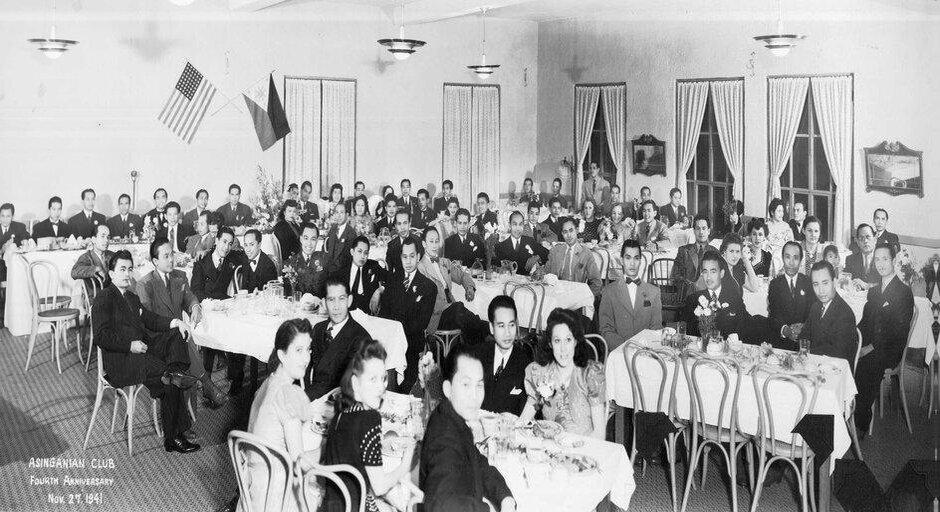
Fil-Am 1941Taken at a banquet of an old Filipino-American association my dad was part of (that’s him under the picture on the right; keep forgetting he still had hair before I was born), one of about a hundred around at the time. Note the date: only a couple of weeks before Pearl Harbor. Note also the Philippine flag on the wall. The Philippines wasn’t yet a sovereign nation but a Commonwealth and didn’t achieve independence till 1946. More at “To My Beloved John Wilson, Who Shares His May 25th Birthday with My Dad; Or, Don’t Call Me a Person Of Color, I’m a Product Of Empire, 2”


Meanwhile in California my dad, who had come to the States a young man in 1927, was engaged to a woman from St Louis he eventually COULD NOT MARRY because—are you ahead of me on this?—HE WASN’T WHITE!!! Yes! The MISCENEGATION LAW of the State of California—which by the way was NOT REPEALED UNTIL 1948—prohibited them and God knows how many other California couples from legally joining, forcing them to travel to other states where they could. Recently read this happened to, among others, that fine actor Dean Jagger (here seen with Danny Kaye and Bing Crosby in White Christmas, 1954 Paramount) and his Chinese-American fiancee; and the Oscar-winning cinematographer-director James Wong Howe (Picnic, 1955) and his white fiancee, author Sanora Babb. I‘d be curious to hear other people’s stories.

How my dad, residing at last in Minneapolis, eventually found and married my mother in Manila is another story, and it’s a doozy. I’ll tell it one of these days. Here it is:


“To My Beloved English Conductor John Wilson, Who Shares a Birthday With My Dad; Or, Don’t Call Me a Person of Color, I’m a Product of Empire”

Part 1 here | Part 2 here | Part 3 here | Part 4 here


Now for John, who was born the day of my father’s final birthday, in 1972. John, I’m not saying we’re psychically linked, but about a month ago in the middle of defrosting the refrigerator I think I got a weird emotional flash from you where you were being right annoyed over some flap over a booking… I got the impression it might’ve been for The John Wilson Orchestra. [UPDATE: It wasn’t, it was the Sinfonia of London. 4 September 2021.] You were waiting for some kind of answer re your orchestra, whichever one it was, and not getting it, and I actually felt your annoyance… As I say, it was weird, like listening in on a party line…

That’s all I could make of it. But it’s enough to make me want to give you something special for your birthday. So…I’ve tried this only once, with an old boyfriend, and I think because I was really, really into him it worked. On the actual day of your birthday, John, I’m going to try to send you an energy shot. [UPDATE: Just did it. Think I got through. 25 May 2020 2AM UK time.] Until then, Happy Birthday, light of my life, fire of my loins. And if you and I ever meet up, tell me if it worked.

[More About My Dad]


FULL DRESS // A gifted mesmerist—a sinister composer—a naive young conductor from the north…inspired by an episode from the life of Rachmaninoff // DOWNLOAD FREE BOOK POSTER
Christmas, 1958 with Cantara; Plus Johnny Mathis Sings “Sleigh Ride” by Leroy Anderson and Mitchell Parish

Christmas, 1958Above: The full audio of Johnny Mathis’s 1958 hit*. And here’s Leroy Anderson’s original 1948 concert version, played by the Calgary Symphony and conducted by Karl Hirzer. Courtesy of adam28xx.

*And at 59:45 in “A Selection of Pop Christmas Classics”.


FULL DRESS // A gifted mesmerist—a sinister composer—a naive young conductor from the north…inspired by an episode from the life of Rachmaninoff // DOWNLOAD FREE BOOK POSTER

My First Music: “My Mother Bids Me Bind My Hair” by Joseph Haydn, Sung by Joan Sutherland with Richard Bonynge at the Piano, 1970

Smile as you will at this mincing little ditty but it got me a medal at the Tri-State Vocal Competition of 1969 when I was fourteen. Go Minnesota!

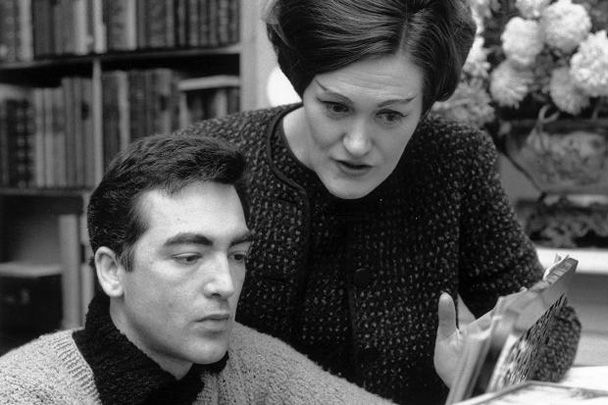
Joan Sutherland Richard Bonynge.jpgAustralian-born conductor Richard Bonynge and soprano Joan Sutherland; they married in 1962.


FULL DRESS // A gifted mesmerist—a sinister composer—a naive young conductor from the north…inspired by an episode from the life of Rachmaninoff // DOWNLOAD FREE BOOK POSTER

My First Music: Benjamin Britten’s War Requiem for My Brilliant English Conductor John Wilson on His 49th Birthday

25 May No sharing the spotlight with my dad for your coincidental birthdays this year, John my bonny. And as promised in my posting three weeks ago, “A Sexy NYC Memory to Celebrate the 3rd Anniversary of Falling in Love with Conductor John Wilson; Plus the BBCSO Doing Elgar’s Bach Fantasia; and Theatre of Blood (United Artists, 1973) Complete”, here’s that Britten piece.

War RequiemEd Lyon tenor, Benjamin Appl baritone, and Susanne Bernhard soprano are the soloists. The Choir of Hanover and the Liverpool Cathedral Choir round out the voices. Orchestra is the NDR Radiophilharmonie, Andrew Manze is the conductor. 2018. Above: War Requiem, written in 1962 by Benjamin Britten.

I sang in the chorus of War Requiem around the time you were going on 1. It was the last concert of the Minnesota Orchestra’s ’72-73 season in Minneapolis; guest conductor was Kurt Adler of the Metropolitan Opera. (Don’t remember the soloists.) It was the greatest musical experience of my life. I know the Decca recording is out there somewhere, but the broadcast above from Radio Hanover is the closest I’ve found to the feeling I got being in the middle of all that gorgeous sound…

Which brings me to address yet another one of those sundry feelings I have about you, and have had about you, lo these several years: besides tenderness, gratitude, annoyance, and raging lust, just a trace of envy that you ascend to such an exquisite sonic plane so often…

But the envy goes when you bring it on home to us, which you always do. And then I’m filled with the pure joy of loving you.


FULL DRESS // A gifted mesmerist—a sinister composer—a naive young conductor from the north…inspired by an episode from the life of Rachmaninoff // DOWNLOAD FREE BOOK POSTER

My First Music: The Pure Joy of St Trinian’s and The Inn of the Sixth Happiness by Malcolm Arnold

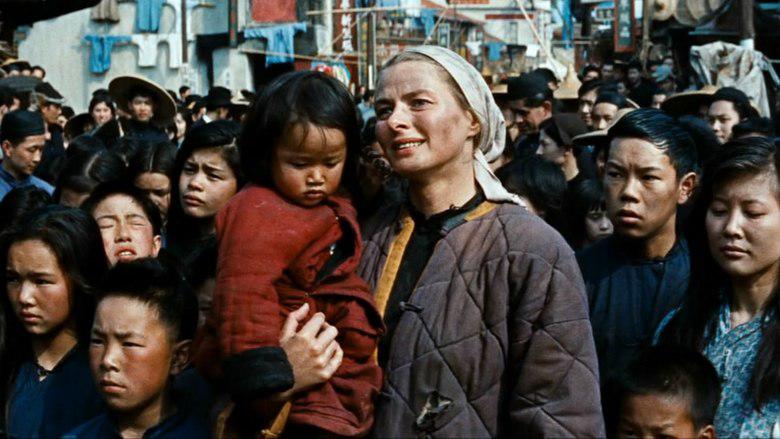
There must be something in the English character that enables the better artists among them to depict situations of unassuming, steady bravery with superior deftness, which is probably why their World War II pictures are better than ours. One of them, The Inn of the Sixth Happiness (20th Century Fox, 1958), doesn’t technically qualify either as a UK picture—Fox produced it; or as a WWII picture—it’s set during the Sino-Japanese War of 1938; but it does have unarmed peasantry scattering to the hills under Japanese gunfire, which is a theme that ran through my mother’s life starting with Pearl Harbor and ending in March, 1945 when American troops marched through the rubble-strewn streets of Manila, hunky victorious good guys. My mother’s first teenage romance was with a private in the 31st Infantry Regiment named Kelly, come to think of it.

Now, when I refer to better artists of English character I don’t mean the film’s producer, director, writer (American, American, American), or stars (Swedish, Austrian). But it’s because of: one, the true-life heroine the story was based on; two, the location shooting; three, the non-lead casting; and four and most importantly, the music, that I think of Sixth Happiness as an English film. The true-life heroine of the story was English-born, not to mention the film has Snowdonia standing in for the daunting terrain around Yangcheng and pretty near the entire Chinese heritage population of Liverpool standing in for Chinese nationals, with supporting roles portrayed by stalwarts of UK stage and screen. This is the first thing I ever saw Burt Kwouk in.

But to the music. This is not Malcolm Arnold’s finest score—Bridge On the River Kwai (Columbia, 1957) really is a superior composition—but it rates higher with me becauuuse, you guessed it, The Inn of the Sixth Happiness has a gorgeous Love Theme, which you can hear below as the Royal Academy of Music performed the suite back in 2014. You’ll also hear the bright, high fanfare brass that Arnold used in a few other of his movies, River Kwai and the one below, for examples. Also, I’m starting to develop a theory to satisfy myself that certain intervals, played with conviction, are the real sinews of English music: they make for that sound of “rightness”, which you can take one way or another, depending on the mood—or your mood, for that matter. Sixth Happiness has plenty of those.

Inn of the 6th Happiness.jpg

Besides the satisfying fanfare brass, Sixth Happiness shares with the satirical The Belles of St Trinian’s (British Lion, 1954) a bit in the score where there’s a song meant to be sung by children—in Sixth Happiness it’s “This Old Man”; in St Trinian’s it’s the school’s hilarious “Battle Cry”. I’m not posting the lyrics here, so click on the link in red to listen to those cheerfully bloodthirsty oaths. But can you imagine what a liberating tonic this ferocious roar from the depths of The Untamed Female Soul was to a little girl in the Catholic part of Minneapolis, watching this on Saturday matinee TV (a tonic, incidentally, I would not imbibe again till I heard Bernadine Dorhn mouth off a few years later)—?

Here’s the BBCCO doing the St Trinian’s suite at the Proms (Timothy West, narrator) bringing back almost all the familiar, funny-music leitmotifs to smile at, like George Cole’s character’s “Flash Harry”, a loping, rattling kind of tune (although lamentably there’s no sign of Joyce Grenfell’s scurrying “Ruby Gates”) before returning to that ghoulish school pageant march, lyrics I believe provided by Arnold himself.

In contrast, “This Old Man” is meant to be a “found” song, purportedly a children’s counting song, heard on the playground since the 19th century, and in a way that’s right, as the first time I heard “This Old Man” was on the playground—but only because it had become a hit on US radio first in 1959. It’s still impossible for me not to hear “This Old Man” and not think of the climactic scene in Sixth Happiness: the hundred children crossing the Yellow River into safe territory, ragged and exhausted but alive, marching into the unoccupied city to cheering crowds, loudly singing this song. Invariably it brings tears to my eyes, immigrants’ daughter that I am, and I remember the first time I watched—and heard—this film on TV with my mother, my mind nearly forming the question I never asked her, not then, not ever: “What happened to you in the war, mom?” Because the music was so ravishing, the love story was so satisfying, and my mother just wanted to enjoy an Ingrid Bergman film.


FULL DRESS // A gifted mesmerist—a sinister composer—a naive young conductor from the north…inspired by an episode from the life of Rachmaninoff // DOWNLOAD FREE BOOK POSTER

“Wanting You” by Sigmund Romberg and Oscar Hammerstein II from The New Moon, 1935, Sung by Jeanette MacDonald and Nelson Eddy

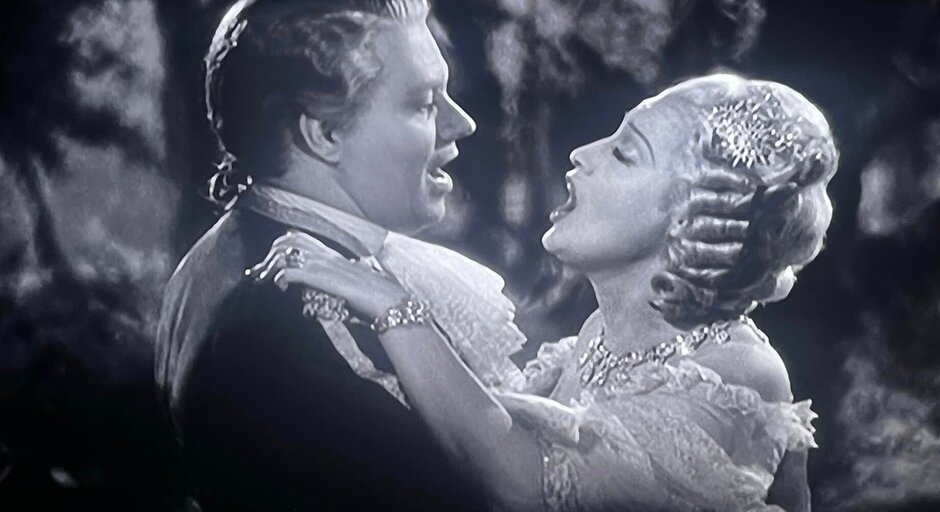
Another MGM musical, pre-Freed Unit. They were such a handsome couple and sang like angels, Jeanette MacDonald and Nelson Eddy. Who in their audience could have realized when watching such a mannered scene that they were in the middle of a chaotic on-again off-again love affair and that right after filming this number—that very night in fact when everyone had gone home—the two of them would be under that very tree having furious make-up sex?

Jeannette and Nelson

Thanks to fellow MacDonald-Eddy fan Sharon Rich (as related to her by Jeanette’s sister Blossom) for that lovely bit of info.


FULL DRESS // A gifted mesmerist—a sinister composer—a naive young conductor from the north…inspired by an episode from the life of Rachmaninoff // DOWNLOAD FREE BOOK POSTER

Shostakovich’s Symphony No 1 and the Japanese Attack, 7 December 1941

Serge Koussevitsky, Leonard Bernstein’s mentor, was on the podium conducting the first symphony by the “new young Soviet composer” Dmitri Shostakovich in the CBS radio Sunday afternoon broadcast of the New York Philharmonic when, in the middle of the first movement, none other than famed NY correspondent John Charles Daly broke in with the news of Pearl Harbor. The Japs bombed the naval base at Pearl twice that morning, first at 8am Hawaii time, then again at 9:30am…then went on that same day to bomb the fuck out of Singapore, Hong Kong, Burma, Guam…

Dmitri Shostakovich.jpgThen about 6pm they finally got around to Clark Air Base and the RCA transmitter on the outskirts of Manila where my mom was going to high school


FULL DRESS // A gifted mesmerist—a sinister composer—a naive young conductor from the north…inspired by an episode from the life of Rachmaninoff // DOWNLOAD FREE BOOK POSTER