My Brilliant John Wilson Reveals One of His Sweetest Conducting Secrets; Plus John’s Two Carousel Overtures, A Hidden Paul McCartney Song to My Love—and the Bells of Notre Dame de Paris Ring Out Once Again

Above: Nicolai Rimsky-Korsakov’s suite “Scheherazade” conducted by John Wilson and played by the Royal Academy of Music Symphony Orchestra. YT video here.

Look at the look on that girl’s face. She’s watching the conductor for cues and he’s smiling at her, giving her the cue to remember that her solo’s coming up in a few measures, and she’s smiling back in assent. The conductor is my beloved John, who gives love to his orchestras like I’ve never seen done before, not with conductors I’ve worked with and I’m guessing not even Bernstein, and I’ve seen Bernstein conduct youth orchestras.

My God, do you wonder why I’m so much in love with this man?


Regarding John’s two Carousel Waltzes:


And just today, 09 November 2024, five years after the fire, the bells of Notre Dame de Paris rang again, with a very special message for Marianists like me.


FULL DRESS // A gifted mesmerist—a sinister composer—a naive young conductor from the north…inspired by an episode from the life of Rachmaninoff // DOWNLOAD FREE BOOK POSTER

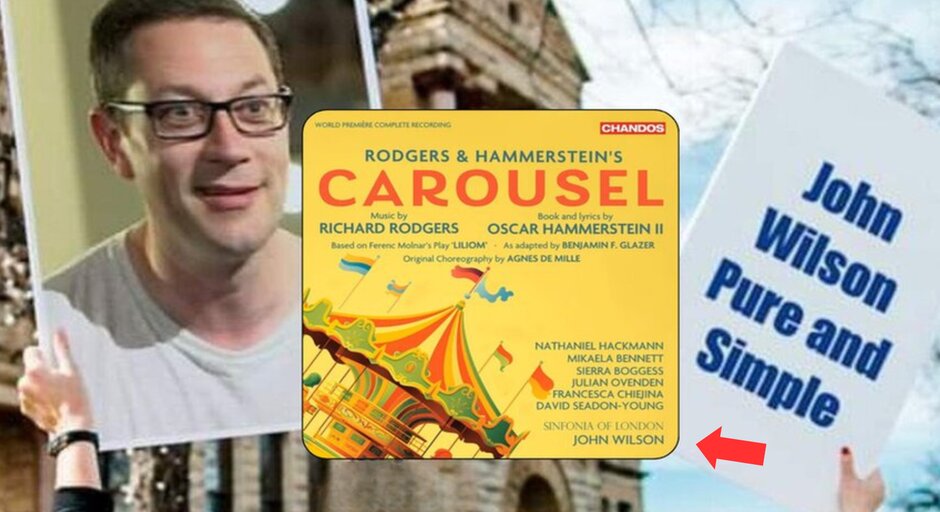
John Wilson’s Recording of the Complete Score of Carousel, Due Out 13 September 2024 from Chandos: Dalisay R&H, Robert Russell Bennett


There are three books I am 99 percent sure my beloved John has in his library: The Joy of Music by Leonard Bernstein; Apple of My Eye by Helene Hanff; and Instrumentally Speaking by Robert Russell Bennett, orchestrator of the music of Richard Rodgers. Bennett was the primary orchestrator for the following Rodgers & Hammerstein stage musicals, all now part of the foundation of modern American musical theater:

…which pretty much makes him the true architect of “The Broadway Sound”. The sonic lines of his work can still be heard in every screen enhancement and stage revival of these classics, no matter how offbeat or “reimagined” the productions—listen to Daniel Kluger’s clever but correct re-orchestration of the title song for 2019 Broadway’s Oklahoma!

As you probably know, faithful readers, John previously recorded Oklahoma! a couple years ago and won some sort of award for it…so of course it was only a matter of time before he got on to R&H’s second classic score. Whether this means that the powers-that-be intend for my bonny to conduct the entire R&H+Bennett catalog I do not know. Personally, since he’s already batting 3 for 3 when it comes to his performance repertoire and my old boss Rouben Mamoulian‘s classic stage productions, I’d love to hear his complete George Gershwin opera, Porgy and Bess.

Actually, what I’d REALLY love, John, is a new recording of a work that even Richard Rodgers himself admitted was 10 percent Rodgers and 90 percent Robert Russell Bennett—Victory at Sea! Oh, I’d sooo love to hear you do something with this:

EXTRA! Some tunes from Carousel covered elsewhere on this blog:


FULL DRESS // A gifted mesmerist—a sinister composer—a naive young conductor from the north…inspired by an episode from the life of Rachmaninoff // DOWNLOAD FREE BOOK POSTER

Directed by My Old Boss, Rouben Mamoulian: Applause, Starring Helen Morgan (Paramount, 1929)

From 2019. Legendary torch singer Helen Morgan (she was the original mulatto Julie in Jerome Kern‘s Showboat) was only 28 when she played the washed-up headliner mother of a chorus girl in this early, early talkie (1929!) which benefits from an excellent sound recording. Filmed over at the Astoria Studio in Queens. Note Mamoulian’s penchant for symbolism: Morgan’s poster like the Holy Madonna hovering over her daughter and daughter’s sweetheart; the rolled-up curtain on the bannister posing as Death. When I saw this shot it hit me then what an artist The Old Man actually was.

Don’t mind the arrows, they’re part of a seminar I’m writing on the works of Mamoulian.

The entire film APPLAUSE is available on my YT channel here


FULL DRESS // A gifted mesmerist—a sinister composer—a naive young conductor from the north…inspired by an episode from the life of Rachmaninoff // DOWNLOAD FREE BOOK POSTER

To Beloved Conductor John Wilson: Eugene O’Neill and My Old Boss, Classic Film/Stage Director Rouben Mamoulian

From December, 2018. John Wilson, fire of my loins: You are a true musician, you command the finest magical mechanism Western Civilization has ever invented: the symphony orchestra, and you do this for a living. All life is asking you to do is to groove on it, and the fact that I’ll be continuing to make love to you long distance indefinitely.

Now, there are far more interesting exercises in the world of Schenkerian analysis  (kidding, kidding!) than one huffy American ex-porn actress taking the piss out of a popular middle-ranking, BBC-scripted, English conductor… If it weren’t for the fact that ex-porn actress happens to have fallen in love with aforementioned Conductor and longs for him regularly. Therefore she takes Conductor’s pronouncements a little more seriously, a little more discerningly than she would, say, the pronouncements of her own musical compatriots—Alsop, Tilson Thomas, Mauceri etc… Additionally, Conductor reveals in his public statements more about himself than I think he’d prefer, John.

So as much as I’d enjoy ragging you for the impudent (and ultimately self-revealing) remarks you made about Mrs Bernstein and Mrs Coates, I really should finally get down to the one single thing (aside, of course, from your tearass tempi, your overuse of percussion, your rushing of singers, your astonishing lack of color in certain critical pieces) that has bugged me since the day I first encountered it: your juvenile dismissal of my old boss, film/stage director Rouben Mamoulian, and his creative contribution to the original 1943 production of Oklahoma! Now, I know you were only riffing off info you got from some book or Andre Previn, who likely socialized with The Old Man when they were both at MGM. But, as I mentioned in an old posting, of all his stage and screen work The Old Man liked to talk about, the one he liked to talk about the most was Oklahoma! And I turned out to be his perfect audience, because early on I’d confessed to him that I was a big Rodgers & Hammerstein fan. (Filipinos are big Rodgers & Hammerstein fans, for obvious reasons.)

But before I get to the point about Oklahoma! I have to tell you a side—though relevant—story about Mamoulian and Eugene O’Neill.

John and MamoulianRouben Mamoulian and John Wilson at around the same age (40), 80 years apart.


MAMOULIAN’S AND MY EUGENE O’NEILL STORY

This is the second story Mamoulian ever told me back in 1978 when he was 81 and I was 23, which he told me in a way that was flattering as hell, which was he didn’t ask if I knew who Eugene O’Neill was, although I did say “Wow” at the mention of the name, so he might have sized up my interest that way, and just went right into the story.

Seems that when he was living an emigre’s life in New York, trying to make a go of it in stage work, he scored his greatest career triumph to date: The Theater Guild wanted him to direct a play by Eugene O’Neill. Now, O’Neill had already won the Pulitzer and he’d already had several successes, not to mention his other new play, Strange Interlude, was already generating a lot of pre-opening night buzz, so we’re talking King of 1928 Broadway here. O’Neill agrees to meet Mamoulian in his hotel room (that is to say, O’Neill’s hotel room. It seems like the best stories about O’Neill take place in hotel rooms) to talk over any directorial concerns O’Neill, the playwright, might have, and if he has any advice to give this youngster concerning his play.

“Actually, Mr O’Neill,” says Mamoulian, trying to sound like himself at thirty, you know, the brash but confident whiz-kid, “I know exactly how to fix your play.”

“You will change not a word. Not a word!” says O’Neill. And here The Old Man doesn’t bother to actually imitate O’Neill, although in time I heard him do some good impressions of other people, mostly actors.

“Look here, Mr O’Neill,” says young Mamoulian, opening the bound script of Marco Millions that he brought with him. “I can show you exactly where the speeches slow the play down, and where we can achieve the same ends using action. Here—” And here The Old Man imitates taking a blue pencil and gleefully slashing a diagonal line across a rejected page like editors do— “—and here—” He goes on to recreate his turning the pages of the script one at a time— “and here—here—here—” with a slash! slash! slash! And all the time I’m thinking with a kind of growing horror: You CUT Eugene O’Neill!!!?

“But in the end,” Mamoulian assures me, “he saw that I was right, and we got along splendidly.”

But that’s not the end of the story. About a year after Mamoulian and I go our separate ways, I get a chance to attend opening night of Marco Millions at Berkeley Stage Company up in the Bay Area, as the plus-one of some guy I was seeing. This was around the time BSC was on its “classics” kick, making it clear in news and ads and publicity sheets that this wasn’t just any old O’Neill revival, this was an extra-special homage to the master playwright of our great theatrical heritage. Scenes cut from the 1928 production had been restored in order that this fruit of O’Neill’s genius be presented intact and full; Mamoulian’s name was hardly mentioned.

Well, I watch this big lumbering thing, right through the parts that dragged on and on with their interminable speeches about the redistribution of wealth and so on, and I’m thinking, this must be where he cut, here— Then here— And here  And almost like he’s whispering in my ear “See? See?” I realize that The Old Man was right to make the cuts, and that Marco Millions probably could have been a fine piece of theater if they’d stuck to the original opening night version.

But I swear, it was not on my mind to argue this during lobby talk after the curtain. The big thing on my mind was that I had the perfect story to share at this particular time, in this particular space, and yeah, I wanted to share it. I was with the guy who brought me, a cokehead freelance lighting designer who was always hitting up people for jobs. Together we went up to the artistic directors, a married couple, my date immediately starting in with the whole buttering up thing, you know, You look fabulous what have you been doing to yourself, etc etc etc.

I break in with something like, “You know, I have a great story about this play I got straight from (and here I made sure to stress the second syllable like he preferred) Rouben Mamoulian and how he worked with—”

And here the guy, my date, takes me aside and mutters as urgently but tenderly as is possible for him, “Sweetheart, would you please shut up while I’m talking business.”

Reader, I did.

So everyone, this is the first time—the very first time—in thirty-eight years I’m telling this story.

And you, Tom Stocker. Just for that, I regret having given you the most explosive blowjob of your life, the one that made you howl like a wolf.


FULL DRESS // A gifted mesmerist—a sinister composer—a naive young conductor from the north…inspired by an episode from the life of Rachmaninoff // DOWNLOAD FREE BOOK POSTER

On Conductor John Wilson’s Full Dress and The First Porn Movie I Ever Did, 1

From 2019: For those of you who know that, as well as being a retired porn actress, I also write porn for pleasure (actually genteel erotica but you know and I know it’s porn, lady porn, but PORN), Full Dress being a riff on my old boss Rouben Mamoulian’s classic The Song of Songs—you know, the one where Marlene Dietrich has a rich would-be composer for a husband and a young, sensitive, bespectacled conductor for a lover, inspiring them both to artistic heights through her Mighty Marlene Power. Oh, baby. This is the movie that inspired me to emulate you in my youth.

But just so you don’t go on thinking this is some kind of fanblog (really, I’m not a fan*, just crazy in love with the bloke below) I thought I’d spend a posting to tell you all how I got my first gig in pictures.

John ExposedAbove John’s arousingly exposed suspender: Nina Simone sings Cole Porter’s “All of You” just for my wild Geordie lad.


This happened in San Francisco—in the 70s a paradise for the sexually adventurous—and coming after the time I worked as classic film director Rouben Mamoulian‘s amanuensis, which was after the time I posed nude for a blind sculptor in St-Paul-de-Vence, which was after the time I danced topless in a mob-run bar in Red Hook, which was after the time I was the night solfeggist at ASCAP

So anyway. One lovely summer evening about six weeks after I hit the city I went with a (legit) actress friend to a house party up on Potrero Hill, mostly because she enticed me with the information that the party would be featuring a hot tub. (Am such a pushover for hot tubs.) Well, at the party there was this cute but obvious older guy from London (trimmed ginger beard, open shirt, bead bracelet—no one goes California like the English) named Paul, who owned the house and who invited me seulement for a session of coke+quaaludes and a nice soak later, after all the other guests have left. Then he gave me his card. (This was only the second time a man ever gave me his business card before we had sex, and it wouldn’t be the last)…

Part 2 “Zombie Love Slave” here.
Part 3 “Sausalito Hot Tub” here.
Part 4 “Lovelace” here.

*No, really, I’m in love with John but he plows through Gershwin like a bull moose and treats Bernstein like Bernstein’s Saruman and he’s Frodo. How could any red-blooded American woman countenance such effrontery to our national treasures?**

**He does, however, conduct Elgar and Vaughan Williams like an angel.


FULL DRESS // A gifted mesmerist—a sinister composer—a naive young conductor from the north…inspired by an episode from the life of Rachmaninoff // DOWNLOAD FREE BOOK POSTER

Rouben Mamoulian, George Gershwin and the Cast of Porgy and Bess: The Full 1942 Album

…being wildly applauded in this photo of opening night. Lest we forget, it was The Old Man who directed the very first production of P&B. (Oh, he never let me forget it.) That’s him behind Gershwin in the goggle glasses.

Porgy and Bess MamoulianOf Porgy and Bess’s premiere, composer-critic Virgil Thomson wrote: “Gershwin’s lack of understanding of all the major problems of form, of continuity, and of serious or direct expression is not surprising in view of the impurity of his musical sources and his frank acceptance of the same. The material is straight from the melting pot. At best it is a piquant but highly unsavory stirring-up together of Israel, Africa and the Gaelic Isles… I do not like fake folklore, nor bittersweet harmony, nor six-part choruses, nor fidgety accompaniments, nor gefilte-fish orchestration.”* The 1934 production ran for 124 performances—for opera, a huge success, but by Broadway standards, a flop.

*Which is why I make it a point to never, ever listen to one note of anything by Virgil Thompson (although I’d heard 4 Saints in 3 Acts long before learning what an anti-semitic little stinker Thompson was, didn’t like it anyway)


FULL DRESS // A gifted mesmerist—a sinister composer—a naive young conductor from the north…inspired by an episode from the life of Rachmaninoff // DOWNLOAD FREE BOOK POSTER

Patrick Hamilton’s Hangover Square; Laird Cregar; Plus Bernard Herrmann’s Concerto Macabre in BBCSSO’s Music to Be Murdered By (2011) Conducted by John Wilson, My Beloved Enfant Terrible

Hangover Square is a 1945 American film noir directed by John Brahm, based on the 1941 novel of the same name by English author Patrick Hamilton. The screenplay was written by Barré Lyndon (pseudonym of Alfred Edgar), who made a number of typical Hollywood changes to Hamilton’s pre-WWII black comedy novel, which sympathetically portrayed the denizens of London’s seedier bedsitters and pubs—the most notorious changes being 1) turning alcoholic protagonist George Harvey Bone into a classical composer-pianist; 2) turning down-and-out Hangover Square into a fakey-English-fakey-genteel neighborhood; and 2) setting the story in the early 20th-century, complete with tailcoats, corsets, chandeliers, the works.

The film was released in New York City on February 7, 1945, two months after its star Laird Cregar suffered a fatal heart attack at the age of 31. His idiosyncratic career lives on in his films—The Lodger, most notably, and this one.


The complete film HANGOVER SQUARE is available here


Screening Room, SF 1979

Above Cregar’s mad composer: Bernard Herrmann’s composition by a mad composer, played by Ben Dawson and backed by the BBC Scottish Symphony Orchestra under the firm virile baton of my beloved John


From FilmScore.com, 2011: John Wilson, the current enfant terrible of British conductors, was in Glasgow yesterday, Sunday 18th September, to conduct Music To Be Murdered By: a varied selection of Bernard Herrmann, Alfred Newman, Miklós Rózsa, David Raksin, Richard Rodney Bennett and Constant Lambert film music with the Scottish Symphony Orchestra.

The rousing Overture from North By Northwest started off this marvellous concert and showed what both the orchestra and conductor were capable of. Then a short suite from David Raksin’s Laura (John) gave us another side of film music: soft, sweet and completely entrancing. More Herrmann next with the Prelude-Nightmare-Love Scene from Vertigo, superbly played with just the right amount of tension and tempo.

The Overture to All About Eve, Alfred Newman’s 1950 20th Century Fox classic film score followed and then pianist Ben Dawson joined Wilson and the BBCSSO to perform brilliantly the Concerto Macabre (John), the climax to Herrmann’s spine-tingling score from Hangover Square. The first act finale was Parade of the Charioteers from Ben Hur (John), Miklos Rozsa’s masterpiece—the orchestra and Wilson brought the house down with this rousing and spectacular performance.

More Herrmann started Part Two: Prelude-Murder-Finale from Psycho (John) . Just the right amount of brio and flair showed the appreciative audience just what a great conductor John Wilson is—he nailed this suite with consummate ease. He might have been channelling Bernard Herrmann here—one of the best performances of this music I have heard.

A suite from Anna Karenina, Constant Lambert’s (John) underrated score from the 1948 British film came next and Wilson told the audience that Bernard Herrmann had originally recorded this for a Decca Album, Great British Film Music. Then the thrilling Main Title from Marnie gave us more classic Herrmann and the concert concluded with the Christopher Palmer adapted Herrmann Suite from Taxi Driver and Richard Rodney Bennett’s Overture and Waltz from Murder On the Orient Express for orchestra, piano and…fire extinguisher! (simulated steam noise for the engine in this well-played piece).

The afternoon was a great addition to Bernard Herrmann’s centennial—and the almost-full auditorium at Glasgow’s City Hall proved that the audience certainly appreciated Herrmann, the Scottish Symphony Orchestra and conductor John Wilson, whose love of film and film music gave us a performance to treasure—and remember. ~Alistair Kerr

EXTRA! Because this is as good a place as any to put it, here’s Laird Cregar playing a surprisingly comic role in my old boss Mamoulian’s sweet 1942 romance, Rings On Her Fingers


FULL DRESS // A gifted mesmerist—a sinister composer—a naive young conductor from the north…inspired by an episode from the life of Rachmaninoff // DOWNLOAD FREE BOOK POSTER

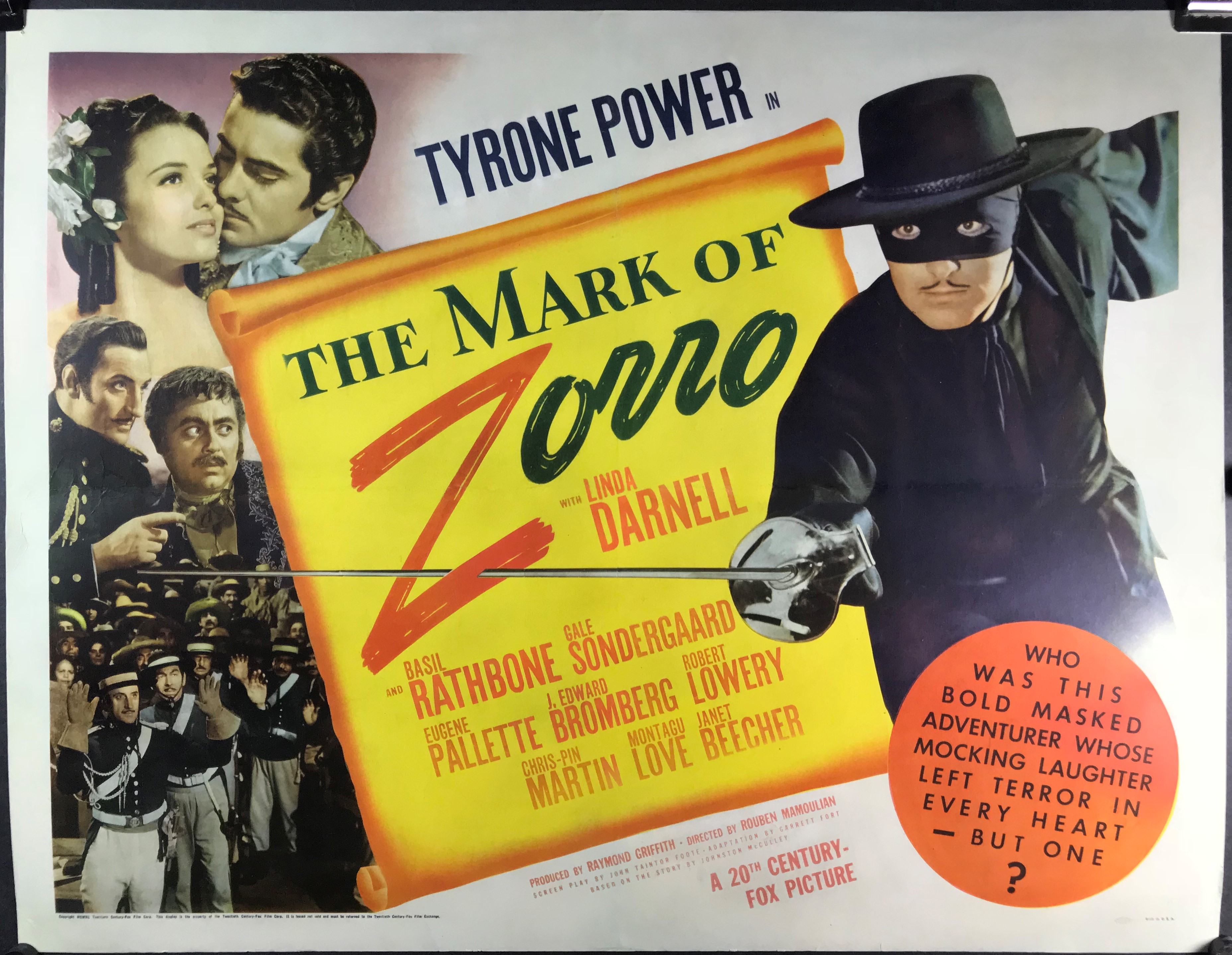
Directed by My Old Boss, Rouben Mamoulian: The Mark of Zorro (20th Century Fox, 1940) Starring Tyrone Power, Linda Darnell, Basil Rathbone; and My Favorite Swashbuckling Score by Alfred Newman

A weekend doddle before I start the big book. The first day I went to work for Mamoulian, he asked me outright if I knew any of his movies. I told him yes, this one. Which all of you probably know like I do, from TV. (Catch it here.)

The Mark of Zorro, 1940Above: The suite of Alfred Newman’s Oscar-nominated score, orchestrated by Hugo Friedhofer.

FULL DRESS // A gifted mesmerist—a sinister composer—a naive young conductor from the north…inspired by an episode from the life of Rachmaninoff // DOWNLOAD FREE BOOK POSTER

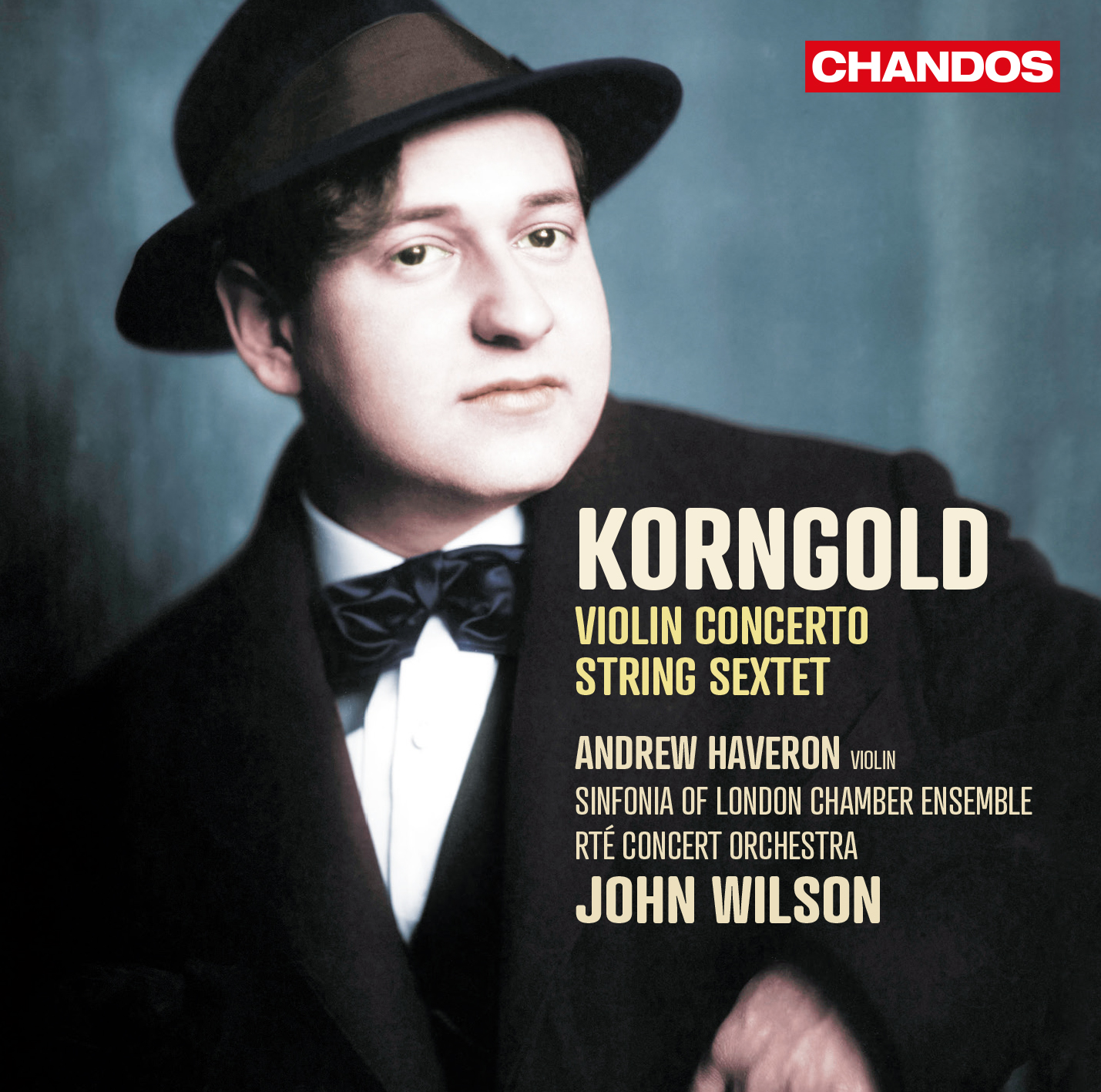
Sexual Fantasies in a Time of Pandemic; Mamoulian’s Crying Violins; and Korngold’s Violin Concerto in D Played by the RTE Concert Orchestra, Andrew Haveron Soloist, with John Wilson Conducting

Before we get to what I think will be a nice and fair assessment of John Wilson’s 2020 recording, a word to some people.

I have always been aware of the tacit agreement that exists between my screen persona Simona Wing and her fans, but let me now take this opportunity to state my position clearly: You all have my blessing to do whatever you want with me in your fantasies.

Because whatever you want to do with me in your fantasies is nothing compared to what I want to do with John Wilson in mine. So, go for it.

Now on to Korngold.

I didn’t realize this was still a thing in the music world, but apparently opinions continue to be strongly divided as to whether Erich Wolfgang Korngold—a true heir, by the way, to The Great Mittel European Romantic Tradition—deserves inclusion in the canon some snooty farts call the Classic Repertoire. When you mention the name Korngold, even the most knowledgeable music lover’s first thought is of upmarket movie soundtracks (Anthony AdverseThe Adventures of Robin HoodThe Sea HawkCaptain Blood) and likely never gets around to the fact that Korngold wrote, among other things, the most luscious symbolist opera of the 20th century, Die Tote Stadt, in 1920, and a hell of a gorgeous violin concerto 25 years later:

(Click here to subscribe to the RTE Concert Orchestra channel and support them.)

So it seems like every generation there has to be one nut who comes along and says, Let’s run Korngold past the hoi-polloi again and see if he’ll fly—and if you think I’m talking about you, John Wilson, you’ve got a swelled head. Because the nut I’m talking about is the nut in the CIA. The anonymous nut who got The Company to fund an enterprise back in the early 70s called “The Golden Age of Hollywood Music” and hence to elevate Korngold to the status of Hollywood Royalty—but through his film scores and his film scores only.

But that story later.

We’re here right now not just to size up a new Korngold recording, but to honor the decades-long musical relationship of Andrew Haveron, violinist, former Leader of The John Wilson Orchestra, current Leader of the Sydney Symphony Orchestra, and conductor John Wilson, whose career in orchestra building started at the age of 22 and hasn’t stopped since.

Korngold’s Violin Concerto in D, their latest Chandos release, was going to get my attention with or without the Winsome Lad of Low Fell anyway, as I’m a sucker for this particular style and era of music. But I was glad to learn about their actual friendship as well; for me it explains why the perfect communication that’s so evident here between Haveron and my John (and through him, to the estimable RTE Orchestra) has some of the magic of Barenboim+du Pré, back in the brief days when those two were cooking hot with Elgar.

This is soloist Haveron’s star turn: a warm, fresh, intimate—revelatory even—rendition of a piece that, let’s face it, is kind of like the “Nessun Dorma” of violin concertos. But this is John’s success too. So much of my bonny’s gift for conducting Korngold, as we know, has to do with his insistence on a technique his PR people call “shimmer” but is actually wrist vibrato on strings, a technique in fingering I learned about and taught myself when I was 14 because I liked the sound it made, although when the orchestra teacher put it down for sounding cheap and sloppy I quit it.

But I know the sound of shimmer and you do too. The John Wilson Orchestra practically patented it. John himself still calls for it whenever he conducts Tchaikovsky. It’s in all the high-toned movies of the 1930s. It’s also in Rouben Mamoulian’s classic film musical Love Me Tonight (complete film here) courtesy of Paramount’s musical director Nat Finston, who understood what he was talking about when, in a certain musical scene, he said he wanted “crying violins”. I could tell what he was talking about when Mamoulian told me this story 46 years later.  

Korngold Violin Concerto String SextetNOTES for Korngold: Concerto & Sextet (Chandos, 2020) can be found here


FULL DRESS // A gifted mesmerist—a sinister composer—a naive young conductor from the north…inspired by an episode from the life of Rachmaninoff // DOWNLOAD FREE BOOK POSTER

English Actor James Mason, My Favorite Humbert and Cat-Loving Friend of My Old Boss, Classic Hollywood Director and Fellow Cat Lover Rouben Mamoulian, on Burns and Allen 3 September 1948

Another doddle for the weekend. Mason’s book, The Cats In Our Lives, which he wrote and illustrated, was open on display on my boss Mamoulians library lectern the day I started to work for him.

Above James Mason and his house Siamese: James and wife Pamela Mason guest star on a hilarious cat-heavy episode of George Burns and Gracie Allen’s classic radio show, 1948.

FULL DRESS // A gifted mesmerist—a sinister composer—a naive young conductor from the north…inspired by an episode from the life of Rachmaninoff // DOWNLOAD FREE BOOK POSTER

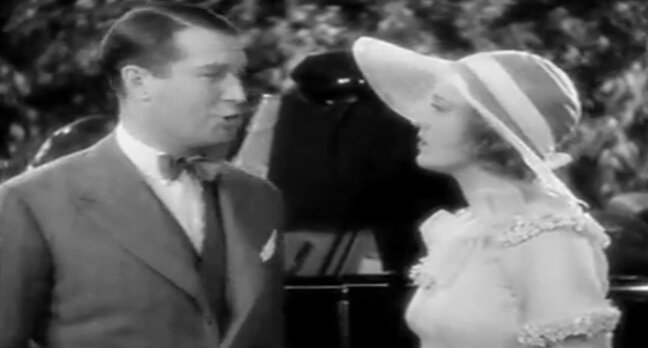
Directed by My Old Boss, Rouben Mamoulian: Love Me Tonight (Paramount, 1932) Just for My Beloved Conductor John Wilson

That snooty critic fart Andrew Sarris once mock-praised my old boss Rouben Mamoulian for his early cinema innovations that never quite caught on. Hah! When’s the last time you were so proud of your old boss’s work you wanted to make sure the world never forgot it? So—here’s the most audacious musical film sequence ever directed, which magically links up the movie’s two singing stars Maurice Chevalier and Jeannette MacDonald:

“Isn’t It Romantic?”
from Love Me Tonight
Rouben Mamoulian, director
Nat Finston, music director-arranger
Songs by Rodgers & Hart

Love Me TonightAbove the lovebirds: Ella Fitzgerald sings this Richard Rodgers+Lorenz Hart perennial, which was scaled down from its operetta length for inclusion in The Great American Songbook.

And if you’re still in doubt about Mamoulian’s genius, check out this opening scene which I uploaded especially for my bonny John Wilson for the beat:

“City Wakes”
from Love Me Tonight
Rouben Mamoulian, director
Nat Finston, music director-arranger

If I had seen Love Me Tonight before I went to work for The Old Man I would’ve been more patient with him. But I was only 23.


The entire film Love Me Tonight is available on my YT channel here


FULL DRESS // A gifted mesmerist—a sinister composer—a naive young conductor from the north…inspired by an episode from the life of Rachmaninoff // DOWNLOAD FREE BOOK POSTER

Rouben Mamoulian’s Golden Boy (Columbia, 1939) and the Look of Love for My Darling John Wilson, Conductor

Barbara Stanwyck was 32 and a box-office star when Paramount contract player William Holden, 21, was personally cast by director Rouben Mamoulian as the lead in his film based on Clifford Odets’s Broadway melodrama of art vs fleeting fame and riches, Golden Boy. Holden was nervous, awkward, and about to be replaced when something about the young player touched Stanwyck’s heart. She took him in hand, coached him personally and kept him from distractions (like studio publicity)… 

Thity-nine years later, at the Oscars Holden had this to say to the world:

Holden, Stanwyck (Golden Boy, 1939)Above Holden and Stanwyck: There are only a few genuine moments in the history of the televised Academy Awards. This is one of them.


The entire film GOLDEN BOY is available on my YT Channel here


FULL DRESS // A gifted mesmerist—a sinister composer—a naive young conductor from the north…inspired by an episode from the life of Rachmaninoff // DOWNLOAD FREE BOOK POSTER

John Wilson Conducts Oklahoma at the 2017 BBC Proms, Rouben Mamoulian Howls In Protest from His Grave, 2

John my bonny, if we ever sit down someday and have a natter like two old friends I’d tell you how much in common you have with The Old Man, which you’d better take as a compliment, because Rouben Mamoulian was a genius. I didn’t think so when I worked for him, but then I was only 23 and he was 81, and the only movie I knew of his—besides The Mark of Zorro with Basil Rathbone and Tyrone Power, which I remember from TV as a kid—was Queen Christina, the result of cinema art-house hopping in New York in the mid-70s, and which had a special place in my half-lesbian heart on account of The Divine Garbo.

CXG Oklahoma

The most subtle reference ever to Agnes De Mille that was clearly about Agnes De Mille without having to mention her name was on Crazy Ex-Girlfriend, season 4 episode 2: “So now they’re randomly doing ballet?” “I guess so, it’s hard to follow.” (Hip-hop follows.) “That’s not even the correct dance language for this piece.” Bay Area-born Vincent Rodriguez III is the hunk in the red neckerchief who plays Josh Chan, heroine Rebecca Bunch’s pinoy love interest. Above: The 2019 Broadway revival version of the title song from Oklahoma! re-orchestrated by the estimable Daniel Kluger; vocal coach was Barbara Maier Gustern. COMPLETE ALBUM at: “Barbara Maier Gustern’s Triumph; Plus an Appreciation of Oklahoma-Born Playwright/Scenarist Lynn Riggs, and Why I Won’t Be Listening to John Wilson’s Chandos-Produced Oklahoma!”


But like I said earlier, I was already familiar with the fact that Mamoulian had directed Carousel and Oklahoma! on Broadway. So when he finally started to chat me up more familiarly, after a few weeks of my just coming in every weekday morning and answering his phone, opening his mail—unpaid bills, media people from all over wanting interviews, a few lines from old friends like Armina Marshall…Paul Horgan…Pamela Mason…Ray Bradbury—balancing his checkbook, reassuring Zayde on the intercom over and over that Henry their handyman hadn’t gone home yet etc etc, and basically fooling around during the many dull spots in the day (which is how I ended up playing the Waltz from Carousel to myself on the actual legendary Richard Rodgers piano), it was easy to follow The Old Man’s train of thought because I already knew a lot about the original production of Oklahoma!

“You know, Agnes…” he started right off the bat one day, and we both immediately understood who he was referring to: Agnes De Mille, the choreographer for the original 1943 production.

I sat up attentively, pen in hand, ready to take dictation. My main duty for Mamoulian was supposed to have been as amanuensis for his memoirs, after all. At least that’s what the temp agency had told me. Although they didn’t say amanuensis.

“No, put your pen down and listen!” he ordered. He was, in the weeks and months to come, going to say that a lot.

So I did. [more later]

Part 1 “The Rodgers Piano” here.
Part 2 “The Eugene O’Neill Story” here.


FULL DRESS // A gifted mesmerist—a sinister composer—a naive young conductor from the north…inspired by an episode from the life of Rachmaninoff // DOWNLOAD FREE BOOK POSTER

“Ask Tony Martin and Cyd Charisse If Their Mailbox is All Right”

Silk Stockings.jpg
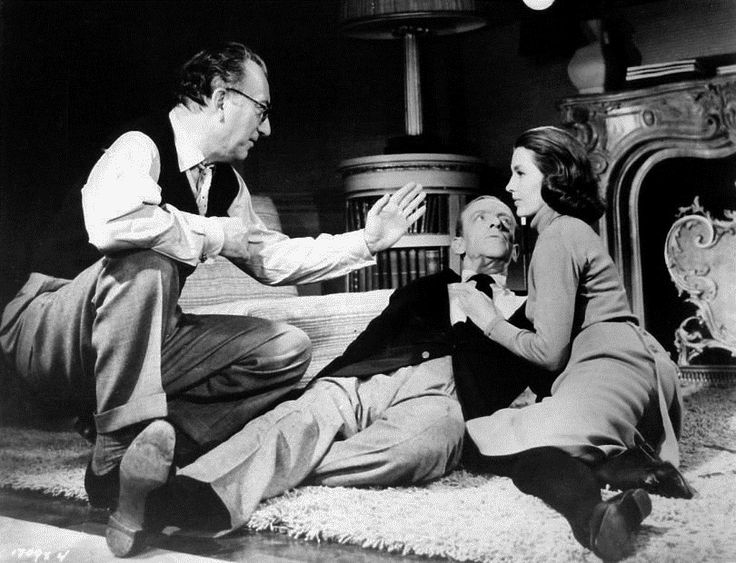
Fred Astaire was 58 when he made this movie. Mamoulian was 60. Cyd Charisse was ageless.


Here’s “Red Blues,” choreographed by Balanchine-trained Eugene Loring on my YT channel, from the 1957 MGM musical, Silk Stockings, directed by Rouben Mamoulian. Mamoulian hadn’t directed a picture since 1946; after the Cleopatra debacle in the early 1960s, Silk Stockings turned out to be his last completed work in Hollywood.

In winter 1979, Charisse and her husband, singer Tony Martin (“Temptation”) lived in a house up the hill from The Old Man on Schuyler Road in Beverly Hills in tranquil retirement. However, at the top of the hill also lived the Shah of Iran’s 86 year-old mother, and came the revolution Iranian students from all over the Southland marched up Schuyler Road to demonstrate outside her house, indulging in a little vandalism on the way. Mamoulian was, of course, furious, and his lovely wife Zayde, who never left her bedroom, buzzed me on the intercom to fume over the “criminals” (her word) who toppled their sovereign letter receptacle. The Old Man’s second concern—after his own mailbox, of course—was the mailbox of his good friend and former leading lady, and I was dispatched to phone them at once. Happily, the protesters had missed theirs.


The entire film SILK STOCKINGS directed by my old boss, Rouben Mamoulian, is available to watch here


FULL DRESS // A gifted mesmerist—a sinister composer—a naive young conductor from the north…inspired by an episode from the life of Rachmaninoff // DOWNLOAD FREE BOOK POSTER