Oh John honey. You’re a sweetheart to do this when you’ve barely unpacked.
John conducted Ralph Vaughan Williams’s Symphony No 5 in D major with the Royal Northern Sinfonia at The Sage in his home town of Gateshead 01 March 2019.
blog postings serving as notes for book
Oh John honey. You’re a sweetheart to do this when you’ve barely unpacked.
John conducted Ralph Vaughan Williams’s Symphony No 5 in D major with the Royal Northern Sinfonia at The Sage in his home town of Gateshead 01 March 2019.
It was a late morning about six weeks into my work assignment and The Old Man hadn’t arisen yet, so there I was in the salon with nothing to do except quietly wait for his appearance and his orders for the day (which letters to answer, which bills to pay, which people to call, etc) before getting down to the primary purpose of my being there, which was, in the agency’s words, “to assist Mr Mamoulian in the writing of his memoirs”. None of that memoir writing actually did transpire in the nearly nine months I was with him, other things did, but let’s not jump ahead. Unsupervised, I was forbidden to handle/read books from his voluminous library, but you know what? He never expressly told me not to play the piano, that big black shiny intriguing baby grand in the middle of the room, and I couldn’t resist. Could you?
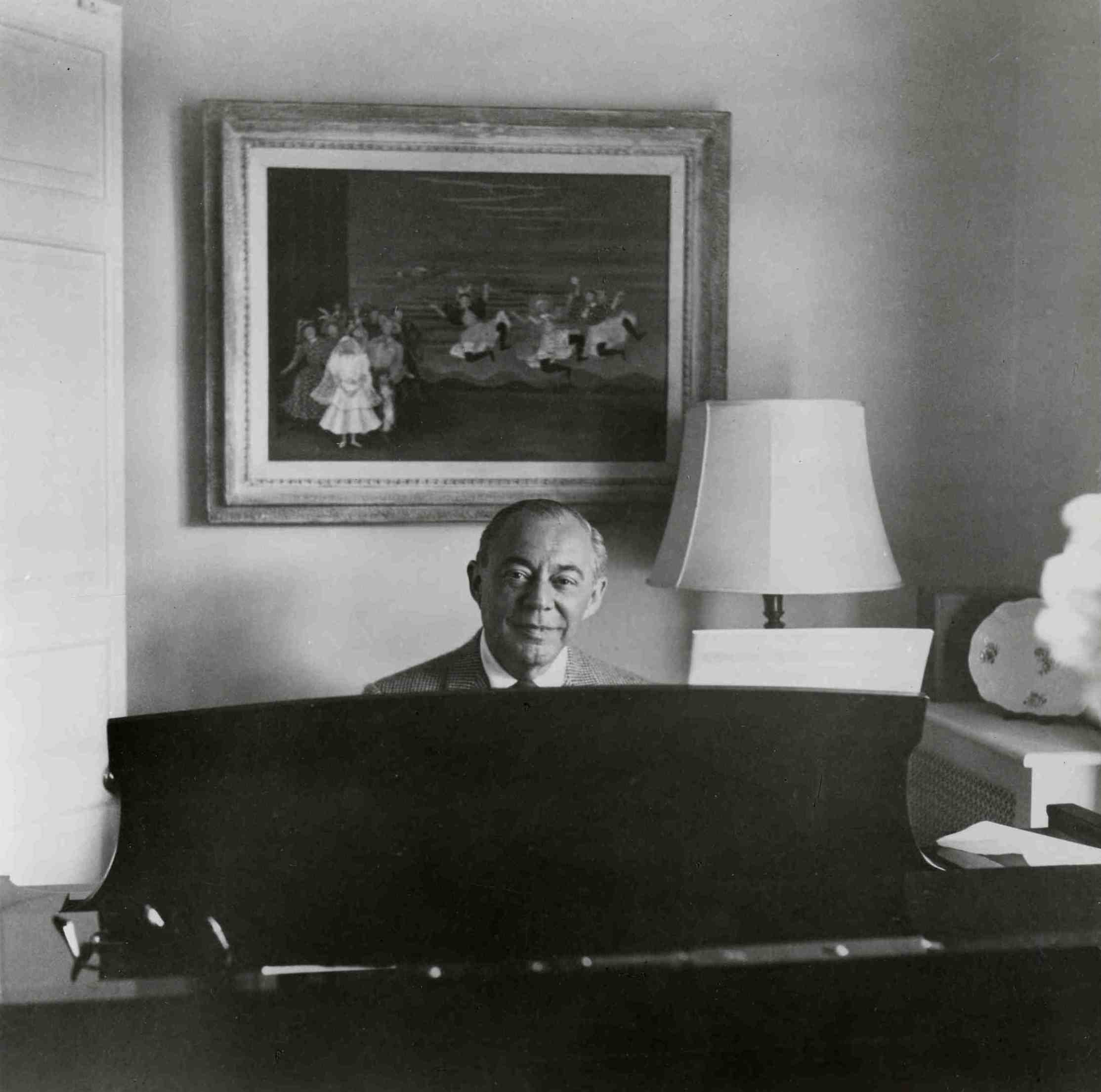
There wasn’t a sound coming from any part of the house, although I could faintly hear Henry the daily handyman moving his wheelbarrow out in the yard. I’d had enough of examining in painstaking detail the boring watercolors and Russian icons on the wall. I sat down on the bench.
Sense memory kicking in… At that point it was the closest I had gotten to this humongous piece of furniture. I remember the smooth feel of the wood as I ran my fingers on it, gently lifting up the fall board to get to the keys. The piano was a Steinway. That is, I remember it as a Steinway, because I don’t remember it not being a Steinway. I put the fingers of my right hand down in place and began, ever so softly, to tap out the first tune that came into my mind, which happened to be the waltz from Carousel. Three, four bars in I thought I heard a rustle from the back of the house and stopped cold, put the fall board down and stood up.
This was the first time my eye was caught by something on the right side of the music rack, some sort of writing actually carved into the wood of the music shelf that lay flat in the cabinet of the piano near the tuning wrench. It was in cursive—and it was a name:
Richard Rodgers
It still gives me goosebumps to remember I actually did that. When The Old Man finally did get up an hour later, I was sitting back at my desk in his alcove-cum-office, pretending to read one of the cheap Hollywood magazines I brought to pass the time, although my mind was still on the bars I’d played and where the bars were going musically, and I think I was humming. I must’ve been humming. Because as he came into the alcove I heard Mamoulian exclaim, “Hey, that’s from Carousel.”
I looked up. Caught! I was about to apologize when he spoke again, this time it seemed almost wistfully. “You know, I directed that.”
I said softly, as if it were an apology, “I know.”
At that moment our relationship started to take a different turn.
[more later]
Part 2 “Agnes De Mille” here
Part 3 “Eugene O’Neill” here
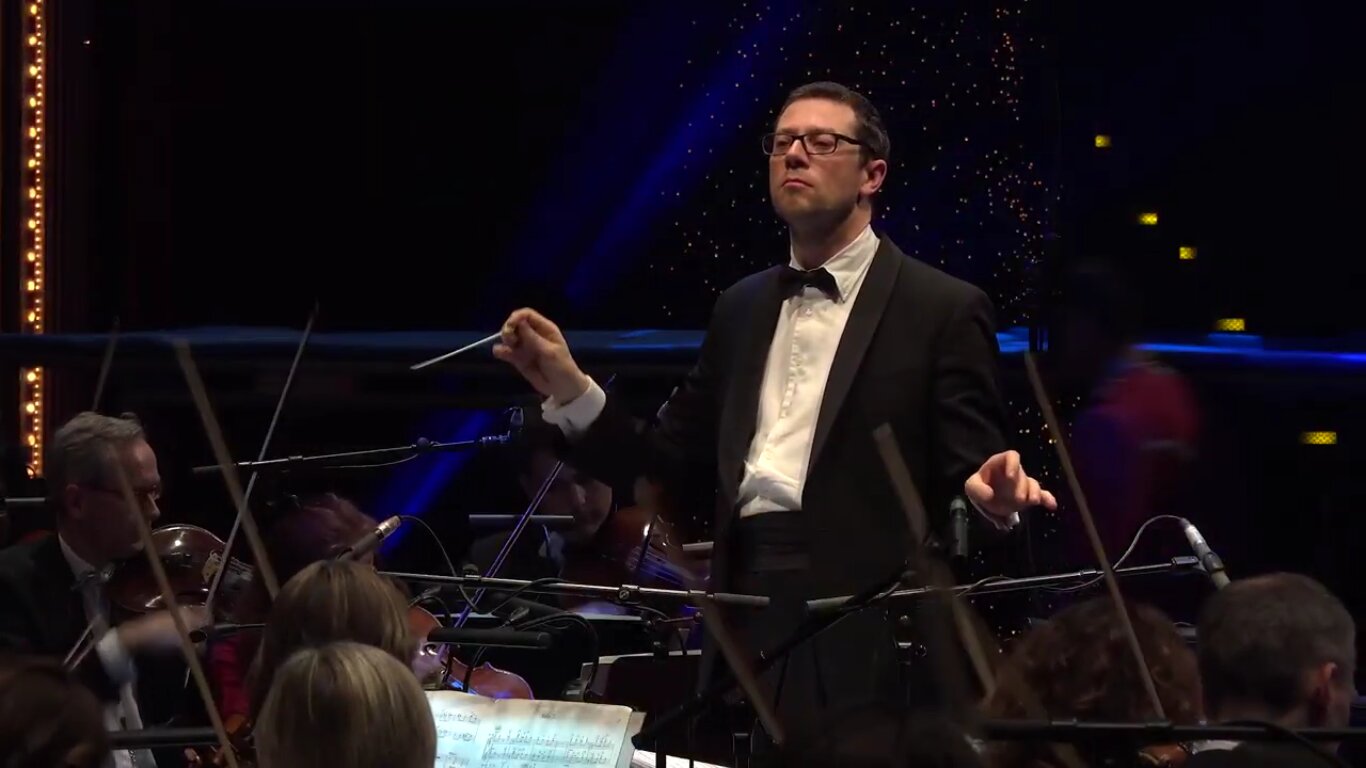 Above: A bright clever orchestral medley that riffs on Gershwin and Porter (sort of), arranged by John and played by the Deutsches Symphonie-Orchester. From the YT promotional video.
From Playbill.com, 2008: Conductor, arranger and musical scholar[!] John Wilson will bring his 58-piece orchestra to the Shaw Theatre August 20-23 for That’s Entertainment!, an evening of music and song that celebrates the great MGM musicals.

The John Wilson Orchestra will perform original orchestrations and scores, many of which have been newly reconstructed by Wilson himself, to pay tribute to some of America’s greatest composers and songwriters, including George Gershwin, Irving Berlin, Cole Porter, Harry Warren, Jerome Kern and Richard Rodgers as well as the great Hollywood arrangers Conrad Salinger, Johnny Green and Nelson Riddle. The evening will feature music and songs from some of Hollywood’s best-loved MGM musicals: High Society, Singin’ in the Rain, An American in Paris, Ziegfeld Follies, Meet Me in St. Louis and The Wizard of Oz. Special guest vocalists are Matt Ford, Rachel Weston and Gary Williams.
As a conductor, Wilson works regularly with the Hallé, City of Birmingham Symphony, Royal Liverpool Philharmonic, BBC Scottish and BBC Concert orchestras. He is a frequent guest conductor in Europe: Recent visits have taken him to the RTE Concert Orchestra in Dublin, and to Scandinavia, Iceland and Bulgaria. Last year he made his Australian debut in Melbourne and Adelaide and his London Philharmonic debut at the Royal Festival Hall. He is also a musical arranger for film, radio and TV, where his credits include orchestrating Sir Richard Rodney Bennett’s score for the BBC production of Gormenghast, which won the Ivor Novello Award for Best Film Score; Howard Goodall’s score for the BBC/HBO film The Gathering Storm about Winston Churchill; and the soundtrack for Kevin Spacey’s Beyond The Sea biopic of singer Bobby Darin, which gained my brilliant, bonny John a Grammy nomination. He has also worked with Sir Paul McCartney and has orchestrated and conducted several of Sir Paul’s compositions with the London Symphony Orchestra.
He has also reconstructed the orchestrations of the major MGM musicals High Society, Singin’ in the Rain, The Band Wagon, and An American in Paris. In January he gave the first European performances of his orchestrations of The Wizard of Oz with the Royal Liverpool Philharmonic, synchronized with the film.
From MusicalCriticism.com, 2009: As part of the celebrations for Johnny Mercer’s centenary, the BBC Concert Orchestra mounted two semi-staged performances of his final stage musical, The Good Companions, at the Watford Colosseum in Hertfordshire. Conductor John Wilson—who led the phenomenally popular MGM Prom this August, as well as a fantastic concert performance of My Fair Lady in Gateshead in July—came together with an experienced cast that included Liz Robertson, Ian Talbot and Annalene Beechey to perform the show, which was first staged in London in 1974. The results could not have been more entertaining.
 Above Inigo, Susie Dean and Miss Trant: Judi Dench, from the 1974 West End production, sings “Darkest Before Dawn”.
The Good Companions is based on JB Priestley’s most popular novel—indeed the work that solidified his reputation. It tells the tale of an upper-middle class woman who—quite against the advice of her relatives—decides to use her newfound wealth to fund a group of strolling players whose director has run off with all the money; escape is a strong theme of the show. One can see why the backstage musical flavour of the novel must have appealed to the book and song writers.
The libretto for the West End show was adapted by Ronald Harwood, Oscar-winning screenwriter of The Pianist. Composer Andre Previn, former Principal Conductor of the London Symphony Orchestra, wrote the music for the Gene Kelly film It’s Always Fair Weather and conducted the films Gigi and My Fair Lady. Lyricist Mercer received nineteen Academy Award nominations and was the lyricist of dozens of American standards including “Moon River” and “The Days of Wine and Roses”.
In short, the piece is an underrated little gem (the original cast album starring Judi Dench, John Mills and Marti Webb was briefly available but is now a rarity), and in conductor John Wilson’s taut performance all the nuances came through. It seems the project has been a labour of love for him: the original full orchestral score was lost after being simplified for amateur productions, and although some of the original performing parts were eventually discovered by Caroline Underwood of the Warner/Chappell music publishers, Wilson has had to restore parts of the score for which no material survived. He has rendered the work of Angela Morley and Herb Spencer, the orchestrators of the original production, extremely sympathetically, and led the performance with verve.
With the Maida Vale Singers covering a range of smaller roles and raising the roof in the ensemble numbers, and the BBC Concert Orchestra playing at their exquisite best, this was a superb evening. One hopes the same team will explore more classic musicals in the future, but in the meantime the Radio 3 broadcast on 16 November at 7pm is not to be missed. ~Dominic McHugh
“I think I’ve done my last batch of film music,” says bonny John. Interview starts at 9:50. (Update 5 March 2019: Damn, the Beeb yanked this podcast! Will replace the link if they ever bring it back. To make up for it below are some downloadables.)
Included with the interview in their entirety: Met soprano Joyce DiDonato sings “You’ll Never Walk Alone” (Rodgers & Hammerstein); the famous barn-raising dance in Seven Brides for Seven Brothers (Gene de Paul, Alexander Courage), and “I Got Rhythm” (George and Ira Gershwin), all played in that ineluctable John Wilson Orchestra way.
 Above bloodily hardworking John: Kim Criswell, the Maida Vale Singers and The John Wilson Orchestra tear into the Gershwin brothers’ “I Got Rhythm”.
From a 15 June 2016 article in The Sydney Morning Herald:
It’s rare, if ever, to hear a kind word said about James T Aubrey, the ruthless former CBS executive hired in 1969 to turn around the stuttering fortunes of the MGM movie studio. In a four-year reign he slashed staff numbers, cancelled many projects and sold off the company’s archive in a sale that, famously, included Judy Garland’s iconic ruby slippers from The Wizard of Oz.
“They had no intrinsic value,” was Aubrey’s icy comment at the time.
And along with that brutal act, incredibly, he also ordered the destruction of many of the film scores in the company’s archive, trashing music from legendary films including The Wizard of Oz, High Society and Singin’ In the Rain.
These gems might have been lost forever were it not for the passion and dedication of English conductor John Wilson, who for the past 15 years has dedicated much of his time to re-creating them.
Now he has re-scored some 200 separate numbers from MGM musicals from the 1930s to the early ’60s purely by ear, a task he was driven to largely out of necessity—he loves the music and wanted his orchestra, the John Wilson Orchestra, to play it.
“I had to do it,” he says simply.
He’s also quite frank about the tedium of minutely reconstructing each part.
“First and foremost, I’m a conductor—it’s all I do really,” he says. “I don’t like writing music out but I have to. It’s a pain in the arse! It’s hours of toil.
“I do love hearing it back—I only do the numbers I think are really sensational—but sitting listening to four seconds of music on a loop for half an hour just to get one bass clarinet part—is that going to be anything other than just necessary?”
One might then expect Wilson to join the chorus of Aubrey critics but he is surprisingly generous towards the man who presented him with a lifetime’s work.
“It would be easy to say James Aubrey was a vandal but I think there were a lot of people around then who had no idea that this was worth keeping,” he says.
The pace at which the studio system turned out films left little time for those involved to consider their longer term significance.
“If you had said to anyone in the 1930s that what they were creating was art they would have laughed at you,” says Wilson. “It was entertainment designed to make a profit. Nobody was archively minded. A lot of the scores were an unfortunate casualty of that prevailing attitude. It would have been a case of, ‘Who wants a load of old crumbly pages’?”
Wilson’s passion for “good quality light music” sprang from listening to the TV and radio when he was growing up in Gateshead in the 1970s-80s.
After an extensive apprenticeship playing piano, arranging music and conducting for amateur dramatics, pantomimes and other productions he went on to study in London.
“By the time I arrived at the Royal College of Music at 18 I was fairly hands-on and practical,” he says. “There were never any divisions for me between David Raksin, Max Steiner and Erich Korngold and Strauss, Mozart and Brahms.”
Now he is working alongside his long-time friend and collaborator, Sydney Symphony Orchestra co-concertmaster Andrew Haveron, bringing his favourite light music to Sydney audiences.
Haveron has led the John Wilson Orchestra since its inception.
“Andrew knows how to play this music better than anyone on the planet. That’s a real game changer,” says Wilson.
On a program that also includes music from Citizen Kane, Gone With The Wind and Star Wars will be Erich Korngold’s music for 1938’s The Adventures of Robin Hood, starring Errol Flynn.
Wilson’s face lights up. “It is,” he says, “the greatest movie score that has ever been written. I never get past how impressive it is.”
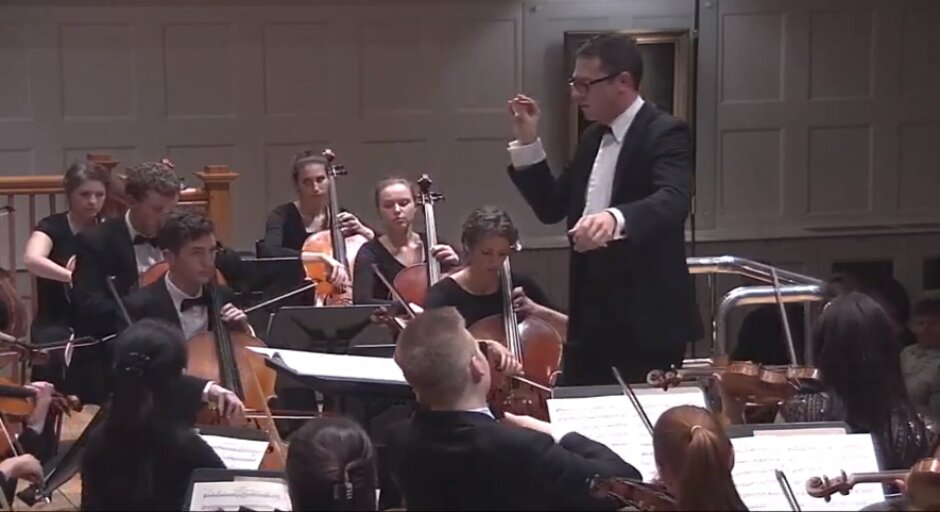 Above John: I Lacrymosa 00:00 / II Dies Irae 09:22 / III Requiem Aeternam 14:56.
A passionate expression of the composer’s pacifism, penned amid the conflict of 1940, Britten’s Sinfonia da Requiem is also a memorial to his parents. A powerful and enduring work, one of Britten’s most abiding from the earlier part of his career.
Transcribed by me from a screenshot uploaded on John’s fan club site.
From the Sinatra Music Society Newsletter by Phil Suffolk (2001) — The world of music can be full of wonderful discoveries and surprises and this is certainly true when I encountered the name John Wilson for the first time. This was in 1997 with the release of an ASV CD devoted to lesser known compositions by that master of melody and superb orchestrator, Eric Coates, played by the BBC Concert Orchestra conducted by John Wilson.
The thing I first noticed first about this disc was the total commitment of the interpretations. A year later, a second volume appeared also devoted to the delightful compositions of Eric Coates. Once again I was struck by the deep understanding and respect show to these often unfamiliar scores, something which isn’t always the cast when this music is performed by orchestras and conductors who just do not seem to understand the idiom.
A little later I learnt that John was preparing a complete edition of the works of Eric Coates, so no wonder he is so completely “inside” this lovely music.
Born in Gateshead in 1972, John Wilson studied composition and conducting at the Royal College of Music, where he graduated in 1995 winning all the main prizes, and also where he was awarded the prestigious Tagore Gold Medal, the highest award attainable by a student at the college.
In 1996 John formed The Sinfonia of Westminster, a group comprised of the pick of the outstanding musicians from leading soloists and chamber groups. But John also enjoys a parallel career conducting The John Wilson Orchestra, which is comprised of young musicians devoted to keeping alive the music of The Great American Songbook, including arrangements by Nelson Riddle, Billy May, Robert Farnon, Paul Weston and Conrad Salinger. The orchestra has given concerts in London’s Queen Elizabeth Hall to great acclaim. He also appears regularly at Pizza in the Park and is the youngest conductor to broadcast on Radio 2’s long running Friday Night Is Music Night programme. John is also a prolific arranger himself, producing numerous orchestrations for film and television and he was also responsible for arranging all the music for the Hong Kong handover celebrations. The first two CDs to appear featuring The John Wilson Orchestra come from two different labels. The first one from Velvetone comprises 19 titles recorded at the CTS Studios in Wembley in 1998. Sarah Moule is the sensitive vocalist on eight tracks including “I Concentrate on You” and “Words Can’t Describe”, a little-known song once recorded by Sarah Vaughan. The rest is all orchestral, my favourites being “Skyliner” and “Cherokee”, both arranged by Neil Richardson, and Bob Farnon’s superb reworking of David Raksin’s classic “Laura”, which for me is worth the price of the disc alone!
John’s most recent CD is a first from Michael Dutton’s Vocalion Digital label. Previously this label has concentrated on re-issues of classic dance band and jazz recordings. They are now embarking on a series of original recordings made specially for the label, and John’s CD Orchestral Jazz is included in the first release. Using 24 strings, 4 winds, 5 rhythm and piano, this disc sounds superb and no wonder, featuring as it does on Richard Rodney Bennett playing piano on 4 tracks and providing arrangements for 8 tracks including “On the Sunny Side of the Street”, “Lush Life” and “Melancholy Baby”.
The remaining arrangements are shared between John himself and Neil Richardson.
Listen out for Ian Moffat’s superb trombone, also Enrico Tomasso on trumpet and Luke Annesley doubling on sax and clarinet. This issue should be snapped up by all who enjoy the very best in orchestral jazz. If you enjoy Nelson Riddle’s recordings then you should love this CD.
One wonders what the future has in store for John Wilson. Personally I would welcome a disc devoted to the music of Robert Farnon, and what about a CD of the great arrangements of the unsung hero of MGM musicals, Conrad Salinger. But whatever, the name John Wilson will ensure that the great music of the twentieth century will be kept alive, played and presented superbly by a young master interpreter.
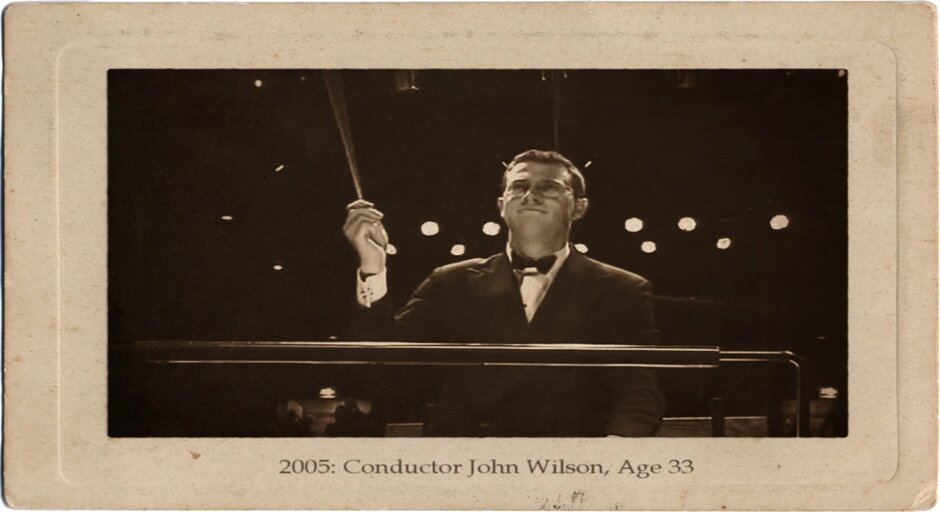

I Mars, the Bringer of War (1914)
III Mercury, the Winged Messenger (1916)
VI Uranus, the Magician (1915)
VII Neptune, the Mystic (1915)
John Williams used the melody and instrumentation of “Mars” as the inspiration for his soundtrack for the Star Wars films. You can especially hear this in the Death Star theme.
The concert also included John Adams’s Guide to Strange Places and Benjamin Britten’s Four Sea Interludes (here played by the RTE conducted by John).
From November 2018: There’s a memorial cross in the churchyard of St Mary the Virgin, Church Clare, Whickham, in memory of the composer William Shield, one of Gateshead’s most illustrious sons.

Shield was born in the village of Swalwell on 5 March 1748 and baptized in this church. The house in which he was born, opposite the Three Tuns pub (now in Low Fell), was demolished in 1936. Apprenticed to a boat builder, Shield studied music with Newcastle-born composer and church organist, Charles Avison (1709-1770), was heard playing violin by Italian composer and violinist Felice Giardini (1716-1796) and encouraged to take up music professionally.
On Giardini’s invitation, he became a member of the Italian Opera (aka The Haymarket Opera House / His Majesty’s Theatre) in London and one of London’s leading viola players. He was also a friend of Haydn. He wrote many successful pieces and songs, and in 1817 was appointed Master of the King’s Musick.
Shield’s main claim to fame, however, is that it has now been proven he wrote the tune of “Auld Lang Syne”. It was supposed that Robert Burns, who wrote the words, had also written the music, basing it on a folk song. Indeed, Burns claimed to have written it in 1788, inspired by a man singing in a pub. Recent research shows, however, that the tune comes from the Overture to Rosina, a music drama written by Shield five years earlier.
The original score for Rosina is in Gateshead Central Public Library. He also provided the music for another Burns song: “Comin’ Thro the Rye”. Shield died at his home in Berners Street on 25 January 1829 and is buried in Westminster Abbey.
~ from The Classical Map of Musical Britain by Richard Fawkes
My beloved John Wilson‘s very first time on the podium in the Royal Albert was not with his eponymous orchestra—that was in 2009—but, at age 35, conducting the 50-piece BBC Concert Orchestra in their program, “British Film Music” (entire program available here in 14 parts). First up is William Walton‘s* score from the unseemly gorgeous (all blue skies and puffy white clouds) 1969 war picture Battle of Britain. “Battle in the Air” (in part 1 @00:01:20) is spirited, ravishing and very dramatic. I saw the film first-run back home in Minneapolis, then again a few years later in London and then again in, of all places, Patras, Greece, but it’s the music I remember most.
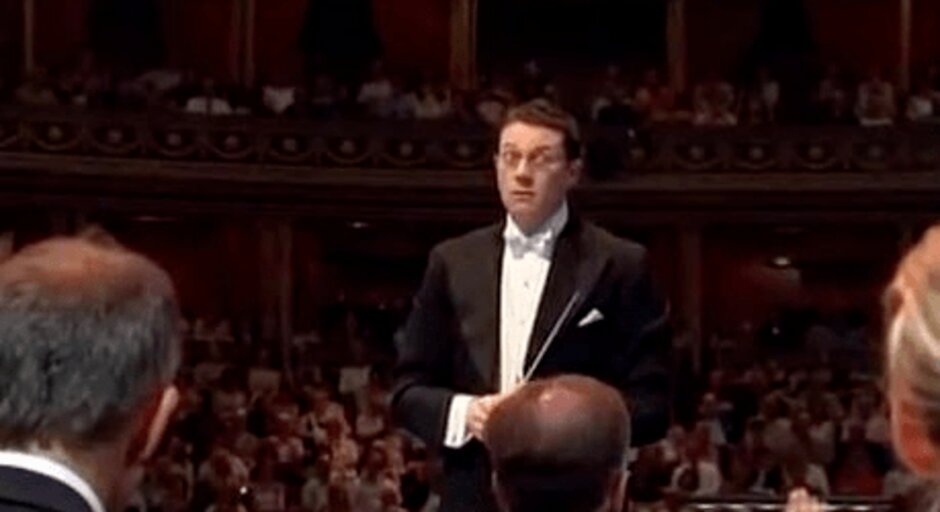 Yes love, that overtone did seem to go on forever, didn’t it?
Here’s the entire program:
Cynthia Fleming, leader. Philip Achille, Cynthia Millar, soloists. Maida Vale Singers, chorus. Richard E Grant, host. Appearance by Sir Richard Attenborough.
** Because of his advanced age, Sir William Walton turned to friend Sir Malcolm Arnold for assistance with the orchestrations (which Arnold supplied, as well as writing additional cues). Harry Saltzman rejected the score, saying it wasn’t long enough. Ron Goodwin (who composed for Where Eagles Dare) wrote the replacement score, but Sir Laurence Olivier threatened to have his name removed in the credits if none of Walton’s original was used. For this reason, Walton’s original music for the “Battle In the Air” sequence was used in the climactic closing of the film.
The following was translated on Google from the Czech and transcribed by me—except for minor grammatical emendations—verbatim:
PRAGUE DAILY | 24 SEPTEMBER 2007 – John Wilson has brought restored film music to the Prague Autumn and is preparing to pay his respects to John Williams.
From the point of view, conductor John Wilson gives the impression of an intelligent young man. He is one of those rare people who is a joy to meet. In addition, he finished a several-hour rehearsal with the Czech Radio Symphony Orchestra. He has prepared a concert for the Prague Autumn Festival, called “Famous Film Music from Hollywood”, which will be performed twice due to great interest. At the age of thirty-five, Wilson has gained a recognition that many might envy. Some time ago, for example, he performed at the prestigious BBC Proms music festival, but he still remains modest and immediately attracts listeners with a helpful, understanding speech.
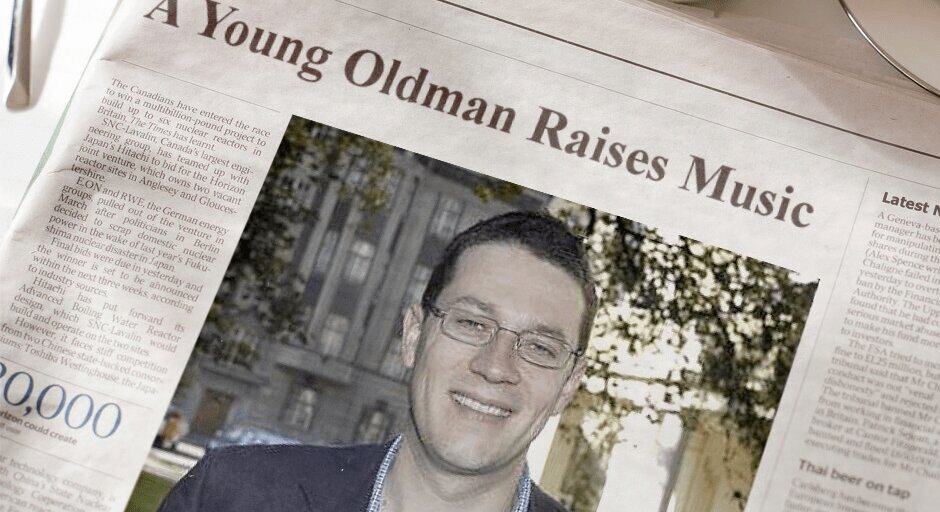 Photo: Jan Handrejch. Above: John and his O’s MGM Jubilee Overture.
It surprises me that at your age, you are so interested in early film music. One would expect that a witness would be more enthusiastically interested in the archives.
I would like something really valuable to be left behind. That is why I try to concentrate a large part of my energy and diligence on the restoration of old, often non-existent or directly lost sheet music scores. [I do this] most often in collaboration with the Hollywood studios Warner Bros and MGM. In the 1960s, the MGM studio liquidated its entire music library, which was one of the largest and most valuable of its time. At the time, people simply did not think that film music needed to be preserved for future generations. The only thing that has survived are the movies. I’m trying to correct their mistake now.
Musical archeology
This must be extremely challenging.
Yes, it really is. It is necessary to listen to the whole composition from the film second by second and to the smallest detail. I’ve seen “The Wizard of Oz” at least two hundred times. With all your will and senses, you focus on each and every measure. You must not miss anything if you want to get the most accurate description possible. You spend all day working hard and eventually find that you have two or three seconds of music. You have to be patient, but I think it’s worth it.
Will we hear the result of your efforts at your Prague concert?
Yes. The first in the first part, which will focus mainly on music “for witnesses”, will be heard, for example, the remembered “Wizard of Oz”. In the second half, however, I would like to pay tribute to John Williams. Not only because he is one of the best modern composers of film music, also successful and popular, but also because Williams is more based on tradition than anyone else. Therefore, I hope that the listeners will notice the context, which I would like to point out non-violently at the concert.
Do you mean, for example, the work of Erich Wolfgang Korngold, a Czech native famous during The Golden Age of Hollywood?
Naturally. Williams’s orchestration, for example, is almost identical to his. This is clearly evident in “Star Wars”, which, of course, cannot be missing from the program. You must understand that Williams began as a pianist in Hollywood recording studios in the 1950s and came into direct contact with the generation that laid the foundations of modern film music. In addition to Korngold at the time, Max Steiner and Alfred Newman, who is the composer of perhaps Hollywood’s most famous tune, a fanfare of 20th Century Fox, were still active. At the same time, I hope that the audience will recognize how much Williams still remains himself and in the true sense of the word, an original.
Last of the Mohicans
Are you well acquainted with the past of film music, but how do you look at its future?
You know, Williams is seventy-five years old this year, and even though he’s still active and still composing great music, he won’t be here forever. I don’t think there’s anyone in the current generation who can replace him. That’s why I’m afraid the whole era of film music will leave with John Williams.
But that sounds pretty hopeless.
Maybe a little. On the other hand, I am convinced that the hope of film music can be the current generation of European composers, who come up with cultured, intelligent and imaginative music. In Hollywood, on the other hand, music is basically declining, becoming flatter and flatter by the day. Sure, it helps the film become great, but I prefer music that will stand up on its own. My concert is also trying to point out that. I try to prove that good film music is not lost in concert halls.
At the same time, film music is struggling for recognition, and many musicologists still see it as an indecent, used form.
In the words of a classic: “Who ever built a monument to a critic?” I will not say at all what the critics say. The attitude of such people is not so critical or professional, but rather snobbish. But attitudes and opinions are changing. Constantly. In July, for example, I conducted British film music with great success at the BBC Proms, a large and acclaimed festival. No one would have dreamed of that ten years ago.
…The other conducted by John Mauceri in 2006 with the Nashville Symphony & Chorus, in a production based (in part) on the original score markings of composer George Gershwin:
“For those who are familiar with the score, the very opening will seem slower. It is clear from Gershwin’s metronome markings and from the articulations in the orchestral parts that he intended the opening to be moderately fast (marked ‘Risoluto e Ben Marcato’ in the composer’s hand), exposing its inner syncopation and then accelerating. ‘Summertime’ is faster than we are accustomed. It is not a sad song, after all, and ‘A Woman is a Sometime Thing’ is slower. In fact, these two ‘lullabies’ by the mother and the father of their nameless child, are at the same metronome marking. In other words, Gershwin wanted to link the daddy and the mommy to each other by the speed of their music, even if their words and styles are quite (humorously) different.” On Porgy & Bess ©John Mauceri
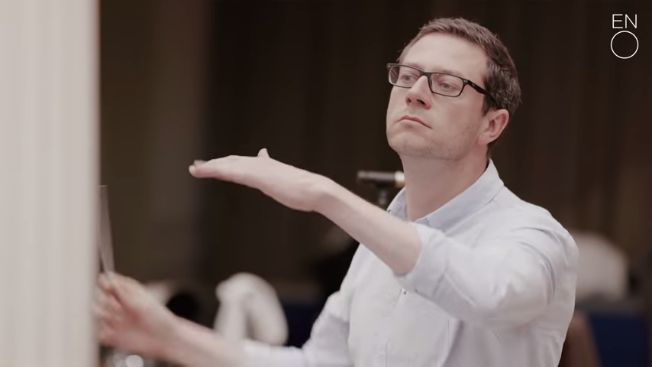
Anthony Tommasini in his New York Times review of the English National Opera’s production of Porgy and Bess described my bonny as the “excellent John Wilson, who led a performance that had sweep, shape and vitality, as well as rarer qualities: precision and restraint”. Here’s our John from this past summer rehearsing “Summertime“. Performances of ENO’s Porgy and Bess run to 17 November.
More about Gershwin and Porgy & Bess:
Between 2000 and 2005 John recorded 8 albums for the venerable jazz/swing/dance band label Vocalion. Whereas four months ago I had none, I now have 6 of them. I have that awful Orchestral Jazz he did with Richard Rodney Bennett; his 2 albums of Angela Morley’s work; his Paul Weston and his Geraldo (see “Geraldo Among the Filipinos, 1963”); and I just ordered Dance Date.
There are two other albums I haven’t gotten yet: One is with a pleasant but unimaginative crooner named Gary Williams (who I suspect was the chap who enabled John to increase the size of his orchestra—“He just turned up one day at my door with a pot of money and said, ‘Will you put together a great big orchestra for me to sing to?’ And that was the start of it,” said my blinky winsome John in a 2011 interview at the BFI) but it doesn’t sound interesting enough to drop fifteen bucks on.
But this one, Lessons In Love, sounds perfectly gorgeous, the little I heard—it’s classic Songbook stuff—and I’m dying to have it. It’s Lance Ellington’s strong clear vocals and fundamental John Wilson Orchestra through and through. Trouble is, it apparently went through a limited pressing so available copies run from 115 American bucks upward. How can a record only 13 years old be a collector’s item already??
Lance Ellington (listen to his “It Don’t Mean a Thing If it Ain’t Got That Swing” from the show Ellington Sings Ellington) is the son of English bandleader/singer Ray (no relation to Duke) Ellington, who I know only as that weird singer on The Goon Show who mangled my favorite Charles Trenet song, “Boum”, even though I yelled at him through the computer screen not to do it. Lance is great, though. He teamed up with John and Orchestra for their 2014 Cole Porter album doing the song “Now You Has Jazz” and that album won the Echo Klassik Music Without Borders Prize. (My beloved’s big smile at 4:23.)

 "I'll Be Dead Before You Break My Heart"