My Beloved Conductor John Wilson’s Concert Schedule 14 September 2022 Through 25 June 2023

After wading through the unsurprising reviews of John’s 16 July concert at the Royal Albert, I thought I’d list his upcoming performances:

[JOHN’S PAST AND PRESENT CONCERT SCHEDULES]

Above: I’m afraid nothing on this list arouses my delight except the Martin-Blane standard, “Love”, here suavely sung by the co-composer himself, Ralph Blane; kickass arrangement by Ralph Burns, who 6 years later orchestrated Richard Rodgers’s No Strings.


The dates link to the ticket sites. The other highlights link to available recordings.

Wed 14 September 2022 19:30
Göteborgs Konserthus
Gothenburg, Sweden
Gothenburg Symphony Orchestra
Leonard Elschenbroich (cello)

___

Thu 15 September 2022 19:00
Vara Konserthus
Vara, Sweden
Gothenburg Symphony Orchestra
Leonard Elschenbroich (cello)

___

Wed 21 September 2022 14:00
BBC Philharmonic Studio
MediaCityUK, Salford
BBC Philharmonic
Timothy Rideout (viola)

___

Sat 08 October 2022 13:30
Duke’s Hall, RAM
London UK
Royal Academy of Music Orchestra

  • Lili Boulanger: D’un matin de printemps
  • Robert Schumann: Symphony No 3 in E flat, op 97, ‘Rhenish’

___

Thu 20 October 2022 19:30
Sheldonian Theatre Oxford
Oxford UK
Oxford Philharmonic Orchestra
Louis Schwizgebel (piano)

___

Sat 11 November 2022 19:30
Duke’s Hall, RAM
London UK
Royal Academy of Music Orchestra

___

So speaks my beloved conductor John Wilson: ‘I am delighted beyond words to be taking Sinfonia of London on our first live tour, playing in some of the UK’s most exciting venues.  All ninety of us are looking forward to welcoming audiences who know the orchestra through our recordings, our televised appearances at the BBC Proms, as well as anyone coming to hear us for the first time. We hope our programme will thrill and inspire you!’

Sat 26 November 2022 19:30
Symphony Hall Birmingham
Birmingham, United Kingdom
Sinfonia of London
Martin James Bartlett (piano)

___

Mon 28 November 2022 19:30
St David’s Hall
Cardiff, United Kingdom
Sinfonia of London
Martin James Bartlett (piano)

___

Thu 1 December 2022 19:45
The Anvil Theatre
Basingstoke, United Kingdom
Sinfonia of London
Alice Coote (mezzo-soprano)

___

Fri 2 December 2022 19:30
Barbican
London, United Kingdom
Sinfonia of London
Alice Coote (mezzo-soprano)

___

Sun 4 December 2022 19:30
Theatre Royal and Royal Concert Hall
Nottingham, United Kingdom
Sinfonia of London
Martin James Bartlett (piano)

___

Sat 31 December 2022 15:00
Berlin Tempodrom
Berlin, Germany
Deutsches Symphonie-Orchester Berlin
Circus Roncalli

  • Nino Rota: Musik aus dem Film ›Der Pate‹
  • Leroy Anderson: ›The Typewriter‹ und ›Fiddle Faddle‹
  • Erich Wolfgang Korngold: Musik aus dem Film ›Robin Hood‹
  • Maurice Ravel: ›Boléro‹
  • Henry Mancini: Musik aus dem Film ›The Pink Panther‹
  • …und mehr…

___

Sat 31 December 2022 19:00
Berlin Tempodrom
Berlin, Germany
Deutsches Symphonie-Orchester Berlin
Circus Roncalli

  • Nino Rota: Musik aus dem Film ›Der Pate‹
  • Leroy Anderson: ›The Typewriter‹ und ›Fiddle Faddle‹
  • Erich Wolfgang Korngold: Musik aus dem Film ›Robin Hood‹
  • Maurice Ravel: ›Boléro‹
  • Henry Mancini: Musik aus dem Film ›The Pink Panther‹
  • …und mehr…

___

Thu 5 January 2023 17:00
Stockholm Concert Hall
Stockholm, Sweden
Royal Stockholm Philharmonic Orchestra
Kim Criswell (vocals)

___

Thu 9 March 2023 19:30
Caird Hall
Dundee, United Kingdom
Royal Scottish National Orchestra
Timothy Orpen (clarinet)

___

Fri 10 March 2023 19:30
Usher Hall
Edinburgh, United Kingdom
Royal Scottish National Orchestra
Timothy Orpen (clarinet)

___

Sun 12 March 2023 19:30
Glasgow City Halls
Glasgow, United Kingdom
Royal Scottish National Orchestra
Timothy Orpen (clarinet)

___ 

Thu 11 May 2023 20:00
Sydney Opera House
Sydney NSW, Australia
Sydney Symphony Orchestra
Stephen Hough (piano)

___

Thu 12 May 2023 11:00
Sydney Opera House
Sydney NSW, Australia
Sydney Symphony Orchestra

___

Sat 13 May 2023 14:00
Sydney Opera House
Sydney NSW, Australia
Sydney Symphony Orchestra
Stephen Hough (piano)

___

Wed 17 May 2023 20:00
Sydney Opera House
Sydney NSW, Australia
Sydney Symphony Orchestra
Stephen Hough (piano)

___

Thu 18 May 2023 13:30
Sydney Opera House
Sydney NSW, Australia
Sydney Symphony Orchestra
Stephen Hough (piano)

___

Fri 19 May 2023 20:00
Sydney Opera House
Sydney NSW, Australia
Sydney Symphony Orchestra
Stephen Hough (piano)

___

Sat 20 May 2023 20:00
Sydney Opera House
Sydney NSW, Australia
Sydney Symphony Orchestra
Stephen Hough (piano)

___

Wed 7 June 2023 19:00
Queen Elizabeth Hall
London, United Kingdom
Orchestra of the Age of Enlightenment

EXTRA! John’s interview with viola player Annette Isserlis (Netty), 16 February 2024 Looking forward to your Offenbach, querido.

Conductor, composer and arranger John Wilson joins “Netty for Tea” in the latest episode. They delve into themes that are close to the heart of the OAE. John also recalls some interesting memories including his revelational trips to HMV, and his (nervous) first encounter with the OAE…

John Wilson, who joined us in the summer as conductor for our Princess Ida production, shares his journey into the world of music. There are compelling conversations about his skilful ability to piece back together scores that were destroyed, experiences of orchestrating a film and the intersection of discipline, expression and freedom in performance and composition.

Tea with Netty is our podcast hosted by viola player Annette Isserlis (Netty). Over a cuppa (or something a little stronger…), Netty chats with a variety of conductors, players and other guests as she ‘spills the tea’ on the side of classical music you don’t normally hear.

___

Wed 8 June 2023 19:00
Queen Elizabeth Hall
London, United Kingdom
Orchestra of the Age of Enlightenment

___

Sat 17 June 2023 19:30
Snape Maltings Concert Hall
Snape, United Kingdom
Sinfonia of London
Roderick Williams (baritone)

  • Paul Dukas: The Sorcerer’s Apprentice
  • Sally Beamish: Four Songs from Hafez (world premiere of orchestral version, Britten Pears Arts COMMISSION)
  • Ottorino Respighi: The Fountains of Rome
  • Sergei Rachmaninoff: Symphonic Dances

___

Sat 18 June 2023 16:00
Snape Maltings Concert Hall
Snape, United Kingdom
Sinfonia of London
Pavel Kolesnikov (piano)
Samson Tsoy (piano)

  • William Walton: Scapino
  • Frederick Delius: Summer Night on the River
  • Britten: Scottish Ballad, op 26
  • Elgar: Symphony No 2 in E flat, op 63

___

Sat 24 June 2023 20:15
The Concertgebouw
Amsterdam, Netherlands
Netherlands Philharmonic Orchestra
Howard McGill (saxophone)

___

Sun 25 June 2023 14:15
The Concertgebouw
Amsterdam, Netherlands
Netherlands Philharmonic Orchestra
Howard McGill (saxophone)


FULL DRESS // A gifted mesmerist—a sinister composer—a naive young conductor from the north…inspired by an episode from the life of Rachmaninoff // DOWNLOAD FREE BOOK POSTER

“Bird Songs at Eventide” by Eric Coates, Sung by Kathryn Rudge, Just for My Bonny 2022 Gramophone Award Winner, John Wilson

John, white-hot flame of my heart: In celebration of your latest award, I’m serenading you tonight with a song I know you know, because you’ve played it and I’ve sung it, and somewhere in that magical Music Room out there, you and I are playing and singing it together.


Listen to John’s new orchestra the SINFONIA OF LONDON here


My John Wins Another AwardAbove John, his award, and a Chandos exec: Eric Coates’s enduring 1926 sheet music hit, “Bird Songs at Eventide” sung by Liverpool-born mezzo Kathryn Rudge, played by RAM professor James Baillieu.

Here also are the lyrics, which were written by the father of your old housemate:

Over the quiet hills 
Slowly the shadows fall; 
Far down the echoing vale 
Birds softly call; 
Slowly the golden sun 
Sinks in the dreaming west; 
Bird songs at eventide 
Call me to rest.

Love, though the hours of day 
Sadness of heart may bring, 
When twilight comes again 
Sorrows take wing; 
For when the dusk of dreams 
Comes with the falling dew, 
Bird songs at eventide 
Call me to you.

~Harry Rodney Bennett (1890-1948), writing as Royden Barrie

FULL DRESS // A gifted mesmerist—a sinister composer—a naive young conductor from the north…inspired by an episode from the life of Rachmaninoff // DOWNLOAD FREE BOOK POSTER

The MGM Jubilee Overture Arranged by Johnny Green, Reconstructed and Conducted by John Wilson, and Played by The John Wilson Orchestra

From November, 2018: MGM’s best-known music director arranged this piece in 1954 in commemoration of the studio’s 30th birthday. And since 2004, when my beloved John Wilson and his eponymous orchestra first played this reconstituted medley at the 2,900-seat Royal Festival Hall, it has gone on to become sort of their signature piece, which they’ve played all over the world from Sydney to Berlin. I can’t imagine how John was able to reconstruct the score directly from hearing this lusterless film short, but my darling has the gift of patience and commitment.

The John Wilson Orchestra 1The MGM Jubilee Overture above John Wilson, the Francois Villon of the podium. Added attraction: Here’s one of those rare moments when John conducted without his baton, which fell out of his grasp but was retrieved seconds later by an alert string player. Berlin, 2016.


Now….right. Because this is turning out to be the second most clicked-on post on my blog (the first most clicked-on being the one about Noli Me Tangere, the Filipino opera based on Jose Rizal’s classic novel) I’ve decided finally to take a few minutes to come back to this posting and add the names of the composers and lyricists as I promised—and bear in mind, I’m doing this pretty much from memory. (I was the night solfeggist at ASCAP, remember?): “Singin’ In the Rain” / Nacio Herb Brown; “I’ve Got You Under My Skin” / Cole Porter; “Broadway Rhythm” / Nacio Herb Brown; “The Last Time I Saw Paris” / Jerome Kern, Oscar Hammerstein II; “Temptation” (shades of Tony Martin!) / Nacio Herb Brown, Arthur Freed; “Be My Love” (shades of Mario Lanza!) Nicholas Brodzsky / Sammy Cahn; “The Trolley Song” (with the Judy sound) / Hugh Martin, Ralph Blane; “On the Atchison, Topeka and the Santa Fe” (more Judy sound) / Harry Warren, Johnny Mercer; “Donkey Serenade” / Herbert Stothart, based on Rudolph Friml; and “Over the Rainbow” (the Judy sound of all Judy sounds) / Harold Arlen, EY Harburg.

The last two numbers “Donkey” and “Rainbow” were obvious tributes to Green’s late predecessor as music director, Oscar winner (for The Wizard of Oz score, which John reconstructed by ear), Herbert Stothart.

Deleted: 2 bars plus “Baby, It’s Cold Outside” / Frank Loesser and John, I’d really enjoy a little chat with you regarding, among other things, your fellow musical reconstructor Philip Lane’s comments one of these days…


FULL DRESS // A gifted mesmerist—a sinister composer—a naive young conductor from the north…inspired by an episode from the life of Rachmaninoff // DOWNLOAD FREE BOOK POSTER

Rachmaninoff’s Vocalise, Sung by Anna Moffo (1964) and Played by the Sinfonia of London (2022), Conducted by John Wilson

One of these is a true vocalise, sung by soprano Anna Moffo and conducted by the legendary Leopold Stokowski.

The other is a strictly instrumental vocalise (which is perfectly all right, Rachmaninoff wrote it for instruments, too) played by the Sinfonia of London, conducted by my bonny John Wilson.


By the way John, if it were in your power to enter the mind and body of any orchestra conductor who ever lived—while they were conducting a particular piece at a particular time and place—who would be that conductor? and what would be the piece, and where and when?

(This is mine. Bernstein—Berlin—Beethoven—Reunification)

Save your answer for when we actually meet.

And Happy New Year to you over in Berlin at Circus Roncalli, my love.


FULL DRESS // A gifted mesmerist—a sinister composer—a naive young conductor from the north…inspired by an episode from the life of Rachmaninoff // DOWNLOAD FREE BOOK POSTER

Richard Rodney Bennett’s Concerto for Stan Getz Played by the BBC Scottish Symphony Orchestra and Conducted by Bonny John Wilson (Chandos, 2017)

A few insights on the orchestral pieces of the lively and prolific Richard Rodney Bennett (“A Collage Artist” will be the post’s title) to be finished as soon as I, one, do a little necessary sex writing, and, two, actually buy the complete Chandos 4-volume set of the work of John’s distinguished mentor, conducted by John. For now, here’s a recording from a BBC broadcast (yes, bonny John is conductor) that starts off with a few words from the composer himself:

John AlbumAbove my beloved John at 28 and his major musical influence, Richard Rodney Bennett (1936-2012) [download PDF of Feb 2020 issue of Gramophone with John’s interview here]: Concerto for Stan Getz (I know I knocked their album Orchestral Jazz and rightly so, but this is a swell picture)


By the way John, with your brimming schedule I can imagine you’re not much of a reader, but I’m sure like many you like having useful books at hand, so here are three in pdf:


NOTE: “[The English temperament] is disciplinable, and steadily obedient to certain limits, but retaining an inalienable part of freedom and self-dependence, [with a propensity for] spending its exertions within a bounded field, the field of plain sense, of practical utility.” ~ Matthew Arnold The Study of Celtic Literature (1867)


FULL DRESS // A gifted mesmerist—a sinister composer—a naive young conductor from the north…inspired by an episode from the life of Rachmaninoff // DOWNLOAD FREE BOOK POSTER

John Wilson Conducts the Sinfonia of London at the Royal Albert Hall in a Concert of Elgar, Vaughan Williams and Others, 16 July 2022

From The Guardian, Fiona Maddocks: “The final work, Elgar’s “Enigma” Variations, was one of the best, most alert and detailed performances you could hope for. Wilson, whose gestures on the podium are so unassuming he appears to do nothing more than beat time, had scrutinised the score, and asked probing questions about every familiar phrase, making it fresh. The Sinfonia of London, mostly a recording ensemble, is made up of leading principals or chamber musicians who want to play for Wilson. You can hear their devotion.”

MY BELOVED CONDUCTOR SPEAKS!

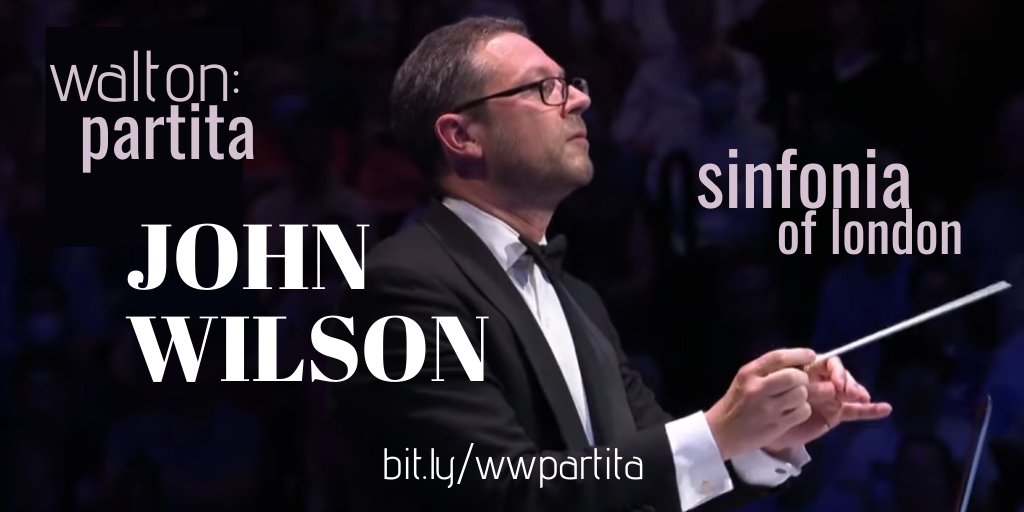
[Proms Director] David Pickard and I had a conversation about Sinfonia Of London’s connection in the past to English music, principally John Barbirolli’s famous record of English music for strings and it is as we know Ralph Vaughan Williams’s 150th anniversary so I thought opening with the Tallis Fantasia would be (a) good thing. And built that around I guess the English romantics and a fairly recent work by a living composer, Huw Watkins, who is Welsh and one of my favorite composers and a piece which he actually happened to write for Adam Walker, who’s our principal flute. The rest of the program con-sists of things you might know and you might not know. Walton’s Partita, which is a tour de force but it’s rarely done, and I think that’s because it’s so impossibly difficult. … Very difficult! One of the first violins came up to me and he said, “This is absolutely bloody murder!” We really sweated over it, and I—I hope to pull it off.

John & SOLAbove: Partita for Orchestra by William Walton (1957) written originally for the Cleveland Orchestra.

Sat 16 July 2022 18:30
Royal Albert Hall
London, United Kingdom
Sinfonia of London
Adam Walker (flute)

EXTRA! Available in PDF:


The entire audio of the BBC Proms 2 BRITISH CLASSICS can be downloaded here


FULL DRESS // A gifted mesmerist—a sinister composer—a naive young conductor from the north…inspired by an episode from the life of Rachmaninoff // DOWNLOAD FREE BOOK POSTER

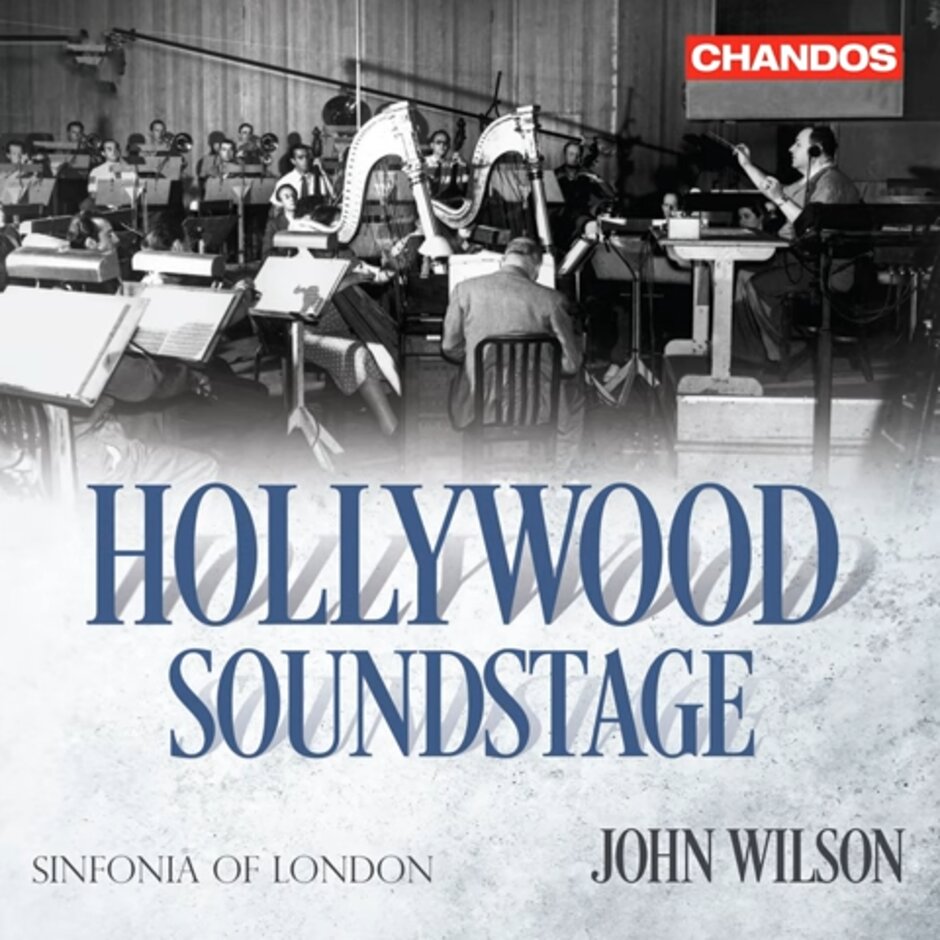
Hollywood Soundstage; or, John Wilson and the Sinfonia of London Play Orchestral Music from the Movies (Chandos, 2022)

Love this cover. Actually, it’s kind of sophisticated. Look! It has the magic words Hollywood and John Wilson and nothing more need be said. Now I know what to get for Christmas for my other old lady friends.

Hollywood SoundstageAbove: John conducts the Sinfonia of London in Frederick Loewe’s “Embassy Waltz” from My Fair Lady.

Actually, I think that’s Musical Director Johnny “Two-Harps” Green up there with the MGM Orchestra.


FULL DRESS // A gifted mesmerist—a sinister composer—a naive young conductor from the north…inspired by an episode from the life of Rachmaninoff // DOWNLOAD FREE BOOK POSTER

John Wilson Becomes Honorary President of the Black Dyke Band 25 May, 2022; Plus Fanfares (Chandos, 2018) an Album by Onyx Brass; and Peter Graham’s Metropolis, 1927

From 4barsrest.com, an online publication that serves brass instrumentalists: The critically acclaimed big band and orchestral conductor (that’s my lad!) has accepted the role of Honorary President of the Yorkshire band Black Dyke. Chairman of the Board of Black Dyke Band Trustees, Trevor Caffull stated, “We are delighted that John Wilson has agreed to be our Honorary President and very excited with some of the initial thoughts shared regarding potential collaborations. In his early life, John was steeped in brass band culture. He has clearly lost none of his enthusiasm for the genre and we are very optimistic that this will evolve into a mutually rewarding association.”

John Wilson, BlackdykeAbove John shaking hands with Prof Nicholas Childs, Music Director: Metropolis 1927, the Black Dyke Brass Band performing this extravagantly yummy piece, inspired by Fritz Lang’s film, composed by Lanarkshire-born Peter Graham. Sidebar: NOTES for Fanfares (Chandos, 2018) can be found here. 

About Fanfares: I fell in love with John the spring of 2018. The summer of 2018 was The Bernstein Summer. The summer my beloved John tried to oedipally murder Leonard Bernstein before an arena of cheering thousands at the Royal Albert; the summer I finally heard on YT his Proms Oklahoma! from 2017 with Mister Grumble and having to end up apologizing to my Oklahoman husband the rest of the year; but more importantly, this was the summer I decided to try to make as comprehensive a chronology as I could of John’s musical paths, as evidenced by the dates of live performances whether videoed or not, radio broadcasts, album recordings and so forth. In this way I hoped to be able to follow him on those various paths, perhaps to be rewarded, even if only for a moment, with hearing music as he hears it, or perceiving if only for a moment what he feels when he conducts. So when I bought Fanfares, it was not a completely whimsical purchase. When I read later on that, a few months after he recorded with Onyx at St Jude’s, John went on to tame the raucous festival orchestra of Circus Roncalli at their New Year’s show in Berlin, I knew I was on the right track.

So this is what I garner from John’s travels in brass. His Gateshead working-class background stands him in good stead in this field; as it’s in the north of England, among the factory and mine workers who were also dedicated amateur instrumentalists, that the uniquely British form of brass ensemble was not simply allowed to grow and thrive, but achieve such a high excellence of sound and musicality that concert composers were, and continue to be, attracted to write works for it, for example this ravishing masterwork by Scottish-born composer Peter Graham for the 165-year-old, 28-piece Black Dyke Band of Yorkshire.*

It was in and around groups like these, as a percussionist, as well as in amateur musical pit orchestras, as a conductor, where my beloved John Wilson as a teenager got his start, and where he first developed his “ear”.

Which brings us back to Fanfares played by the London-based Onyx Brass, or to be more accurate, the Onyx Brass 5 plus 6 friends. In this trailer @00:24, John gleefully declares his pleasure at hearing such a rich clear loud sound (“shatteringly loud” he laughs, “a thrilling sound”) from such a relatively small chamber group. A little brass does go a long way.

The album is a tribute to the impressive range of John’s genuine knowledge of the repertoire. The selections are grouped under each of the 15 featured composers, themselves grouped very loosely by era.  If one listens seriously and openly to the entire record—there are 58 cuts—even an absolute neophyte to the field of British brass might be able to discern qualities in the music itself that distinguish traditional British music in general: for instance those certain intervals I talked about in “The Pure Joy of St Trinian’s and The Inn of the Sixth Happiness by Malcolm Arnold” that suggest stability, cohesiveness, and “rightness”. This is the music of pageantry.

John begins the collection with famed Master of the Queen’s Music, Arthur Bliss, near the top, and the Onyx Brass does his “God Save the Queen” with the reverence and swelling pride it deserves. Tuneful Arnold, who played first trumpet in the BBCSO, is well-represented here, as are Albert Ketelbey, Arnold Bax, Frederic Curzon, Eric Coates, etc etc. But the real gems come from Imogen Holst (Gustav’s daughter, 1907-1984) with her “Leiston” Suite (1967); Elisabeth Lutyens with her typically odd but compelling Fanfare for a Festival (1975); Michael Tippett with the “Wolf Trap” Fanfare (1980); and also Joseph Horovitz, my beloved John’s composition teacher at the Royal College of Music, with his “Graduation” Fanfare No 2”, which debuted in 2013 at the graduation ceremony of the Royal College.

Each of these later pieces may stretch the definition of what a fanfare actually is, but all of them contribute a superior musicality to the brass repertoire. John’s championing of these works—particularly Holst’s suite, which deserves to be included in general concert programs—shows me not only where his heart is, but also his head. And John Wilson’s head is something that’s been on my mind for the last four years.

*A brief look at the score excerpt of Graham’s “Metropolis 1927” will give you an idea of how large and fully-complemented a British brass band can be.


FULL DRESS // A gifted mesmerist—a sinister composer—a naive young conductor from the north…inspired by an episode from the life of Rachmaninoff // DOWNLOAD FREE BOOK POSTER

John Wilson Conducts the BBCCO in Edward German’s “The Tempter” (Chandos, 1997)

20 November, 1999. On this day 20 years ago, at 6AM, my bonny John Wilson made his first appearance on BBC radio when the morning show played his 1997 recording for Chandos of “The Tempter”, a theatrical music piece by the nearly forgotten, once popular, Welsh-English composer Sir Edward German (1862 – 1936), whose reputation John in his career has done a lot to restore. No, really. I’m into theatrical music so I should have known about this chap years ago, not just about Arthur Sullivan. So thank you, John, for Edward German. (I think you do a nifty Nell Gwyn Overture too.)

John was 25 when he conducted this, and even then showed his flair with bright theatrical pieces.

Edward German 940x512


FULL DRESS // A gifted mesmerist—a sinister composer—a naive young conductor from the north…inspired by an episode from the life of Rachmaninoff // DOWNLOAD FREE BOOK POSTER

My Beloved John Wilson’s Concert Schedule 6 March Through 16 July 2022, Plus an Update on That E-album About an English Conductor

To those of you patiently awaiting the completion of John Wilson An English Conductor: I’m taking the time to refine my observations about John’s artistic path. Anyone who knows me from A Poet from Hollywood: Love, Insanity, Stephen Gyllenhaal, and the Creative Process knows this is my real bag.

[JOHN’S PAST AND PRESENT CONCERT SCHEDULES]

Ah, there’s the man whose every gesture makes my heart beat faster.


Meanwhile, here’s his concert schedule—including his appearance with the Royal College—for the next few months (with links to music):

John’s schedule for 5 November 2021 to 18 February 2022 can be found on my posting here.


Sun 6 March 2022 20:00
Berliner Philharmonie
Berlin, Germany
DSO Berlin

___

Thu 17 March 2022 19:30
Royal College of Music
London, UK
Royal College of Music Symphony Orchestra

(Note: John ill, replaced by Martin Andre)

___

Fri 8 April 2022 19:00
Sheffield City Hall
Sheffield, United Kingdom
BBC Philharmonic Orchestra
Louis Lortie (piano)

___

Sat 9 April 2022 19:30
The Bridgewater Hall
Manchester, United Kingdom
BBC Philharmonic Orchestra

___

Thu 21 April 2022
The Bridgewater Hall
Manchester, United Kingdom
Halle Orchestra

___

Fri 20 May 2022 19:30
Usher Hall
Edinburgh, United Kingdom
Royal Scottish National Orchestra
Louis Schwizgebel (piano)

___

Fri 21 May 2022 19:30
Glasgow Royal Concert Hall
Glasgow, United Kingdom
Royal Scottish National Orchestra
Louis Schwizgebel (piano)

___

Sat 16 July 2022 18:30
Royal Albert Hall
London, United Kingdom
Sinfonia of London
Adam Walker (flute)


FULL DRESS // A gifted mesmerist—a sinister composer—a naive young conductor from the north…inspired by an episode from the life of Rachmaninoff // DOWNLOAD FREE BOOK POSTER

For Valentine’s Day, 2022: My Desired and Beloved John Wilson Conducts the Sinfonia of London in Maurice Ravel’s Bolero, 1928 (Chandos, 2022)

Imagine Ida Rubenstein, who commissioned this late work from the old man, dancing to it in private…not to her lover, but to the portrait of her lover, to which she can be just as revealing as she pleases…

I can be as revealing as I please, John (remember what I used to do for a living?). Happy Valentine’s Day, mi amor.

I see you like this, John, and I’m a puddle of goo. Above: My number one stroke song. In case you missed it, you mooks, that’s Bolero up there, Maurice Ravel’s 1928 one-movement orchestral piece, played by the Sinfonia of London and conducted by the man of my dreams, John Wilson, for Chandos records, February 2022.

Additional texts in PDF:


FULL DRESS // A gifted mesmerist—a sinister composer—a naive young conductor from the north…inspired by an episode from the life of Rachmaninoff // DOWNLOAD FREE BOOK POSTER

John Wilson Pinch-Hit Conducts Antonin Dvořák Twice in a Month and Does Britten’s Serenade for Tenor, Horn and Strings with the BBCSSO in Glasgow April, 2017 and November, 2019

Back in October 2019, on extremely short notice, my brilliant, bonny John Wilson substitute-conducted the state-run radio orchestra of Ireland, RTE, in a program of Brahms’s Variations on a Theme by Joseph Haydn, Robert Schumann’s Violin Concerto in D minor, and Dvořák’s quite listenable Symphony No 8 in G major.

Pinch-hitting for a sick colleague in Glasgow a month later, John conducted Brahms’s Haydn Variations, as well as Dvořák’s crowd-pleasing Symphonic Variations.


Ann Not Antonin DvorakNo, not Antonin Dvořák (1841-1904) but the much-easier-on-the-eyes American-born film actress Ann Dvorak [same pronunciation] (b Anna McKim 1911-1979)—writer, BBC wartime broadcaster, and star of Pre-Code movies. Here’s Symphonic Variations, plus fellow Czech Rafael Kubelik (1914-1996) here conducting the Berlin Philharmonic in his illustrious countryman’s Eighth Symphony.


Ann’s most famous Pre-Code movie THREE ON A MATCH can be viewed in its entirety here


But it’s John’s performance of Britten’s Serenade for Tenor, Horn and Strings that really made me sit up. Written by Benjamin Britten for his live-in sweetie Peter Pears—who sang it (above) in 1943—Serenade, with its unlikely musical combination, is a remarkably rich work, just the kind of music that John should be involved in at this point in his career. Of course he conducted it splendidly in Glasgow.

From The Herald, April 2017: What does Englishness mean in early 20th century orchestral music? Is there a discernible sense of national identity woven through the symphonies of Elgar, Walton and Vaughan Williams, the tone poems of Holst and Bax and Delius? And if so, does it mean the same thing when we hear it now as it did then? These are contentious opening gambits. In 2017, in Scotland, in Britain, in Europe, we should know better than to prescribe any essentialising nationalistic attributes to a disparate group of artists. Yet for conductor John Wilson there is something in it, just not in any flag-clutching way. “The connection I can make with national identity is that there’s something about the melancholy of this music which is actually at the heart of the English character,” says John. “That’s what I respond to. That longing for something that was probably never there in the first place. It’s a peculiar English romance.”

John Wilson is the BBC Scottish Symphony Orchestra’s new associate guest conductor, taking over the role that Andrew Manze held from 2010 to 2014. He’s planning to use his position as an advocate for 20th century English, as well as American, music. Next week he’s in Glasgow to conduct Britten’s Serenade for Tenor Horn and Strings with tenor Ian Bostridge and horn player Christopher Parkes. Also on the programme is Elgar’s Third Symphony—a score that was unfinished until 1997, when composer Anthony Payne completed it using Elgar’s abandoned fragments. The aspects of struggle, doubt and nagging melancholy that linger just under the surface of so much of Elgar’s music are all there in the symphony, but they are made doubly poignant by the thwarted potential of a work that could have changed the scope of English orchestral music. For Wilson, Elgar’s finest moments equate to the musical clout of Beethoven.

Wilson is best known as a conductor of light music. He founded the John Wilson Orchestra in 1994, when he was just 22, and since then his dedication to the music of Hollywood’s golden age has achieved a two-way thing. On the one side, he has enticed fans of light music into the concert hall, and on the other, his attention to detail and the calibre of the musicians in his hand-picked band (including BBCSSO violinist Greg Lawson) have brought new status to music once dismissed as gushy and camp. If the classical music world now shows respect for the film scores of vintage MGM musicals, that shift in attitude can be largely attributed to nearly 25 years of period-performance championing by Wilson.

By branding his specialist orchestra with his own name, Wilson designated which repertoire he would be most widely associated with. Yet although he will always stand up for light music, in his various other conducting ventures he’s keen to emphasise that his passion extends to other repertoire. “I didn’t study MGM musicals at the Royal Conservatory of Music, I studied conducting,” he says. “I got a reputation for doing light music because that got all the publicity, but really light music was my dessert.” He smiles. ”I’ve always taken dessert seriously. As Karajan said, ‘light music was my medicine.’”

Wilson was born in Gateshead and grew up without anyone telling him what qualified as proper music and what should be considered naff. “The whole light music repertoire belonged to a couple of generations above me,” he told me. “This was the music they danced to, courted to, got married to. A lot of people have a nostalgic connection to it. Some of my professors were sniffy because they were too close to it, because it was the pop music of their youth and therefore something to be scorned at, but that doesn’t exist for my generation. We can see that a Cole Porter song is as serious in its craft as a Brahms symphony.”

Besides his admiration for the BBCSSO’s musicians (“am I allowed to say they are even better than I remembered? These dazzlingly good string principals”) Wilson says he was drawn to his new Glasgow position because this orchestra’s management never pigeonholed him as an MGM guy when others in the industry did.

“I first conducted the BBCSSO donkey’s years ago”—it was 2002—“doing light music and Christmas classics, that kind of thing. Then they kept asked me back to do interesting work that reflected my musical development. They weren’t always trying to shoehorn me into what everyone else thought I did exclusively. As I broadened my repertoire, they were happy to let me explore that. That’s why the relationship has lasted and why I’ve kept coming back.”

Now he’s looking forward to regular Glasgow visits for radio broadcasts and recordings for the Chandos label, starting with the music of Richard Rodney Bennett: “There’s a whole body of really eloquent fine music there that needs recording,” he enthuses. Next season his concert programmes include Elgar’s Cello Concerto and Walton’s First Symphony; Copland’s Appalachian Spring and the Third Symphony by American composer Roy Harris. In past interviews he has told me that his Desert Island Discs choices would include the Elgar symphonies, the Vaughan Williams symphonies and possibly American music by Copland, John Adams and Harris: next season he’ll be doing well by his wish list.

And, of course, there is next week’s billing of Elgar and Britten. “I can’t speak for anyone else,” Wilson says, “but I play these English programmes because I think that English music needs advocates. For years it was the province of a handful of English conductors, and when they died it went a little bit into the wilderness. I’m keen for it to come out of its old-fashioned straight jacket and to be seen for what it was, which was the flowering of a national school. It’s not just pretty pastoral wanderings.”

“Oddly enough,” he adds, back on the national identity train of thought, “some of the occasional pieces of Walton or Elgar might carry political implications, but they were never meant to be the great music of these composers. These were world composers and they knew it, even if the world at the time didn’t. They expressed global human sentiment. Vaughan Williams is a towering figure in terms of the great human statements—his Ninth Symphony and Sea Symphony are blazing visionary works for all of humankind. There’s a certain amount of reclaiming that needs to happen. There you go: does that amount to a mission statement?” ~Kate Molleson


FULL DRESS // A gifted mesmerist—a sinister composer—a naive young conductor from the north…inspired by an episode from the life of Rachmaninoff // DOWNLOAD FREE BOOK POSTER

My Bonny John Wilson Wins an Award from His Colleagues (2018) and Cements His Musicological Image with the Help of Gramophone (2016)

From Gramophone.com, September 2016: “I’ve always been fascinated in the byways of music,” says conductor John Wilson, picking up the score to Aaron Copland’s Second Symphony and half-studying the typeface while he talks. “Back at college when all my friends were getting in a lather about Mahler, I was more into Lord Berners and bits of Walton that people hadn’t heard for years.”

Wilson is a self-styled anomaly in the conducting world. He’s utterly serious about light music, cheerfully and loquaciously Geordie in a profession that traditionally trades on pomp and grand personas. He’s as fastidious about authentic performance practise as any baroque specialist, but the repertoire to which he applies those principles of original instrumentation and historically informed interpretations is one that only recently earned enough clout to make it into the Proms. If the classical music world now shows respect for the film scores of vintage MGM musicals, that shift in attitude can be largely attributed to two decades and counting of championing by Wilson himself. Because since founding the John Wilson Orchestra in 1994, his dedication to the music of Hollywood’s golden age has achieved a two-way thing: on the one side he has enticed fans of light music into the concert hall. On the other side, his attention to detail and the calibre of his hand-picked band have brought new status to music once dismissed as gushy, camp and saccharine.

By giving his own name to his own specialist orchestra, Wilson determined the repertoire that he would be best associated with. And yet in his other conducting positions—Principal Conductor of the Royal Northern Sinfonia and the RTÉ Concert Orchestra Dublin, newly appointed Associate Guest Conductor of the BBC Scottish Symphony Orchestra—he is keen to emphasise his aptitude for broader repertoire. “I always took an interest in that exciting time after the First World War,” he tells me by way of example. “And I probably have the biggest satisfaction from getting my hands on Brahms.” His desert island conducting choices? “Oooh, I’d take the Elgar symphonies, the Vaughan Williams symphonies, possibly American music by Copland, John Adams, Roy Harris.” His latest recording is the second in a series of Copland orchestral works with the BBC Philharmonic for Chandos. There isn’t much trace of light music in the jagged edges and sharp punches of the Second Symphony, the Organ Symphony or the Symphonic Ode.

Wilson maintains that there has never been a division in his mind between music that is ‘light’ or music that is ‘serious’, but accepts that isn’t the case for everyone. “The root of my passion is my love of songs,” he says. “Songs of Britten or Ireland or Cole Porter. Ella and Frank singing Gershwin. I just assumed it would all be part of my repertoire and I never put anything in a ghetto. So when we [the John Wilson Orchestra] did our MGM Prom in 2009 and a telly audience of 3.5 million saw that real seriousness of research had been applied to those scores, I think that’s when I felt a big shift in attitudes. My orchestra had spent 15 years learning how to play that music. I put together the performing editions just as any musicologist would prepare Handel or Vivaldi. Maybe it was because it was the the Proms, maybe because it was an orchestra full of incredibly serious players, but somehow we managed to get a lot of people who wouldn’t normally go near that repertoire to sit up and listen.”

Wilson was born in Gateshead on Tyneside in 1972—which, if you do the maths, made him just 22 when he founded the John Wilson Orchestra. “The whole light music repertoire belonged to a couple of generations above me,” he says. “This was the music they danced to, courted to, got married to. A lot of people have a nostalgic connection to it. Some of my professors were sniffy because they were too close to it, because it was the pop music of their youth and therefore something to be scorned at, but that doesn’t exist for my generation. We can see that a Cole Porter song is as serious in its craft as a Brahms symphony.” That’s the kind of bold claim that earned him a few raised eyebrows as a student of composition and conducting at the Royal College of Music, where a couple of teachers told him he should be immersing himself in “proper” compositional techniques.

But even then he already knew exactly what he wanted to get from sitting through those classes in advanced orchestration, exactly what repertoire he wanted to use those tools to excavate. “I’ve produced all my own parts for the Strauss waltzes with all the repeats written out. Heck—I just made the print bigger and suddenly orchestras enjoy playing them because it’s not a panic trying to find which bloody repeat to play!” Wilson is pragmatic about such unromantic things as notation size and syntax. “If the music is printed too small,” he shrugs, “half of your brain gets used up just trying to decipher the stuff. I want my players to be totally involved in the the music. The librarian of any orchestra,” he adds, “is a crucial figure. Unsung heroes.”

We’re talking at MediaCity in Salford, where Wilson has just conducted a lunchtime concert with the BBC Philharmonic and is preparing for an afternoon session recording Copland’s 15-minute Second Symphony of 1933, also known as the Short Symphony. This is not the populist, generous Copland of Appalachian Spring, Rodeo or Fanfare for the Common Man—repertoire included on the first instalment of the Wilson/BBC Phil Chandos series. About that first disc, Gramophone’s reviewer wrote that “Wilson secures superb playing from the BBC Philharmonic… the three ballets receive strongly characterised interpretations, as piquant and affecting in the slower passages as they are punchy and ebullient in the faster ones.”

Now Wilson describes the music on the second disc as “hard as nails” and “totally uncompromising” in comparison. “He had created this instantly identifiable sound—the ‘wide-open spaces’ sound that we all know and love. Nobody had done it before and suddenly loads of other American composers started imitating him. But he was also a proper composer, ferociously accomplished, who developed ideas out of very small cells. He had worked hard as a student of Nadia Boulanger to get his technique into shape. He worked hard every day of his life, and he knew about concision. The Second Symphony is compact and concise, which is never a bad thing… He stops once he’s said enough!”

Wilson is sanguine about the particular challenges of bringing this compact, astringent score to life. “I’ve been trying to analyse what makes it quite so difficult,” he says. “There are plenty of pieces with changing time signatures and rhythmic complexities: that’s meat and drink to orchestral players. But with Copland’s Second Symphony there isn’t a single extra note in the score. It’s like Mozart or Rossini or Mendelssohn in that it’s got to be so perfect for it to work. There’s nowhere to hide.” He looks up and grins. “It’s the musical equivalent of standing in the middle of Oxford Street in your underpants!”

John and ISM AwardAbove pic of John accepting the 2018 Incorporated Society of Musicians Distinguished Musician Award: John conducts his own John Wilson Orchestra in his own medley/arrangement/overture in his own 2011 BBC Proms show, Hooray for Hollywood.


But should this music sound perfect? Has one side-effect of Copland’s wide-open-spaces popularity been a performance tradition that flattens out the edges, softens the harshness? “Possibly,” Wilson acknowledges. “And actually you do want a bit of tussle. We need to play the music in until that tussle becomes something we can do with conviction and style rather than with difficulty. But no, I don’t think that these pieces—the Ode, the Variations, the Second Symphony—I don’t think they’ve been played enough for any performance tradition to have been built up. I’m hoping that by recording them now we can be new advocates.”

Since lunchtime Wilson has changed out of concert dress and into his civvies—jeans, Adidas trainers, untucked checked shirt, thick-rimmed square black glasses. That casualness transfers to the way he works with the orchestra, too. During the session he is brisk, friendly, funny, courteous. He doesn’t waste time and he seems to know what he’s looking for: a sound that is bright and punchy, rhythms that are super-crisp and projection that is sharp-edged, almost metallic. He also seems to know how to get it quickly, with a minimum number of instructions. The physical gestures he makes are notably low key, and when the music hits a catchy rhythm he begins to wiggle. He talks with a smile but he doesn’t crack many jokes.

He’s not an incessant stopper, either: he lets the orchestra play for a good five minutes before interrupting. “Legato, eloquent, bright,” he tells the strings. “But make sure the sound is switched on. It lacks a little ardour. It’s all rather surface. the sound needs more weight.” He reaches a passage where the violins and violas divide desk-by-desk. “We need very fast, very narrow vibrato on each note. Really brilliant. What you just did? That was fine, but it sounded just ordinary.” Later he looks for the sweet spot of clarity and charm. “Can it be marcato and still melodious?” he asks. “Can it be legato and still have clean definition on the lines?” He turns to the violins: “go for a really high-risk top note. A bit of scratch and strain in the sound will do no harm at all.”

During the break I ask whether the lushness and brightness so audible in the first of his Copland discs for Chandos influence the sound he is going for in the Second Symphony. “Sure, a little,” Wilson replies. “Probably most of all in the slow movement. Though I don’t think of it as a luscious sound so much as a very clean sound. The way he scores with gaps in between high notes, low notes and middle notes… We’ve been talking a lot about gaps. So much of his rhythmic trickery comes where you don’t play. He’s brilliant at conjuring exciting rhythms with gaps.”

It is fascinating listening to Wilson work on thorny mid-century symphonic repertoire while bearing in mind his bent for MGM heritage. Does he hear any parallels himself? Does the style he’s developed with the John Wilson Orchestra filter into the work he’s doing here? “Well, Copland was born in 1900 and raised in Brooklyn. There’s no chance he could have not absorbed influences from Harlem, from Gershwin. It’s all there in the music. Put it this way: if I’m conducting a Fred Astaire dance routine, those rhythm have to be executed with great style. The string playing has to be faultless, delivered with real ardour and perfection. The brass playing has to have a certain swagger. It has to be cleanly articulated with a ton of accents. And none of those characteristics would do any harm in Rodeo—they wouldn’t do much harm in The Rite of Spring, either. Basically we’re talking here about playing with commitment.”

And what about the Americanness of the sound, I ask. Regardless of whether each Copland score has gathered its own performance tradition, does Wilson try to capture attributes of a quintessentially American orchestral sound? “Possibly,” he replies. “Copland’s ballet scores are best known in the New York Philharmonic versions conducted by Leonard Bernstein. The thing that stands out to me there is the trumpet sound: totally ballsy—that supreme confidence of all the New York brass playing right down the line, so super-confident and spirited but refined, too, not just a load of machismo. There’s a certain vigour to those Wild West pieces, a certain swagger. Which is not the first adjective you’d use to describe British brass playing. Here we specialise more in gentleman brass playing: warm, neat, very accurate.”

The aim, he stresses, is not to try to imitate that vintage American sound, “but there are stylistic parameters that we have to try to fulfil. It would be a mistake to play these pieces in a completely British way—we have to just go for it. And actually, Copland doesn’t give us much choice. He marks down very clearly what he wants, which means that with a lot of this music we’re leaving the arena of personal taste and entering into being either right or wrong. With the symphonies, if we play 90 percent of what’s on the page then most of the work is done for us. Then we get the luxury of refining the sound, taking the music to places it has never gone before.”

Meanwhile Wilson is also taking his own audiences—the following he has built via his John Wilson Orchestra—to places they have never gone before. I suggest that the gentler start to the Copland series might have helped to lure in some listeners and he laughs. “Well, there is a responsibility there,” he says. “People are paying money so it is really important not to betray their trust and go too far. In general I hope I can programme in a way that takes the audience places they’ll enjoy when they’ll get there. The language of a Judy Garland song is exactly the same as the language of a Rachmaninov symphony, so I feel great about making that leap. Navigating from MGM musicals to Korngold film scores to Copland’s marvellously thrilling Organ Symphony? Sure, that is a nice little trip! And if we play with enough conviction, if we are totally convinced ourselves, then I am sure that people are happy to come with us.” ~Kate Molleson


FULL DRESS // A gifted mesmerist—a sinister composer—a naive young conductor from the north…inspired by an episode from the life of Rachmaninoff // DOWNLOAD FREE BOOK POSTER

My 7 January, 2022 Birthday Treat; Plus a Quick Note to My Beloved English Conductor, John Wilson Before His January Tour with the National Youth Orchestra of the Netherlands

John mi vida— It may be likely that we’ll actually meet up sometime or another, since I give not only to the Academy but to the College as well (although I’m thinking of becoming a Friend of the College this year because one, Pru and Emma at the main office have been very kind, and two, I’d like to visit the RCM’s brand-new museum), and so perhaps my few dollars might wangle me an invitation to one of those “Meet the Fellows” wine-and-cheese thingies you as a Fellow are encouraged to attend. If that happens, how about coming over and saying hi to me? I won’t bite. I forgave you for Oklahoma! a while ago.

My birthday treat: Knightsbridge March from London Everyday by Eric Coates and Conducted by My Excellent John Wilson with the BBC Philharmonic. Video clip of John conducting this piece with the BBCSO in 2010 on my YT channel here.


Everyone else, find John’s schedule for January and following, including his tour with the NYO Netherlands, at:

“Following My Beloved John Wilson’s Concertizing 5 November, 2021 Through 10 February, 2022”

and including his appearances at the Royal College and the Royal Academy:

“My Beloved John Wilson’s Concert Schedule March Through May, 2022”

FULL DRESS // A gifted mesmerist—a sinister composer—a naive young conductor from the north…inspired by an episode from the life of Rachmaninoff // DOWNLOAD FREE BOOK POSTER