Here’s a blast from the past. When The Kid was still in my belly, Mr Grumble and I managed to get the sublet on a 3-room apartment in the East Village, which we upgraded a few months later to a 4-room with renewable 2-year lease for $250 a month. Yes. Only two hundred and fifty smackers a month. Which means we could make it on theatrical gigs and more-than-occasional temp work, even after paying $60 a week to Maxine Wilkes, God bless her memory, for taking him every weekday, 7:30am – 6:00pm, to play/be fed/hang out with her other charges and the rest of her large brood in their enormous 8-room $110(!) a month apartment in the Campos Plaza project 3 blocks away. That project, I recall, had the cleanest, best-kept playground in the neighborhood (not stinky like the one in Tompkins Square Park, for example) and little one learned to walk, then run, in that yard. Was grateful to Our Lady every day to be able to bring the Bograt over to such a nice place—warm, messy, safe, and good-hearted.
Anyway, on the weekends we had him all to ourselves, and would take The Kid—Boggy, his name was then—around with us bar-hopping. Trendy Holiday Lounge on St Mark’s and Downtown Beirut on 2nd… Vazac Hall on Avenue B, which made an appearance on Edward Woodward’s TV show The Equalizer… And that other Polish bar over on 7th, the Blue & Gold. All with the greatest jukeboxes… [more later]
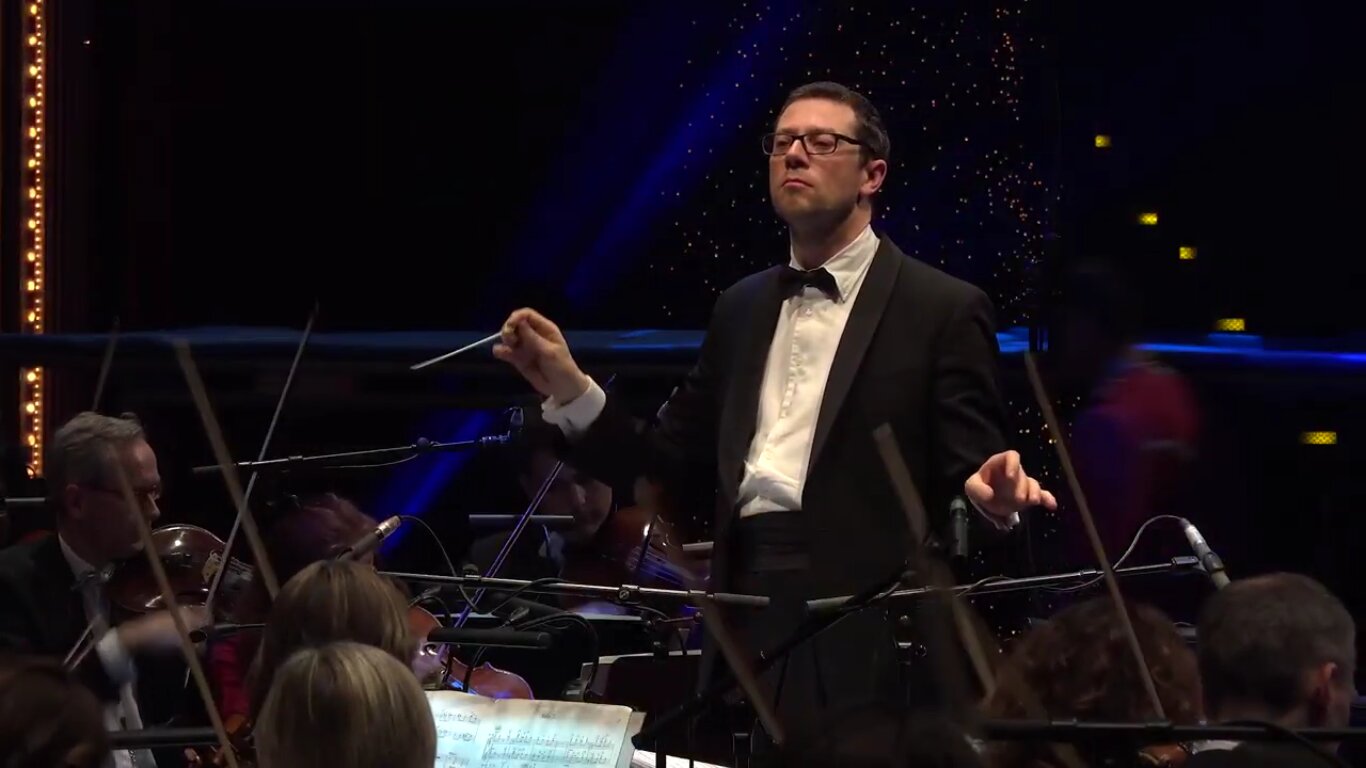
Above: A bright clever orchestral medley that riffs on Gershwin and Porter (sort of), arranged by John and played by the Deutsches Symphonie-Orchester. From the YT promotional video.
I’m still finding it mighty strange that John was born on the same day as my father’s final birthday, in 1972—on the 25th of May, which would make them both Geminis—but somehow it starts to make sense: There’s John of the BBC and Eric Coates and Ralph Vaughan Williams and the tra-la-boomy-boom that makes up English music; and then there’s John of the big-shouldered swaggering sweating bombastic vibrant American tune book. One (when he plays it well) makes me want to cook him a nice lamb stew with pearl onions swimming in the rich gravy; the other (again, when he plays it well, which is almost always) makes me want to—well, I was in The Business, you know, use your imagination.
Low Fell Lad Makes Good. Above: the Arlen-Kohler standard “Get Happy” was written for Ruth Etting but popularized by Judy Garland in the film, Summer Stock (MGM, 1951).
Only don’t be too sure which is which. Like I said, John almost always plays the music of his own country and heritage well, with a deep feeling that’s irresistible; whereas when he works out the great American tunes it turns out more often to be hit-and-miss, with many many many more misses than hits.
But oh! When he does hit!
When bonny John and his orchestra play “Get Happy” or “The Trolley Song” or “June Is Bustin’ Out All Over” or the MGM Jubilee Overture—or the absolute best of the lot, “Slaughter On Tenth Avenue“—it’s total heaven, and I’m not the only one to say this. Subtlety is not this lad’s forte when it comes to the American popular repertoire. But when John goes big, bright, busy and loud when the number actually calls for it, screams out for it, it’s so damn satisfying when he does it and does it brilliantly that I want to—how can I put this?—do something for my darling in gratitude…make him a nice meal…fatten him up a little… (Ess, kind, ess!)
For right now, though, I’ll settle for a natter on a quiet afternoon with you John, rather not in London, maybe when you get up to Gateshead again, mi amor, back to The Angel of the North…
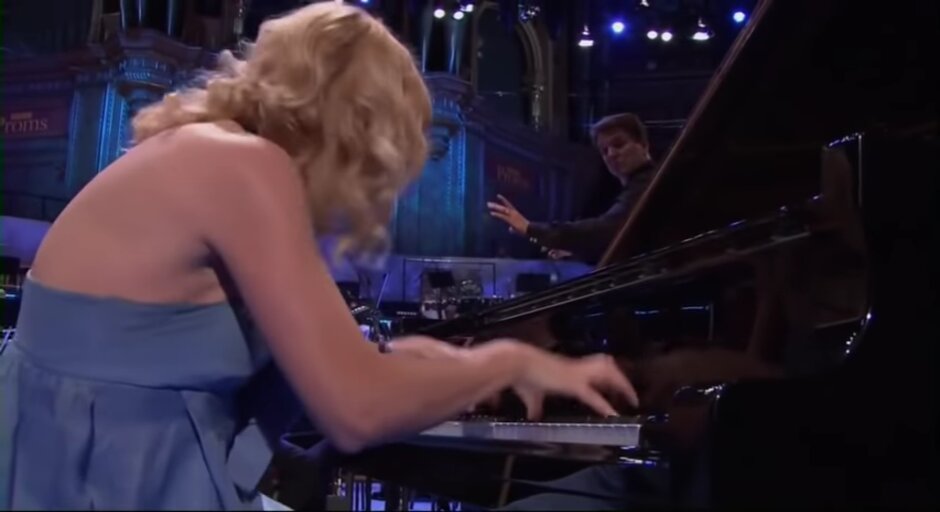
I love watching how Lockhart, official Guest Conductor of the BBC Concert Orchestra, scrupulously keeps in sync with not just his orchestra but with his soloist. It’s also a delight to watch at the beginning of the clip Lisitsa curtsying almost shyly to leader Cynthia Fleming.
Valentina Lisitsa, who started out as a YouTube sensation 12 years ago and is now counted as one of the foremost keyboard interpreters of the Eastern European Romantics, gives an intensely satisfying performance here of Addinsell’s “Warsaw Concerto“. The concerto was written for the movies—for, specifically, the 1941 movie Dangerous Moonlight, in which Polish concert pianist Anton Walbrook becomes a fighter pilot for the RAF, falls in love, gets amnesia, and composes some music. The movie, although a success from a propaganda viewpoint, was considered a potboiler by critics, and even the astute Anthony Burgess, who was an army sergeant and nascent composer himself at the time, looked down on the “Warsaw Concerto” as a cheap imitation of Rachmaninoff. Intellectual snobs have derided the piece, but it’s lingered in the memory for lo these many years, and is only now taking its permanent place in the Classic Repertoire.
For that we have to thank composer/film music restorer Philip Lane. It was to Lane that the musical estate of Richard Addinsell was entrusted and, like composer/orchestrator William David Brohn for Prokoviev’s Alexander Nevsky (Abbado with the LSO + full score here on YT) and my beloved John Wilson, Lane took on the task of reconstructing by ear written scores for film music whose manuscripts had been destroyed through carelessness or war. (Some suggest that the “Warsaw Concerto” was entirely the work of Addinsell’s orchestrator, Roy Douglas, who died in 2015 at the age of 107.) Addinsell’s—or Douglas’s—”Warsaw Concerto” was one of them. As Lane writes:
“The process of reconstruction does not get easier, but some films are more difficult than others. The biggest enemy is the combination of dialogue and sound effects over the music, and occasionally there are seconds of complete inaudibility when guesswork has to replace authenticity. The greater the composer, the more difficult the work, on the whole, since the melodic and harmonic language tends to be more adventurous. In the case of recent scores there are usually soundtrack CDs devoid of extraneous sounds to work from, but despite the change in status of film music, present day composers still mislay their scores. I have reconstructed music by Jerry Goldsmith, Randy Edelman and James Horner in the last year alone. If the composers are still alive I obviously encourage them to do the reconstruction themselves. So far, they have declined for various reasons.”
“The process of reconstruction does not get easier, but some films are more difficult than others. The biggest enemy is the combination of dialogue and sound effects over the music, and occasionally there are seconds of complete inaudibility when guesswork has to replace authenticity. The greater the composer, the more difficult the work, on the whole, since the melodic and harmonic language tends to be more adventurous. In the case of recent scores there are usually soundtrack CDs devoid of extraneous sounds to work from, but despite the change in status of film music, present day composers still mislay their scores. I have reconstructed music by Jerry Goldsmith, Randy Edelman and James Horner in the last year alone. If the composers are still alive I obviously encourage them to do the reconstruction themselves. So far, they have declined for various reasons.”
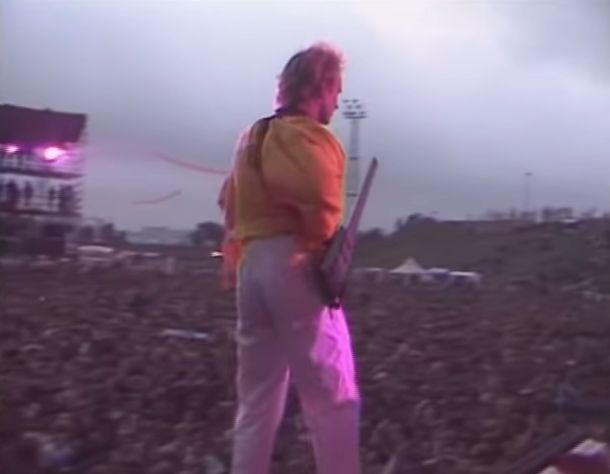
If I hadn’t fallen so hard for Geordie-born-and-bred John Wilson, Conductor I’d never have been delving into All Things Gateshead and I never would have stumbled onto a bootleg recording of this show by English progressive rock group The Police, which was the very show Mister Grumble and I missed in New York when we were just setting up household in the East Village and I was heavily pregnant. Great music, great energy, and the sound is impeccable.
From Playbill.com, 2008: Conductor, arranger and musical scholar[!] John Wilson will bring his 58-piece orchestra to the Shaw Theatre August 20-23 for That’s Entertainment!, an evening of music and song that celebrates the great MGM musicals.
The John Wilson Orchestra will perform original orchestrations and scores, many of which have been newly reconstructed by Wilson himself, to pay tribute to some of America’s greatest composers and songwriters, including George Gershwin, Irving Berlin, Cole Porter, Harry Warren, Jerome Kern and Richard Rodgers as well as the great Hollywood arrangers Conrad Salinger, Johnny Green and Nelson Riddle. The evening will feature music and songs from some of Hollywood’s best-loved MGM musicals: High Society, Singin’ in the Rain, An American in Paris, Ziegfeld Follies, Meet Me in St. Louis and The Wizard of Oz. Special guest vocalists are Matt Ford, Rachel Weston and Gary Williams.
As a conductor, Wilson works regularly with the Hallé, City of Birmingham Symphony, Royal Liverpool Philharmonic, BBC Scottish and BBC Concert orchestras. He is a frequent guest conductor in Europe: Recent visits have taken him to the RTE Concert Orchestra in Dublin, and to Scandinavia, Iceland and Bulgaria. Last year he made his Australian debut in Melbourne and Adelaide and his London Philharmonic debut at the Royal Festival Hall. He is also a musical arranger for film, radio and TV, where his credits include orchestrating Sir Richard Rodney Bennett’s score for the BBC production of Gormenghast, which won the Ivor Novello Award for Best Film Score; Howard Goodall’s score for the BBC/HBO film The Gathering Storm about Winston Churchill; and the soundtrack for Kevin Spacey’s Beyond The Sea biopic of singer Bobby Darin, which gained my brilliant, bonny John a Grammy nomination. He has also worked with Sir Paul McCartney and has orchestrated and conducted several of Sir Paul’s compositions with the London Symphony Orchestra.
He has also reconstructed the orchestrations of the major MGM musicals High Society, Singin’ in the Rain, The Band Wagon, and An American in Paris. In January he gave the first European performances of his orchestrations of The Wizard of Oz with the Royal Liverpool Philharmonic, synchronized with the film.
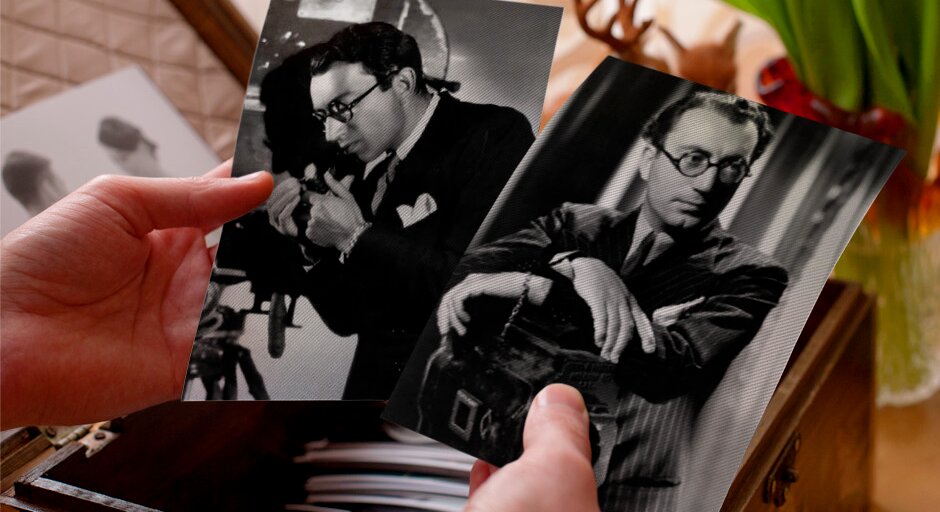
From 22 December 2019. 41 years ago in Beverly Hills I was sitting in the alcove-cum-office that I shared with my boss, The Old Man, Rouben Mamoulian. It was late afternoon, the Friday before Christmas weekend, and I was eager to get back home to my boyfriend Sol and our little room behind Musso & Frank. But there were a few more things to do before I could leave.
The Old Man reached behind him on his desk for a volume that had a paper bookmark in it and asked me to read aloud. I found the place and began; it was a poem I’d never read before, called “Fern Hill”:
Now as I was young and easy under the apple boughs
About the lilting house and happy as the grass was green,
The night above the dingle starry,
Time let me hail and climb
Golden in the heydays of his eyes,
And honoured among wagons I was prince of the apple towns
And once below a time I lordly had the trees and leaves
Trail with daisies and barley
Down the rivers of the windfall light.

And as I was green and carefree, famous among the barns
About the happy yard and singing as the farm was home,
In the sun that is young once only,
Time let me play and be
Golden in the mercy of his means,
And green and golden I was huntsman and herdsman, the calves
Sang to my horn, the foxes on the hills barked clear and cold,
And the sabbath rang slowly
In the pebbles of the holy streams.

All the sun long it was running, it was lovely, the hay
Fields high as the house, the tunes from the chimneys, it was air
And playing, lovely and watery
And fire green as grass.
And nightly under the simple stars
As I rode to sleep the owls were bearing the farm away,
All the moon long I heard, blessed among stables, the nightjars
Flying with the ricks, and the horses
Flashing into the dark.

And then to awake, and the farm, like a wanderer white
With the dew, come back, the cock on his shoulder: it was all
Shining, it was Adam and maiden,
The sky gathered again
And the sun grew round that very day.
So it must have been after the birth of the simple light
In the first, spinning place, the spellbound horses walking warm
Out of the whinnying green stable
On to the fields of praise.

And honoured among foxes and pheasants by the gay house
Under the new made clouds and happy as the heart was long,
In the sun born over and over,
I ran my heedless ways,
My wishes raced through the house high hay
And nothing I cared, at my sky blue trades, that time allows
In all his tuneful turning so few and such morning songs
Before the children green and golden
Follow him out of grace,

Nothing I cared, in the lamb white days, that time would take me
Up to the swallow thronged loft by the shadow of my hand,
In the moon that is always rising,
Nor that riding to sleep
I should hear him fly with the high fields
And wake to the farm forever fled from the childless land.
Oh as I was young and easy in the mercy of his means,
Time held me green and dying
Though I sang in my chains like the sea.
After I read the entire poem out loud he sat back in his chair with a dreamy look and, pointing to a passage, asked me to read it again.
And then to awake, and the farm, like a wanderer white
With the dew, come back, the cock on his shoulder: it was all
Shining, it was Adam and maiden...
And here he sat up and whispered fiercely, “A cock on his shoulder…” And here he leaned over and, laying a hand on my knee, directly looked into my face and said urgently, “Yes, yes! That is what it was like! When I was a boy in Armenia…” And I want to tell you his eyes were glistening a little bit when he said that but I’m afraid to be mocked for cheap sentiment. But yes, yes, The Old Man had tears in his eyes when I read him “Fern Hill”.
So that was his Christmas present to me (plus a few extra dollars Christmas bonus) and it’s a Christmas present I want to give to you, John, not just because I’m in love with you and want to give you nice things, but because I want you to know something about the man you made such a careless remark about and why I’ll be spending some time upholding his memory and reputation.
Everyone else, a very Merry Christmas and Other Assorted Holiday Cheer.
From MusicalCriticism.com, 2009: As part of the celebrations for Johnny Mercer’s centenary, the BBC Concert Orchestra mounted two semi-staged performances of his final stage musical, The Good Companions, at the Watford Colosseum in Hertfordshire. Conductor John Wilson—who led the phenomenally popular MGM Prom this August, as well as a fantastic concert performance of My Fair Lady in Gateshead in July—came together with an experienced cast that included Liz Robertson, Ian Talbot and Annalene Beechey to perform the show, which was first staged in London in 1974. The results could not have been more entertaining.
Above Inigo, Susie Dean and Miss Trant: Judi Dench, from the 1974 West End production, sings “Darkest Before Dawn”.
The Good Companions is based on JB Priestley’s most popular novel—indeed the work that solidified his reputation. It tells the tale of an upper-middle class woman who—quite against the advice of her relatives—decides to use her newfound wealth to fund a group of strolling players whose director has run off with all the money; escape is a strong theme of the show. One can see why the backstage musical flavour of the novel must have appealed to the book and song writers.
The libretto for the West End show was adapted by Ronald Harwood, Oscar-winning screenwriter of The Pianist. Composer Andre Previn, former Principal Conductor of the London Symphony Orchestra, wrote the music for the Gene Kelly film It’s Always Fair Weather and conducted the films Gigi and My Fair Lady. Lyricist Mercer received nineteen Academy Award nominations and was the lyricist of dozens of American standards including “Moon River” and “The Days of Wine and Roses”.
In short, the piece is an underrated little gem (the original cast album starring Judi Dench, John Mills and Marti Webb was briefly available but is now a rarity), and in conductor John Wilson’s taut performance all the nuances came through. It seems the project has been a labour of love for him: the original full orchestral score was lost after being simplified for amateur productions, and although some of the original performing parts were eventually discovered by Caroline Underwood of the Warner/Chappell music publishers, Wilson has had to restore parts of the score for which no material survived. He has rendered the work of Angela Morleyand Herb Spencer, the orchestrators of the original production, extremely sympathetically, and led the performance with verve.
With theMaida Vale Singers covering a range of smaller roles and raising the roof in the ensemble numbers, and the BBC Concert Orchestra playing at their exquisite best, this was a superb evening. One hopes the same team will explore more classic musicals in the future, but in the meantime the Radio 3 broadcast on 16 November at 7pm is not to be missed. ~Dominic McHugh
“I think I’ve done my last batch of film music,” says bonny John. Interview starts at 9:50. (Update 5 March 2019: Damn, the Beeb yanked this podcast! Will replace the link if they ever bring it back. To make up for it below are some downloadables.)
Included with the interview in their entirety: Met soprano Joyce DiDonato sings “You’ll Never Walk Alone” (Rodgers & Hammerstein); the famous barn-raising dance in Seven Brides for Seven Brothers (Gene de Paul, Alexander Courage), and “I Got Rhythm” (George and Ira Gershwin), all played in that ineluctable John Wilson Orchestra way.
Above bloodily hardworking John: Kim Criswell, the Maida Vale Singers and The John Wilson Orchestra tear into the Gershwin brothers’ “I Got Rhythm”.
From a 15 June 2016 article in The Sydney Morning Herald:
It’s rare, if ever, to hear a kind word said about James T Aubrey, the ruthless former CBS executive hired in 1969 to turn around the stuttering fortunes of the MGM movie studio. In a four-year reign he slashed staff numbers, cancelled many projects and sold off the company’s archive in a sale that, famously, included Judy Garland’s iconic ruby slippers from The Wizard of Oz.
“They had no intrinsic value,” was Aubrey’s icy comment at the time.
And along with that brutal act, incredibly, he also ordered the destruction of many of the film scores in the company’s archive, trashing music from legendary films including The Wizard of Oz, High Society and Singin’ In the Rain.
These gems might have been lost forever were it not for the passion and dedication of English conductor John Wilson, who for the past 15 years has dedicated much of his time to re-creating them.
Now he has re-scored some 200 separate numbers from MGM musicals from the 1930s to the early ’60s purely by ear, a task he was driven to largely out of necessity—he loves the music and wanted his orchestra, the John Wilson Orchestra, to play it.
“I had to do it,” he says simply.
He’s also quite frank about the tedium of minutely reconstructing each part. “First and foremost, I’m a conductor—it’s all I do really,” he says. “I don’t like writing music out but I have to. It’s a pain in the arse! It’s hours of toil.
“I do love hearing it back—I only do the numbers I think are really sensational—but sitting listening to four seconds of music on a loop for half an hour just to get one bass clarinet part—is that going to be anything other than just necessary?”
One might then expect Wilson to join the chorus of Aubrey critics but he is surprisingly generous towards the man who presented him with a lifetime’s work.
“It would be easy to say James Aubrey was a vandal but I think there were a lot of people around then who had no idea that this was worth keeping,” he says.
The pace at which the studio system turned out films left little time for those involved to consider their longer term significance.
“If you had said to anyone in the 1930s that what they were creating was art they would have laughed at you,” says Wilson. “It was entertainment designed to make a profit. Nobody was archively minded. A lot of the scores were an unfortunate casualty of that prevailing attitude. It would have been a case of, ‘Who wants a load of old crumbly pages’?”
Wilson’s passion for “good quality light music” sprang from listening to the TV and radio when he was growing up in Gateshead in the 1970s-80s.
After an extensive apprenticeship playing piano, arranging music and conducting for amateur dramatics, pantomimes and other productions he went on to study in London.
“By the time I arrived at the Royal College of Music at 18 I was fairly hands-on and practical,” he says. “There were never any divisions for me between David Raksin, Max Steiner and Erich Korngold and Strauss, Mozart and Brahms.”
Now he is working alongside his long-time friend and collaborator, Sydney Symphony Orchestra co-concertmaster Andrew Haveron, bringing his favourite light music to Sydney audiences.
Haveron has led the John Wilson Orchestra since its inception.
“Andrew knows how to play this music better than anyone on the planet. That’s a real game changer,” says Wilson.
On a program that also includes music from Citizen Kane, Gone With The Wind and Star Wars will be Erich Korngold’s music for 1938’s The Adventures of Robin Hood, starring Errol Flynn.
Wilson’s face lights up. “It is,” he says, “the greatest movie score that has ever been written. I never get past how impressive it is.”
My beloved John Wilson conducted this symphony with the Royal Northern Sinfonia at The Sage (now The Glasshouse) in his home town of Gateshead in March 2019.
A passionate expression of the composer’s pacifism, penned amid the conflict of 1940, Britten’s Sinfonia da Requiem is also a memorial to his parents. A powerful and enduring work, one of Britten’s most abiding from the earlier part of his career.
Transcribed by me from a screenshot uploaded on John’s fan club site.
From the Sinatra Music Society Newsletter by Phil Suffolk (2001) —The world of music can be full of wonderful discoveries and surprises and this is certainly true when I encountered the name John Wilson for the first time. This was in 1997 with the release of an ASV CD devoted to lesser known compositions by that master of melody and superb orchestrator, Eric Coates, played by the BBC Concert Orchestra conducted by John Wilson.
The thing I first noticed first about this disc was the total commitment of the interpretations. A year later, a second volume appeared also devoted to the delightful compositions of Eric Coates. Once again I was struck by the deep understanding and respect show to these often unfamiliar scores, something which isn’t always the cast when this music is performed by orchestras and conductors who just do not seem to understand the idiom.
A little later I learnt that John was preparing a complete edition of the works of Eric Coates, so no wonder he is so completely “inside” this lovely music.
Born in Gateshead in 1972, John Wilson studied composition and conducting at the Royal College of Music, where he graduated in 1995 winning all the main prizes, and also where he was awarded the prestigious Tagore Gold Medal, the highest award attainable by a student at the college.
In 1996 John formed The Sinfonia of Westminster, a group comprised of the pick of the outstanding musicians from leading soloists and chamber groups. But John also enjoys a parallel career conducting The John Wilson Orchestra, which is comprised of young musicians devoted to keeping alive the music of The Great American Songbook, including arrangements by Nelson Riddle, Billy May, Robert Farnon, Paul Weston and Conrad Salinger. The orchestra has given concerts in London’s Queen Elizabeth Hall to great acclaim. He also appears regularly at Pizza in the Park and is the youngest conductor to broadcast on Radio 2’s long running Friday Night Is Music Night programme. John is also a prolific arranger himself, producing numerous orchestrations for film and television and he was also responsible for arranging all the music for the Hong Kong handover celebrations. The first two CDs to appear featuring The John Wilson Orchestra come from two different labels. The first one from Velvetone comprises 19 titles recorded at the CTS Studios in Wembley in 1998. Sarah Moule is the sensitive vocalist on eight tracks including “I Concentrate on You” and “Words Can’t Describe”, a little-known song once recorded by Sarah Vaughan. The rest is all orchestral, my favourites being “Skyliner” and “Cherokee”, both arranged by Neil Richardson, and Bob Farnon’s superb reworking of David Raksin’s classic “Laura”, which for me is worth the price of the disc alone!
John’s most recent CD is a first from Michael Dutton’s Vocalion Digital label. Previously this label has concentrated on re-issues of classic dance band and jazz recordings. They are now embarking on a series of original recordings made specially for the label, and John’s CD Orchestral Jazz is included in the first release. Using 24 strings, 4 winds, 5 rhythm and piano, this disc sounds superb and no wonder, featuring as it does on Richard Rodney Bennett playing piano on 4 tracks and providing arrangements for 8 tracks including “On the Sunny Side of the Street”, “Lush Life” and “Melancholy Baby”.
The remaining arrangements are shared between John himself and Neil Richardson.
Listen out for Ian Moffat’s superb trombone, also Enrico Tomasso on trumpet and Luke Annesley doubling on sax and clarinet. This issue should be snapped up by all who enjoy the very best in orchestral jazz. If you enjoy Nelson Riddle’s recordings then you should love this CD.
One wonders what the future has in store for John Wilson. Personally I would welcome a disc devoted to the music of Robert Farnon, and what about a CD of the great arrangements of the unsung hero of MGM musicals, Conrad Salinger. But whatever, the name John Wilson will ensure that the great music of the twentieth century will be kept alive, played and presented superbly by a young master interpreter.
John Williams used the melody and instrumentation of “Mars” as the inspiration for his soundtrack for the Star Wars films. You can especially hear this in the Death Star theme.
My beloved John Wilson‘s very first time on the podium in the Royal Albert was not with his eponymous orchestra—that was in 2009—but, at age 35, conducting the 50-piece BBC Concert Orchestra in their program, “British Film Music” (entire program available here in 14 parts). First up is William Walton‘s* score from the unseemly gorgeous (all blue skies and puffy white clouds) 1969 war picture Battle of Britain.“Battle in the Air” (in part 1 @00:01:20) is spirited, ravishing and very dramatic. I saw the film first-run back home in Minneapolis, then again a few years later in London and then again in, of all places, Patras, Greece, but it’s the music I remember most.
Yes love, that overtone did seem to go on forever, didn’t it?
Cynthia Fleming, leader. Philip Achille, Cynthia Millar, soloists. Maida Vale Singers, chorus. Richard E Grant, host. Appearance by Sir Richard Attenborough.
** Because of his advanced age, Sir William Walton turned to friend Sir Malcolm Arnold for assistance with the orchestrations (which Arnold supplied, as well as writing additional cues). Harry Saltzman rejected the score, saying it wasn’t long enough. Ron Goodwin (who composed for Where Eagles Dare) wrote the replacement score, but Sir Laurence Olivier threatened to have his name removed in the credits if none of Walton’s original was used. For this reason, Walton’s original music for the “Battle In the Air” sequence was used in the climactic closing of the film.

 Above: A bright clever orchestral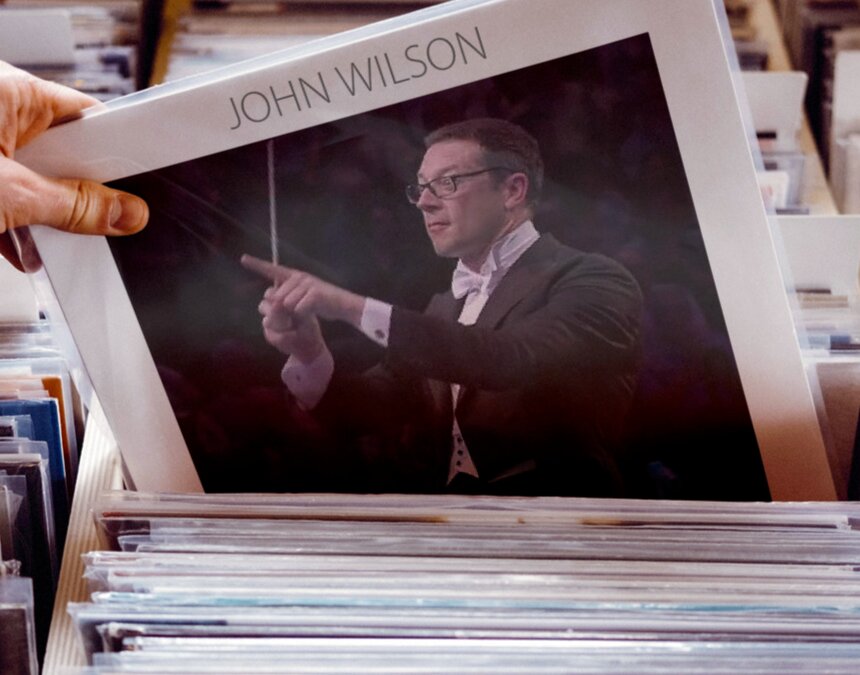
 Touching to catch a (private?) glance at Sting—
 Above Inigo, Susie Dean and Miss Trant: Judi Dench, from the 1974 West End production, sings
  Above bloodily hardworking John: Kim Criswell, the Maida Vale Singers and The John Wilson Orchestra tear into the Gershwin brothers’
 Above John: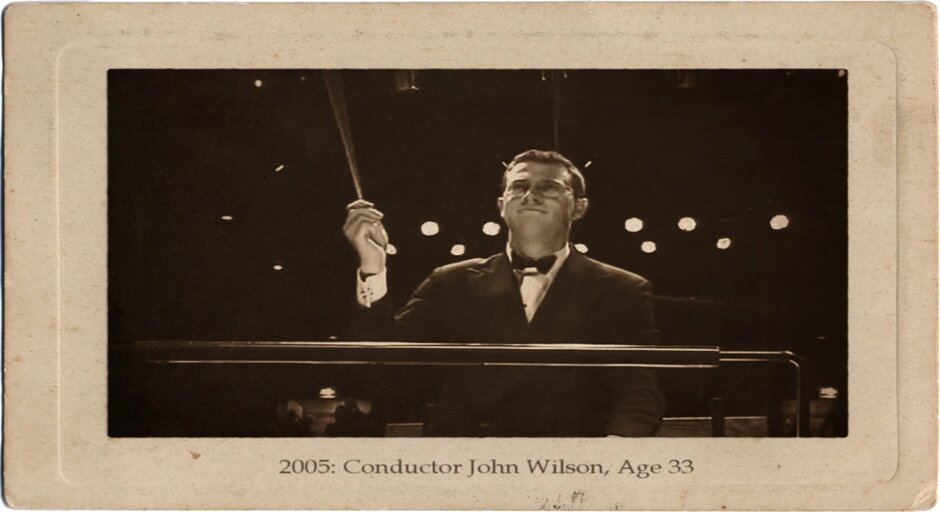

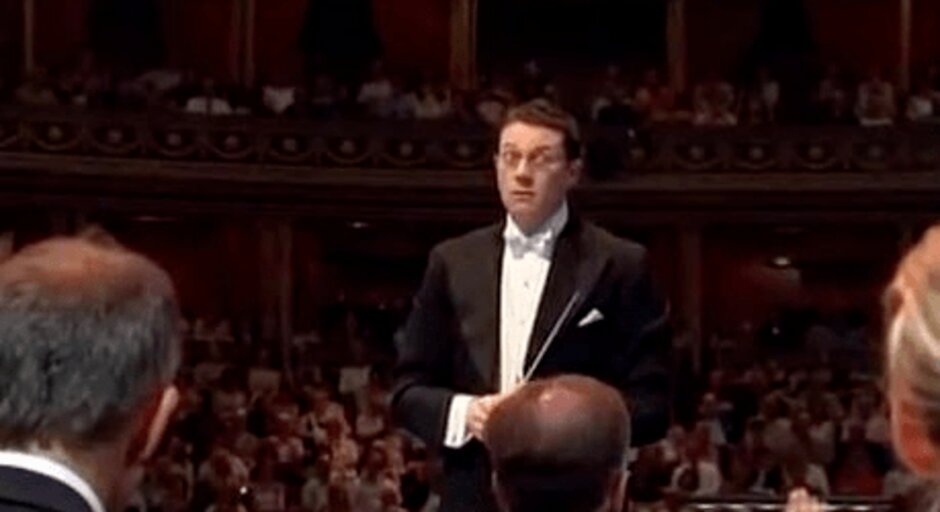 Yes love, that overtone did seem to go on forever, didn’t it?
 "I'll Be Dead Before You Break My Heart"