From 2019: I started collecting these Moments after getting right annoyed, not when I first heard my beloved Geordie lad John Wilson cheerfully dismissing Oscar Hammerstein II’s lyrics as being “needless”, not after the 2010 BBC Proms (an R+H tribute) or even the 2017 BBC Proms (Oklahoma! for God’s sake), but later on when I read about John in Brighton trying to conduct a sing-along with his concert audience in “You’ll Never Walk Alone” the way Liverpool soccer club fans like to sing it when they’re winning—a song cue I HATE HATE HATE and would like to strangle the group responsible, Gerry and the Pacemakers, for.
The rule for bringing up a Rodgers & Hammerstein song in a Moment is simple: You sing it spontaneously—knowing the words and understanding and conveying its sentimental message—at the right moment. You have to read the moment, John. In the Jack Benny scene the humor is clear because everybody knows the words to “Getting to Know You” and everybody knows about Jack’s musical vanity vs his excessive courtliness toward pretty talented women; in the Cheers scene, Diane’s song cue is truly meant to comfort and inspire, and so makes for a genuine moment for characters and audience together; in 3rd Rock, well, “Oklahoma!” is just the ultimate rouser. You don’t even have to sing it well. (So a much better sing-along song actually.)
A Rodgers & Hammerstein Moment 2 “Oklahoma!” 3rd Rock from the Sun
A Rodgers & Hammerstein Moment 1 “Getting to Know You” The Jack Benny Program
So it kind of heartens me, John, that you won’t be going back to mangling The Great American Songbook for awhile. Here’s hoping you take a long vacation in Bermuda, my Tyneside darling. Get a tan, get laid. And when you come back, commit yourself to the orchestral repertoire you do best.
Well, John, this isn’t a Joan Crawford movie so there’s no gold cigarette case but as I’m still in love with you and want to give you nice things, I’ll give you my honest appraisals, which is something I’ve been doing all along anyway (I hope you’ll agree) and not throwing myself into Long Island Sound for your sake. So let’s do this organized, going down the numbers in the program one by one because, as you recall, I used to work at ASCAP:
“We’re In the Money” (from Gold Diggers of 1933) / Harry Warren, Al Dubin Count on you to include the lyrics in pig Latin.
“The Desert Song” (from the 1953 film) / Sigmund Romberg, Oscar Hammerstein II Meh. I think the only reason you worked this in is because Kim Criswell’s singing a Romberg song in your 5 January concert in Stockholm, “Softly, As In a Morning Sunrise”, which is a hot, HOT number. In fact I can’t believe you’re going to stand on the same stage when she sings that song and not get incinerated. But that’s just you I guess.
The Treasure of the Sierra Madre (suite; from the 1948 film) / Max Steiner God, I forgot how repetitive Max Steiner can be when he’s not cribbing from Herman Hupfeld.
The Old Man and the Sea (suite, 1st movement; from the 1958 film) / Dmitri Tiomkin One movement, mercifully short.
“Seventy-Six Trombones” (YT) (from The Music Man, 1962) / Meredith Willson I lost a bet to Mister Grumble that you would never, never, EVER do this number, ever. (Because, you know, it’s so OBVIOUS.) But…yeah, it was okay. No Andre Rieu though.
“Blues in the Night” (from Blues In the Night, 1941) / Harold Arlen, Johnny Mercer A low-voiced woman should sing this. Preferably a woman who’s been there.
Auntie Mame (main title; from the 1958 film) / Bronislav Kaper You know, I’d forgotten how much I like this sweet waltz.
“The Man That Got Away” (from A Star is Born, 1954) / Harold Arlen, Ira Gershwin [in an obvious nod to the movie’s latest remake] Of all your singers, Louise Dearman is the only one who could’ve carried these two numbers in this room particularly, and whatever luck or good judgment (and I’m nuts about you dear, but I’m never completely confident about your judgment in these matters) brought her there I’m glad.
“Get Me to the Church On Time” (from My Fair Lady, 1962) / Frederick Loewe, Alan Jay Lerner A little harkening back to your 2012 Proms triumph, eh?
25-MINUTE INTERVAL Proms Plus Talk: a discussion of some of the great film scores being played tonight [Hah! In a pig’s eye] with Matthew Sweet, David Benedict and Pamela Hutchinson
Gypsy (overture; from the 1962 film) / Jule Styne, arr Ramin and Ginzler I still have the clip of you conducting this at the 2012 Proms (the other one). This one is sooo much hotter.
Now, Voyager (suite; from the 1942 film) / Max Steiner John, I’m afraid I really didn’t give this number a fair hearing the first time so I’m going to listen to it again and compare it to your Chandos 2022 recording. But you know, I almost missed the old dear telling Katie Derham that YOU wrote this arrangement because the Mountview kids down on the floor were leading a cheer [@1:05:00].
“The Deadwood Stage” (from Calamity Jane, 1953) / Sammy Fain, Paul Francis Webster [a Doris Day tribute] O-kay! A FULL number from a musical, complete with chorus—this is the very thing that made your name. All is forgiven.
“It’s Magic” (from Romance On the High Seas [correction, BBC: “On”, not “In”], 1948) / Jule Styne, Sammy Cahn [again, a Doris Day tribute] What in the name of heaven possessed whoever decided to include the worst song Jule Styne ever wrote? Redeemable only—only—if Bugs Bunny (YT) sings it.
A Streetcar Named Desire (main title; from the 1951 film) / Alex North Oh, you’re going to have fun with this one when you have to give sexy program notes to the audience from the podium, like you did in Brighton.
“The Days of Wine and Roses” (YT) (from the 1962 film) Henry Mancini arr Nelson Riddle, Johnny Mercer Nelson Riddle!? You used the freakin’ Nelson Riddle arrangement?? What are you trying to do, send love signals to Seth MacFarlane?
“Tomorrow” (from The Constant Nymph) / Erich Wolfgang Korngold You had this and your Prince Charming from Cendrillon, Kate Lindsey, up your sleeve! What a nice surprise.
ENCORE “I Could Have Danced All Night” (from My Fair Lady, 1962) / Frederick Loewe, Alan Jay Lerner Every soprano in the world wants to hear this song done right. She passes.
John my bonny, if we ever sit down someday and have a natter like two old friends I’d tell you how much in common you have with The Old Man, which you’d better take as a compliment, because Rouben Mamoulian was a genius. I didn’t think so when I worked for him, but then I was only 23 and he was 81, and the only movie I knew of his—besides The Mark of Zorro with Basil Rathbone and Tyrone Power, which I remember from TV as a kid—was Queen Christina, the result of cinema art-house hopping in New York in the mid-70s, and which had a special place in my half-lesbian heart on account of The Divine Garbo.
But like I said earlier, I was already familiar with the fact that Mamoulian had directed Carousel and Oklahoma! on Broadway. So when he finally started to chat me up more familiarly, after a few weeks of my just coming in every weekday morning and answering his phone, opening his mail—unpaid bills, media people from all over wanting interviews, a few lines from old friends like Armina Marshall…Paul Horgan…Pamela Mason…Ray Bradbury—balancing his checkbook, reassuring Zayde on the intercom over and over that Henry their handyman hadn’t gone home yet etc etc, and basically fooling around during the many dull spots in the day (which is how I ended up playing the Waltz from Carousel to myself on the actual legendary Richard Rodgers piano), it was easy to follow The Old Man’s train of thought because I already knew a lot about the original production of Oklahoma!
“You know, Agnes…” he started right off the bat one day, and we both immediately understood who he was referring to: Agnes De Mille, the choreographer for the original 1943 production.
I sat up attentively, pen in hand, ready to take dictation. My main duty for Mamoulian was supposed to have been as amanuensis for his memoirs, after all. At least that’s what the temp agency had told me. Although they didn’t say amanuensis.
“No, put your pen down and listen!” he ordered. He was, in the weeks and months to come, going to say that a lot.
Above the cast of Broadway Originals, first broadcast 23 August 1990) : “All the Things You Are” sung by all (Rebecca Luker, Jason Graae, Davis Gaines, Paige O’Hara, Judy Kaye, Kim Criswell, Brent Barrett, Chris Groenendaal, Shelley Freydont, and Gary Pierce). Boston Pops Orchestra and Chorus conducted by John McGlinn. And here’s the complete audio recording of this concert.
You are the promised kiss of springtime
That makes the lonely winter seem long
You are the breathless hush of evening
That trembles on the brink of a lovely song
You are the angel glow that lights a star
The dearest things I know are what you are
My bonny John was 30 when he recorded, with the orchestra that bears his name, this achingly tender theme.
I saw The Bad and the Beautiful (MGM, 1952) for the first time in New York when I was 20, at one of those great cinema art houses, the Little Carnegie I think. Anyone remember that fabulous nosh pit in the lobby of the Little Carnegie? It was set up to resemble an outdoor Parisian cafe, complete with wrought tables and chairs, painted scenery, etc… Here after the show my date treated me to a glass of cabernet and a flaky meat pasty, the leftovers of which the waiter wrapped up for me in a square of foil he molded into the shape of a swan.
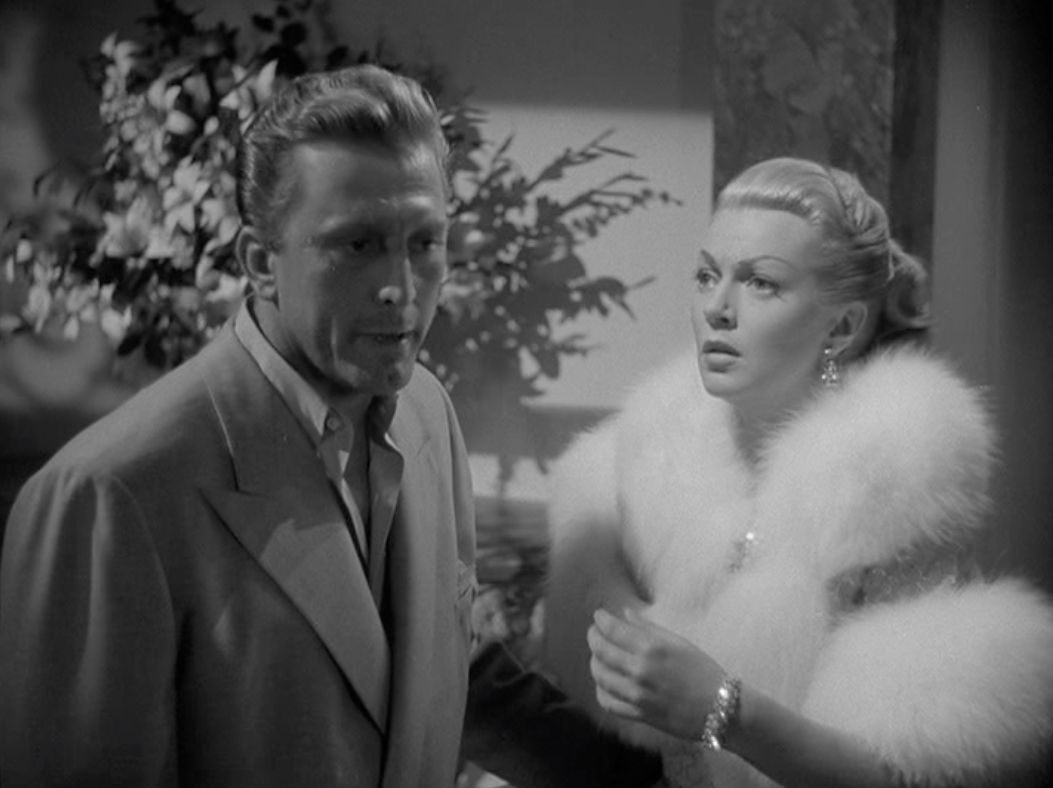
What do you do when you’re a passionate actress still in love with a wounding bastard who’s a screen genius? You make the damn movie.
As for Bad+Beautiful: Cast headed by Lana Turner, Kirk Douglas, Gloria Grahame, Dick Powell, Barry Sullivan, Gilbert Roland, Walter Pigeon. Vincent Minnelli helmed. MGM, 1952 (trailer here). 5 Oscar wins. To feel the full effect, get your heart stomped on by a Hollywood louse before viewing.
“The Bad and the Beautiful“ Soft Lights and Sweet Music, album Classic Angela Morley Arrangements The John Wilson Orchestra John Wilson, conductor Vocalion, 2002
*Oscar-winning transsexual composer-arranger Angela Morley (1924-2009) has quite a story herself, which maybe I’ll get to in another posting. For now, here’s a 1977 article in the Independent that should whet your interest.
I’m all right, Mister Grumble’s all right. We’ve lived through an East Village tenement fire, an armed coup d’etat attempt in South America and the San Francisco Earthquake of ‘89, so this [fill in current disaster] is nothing.
Ah, the coup. The coup—actually the attempted coup—was part of the CIA’s plan to oust popular Ecuadorian leftist president Rafael Correa by inciting the federal police in Quito to violently demonstrate for a pay raise. Normal TV broadcasts suspended, the government broke in on a rerun of Las Zuquillo, damn; on the phone the American Embassy told us not to worry, if the borders closed they’d send a car to fetch us; and we (the downstairs neighbors—Jewish Cuban refugees—and I, Mister Grumble having entirely lost his sight by then) spent the rest of the day watching for tanks to come rolling down the Autopista Rumiñahui, a major road into the city, which got Mister Grumble all reminiscent of the time in ’68 when Soviet tanks rolled down the streets of Prague, resulting in Army Intelligence sending him into Czechoslavakia. (His mission—which turned out fatal for everyone but my sweet baby—was declassified so I guess I can tell the story, but not now.)
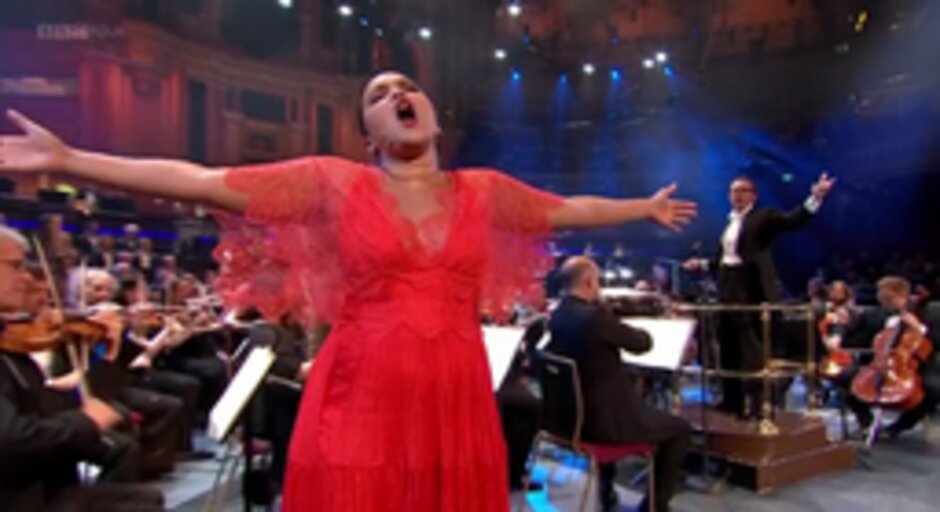
But listen: Some weeks before the coup, while Mister Grumble was going blind, I was desperately looking for some entertainment we could both enjoy and found online BBC Radio on Demand—this was back in the days when there was Radio 4, Radio 4 Extra and Radio 7…now all gone. It was on, I think, 23 August 2010 they advertised on their news feed a live broadcast that evening of an all-Rodgers & Hammerstein concert at the Royal Albert Hall, to be headed by a “brilliant young conductor” named John Wilson. “The music of Rodgers & Hammerstein as you’ve never heard it before!” promised the Beeb. And oh, I was hungry for a little bit of America, of home.
“Do you want to hear it?” I called to Mister Grumble across our atypically vast living room.
“Where’s it coming from?”
“England,” I told him.
“Are you kidding!?” he answered with a derisive laugh. And that was that.
This 2010 clip was uploaded to YT as a fundraiser in 2020 for Concordia, a group dedicated to promoting and supporting struggling young musicians. My beloved John Wilson was one of those struggling young musicians, and now as guest conductor he leads Concordia Foundation Artists here in a performance of Vaughan Williams’s Serenade to Music from the Foundation’s 15th Anniversary Concert, held at The Queen Elizabeth Hall in London on 22nd November 2010, with a reading of the text by Founder and Artistic Director, Gillian Humphreys OBE. This is the piece that made Rachmaninoff weep.
How sweet the moonlight sleeps upon this bank!
Here will we sit and let the sounds of music
Creep in our ears: soft stillness and the night
Become the touches of sweet harmony...

~William Shakespeare, The Merchant of Venice, Act V
BBC’s resident singer/interviewer Clare Teal welcomes Proms stalwart and all-around “shouty scary” (her description) conductor John Wilson to the studio to talk about his new CD album Cole Porter in Hollywood and his orchestra’s 2014 tour, as well as spin a few swing platters, none of which we hear in entirety. Toward the end of the interview John Wilson Orchestra drummer Matt Skelton rips through “Begin the Beguine”.
Clare Teal and Conductor John Wilson, 28 September 2014. Above John and Clare: Pete Townshend sings “Begin the Beguine“.
“Begin the Beguine” is a song written by Cole Porter (a song is music with WORDS John, you know?) who composed it at the piano in the bar of the Ritz Hotel in Paris. The beguine comes from the Caribbean; it’s a combination of French ballroom dance and Latin folk dance and was popular in Paris at the time Porter was writing.
The song is notable for its 108-measure length, departing drastically from the conventional thirty-two-bar form. Where a typical standard popular song of its time was written in a fairly strict 32-measure form consisting of two or three eight-measure subjects generally arranged in the form A-A-B-A or A-B-A-C, “Begin the Beguine” employs the form A-A-B-A-C1-C2 with each phrase being sixteen measures in length rather than the usual eight. The final C2 section is stretched beyond its 16 measures an additional twelve bars for a total of 28 measures, with the twelve additional measures providing a sense of finality to the long form. The slight differences in each of the A sections, along with the song’s long phrases and final elongated C2 section at the end, give it unique character and complexity. The fact that the song’s individual parts hold up melodically and harmonically over such a long form also attests to Porter’s talent and ability as a songwriter.
Porter reportedly once said of the song, “I can never remember it—if I want to play I need to see the music in front of me!” Alec Wilder described it in his book American Popular Song: The Great Innovators 1900-1950 as “a maverick, an unprecedented experiment and one which, to this day, after hearing it hundreds of times, I cannot sing or whistle or play from start to finish without the printed music”.
Pete Townshend “Begin the Beguine“ Cole Porter, words+music Another Scoop (1987) Pete Townshend Catalog
When they begin the beguine
It brings back the sound of music so tender
It brings back a night of tropical splendor
It brings back a memory ever green

I'm with you once more under the stars
And down by the shore an orchestra's playing
And even the palms seem to be swaying
When they begin the beguine

To live it again is past all endeavor
Except when that tune clutches my heart
And there we are, swearing to love forever
And promising never, never to part

What moments divine, what rapture serene
Til clouds came along to disperse the joys we had tasted
And now when I hear people curse the chance that was wasted
I know but too well what they mean

So don't let them begin the beguine
Let the love that was once a fire remain an ember
Let it sleep like the dead desire I only remember
When they begin the beguine

Oh yes, let them begin the beguine, make them play
'Til the stars that were there before return above you
'Til you whisper to me once more
Darling, I love you

And we suddenly know what heaven we're in
When they begin the beguine
When they begin the beguine
25 May, 2019. This afternoon someone in Glyndebourne will be cutting my beloved John Wilson’s cake into tiny little slices, and so I wish them all well at the gathering.
La Dietrich inspires a handsome young English orchestra conductor to artistic heights with her transfiguring and deeply sexual love in this erotically frank Pre-Code movie from Paramount. If only you understood dirty German, my bonny…
Behold the worst reviewmy bonny conductor John Wilson ever got and I cherish it because it’s so on the money. But first things first. Samuel Barber completed this Violin Concerto in 1939; a work in three movements, it lasts about 22 minutes. I’ve got this classic 1964 recording and it’s one of my yummier ones.
From Bachtrack: Exaggeration and Disinterest Mar John Wilson’s CBSO Programme
Simon Cummings, 08 April 2019. Great composers—or, rather, their greatest compositions—have a tendency to be able to shine through less than ideal performances. This was the situation that faced us in Symphony Hall last Saturday, though it’s important to stress that the root cause lay not with the City of Birmingham Symphony Orchestra, or their Chorus, or with either of the evening’s two soloists, but with conductor John Wilson.
Wilson’s approach to all three works on the programme could be summarised as ‘filmic’. It was as if each piece wasn’t quite adequate on its own terms but needed to be given the kind of superficial gloss that might make it suitable for Hollywood. The resulting effect of this was two-fold: exaggeration of the works’ more obviously lyrical or bombastic high points, and a kind of disinterested flattening of their less show-stopping sequences.
Thus, the contrasting episodes of Copland’s Appalachian Spring felt less like components of a single, overarching continuity than the vagaries of a narrative that kept changing its mind. At its most relaxed, as in the deliciously sleepy, dawn- and dusk-like music with which the works begins and ends, Wilson seemed to have little idea what to do, allowing its inherent prettiness to sound with indifference to pacing, shape and nuance. Only when the material became conspicuously excited did Wilson do the same, leading to a more appealing rendition of the assorted Allegro sections, which were lively and fun. (It’s interesting to note that Symphony Hall’s renowned acoustics, supposedly good for everything, audibly struggle when presented with small orchestras performing tight, crisp rhythms such as those in the Copland, on this occasion making the CBSO sound more than a little swamped.) But in hindsight these only made it more apparent how flat was the rest of the work, with clunky gear changes and a weak sense of connection.
The nature of the material in Samuel Barber’s Violin Concerto played much more into Wilson’s wheelhouse. The lyrical first two movements contain much that is redolent of silent film scores, which therefore suited the cinematic treatment they received. The sweetness in the music often felt rather cloying and over-earnest—where Copland had been likeable, Barber seemed to be spending all his time desperately trying to get us to like him–but the sense of dialogue between soloist James Ehnes and the orchestra, clearly heard here as equals, was highly engaging.
The Violin Concerto is a problematic work at the best of times, due to its weird structural combination of two emotionally-charged movements followed by an evidently bolted-on presto finale that appears to stem more from a desire to satisfy the demands of the original violinist than from the same creative impulse as the rest of the work. Yet on this occasion, Ehnes’ enthusiasm in the finale was a huge relief, his breakneck fingerwork rising above the robotic pulse laid down by Wilson. Best of all, though, was Ehnes’ even more unstoppable encore, a performance of Eugène Ysaÿe’s Violin Sonata no 3 that took real risks, resulting in such nail-biting excitement that the concerto was almost immediately forgotten.
For all the issues that had manifested in the Copland and Barber, nothing and no-one can stand in the way of the juggernaut that is Walton’s Belshazzar’s Feast. Wilson’s tendency to exaggeration was matched by Walton’s own overblown response to Osbert Sitwell’s libretto. To stunning effect, particularly in the first half of the work: testifying again that the devil has the best tunes, the combination of orchestra and chorus (who, on this occasion, augmented by the University of Birmingham Voices, were simply enormous) during Belshazzar’s unbound, sacrilegious revelries was an absolute riot and hugely involving. Considering the downfall that we all knew was coming next, one almost felt guilty for enjoying it so much.
Bass-baritone Božidar Smiljanić was by turns mesmerising, moving and borderline prophetic as soloist. His take on the introduction to Babylon was masterful, moving abruptly from proudly rattling off a list of valuable commodities to a stern, almost witheringly prolonged articulation of the word “slaves”, concluding with a tender lament for the “souls of men”. Likewise, the almost laughably undramatic moment when the libretto sums up almighty judgement in the wake of all the ungodly merriment in just a single sentence, Smiljanić made profound, as if he were heralding not merely the end of Belshazzar’s days but everyone’s.
Again, though, the music’s more inverted, painful episodes lacked weight, Wilson making them brisk and functional, mere lulls before the storms. When these came, they were overwhelming—how could they not be? But it was just such a shame that the most powerful moments of the concert, such as these, were for the most part in spite of John Wilson’s best efforts, rather than because of them.
On Thursday 16 May 2019, His Royal Highness The Prince of Wales, President of the Royal College of Music (RCM), held a special gala concert at Windsor Castle. The concert showcased some of the RCM’s most acclaimed alumni, including Sir Thomas Allen, Dame Sarah Connolly and Conductor John Wilson, performing alongside Maxim Vengerov, Polonsky Visiting Professor of Violin, and the talented young musicians in the RCM Chamber Orchestra. The evening included a performance of George Frideric Handel’s Overture to an English Opera (here played by the Little Orchestra of London).
…including a complete concert performance of Trial By Jury which I sang in, in a fully-staged Equity-waiver production, the year before my sweet Geordie lad was born.
Hastily conceived as a one-act filler for an evening’s entertainment with Offenbach’s La Périchole, Trial By Jury quickly established itself as the real hit of the production. Although this was not Gilbert & Sullivan’s first collaboration, it was the work that established the partnership for good. The first performance of Trial By Jury was on 25 March, 1875.
From Bachtrack.com: The Orchestra of the Age of Enlightenment has always gone its own way, choosing its own repertoire and collaborators and pioneering a now established framework for ‘historically informed’ performance. So what would happen when its players alighted upon WS Gilbert and Arthur Sullivan, alongside the vivacious and intrepid John Wilson, king of 20th-century popular repertoire? Wilson drew miraculous playing from the OAE, which seemed completely at home among the clouds of meringue and piles of whipped cream that Gilbert & Sullivan offer their audiences. The overture to The Gondoliers is rather boilerplate stuff, lacking Sullivan’s flair for pastiche and relentless tunefulness we find in say, Iolanthe, whose wispy opening enchanted later. But Wilson offered us a generous cone of creamy gelato, coaxing sumptuous and effulgent warmth from the OAE strings… ~Benjamin Poore
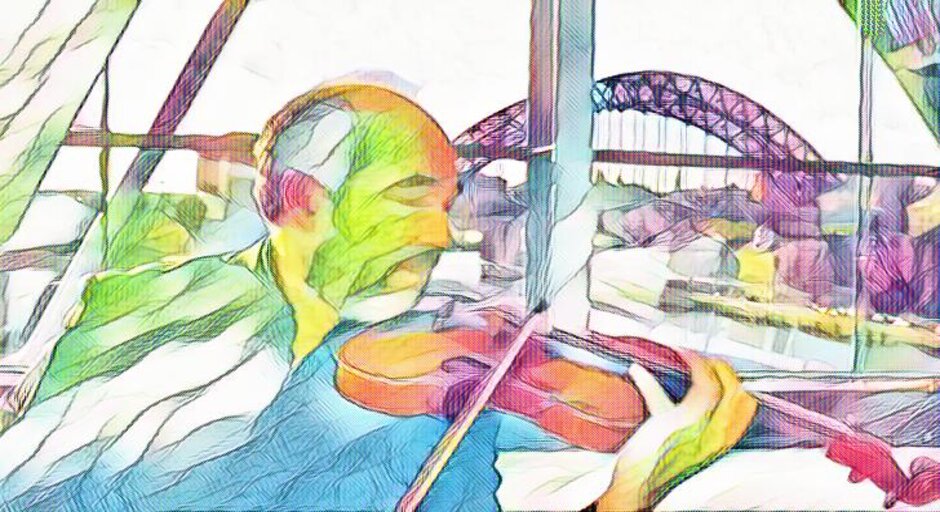
This is the group my beloved John Wilson wished a happy birthday to, and it’s a truly worthwhile one: The Royal Northern Sinfonia has an outstanding record in community outreach in the northeast of England. Plus they play from an exquisitely good repertoire. It’s pleasing to think of my John with musical memories like these. I hope he gets as much pleasure from them as I do remembering the Minnesota Orchestra when I was a teenager in Minneapolis during the Vietnam War era.
Bradley Creswick at the upstairs hall at The Sage, the Royal Northern Sinfonia’s permanent home in Gateshead, on the south side of the river from Newcastle. That’s the Tyne and the Tyne Bridge out the window.
Royal Northern Sinfonia is a British chamber orchestra, founded in Newcastle upon Tyne and currently based in Gateshead. For the first 46 years of its history, the orchestra gave the bulk of its concerts at the Newcastle City Hall. Since 2004, the orchestra has been resident at The Sage, Gateshead. In June 2013 Her Majesty Queen Elizabeth II bestowed the title “Royal” on the orchestra, formally naming it the Royal Northern Sinfonia.
The vid here (screenshot above) doesn’t have the entire Vaughan Williams, so here’s my Tyneside lad conducting this exquisite piece:
“The Lark Ascending” Made in Britain, album Ralph Vaughan Williams, composer Royal Liverpool Philharmonic Orchestra John Wilson, conductor Avie Records, 2011


 Above the cast of Broadway Originals, first broadcast 23 August 1990) : “
 What do you do when you’re a passionate actress still in love with a wounding bastard who’s a screen genius? You make the damn movie.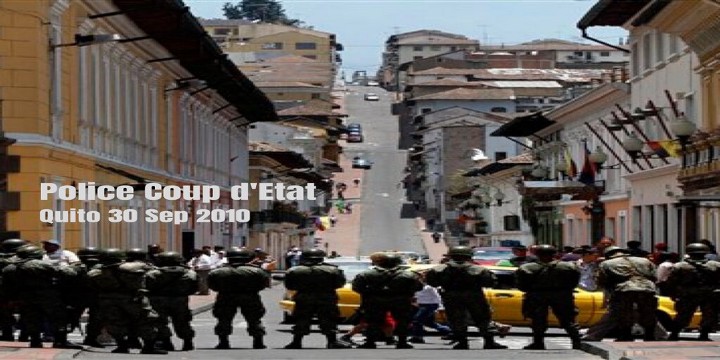

 Clare Teal and Conductor John Wilson, 28 September 2014. Above John and Clare: Pete Townshend sings “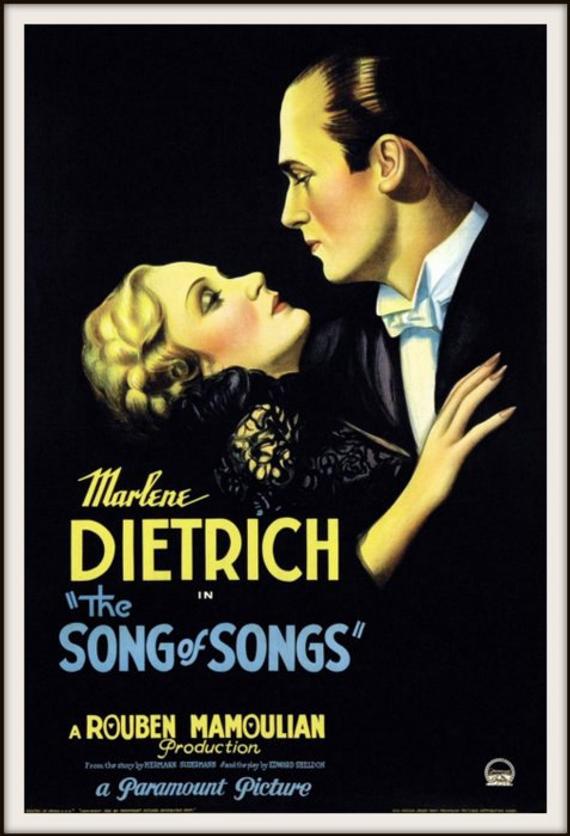


 Above my bonny John and members of the Trial by Jury cast:
  Bradley Creswick at the upstairs hall at
  "I'll Be Dead Before You Break My Heart"