I must’ve seen this movie four, five times when it first came out, when matinees were cheap, and what kept calling me back—besides the lovely, lush, immersive experience of just sinking back into an engaging and sensually-satisfying film in an air-conditioned theater in the middle of smelly, sticky, hot Manhattan—was, of course, the music. I really, really dug the score, just like I really dug the score of Walton (mostly)’s Battle of Britain (@1:20), a few years earlier, and went back matinees to go hear it again and again. Which doesn’t mean I like all of Richard Rodney Bennett; I think I’ve gone to almost every other movie he did a score to and can’t remember the music to any of them.
But this one I could whistle for years, decades, afterwards, and the only thing that brought it back to mind recently was—yes! yes!—falling in love with my bonny conductor John Wilson. Because of his association with Bennett, you see. Oh, they owned a house together or some such relationship [download PDF of Feb 2020 issue of Gramophone here], but that’s not what I’m talking about. Back when John was 28, he and Bennett—and The John Wilson Orchestra!!!—got together to record, as I mentioned in an earlier posting, an abomination called Orchestral Jazz. So I’m figuring that anything my bonny lad knows about jazz has to’ve come from this guy, and the trouble is, I really can’t find anything that would lead me to believe Bennett knew anything at all about jazz, except that he once partnered with jazz singer Claire Martin, and she’s the real thing.
Directed by Sidney Lumet, whose first film was about another dozen people meting out justice, 12 Angry Men (United Artists, 1957). Above Jean-Pierre Cassel: “The Orient Express”, for which the composer heavily cribbed from Ravel’s “La valse”. Composer Richard Rodney Bennett on piano, Marcus Dods conducting the Orchestra of the Royal Opera House, 1974.
But when it comes to purely orchestral music, Bennett shows that he knows a thing or two, Royal Academy graduate that he is. I’m glad, because his complete score for the film Murder on the Orient Express (Paramount, 1974) is probably the last example of a type of music they call over there English Light Music, which flourished on and off for about a hundred years since the 1870s, and is defined by easily accessible melodies and lush, decorative orchestration. In other words, music that’s delicious to hear and easy to digest. And while Murder has slightly campy touches, Bennett essentially knew who his audience was, and what they wanted.
It was just the other night I had a fever dream, running a 101-degree temperature and twisting the sheets, not longing for my beloved John Wilson this time, but trying to fight off an infection. When I finally made it into sweet sweaty sleep I was immediately taken into a strange scenario where, for God knows what reason, I was expected to conduct, with no rehearsal, Australian composer Brett Dean’s tribute to the doomed Soviet cosmonaut Vladimir Komarov, in front of an audience of 200-800 (the crowd kept stealthily increasing), among whose number were members of the orchestra I couldn’t tell apart and no one was helping me. Being a dream, there were other factors and factors conspiring to keep me from conducting the damn piece: the string section turned into one fella carrying a zither that turned into a floor harp; the stage manager was nowhere to be found and I was expected to run the lights as well; no one would give me a copy of the score. When I yelled out, “Okay, who’s got the tinfoil?” it was then I woke up.
Self-taught French composer Emmanuel Chabrier wrote this enduringly scrumptious piece in the early 1880s, the orchestration sounding more like something post-WWI. Yet it was composed during the height of La Belle Epoque. This was the last piece (a reduction, of course) I ever played on the violin in my junior high school orchestra, before switching a couple years later, at 16, to Voice at the University of Minnesota.
Lastly, a word about the strings in the fourth movement. Yup, there was that “John Wilson Orchestra shimmer”, that famous wrist vibrato anyone who’s ever picked up a fiddle recognizes and has to have come to terms with fairly early in training. We used to wonder if it made our playing actually sound better, and it depends. The Russians and Mittel Europeans used it a lot a hundred years ago. Some call this type of playing now “period playing”. My old boss, Rouben Mamoulian, called this style of playing “crying violins”. He claimed it was his idea to use it in the musical Love Me Tonight, in the “Isn’t It Romantic” sequence.
John Wilson, winner of the 2018 Incorporated Society of Musicians Distinguished Musician Award, conducts the Academy Symphony Orchestra in a Russian-themed program: Brett Dean’s 2006 work “Komarov’s Fall”, followed by Academy piano student Bocheng Wang joining the orchestra for Prokofiev’s Piano Concerto No 3; Tchaikovsky’s Symphony No 6 “Pateticheskaya” (better known as the “Pathétique”) closes the concert.
Just a couple things concerning John’s ever-evolving technique. Noticed that in the Tchaikovsky, in the Allegro con grazia he put down his baton in order to use both hands in shaping the sound, which worked just fine and made the second movement the most effective movement of the symphony. In the third movement, that young percussionist played the cymbals with more reverberation, making a less snappy sound—on time, but eliciting a very visible reaction from their conductor. In fact, it was enough to prompt my bonny at the end of the movement to take the kerchief to wipe his face out of his pocket with a decided snap, as well as to turn the score page with a snap equally as audible—a discernable message—before taking a moment to humbly submit to the music and end the concert with a satisfying fourth.
Back in 2018 John conducted Symphonies 1 and 2; in 2019 he did the 3rd, the 4th, and the tranquil 5th, and this year, 2020, on 15 January, he’ll be conducting Vaughan Williams’s fairly atypical 6th with the BBC Philharmonic (in a program that includes “In the Fen Country”, also by Vaughan Williams) in Nottingham (according to his management website; the BBC says it’s Salford).
This is the first truly important piece of the year for my beloved conductor. I’m listening right now to Roger Norrington and the San Francisco Symphony perform it, trying to discern the tricky bits John might find challenging.
Saw Ben-Hur (20th Century Fox, 1959) first run years ago with my very Catholic mom so I remember the music as Holy music. Then after that, as Monty Python music.
Listen carefully to this 1938 piece by American composer Samuel Barber and you’ll hear the stirrings and inspiration for English progressive rock group King Crimson’s classic “In the Court of the Crimson King”.
Of course it’s not Bella Seaton (Jean Heywood) in When the Boat Comes In speaking that line, it’s her daughter, schoolteacher Jessie, pleading the case of an artistic young pupil doomed to work down the coal pit in Gallowshields, a post-WWI fictional town—a composite of all the little towns along the River Tyne in the north near Newcastle (you know, that place in the phrase “Selling coals to Newcastle is like selling ice to Eskimos”) including the town where my beloved conductor John Wilsonwas born and bred, Gateshead*. Bella is the strong-willed matriarch, as we Yanks would say, of the Seaton family, so she gets a lot of scenes, which is great because I pick up the the Geordie accent from Northumberland-born Heywood more easily than from anyone else in the show.
As I might have mentioned a few postings ago I did three of my flicks speaking in a foreign accent: one in French, one in Cuban, and one in Malaysian, which I actually did in Filipino but no one could tell the difference. I like to practice the Geordie accent during off moments, you know, because it reminds me of John, and so it gives me pleasure.
During a live-to-streaming broadcast, bonny John was kind enough to share his thoughts about the foremost 20th century composer of English Light Music, Eric Coates (1886 – 1957):
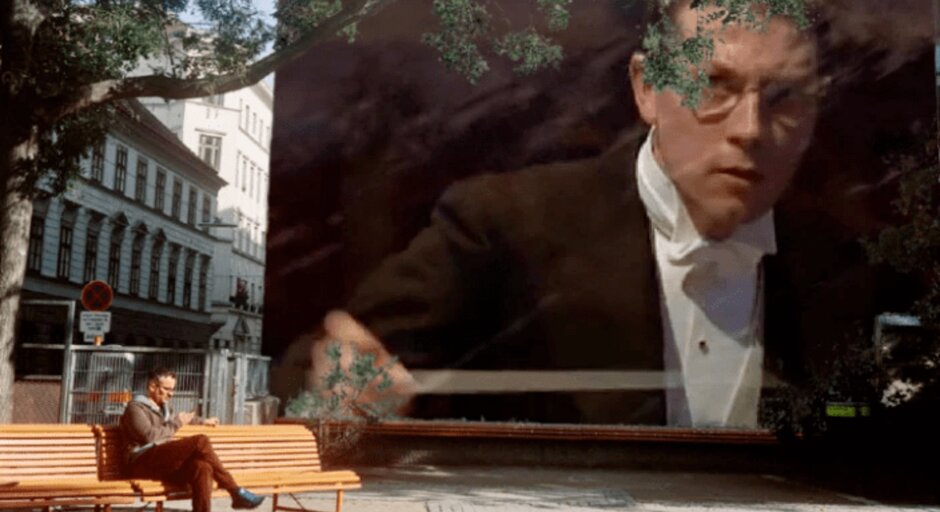
John was all of 26 when he first conducted a recording of “The Enchanted Garden” with the BBC Concert Orchestra in 1998 for Chandos.
ON COATES’S PLACE IN ENGLISH MUSIC
“Well you know, people often say that there’s nobody between Purcell and Elgar, there’s this three-hundred-year sort of gap when we were a land without music—but there was this one composer of genius and significance between that…1870s…which is Sullivan, and it was Sullivan who was sort of the founding father of what we might call, uh, Light Music in England with his “Overture di Ballo”, and that’s aside from his partnership with Gilbert. After Sullivan you had Edward German, and by the time you get to his successor, Eric Coates, the new medium of broadcasting means that this school of me-tic-ulously crafted, uh, pieces for orchestra has a, has a much wider listenership… So I don’t think it’s farfetched to say that Coates was one of the very first composers to be made by the new medium of broadcasting. And between 1906 and 1957 when he died he had this fifty-year career, that’s five decades, um, in which he was very single-minded in his ambitions to write beautifully-crafted, um, easygoing pieces for orchestra. … He’s one of the most meticulous craftsman of all and, uh, you know, he famously met Maurice Ravel in 1925, they had lunch at the Ritz to swap ideas on orchestration, which is (exhales short laugh) quite something.”
ON COATES’S FANTASY PIECES:
“He had a, a small child, Austin, uh, born in 1922, and he was forever haranguing him to set his favorite, uh, bedtime stories to music, so that’s where “The Selfish Giant” [slurred], which is the first, then “The Three Bears” and then in 1930 “Cinderella” originated. And they’re perfect, um, little vehicles, for sort of miniature orchestral tone-poems, and several of them were later turned into ballets and staged.” …
“I think, um, it was the perfect form for a composer who didn’t want to venture into symphonies. You know, just as as the suite is the perfect kind of miniature form of a symphony, so these nursery, uh, these fairy tales were the sort of tone-poems in miniature, ideally suited to Coates’s talent.”
ON COATES’S “THE SELFISH GIANT”
“Um, I think the most significant thing in this piece is the newly-found use of syncopation in the orchestra, and it caused quite a stir in 1925 or wherever [sic] it was written, ‘cause it was the first kind of fusion of, uh, syncopated jazz rhythms… I mean, harmless now when you hear them, but caused sort of semi-scandalous [sic] at the time, and people were writing to the newspaper saying, We must ban jazz, you know, morally disintegrating and all of that… [fades]”
ON COATES’S COMMERCIAL SUCCESS
“There’s a contractual side of Coates’s life, because he was very early on given a, a long-term contract with Chappell’s, the publisher, with whom he remained for most of his life, and that contract stipulated that he had to write one extended work, and three short wor—two short works—and three songs every year. And that’s basically all he did. For fifty years. He never stepped outside the terms of his contract, and I think he had trouble getting down to composition, it was, he was always, I remember his son Austin, whom I knew very well, telling me he was always just happy to be fiddling around with his camera and, and his hobbies and things like that, you know, composing was always something had to sort of apply himself to rather reluctantly.”
ON COATES’S RECORDED MUSIC
“He, as I say, all of these new sort of fo-forms of media, the 78 record and then later the long-playing record… You see that—you see the appearance of each new sort of, uh, (clears throat) form of recording being mirrored in the, in the sort of, the timings of Coates’s piece. So when you get th’—when Decca bring out the, the long-playing FFRR recording process y-you see that the ‘Four Centuries’ Suite ju-just tailored to those kinds of processes and lens(?) So yes, he always had his eye on, on, on how to disseminate his, his music [fades].”
ON COATES’S “VALSE-ROMANCE” AND “LAZY NIGHT”
“We-ll yeah, I mean, you know, they’re so transparently scored, these pieces, no, there’s nev—nothing ever unnecessarily doubled, everything’s carefully calculated, i-it’s like, you know, any of those Rossini or Mozart or Schubert, but one person sort of slightly off-center and it tells, so there’s nowhere to hide, it’s one of these… [fades]”
ON COATES’S “THE ENCHANTED GARDEN” (1938)
“Yup, bigger orchestra, I think it’s his longest single movement, twenty minutes, and, um, I guess he was at the peak of his powers, you know, he was a, he was re(?) master of the orchestra by, by this stage, so for he, for him, he wanted the use of the more exotic instruments, such as the bass clarinet…cor anglais…which don’t really appear in many of his other pieces because he was a, you know, he used to write for the, the salon orchestras of the day and the seaside orchestras and light orchestras… Again, rise in gramophone records, you know, all those, uh, freelance orchestras which could be assembled at a minute’s notice to, to make records, he did a lot of that. …
“Household name by 1933 with the, with the ‘London’ Suite, twenty thousand letters to the BBC, and they had to have a, a constable standing outside the door of their flat to, uh, to, ‘cause there were so many, sort of, autograph hunters and what-have-you. … They were always moving house, you know. His wife used go to the estate agents, like most people go to the supermarket, and she was always picking out… [fades] Poor old Eric was always being dragged from, from one place to th’— She was always dreaming up scenarios for Mrs Coates, and I think she wrote the scenario for this ballet. Several of his other sort of, uh, ballets were, were, were to stories by his beloved wife, and, uh, they made very effective stage pieces as you can hear, ‘cause he, he had a sort of, eh, eh, good dramatic instinct, you know, lots of colorful, eh, fantasy episodes in a piece like this.”
ON COATES AND THE MUSICAL THEATER
“He dabbled with theater, he wrote three musicals which were never, uh, completed, although with all the songs are written [sic], but the books weren’t…um…finished. And, uh, you know, one wonders why he never quite sort of, um, made his name in the theater, ‘cause he certainly had the melodic gifts, you know, to rival Ivor Novello and Noel Coward and Vivian Ellis and all those people of the, of the period. But his greatest need, musically, was the, was the, was the sound of the, the orchestra, yeah, yeah, that’s why he put pen to paper, and the idea of writing a musical and someone else doing the orchestration, that never quite fired his imagination enough, I don’t think.”
ON ERIC COATES’S MASTERPIECE
“…No, it’s ‘The Four Centuries’ Suite, that’s where he’s at his most dazzling, which you can hear on Volume IV…(pause, audience laughs)…whenever that may be.”
AGAIN, ON COATES’S COMMERCIAL SUCCESS
“…The highest composer [sic] in England I think, making three hundred quid a week in the 1930s, not bad.” …
“He was, he was a viola player, and, ah, he was principal viola of the Queen’s Hall Orchestra and he was, ah, longing to give up the viola ‘cause he said it was too heavy and (audience laughs), and, and he had this great big, you know, seventeen-inch viola, and he said it used to give him arm ache, and he’s longing to give it up, and so he decided to do that. Well, he didn’t decide that, he got the sack, for sending too many deputies. To rehearsals. (audience laughs) Henry Wood gave him the sack. And so his hand was forced and he became a composer, a full-timer [sic] of necessity. Ah, but I think it was this piece that sort of consolidated his position.”
ON COATES’S “SUMMER DAYS” SUITE
“I think, you know, Coates, eh, really never wanted reality to, sort of, um, come into-to his musical world, they were always il-lu-sory picture postcard pieces d-designed to sort of transport the listener. Um, even i-in his London suites, you know, he picks the posh bits. There are no tenements (audience laughs) glimpsed in any of his London music. And I think, ahoh, this is the closest I feel to a sort of tinge of regret. Melancholy in the last movement. It has, it has, it has a faint aura of sadness, I-I’d say.”
From MusicalCriticism.com, 2010: Although the BBC Proms are renowned for bringing many of the world’s greatest classical artists to London for a two-month-long festival, the concert that drew the most attention last year was—quite unexpectedly—a programme of songs from the classic MGM musicals of the 1930s, ’40s and ’50s. The man behind it all was John Wilson, the Newcastle[sic]-born conductor who has spent years reconstructing many of these great scores—which include The Wizard of Oz, Singin’ in the Rain and An American in Paris—so that they can be performed again in their original orchestrations.
Yet Wilson has many strings to his bow. He’s the Principal Conductor of the Northern Sinfonia, which is based at Gateshead‘s gorgeous modern concert hall, The Sage; he regularly conducts the Royal Liverpool Philharmonic, City of Birmingham Symphony and Philharmonia orchestras; he’s a regular on Friday Night is Music Night; he orchestrated Sir Richard Rodney Bennett’s score for a BBC production of Gormenghast, for which he won the Ivor Novello Award for Best Film Score; and he was in charge of the music for Beyond the Sea, Kevin Spacey’s biopic about Bobby Darin.
Wilson’s current engagement is a new departure: he’s making his debut with Opera North in a new production of Gilbert and Sullivan’s little-known Ruddigore. It’s the first time he’s performed with an opera company, but it’s clear that he’s a theatre animal, and the critics have been raving about the production—Tim Ashley in The Guardian has even given it five stars out of five, and described it as “one of the great Gilbert and Sullivan stagings” I caught up with Wilson in between performances to ask him about his approach to the piece, and also about his future plans.
“I grew up with it, and I’ve always loved it,” says the conductor when I ask him why he’s now conducting Gilbert and Sullivan. “I did a lot of it when I was a kid, with local amateur groups. I’ve always thought of it as the starting point of modern American musical theatre. You’d have to have a wooden heart not to be affected by Sullivan’s music.”
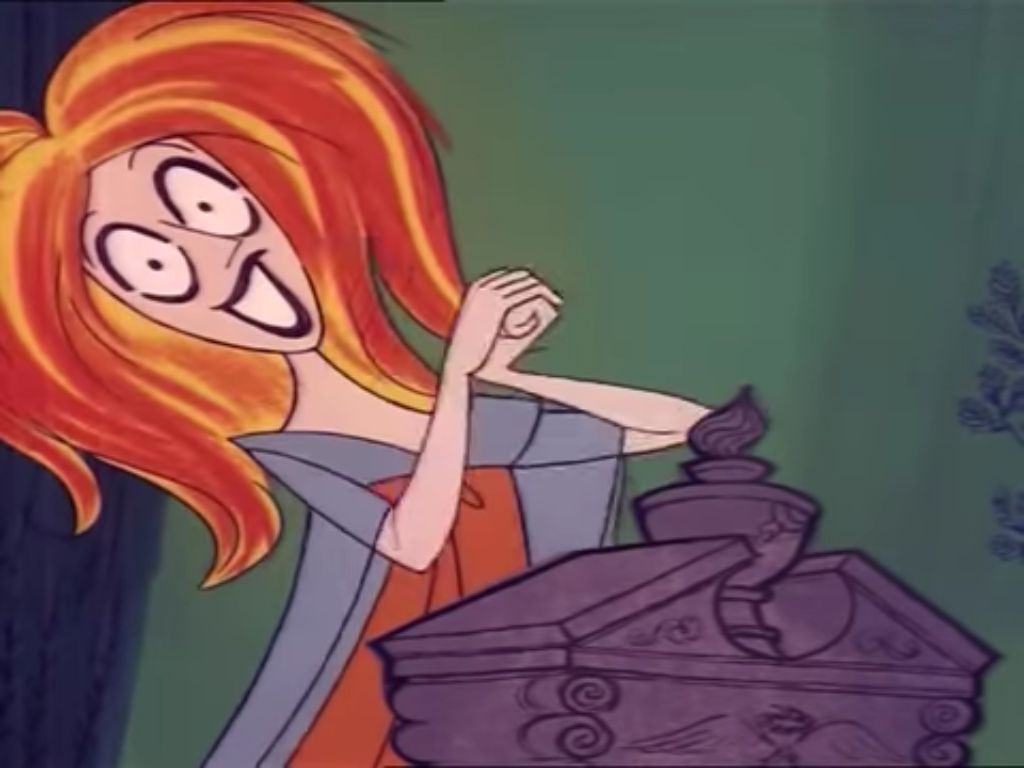
We all know the big G&S hits like The Mikado and The Pirates of Penzance—so why is Ruddigore less well-known? “It’s tricky to stage,” Wilson replies. “The ghost scene in the second act didn’t work on the first night of the original production. Also, the first act is very sombre in a lot of respects. But I think it’s got some of Sullivan’s best music in it. Just after The Mikado, Gilbert and Sullivan were at the height of their powers. The ghost music is some of Sullivan’s best music for the theatre, in my opinion. And Mad Margaret’s aria is one of the most ravishing things he ever wrote.
“Opera North’s production has been very careful to avoid the accretions that have occurred over the years—that’s the case both for Jo Davies the director, and I. We’ve gone back to the original text, and I think it comes up fresh as paint.”
Why has the production been such a success? “We’ve had absolute faith in the text. One of the earliest questions people kept asking was, ‘Who have you got to update the book?’ And Jo Davies said she would no sooner get someone in to rewrite Gilbert than she would to rewrite Oscar Wilde. It just needs to be well directed, well sung and well played.
“We’ve spent a lot of time in rehearsals on the text. People think of Oklahoma! as the first musical in which the songs propel the narrative, but all the way through Ruddigore the songs are completely interwoven with the drama. And I think that a crucial part of the success of this production has been getting the text across to the audience. That’s helped us to communicate the clarity of thought behind the text, too.”
What’s the challenge of conducting this piece? “It’s not straightforward in any way, shape or form. It’s an incredibly tricky piece. Apart from the technical things like keeping the robust quality of the music in a slow 6/8, the most important and difficult thing is making sure that every single word of the text is heard. Everything has to be spot on; it’s not just a case of getting the tempi and balance right. A couple of the reviews hinted that they thought the patter songs were a notch too slow, but then in the same breath they commented that you could hear every word of them. That might be because we’ve hit on tempi that allow us to convey the text!
“There again, in our favour with Sullivan, everything’s beautifully scored. You can always hear the orchestra—he never overscores. I think that’s the crucial thing. And the lightness of touch, obviously. It needs to be well articulated and well defined, and you need to get the sparkle into it.”
I ask Wilson whether doing a G&S piece with an opera company results in a more ‘operatic’ performance than might otherwise be the case. “I think what you have to aim for is a sort of middle ground,” he responds. “A lot of these roles weren’t written for opera singers—they were meant for what we might call ‘musical comedians’. We’ve tried to sing it legitimately, but in certain of the numbers, the text takes precedence over the music. That’s something we’ve worked on together. The dramatic impact of the song mustn’t suffer just because you want to show off your lyric baritone. I have to say, the cast is so young and talented, as well as very flexible. They’ve risen to all of these challenges, and we’ve not had any stylistic issues. They’ve taken it all on board!
“It’s my first time working with an opera company—I’ve done musicals all my life, and concert performances, but I’ve never done an operatic piece in the theatre. It feels like I’m suddenly working in 3D rather than 2D!” He also says he enjoys going to the opera enormously, and ‘skips off to a dress rehearsal’ whenever he can. Would he come back? “If they invite me, sure thing!”
John Wilson’s portfolio involves orchestration, arranging and conducting. What does he think of as his main activity? “I enjoy doing all music—I’ve never made the kinds of divisions that many people seem to have to make. I’m doing Szymanowski and Rachmaninov in the next couple of months, and then I’m doing Rodgers and Hammerstein with Kim Criswell and Brent Barrett with the CBSO.
“If I had to fill in my profession on a form, I would put ‘conductor’. But I’m a musician first and foremost. It’s a bit like having several rooms in the same house: I’ve always written arrangements and reconstructions, and I think that’s a service, really, for a lot of this music because it wouldn’t exist otherwise. It’s music that I love: the MGM music that I did at the Proms last year [2009] is music that I’ve loved all my life. It’s a labour of love.”
And why was that Prom quite so successful? “It’s a combination of a few things, I think. People are familiar with the general outline of the repertoire—they know the tunes and they’ve seen the films, so they’re aware of it. And it worked perfectly in that setting. It was scheduled on the television on a Saturday night at a time when people were in, and they stayed tuned in. We had about 80,000 letters in total after the concert, from people all over the country.
“The thing that particularly came across was how good the orchestra was, and how much the players seemed to be enjoying themselves. It was a very serious orchestra, filled with star players from all over Britain and Europe. I think that such a virtuoso orchestra playing music which was written for the finest musicians in the world at the time could never not have an impact. The fact that it had a bigger impact than I thought it might was a pleasant surprise. I received fan letters every day for the rest of the year about it, and I’m still receiving them.”
The public is clearly dying to hear more of both this repertoire and these performers, and evidently Wilson is only too happy to oblige. “We have a UK tour with my orchestra in November, which I’m looking forward to. We want to make recordings, and we have plans for that. We’ve also got invitations to festivals for the rest of the year, so we’re certainly capitalising on it.”
Wilson has also just become co-Principal Conductor of the Northern Sinfonia in Gateshead. ‘They’ve divided the post up into several parts, with Thomas Zehetmair as the Music Director. In addition to light music concerts, I’ll be doing programmes of straightforward symphonic repertoire. There’s an audience for all kinds of music up there, so I want to put various aspects of my talents to use.”
Last summer, the Sinfonia put on a magnificent concert of My Fair Lady starring the veteran actor Anthony Andrews as Henry Higgins. Happily, it’s the start of more to come: “We did two performances—an afternoon and an evening—and we played the entire score from beginning to end, with ne’er a cut in sight. It’s part of a series we’ve started up there, in which we do semi-staged performances of classic musicals where we play every note of the score in the original orchestration. We’re doing Show Boat in July, and the plan is to do one every year.”
But in spite of Wilson’s growing success and fame, music is a lifelong passion rather than the means for becoming a celebrity. “I’m not terribly ambitious. I’ve always loved music and I was very lucky to be encouraged as a kid. I didn’t have any form of training until I was in my teens, but my mother gave me a very basic introduction to the piano, and I was encouraged by my music teachers at school. I started playing for amateur theatricals, and then someone became sick and couldn’t conduct, so I did it. I did some pantomimes, where you have to do orchestrations for the forces at your disposal. It all started from there, really!
“I then went to the Royal College of Music as a percussionist, because that’s what I studied at school, then I changed to composition and conducting. I formed an orchestra while I was at college, and that was the beginning of forming the John Wilson Orchestra. By that time, I’d done quite a lot of conducting in the north, doing amateur shows and G&S. Then I studied conducting at college, and I’d always had a genuine passion for light music. So whilst I might have been pigeonholed for several years as a conductor of light music, it did mean I was pigeonholed for something, and that gave me the chance to have a career.“
Last November, he closed the BBC Concert Orchestra’s year-long celebration of British light music with a complete performance of Johnny Mercer and Andre Previn’s The Good Companions that was performed in Watford and broadcast on Radio 3. “I love that piece!” he enthuses. “It was a real labour of love for me—it took me a year to put it back together. In 1974, the show was re-scored for amateur uses. They took all the lovely woodwind doubles out, as well as one of the trumpet parts, and they added violas. I knew that this wasn’t the original orchestration because of a note in the vocal score, and because there are things you can hear on the original cast album that weren’t in the score that was available. I spent forever trying to track down the original full scores, and it seemed like they didn’t exist.
“When I eventually received in the post a big box of materials marked ‘Original West End Parts’, I couldn’t believe my luck. And they were about 80% complete. So I spent a year making an edition from them, filling in the gaps and making sure that it was immaculately laid out. We put it together in an incredibly short space of time, and it didn’t turn out too badly—I was quite pleased with it.”
Any plans to do more? “I’m doing one of the Ivor Novello shows next year. I don’t know which one, but I’m going to restore one of them. Again, I’m hoping that something of Glamorous Night or The Dancing Years survives in its original orchestration. They were all simplified for the road companies, and one wants to do the originals. That was the great thing about The Good Companions—you had Angela Morley and Herb Spencer doing the orchestrations, and they were geniuses.”
When I ask Wilson what his favourite repertoire is, he responds: “My favourite thing is the variety—I’d just get bored if I did the same thing all the time. Of course, I love all of the 1950s Hollywood studio orchestra stuff, because the execution is so impressive, as well as the writing and the construction of it all. You have to take your hat off to Alfred Newman and the 20th Century Fox studio orchestra. You’re never going to get any better than that—ever.
Can he really have no ambitions at all? “I have lots of personal ambitions—I’d love to increase my knowledge and capabilities—but in terms of “career”, I just tend to sit and pray that the phone will ring! But I’m very proactive about creating things that I want to do—I’m doing the whole of Singin’ in the Rain at the Royal Festival Hall in November with the Philharmonia. I do it simply because I love the music. My success, such as it is, is a result of wanting to recreate great pieces of music that have been lost.”
To close, we talk about what he would like to be remembered for: “I hope I live a bit longer first! But if I had any legacy, it would be for making light music the serious business that it used to be.” ~Dominic McHugh
Most people* seem to discount the idea that Bernard Herrmann’s score for Psycho is actually a near-perfect work for strings (given that it was written exclusively for strings anyway) and that, given the right setting, is a very listenable chamber piece that doesn’t need to reference the film. Here’s the Tippett Quartet performing this arrangement by Richard Birchall at Kings Place, 2011.
John Mills, Jeremy Isaac, Lydia Lowndes-Northcott, and Bozidar Vukotic: the London-based Tippett Quartet.
* Like Mister Grumble. This is the second-most heated debate** between us: whether or not movie music (for narrative films not musicals) can be considered truly concert-worthy.
** (The most heated debate between us is whether Oswald did it or not. This one gets us both really het up, as one of us has a slight connection with the actual case.)
The leader of the Tippitt Quartet (circa 2011), John Mills, is also the leader of The John Wilson Orchestra to date.
From GlasgowTheatreBlog.com, 2011: Hooray for Hollywood follows on from the phenomenally successful appearances at the last two BBC Prom seasons and a festive season TV special. It was a whirlwind chronology of the golden age of movie musicals from the 1930s to the end of the studio musicals in the 1960s. Below, the program (YT clips in red):
“During my childhood in the 1970s and 1980s the BBC would regularly screen the Metro-Goldwyn-Mayer film musicals on a Saturday afternoon. I was instantly attracted to the sound of the MGM Studio Orchestra and, even then, knew that one day I must conduct an orchestra like that! As my musical experience broadened, I was able to analyse what made that special sound. That the Hollywood studio orchestras had vast string sections is a popular myth—the epic soundtrack for Gone with the Wind was recorded with only eight first violins.) It was this sound that I had in my mind when, in 1994, I formed the John Wilson Orchestra for a Concert at the Bloomsbury Theatre. In 2000 our debut performance at the Queen Elizabeth Hall paid tribute to the great American composers and arrangers of the past century—Nelson Riddle, Billy May, Johnny Mandel, Paul Weston and others. This led to an invitation to play next door at the Royal Festival Hall and—as part of a concert devoted to the screen composers of Hollywood’s Golden Age—I included a handful of well known songs from the MGM musical films.
“I knew that MGM had been taken over by Turner Classic Movies which had, in turn, been acquired by Warner Bros. I’d read that Warner Bros presided over meticulously preserved archives and that every note of music for their films survived intact. So I wrote informing them of my forthcoming concert, asking if I might have access to some of the MGM scores. I received a reply by return informing me that, while all of the available music materials for Warner films were preserved in the archives of the University of Southern California, the full scores and orchestral parts for all of the MGM productions were destroyed in 1969—for no reason other than that they took up too much space and a new car park was needed. Every note of music for every MGM film was gone—used as landfill for a Californian golf course.
“Well, not quite. For copyright reasons, MGM was obliged to hang on to some sort of musical documentation—a record of who composed what, so that royalties could be apportioned correctly. So it was with great excitement that I travelled to Hollywood to spend a week inspecting what the USC archives call The MGM Conductor Books. For every production—musical or otherwise—a short score, or “piano-conductor” score, would be prepared, from which the music director could conduct. These were condensed versions of the full scores and contained most of the information necessary for recording purposes and for fitting the music to the picture. Full scores seem to have been considered too unwieldy: too many page turns that could be picked up by the microphones.
“The MGM conductor books exist in varying degrees of completeness; for example, The Wizard of Oz is sketched mainly on two staves with scant indication of harmony (and virtually no instrumentation), whereas Seven Brides for Seven Brothers is laid out over six staves like a miniature full score. Easter Parade and Gigi are all but lost—only a third of each score survives; High Society is 95 percent complete and has the most lucid sketches. In general, the piano-conductor scores for the later musicals seem to contain more information than their earlier counterparts; a state of affairs brought about by Johnny Green, who was appointed Head of Music Department in 1950 and who insisted on the highest standards of music copying and preparation.
“The conductor books are all beautifully copied by a handful of top-class copyists who must have been on permanent contract at MGM for at least 20 years. While these documents have provided the basis for my reconstructions, most of the real work is done by listening over and over again to the soundtracks. I once spent an entire Sunday reconstructing four seconds of music from the cyclone scene in The Wizard of Oz. There are many things the conductor doesn’t give you, inner parts buried deep in the orchestra—also, only rarely did the vocal or choral parts make it into the conductor books.
“Reconstructing these scores is a chore, but a joyous one. The songs are all in the top class, written by the greatest tunesmiths of the day. The arrangements are, in my opinion, the finest ever made in the field of musical comedy. The performances on the original soundtracks are just about the best you’ll ever hear. The unbeatable playing of the musicians in the MGM Studio Orchestra is a constant inspiration, not only to me, but also to the musicians of my own orchestra.”
John recorded Eric Coates’s entire London Everyday suite back in January and Chandos just released the album. “Knightsbridge”, the last movement, is well-known as the signature tune for BBC Radio’s In Town Tonight. It’s a sprightly march with a grandness that doesn’t sound actually deserved, which is why I can’t get it out of my head.
Here it is performed by the BBC Symphony for the program British Light Music at the 2900-seat Royal Festival Hall in London, 2011, with 39-year-old John conducting.
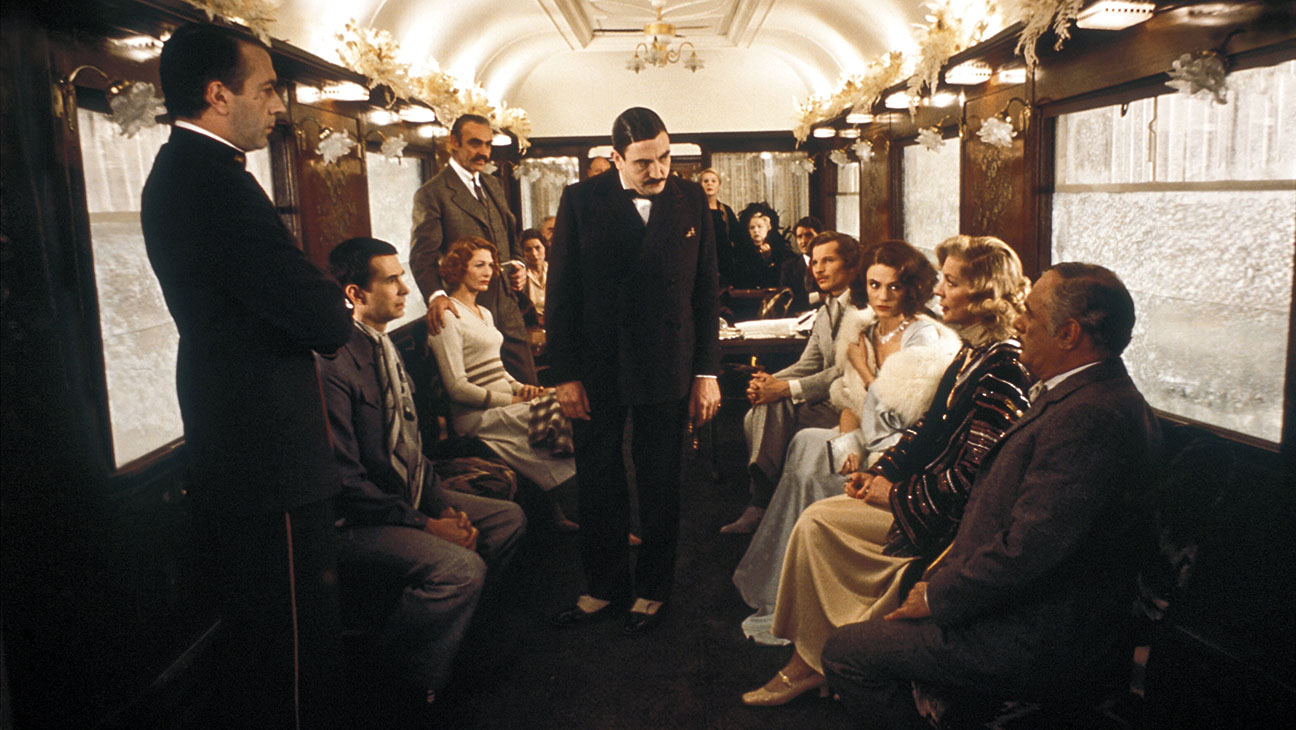 Directed by Sidney Lumet, whose first film was about another dozen people meting out justice, 12 Angry Men (United Artists, 1957). Above Jean-Pierre Cassel: “The Orient Express”, for which the composer heavily cribbed from Ravel’s “La valse”. Composer Richard Rodney Bennett on piano, Marcus Dods conducting the Orchestra of the Royal Opera House, 1974.
 Filipina nude painted by Fernando Amorsolo y Cueto, 1960, just for
  Above John:
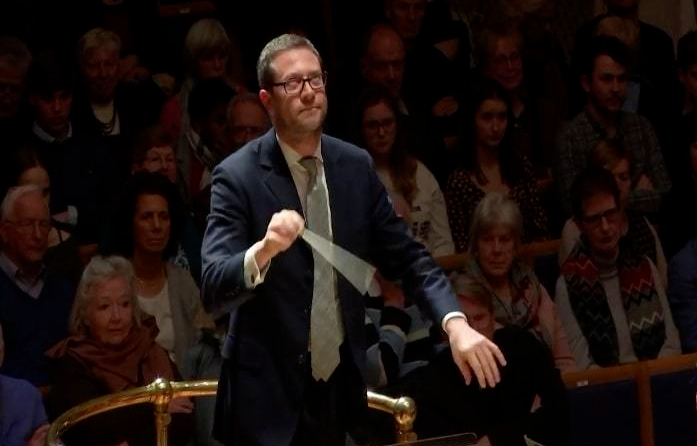 Above John:
 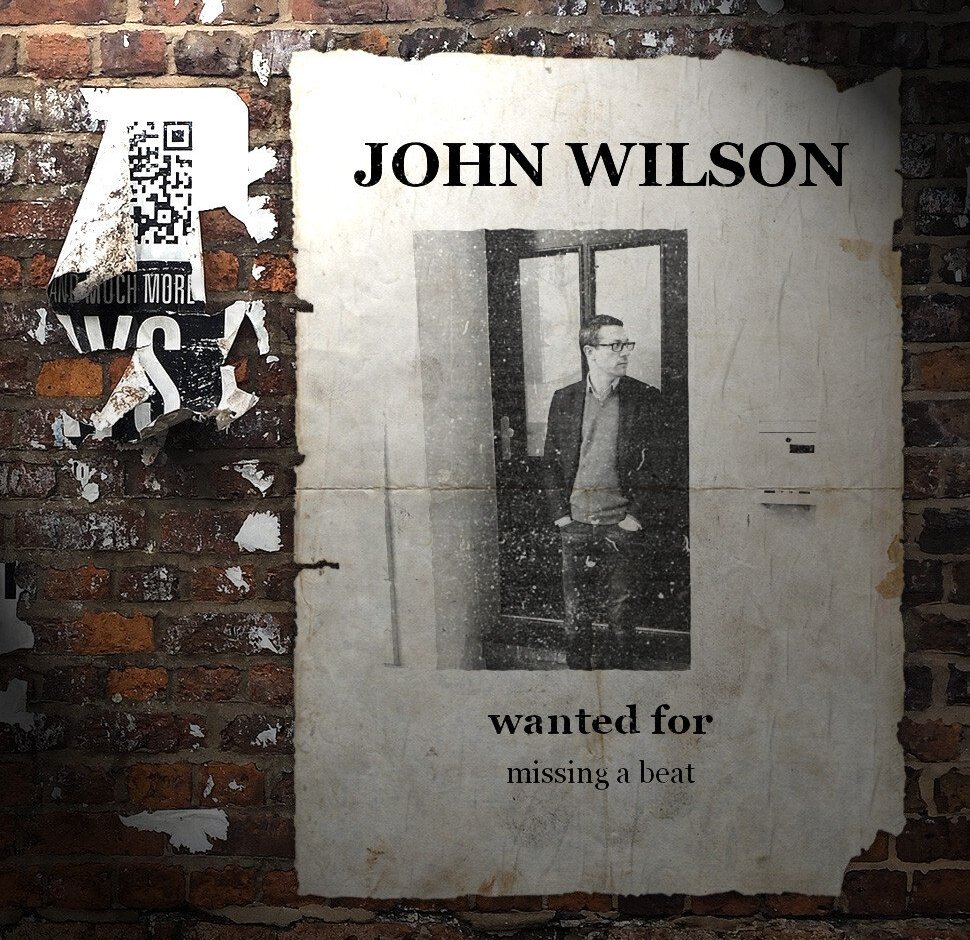 Above the picture of John I stole from him:
 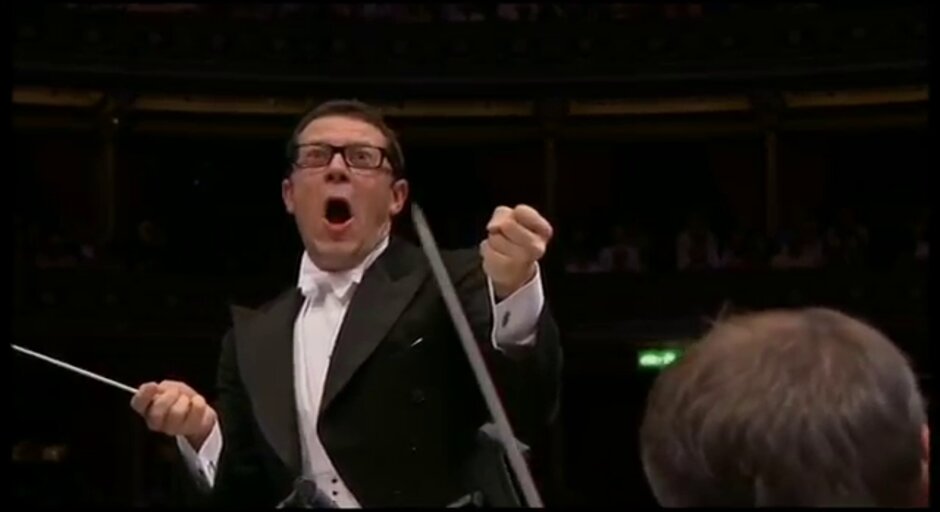 Saw Ben-Hur (20th Century Fox, 1959) first run years ago with my very Catholic mom so I remember the music as Holy music. Then after that, as Monty Python music.
 As part of the 50th anniversary of their founding (in October 1969) King Crimson will be touring the States with members of Frank Zappa’s band through summer 2020. Above:
  American audiences will probably better remember Jean Heywood, who died in September at the age of 98, as the grandmother in another classic story about artistic aspirations in the north,
  John was all of 26 when he first conducted a recording of
  Above Mad Meg:
  John Mills, Jeremy Isaac, Lydia Lowndes-Northcott, and Bozidar Vukotic: the London-based Tippett Quartet.
 You really fought for that tympani, didn’t you love? Above:
  "I'll Be Dead Before You Break My Heart"