Australian-born, Royal College of Music graduate Pheloung, who died last week at the age of 65, got some respectful notices for having been the composer of the popular Inspector Morse theme and the music to the film Truly, Madly, Deeply (BBC Films, 1990).
Alan Rickman and Juliet Stevenson recreate the moment when you sense he’s near…
I’m guessing the author of Waving, Not Drowning (which I reviewed on Amazon and below) borrowed the name for his fictional conductor, Barrington Orwell, from Pheloung. It’s a small world over there.
This 2010 clip was uploaded to YT as a fundraiser in 2020 for Concordia, a group dedicated to promoting and supporting struggling young musicians. My beloved John Wilson was one of those struggling young musicians, and now as guest conductor he leads Concordia Foundation Artists here in a performance of Vaughan Williams’s Serenade to Music from the Foundation’s 15th Anniversary Concert, held at The Queen Elizabeth Hall in London on 22nd November 2010, with a reading of the text by Founder and Artistic Director, Gillian Humphreys OBE. This is the piece that made Rachmaninoff weep.
How sweet the moonlight sleeps upon this bank!
Here will we sit and let the sounds of music
Creep in our ears: soft stillness and the night
Become the touches of sweet harmony...

~William Shakespeare, The Merchant of Venice, Act V
BBC’s resident singer/interviewer Clare Teal welcomes Proms stalwart and all-around “shouty scary” (her description) conductor John Wilson to the studio to talk about his new CD album Cole Porter in Hollywood and his orchestra’s 2014 tour, as well as spin a few swing platters, none of which we hear in entirety. Toward the end of the interview John Wilson Orchestra drummer Matt Skelton rips through “Begin the Beguine”.
Clare Teal and Conductor John Wilson, 28 September 2014. Above John and Clare: Pete Townshend sings “Begin the Beguine“.
“Begin the Beguine” is a song written by Cole Porter (a song is music with WORDS John, you know?) who composed it at the piano in the bar of the Ritz Hotel in Paris. The beguine comes from the Caribbean; it’s a combination of French ballroom dance and Latin folk dance and was popular in Paris at the time Porter was writing.
The song is notable for its 108-measure length, departing drastically from the conventional thirty-two-bar form. Where a typical standard popular song of its time was written in a fairly strict 32-measure form consisting of two or three eight-measure subjects generally arranged in the form A-A-B-A or A-B-A-C, “Begin the Beguine” employs the form A-A-B-A-C1-C2 with each phrase being sixteen measures in length rather than the usual eight. The final C2 section is stretched beyond its 16 measures an additional twelve bars for a total of 28 measures, with the twelve additional measures providing a sense of finality to the long form. The slight differences in each of the A sections, along with the song’s long phrases and final elongated C2 section at the end, give it unique character and complexity. The fact that the song’s individual parts hold up melodically and harmonically over such a long form also attests to Porter’s talent and ability as a songwriter.
Porter reportedly once said of the song, “I can never remember it—if I want to play I need to see the music in front of me!” Alec Wilder described it in his book American Popular Song: The Great Innovators 1900-1950 as “a maverick, an unprecedented experiment and one which, to this day, after hearing it hundreds of times, I cannot sing or whistle or play from start to finish without the printed music”.
Pete Townshend “Begin the Beguine“ Cole Porter, words+music Another Scoop (1987) Pete Townshend Catalog
When they begin the beguine
It brings back the sound of music so tender
It brings back a night of tropical splendor
It brings back a memory ever green

I'm with you once more under the stars
And down by the shore an orchestra's playing
And even the palms seem to be swaying
When they begin the beguine

To live it again is past all endeavor
Except when that tune clutches my heart
And there we are, swearing to love forever
And promising never, never to part

What moments divine, what rapture serene
Til clouds came along to disperse the joys we had tasted
And now when I hear people curse the chance that was wasted
I know but too well what they mean

So don't let them begin the beguine
Let the love that was once a fire remain an ember
Let it sleep like the dead desire I only remember
When they begin the beguine

Oh yes, let them begin the beguine, make them play
'Til the stars that were there before return above you
'Til you whisper to me once more
Darling, I love you

And we suddenly know what heaven we're in
When they begin the beguine
When they begin the beguine
From 22 December 2019. 41 years ago in Beverly Hills I was sitting in the alcove-cum-office that I shared with my boss, The Old Man, Rouben Mamoulian. It was late afternoon, the Friday before Christmas weekend, and I was eager to get back home to my boyfriend Sol and our little room behind Musso & Frank. But there were a few more things to do before I could leave.
The Old Man reached behind him on his desk for a volume that had a paper bookmark in it and asked me to read aloud. I found the place and began; it was a poem I’d never read before, called “Fern Hill”:
Now as I was young and easy under the apple boughs
About the lilting house and happy as the grass was green,
The night above the dingle starry,
Time let me hail and climb
Golden in the heydays of his eyes,
And honoured among wagons I was prince of the apple towns
And once below a time I lordly had the trees and leaves
Trail with daisies and barley
Down the rivers of the windfall light.

And as I was green and carefree, famous among the barns
About the happy yard and singing as the farm was home,
In the sun that is young once only,
Time let me play and be
Golden in the mercy of his means,
And green and golden I was huntsman and herdsman, the calves
Sang to my horn, the foxes on the hills barked clear and cold,
And the sabbath rang slowly
In the pebbles of the holy streams.

All the sun long it was running, it was lovely, the hay
Fields high as the house, the tunes from the chimneys, it was air
And playing, lovely and watery
And fire green as grass.
And nightly under the simple stars
As I rode to sleep the owls were bearing the farm away,
All the moon long I heard, blessed among stables, the nightjars
Flying with the ricks, and the horses
Flashing into the dark.

And then to awake, and the farm, like a wanderer white
With the dew, come back, the cock on his shoulder: it was all
Shining, it was Adam and maiden,
The sky gathered again
And the sun grew round that very day.
So it must have been after the birth of the simple light
In the first, spinning place, the spellbound horses walking warm
Out of the whinnying green stable
On to the fields of praise.

And honoured among foxes and pheasants by the gay house
Under the new made clouds and happy as the heart was long,
In the sun born over and over,
I ran my heedless ways,
My wishes raced through the house high hay
And nothing I cared, at my sky blue trades, that time allows
In all his tuneful turning so few and such morning songs
Before the children green and golden
Follow him out of grace,

Nothing I cared, in the lamb white days, that time would take me
Up to the swallow thronged loft by the shadow of my hand,
In the moon that is always rising,
Nor that riding to sleep
I should hear him fly with the high fields
And wake to the farm forever fled from the childless land.
Oh as I was young and easy in the mercy of his means,
Time held me green and dying
Though I sang in my chains like the sea.
After I read the entire poem out loud he sat back in his chair with a dreamy look and, pointing to a passage, asked me to read it again.
And then to awake, and the farm, like a wanderer white
With the dew, come back, the cock on his shoulder: it was all
Shining, it was Adam and maiden...
And here he sat up and whispered fiercely, “A cock on his shoulder…” And here he leaned over and, laying a hand on my knee, directly looked into my face and said urgently, “Yes, yes! That is what it was like! When I was a boy in Armenia…” And I want to tell you his eyes were glistening a little bit when he said that but I’m afraid to be mocked for cheap sentiment. But yes, yes, The Old Man had tears in his eyes when I read him “Fern Hill”.
So that was his Christmas present to me (plus a few extra dollars Christmas bonus) and it’s a Christmas present I want to give to you, John, not just because I’m in love with you and want to give you nice things, but because I want you to know something about the man you made such a careless remark about and why I’ll be spending some time upholding his memory and reputation.
Everyone else, a very Merry Christmas and Other Assorted Holiday Cheer.
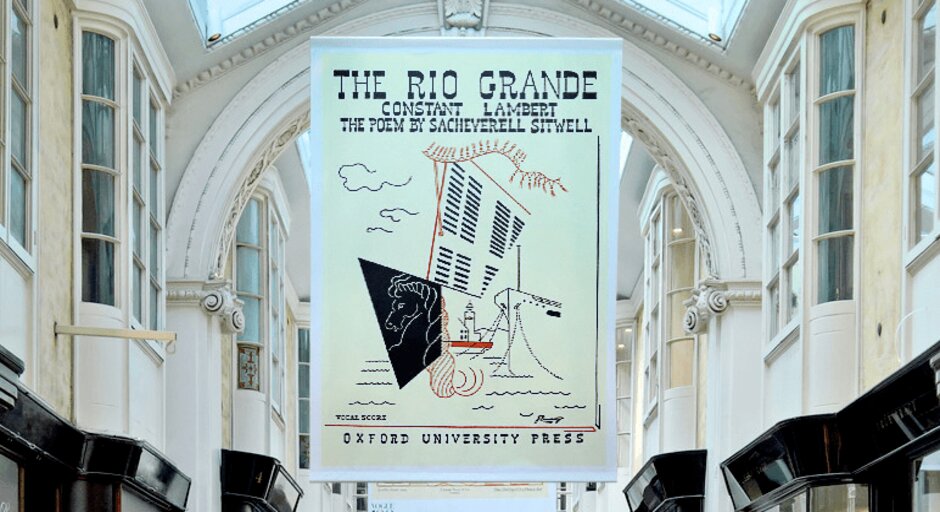
A very nifty, lively, jazzy modernist piece written by Constant Lambert (The Who manager Kit Lambert’s dad) in 1927. Australian virtuoso Eileen Joyce, who famously played the heart-wrenching Rachmaninoff in the film Brief Encounter (entire film here), is at the piano here. County Antrim-born Jean Allister, contralto soloist, joins her with the BBC Symphony Orchestra and the BBC Chorus. At the podium is Sir Malcolm Sargent.
Composer-novelist Anthony Burgess, in his autobiography Little Wilson and Big God (Burgess’s original name was John Wilson; his middle family name was Burgess and his confirmation name was Anthony) wrote,“Lambert, who admired Duke Ellington and proclaimed his harmonic roots in Frederick Delius (who in his turn had taken them from Debussy), was a fearless reconciler of what the academies and Tin Pan Alley alike presumed to be eternally opposed. I was present at that first performance, and so was my father. And, in 1972, on a plane from New York to Toronto, I found myself sitting next to Duke Ellington, who spoke almost with tears of the stature of Lambert, admitted that he had learned much from both Delius and Debussy, and expressed scorn for the old musical division, which had been almost as vicious as a colour bar. He had lived to see it dissolve and jazz become a legitimate item in the academic curricula.” [More Burgess on Lambert here.]
Music by Felipe de Leon, libretto by Guillermo Tolentino. Noli Me Tangere is based on Dr. Jose Rizal’s 1887 classic novel of the same name. It follows the story of Juan Crisóstomo Ibarra y Magsalin, who returns home to the Philippines after pursuing scholarly studies in Europe. He plans to open a school and marry his sweetheart, Maria Clara (where we get the name of the dress I’d love to make and wear again), but Padre Damaso, arch-enemy of the Ibarras, sets out to thwart Crisostomo’s plans, creating the dramatic—and very operatic—storyline of forbidden love, betrayal, and revenge. “Awit ng Gabi ni Sisa” is one of the great soprano mad scenes in opera.
From the 2011 University of the Philippines production. Info on Cebuana coloratura Mendezona can be found at her website here.


 Clare Teal and Conductor John Wilson, 28 September 2014. Above John and Clare: Pete Townshend sings “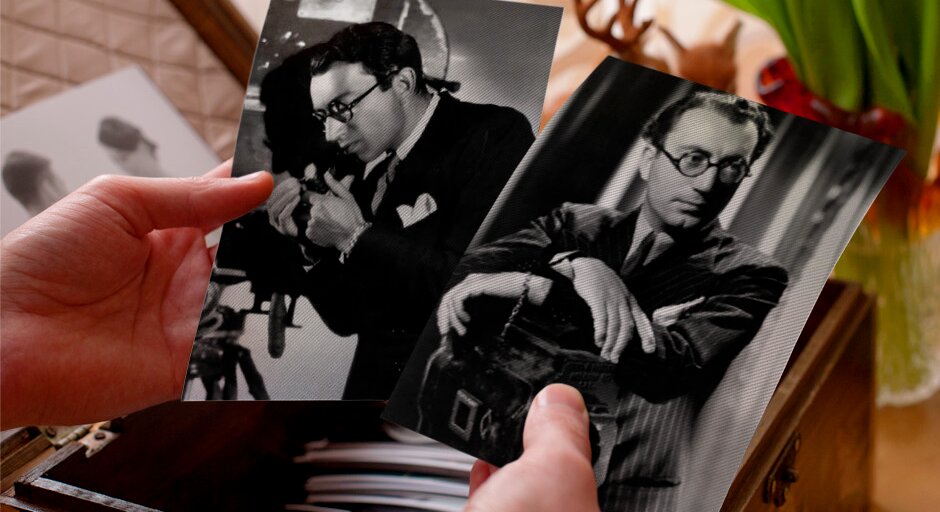

 "I'll Be Dead Before You Break My Heart"