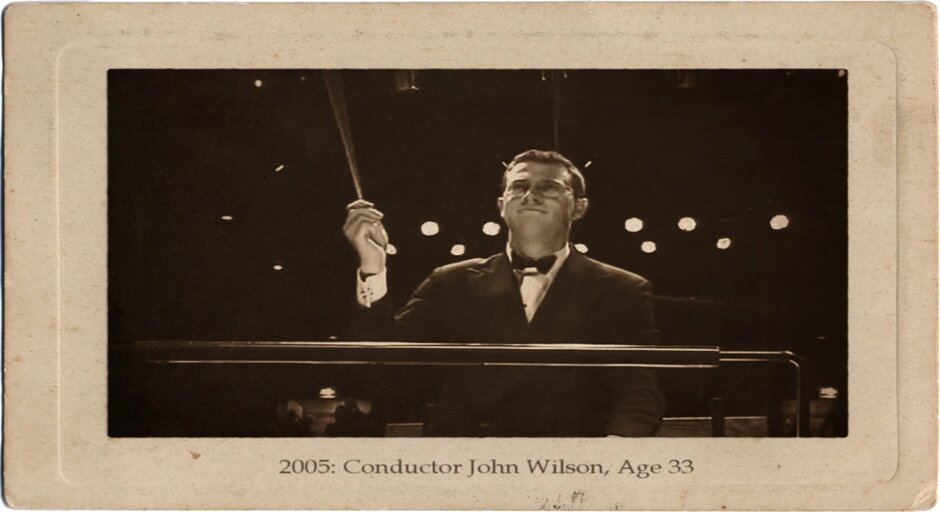
JB Priestley’s The Good Companions in 1933 with John Gielgud and Jessie Matthews; in 1974 with Judi Dench; in 2000 at the Eureka Theatre, SF; and in 2009 Conducted by John Wilson My Bonny

From MusicalCriticism.com, 2009: As part of the celebrations for Johnny Mercer’s centenary, the BBC Concert Orchestra mounted two semi-staged performances of his final stage musical, The Good Companions, at the Watford Colosseum in Hertfordshire. Conductor John Wilson—who led the phenomenally popular MGM Prom this August, as well as a fantastic concert performance of My Fair Lady in Gateshead in July—came together with an experienced cast that included Liz Robertson, Ian Talbot and Annalene Beechey to perform the show, which was first staged in London in 1974. The results could not have been more entertaining.

Above Inigo, Susie Dean and Miss Trant: Judi Dench, from the 1974 West End production, sings “Darkest Before Dawn”.


The Good Companions is based on JB Priestley’s most popular novel—indeed the work that solidified his reputation. It tells the tale of an upper-middle class woman who—quite against the advice of her relatives—decides to use her newfound wealth to fund a group of strolling players whose director has run off with all the money; escape is a strong theme of the show. One can see why the backstage musical flavour of the novel must have appealed to the book and song writers.

The libretto for the West End show was adapted by Ronald Harwood, Oscar-winning screenwriter of The Pianist. Composer Andre Previn, former Principal Conductor of the London Symphony Orchestra, wrote the music for the Gene Kelly film It’s Always Fair Weather and conducted the films Gigi and My Fair Lady. Lyricist Mercer received nineteen Academy Award nominations and was the lyricist of dozens of American standards including “Moon River” and “The Days of Wine and Roses”.

In short, the piece is an underrated little gem (the original cast album starring Judi Dench, John Mills and Marti Webb was briefly available but is now a rarity), and in conductor John Wilson’s taut performance all the nuances came through. It seems the project has been a labour of love for him: the original full orchestral score was lost after being simplified for amateur productions, and although some of the original performing parts were eventually discovered by Caroline Underwood of the Warner/Chappell music publishers, Wilson has had to restore parts of the score for which no material survived. He has rendered the work of Angela Morley and Herb Spencer, the orchestrators of the original production, extremely sympathetically, and led the performance with verve.

With the Maida Vale Singers covering a range of smaller roles and raising the roof in the ensemble numbers, and the BBC Concert Orchestra playing at their exquisite best, this was a superb evening. One hopes the same team will explore more classic musicals in the future, but in the meantime the Radio 3 broadcast on 16 November at 7pm is not to be missed. ~Dominic McHugh
An excerpt from the musical film The Good Companions with Jessie Matthews and John Gielgud is available on my YT channel here


FULL DRESS // A gifted mesmerist—a sinister composer—a naive young conductor from the north…inspired by an episode from the life of Rachmaninoff // DOWNLOAD FREE BOOK POSTER

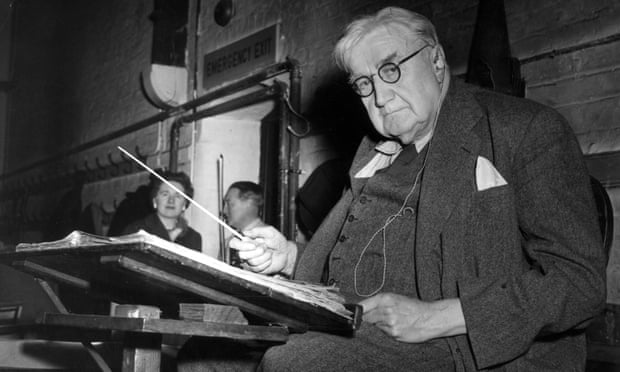
Ralph Vaughan Williams Conducts His Symphony No. 5, 1952

This recording was made off-air by a sound engineer using state-of-the-art recording equipment for the time that used rare and expensive long-playing acetate disks. The symphony was first performed in June 1943 (at the height of the blitz) but this recording captures a later performance in September 1952. There are four movements: Preludio 0:00 Scherzo 11:40 Romanza 16:40 Passacaglia 26:42.

Ralph Vaughan Williams, 1956.jpg

My beloved John Wilson conducted this symphony with the Royal Northern Sinfonia at The Sage (now The Glasshouse) in his home town of Gateshead in March 2019.


FULL DRESS // A gifted mesmerist—a sinister composer—a naive young conductor from the north…inspired by an episode from the life of Rachmaninoff // DOWNLOAD FREE BOOK POSTER

My Beloved John Wilson, RCM Alumnus, Conducts Fellow RCM Alumnus Benjamin Britten’s Sinfonia da Requiem with the Royal College of Music Symphony Orchestra, November 2013

Recorded on 7 November 2013 in the Amaryllis Fleming Concert Hall at the Royal College of Music in London.

john-wilson-rcm-britten-2013Above John: I Lacrymosa 00:00 / II Dies Irae 09:22 / III Requiem Aeternam 14:56.

A passionate expression of the composer’s pacifism, penned amid the conflict of 1940, Britten’s Sinfonia da Requiem is also a memorial to his parents. A powerful and enduring work, one of Britten’s most abiding from the earlier part of his career.


FULL DRESS // A gifted mesmerist—a sinister composer—a naive young conductor from the north…inspired by an episode from the life of Rachmaninoff // DOWNLOAD FREE BOOK POSTER

John Wilson: An Appreciation from The Sinatra Music Society, Newcastle Branch, 2001

Transcribed by me from a screenshot uploaded on John’s fan club site.

From the Sinatra Music Society Newsletter by Phil Suffolk (2001) The world of music can be full of wonderful discoveries and surprises and this is certainly true when I encountered the name John Wilson for the first time. This was in 1997 with the release of an ASV CD devoted to lesser known compositions by that master of melody and superb orchestrator, Eric Coates, played by the BBC Concert Orchestra conducted by John Wilson.

The thing I first noticed first about this disc was the total commitment of the interpretations. A year later, a second volume appeared also devoted to the delightful compositions of Eric Coates. Once again I was struck by the deep understanding and respect show to these often unfamiliar scores, something which isn’t always the cast when this music is performed by orchestras and conductors who just do not seem to understand the idiom.

A little later I learnt that John was preparing a complete edition of the works of Eric Coates, so no wonder he is so completely “inside” this lovely music.

Born in Gateshead in 1972, John Wilson studied composition and conducting at the Royal College of Music, where he graduated in 1995 winning all the main prizes, and also where he was awarded the prestigious Tagore Gold Medal, the highest award attainable by a student at the college.

In 1996 John formed The Sinfonia of Westminster, a group comprised of the pick of the outstanding musicians from leading soloists and chamber groups. But John also enjoys a parallel career conducting The John Wilson Orchestra, which is comprised of young musicians devoted to keeping alive the music of The Great American Songbook, including arrangements by Nelson Riddle, Billy May, Robert Farnon, Paul Weston and Conrad Salinger. The orchestra has given concerts in London’s Queen Elizabeth Hall to great acclaim. He also appears regularly at Pizza in the Park and is the youngest conductor to broadcast on Radio 2’s long running Friday Night Is Music Night programme. John is also a prolific arranger himself, producing numerous orchestrations for film and television and he was also responsible for arranging all the music for the Hong Kong handover celebrations. The first two CDs to appear featuring The John Wilson Orchestra come from two different labels. The first one from Velvetone comprises 19 titles recorded at the CTS Studios in Wembley in 1998. Sarah Moule is the sensitive vocalist on eight tracks including “I Concentrate on You” and “Words Can’t Describe”, a little-known song once recorded by Sarah Vaughan. The rest is all orchestral, my favourites being “Skyliner” and “Cherokee”, both arranged by Neil Richardson, and Bob Farnon’s superb reworking of David Raksin’s classic “Laura”, which for me is worth the price of the disc alone!

John’s most recent CD is a first from Michael Dutton’s Vocalion Digital label. Previously this label has concentrated on re-issues of classic dance band and jazz recordings. They are now embarking on a series of original recordings made specially for the label, and John’s CD Orchestral Jazz is included in the first release. Using 24 strings, 4 winds, 5 rhythm and piano, this disc sounds superb and no wonder, featuring as it does on Richard Rodney Bennett playing piano on 4 tracks and providing arrangements for 8 tracks including “On the Sunny Side of the Street”, “Lush Life” and “Melancholy Baby”.

The remaining arrangements are shared between John himself and Neil Richardson.

Listen out for Ian Moffat’s superb trombone, also Enrico Tomasso on trumpet and Luke Annesley doubling on sax and clarinet. This issue should be snapped up by all who enjoy the very best in orchestral jazz. If you enjoy Nelson Riddle’s recordings then you should love this CD.

One wonders what the future has in store for John Wilson. Personally I would welcome a disc devoted to the music of Robert Farnon, and what about a CD of the great arrangements of the unsung hero of MGM musicals, Conrad Salinger. But whatever, the name John Wilson will ensure that the great music of the twentieth century will be kept alive, played and presented superbly by a young master interpreter. 


FULL DRESS // A gifted mesmerist—a sinister composer—a naive young conductor from the north…inspired by an episode from the life of Rachmaninoff // DOWNLOAD FREE BOOK POSTER

Gustav Holst’s The Planets: The National Youth Orchestra of Great Britain Conducted by John Wilson, Leeds Town Hall, May 2013


I Mars, the Bringer of War (1914)
III Mercury, the Winged Messenger (1916)
VI Uranus, the Magician (1915)
VII Neptune, the Mystic (1915)

John Williams used the melody and instrumentation of “Mars” as the inspiration for his soundtrack for the Star Wars films. You can especially hear this in the Death Star theme.

The concert also included John Adams’s Guide to Strange Places and Benjamin Britten’s Four Sea Interludes (here played by the RTE conducted by John).

FULL DRESS // A gifted mesmerist—a sinister composer—a naive young conductor from the north…inspired by an episode from the life of Rachmaninoff // DOWNLOAD FREE BOOK POSTER

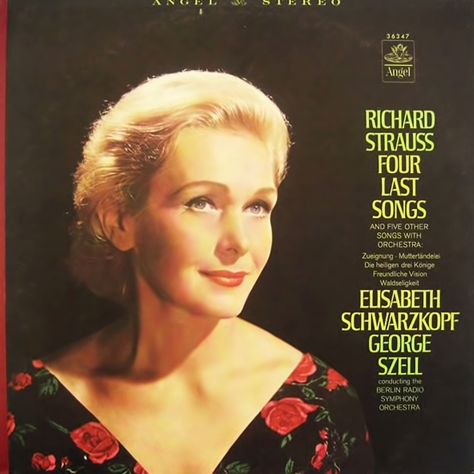
Four Last Songs by Richard Strauss: Elisabeth Schwarzkopf, Soprano, with George Szell Conducting the Berlin Radio Symphony Orchestra

The Four Last Songs are “Frühling” (Spring), “September”, “Beim Schlafengehen” (When Falling Asleep) and “Im Abendrot” (At Sunset). All of the songs but “Frühling” deal with death and all were written shortly before Strauss himself died. They are suffused with a sense of calm, acceptance, and completeness. The settings are for a solo soprano voice given soaring melodies against a full orchestra, and all four songs have prominent horn parts. The combination of a beautiful vocal line with supportive horn accompaniment references Strauss’s own life: His wife Pauline de Ahna was a famous soprano and his father Franz Strauss a professional horn player.

schwarzkopf-last-songs-strauss.jpeg

My beloved John Wilson lived in this ravishing music when he conducted the Swedish Radio Symphony Orchestra late in March 2019, in a program that included Korngold and the Emperor Waltz.


FULL DRESS // A gifted mesmerist—a sinister composer—a naive young conductor from the north…inspired by an episode from the life of Rachmaninoff // DOWNLOAD FREE BOOK POSTER

Two “Summertimes” from The Gershwins’ Porgy and Bess, One Conducted by John Wilson, 2018

…The other conducted by John Mauceri in 2006 with the Nashville Symphony & Chorus, in a production based (in part) on the original score markings of composer George Gershwin:

“For those who are familiar with the score, the very opening will seem slower. It is clear from Gershwin’s metronome markings and from the articulations in the orchestral parts that he intended the opening to be moderately fast (marked ‘Risoluto e Ben Marcato’ in the composer’s hand), exposing its inner syncopation and then accelerating. ‘Summertime’ is faster than we are accustomed. It is not a sad song, after all, and ‘A Woman is a Sometime Thing’ is slower. In fact, these two ‘lullabies’ by the mother and the father of their nameless child, are at the same metronome marking. In other words, Gershwin wanted to link the daddy and the mommy to each other by the speed of their music, even if their words and styles are quite (humorously) different.” On Porgy & Bess ©John Mauceri

john-wilson-conducts-porgy-and-bess

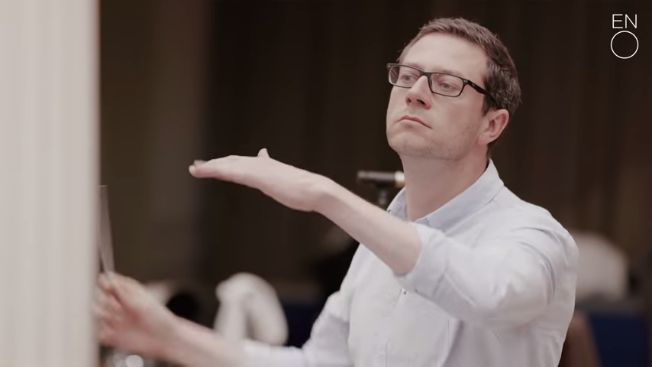
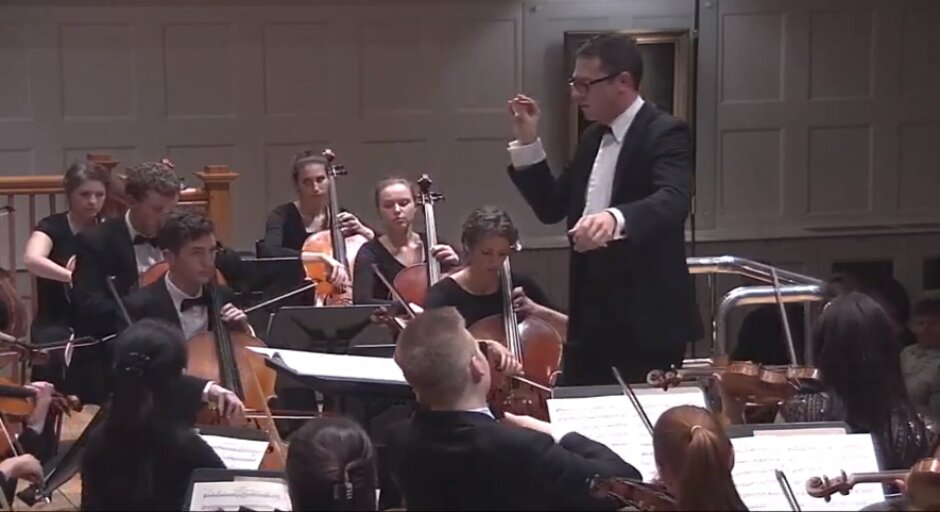
Anthony Tommasini in his New York Times review of the English National Opera’s production of Porgy and Bess described my bonny as the “excellent John Wilson, who led a performance that had sweep, shape and vitality, as well as rarer qualities: precision and restraint”. Here’s our John from this past summer rehearsing “Summertime“. Performances of ENO’s Porgy and Bess run to 17 November.

More about Gershwin and Porgy & Bess:


FULL DRESS // A gifted mesmerist—a sinister composer—a naive young conductor from the north…inspired by an episode from the life of Rachmaninoff // DOWNLOAD FREE BOOK POSTER

The Overture to Candide by Leonard Bernstein, Conducted by Bernstein, Played by the NY Philharmonic, 8 Jan 1961

Here’s “Overtures and Preludes”, episode 1 of season 4 of the Young People’s Concerts (which I remember watching new!). This one particular playing—at this particular time and place—with this particular freshness and energy—is my standard against which all other Candide Overtures that ever were or ever will be are judged.

Happy 100th, Lenny.

Screening Room, SF 1979

FULL DRESS // A gifted mesmerist—a sinister composer—a naive young conductor from the north…inspired by an episode from the life of Rachmaninoff // DOWNLOAD FREE BOOK POSTER

The Story So Far, with Conductor John Wilson

From August, 2018. Cantara, former ASCAP solfeggist and 70s porn actress turned memoirist, has fallen hopelessly in love with a man at the other end of the world, an English, middle-ranking orchestra conductor—who plays, on the side, Golden Age of Hollywood music and The Great American Songbook—by the name of John Wilson.

The Queen of Heaven has her eye on you, John

Not because he’s a fellow creator (he doesn’t create, but reconstructs, orchestrates and arranges the music of others)—not because of his looks (he’s peaky, scrawny, blinky; his gray-green eyes lack luster; he’s got a facial tic, pores like craters, lousy posture, enormous feet, the limbs of a stick insect and the hands of a hod carrier; his nose is an equilateral triangle; his famous cleft chin, supposedly his best feature, always looks slightly askew; his ultra-short mousy hair can’t conceal the fact he’s already going gray; he sweats like a stevedore on the podium; and for the past few years he’s taken to wearing geek glasses)—and certainly not for his intellect (his fatuous pronouncement about the needlessness of lyrics in The Great American Songbook makes me want to smack the back of his head like the whippersnapper he is and send him home with a note).

So what is it about him?* I’ve only been aware of his existence since 30 April and in love with him since 4 May, 2018; since then my feelings have been an insane mixture of tenderness, gratitude, annoyance, and lust. The tenderness I understand: I’ve spent enough time in Hollywood to understand the position he’s in… As far as gratitude, here’s his concert version of “The Trolley Song” using the original 1944 orchestration(!)— thank you thank you thank you, John. Even the raging lust I get.

But whenever John gets himself in the way of the music it drives me nuts. It’s crystal clear to me the times he does this because I’m in love with him, dammit, and because he’s a musician I pay attention to the music. Truth to tell, the only times John really gets himself in the way are when he’s conducting his own hand-picked group which is dedicated mostly to music from Golden Hollywood & The Great American Songbook, and cannily named The John Wilson Orchestra.


Listen to John’s new orchestra the SINFONIA OF LONDON here


Whether he gets himself in the way indeliberately or on purpose I cannot entirely tell, but I’m starting to. With a little patience he isn’t that hard to read, my bonny John Wilson. After countless times listening to his recordings and broadcasts; pouring over his interviews; watching him conduct (in video clips, mainly from the annual BBC Proms); watching him conduct other orchestras besides his own (ditto); and, most important, learning to separate the showman from the musician, I’m starting to understand his type of intelligence and his musical capability, which is actually pretty sizeable. His ear (the way he hears things, not his purported perfect pitch) is intriguing and his industriousness is admirable. I am definitely not buying into the PR excess—he is not “a superstar”, “a guru”, “charismatic”, “legendary”, “a conducting icon” or, God help us, as proclaimed by the BBC, “the nation’s favorite” (!!!). But his musicianship at times is kiiind of brilliant.

* Update 10 August 2019: I’ve just read up on what it is about him, and now I’ve got science to back me up. It’s John’s fault.


FULL DRESS // A gifted mesmerist—a sinister composer—a naive young conductor from the north…inspired by an episode from the life of Rachmaninoff // DOWNLOAD FREE BOOK POSTER

The Story So Far: Or, Conductor John Wilson—His Limits

Anyroad, like a good Dr Watson I have compiled a list:


Listen to John’s new orchestra the SINFONIA OF LONDON here


JOHN WILSON – HIS LIMITS (Updated September 2021)


Knowledge of/affinity for/talent with:

All the rest is just Cantara trying to sort out where bonny John fits into her inner life. Which as it turns out is in every nook, every cranny


FULL DRESS // A gifted mesmerist—a sinister composer—a naive young conductor from the north…inspired by an episode from the life of Rachmaninoff // DOWNLOAD FREE BOOK POSTER