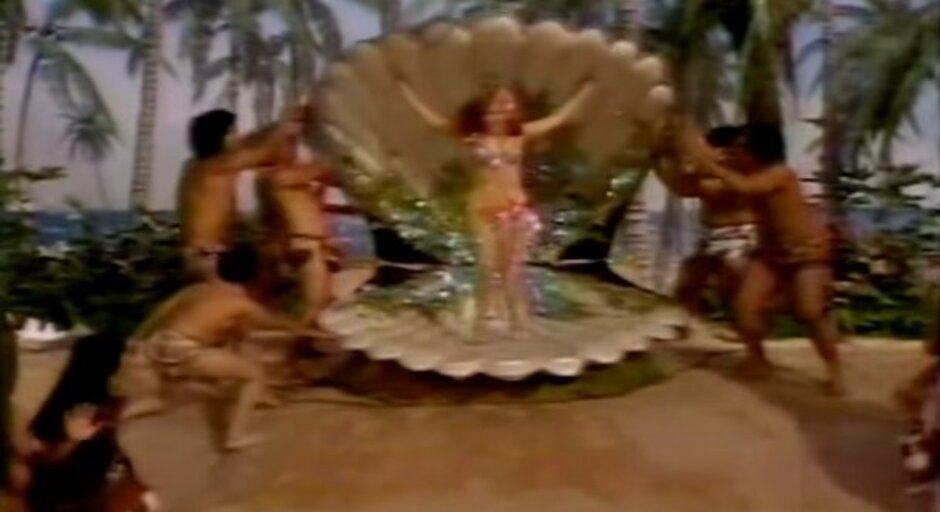
From 2023: Here’s my favorite Hawaiian-born girl singer in her 1977 TV special being pulled from the sea by astonished islanders—mostly Filipino, look at them closely—to lead a rousing chorus, with hula gestures, in THE GREATEST SHOW TUNE ever written. You got that, my Geordie love? Or is that too “exotic”for you?
“I Shall Return.” The Invasion of Lingayen Gulf (Paglusob sa Golpo ng Lingayen), was an amphibious operation in World War Two led by General Douglas MacArthur, 6-9 January 1945
After looking at a Google map, I figured that if the Gulf were big enough to accommodate battleships in wartime, it would’ve been big enough to harbor smaller vessels in peacetime, like tramp steamers. Tramp steamers were easy to sign on to then, and even as late as the 1970s you could hop on, do a lot of dirty heavy work, then hop off at the first stop and hop on the next steamer going further. The trick back then was knowing the comings and goings of such short-run vessels which, as this was in the old days before comprehensive shipping news, you pretty much had to do by going in person right to the docks to find out.
There were two directions my dad could’ve taken, east or west. West would’ve meant hopping from steamer to steamer, wending his way through the islands and peninsulas of Indochina. East meant making his way down the coast of Luzon facing the China Sea, into Manila Bay, where if he lucked out he could sign on to one of the much larger, international, Pacific-crossing tramp steamers, like the Queenmoor out of Newcastle, UK. I’m inclined to think that’s the route he chose. Because, thanks to the Thomasite teachers sent by our American conquerors, Dad had one invaluable asset: He could speak the English language.
In either case, it still might’ve taken him as long as 6-8 months to reach San Francisco, which my mother told me was his first place of residence. So it happened that my father, Cenon Merto “Sam” Ramos, started his American life in the most evocative city in America—the home of fog, hills, sourdough, hashish, Dashiell Hammett, Harry Bridges, Gracie Allen, Mission Dolores, earthquakes, Chinatown, Manilatown, the DiMaggio boys, and the San Francisco Symphony Orchestra (period recording of Alfred Hertz conducting the SFSO in Wagner’s Parsifal here).
The picture below is of the fourth anniversary banquet of the local Asinganian Club, November 1941, just two weeks before Pearl Harbor. That’s my dad, extreme right under the picture, when he still had hair.
Asinganian, I have to explain, means “of Pangasinan”, which is the province my father comes from—but it can be extended to also mean “of La Union”, meaning from the province above Pangasinan, called La Union, which is where my mother was born. Think of these provinces as the Lancashire and Yorkshire of the Philippines, John.
Note the date: 27 November 1941, two weeks before Pearl Harbor. Also note the flags: The Philippines was a US Commonwealth (which made us technically US nationals) and didn’t achieve independence until 4 July, 1946
There were about 100 Filipino-American clubs in the US around this time; this is the way Filipino immigrants socialized, and it was pretty successful. Even years later my mom could tell you the names and phone numbers of Filipinos in Calgary, Denver, Manila etc, just because they were Filipino and exchanged visiting cards with her at some party thrown at one of the many, many dances of the Moveable Filipino Club for manongs+manangs and their white/pinoy spouses/children in Minneapolis. It was quite a network while it lasted.
But don’t get the idea that my father and my mother met through some stateside Filipino club, because at the time she was still in the Philippines, getting occupied and bombed on. (See “The Pure Joy of St Trinian’s and The Inn of the Sixth Happiness by Malcolm Arnold“.) We never talked about that part of her life at home, but after my father died I eventually managed to get some extremely unsettling details from my various cousins.
But aside from that, as it turned out, after the war Mom and Dad had met through the penpal ads that were in the back of the regular issues of the Asinganian Club newsletter, which circulated not only in the States but the Philippines. After my dad’s first marriage in the mid-1940s to a white, probably Irish, woman named Margaret—I’m going to imagine her name was Margaret—failed to work out (see “25 May—Two Birthdays: My Dad’s and My Beloved English Conductor John Wilson’s”) my dad, like so many other young guys working far from home in a strange new place, was counseled to take “a wife from the old country”. But where to find one? The immigration quotas of the 1920s-1940s were not favorable to single, marriageable Filipino men: the percentage during that time was never more than 2 marriageable females for every 98 marriageable males. But if you were a citizen (by then, my dad was already a total US citizen and the Philippines was a separate sovereign nation), you could travel to the islands, choose a wife, and bring her back as your dependent. A lot of American soldiers did this after the war.
What I didn’t learn until the second wave of cousins passed through our house in the period after my father’s death, was that my mom wasn’t the only by-mail bride he was courting.
EXTRA! As a San Francisco treat, here’s Dennis Hagerty between showings at the Castro Theatre playing our city theme, “San Francisco, Open Your Golden Gate” from the 1936 MGM classic movie with Jeannette MacDonald and Clark Gable, San Francisco.
How Mr Stevens and my father initially met I’m not quite sure, although I think at this time my dad had gotten into domestic service, maybe even through his white wife (and possibly career housekeeper) Margaret… Because from the first Mr Stevens, liking the cut of his jib so to speak, employed my dad as an all-around house servant—major domo, valet, cook, chauffeur. In those days it was a prestige thing for a successful American (i.e. white) businessman to have an Oriental houseboy, like Sammee Tong in Bachelor Father. This is real Scott Fitzgerald country.
Then when the old man died his son and heir, Winfield Stevens Jr, took over the railroad business and added to that his own Buick dealership. Mr Stevens Jr, being more of a family man, didn’t need a valet, so he got a job for dad with the MN&S in the yard so Dad could join the railroad union and start racking up benefits. He also paid Dad off the books to cook for his family on Sundays (which is when I would see my father dress for work in his crisp, clean white short-sleeved shirt and black bow tie); and during the hunting season he would cook for Mr Stevens and his railroad cronies wherever they were shooting. These two, three times a year Dad would come home with a side of venison or a brace of pheasants which, I don’t know how he did it, he managed to cook pretty tastily. Probably it was the soy sauce, garlic and vinegar.
I went on one of these trips with my dad a couple times in ’63 when I was eight. It was fun, sleeping in the top bunk of a compartment all alone (dad slept with the men on the other side) in a railroad-car-turned-hunting-cabin, being so deep in the woods. And you can’t beat the Minnesota woodland, old and mysterious and full of Chippewa lore.
So it’s 1951. There’s my dad in a clean prosperous city, Minneapolis, with a good job and good prospects, without a wife, not getting any younger, and going through a sort of anxious “last chance to have a family” phase.
His only hope for matrimony lay in the three—count ’em—three penpal relationships he started after he and Margaret the Irish-American housekeeper called it quits in St Louis and he followed his new boss, starting out in Mpls in a one-bedroom in a big old building near 38th & Chicago where the George Floyd memorial is now, and where my mother, then I four years later, were brought home to.
The Jai Alai Building in Manila—home of young marrieds, Filipino swells, and the WWII Japanese secret police.
Now, as I recall it, there were a couple of cousins on my dad’s side from Manila, spinster sisters, who came around to the house after dad died to: one, pay their respects; and two, make sure they were still getting their remittances. (Dad supported a lot of cousins in his lifetime.) Relieved at mother’s assurances that the checks would keep on coming, the two sisters—let’s call them Patti and Laverne—sat me down privately one evening during…I guess it was Dad’s wake, more or less…to tell me the saga of the Three Penpals and My Father’s Quest for Ms Right.
My dad had her letters and her picture—like I said, she was as pretty as a movie star. And as Patti and Laverne reported back to my father, she was educated and from a good family in the professional class (her father, my lolo, my grandfather, José de la Peña a municipal judge; her mother, my lola, my grandmother, Cristina Abérin a schoolteacher). Domestic talents—nil, but look at that punim! They couldn’t have done a better job if they’d been selling Edward Rochester on Bertha Mason.
But more on that later. Let’s just say it worked like the plot of a Mamoulian musical, a fairy tale where all the women are either witches or princesses and there’s always that Magick Choice of Three…
So, according to Patti and Laverne’s scorecard, candidates one and two struck out but candidate three, my mother, was the bride for my dad. He wrote and proposed to her, she answered yes, except he’d have to meet her family first. Cut to scene of my dad landing in Manila where he hasn’t set foot in 24 years. Dad spends the rest of the dry season making the rounds of the de la Peñas, being inspected and generally approved of; my dad was always a simple, up-front guy and people got to like him very easily.
O, let us be married, too long we have tarried! But what shall we do for a church? was the question, as my father, a divorcé (remember Margaret?) didn’t qualify for a church wedding. Before too long someone in the family suggested the Jai Alai Building in Manila, the Art Deco showcase where the local smart set had their do’s and where the Japanese in World War Two had their secret police headquarters.
But the inside is nice and my parents’ wedding even made the society page. They described my dad as an “American businessman”.
EXTRA! For those of you who’ve read this to the end, here’s the danceable jukebox version of “Dahil Sa Iyo” I grew up listening to.
From August, 2020: Like his coeval Pete Townshend, Paul McCartney never learned to read/write music, but like Townshend, that certainly didn’t stop him. Composer-arranger David Bennett talks about this in his latest YT podcast, “How Much Music Theory Did The Beatles Know?”
“‘The Beatles didn’t read or write sheet music, so surely they didn’t understand music theory…?’ Well, no. Reading sheet music is only part of what it means to understand music theory,” says Bennett. Which gets me fascinated enough to want to ask my beloved John Wilson how he and McCartney were able to musically communicate when they did Ocean’s Kingdom together…
And just so you don’t think I’m always down on bonny John, who was himself brilliantly educated at the Royal College of Music, here’s his orchestration, written in 2002 when he was 30, of Howard Goodall’s score for the TV movie The Gathering Storm, a bit Elgarish. And here’s the orchestration he wrote when he was 28, of Richard Rodney Bennett’s music for the TV mini-series fantasy Gormenghast, which won the Ivor Novello Award for Best Film Score in 2000.
Simply note that there’s nothing subtle about Rachel’s devotion to one particular maestro of the pen. And you think I’m the only crazy one out there.
The comedy short Fuck Me, Ray Bradbury was nominated in 2011 for a Hugo Award—you know, from the prestigious World Science Fiction Society, so this isn’t just any old piece of porn. So laugh your ass off, or shut up.
Looking ahead to May 25, 2024—John, I have three stories in my repertoire I’ve been saving all these years for that one special person. Not Mister Grumble, not Mamoulian, certainly not Steve Gyllenhaal. You. You read the first one, the story of how I met agent-turned-producer Michael Linnit and had my first orgasm at the St Regis. This is the second. (The third is the story of how I got my job as Night Solfeggist at ASCAP. I’ll tell that one this summer.)
My mother at 19 looked just like this movie star when the Japs occupied Manila. You figure out that part of her story.
I’m writing it now when I have a few minutes here and there. Check back between when you finish up with the Royal Scottish National Orchestra and before Glyndebourne. I’ll start it on your birthday. I’m still in love with you and want to give you nice things. Mahal kita, mahal ko.
Of course there’s no “h” in the actual title but I’m putting it in anyway to alert singers to the long vowel because the money-grubbing whore who wrote the lyrics to this Broadway musical standard didn’t give two shits for singers.
Above: After some silliness, the boys deliver a splendid rendition of the Frederick Loewe standard, “They Call the Wind Mariah” from Paint Your Wagon (Broadway, 1951)
I, however, have a lot of affection and admiration for Berlin-born-and-trained composer Frederick Loewe, who wrote the most tuneful, singable melodies on Broadway, up there with Richard Rodgers and Jerome Kern. Loewe was right not to want to have anything to do with the big-screen disaster, Paint Your Wagon, which plowed on without him (Paramount, 1969), messing up Josh Logan, Paddy Chayefsky(!), Jean Seberg, Lee Marvin, Clint Eastwood, et al, in its trail…
The only way to read the 1969 film (and I don’t recommend watching it for pleasure ever ever ever, not even for yummy Clint) is to look at it like a late-60s hippie festival, complete with trees, mud, and crazy sex. (You know, like Woodstock…) The absolutely unreal pluralism of the background characters—Jews, Italians, whites (but no blacks), Chinese dressed in brocade with their wives(!?) all living in this dirty mining camp (a dirty mining camp where men politely doff their hats to white women) peacefully together—is another hippie fantasy, with a dollop of Chayefsky the liberal (of Marty and Network fame) added.
The one good thing in this pile of offal is the song, “They Call the Wind Mariah”, sung incongruously by Harve Presnell; but beautifully and hauntingly here by, of all people, the Smothers Brothers, the shining jokester-balladeer heroes of my youth. (Adding to their luster: as wartime US Army brats, they spent part of their childhood in the Philippines.)
Here’s hoping you haven’t watched/heard Paint Your Wagon. If you have, and the Andre Previn interpolations made you (like me) sick*, here are two lovely selections from the pen of Frederick Loewe, rendered by my bonny John Wilson and his various orchestras:
John, it gives me such a kick telling you about my dad, I think I’ll write about him more.
Above: The Gillette Friday Night at the Fights TV Theme by Merrick+Anderson “Look Sharp Be Sharp” conducted by Eugene Ormandy. My dad’s favorite boxers: Sonny Liston (US), World Heavyweight Champion (and yeah, I greatly regard Mohammed Ali as a person but that 1965 bout in Maine was fixed—I mean, watch the film! Liston could’ve gotten up when he wanted but he purposely stayed down for the count and you can see it) —Pancho Villa (PH), World Flyweight Champion—Barney Ross (US), Lightweight, Light Welterweight, and Welterweight World Champion and loyal friend-to-the-end to Jack Ruby
He didn’t talk himself much, like a lot of other fathers I guess. He was born dirt-poor on the 25th of May, 1905 on the west coast of the big island, Luzon, on the South China Sea, in a province called Pangasinan, fabled kingdom of fabled Urduja, Warrior Queen, just like your King Arthur and yes she really lived and so did King Arthur, so there. Dad left school when he was 10, that would’ve been 1915, and went to work to support his grass widow (probably) mother. I get my Chinese heritage from dad’s distant family in Guangdong. (Catalonian and Irish from my mom.)
If you could, my bonny John Wilson, imagine me wearing a maria clara (like great-grandmother Aberin below) and you wearing a barong, I’d be singing you this song:
Sa buhay ko’y labis
Ang hirap at pasakit, ng pusong umiibig
Mandi’y wala ng langit
At ng lumigaya, hinango mo sa dusa
Tanging ikaw sinta, ang aking pag-asa.

Dahil sa iyo, nais kong mabuhay
Dahil sa iyo, hanggang mamatay
Dapat mong tantuin, wala ng ibang giliw
Puso ko’y tanungin, ikaw at ikaw rin

Dahil sa iyo, ako’y lumigaya
Pagmamahal, ay alayan ka
Kung tunay man ako, ay alipinin mo
Ang lahat sa buhay ko, dahil sa iyo
“Dahil Sa Iyo” Mike Velarde Jr music (1938), Tom Spinoza, lyrics Cora and Santos Beloy, vocalists Tri-World Records (1964)
My mother’s lola, my great-grandmother, the spitting image of my mother the way Georgiana Drew is the spitting image of Drew Barrymore and I’m the spitting image of my dad. I have no documentation for my assertion—my gran’s house and possessions were completely destroyed during the Japanese Occupation. But whenever we came across this picture in the media—in an article in Time, for example—my mom would always point her out and tell me the story of how my great-grandfather came over from Ireland and, upon discovering he was meeting fellow Catholics in a sea of Asians, stayed, changed his name from O’Brien to Abérin, and married the local beauty. How Van Camp found her is anybody’s guess.
Mahler’s “Resurrection” was voted the fifth-greatest symphony of all time in a survey of conductors carried out by BBC Music Magazine. (I wonder if my beloved conductor John Wilson voted.)
Above Cebuana New York-based soprano Evelyn Mandac (b 1945), who remains one of my role models (listen to her float over the fifth movement), the only Filipino singer ever to play the Met: Mahler’s entire glorious second symphony.
Although now lauded as monuments of vision and creativity, in their time Mahler’s symphonies were occasionally reviled but more often dismissed as a conductor’s egotistical indulgence. A critic of the time called his work “one hour or more of the most painful musical torture” (and that assault was directed toward his lovely pastoral Symphony no. 4!). As late as 1952, a detractor still moaned that “an hour of masochistic aural flagellation, with all of its elephantine forms, fatuous mysticism and screaming hysteria … adds up to a sublimely ridiculous minus-zero.”
The problem wasn’t so much a matter of grasping Mahler’s musical style. As the culmination of the long line of Viennese symphonists, his ideas were firmly rooted in the conservative structures of Haydn, Mozart, Beethoven, Schubert and Bruckner. Rather, the challenge lay in its emotional premises. As critic Herbert Reid later posited, “Mahler sensed the imminent upheavals that were to shatter the rationality and optimism that had driven Western civilization up to World War I. His symphonies are spiritual quests that reflect a wholly modern ambivalence of joy and pain, faith and doubt, transcendence and perdition. Mahler was way ahead of his time. Only by the 1960s did his private anxieties at last become our own.”
The Resurrection was Mahler’s favorite symphony, which he led on many auspicious occasions, and it had the longest gestation of any of his works. The opening was completed in 1888 as “Totenfeier” (“Funeral Rites”), a stormy symphonic poem to bear the hero of Mahler’s recently-completed First Symphony to his grave, amid torment over the meaning of his life. The middle movements awaited Mahler’s summer vacation of 1893 and reflected his fascination with the same medieval folk poetry which provided the texts for most of his songs.
The first movement is hugely dramatic; according to Mahler’s own program notes it aims to convey nothing less than a search for the meaning of life. The second, representing long-forgotten pleasure, is a gentle, old-fashioned dance of lilting grace, yet challenged by creeping shadows. The third is a grotesque and wickedly sarcastic waltz, shot through with anguished outcries. The fourth is a child’s song, naïve and wistfully introspective.
And then comes the vast finale, which depicts the full terror and glory of a pagan last judgment and resurrection. It begins with a huge crash and progresses through episodes of hushed expectancy, quivering tension, funeral dirges, hopeful fanfares and fevered misgiving, culminating in a triumphant apocalyptic chorale, one of the most glorious and powerful climaxes in all of music. Mahler adds to the awesome wonder with extraordinary instrumental effects, including offstage brass, a massive battery of percussion and ultimately the sheer visceral excitement of the potent sound produced by hundreds of singers and players. ~ Peter Gutmann, Classical Notes
God, Danny Sibolboro was such a weenie. Taken December 1963 at one of the many, many dances of the Moveable Filipino Club, Minneapolis, Minnesota. Geraldo was playing. Filipinos love Geraldo.





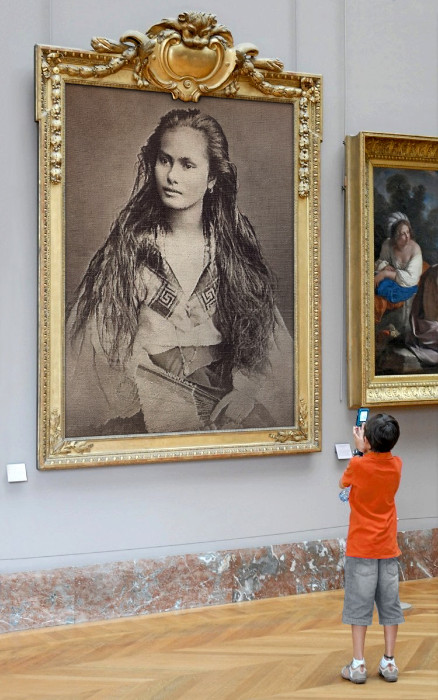 My mother’s lola, my great-grandmother,
 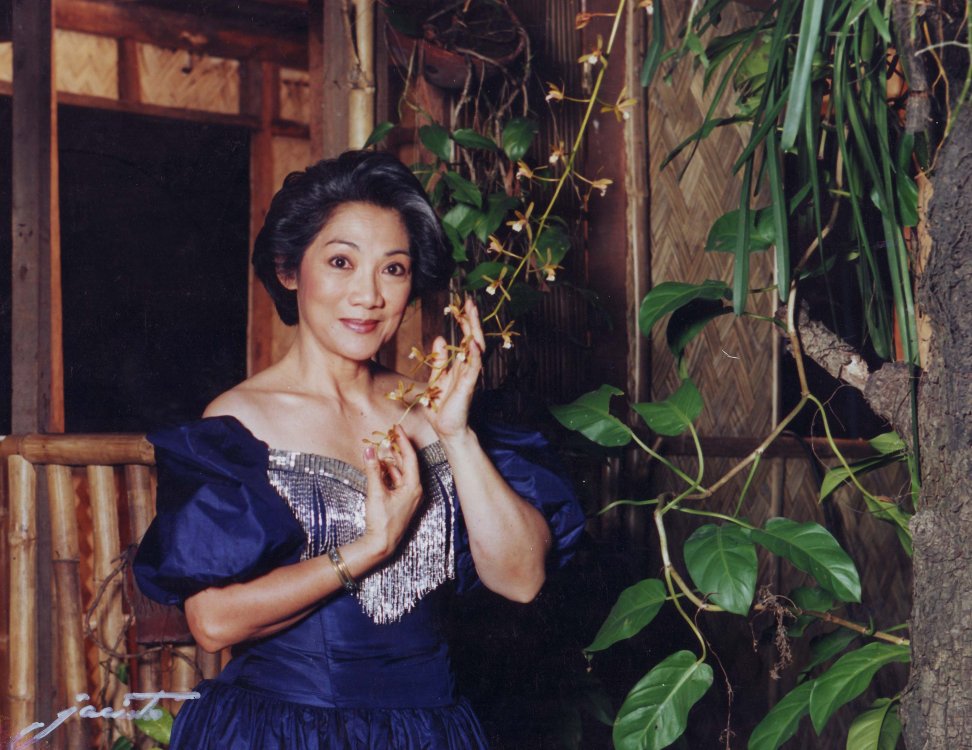 Above Cebuana New York-based soprano Evelyn Mandac (b 1945), who remains one of my role models (listen to her float over the fifth movement), the only Filipino singer ever to play the Met: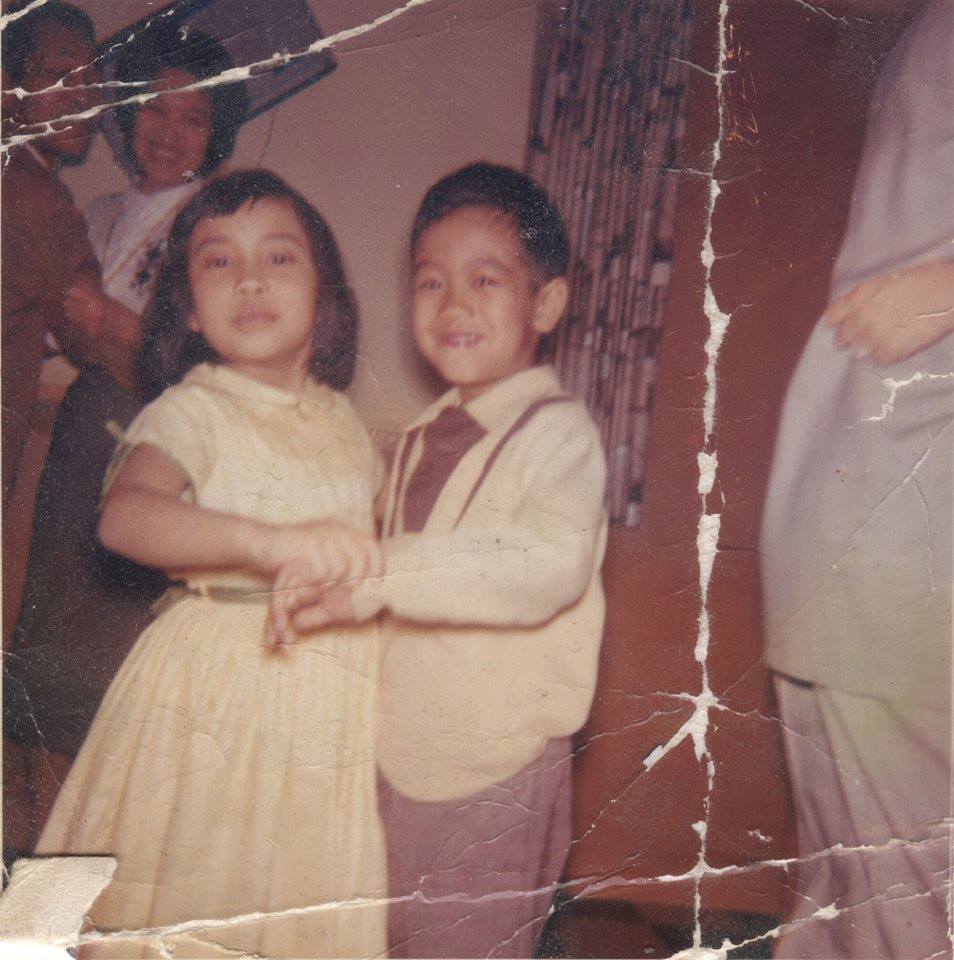
 "I'll Be Dead Before You Break My Heart"