Recorded at the Duke’s Hall, Royal Academy of Music, 2 July 2021. Found the donation window, incidentally. Back in January, 2020 after we heard John conducting them in Tchaikowsky I said to Mister Grumble, ‘That was as good as any small-city orchestra in the US. I’d’ve paid cash money for this,’ and darned if the RAM didn’t just make my life a little easier. Here it is.
To continue from my earlier posting, “My Beloved John Wilson Appointed to the Henry Wood Chair of Conducting at the Royal Academy of Music and Conducts the RAMSO in Arnold Schoenberg’s ‘Verklärte Nacht’ (1899) at Snape Maltings, 6 June 2021”: We talked over beers, Mister Grumble and I, about John’s energy, among other things, a couple of weeks ago. After we toasted Bloomsday, he gave me his take on John and John’s music. Mister G isn’t as enamored of John Wilson’s enormous and varied repertoire—from Broadway tunes to Rachmaninoff to Turnage—as I am, but he has many good things to say about my beloved conductor’s basic character. I described to him (my angel baby is blind) how differently John looks and acts when he’s with the RAM, or the Sinfonia of London or the Royal Northern Sinfonia. Less tense, more in control, more in his element—happier. Plus he doesn’t sweat as much as on the stage of the Royal Albert. ‘Then this is where he belongs,’ said Mister Grumble.
O sieh, wie klar das Weltall schimmert! / Es ist ein Glanz um alles her / Du treibst mit mir auf kaltem Meer / doch eine eigne Wärme flimmert von Dir in mich von mir in Dich… ~Richard Dehmel
Above my beloved: Leopold Stokowski conducts the 1943, final and most popular composer’s edit of the string orchestra version of this exquisite one-movement sextet based on Richard Dehmel’s poem. (The 1924 version was conducted by Edward Clark of the BBC in Newcastle that year.) Find the Hollywood String Quartet’s version here.
It was not a revelation, I knew John was going to be wonderful and the orchestra was going to be wonderful. I’d heard the “Mars” part of Holst’s The Planets that he conducted in Leeds with the National Youth Orchestra of Great Britain (see John above wearing the bright blue NYOGB hoodie) and was impressed with its energy. RAM trumpet Rebecca Toal (heard in Brett Dean’s “Komarov’s Fall”) had this to say about my dear one:
“John is particularly generous with his energy and he’s so committed. I think I’ve done one project with him before, and both times he’s just thrown himself into the projects. It’s so nice to have people come in from the outside and completely splash their energy everywhere and leave you feeling on a high and motivated, even after they’ve left.”
Before we get to what I think will be a nice and fair assessment of John Wilson’s 2020 recording, a word to some people.
I have always been aware of the tacit agreement that exists between my screen persona Simona Wingand her fans, but let me now take this opportunity to state my position clearly: You all have my blessing to do whatever you want with me in your fantasies.
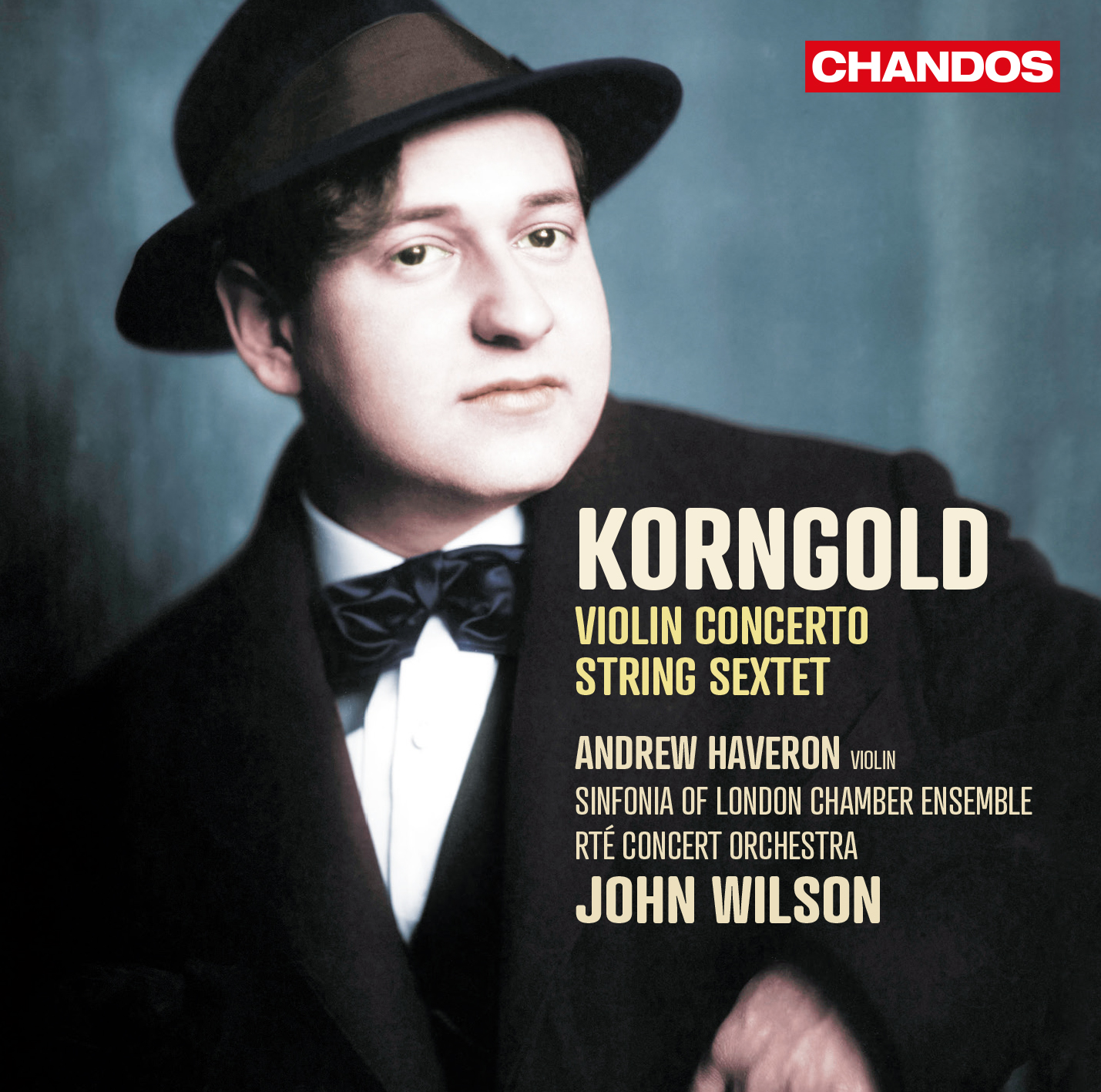
I didn’t realize this was still a thing in the music world, but apparently opinions continue to be strongly divided as to whether Erich Wolfgang Korngold—a true heir, by the way, to The Great Mittel European Romantic Tradition—deserves inclusion in the canon some snooty farts call the Classic Repertoire. When you mention the name Korngold, even the most knowledgeable music lover’s first thought is of upmarket movie soundtracks (Anthony Adverse—The Adventures of Robin Hood—The Sea Hawk—Captain Blood) and likely never gets around to the fact that Korngold wrote, among other things, the most luscious symbolist opera of the 20th century, Die Tote Stadt, in 1920, and a hell of a gorgeous violin concerto 25 years later:
So it seems like every generation there has to be one nut who comes along and says, Let’s run Korngold past the hoi-polloi again and see if he’ll fly—and if you think I’m talking about you, John Wilson, you’ve got a swelled head. Because the nut I’m talking about is the nut in the CIA. The anonymous nut who got The Company to fund an enterprise back in the early 70s called “The Golden Age of Hollywood Music” and hence to elevate Korngold to the status of Hollywood Royalty—but through his film scores and his film scores only.
But that story later.
We’re here right now not just to size up a new Korngold recording, but to honor the decades-long musical relationship of Andrew Haveron, violinist, former Leader of The John Wilson Orchestra, current Leader of the Sydney Symphony Orchestra, and conductor John Wilson, whose career in orchestra building started at the age of 22 and hasn’t stopped since.
Korngold’s Violin Concerto in D, their latest Chandos release, was going to get my attention with or without the Winsome Lad of Low Fell anyway, as I’m a sucker for this particular style and era of music. But I was glad to learn about their actual friendship as well; for me it explains why the perfect communication that’s so evident here between Haveron and my John (and through him, to the estimable RTE Orchestra) has some of the magic of Barenboim+du Pré, back in the brief days when those two were cooking hot with Elgar.
This is soloist Haveron’s star turn: a warm, fresh, intimate—revelatory even—rendition of a piece that, let’s face it, is kind of like the “Nessun Dorma” of violin concertos. But this is John’s success too. So much of my bonny’s gift for conducting Korngold, as we know, has to do with his insistence on a technique his PR people call “shimmer” but is actually wrist vibrato on strings, a technique in fingering I learned about and taught myself when I was 14 because I liked the sound it made, although when the orchestra teacher put it down for sounding cheap and sloppy I quit it.
But I know the sound of shimmer and you do too. The John Wilson Orchestra practically patented it. John himself still calls for it whenever he conducts Tchaikovsky. It’s in all the high-toned movies of the 1930s. It’s also in Rouben Mamoulian’s classic film musical Love Me Tonight (complete film here) courtesy of Paramount’s musical director Nat Finston, who understood what he was talking about when, in a certain musical scene, he said he wanted “crying violins”. I could tell what he was talking about when Mamoulian told me this story 46 years later.
Front Row: What’s so enthralling to you about the music of Erich Korngold?
John: It’s very much his own style… You hear two seconds of music and immediately you know it’s by Korngold because by the way he was 13 or 14 he had a fully developed late-Romantic Austro-German style and, you know, had it not been for the Nazis and the Second World War he would have continued to develop his operatic skills, his symphonic skills, and he would now be as established as Richard Strauss…
Front Row: What made you choose the particular pieces [for the Chandos recording] that you did?
John: I think the Symphony, Korngold’s Symphony in F-sharp, is the last great Austro-German romantic symphony and…it was written 1947 to 52, it took 5 years, and…I think it was the piece that Korngold spent, lavished the most time on. I think it was the piece that he felt was he felt he really had to write because it was a labor of love… And you know, he couldn’t get a satisfactory performance out of it during his lifetime because he was considered old hat…and in 1972 I think it was, it was discovered in the Munich orchestra’s library and the first recording performance given… And I just felt that the time had come for a revised sort of conception of this symphony of Korngold’s.
Originally drawn from music composed as incidental accompaniment to a play, Copland’s “Quiet City” has gained much more popularity as a concert work for orchestra.
John recorded this and other Copland standards for Chandos a couple of years ago but this rendition, performed by the next generation at RCM, is closer to my heart.
As I once pledged, I will go almost anywhere my beloved conductor John Wilson leads me; and so it was a remark of his that led me to this movie, which in the mid-90s was an estimable hit in the UK, though not so much here in the States. When asked by The Telegraph about his early musical influences, said John, “Brass bands. Coming from a working-class background, the tradition of amateur music-making was important to me…”
There’ve been a couple of other, better known (in the US) British films, The Full Monty and Billy Elliot (here’s Billy’s angry dance), which also address the economic/unemployment crisis in Britain that, back in the 80s, did its part to whittle away at arts education throughout the country, particularly in the north. Like I said, my beloved conductor‘s remarks in recent interviews about his early influences started me thinking not only about his musical but general education growing up in Gateshead in the 80s. I’ll take this on in an upcoming post. The contrasts / similarities between his musical influences and school training—as a northern Brit through most of the 80s—and mine—as a midwestern American in Minneapolis through the mid 60s-early 70s—I find worth examining, and not just because I’m hopelessly in love with the bloke.
For now, this is what I take away from anecdotal evidence like Brassed Off and John’s childhood memories: The British, in general, seem to be more used to the sound of brass ensembles than Americans. Now, we like to think we know all about brass ensemble music because, being Americans, military marches and Sousa seem to stalk us everywhere we go in this great land of ours. But really, it’s not the same kind of music. I’ll discuss this in my review.
But let me just say this here: I will try to cut John a little more slack when it comes to his choices in orchestration for The Great American Songbook. I mean, if that’s really the way he hears it in his head…
Serge Koussevitsky, Leonard Bernstein’s mentor, was on the podium conducting the first symphony by the “new young Soviet composer” Dmitri Shostakovich in the CBS radio Sunday afternoon broadcast of the New York Philharmonic when, in the middle of the first movement, none other than famed NY correspondent John Charles Daly broke in with the news of Pearl Harbor. The Japs bombed the naval base at Pearl twice that morning, first at 8am Hawaii time, then again at 9:30am…then went on that same day to bomb the fuck out of Singapore, Hong Kong, Burma, Guam…
Here’s a sweet little doddle while I work on a few involved postings (not all of them to do with my bonny John Wilson). Cabin Pressure is one of the funniest, most cleverly-written work sitcoms on BBC Radio and it doesn’t hurt that two stage/screen veterans with the most gorgeous voices and perfect comedic delivery are top of the compact cast list. I’m sharing this episode because it starts off with a demanding conductor and a paranoid bassoonist on board the tiny chartered airplane—and as always, of course, Glinka’s overture to the opera Ruslan and Ludmila.
Stephanie Cole, creator John Finnemore, Roger Allam, and Benedict Cumberbatch perform Cabin Pressure for a live BBC studio audience.
Counted among one of the greatest cellists in the Golden Age of String Players, George Neikrug has died, the day after turning 100.
Born in New York, at age 24, Neikrug met D.C. Dounis, a Greek pedagogue, whose revolutionary approach had a profound influence on the young cellist. “Trying to tell you about Dounis’s teaching is like asking me to tell you about a whole science like biology,” Neikrug said. “Dounis put very much emphasis on the most basic things I did like how I played a down bow and an up bow. He would show me how to play a down bow and an up bow and then I would play through a whole piece and he would sit there and practise with me. If he caught me doing one thing wrong I’d have to do it over again so I learned this tremendous amount of concentration…”
It was thanks to his studies with Dounis that Neikrug resolved to devote his life to teaching at schools including Detmold, Oberlin, the University of Texas-Austin and Boston University, whose arts faculty he joined in 1971.
In 1960, Neikrug performed “Schelomo: Rhapsodie Hébraïque“, the final work in Swiss composer Ernest Bloch’s 1916 Jewish Cycle. with the NBC Symphony at Carnegie Hall and Leopold Stokowski, who described the cellist’s performance as “unforgettable”.
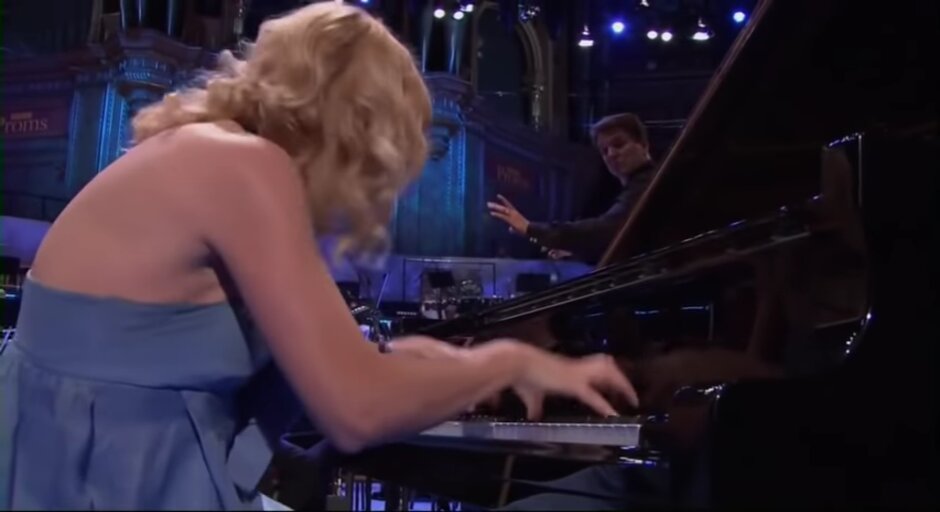
I love watching how Lockhart, official Guest Conductor of the BBC Concert Orchestra, scrupulously keeps in sync with not just his orchestra but with his soloist. It’s also a delight to watch at the beginning of the clip Lisitsa curtsying almost shyly to leader Cynthia Fleming.
Valentina Lisitsa, who started out as a YouTube sensation 12 years ago and is now counted as one of the foremost keyboard interpreters of the Eastern European Romantics, gives an intensely satisfying performance here of Addinsell’s “Warsaw Concerto“. The concerto was written for the movies—for, specifically, the 1941 movie Dangerous Moonlight, in which Polish concert pianist Anton Walbrook becomes a fighter pilot for the RAF, falls in love, gets amnesia, and composes some music. The movie, although a success from a propaganda viewpoint, was considered a potboiler by critics, and even the astute Anthony Burgess, who was an army sergeant and nascent composer himself at the time, looked down on the “Warsaw Concerto” as a cheap imitation of Rachmaninoff. Intellectual snobs have derided the piece, but it’s lingered in the memory for lo these many years, and is only now taking its permanent place in the Classic Repertoire.
For that we have to thank composer/film music restorer Philip Lane. It was to Lane that the musical estate of Richard Addinsell was entrusted and, like composer/orchestrator William David Brohn for Prokoviev’s Alexander Nevsky (Abbado with the LSO + full score here on YT) and my beloved John Wilson, Lane took on the task of reconstructing by ear written scores for film music whose manuscripts had been destroyed through carelessness or war. (Some suggest that the “Warsaw Concerto” was entirely the work of Addinsell’s orchestrator, Roy Douglas, who died in 2015 at the age of 107.) Addinsell’s—or Douglas’s—”Warsaw Concerto” was one of them. As Lane writes:
“The process of reconstruction does not get easier, but some films are more difficult than others. The biggest enemy is the combination of dialogue and sound effects over the music, and occasionally there are seconds of complete inaudibility when guesswork has to replace authenticity. The greater the composer, the more difficult the work, on the whole, since the melodic and harmonic language tends to be more adventurous. In the case of recent scores there are usually soundtrack CDs devoid of extraneous sounds to work from, but despite the change in status of film music, present day composers still mislay their scores. I have reconstructed music by Jerry Goldsmith, Randy Edelman and James Horner in the last year alone. If the composers are still alive I obviously encourage them to do the reconstruction themselves. So far, they have declined for various reasons.”
“The process of reconstruction does not get easier, but some films are more difficult than others. The biggest enemy is the combination of dialogue and sound effects over the music, and occasionally there are seconds of complete inaudibility when guesswork has to replace authenticity. The greater the composer, the more difficult the work, on the whole, since the melodic and harmonic language tends to be more adventurous. In the case of recent scores there are usually soundtrack CDs devoid of extraneous sounds to work from, but despite the change in status of film music, present day composers still mislay their scores. I have reconstructed music by Jerry Goldsmith, Randy Edelman and James Horner in the last year alone. If the composers are still alive I obviously encourage them to do the reconstruction themselves. So far, they have declined for various reasons.”
This is what the greatest film composer of the 20th century looks like conducting the London Symphony Orchestra in the Royal Albert Hall (2:24). From Alfred Hitchcock’s The Man Who Knew Too Much (Paramount, 1956). This is a chorale entitled “The Storm Clouds Cantata” arranged by Herrmann and composed by Australian Arthur Benjamin specifically for the movie.
John’s striving for “The Hollywood Sound” may be a new thing for his popular audience in England, but over here it’s been part of our musical history since before the Second World War. In 1939 violinist Felix Slatkin and his wife, cellist Eleanor Aller Slatkin, founded the Hollywood String Quartet. Their uniquely American style of playing strings quickly won the HSQ recognition and praise from critics around the world when they essayed works from the Classic Repertoire.
Said the Gramophone Classical Music Guide of their 1951 recording of Arnold Schoenberg‘s piece: “This was the first ever recording of ‘Verklärte Nacht‘ in its original sextet form and it remains unsurpassed.”
In the liner notes of one of their other recordings, Paul Shure remembered: “Dynamics were a very big part of our work. Our discussions were always about dynamics and a little bit about tempi, and nothing else. We played with vibrato except where there was a particular effect to be had—no dead left hands were allowed.” This sounds so similar to what JWO concertmaster John Mills said in the web series Sarah’s Music: “John asks us, the strings, to play with so much vibrato that people’s family photos should fall off the TV sets. We’re effectively trying to recreate the sound of the studio orchestra.”
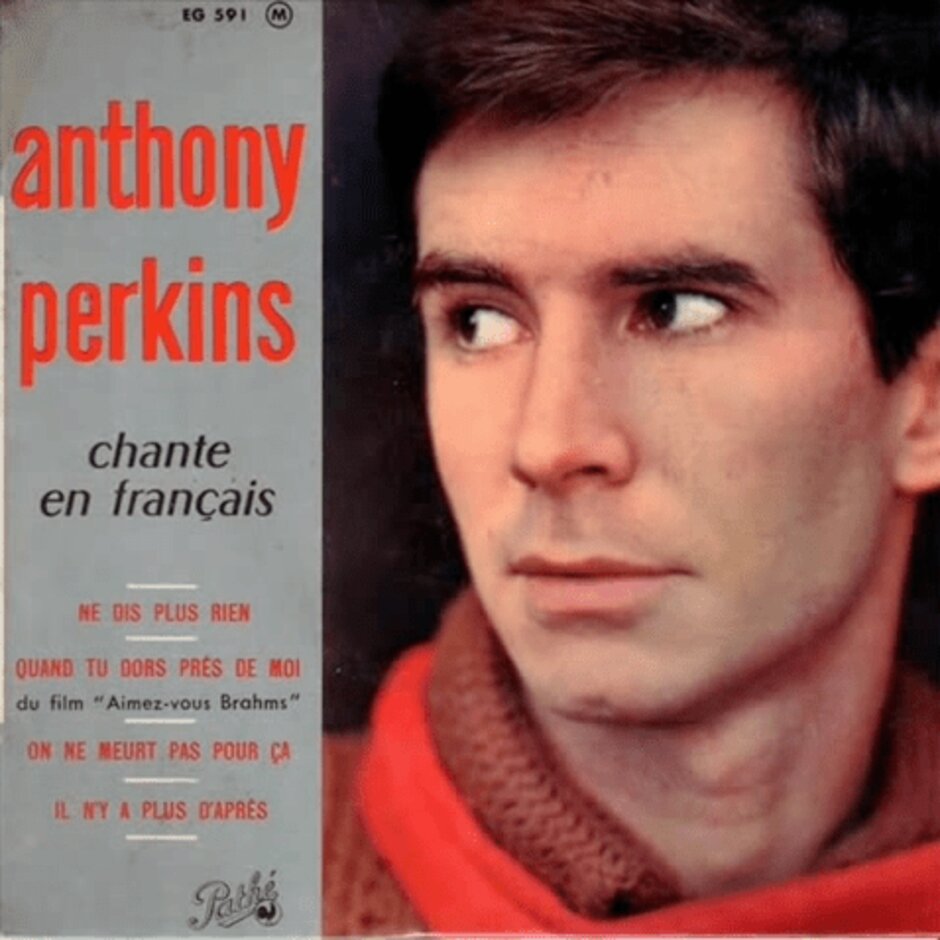
Straight, gay, sexually messed up by his mother, I still had a major crush on Anthony Perkins when I was a girl; no time more than when he was cast as the fumbling young lover of soignee Parisienne Ingrid Bergman in Goodbye Again (United Artists, 1961) the film version of Francoise Sagan’s novel Aimez-vous Brahms? (Though that he turned her down in real life just kills me.)
“Quand Tu Dors” is, of course, taken from the 3rd movement of Johannes Brahms’s Third Symphony, and you’ll recognize it when you hear it. That’s Herbert Von Karajan and the Berlin Philharmonic.



 Above: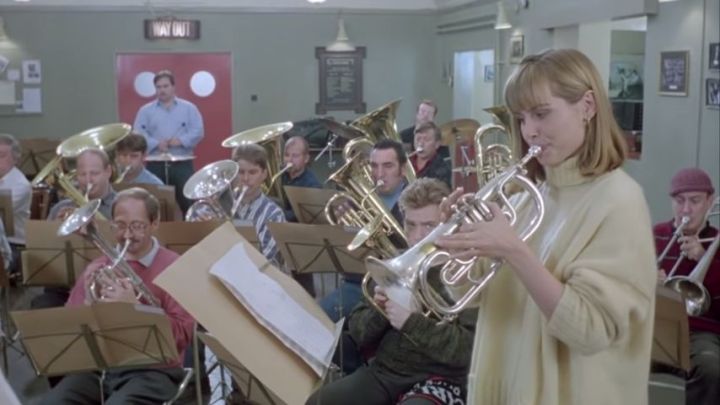

 Stephanie Cole, creator John Finnemore, Roger Allam, and Benedict Cumberbatch perform Cabin Pressure for a live BBC studio audience.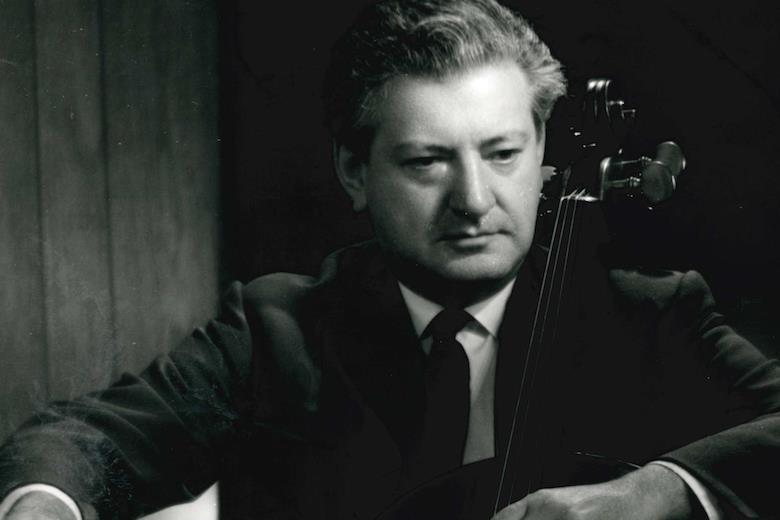


 "I'll Be Dead Before You Break My Heart"