Of course it’s not Bella Seaton (Jean Heywood) in When the Boat Comes In speaking that line, it’s her daughter, schoolteacher Jessie, pleading the case of an artistic young pupil doomed to work down the coal pit in Gallowshields, a post-WWI fictional town—a composite of all the little towns along the River Tyne in the north near Newcastle (you know, that place in the phrase “Selling coals to Newcastle is like selling ice to Eskimos”) including the town where my beloved conductor John Wilsonwas born and bred, Gateshead*. Bella is the strong-willed matriarch, as we Yanks would say, of the Seaton family, so she gets a lot of scenes, which is great because I pick up the the Geordie accent from Northumberland-born Heywood more easily than from anyone else in the show.
As I might have mentioned a few postings ago I did three of my flicks speaking in a foreign accent: one in French, one in Cuban, and one in Malaysian, which I actually did in Filipino but no one could tell the difference. I like to practice the Geordie accent during off moments, you know, because it reminds me of John, and so it gives me pleasure.
Here’s a sweet little doddle while I work on a few involved postings (not all of them to do with my bonny John Wilson). Cabin Pressure is one of the funniest, most cleverly-written work sitcoms on BBC Radio and it doesn’t hurt that two stage/screen veterans with the most gorgeous voices and perfect comedic delivery are top of the compact cast list. I’m sharing this episode because it starts off with a demanding conductor and a paranoid bassoonist on board the tiny chartered airplane—and as always, of course, Glinka’s overture to the opera Ruslan and Ludmila.
Stephanie Cole, creator John Finnemore, Roger Allam, and Benedict Cumberbatch perform Cabin Pressure for a live BBC studio audience.
Australian-born, Royal College of Music graduate Pheloung, who died last week at the age of 65, got some respectful notices for having been the composer of the popular Inspector Morse theme and the music to the film Truly, Madly, Deeply (BBC Films, 1990).
Alan Rickman and Juliet Stevenson recreate the moment when you sense he’s near…
I’m guessing the author of Waving, Not Drowning (which I reviewed on Amazon and below) borrowed the name for his fictional conductor, Barrington Orwell, from Pheloung. It’s a small world over there.
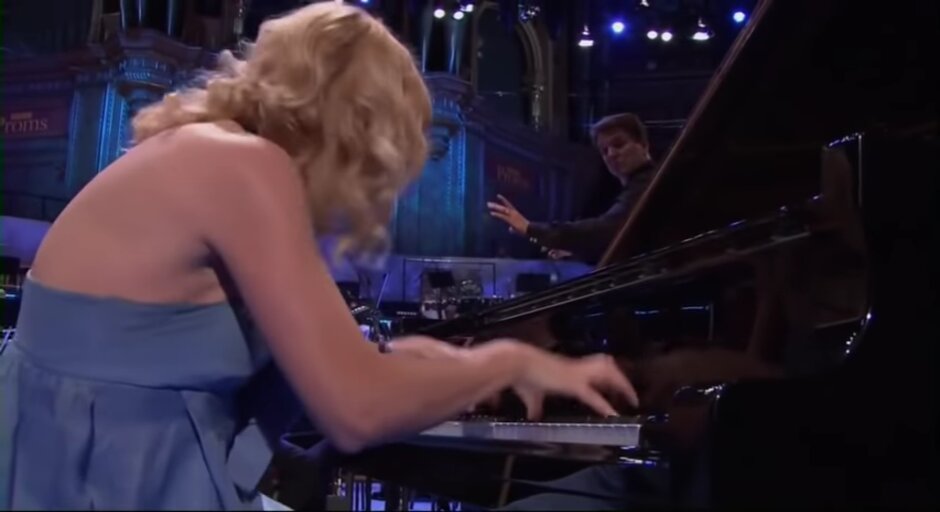
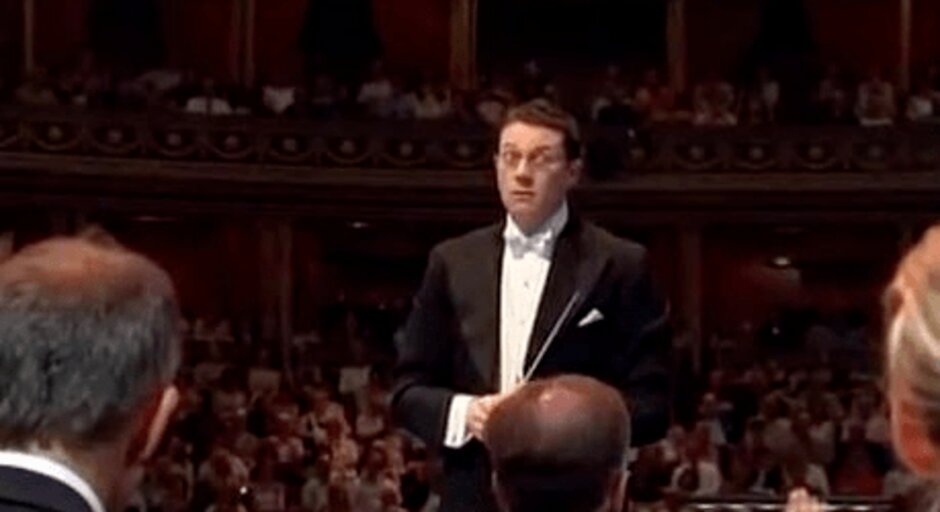
I love watching how Lockhart, official Guest Conductor of the BBC Concert Orchestra, scrupulously keeps in sync with not just his orchestra but with his soloist. It’s also a delight to watch at the beginning of the clip Lisitsa curtsying almost shyly to leader Cynthia Fleming.
Valentina Lisitsa, who started out as a YouTube sensation 12 years ago and is now counted as one of the foremost keyboard interpreters of the Eastern European Romantics, gives an intensely satisfying performance here of Addinsell’s “Warsaw Concerto“. The concerto was written for the movies—for, specifically, the 1941 movie Dangerous Moonlight, in which Polish concert pianist Anton Walbrook becomes a fighter pilot for the RAF, falls in love, gets amnesia, and composes some music. The movie, although a success from a propaganda viewpoint, was considered a potboiler by critics, and even the astute Anthony Burgess, who was an army sergeant and nascent composer himself at the time, looked down on the “Warsaw Concerto” as a cheap imitation of Rachmaninoff. Intellectual snobs have derided the piece, but it’s lingered in the memory for lo these many years, and is only now taking its permanent place in the Classic Repertoire.
For that we have to thank composer/film music restorer Philip Lane. It was to Lane that the musical estate of Richard Addinsell was entrusted and, like composer/orchestrator William David Brohn for Prokoviev’s Alexander Nevsky (Abbado with the LSO + full score here on YT) and my beloved John Wilson, Lane took on the task of reconstructing by ear written scores for film music whose manuscripts had been destroyed through carelessness or war. (Some suggest that the “Warsaw Concerto” was entirely the work of Addinsell’s orchestrator, Roy Douglas, who died in 2015 at the age of 107.) Addinsell’s—or Douglas’s—”Warsaw Concerto” was one of them. As Lane writes:
“The process of reconstruction does not get easier, but some films are more difficult than others. The biggest enemy is the combination of dialogue and sound effects over the music, and occasionally there are seconds of complete inaudibility when guesswork has to replace authenticity. The greater the composer, the more difficult the work, on the whole, since the melodic and harmonic language tends to be more adventurous. In the case of recent scores there are usually soundtrack CDs devoid of extraneous sounds to work from, but despite the change in status of film music, present day composers still mislay their scores. I have reconstructed music by Jerry Goldsmith, Randy Edelman and James Horner in the last year alone. If the composers are still alive I obviously encourage them to do the reconstruction themselves. So far, they have declined for various reasons.”
“The process of reconstruction does not get easier, but some films are more difficult than others. The biggest enemy is the combination of dialogue and sound effects over the music, and occasionally there are seconds of complete inaudibility when guesswork has to replace authenticity. The greater the composer, the more difficult the work, on the whole, since the melodic and harmonic language tends to be more adventurous. In the case of recent scores there are usually soundtrack CDs devoid of extraneous sounds to work from, but despite the change in status of film music, present day composers still mislay their scores. I have reconstructed music by Jerry Goldsmith, Randy Edelman and James Horner in the last year alone. If the composers are still alive I obviously encourage them to do the reconstruction themselves. So far, they have declined for various reasons.”
My beloved John Wilson‘s very first time on the podium in the Royal Albert was not with his eponymous orchestra—that was in 2009—but, at age 35, conducting the 50-piece BBC Concert Orchestra in their program, “British Film Music” (entire program available here in 14 parts). First up is William Walton‘s* score from the unseemly gorgeous (all blue skies and puffy white clouds) 1969 war picture Battle of Britain.“Battle in the Air” (in part 1 @00:01:20) is spirited, ravishing and very dramatic. I saw the film first-run back home in Minneapolis, then again a few years later in London and then again in, of all places, Patras, Greece, but it’s the music I remember most.
Yes love, that overtone did seem to go on forever, didn’t it?
Cynthia Fleming, leader. Philip Achille, Cynthia Millar, soloists. Maida Vale Singers, chorus. Richard E Grant, host. Appearance by Sir Richard Attenborough.
** Because of his advanced age, Sir William Walton turned to friend Sir Malcolm Arnold for assistance with the orchestrations (which Arnold supplied, as well as writing additional cues). Harry Saltzman rejected the score, saying it wasn’t long enough. Ron Goodwin (who composed for Where Eagles Dare) wrote the replacement score, but Sir Laurence Olivier threatened to have his name removed in the credits if none of Walton’s original was used. For this reason, Walton’s original music for the “Battle In the Air” sequence was used in the climactic closing of the film.
Classic Repertoire, English Romantics Division – Creditably conducted Walton, Delius, Elgar, Britten; deep affinity for Ralph Vaughan Williams (it’s that Sehnsucht, my bonny)
Film Music – Creditably conducted a program of “British Film Music” for the 2007 Proms; transcribed by ear complete MGM “lost” movie musical scores including The Wizard of Oz, Meet Me In St Louis and Singin’ In the Rain, resulting in 350+ (John’s count as of 2016, although his count confusingly goes up or down in successive interviews) pieces of programmable material (for the Proms, for example)—many of which are now of course part of The John Wilson Orchestra repertoire—while the complete scores are now available to orchestras worldwide for symphonic and live-to-screen concerts
Big Band/Big Swing – In his early 20s John cut his teeth on this type of music, starting with his stints conducting his Royal College (he’s a 1994 alumnus) / Royal Academy colleagues in the fancy palm courts of the hotels Grosvenor House and Royal Park (Times music critic Clive Davis gave the young students a “golden”—John’s word—review) plus Pizza On the Park, actually a swanky cabaret, and The Boatyard, a trendy restaurant in Essex; recorded 8 dance/swing albums for Vocalion; nominated for Grammy 2006 for the soundtrack of the biopic Beyond the Sea(which is really the first time I heard The JWO but didn’t know it)
Jazz – John has absolutely no idea what jazz is, yet recorded a thoroughly awful and dishonest album with Richard Rodney Bennett entitled Orchestral Jazz
Broadway and The Great American Songbook – DON’T get me started here. I’m blogging about this below.
All the rest is just Cantara trying to sort out where bonny John fits into her inner life. Which as it turns out is in every nook, every cranny…
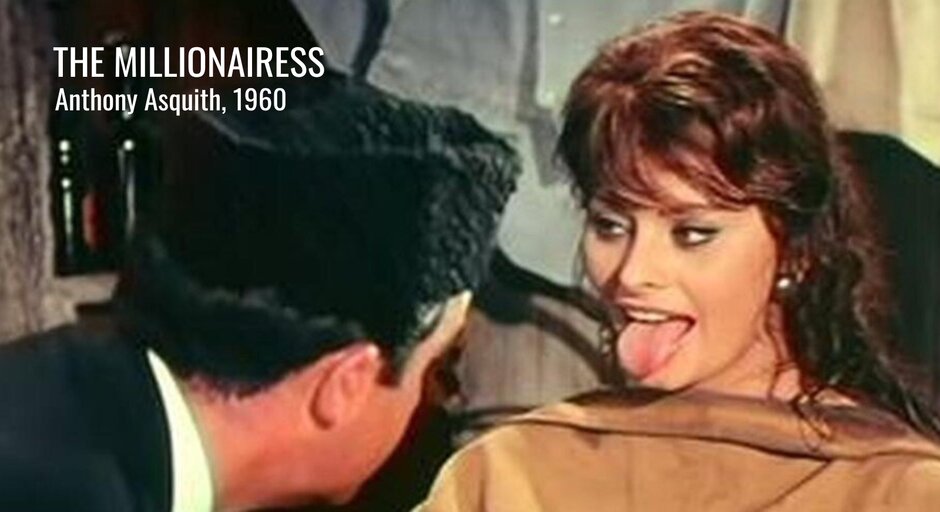
 American audiences will probably better remember Jean Heywood, who died in September at the age of 98, as the grandmother in another classic story about artistic aspirations in the north,
  Stephanie Cole, creator John Finnemore, Roger Allam, and Benedict Cumberbatch perform Cabin Pressure for a live BBC studio audience.
 Yes love, that overtone did seem to go on forever, didn’t it?
 Above Tim Curry,
 "I'll Be Dead Before You Break My Heart"