Ocean’s Kingdom, A 2011 Ballet Score by Paul McCartney, Co-Arranged and Conducted by John Wilson; Plus Howard Goodall and The Philippine Rondalla Serenata

From August, 2020: Like his coeval Pete Townshend, Paul McCartney never learned to read/write music, but like Townshend, that certainly didn’t stop him. Composer-arranger David Bennett talks about this in his latest YT podcast, “How Much Music Theory Did The Beatles Know?”

“‘The Beatles didn’t read or write sheet music, so surely they didn’t understand music theory…?’ Well, no. Reading sheet music is only part of what it means to understand music theory,” says Bennett. Which gets me fascinated enough to want to ask my beloved John Wilson how he and McCartney were able to musically communicate when they did Ocean’s Kingdom together…

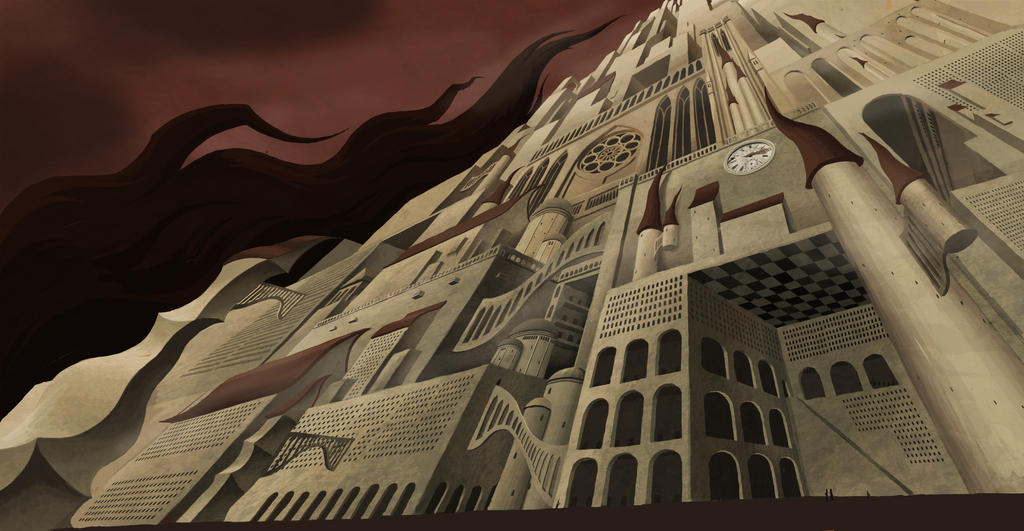
gormenghast_castle_by_malex096-d65uust-1I prefer this second movement of Ocean’s Kingdom but the entire piece is worthwhile.


And just so you don’t think I’m always down on bonny John, who was himself brilliantly educated at the Royal College of Music, here’s his orchestration, written in 2002 when he was 30, of Howard Goodall’s score for the TV movie The Gathering Storm, a bit Elgarish. And here’s the orchestration he wrote when he was 28, of Richard Rodney Bennett’s music for the TV mini-series fantasy Gormenghast, which won the Ivor Novello Award for Best Film Score in 2000.

EXTRA! My favorite Beatle tune, just for my beloved conductor reverb and all: “I Feel Fine”

EXTRA EXTRA! The Philippine Rondalla Serenata* play that toe-tapping Beatles standard, “Ob-la-di, Ob-la-da” in traditional Philippine rondalla style

*Dedicated to showcasing the musical talent of blind and visually impaired musicians in the Philippines—here’s their Facebook page


The complete OCEAN’S KINGDOM is available on YT here


FULL DRESS // A gifted mesmerist—a sinister composer—a naive young conductor from the north…inspired by an episode from the life of Rachmaninoff // DOWNLOAD FREE BOOK POSTER

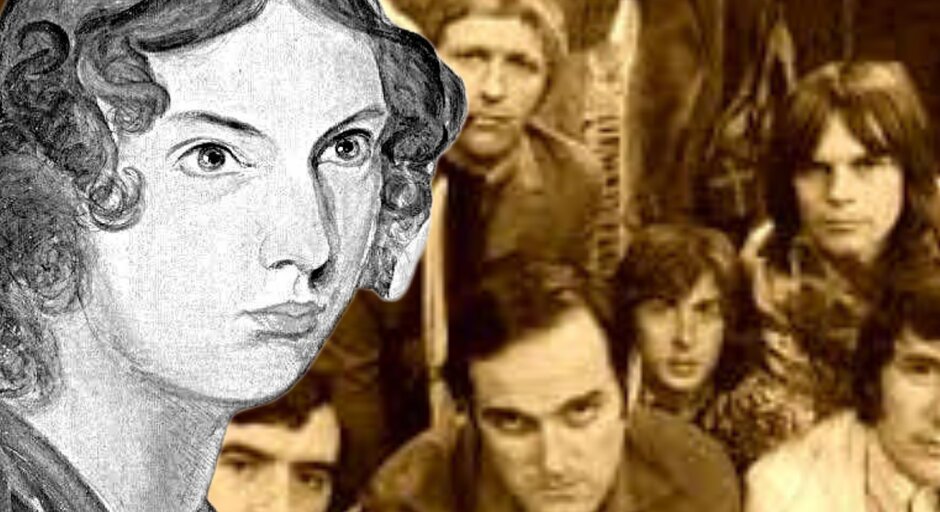
Anne Brontë and Monty Python

What shocking secret did teenage Jane learn on her wedding day! cried out the back of the Scholastic paperback on sale at school when I was 11, which got me to pony up the ninety-five cents to buy Charlotte’s Jane Eyre and find out. What merciless revenge did Heathcliff wreak on his in-laws! got another ninety-five cents out of me to buy Emily’s Wuthering Heights when I was 15. But it wasn’t until I was 19 when a sketch on Monty Python proclaimed Arthur Huntingdon’s shameless conduct against his wife that I was stoked to read Anne’s The Tenant of Wildfell Hall. It was worth the wait, I was finally old enough to appreciate it. The guy was scum.


From season 3, episode 9 (starting at 2:38) of Monty Python’s Flying Circus, the Housing Development Sketch*:

A modern construction site where various fictional characters from 19th century English literature are at work: a saucy dairymaid from Thackeray’s Barry Lyndon mixes cement; a crinolined lady from Trollope’s Barchester Towers carries a shovel; the beadle from Dickens’s Oliver Twist pushes a wheelbarrow; farmers from Hardy’s Tess of the d’Urbervilles lay bricks.

Voice Over (Michael Palin): This new housing development in Bristol is one of the most interesting in the country. It’s using a variety of new techniques: shockproof curtain walling, a central high voltage, self-generated electricity source, and extruded acrylic fiberglass fitments. It’s also the first major housing project in Britain to be built entirely by characters from 19th century English literature!

In a half-finished concrete shell, a little girl in a shabby dress is working on top of a ladder.

VO: Here, Little Nell from The Old Curiosity Shop fits new nylon syphons into the asbestos-lined ceilings— (shot of electrical wiring) But here’s the electrical system which has attracted the most attention! (cut to Arthur Huntingdon in blue safety helmet studying blueprint) Arthur Huntingdon, who Helen Graham married as a young girl, and whose shameless conduct eventually drove her back to her brother Lawrence in Anne Brontë’s The Tenant of Wildfell Hall, describes why it’s unique.

Huntingdon (Eric Idle): Because sir, it is self-generating. Because we have harnessed here in this box the very forces of life itself. The very forces that will send Helen running back to beg forgiveness!

*Postwar council-housing building scandals were a major issue in England in the 60s-70s. Check out the seminal BBC series, Our Friends In the North.


FULL DRESS // A gifted mesmerist—a sinister composer—a naive young conductor from the north…inspired by an episode from the life of Rachmaninoff // DOWNLOAD FREE BOOK POSTER

Two Horror Queens: Composer Elisabeth Lutyens (1906-1983) and Actress Veronica Carlson (1944-2022)

She was eaten by cannibals, bitten by Dracula, and raped by Victor Frankenstein. I adore her.

I am talking of course about English model-turned-actress Veronica Carlson, the most delectable of all of Count Dracula’s victims. Her movie career wasn’t long, but she made a lasting impression on countless adolescents in the 60s, many of whom, now grown, still look forward to watching Dracula Has Risen from the Grave for a really good stroke session.

Hammer, the film studio where Carlson did her best-known work, worked wonders when it came to dignifying luridness, which is what you’d expect from the Brits, wouldn’t you? The British were never sexier than in the 60s. I miss that.

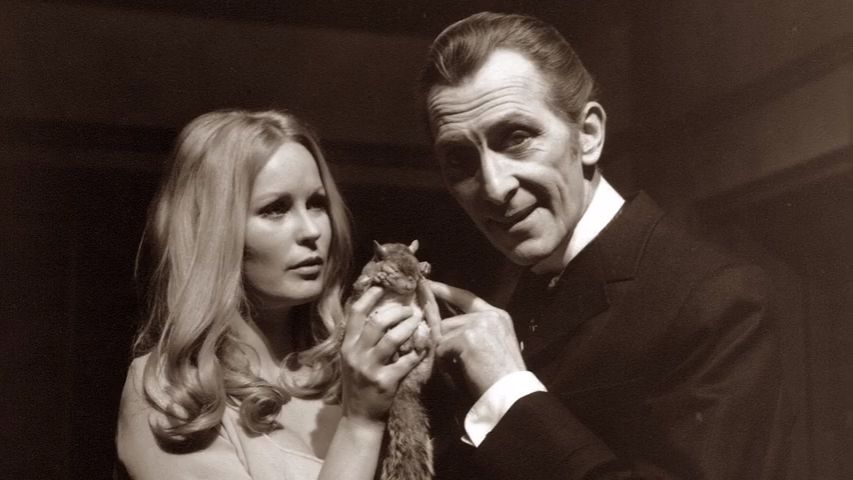
Veronica Carlson, Peter Cushing.jpgIt’s Veronica Carlson’s deeply sexy love-trance gaze at kindly Peter Cushing that makes this publicity pic spring to life. Photo session was done following shooting of their utterly gratuitous, dramatically unfeasible but vigorous rape scene in Frankenstein Must Be Destroyed (1965, Terence Fisher, dir), which made the most of the gorgeous Hammer star’s drawing power.

As for Elisabeth Lutyens, she tells her own story in this short interview with the BBC. Her work for Amicus films is best exemplified by her theme for Dr Terror’s House of Horrors, above. But this short piece is much more to my liking and demonstrates her superior musical gift.

 “Lament of Isis on the Death of Osiris”
composed by Elisabeth Lutyens, 1969


FULL DRESS // A gifted mesmerist—a sinister composer—a naive young conductor from the north…inspired by an episode from the life of Rachmaninoff // DOWNLOAD FREE BOOK POSTER

A Sexy NYC Memory to Celebrate My 3rd Anniversary of Falling in Love with Conductor John Wilson; Plus the BBCSO Doing Elgar’s Bach Fantasia; and Theatre of Blood (United Artists, 1973)

From 4 May, 2021. In one of my old postings (“On Conductor John Wilson’s Full Dress and The First Porn Movie I Ever Did, 1”) I said something about a certain hot tub party being only the second time a man ever gave me his business card before we had sex… Well, this was the first.

It happened one evening in July, 1973. I was 18. I had just gotten that job as night solfeggist at ASCAP only a couple of weeks earlier, which is in itself a very interesting story I’ll have to tell you one of these days. Only now let’s get back to me walking down Broadway from 63rd. I loved walking home to the Village after work on a summer evening, when all of midtown was still buzzy with life and good times. After the night shift, some of my fellow solfeggists would go across the street to O’Neal’s Balloon to drink with the fancy Lincoln Center crowd (here’s my own favorite table showing up in Annie Hall), but I got a bigger kick being below 54th with all the theater people. On this particular evening I was approaching 46th…and right there on the corner of 46th stood a really good-looking guy, tall and blond and nicely dressed, who seemed to be scoping out one by one all the passers-by. For some reason he lit upon me. He got my attention. Then he asked me if I knew where a good jazz club could be found, the way you might ask any passer-by about a mailbox or the way to the Empire State Building… I told him I was new in town. Then he suggested we (“we”!) buy a newspaper and sit down somewhere and check the listings together. Oh, I was game. My first New York adventure! We went across the street to Howard Johnson’s where he bought me a hamburger and told me about himself. He told me he was an agent. He’d just put his client on the plane that day—his client having just been on The Dick Cavett Show promoting his new film, a comedy-horror flick that’s now a classic—and he himself was going back to London in the morning. He told me his client’s name, which I recognized at once, and then he gave me his card, which I kept for years until I gave it to an actor friend who said he was “looking for a UK rep”… Then he asked me about myself, all the nice polite questions a man’ll ask you beforehand… But we also talked about show business, shows, show music. I told him I liked Man of La Mancha. Having found no jazz clubs worth going to that night, we left HoJo’s and walked over to 5th Avenue, where we strolled back to his hotel room at the St Regis. I was ready for anything, expecting nothing. Even when he pulled the line, “Let’s get out of these hot clothes, shall we?” with that gorgeous limey accent of his, I still wasn’t sure we were on the road to making it…until we started making it. At that point we hadn’t even kissed. But oh, how he made up for it! I wasn’t a virgin, but here was the first man I ever slept with who actually knew how to take his time pleasuring a woman. By the time I was under him, gazing down at the back of his incredibly sexy legs, an electric shock went through me, and for the first time in my life, I orgasmed. So that’s the story of my first New York hookup. We parted in the morning, wishing each other well, and I even made it back to the boarding house in time for breakfast. A perfect sexual encounter with a happy ending.

I’m telling you this, John, because what Michael Linnit made me feel that night is nothing compared to how you made me feel when you conducted Elgar’s Bach Fantasia in Sydney three years ago. I’m not kidding. I had just fallen in love with you when I saw you shimmy to a Jule Styne tune in some video… But this time (it was about 2 weeks later) there was only you and the music on the radio. I’m not even crazy about Elgar, I was waiting for your Prokofiev. But I was so keyed up—for the past couple of weeks I had been vibrating with desire for you—that when a certain chord was played in the Elgar, a wave rolled through me, it was just so yummy… But that wasn’t all. As I lay there gasping, a little voice in my head went, You fool! Don’t you remember who’s doing this? And so I came again, this orgasm coming over me like a wave meant to drown…and I reached for you and knocked the lamp off the night table.

One day I’ll tell you about the other times (Vaughan Williams, Richard Rodgers). But I just wanted to let you know now how much you’ve meant to me, how much you still mean, even when you’re not wearing full dress.

Elgar GirlAbove Cantara and her lust: Elgar’s Bach Fantasia played by the BBCSO under Leonard Slatkin. And here’s the score.


FULL DRESS // A gifted mesmerist—a sinister composer—a naive young conductor from the north…inspired by an episode from the life of Rachmaninoff // DOWNLOAD FREE BOOK POSTER

Things I Did for Love of Geordie John Wilson, 1: Watched Get Carter (British MGM 1971, Mike Hodges Director) and Sarah Millican; and Listened to, But Didn’t Watch, The Orville

This is all to do with my beloved John Wilson, Conductor being from Gateshead. Except for that Seth MacFarlane show.

Sarah Millican first. Tried listening to this fast-talking comedienne from nearby South Shields the middle of 2019 but could not keep up with her pace or her accent. Later I started watching old episodes of Auf Wiedersehn Pet, The Likely Lads, Byker Grove (which starred BGT presenters Ant & Dec when they were kids), and now one of my favorite shows ever on television, Our Friends In the North (all episodes here) etc etc but they’re just so…masculine, you know? Which I suspect probably pretty much characterizes Geordie culture anyway… So I started alternating watching that show with When the Boat Comes In, which was more successful for me, as the estimable Northumbria-born actress Jean Heywood provided a good model of what a feminine northeast accent sounds like. After her it was a snap to follow Millican.

Second, The Orville, Seth MacFarlane’s Star Trek-like TV series. Like the 70s folksinger says, “I’m a stoner, I’m a trekker, I’m a young sky walker…” So yeh, I’d be interested in watching this show just to see if it measures up to the standards of my youth. Unfortunately, none of MacFarlane’s (post-Family Guy) projects ever sound interesting enough for me to overcome my intense personal dislike for him. So…maybe later. I did, however, listen to the show’s theme music, which was written by Andrew Cottee, the same young man who wrote some arrangements for The John Wilson Orchestra over in England. The theme does everything expected of it.

Third, Get Carter, starring Michael Caine and the City of Newcastle. Made this movie last on my list because it deserves two paragraphs, being the British noir classic that it is…

Sidebar: As we all now know from film school, existentialism is the engine of noir, which means that petty details like Michael Caine speaking in a thick Cockney accent* when his character’s supposed to be from Newcastle-upon-Tyne oughtn’t to matter to the sophisticated auditor. But I had a problem. I’m sorry. Three years ago I wouldn’t have cared, one Brit being the same as any other. Then I fell in love with John Wilson, a Low Fell lad, and individuality suddenly became a very important thing to me.

The Movie Overall: Not quite sure why the filmmakers transplanted novelist Ted Lewis’s story from his original setting in Lincolnshire (Lewis’s birthplace), to Tyneside, but since it’s the classic story of the Anti-Hero’s Revenge, which works anytime, anyplace, it does fine here. Michael Caine’s a little podgy but quick with his reflexes and still a treat for the ladies. Lots of sex and violence, lots of local atmosphere, local faces, and landmarks like Tyne Bridge, the Newcastle Racecourse and, of course, the carpark across the Tyne River.

The Carpark in Gateshead Scene: By a stroke of luck Get Carter was just streamed on Criterion so I watched the entire movie, then to make sure, watched the carpark scene twice more in order to understand why it so sticks in the mind. Because it does, you know, even though I’m not a fan of movies like this. I guess it’s because there’s rather a high elegance to this scene that contrasts with all the mundaneness and phony poshness around it… Very arty, but a genuine statement. Or maybe it’s just because I like watching Michael Caine get all riled up.

EXTRA! Mark Steel’s in Gateshead. Say no more.


The now torn-down carpark at Trinity Square in Gateshead in this famous scene was a dreary piece of English Brutalist architecture that, according to its creator, was never meant to stand the test of time anyway. That’s the theme to The Orville above.

*I understand that a stage version of Get Carter was recently performed in Newcastle, with Carter’s accent vocalized accurately.


FULL DRESS // A gifted mesmerist—a sinister composer—a naive young conductor from the north…inspired by an episode from the life of Rachmaninoff // DOWNLOAD FREE BOOK POSTER

My First Music: Soames Rapes Irene in The Forsyte Saga (BBC, 1967); “Halcyon Days” from Eric Coates’s Three Elizabeths Suite Played by the BBCPO and Conducted By My Excellent John Wilson

I was twelve when The Forsyte Saga was first shown on American TV and I thought it was the coolest series ever.* It was about a large, rich and, though unconnected, influential family living in late-capitalist England circa 1879, who keep getting into pretty heated conflicts with each other—which at the bottom are really about, more or less, the value of art and the inner life vs commerce—all the while being beautifully attired and beautifully well-spoken. Hearing this royal fanfare “Halcyon Days” that opened the show was enough to get me all excited with anticipation on a Sunday night, but it wasn’t until last year around May when I finally discovered the composer of the piece, Eric Coates, plus the rest of this ravishing movement, when I fell in love with conductor John Wilson and developed a raging need to get close to the music he’s close to.

Screening Room, SF 1979Above: Above Soames played by Eric Porter—The Man of Property, Noted Art Collector, and about as Mr Wrong as you can get—who mistook his wife for a soulless mannequin and, in novelist John Galsworthy’s sardonic words, “asserted his marital rights and acted like a man” in this scene, in which the BBC made shocking good use of Nyree Dawn Porter’s lovely embonpoint: My gorgeous, wondrous John Wilson leads the BBC Philharmonic in Coates’s “Halcyon Days”.

My beloved John conducted this 29 March, 2022 in Salford, as part of a program devoted exclusively to the music of prolific BBC composer, Eric Coates. It was glorious.

Here’s a remembrance of Nyree Dawn Porter and The Forsyte Saga in The Guardian reprinted in FB, including my protestation over the use of the word “frigid”.

*In fact it got me to read the entire cycle of nine novels the series was based on; finished them when I was thirteen. Dinny Cherrell’s my favorite character.


FULL DRESS // A gifted mesmerist—a sinister composer—a naive young conductor from the north…inspired by an episode from the life of Rachmaninoff // DOWNLOAD FREE BOOK POSTER

From The Patrick and Maureen Maybe Music Experience, Written and Performed by Patrick Barlow, with Imelda Staunton

On BBC radio 1999, so I guess that makes this show 24 years old.

The Patrick and Maureen Maybe Exprience.jpg

Patrick: This is Irina, the performance artist from Praha.
Maureen: Where?
Irina: Praaa-ha.
Maureen: Yes, I think we know where she comes from. Does she normally wear that?
Irina: I wear very little. There is a saying in my country, “Music is like the body. The more it is exposed, the more it can arouse.” Another expression we have in Czech, “Music is like sex—if we do not have it, WE DIE!!!”
Maureen: (alarmed) Sex. She said sex!
Irina: My music is like my sex. It come from the dark inside of my wooomb of my sex! Yearning to receive the seed of the dark black innards of my inward being… Dark, black, and hot, they copulate in the tone of the music of the fire that meets and heats, and in the heat is born the sacred coming of the sex of my body, is sex and my body is music, on and in, and in and on, my body is the sex of my heat, and my music, my heat, my body is on…
Maureen: Heat?
Irina: Of course. Always. Or as we say in my country, “[something-something-sex in Czech]”… Now I tune and prepare. (plays violin, orgasming loudly to music)
Maureen: Well, that was quite unusual.
Irina: (panting) Thank you.
Patrick: Um, did you actually achieve…?
Irina: (more panting) Orgasm? Of course.
Maureen: So, any other questions you’d like to ask, Patrick…? Any tips? Sorry, the producer’s flashing me. (in headset) Yup! Sorry? Yes yes, I know, well, he’s had her on, it wasn’t my idea…
Patrick: I did not get her on! I was under the impression we agreed we needed an example of the solo fiddle…
Maureen: Yes yes, you would like a fiddle wouldn’t you? (in headset) Yes, yes, all right. (hangs up headset) I’m afraid this is the BBC and we can’t have people having orgasms on it. Can we, Patrick?
Patrick: (deflated) No, no, I’m afraid not.
Maureen: (to Irina) So please leave. Now our next guest…

The battling couple then go on to humiliate Juliet Stevenson.


FULL DRESS // A gifted mesmerist—a sinister composer—a naive young conductor from the north…inspired by an episode from the life of Rachmaninoff // DOWNLOAD FREE BOOK POSTER

JFK and Red Dwarf, Season 7, Episode 1 (BBC2, 1997): “Tikka to Ride”; Plus the Red Dwarf Theme and That Movie About Churchill, Scored by Howard Goodall and Orchestrated by My Beloved John Wilson

From 25 November, 2022: On the 59th anniversary of the funeral of our own murdered-in-broad-daylight John Fitzgerald Kennedy, nothing moves me as much as the handful of scenes (here on my YT channel) where RD’s time-traveling spaceship crew—Kryten the android, Rimmer the Hologram, Cat the evolved cat, and Dave Lister the last human in the universe—unite with a disgraced JFK to right a timeline gone wrong and restore our 35th president’s shining legacy to history. That’s American actor Michael J Shannon playing Kennedy / The Shooter on the Grassy Knoll.

Red Dwarf Above Robert Llewellyn, Chris Barrie, Danny John-Jules, Craig Charles and Michael J Shannon as Kennedy /  The Shooter on the Grassy Knoll: The Red Dwarf theme by Howard Goodall, who also wrote the score to The Gathering Storm (2002), which was orchestrated, at age 30, by my beloved John Wilson.

EXTRA! This seems to be the best place for this Howard Goodall piece: “The Lord Is My Shepherd (Psalm 23)” aka theme for the BBC’s sweet and funny 1994 series The Vicar of DibleyPlease enjoy its delicate and reverent scrumptiousness.

EXTRA EXTRA! The long, clear, laughtrack-free jukebox version of “Tongue-Tied”! Danny John-Jules never looked more fantastic.


FULL DRESS // A gifted mesmerist—a sinister composer—a naive young conductor from the north…inspired by an episode from the life of Rachmaninoff // DOWNLOAD FREE BOOK POSTER

Billy Wilder & IAL Diamond’s The Private Life of Sherlock Holmes, Scored by Miklós Rózsa (Mirisch, 1970)

I have a lot of toasty warm affection for this underrated movie (which I saw second-run in Minneapolis the summer before I started music school), not least because of Hungarian-born Miklós Rózsa‘s score, which he based on his Violin Concerto, op 24.

the private life of sherlock holmes bw
Robert Stephens as the great detective and Genevieve Page as his latest client. Yes, that’s Sherlock Holmes embracing a beautiful, nude, warm and willing woman while heroically subduing his id.


This is Austrian-born Wilder and Romanian-born Diamond at their best, examining—through impish Hollywood eyes, of course—that weird combination of emotional reticence and superciliousness that makes English men just sooo attractive. Their great detective, however, turns out in the end (not to give anything away) to be a lonely man, unsophisticated, profoundly vulnerable, and something of a loser. Stephens’s highly original performance makes his my favorite Holmes of all.


The entire film THE PRIVATE LIFE OF SHERLOCK HOLMES is available here


FULL DRESS // A gifted mesmerist—a sinister composer—a naive young conductor from the north…inspired by an episode from the life of Rachmaninoff // DOWNLOAD FREE BOOK POSTER

25 May—Two Birthdays: My Dad’s and My Beloved English Conductor John Wilson’s

My father, who was born on the 25th of May 1905, went to the movies with me only a couple of times. The first was for Taras Bulba (United Artists, 1962). I remember him getting a particular kick out of the ride of the Cossacks scene, thrilling Franz Waxman music and all.

The second time was for Tora! Tora! Tora! (20th Century Fox, 1970). The movie house in Columbia Heights, just over the city line from Northeast Minneapolis, was within walking distance, I walked it all the time, and could still get in for 50 cents because at 15 I still looked 12. For some reason my father ended up not only driving me the few blocks, but after I’d found my seat and the lights went down I was astonished to notice him come in and sit down beside me.

“Dad, what are you doing here?” I whispered loudly. “You know, the Japs win in this.”

“Not for long,” he answered cheerfully, which is about as close as anyone in our family got to talking about the 7 December 1941 attacks and the general brutality my mother, then a teenager in Bangar in the province of La Union, had to face in an occupied country.

Bangar in those days was rather like Nouvion in ‘Allo ‘Allo—a little town situated a ways from the capital but near the sea, a hotbed of resistance. When you read about Bangar here, just remember: that kid who escaped, which resulted in occupying troops burning down the place, was one of my cousins. When the guards marched him to town to be executed, his family, through looks and gestures from a distance, pretty much gave him the word that they expected him to “take one for the team” i.e. let himself be shot; but at the last moment, as family legend goes, he grabbed the officer’s sword and in the confusion was able to get away into the forest. And so as feared came the reprisals.

A shadow still hangs over the de la Peña family.
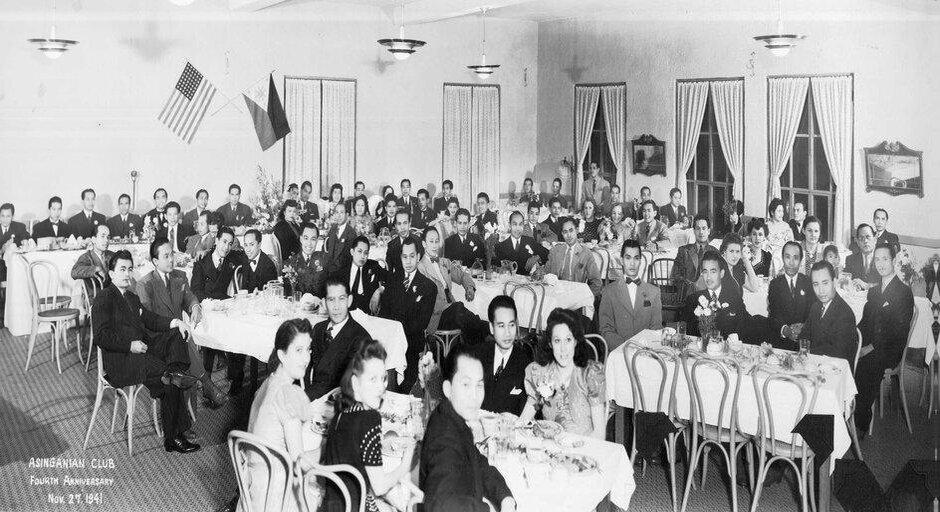
Fil-Am 1941Taken at a banquet of an old Filipino-American association my dad was part of (that’s him under the picture on the right; keep forgetting he still had hair before I was born), one of about a hundred around at the time. Note the date: only a couple of weeks before Pearl Harbor. Note also the Philippine flag on the wall. The Philippines wasn’t yet a sovereign nation but a Commonwealth and didn’t achieve independence till 1946. More at “To My Beloved John Wilson, Who Shares His May 25th Birthday with My Dad; Or, Don’t Call Me a Person Of Color, I’m a Product Of Empire, 2”


Meanwhile in California my dad, who had come to the States a young man in 1927, was engaged to a woman from St Louis he eventually COULD NOT MARRY because—are you ahead of me on this?—HE WASN’T WHITE!!! Yes! The MISCENEGATION LAW of the State of California—which by the way was NOT REPEALED UNTIL 1948—prohibited them and God knows how many other California couples from legally joining, forcing them to travel to other states where they could. Recently read this happened to, among others, that fine actor Dean Jagger (here seen with Danny Kaye and Bing Crosby in White Christmas, 1954 Paramount) and his Chinese-American fiancee; and the Oscar-winning cinematographer-director James Wong Howe (Picnic, 1955) and his white fiancee, author Sanora Babb. I‘d be curious to hear other people’s stories.

How my dad, residing at last in Minneapolis, eventually found and married my mother in Manila is another story, and it’s a doozy. I’ll tell it one of these days. Here it is:


“To My Beloved English Conductor John Wilson, Who Shares a Birthday With My Dad; Or, Don’t Call Me a Person of Color, I’m a Product of Empire”

Part 1 here | Part 2 here | Part 3 here | Part 4 here


Now for John, who was born the day of my father’s final birthday, in 1972. John, I’m not saying we’re psychically linked, but about a month ago in the middle of defrosting the refrigerator I think I got a weird emotional flash from you where you were being right annoyed over some flap over a booking… I got the impression it might’ve been for The John Wilson Orchestra. [UPDATE: It wasn’t, it was the Sinfonia of London. 4 September 2021.] You were waiting for some kind of answer re your orchestra, whichever one it was, and not getting it, and I actually felt your annoyance… As I say, it was weird, like listening in on a party line…

That’s all I could make of it. But it’s enough to make me want to give you something special for your birthday. So…I’ve tried this only once, with an old boyfriend, and I think because I was really, really into him it worked. On the actual day of your birthday, John, I’m going to try to send you an energy shot. [UPDATE: Just did it. Think I got through. 25 May 2020 2AM UK time.] Until then, Happy Birthday, light of my life, fire of my loins. And if you and I ever meet up, tell me if it worked.

[More About My Dad]


FULL DRESS // A gifted mesmerist—a sinister composer—a naive young conductor from the north…inspired by an episode from the life of Rachmaninoff // DOWNLOAD FREE BOOK POSTER
Vincent Price Makes Love to Coral Browne in Theatre of Blood (United Artists, 1973)

In an earlier posting (“A Sexy NYC Memory to Celebrate the 3rd Anniversary of Falling in Love with Conductor John Wilson; Plus the BBCSO Doing Elgar’s Bach Fantasia; and Theatre of Blood, United Artists, 1973”) I mentioned TofB, which came out the summer I moved to Greenwich Village. Recently I discovered a new bio of Vincent Price entitled Vincent Price: The British Connection (Telos, 2020) where, to my delight, Gateshead-based author Mark Iveson reveals the torrid affair between Price and the noted Australian-born actress, Coral Browne:

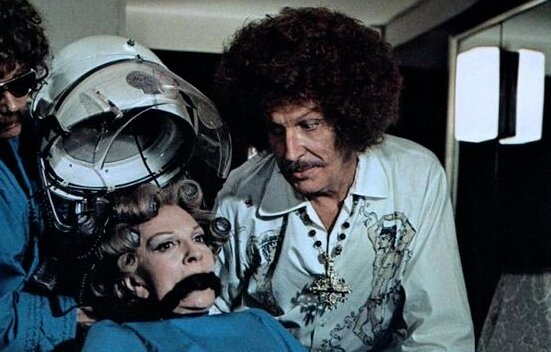
Theatre of BloodAbove Diana Rigg, Coral Browne and Vincent Price: Michael J Lewis’s excellent, elegant opening music for Theatre of Blood. Full movie here.
Price’s infatuation intensified, regarding Coral as “the Great Barrier Reef—beautiful, exotic and dangerous. I was like a bird dog!”

“I remember he electrocuted me on my birthday,” Browne recalled when she performed her death scene with Price. Ironically her acting isn’t very good in this scene because she doesn’t look even remotely terrified of her murderer. Instead, she prefers gazing into his eyes instead of screaming in fear.

After the day’s filming, Price once again approached Diana Rigg for advice. “I said to Diana, ‘I understand it’s Ms Browne’s birthday. What could I get her?’ And Diana said, ‘Well, you know what she wants. You!” 

And from then on,” added Rigg, “they never looked back. I think they fell into bed and I think it was a wildly sexual relationship. Incredibly sexual. I remember Coral saying that they worked out their combined ages were 120-something, and when you saw these absolutely shagged out people on the set, it was really quite funny. And that was the start of it.”


FULL DRESS // A gifted mesmerist—a sinister composer—a naive young conductor from the north…inspired by an episode from the life of Rachmaninoff // DOWNLOAD FREE BOOK POSTER

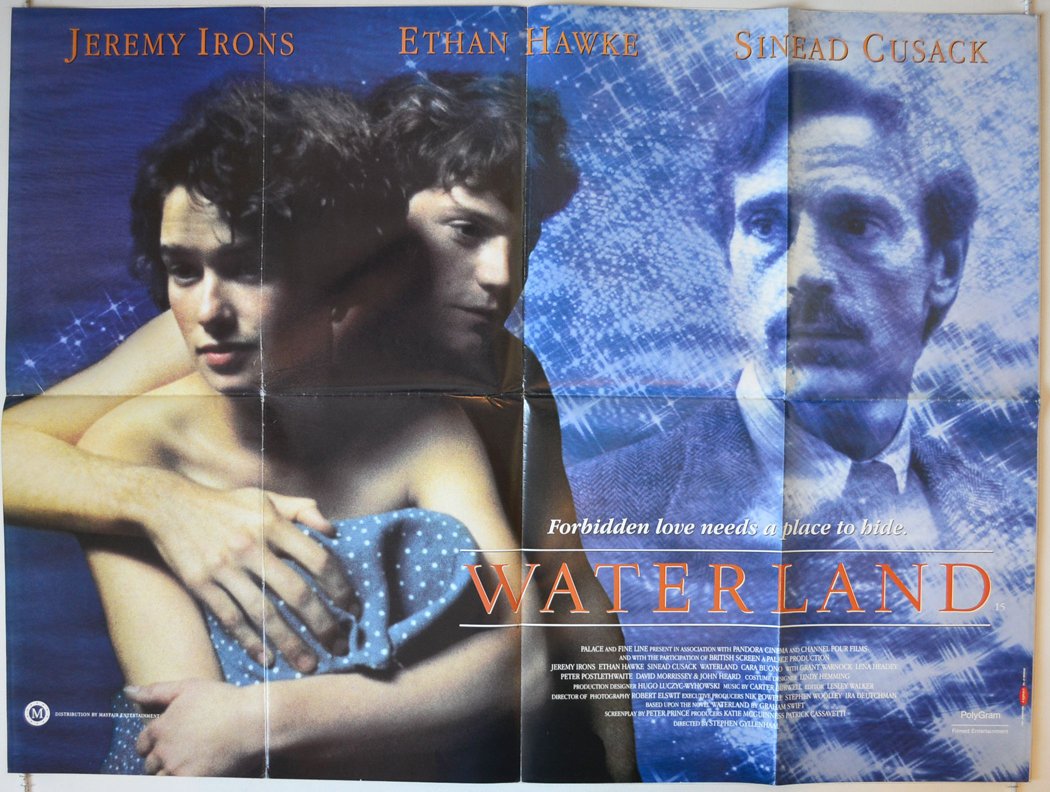
Waterland from the Graham Swift Novel Starring Jeremy Irons, Sinead Cusack, Ethan Hawke, Grant Warnock, Lena Headey; Music by Carter Burwell; Directed by Stephen Gyllenhaal, 1992

This is Stephen’s best movie, hands down. Whenever I think of Stephen and thinking of him raises my blood pressure remembering all the shenanigans he pulled on me, I also think of Waterland and (almost) all is forgiven between us, as far as I’m concerned.

Waterland.jpgThat’s Lena Headey in her first screen role. Above Lena, Grant Warnock and Jeremy Irons: Carter Burwell’s gorgeous, haunting music from Waterland.

I’m not a huge fan of Graham Swift‘s books, but I read his Waterland and Last Orders, and much prefer Last Orders as a novel but Waterland as a film, no matter how many trivial changes the screenwriter made. In Swift’s memoir there’s the amusing revelation that Steve got this assignment because although he was last on the list he was the only one available…yeah, that’s the Gyllenhaal Luck. Fortunately—really fortunately—Steve had with him a very good Director of Photography, Robert Elswit, and score composer Carter Burwell, whose music you can hear above.

I mentioned in another posting about his film work that “there’s a creepy, dreamy, nasty edge in almost all the sex scenes in Steve’s movies…” which certainly figures here. Not in the actual sex scenes between the teenage lovers, which are all lyrically rendered, but in that damn ABORTION SCENE in the woods, which never fails to get gasps from us females in the audience. Check it out. There’s a weird fairy-tale quality to this scene which is beautiful, but sooo the wrong tone.


FULL DRESS // A gifted mesmerist—a sinister composer—a naive young conductor from the north…inspired by an episode from the life of Rachmaninoff // DOWNLOAD FREE BOOK POSTER

My First Music: The Pure Joy of St Trinian’s and The Inn of the Sixth Happiness by Malcolm Arnold

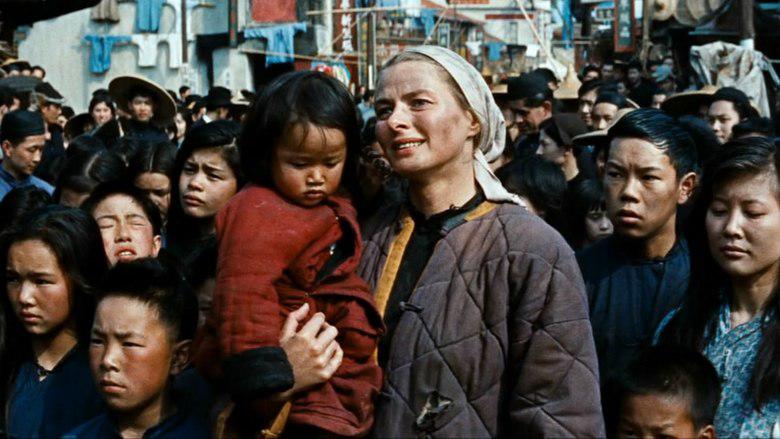
There must be something in the English character that enables the better artists among them to depict situations of unassuming, steady bravery with superior deftness, which is probably why their World War II pictures are better than ours. One of them, The Inn of the Sixth Happiness (20th Century Fox, 1958), doesn’t technically qualify either as a UK picture—Fox produced it; or as a WWII picture—it’s set during the Sino-Japanese War of 1938; but it does have unarmed peasantry scattering to the hills under Japanese gunfire, which is a theme that ran through my mother’s life starting with Pearl Harbor and ending in March, 1945 when American troops marched through the rubble-strewn streets of Manila, hunky victorious good guys. My mother’s first teenage romance was with a private in the 31st Infantry Regiment named Kelly, come to think of it.

Now, when I refer to better artists of English character I don’t mean the film’s producer, director, writer (American, American, American), or stars (Swedish, Austrian). But it’s because of: one, the true-life heroine the story was based on; two, the location shooting; three, the non-lead casting; and four and most importantly, the music, that I think of Sixth Happiness as an English film. The true-life heroine of the story was English-born, not to mention the film has Snowdonia standing in for the daunting terrain around Yangcheng and pretty near the entire Chinese heritage population of Liverpool standing in for Chinese nationals, with supporting roles portrayed by stalwarts of UK stage and screen. This is the first thing I ever saw Burt Kwouk in.

But to the music. This is not Malcolm Arnold’s finest score—Bridge On the River Kwai (Columbia, 1957) really is a superior composition—but it rates higher with me becauuuse, you guessed it, The Inn of the Sixth Happiness has a gorgeous Love Theme, which you can hear below as the Royal Academy of Music performed the suite back in 2014. You’ll also hear the bright, high fanfare brass that Arnold used in a few other of his movies, River Kwai and the one below, for examples. Also, I’m starting to develop a theory to satisfy myself that certain intervals, played with conviction, are the real sinews of English music: they make for that sound of “rightness”, which you can take one way or another, depending on the mood—or your mood, for that matter. Sixth Happiness has plenty of those.

Inn of the 6th Happiness.jpg

Besides the satisfying fanfare brass, Sixth Happiness shares with the satirical The Belles of St Trinian’s (British Lion, 1954) a bit in the score where there’s a song meant to be sung by children—in Sixth Happiness it’s “This Old Man”; in St Trinian’s it’s the school’s hilarious “Battle Cry”. I’m not posting the lyrics here, so click on the link in red to listen to those cheerfully bloodthirsty oaths. But can you imagine what a liberating tonic this ferocious roar from the depths of The Untamed Female Soul was to a little girl in the Catholic part of Minneapolis, watching this on Saturday matinee TV (a tonic, incidentally, I would not imbibe again till I heard Bernadine Dorhn mouth off a few years later)—?

Here’s the BBCCO doing the St Trinian’s suite at the Proms (Timothy West, narrator) bringing back almost all the familiar, funny-music leitmotifs to smile at, like George Cole’s character’s “Flash Harry”, a loping, rattling kind of tune (although lamentably there’s no sign of Joyce Grenfell’s scurrying “Ruby Gates”) before returning to that ghoulish school pageant march, lyrics I believe provided by Arnold himself.

In contrast, “This Old Man” is meant to be a “found” song, purportedly a children’s counting song, heard on the playground since the 19th century, and in a way that’s right, as the first time I heard “This Old Man” was on the playground—but only because it had become a hit on US radio first in 1959. It’s still impossible for me not to hear “This Old Man” and not think of the climactic scene in Sixth Happiness: the hundred children crossing the Yellow River into safe territory, ragged and exhausted but alive, marching into the unoccupied city to cheering crowds, loudly singing this song. Invariably it brings tears to my eyes, immigrants’ daughter that I am, and I remember the first time I watched—and heard—this film on TV with my mother, my mind nearly forming the question I never asked her, not then, not ever: “What happened to you in the war, mom?” Because the music was so ravishing, the love story was so satisfying, and my mother just wanted to enjoy an Ingrid Bergman film.


FULL DRESS // A gifted mesmerist—a sinister composer—a naive young conductor from the north…inspired by an episode from the life of Rachmaninoff // DOWNLOAD FREE BOOK POSTER

Marquess of the Gardens of Aranjuez, His Finest Work in the 1995 UK Film, Brassed Off

As I once pledged, I will go almost anywhere my beloved conductor John Wilson leads me; and so it was a remark of his that led me to this movie, which in the mid-90s was an estimable hit in the UK, though not so much here in the States. When asked by The Telegraph about his early musical influences, said John, “Brass bands. Coming from a working-class background, the tradition of amateur music-making was important to me…”

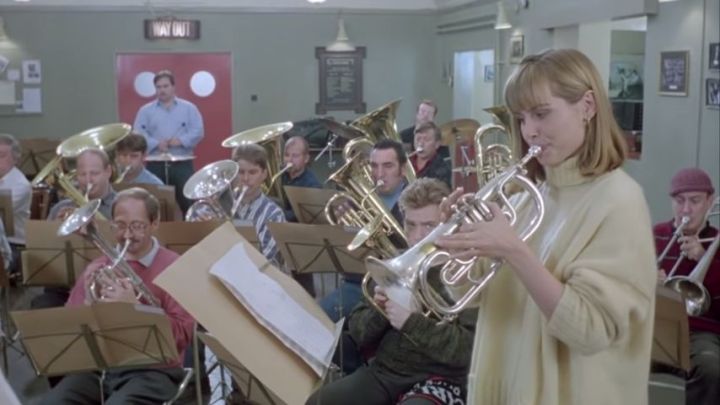
brassed-off.jpegIn this scene where the ensemble plays the famous Adagio of the Concierto, Tara Fitzgerald shows the lads her superior proficiency on the flugelhorn, inspiring their conductor, played by Lancashire-born Peter Postlethwaite, to consider taking the band on a competition tour and win some desperately needed prize money for their out-of-work members. Above: Joaquin Rodrigo’s entire Concierto de Aranjuez (1939), Richard Gallen, guitar, Moscow 2012.

There’ve been a couple of other, better known (in the US) British films, The Full Monty and Billy Elliot (here’s Billy’s angry dance), which also address the economic/unemployment crisis in Britain that, back in the 80s, did its part to whittle away at arts education throughout the country, particularly in the north. Like I said, my beloved conductors remarks in recent interviews about his early influences started me thinking not only about his musical but general education growing up in Gateshead in the 80s. I’ll take this on in an upcoming post. The contrasts / similarities between his musical influences and school training—as a northern Brit through most of the 80s—and mine—as a midwestern American in Minneapolis through the mid 60s-early 70s—I find worth examining, and not just because I’m hopelessly in love with the bloke.

For now, this is what I take away from anecdotal evidence like Brassed Off and John’s childhood memories: The British, in general, seem to be more used to the sound of brass ensembles than Americans. Now, we like to think we know all about brass ensemble music because, being Americans, military marches and Sousa seem to stalk us everywhere we go in this great land of ours. But really, it’s not the same kind of music. I’ll discuss this in my review.

But let me just say this here: I will try to cut John a little more slack when it comes to his choices in orchestration for The Great American Songbook. I mean, if that’s really the way he hears it in his head…


FULL DRESS // A gifted mesmerist—a sinister composer—a naive young conductor from the north…inspired by an episode from the life of Rachmaninoff // DOWNLOAD FREE BOOK POSTER