From November, 2018: MGM’s best-known music director arranged this piece in 1954 in commemoration of the studio’s 30th birthday. And since 2004, when my beloved John Wilson and his eponymous orchestra first played this reconstituted medley at the 2,900-seat Royal Festival Hall, it has gone on to become sort of their signature piece, which they’ve played all over the world from Sydney to Berlin. I can’t imagine how John was able to reconstruct the score directly from hearing this lusterless film short, but my darling has the gift of patience and commitment.
Now….right. Because this is turning out to be thesecond most clicked-on post on my blog (the first most clicked-on being the one about Noli Me Tangere, the Filipino opera based on Jose Rizal’s classic novel) I’ve decided finally to take a few minutes to come back to this posting and add the names of the composers and lyricists as I promised—and bear in mind, I’m doing this pretty much from memory. (I was the night solfeggist at ASCAP, remember?): “Singin’ In the Rain” / Nacio Herb Brown; “I’ve Got You Under My Skin” / Cole Porter; “Broadway Rhythm” / Nacio Herb Brown; “The Last Time I Saw Paris” / Jerome Kern, Oscar Hammerstein II; “Temptation” (shades of Tony Martin!) / Nacio Herb Brown, Arthur Freed; “Be My Love” (shades of Mario Lanza!) Nicholas Brodzsky / Sammy Cahn; “The Trolley Song” (with the Judy sound) / Hugh Martin, Ralph Blane; “On the Atchison, Topeka and the Santa Fe” (more Judy sound) / Harry Warren, Johnny Mercer; “Donkey Serenade” / Herbert Stothart, based on Rudolph Friml; and “Over the Rainbow” (the Judy sound of all Judy sounds) / Harold Arlen, EY Harburg.
The last two numbers “Donkey” and “Rainbow” were obvious tributes to Green’s late predecessor as music director, Oscar winner (for The Wizard of Oz score, which John reconstructed by ear), Herbert Stothart.
From 4barsrest.com, an online publication that serves brass instrumentalists: The critically acclaimed big band and orchestral conductor (that’s my lad!) has accepted the role of Honorary President of the Yorkshire band Black Dyke. Chairman of the Board of Black Dyke Band Trustees, Trevor Caffull stated, “We are delighted that John Wilson has agreed to be our Honorary President and very excited with some of the initial thoughts shared regarding potential collaborations. In his early life, John was steeped in brass band culture. He has clearly lost none of his enthusiasm for the genre and we are very optimistic that this will evolve into a mutually rewarding association.”
Above John shaking hands with Prof Nicholas Childs, Music Director: Metropolis 1927, the Black Dyke Brass Band performing this extravagantly yummy piece, inspired by Fritz Lang’s film, composed by Lanarkshire-born Peter Graham. Sidebar: NOTES for Fanfares (Chandos, 2018) can be found here.
About Fanfares: I fell in love with John the spring of 2018. The summer of 2018 was The Bernstein Summer. The summer my beloved John tried to oedipally murder Leonard Bernstein before an arena of cheering thousands at the Royal Albert; the summer I finally heard on YT his Proms Oklahoma! from 2017 with Mister Grumble and having to end up apologizing to my Oklahoman husband the rest of the year; but more importantly, this was the summer I decided to try to make as comprehensive a chronology as I could of John’s musical paths, as evidenced by the dates of live performances whether videoed or not, radio broadcasts, album recordings and so forth. In this way I hoped to be able to follow him on those various paths, perhaps to be rewarded, even if only for a moment, with hearing music as he hears it, or perceiving if only for a moment what he feels when he conducts. So when I bought Fanfares, it was not a completely whimsical purchase. When I read later on that, a few months after he recorded with Onyx at St Jude’s, John went on to tame the raucous festival orchestra of Circus Roncalli at their New Year’s show in Berlin, I knew I was on the right track.
So this is what I garner from John’s travels in brass. His Gateshead working-class background stands him in good stead in this field; as it’s in the north of England, among the factory and mine workers who were also dedicated amateur instrumentalists, that the uniquely British form of brass ensemble was not simply allowed to grow and thrive, but achieve such a high excellence of sound and musicality that concert composers were, and continue to be, attracted to write works for it, for example this ravishing masterwork by Scottish-born composer Peter Graham for the 165-year-old, 28-piece Black Dyke Band of Yorkshire.*
It was in and around groups like these, as a percussionist, as well as in amateur musical pit orchestras, as a conductor, where my beloved John Wilson as a teenager got his start, and where he first developed his “ear”.
Which brings us back to Fanfares played by the London-based Onyx Brass, or to be more accurate, the Onyx Brass 5 plus 6 friends. In this trailer @00:24, John gleefully declares his pleasure at hearing such a rich clear loud sound (“shatteringly loud” he laughs, “a thrilling sound”) from such a relatively small chamber group. A little brass does go a long way.
The album is a tribute to the impressive range of John’s genuine knowledge of the repertoire. The selections are grouped under each of the 15 featured composers, themselves grouped very loosely by era. If one listens seriously and openly to the entire record—there are 58 cuts—even an absolute neophyte to the field of British brass might be able to discern qualities in the music itself that distinguish traditional British music in general: for instance those certain intervals I talked about in “The Pure Joy of St Trinian’s and The Inn of the Sixth Happiness by Malcolm Arnold” that suggest stability, cohesiveness, and “rightness”. This is the music of pageantry.
John begins the collection with famed Master of the Queen’s Music, Arthur Bliss, near the top, and the Onyx Brass does his “God Save the Queen” with the reverence and swelling pride it deserves. Tuneful Arnold, who played first trumpet in the BBCSO, is well-represented here, as are Albert Ketelbey, Arnold Bax, Frederic Curzon, Eric Coates, etc etc. But the real gems come from Imogen Holst (Gustav’s daughter, 1907-1984) with her “Leiston” Suite (1967); Elisabeth Lutyens with her typically odd but compelling Fanfare for a Festival (1975); Michael Tippett with the “Wolf Trap” Fanfare (1980); and also Joseph Horovitz, my beloved John’s composition teacher at the Royal College of Music, with his “Graduation” Fanfare No 2”, which debuted in 2013 at the graduation ceremony of the Royal College.
Each of these later pieces may stretch the definition of what a fanfare actually is, but all of them contribute a superior musicality to the brass repertoire. John’s championing of these works—particularly Holst’s suite, which deserves to be included in general concert programs—shows me not only where his heart is, but also his head. And John Wilson’s head is something that’s been on my mind for the last four years.
*A brief look at the score excerpt of Graham’s “Metropolis 1927” will give you an idea of how large and fully-complemented a British brass band can be.
20 November, 1999. On this day 20 years ago, at 6AM, my bonny John Wilson made his first appearance on BBC radio when the morning show played his 1997 recording for Chandos of “The Tempter”, a theatrical music piece by the nearly forgotten, once popular, Welsh-English composer Sir Edward German (1862 – 1936), whose reputation John in his career has done a lot to restore. No, really. I’m into theatrical music so I should have known about this chap years ago, not just about Arthur Sullivan. So thank you, John, for Edward German. (I think you do a nifty Nell Gwyn Overture too.)
John was 25 when he conducted this, and even then showed his flair with bright theatrical pieces.
Back in October 2019, on extremely short notice, my brilliant, bonny John Wilson substitute-conducted the state-run radio orchestra of Ireland, RTE, in a program of Brahms’s Variations on a Theme by Joseph Haydn, Robert Schumann’s Violin Concerto in D minor, and Dvořák’s quite listenable Symphony No 8 in G major.
Pinch-hitting for a sick colleague in Glasgow a month later, John conducted Brahms’s Haydn Variations, as well as Dvořák’s crowd-pleasing Symphonic Variations.
But it’s John’s performance of Britten’s Serenade for Tenor, Horn and Strings that really made me sit up. Written by Benjamin Britten for his live-in sweetie Peter Pears—who sang it (above) in 1943—Serenade, with its unlikely musical combination, is a remarkably rich work, just the kind of music that John should be involved in at this point in his career. Of course he conducted it splendidly in Glasgow.
From The Herald, April 2017: What does Englishness mean in early 20th century orchestral music? Is there a discernible sense of national identity woven through the symphonies of Elgar, Walton and Vaughan Williams, the tone poems of Holst and Bax and Delius? And if so, does it mean the same thing when we hear it now as it did then? These are contentious opening gambits. In 2017, in Scotland, in Britain, in Europe, we should know better than to prescribe any essentialising nationalistic attributes to a disparate group of artists. Yet for conductor John Wilson there is something in it, just not in any flag-clutching way. “The connection I can make with national identity is that there’s something about the melancholy of this music which is actually at the heart of the English character,” says John. “That’s what I respond to. That longing for something that was probably never there in the first place. It’s a peculiar English romance.”
John Wilson is the BBC Scottish Symphony Orchestra’s new associate guest conductor, taking over the role that Andrew Manze held from 2010 to 2014. He’s planning to use his position as an advocate for 20th century English, as well as American, music. Next week he’s in Glasgow to conduct Britten’s Serenade for Tenor Horn and Strings with tenor Ian Bostridge and horn player Christopher Parkes. Also on the programme is Elgar’s Third Symphony—a score that was unfinished until 1997, when composer Anthony Payne completed it using Elgar’s abandoned fragments. The aspects of struggle, doubt and nagging melancholy that linger just under the surface of so much of Elgar’s music are all there in the symphony, but they are made doubly poignant by the thwarted potential of a work that could have changed the scope of English orchestral music. For Wilson, Elgar’s finest moments equate to the musical clout of Beethoven.
Wilson is best known as a conductor of light music. He founded the John Wilson Orchestra in 1994, when he was just 22, and since then his dedication to the music of Hollywood’s golden age has achieved a two-way thing. On the one side, he has enticed fans of light music into the concert hall, and on the other, his attention to detail and the calibre of the musicians in his hand-picked band (including BBCSSO violinist Greg Lawson) have brought new status to music once dismissed as gushy and camp. If the classical music world now shows respect for the film scores of vintage MGM musicals, that shift in attitude can be largely attributed to nearly 25 years of period-performance championing by Wilson.
By branding his specialist orchestra with his own name, Wilson designated which repertoire he would be most widely associated with. Yet although he will always stand up for light music, in his various other conducting ventures he’s keen to emphasise that his passion extends to other repertoire. “I didn’t study MGM musicals at the Royal Conservatory of Music, I studied conducting,” he says. “I got a reputation for doing light music because that got all the publicity, but really light music was my dessert.” He smiles. ”I’ve always taken dessert seriously. As Karajan said, ‘light music was my medicine.’”
Wilson was born in Gateshead and grew up without anyone telling him what qualified as proper music and what should be considered naff. “The whole light music repertoire belonged to a couple of generations above me,” he told me. “This was the music they danced to, courted to, got married to. A lot of people have a nostalgic connection to it. Some of my professors were sniffy because they were too close to it, because it was the pop music of their youth and therefore something to be scorned at, but that doesn’t exist for my generation. We can see that a Cole Porter song is as serious in its craft as a Brahms symphony.”
Besides his admiration for the BBCSSO’s musicians (“am I allowed to say they are even better than I remembered? These dazzlingly good string principals”) Wilson says he was drawn to his new Glasgow position because this orchestra’s management never pigeonholed him as an MGM guy when others in the industry did.
“I first conducted the BBCSSO donkey’s years ago”—it was 2002—“doing light music and Christmas classics, that kind of thing. Then they kept asked me back to do interesting work that reflected my musical development. They weren’t always trying to shoehorn me into what everyone else thought I did exclusively. As I broadened my repertoire, they were happy to let me explore that. That’s why the relationship has lasted and why I’ve kept coming back.”
Now he’s looking forward to regular Glasgow visits for radio broadcasts and recordings for the Chandos label, starting with the music of Richard Rodney Bennett: “There’s a whole body of really eloquent fine music there that needs recording,” he enthuses. Next season his concert programmes include Elgar’s Cello Concerto and Walton’s First Symphony; Copland’s Appalachian Spring and the Third Symphony by American composer Roy Harris. In past interviews he has told me that his Desert Island Discs choices would include the Elgar symphonies, the Vaughan Williams symphonies and possibly American music by Copland, John Adams and Harris: next season he’ll be doing well by his wish list.
And, of course, there is next week’s billing of Elgar and Britten. “I can’t speak for anyone else,” Wilson says, “but I play these English programmes because I think that English music needs advocates. For years it was the province of a handful of English conductors, and when they died it went a little bit into the wilderness. I’m keen for it to come out of its old-fashioned straight jacket and to be seen for what it was, which was the flowering of a national school. It’s not just pretty pastoral wanderings.”
“Oddly enough,” he adds, back on the national identity train of thought, “some of the occasional pieces of Walton or Elgar might carry political implications, but they were never meant to be the great music of these composers. These were world composers and they knew it, even if the world at the time didn’t. They expressed global human sentiment. Vaughan Williams is a towering figure in terms of the great human statements—his Ninth Symphony and Sea Symphony are blazing visionary works for all of humankind. There’s a certain amount of reclaiming that needs to happen. There you go: does that amount to a mission statement?” ~Kate Molleson
John mi vida— It may be likely that we’ll actually meet up sometime or another, since I give not only to the Academy but to the College as well (although I’m thinking of becoming a Friend of the College this year because one, Pru and Emma at the main office have been very kind, and two, I’d like to visit the RCM’s brand-new museum), and so perhaps my few dollars might wangle me an invitation to one of those “Meet the Fellows” wine-and-cheese thingies you as a Fellow are encouraged to attend. If that happens, how about coming over and saying hi to me? I won’t bite. I forgave you for Oklahoma! a while ago.
For you fans, here’s the program for my bonny‘s 4 September, 2021 concert:
Johann Strauss II: Die Fledermaus Overture (!!!) / O happy the audience who experiences this Viennese treasure at the Royal Albert with a full orchestra conducted by my beloved John
Back in 2018 John conducted Symphonies 1 and 2; in 2019 he did the 3rd, the 4th, and the tranquil 5th, and this year, 2020, on 15 January, he’ll be conducting Vaughan Williams’s fairly atypical 6th with the BBC Philharmonic (in a program that includes “In the Fen Country”, also by Vaughan Williams) in Nottingham (according to his management website; the BBC says it’s Salford).
This is the first truly important piece of the year for my beloved conductor. I’m listening right now to Roger Norrington and the San Francisco Symphony perform it, trying to discern the tricky bits John might find challenging.
Saw Ben-Hur (20th Century Fox, 1959) first run years ago with my very Catholic mom so I remember the music as Holy music. Then after that, as Monty Python music.
Of course it’s not Bella Seaton (Jean Heywood) in When the Boat Comes In speaking that line, it’s her daughter, schoolteacher Jessie, pleading the case of an artistic young pupil doomed to work down the coal pit in Gallowshields, a post-WWI fictional town—a composite of all the little towns along the River Tyne in the north near Newcastle (you know, that place in the phrase “Selling coals to Newcastle is like selling ice to Eskimos”) including the town where my beloved conductor John Wilsonwas born and bred, Gateshead*. Bella is the strong-willed matriarch, as we Yanks would say, of the Seaton family, so she gets a lot of scenes, which is great because I pick up the the Geordie accent from Northumberland-born Heywood more easily than from anyone else in the show.
As I might have mentioned a few postings ago I did three of my flicks speaking in a foreign accent: one in French, one in Cuban, and one in Malaysian, which I actually did in Filipino but no one could tell the difference. I like to practice the Geordie accent during off moments, you know, because it reminds me of John, and so it gives me pleasure.
During a live-to-streaming broadcast, bonny John was kind enough to share his thoughts about the foremost 20th century composer of English Light Music, Eric Coates (1886 – 1957):
John was all of 26 when he first conducted a recording of “The Enchanted Garden” with the BBC Concert Orchestra in 1998 for Chandos.
ON COATES’S PLACE IN ENGLISH MUSIC
“Well you know, people often say that there’s nobody between Purcell and Elgar, there’s this three-hundred-year sort of gap when we were a land without music—but there was this one composer of genius and significance between that…1870s…which is Sullivan, and it was Sullivan who was sort of the founding father of what we might call, uh, Light Music in England with his “Overture di Ballo”, and that’s aside from his partnership with Gilbert. After Sullivan you had Edward German, and by the time you get to his successor, Eric Coates, the new medium of broadcasting means that this school of me-tic-ulously crafted, uh, pieces for orchestra has a, has a much wider listenership… So I don’t think it’s farfetched to say that Coates was one of the very first composers to be made by the new medium of broadcasting. And between 1906 and 1957 when he died he had this fifty-year career, that’s five decades, um, in which he was very single-minded in his ambitions to write beautifully-crafted, um, easygoing pieces for orchestra. … He’s one of the most meticulous craftsman of all and, uh, you know, he famously met Maurice Ravel in 1925, they had lunch at the Ritz to swap ideas on orchestration, which is (exhales short laugh) quite something.”
ON COATES’S FANTASY PIECES:
“He had a, a small child, Austin, uh, born in 1922, and he was forever haranguing him to set his favorite, uh, bedtime stories to music, so that’s where “The Selfish Giant” [slurred], which is the first, then “The Three Bears” and then in 1930 “Cinderella” originated. And they’re perfect, um, little vehicles, for sort of miniature orchestral tone-poems, and several of them were later turned into ballets and staged.” …
“I think, um, it was the perfect form for a composer who didn’t want to venture into symphonies. You know, just as as the suite is the perfect kind of miniature form of a symphony, so these nursery, uh, these fairy tales were the sort of tone-poems in miniature, ideally suited to Coates’s talent.”
ON COATES’S “THE SELFISH GIANT”
“Um, I think the most significant thing in this piece is the newly-found use of syncopation in the orchestra, and it caused quite a stir in 1925 or wherever [sic] it was written, ‘cause it was the first kind of fusion of, uh, syncopated jazz rhythms… I mean, harmless now when you hear them, but caused sort of semi-scandalous [sic] at the time, and people were writing to the newspaper saying, We must ban jazz, you know, morally disintegrating and all of that… [fades]”
ON COATES’S COMMERCIAL SUCCESS
“There’s a contractual side of Coates’s life, because he was very early on given a, a long-term contract with Chappell’s, the publisher, with whom he remained for most of his life, and that contract stipulated that he had to write one extended work, and three short wor—two short works—and three songs every year. And that’s basically all he did. For fifty years. He never stepped outside the terms of his contract, and I think he had trouble getting down to composition, it was, he was always, I remember his son Austin, whom I knew very well, telling me he was always just happy to be fiddling around with his camera and, and his hobbies and things like that, you know, composing was always something had to sort of apply himself to rather reluctantly.”
ON COATES’S RECORDED MUSIC
“He, as I say, all of these new sort of fo-forms of media, the 78 record and then later the long-playing record… You see that—you see the appearance of each new sort of, uh, (clears throat) form of recording being mirrored in the, in the sort of, the timings of Coates’s piece. So when you get th’—when Decca bring out the, the long-playing FFRR recording process y-you see that the ‘Four Centuries’ Suite ju-just tailored to those kinds of processes and lens(?) So yes, he always had his eye on, on, on how to disseminate his, his music [fades].”
ON COATES’S “VALSE-ROMANCE” AND “LAZY NIGHT”
“We-ll yeah, I mean, you know, they’re so transparently scored, these pieces, no, there’s nev—nothing ever unnecessarily doubled, everything’s carefully calculated, i-it’s like, you know, any of those Rossini or Mozart or Schubert, but one person sort of slightly off-center and it tells, so there’s nowhere to hide, it’s one of these… [fades]”
ON COATES’S “THE ENCHANTED GARDEN” (1938)
“Yup, bigger orchestra, I think it’s his longest single movement, twenty minutes, and, um, I guess he was at the peak of his powers, you know, he was a, he was re(?) master of the orchestra by, by this stage, so for he, for him, he wanted the use of the more exotic instruments, such as the bass clarinet…cor anglais…which don’t really appear in many of his other pieces because he was a, you know, he used to write for the, the salon orchestras of the day and the seaside orchestras and light orchestras… Again, rise in gramophone records, you know, all those, uh, freelance orchestras which could be assembled at a minute’s notice to, to make records, he did a lot of that. …
“Household name by 1933 with the, with the ‘London’ Suite, twenty thousand letters to the BBC, and they had to have a, a constable standing outside the door of their flat to, uh, to, ‘cause there were so many, sort of, autograph hunters and what-have-you. … They were always moving house, you know. His wife used go to the estate agents, like most people go to the supermarket, and she was always picking out… [fades] Poor old Eric was always being dragged from, from one place to th’— She was always dreaming up scenarios for Mrs Coates, and I think she wrote the scenario for this ballet. Several of his other sort of, uh, ballets were, were, were to stories by his beloved wife, and, uh, they made very effective stage pieces as you can hear, ‘cause he, he had a sort of, eh, eh, good dramatic instinct, you know, lots of colorful, eh, fantasy episodes in a piece like this.”
ON COATES AND THE MUSICAL THEATER
“He dabbled with theater, he wrote three musicals which were never, uh, completed, although with all the songs are written [sic], but the books weren’t…um…finished. And, uh, you know, one wonders why he never quite sort of, um, made his name in the theater, ‘cause he certainly had the melodic gifts, you know, to rival Ivor Novello and Noel Coward and Vivian Ellis and all those people of the, of the period. But his greatest need, musically, was the, was the, was the sound of the, the orchestra, yeah, yeah, that’s why he put pen to paper, and the idea of writing a musical and someone else doing the orchestration, that never quite fired his imagination enough, I don’t think.”
ON ERIC COATES’S MASTERPIECE
“…No, it’s ‘The Four Centuries’ Suite, that’s where he’s at his most dazzling, which you can hear on Volume IV…(pause, audience laughs)…whenever that may be.”
AGAIN, ON COATES’S COMMERCIAL SUCCESS
“…The highest composer [sic] in England I think, making three hundred quid a week in the 1930s, not bad.” …
“He was, he was a viola player, and, ah, he was principal viola of the Queen’s Hall Orchestra and he was, ah, longing to give up the viola ‘cause he said it was too heavy and (audience laughs), and, and he had this great big, you know, seventeen-inch viola, and he said it used to give him arm ache, and he’s longing to give it up, and so he decided to do that. Well, he didn’t decide that, he got the sack, for sending too many deputies. To rehearsals. (audience laughs) Henry Wood gave him the sack. And so his hand was forced and he became a composer, a full-timer [sic] of necessity. Ah, but I think it was this piece that sort of consolidated his position.”
ON COATES’S “SUMMER DAYS” SUITE
“I think, you know, Coates, eh, really never wanted reality to, sort of, um, come into-to his musical world, they were always il-lu-sory picture postcard pieces d-designed to sort of transport the listener. Um, even i-in his London suites, you know, he picks the posh bits. There are no tenements (audience laughs) glimpsed in any of his London music. And I think, ahoh, this is the closest I feel to a sort of tinge of regret. Melancholy in the last movement. It has, it has, it has a faint aura of sadness, I-I’d say.”
John recorded Eric Coates’s entire London Everyday suite back in January and Chandos just released the album. “Knightsbridge”, the last movement, is well-known as the signature tune for BBC Radio’s In Town Tonight. It’s a sprightly march with a grandness that doesn’t sound actually deserved, which is why I can’t get it out of my head.
Here it is performed by the BBC Symphony for the program British Light Music at the 2900-seat Royal Festival Hall in London, 2011, with 39-year-old John conducting.
From 2019: I started collecting these Moments after getting right annoyed, not when I first heard my beloved Geordie lad John Wilson cheerfully dismissing Oscar Hammerstein II’s lyrics as being “needless”, not after the 2010 BBC Proms (an R+H tribute) or even the 2017 BBC Proms (Oklahoma! for God’s sake), but later on when I read about John in Brighton trying to conduct a sing-along with his concert audience in “You’ll Never Walk Alone” the way Liverpool soccer club fans like to sing it when they’re winning—a song cue I HATE HATE HATE and would like to strangle the group responsible, Gerry and the Pacemakers, for.
The rule for bringing up a Rodgers & Hammerstein song in a Moment is simple: You sing it spontaneously—knowing the words and understanding and conveying its sentimental message—at the right moment. You have to read the moment, John. In the Jack Benny scene the humor is clear because everybody knows the words to “Getting to Know You” and everybody knows about Jack’s musical vanity vs his excessive courtliness toward pretty talented women; in the Cheers scene, Diane’s song cue is truly meant to comfort and inspire, and so makes for a genuine moment for characters and audience together; in 3rd Rock, well, “Oklahoma!” is just the ultimate rouser. You don’t even have to sing it well. (So a much better sing-along song actually.)
A Rodgers & Hammerstein Moment 2 “Oklahoma!” 3rd Rock from the Sun
A Rodgers & Hammerstein Moment 1 “Getting to Know You” The Jack Benny Program
So it kind of heartens me, John, that you won’t be going back to mangling The Great American Songbook for awhile. Here’s hoping you take a long vacation in Bermuda, my Tyneside darling. Get a tan, get laid. And when you come back, commit yourself to the orchestral repertoire you do best.
John my bonny, if we ever sit down someday and have a natter like two old friends I’d tell you how much in common you have with The Old Man, which you’d better take as a compliment, because Rouben Mamoulian was a genius. I didn’t think so when I worked for him, but then I was only 23 and he was 81, and the only movie I knew of his—besides The Mark of Zorro with Basil Rathbone and Tyrone Power, which I remember from TV as a kid—was Queen Christina, the result of cinema art-house hopping in New York in the mid-70s, and which had a special place in my half-lesbian heart on account of The Divine Garbo.
But like I said earlier, I was already familiar with the fact that Mamoulian had directed Carousel and Oklahoma! on Broadway. So when he finally started to chat me up more familiarly, after a few weeks of my just coming in every weekday morning and answering his phone, opening his mail—unpaid bills, media people from all over wanting interviews, a few lines from old friends like Armina Marshall…Paul Horgan…Pamela Mason…Ray Bradbury—balancing his checkbook, reassuring Zayde on the intercom over and over that Henry their handyman hadn’t gone home yet etc etc, and basically fooling around during the many dull spots in the day (which is how I ended up playing the Waltz from Carousel to myself on the actual legendary Richard Rodgers piano), it was easy to follow The Old Man’s train of thought because I already knew a lot about the original production of Oklahoma!
“You know, Agnes…” he started right off the bat one day, and we both immediately understood who he was referring to: Agnes De Mille, the choreographer for the original 1943 production.
I sat up attentively, pen in hand, ready to take dictation. My main duty for Mamoulian was supposed to have been as amanuensis for his memoirs, after all. At least that’s what the temp agency had told me. Although they didn’t say amanuensis.
“No, put your pen down and listen!” he ordered. He was, in the weeks and months to come, going to say that a lot.
BBC’s resident singer/interviewer Clare Teal welcomes Proms stalwart and all-around “shouty scary” (her description) conductor John Wilson to the studio to talk about his new CD album Cole Porter in Hollywood and his orchestra’s 2014 tour, as well as spin a few swing platters, none of which we hear in entirety. Toward the end of the interview John Wilson Orchestra drummer Matt Skelton rips through “Begin the Beguine”.
Clare Teal and Conductor John Wilson, 28 September 2014. Above John and Clare: Pete Townshend sings “Begin the Beguine“.
“Begin the Beguine” is a song written by Cole Porter (a song is music with WORDS John, you know?) who composed it at the piano in the bar of the Ritz Hotel in Paris. The beguine comes from the Caribbean; it’s a combination of French ballroom dance and Latin folk dance and was popular in Paris at the time Porter was writing.
The song is notable for its 108-measure length, departing drastically from the conventional thirty-two-bar form. Where a typical standard popular song of its time was written in a fairly strict 32-measure form consisting of two or three eight-measure subjects generally arranged in the form A-A-B-A or A-B-A-C, “Begin the Beguine” employs the form A-A-B-A-C1-C2 with each phrase being sixteen measures in length rather than the usual eight. The final C2 section is stretched beyond its 16 measures an additional twelve bars for a total of 28 measures, with the twelve additional measures providing a sense of finality to the long form. The slight differences in each of the A sections, along with the song’s long phrases and final elongated C2 section at the end, give it unique character and complexity. The fact that the song’s individual parts hold up melodically and harmonically over such a long form also attests to Porter’s talent and ability as a songwriter.
Porter reportedly once said of the song, “I can never remember it—if I want to play I need to see the music in front of me!” Alec Wilder described it in his book American Popular Song: The Great Innovators 1900-1950 as “a maverick, an unprecedented experiment and one which, to this day, after hearing it hundreds of times, I cannot sing or whistle or play from start to finish without the printed music”.
Pete Townshend “Begin the Beguine“ Cole Porter, words+music Another Scoop (1987) Pete Townshend Catalog
When they begin the beguine
It brings back the sound of music so tender
It brings back a night of tropical splendor
It brings back a memory ever green

I'm with you once more under the stars
And down by the shore an orchestra's playing
And even the palms seem to be swaying
When they begin the beguine

To live it again is past all endeavor
Except when that tune clutches my heart
And there we are, swearing to love forever
And promising never, never to part

What moments divine, what rapture serene
Til clouds came along to disperse the joys we had tasted
And now when I hear people curse the chance that was wasted
I know but too well what they mean

So don't let them begin the beguine
Let the love that was once a fire remain an ember
Let it sleep like the dead desire I only remember
When they begin the beguine

Oh yes, let them begin the beguine, make them play
'Til the stars that were there before return above you
'Til you whisper to me once more
Darling, I love you

And we suddenly know what heaven we're in
When they begin the beguine
When they begin the beguine
 The MGM Jubilee Overture above John Wilson, the Francois Villon of the podium. Added attraction: Here’s one of those rare moments when John conducted without his baton, which fell out of his grasp but was retrieved seconds later by an alert string player. Berlin, 2016.
 Above John shaking hands with Prof Nicholas Childs, Music Director:
 No, not
 Above Mister Personality:
 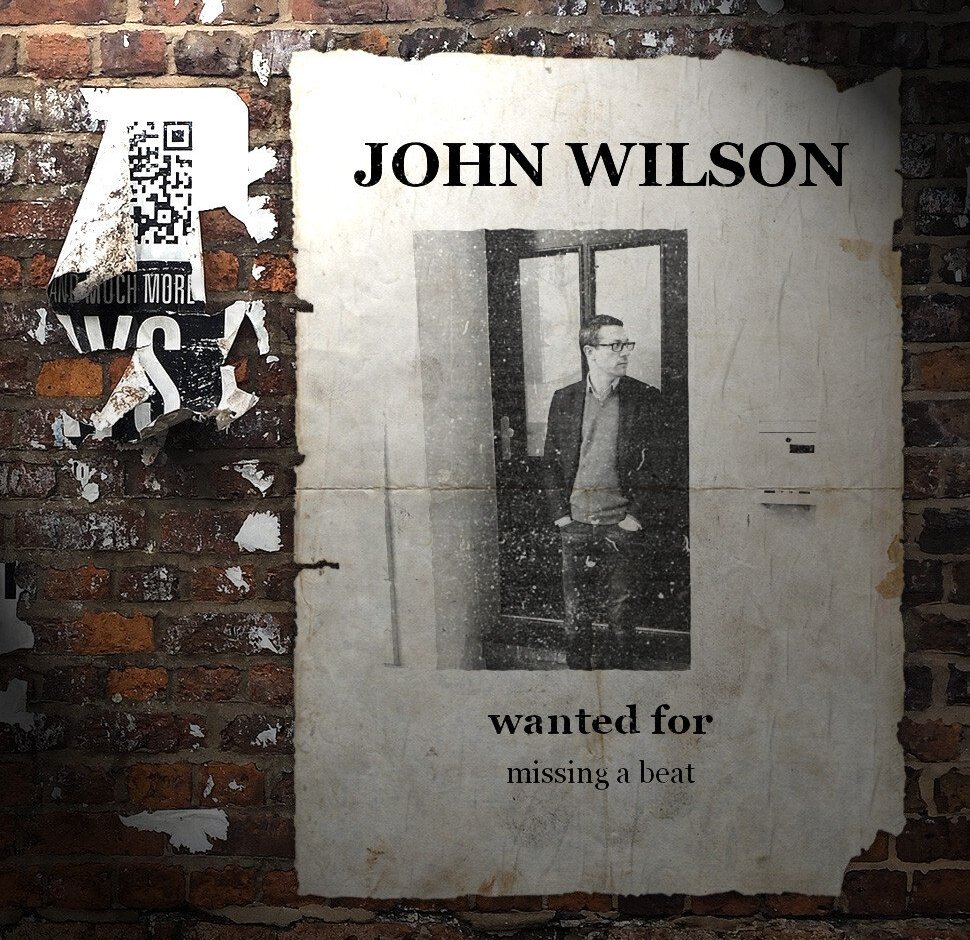 Above the picture of John I stole from him:
 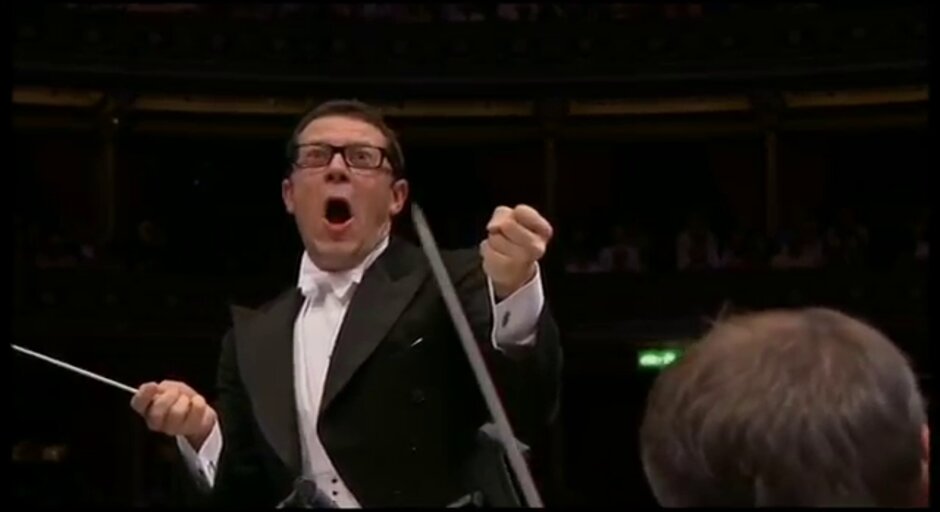 Saw Ben-Hur (20th Century Fox, 1959) first run years ago with my very Catholic mom so I remember the music as Holy music. Then after that, as Monty Python music.
 American audiences will probably better remember Jean Heywood, who died in September at the age of 98, as the grandmother in another classic story about artistic aspirations in the north,
 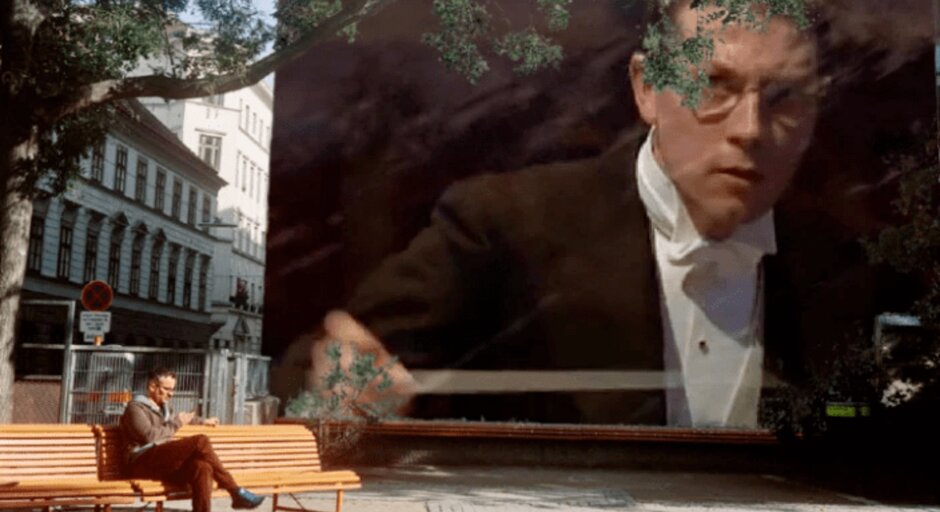 John was all of 26 when he first conducted a recording of
  You really fought for that tympani, didn’t you love? Above:

 Clare Teal and Conductor John Wilson, 28 September 2014. Above John and Clare: Pete Townshend sings “
 "I'll Be Dead Before You Break My Heart"