Evelyn Mandac Sings Gustav Mahler’s 2nd “Resurrection” Symphony in C Minor with Philadelphia Orchestra, Eugene Ormandy Conducts, 1970

Mahler’s “Resurrection” was voted the fifth-greatest symphony of all time in a survey of conductors carried out by BBC Music Magazine. (I wonder if my beloved conductor John Wilson voted.)
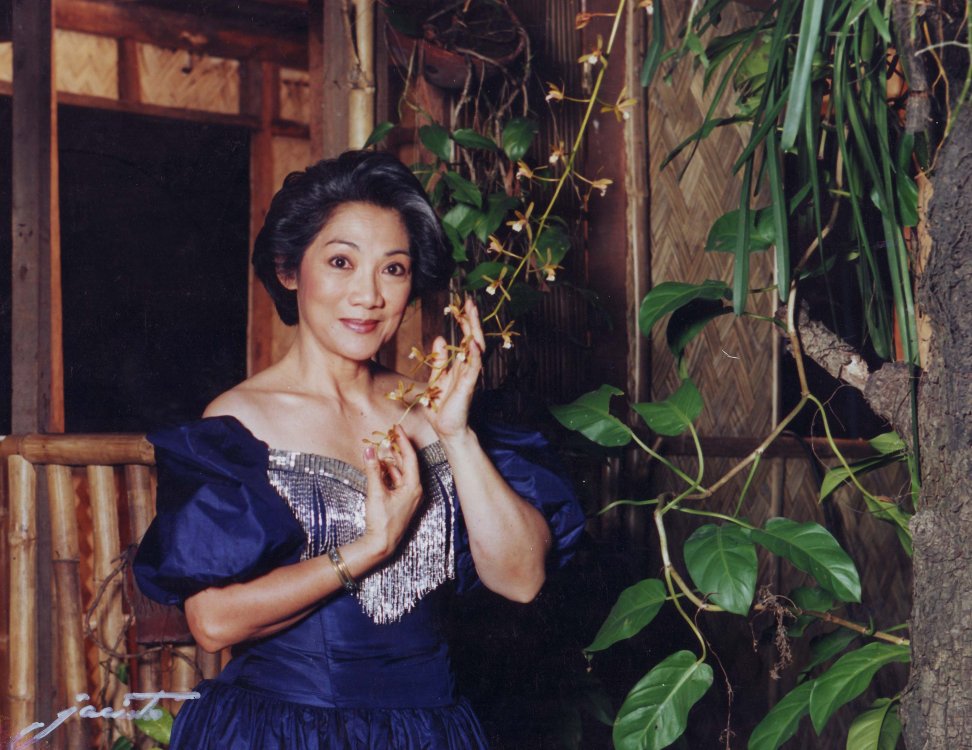

evelynmandacAbove Cebuana New York-based soprano Evelyn Mandac (b 1945), who remains one of my role models (listen to her float over the fifth movement), the only Filipino singer ever to play the Met: Mahler’s entire glorious second symphony.


Although now lauded as monuments of vision and creativity, in their time Mahler’s symphonies were occasionally reviled but more often dismissed as a conductor’s egotistical indulgence. A critic of the time called his work “one hour or more of the most painful musical torture” (and that assault was directed toward his lovely pastoral Symphony no. 4!). As late as 1952, a detractor still moaned that “an hour of masochistic aural flagellation, with all of its elephantine forms, fatuous mysticism and screaming hysteria … adds up to a sublimely ridiculous minus-zero.”

The problem wasn’t so much a matter of grasping Mahler’s musical style. As the culmination of the long line of Viennese symphonists, his ideas were firmly rooted in the conservative structures of Haydn, Mozart, Beethoven, Schubert and Bruckner. Rather, the challenge lay in its emotional premises. As critic Herbert Reid later posited, “Mahler sensed the imminent upheavals that were to shatter the rationality and optimism that had driven Western civilization up to World War I. His symphonies are spiritual quests that reflect a wholly modern ambivalence of joy and pain, faith and doubt, transcendence and perdition. Mahler was way ahead of his time. Only by the 1960s did his private anxieties at last become our own.”

The Resurrection was Mahler’s favorite symphony, which he led on many auspicious occasions, and it had the longest gestation of any of his works. The opening was completed in 1888 as “Totenfeier” (“Funeral Rites”), a stormy symphonic poem to bear the hero of Mahler’s recently-completed First Symphony to his grave, amid torment over the meaning of his life. The middle movements awaited Mahler’s summer vacation of 1893 and reflected his fascination with the same medieval folk poetry which provided the texts for most of his songs.

The first movement is hugely dramatic; according to Mahler’s own program notes it aims to convey nothing less than a search for the meaning of life. The second, representing long-forgotten pleasure, is a gentle, old-fashioned dance of lilting grace, yet challenged by creeping shadows. The third is a grotesque and wickedly sarcastic waltz, shot through with anguished outcries. The fourth is a child’s song, naïve and wistfully introspective.

And then comes the vast finale, which depicts the full terror and glory of a pagan last judgment and resurrection. It begins with a huge crash and progresses through episodes of hushed expectancy, quivering tension, funeral dirges, hopeful fanfares and fevered misgiving, culminating in a triumphant apocalyptic chorale, one of the most glorious and powerful climaxes in all of music. Mahler adds to the awesome wonder with extraordinary instrumental effects, including offstage brass, a massive battery of percussion and ultimately the sheer visceral excitement of the potent sound produced by hundreds of singers and players. ~ Peter Gutmann, Classical Notes

FULL DRESS // A gifted mesmerist—a sinister composer—a naive young conductor from the north…inspired by an episode from the life of Rachmaninoff // DOWNLOAD FREE BOOK POSTER

My Darling John Wilson Conducts The John Wilson Orchestra in Jule Styne+Sid Ramin+Red Ginzler’s Overture to Gypsy (1959) at the BBC Proms, 2012

The indication “burlesque strip stylewas actually written on the music right around 4:00. Both Ramin and Ginzler cut their teeth writing swing arrangements; lead trumpet in the original Gypsy pit was Dick Perry, late of the Tommy Dorsey Orchestra. Solo trumpet Mike Lovatt here lays it down fine. Some people obviously know something about burlycue. Composer Jule Styne was pleased with this overture’s orchestration.


The entire 2012 BBC Proms concert The Broadway Sound with The John Wilson Orchestra is available on YT here


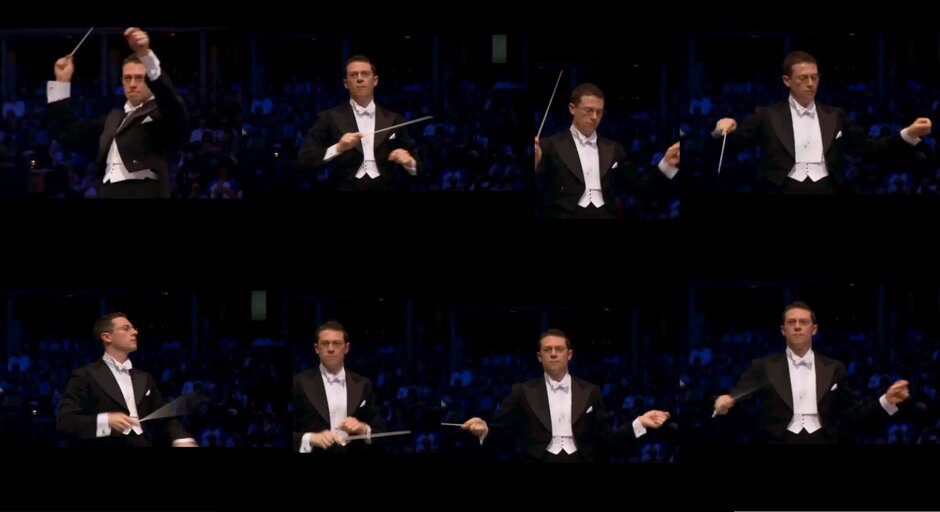
John Wilson SOLAbove the man of my desire: The entire audio recording of The Broadway Sound…plus at 4:00 of this clip on YT of the Overture John shimmies like a brazen hussy. That was the moment I fell in love with you, John mi vida. That lovely luscious moment when I stumbled onto that clip of you at the Royal Albert and got your number


FULL DRESS // A gifted mesmerist—a sinister composer—a naive young conductor from the north…inspired by an episode from the life of Rachmaninoff // DOWNLOAD FREE BOOK POSTER

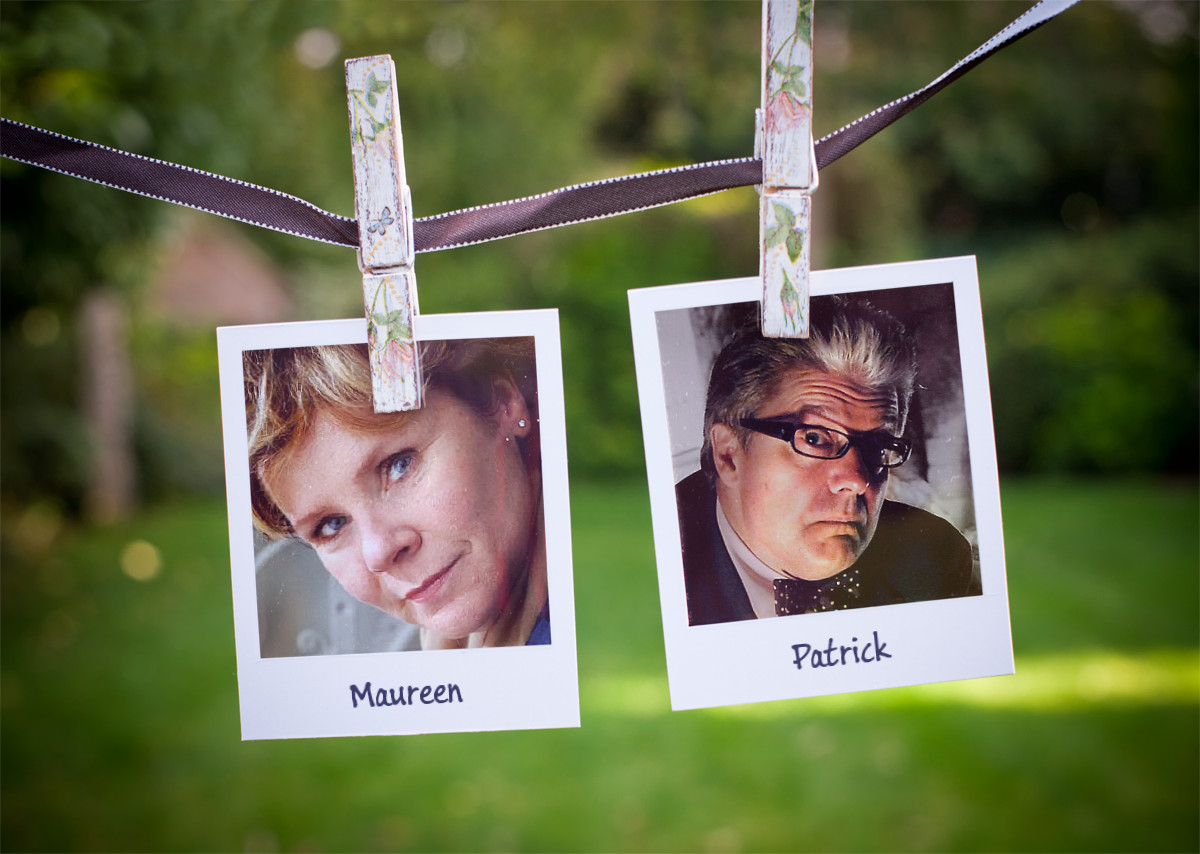
From The Patrick and Maureen Maybe Music Experience, Written and Performed by Patrick Barlow, with Imelda Staunton

On BBC radio 1999, so I guess that makes this show 24 years old.

The Patrick and Maureen Maybe Exprience.jpg

Patrick: This is Irina, the performance artist from Praha.
Maureen: Where?
Irina: Praaa-ha.
Maureen: Yes, I think we know where she comes from. Does she normally wear that?
Irina: I wear very little. There is a saying in my country, “Music is like the body. The more it is exposed, the more it can arouse.” Another expression we have in Czech, “Music is like sex—if we do not have it, WE DIE!!!”
Maureen: (alarmed) Sex. She said sex!
Irina: My music is like my sex. It come from the dark inside of my wooomb of my sex! Yearning to receive the seed of the dark black innards of my inward being… Dark, black, and hot, they copulate in the tone of the music of the fire that meets and heats, and in the heat is born the sacred coming of the sex of my body, is sex and my body is music, on and in, and in and on, my body is the sex of my heat, and my music, my heat, my body is on…
Maureen: Heat?
Irina: Of course. Always. Or as we say in my country, “[something-something-sex in Czech]”… Now I tune and prepare. (plays violin, orgasming loudly to music)
Maureen: Well, that was quite unusual.
Irina: (panting) Thank you.
Patrick: Um, did you actually achieve…?
Irina: (more panting) Orgasm? Of course.
Maureen: So, any other questions you’d like to ask, Patrick…? Any tips? Sorry, the producer’s flashing me. (in headset) Yup! Sorry? Yes yes, I know, well, he’s had her on, it wasn’t my idea…
Patrick: I did not get her on! I was under the impression we agreed we needed an example of the solo fiddle…
Maureen: Yes yes, you would like a fiddle wouldn’t you? (in headset) Yes, yes, all right. (hangs up headset) I’m afraid this is the BBC and we can’t have people having orgasms on it. Can we, Patrick?
Patrick: (deflated) No, no, I’m afraid not.
Maureen: (to Irina) So please leave. Now our next guest…

The battling couple then go on to humiliate Juliet Stevenson.


FULL DRESS // A gifted mesmerist—a sinister composer—a naive young conductor from the north…inspired by an episode from the life of Rachmaninoff // DOWNLOAD FREE BOOK POSTER

A Great American Songbook Song for My Beloved John Wilson, Conductor: “Long Ago and Far Away” by Kern-Gershwin; Plus the “Hooray for Hollywood” Overture from the 2011 Proms Arranged by John

John, I know you know this song because you arranged it for your 2011 BBC Proms “Hooray for Hollywood” Overturethe loveliest orchestral version of this tune I’ve ever heard, by the way. If I hadn’t been in love with you before, my love, this would’ve clinched it.

“Long Ago (and Far Away)” is a popular, Oscar-nominated song with music by Jerome Kern and lyrics by Ira Gershwin from the Technicolor film musical Cover Girl starring Rita Hayworth and Gene Kelly (Columbia, 1944). Charting versions were recorded almost simultaneously by Dick Haymes and Helen Forrest, Bing Crosby, Perry Como, and Jo Stafford.

John Wilson 'Hooray for Hollywood' Overture.jpgAbove: The Jo Stafford recording was released by Capitol Records; the record first reached the Billboard magazine charts on 4 May, 1944 and lasted 12 weeks on the chart, peaking at #6.


COMPLETE downloadable audio of the BBC Proms 2011 concert John Wilson and The John Wilson Orchestra “Hooray for Hollywood” here / complete video on YT here


EXTRA! As long as we’re on the topic of wartime warblers, here’s Ginny Simms with the Kay Kyser Orchestra in my favorite rendition of “With the Wind and the Rain In Your Hair” (Clara Edwards, 1935).


FULL DRESS // A gifted mesmerist—a sinister composer—a naive young conductor from the north…inspired by an episode from the life of Rachmaninoff // DOWNLOAD FREE BOOK POSTER

Stephen Sondheim, Earl Wrightson, and Irwin Kostal, Leonard Bernstein’s Legendary Orchestrator, On American Musical Theatre, WCBS, 15 October 1961

In an episode of this television series (available on my YT channel here), originally broadcast exclusively in New York City, Sondheim speaks before a workshop of NYC high school students, discussing the genesis of such songs as “Small World”, “I Feel Pretty”, and “One Hand, One Heart,” which are performed by Martha Wright and Ralph Curtis.

This show also includes question and answer period with Irwin Kostal, arranger and conductor for West Side Story. Hosted by Earl Wrightson. Produced by Ned Cramer. Directed by Neal Finn.

  • Everything’s Coming Up Roses – The CBS Orchestra
  • Small World – Martha Wright
  • Maria – Ralph Curtis
  • I Feel Pretty – Martha Wright
  • Tonight (Balcony Scene) – Ralph Curtis and Martha Wright
  • One Hand, One Heart – Ralph Curtis and Martha Wright
  • Mambo – The CBS Orchestra
  • Cool (Fugue) – The CBS Orchestra
  • Everything’s Coming Up Roses (reprise) – The CBS Orchestra

Sondheim, Wrightson, KostalAbove: Lyricist-Composer Stephen Sondheim, Baritone/Host Earl Wrightson, Orchestrator-Conductor Irwin Kostal. Again, here’s the clip on YT that provides a rare glimpse into the creative life of Sondheim and Kostal.


Here’s an excerpt transcription:

Mr Kostal, what is the difference between an orchestrator and an arranger?

It refers specifically to what you find on the music. When a composer composes a piece of music, we hope that it’s a complete piece of music, and when a man like Mr Bernstein composes the music (short laugh) it is. So all you do, you just discuss with him what he’d like to hear, flutes, violins…and you follow exactly what is written on the paper. This is what I call orchestration. Now, I get to do very little of that kind of work…because nowadays composers don’t bother with too much detail…

Steve [Sondheim] here is the kind of man we need because he’s studying music, and believe me that is a rarity on Broadway, because most composers don’t… At one time in history, composers actually did their own orchestration. They had the time in those days…but also, they could do it. For instance, Victor Herbert was a tremendous orchestrator. On one television show I did recently I actually used Mr Herbert’s scores as he wrote them in 1916—I couldn’t do ‘em any better. He knew what he was doing. Kurt Weill was the last one to do this. George Gershwin never did it on Broadway, but he—after he became a successful songwriter—studied music and learned how to orchestrate so that by the time he did Porgy and Bess he was able to do a very good job on the orchestrations.

Now, in arranging—if the composer does not do his job properly, the orchestrator has to come in and finish the job for him. Now, you’d be surprised how many times I do Broadway shows where I get roughly a one-line melody, a lead sheet, and I have to add the bass line, the harmony, the chords, and if it goes on for four minutes or a routine I have to think of things for the flutes to play and the violins to play etcetera, and it becomes a hefty job and I really feel like I am a composer’s partner when I do this*… You know, the more you do of this sort of work, the less the composer likes it. Because he’s kind of mad at you because he didn’t do it himself, I think anyway. And it serves him right. He should do it himself. I think he should go to school himself and learn. We have too many lead sheets—sure, the melody is the most important thing in music, but too many of our composers have decided to write only the melody. They have separated melody from music. Now, the art of melody writing is not a separate art from music, it’s a part of music. And when they have written this top line and leave the rest to me, they’ve got to be dissatisfied because they didn’t do it themselves. Let them get down to their business and go to school and learn to write!

[*I wonder who’s he’s talking about. Shinbone Alley’s George Kleinsinger? Fiorello’s Jerry Bock? Surely not The Music Man’s Meredith Willson—Willson went to Juilliard.]


FULL DRESS // A gifted mesmerist—a sinister composer—a naive young conductor from the north…inspired by an episode from the life of Rachmaninoff // DOWNLOAD FREE BOOK POSTER

Letter to Leonard Bernstein from Felicia Montealegre, Late 1951

An extremely private but deeply moving letter, published in a collection by Yale U Press in 2013. This was written around the time she had just married Bernstein and was still acting in television (watch Felicia as Mildred in Of Human Bondage on Studio One on my YT channel here):

Lenny and FeliciaAbove the newlyweds: Bernstein’s early piano composition, “Four Anniversaries: 1. For Felicia”

Darling,

If I seemed sad as you drove away today it was not because I felt in any way deserted but because I was left alone to face myself and this whole bloody mess which is our “connubial” life. I’ve done a lot of thinking and have decided that it’s not such a mess after all.

First: we are not committed to a life sentence—nothing is really irrevocable, not even marriage (though I used to think so).

Second: you are a homosexual and may never change—you don’t admit to the possibility of a double life, but if your peace of mind, your health, your whole nervous system depend on a certain sexual pattern what can you do?

Third: I am willing to accept you as you are, without being a martyr or sacrificing myself on the L.B. altar. (I happen to love you very much—this may be a disease and if it is what better cure?) It may be difficult but no more so than the “status quo” which exists now—at the moment you are not yourself and this produces painful barriers and tensions for both of us—let’s try and see what happens if you are free to do as you like, but without guilt and confession, please!

As for me—once you are rid of tensions I’m sure my own will disappear. A companionship will grow which probably no one else may be able to offer you. The feelings you have for me will be clearer and easier to express—our marriage is not based on passion but on tenderness and mutual respect. Why not have them?

I know now too that I need to work. It is a very important part of me and I feel incomplete without it. I may want to do something about it soon. I am used to an active life, and then there is that old ego problem.

We may have gotten married too soon and yet we needed to get married and we’ve not made a mistake. It is good for us even if we suffer now and make each other miserable—we will both grow up some day and be strong and unafraid either together or apart—after all we are both more important as individuals than a “marriage” is.

In any case my dearest darling ape, let’s give it a whirl. There’ll be crisis (?) from time to time but that doesn’t scare me any more. And let’s relax in the knowledge that neither of us is perfect and forget about being HUSBAND AND WIFE in such strained capital letters, it’s not that awful!

There’s a lot else I’ve got to say but the pill has overpowered me. I’ll write again soon. My wish for the week is that you come back guiltless and happy.

~F

from The Leonard Bernstein Letters
edited by Nigel Simeone
Yale University Press, 2013


FULL DRESS // A gifted mesmerist—a sinister composer—a naive young conductor from the north…inspired by an episode from the life of Rachmaninoff // DOWNLOAD FREE BOOK POSTER

John Wilson Discourses Upon Leonard Bernstein at Birmingham Symphony Hall, 24 January 2018

I started transcribing John’s pronouncements verbatim after this unbelievable doozy, just to make sure I heard what I heard.

john-wilson-on-bernsteinStephen Maddock, CEO of the City of Birmingham Symphony Orchestra, who manages to insert the word Gesamtkunstwerk into all his conversations, lets the man I love John Wilson have a go at not only Leonard Bernstein, but his excellent wife Felicia with a near antisemitic remark. Above: The entire audio of John’s chat.
My bonny John at 7:55: “The music is of such importance it actually unlocks some of the questions as to what people are meant to be doing and thinking on stage. I’ve done West Side Story a lo’, I’ve done a few complete productions of it and whenever you are unsure of how to turn something dramatically you look in the score and the subito or the hairpin will actually give you the direction of what’s happening on the stage in every bar.”

John honey, I know you were trying in your stumbling way to tie in the Wagnerian theory of stage action indicated by the music, but here in America our musicals have called these things called books

And at 5:45: “He was writing these musicals to make some money… Because, you know, he had a wife and she wanted to live in a certain amount of style and he wanted, uh, some kind of security and…between 1943 with Oklahoma and 1965, 68, you have a fifteen-year period [sic] when there was greaaat money to be made on the Broadway stage, and he made no secret about it, you know… He wrote Wonderful Town in three weeks because he wanted to cash in…”

John, I know it was just a businessmen’s matinee, but couldn’t you have put some of your own genuine ideas into your talk?

FULL DRESS // A gifted mesmerist—a sinister composer—a naive young conductor from the north…inspired by an episode from the life of Rachmaninoff // DOWNLOAD FREE BOOK POSTER

Pre-Code Thrillers and The First Porn Movie I Ever Did, 2

I booked my first acting gig as a result of getting into a bondage game with that producer from England with the hot tub. Pau—sorry, think I’ll call him Basingstoke* from now on—and I were fooling around in his sex dungeon when he asked me if the place was giving me any story ideas. This is how movies are born.

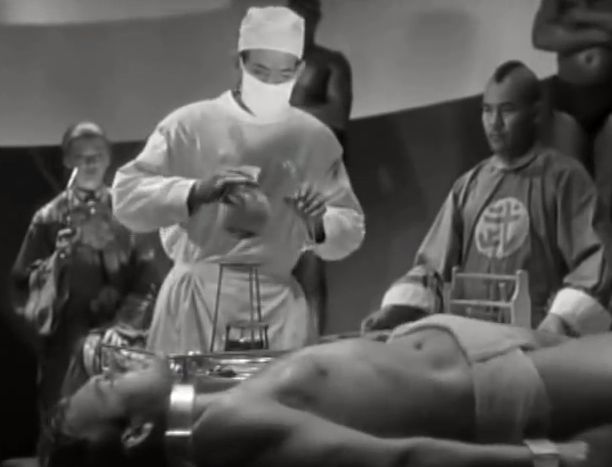
I told him it reminded me of one of my favorite flicks from the golden pre-Code days, The Mask of Fu Manchu (MGM, 1932), starring Boris Karloff as Fu Manchu and Myrna Loy as his “ugly and insignificant” daughter, Fah Lo See. With Karen Morley, Charles Starrett, etc etc and a cast of literally hundreds of male extras of various types. Was especially partial to the oiled and muscular mamelukes.


“Torturing Terence” from THE MASK OF FU MANCHU is available on my YT channel here / The entire film is available to watch here


mask of fu manchuFah Lo See watches with lust-crazed eyes as her dad turns the handsome English adventurer into her zombie love slave. She promises to be gentle, John.
Part 1 “Full Dress” here.
Part 3 “Sausalito Hot Tub” here.
Part 4 “Lovelace” here.

*All in affection, Paul.


FULL DRESS // A gifted mesmerist—a sinister composer—a naive young conductor from the north…inspired by an episode from the life of Rachmaninoff // DOWNLOAD FREE BOOK POSTER

My Beloved Bearded English Conductor John Wilson; Plus English Harpsichordist Matthew Halls Plays Bach’s Goldberg Variations

Just had an interesting daydream of my beloved John Wilsonnow shag-headed and fully bearded (he grows it fast)—conducting a chamber orchestra on Zoom. Hmm… Wonder if he might actually be planning something like that right now…

Meanwhile, those of us who are still earthbound can treat our heads and ears to Oxford-trained harpsichordist Matthew Halls’s rendition of the complete Goldberg Variations of Johann Sebastian Bach (for which exists a cute story why it’s called that I won’t get into right now, although if you know/like the Variations you probably know it anyway).

This is a sparkling 2011 recording done by Linn Records of Glasgow, who also recorded that great jazz album by vocalist Claire Martin, Richard Rodney Bennett’s jazz partner, I mentioned in an earlier posting.


Aria IVariation 1 / Variation 2 / Variation 3 First Canon / Variation 4 / Variation 5 / Variation 6 Second Canon / Variation 7 al Tempo di Giga / Variation 8 / Variation 9 Third Canon / Variation 10 Fuguetta / Variation 11Variation 12 Fourth Canon / Variation 13 / Variation 14 / Variation 15 Fifth Canon / Variation 16 Overture / Variation 17 / Variation 18 Sixth Canon / Variation 19 / Variation 20 / Variation 21 Seventh Canon / Variation 22 / Variation 23 / Variation 24 Eighth Canon / Variation 25 / Variation 26 / Variation 27 Ninth Canon / Variation 28 / Variation 29 / Variation 30 Quodilibet / Aria II


FULL DRESS // A gifted mesmerist—a sinister composer—a naive young conductor from the north…inspired by an episode from the life of Rachmaninoff // DOWNLOAD FREE BOOK POSTER

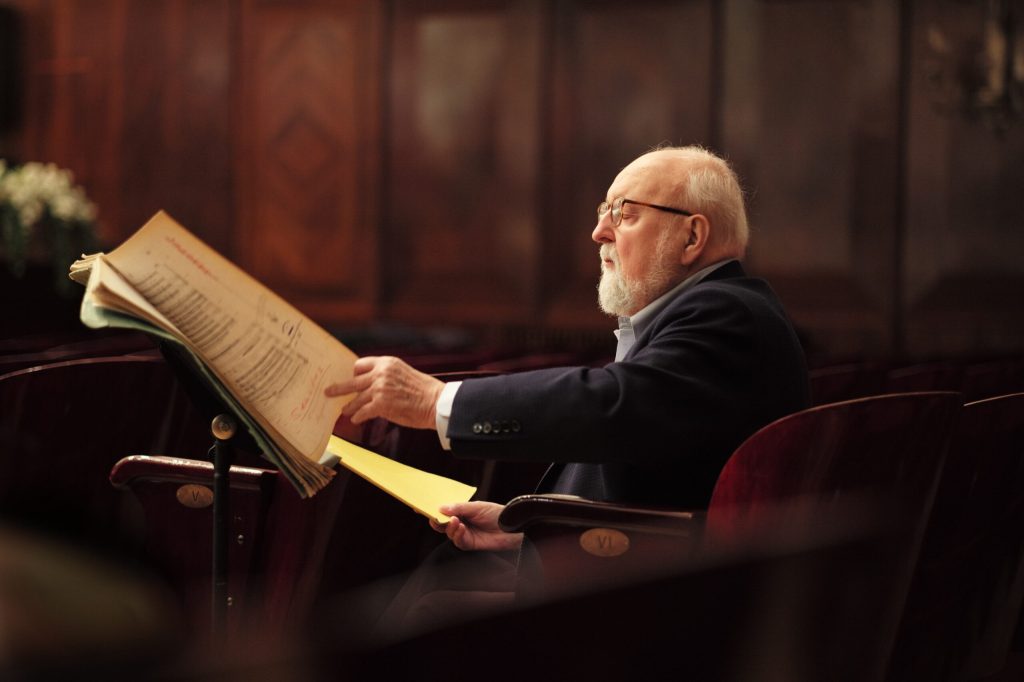
Krzysztof Penderecki (1933 – 2020) and His Credo, as Commissioned and Conducted by Helmuth Rilling: the Full Recording

Here’s Polish-born Krzysztof Penderecki, one of the most dynamic composers ever of orchestral-choral music, and his late masterwork, Credo.


Credo was a work commissioned and conducted by Helmuth Rilling, and performed by the Oregon Bach Festival Choir and Orchestra. It won a Grammy for Best Choral Performance in 2000.


FULL DRESS // A gifted mesmerist—a sinister composer—a naive young conductor from the north…inspired by an episode from the life of Rachmaninoff // DOWNLOAD FREE BOOK POSTER

My Darling John Wilson Conducts The John Wilson Orchestra in a Semi-Staged Concert of My Fair Lady at the Royal Albert Hall, BBC Proms, 14 July 2012

From 2020: Completely bummed out that John’s 21 January concert with the LSO at the Barbican was completely canceled, so here’s my bonny lad at the 2012 BBC Proms with his eponymous orchestra in a really classy (for once) semi-staged concert of the complete 1956 Broadway musical, My Fair Lady, book and lyrics by Alan Jay Lerner and music by Frederick Loewe; orchestration (for the movie score) by Andre Previn, orchestration enhancement by John Wilson. Cast: Anthony Andrews, James Fleet, Alun Armstrong, Julian Ovenden etc, and as Eliza, Annalene Beechey.


EXTRA! John Wilson and the Sinfonia of London play the Embassy Waltz from their new album, Hollywood Soundstage (Chandos, Sep 2022)


FULL DRESS // A gifted mesmerist—a sinister composer—a naive young conductor from the north…inspired by an episode from the life of Rachmaninoff // DOWNLOAD FREE BOOK POSTER

JFK and Red Dwarf, Season 7, Episode 1 (BBC2, 1997): “Tikka to Ride”; Plus the Red Dwarf Theme and That Movie About Churchill, Scored by Howard Goodall and Orchestrated by My Beloved John Wilson

From 25 November, 2022: On the 59th anniversary of the funeral of our own murdered-in-broad-daylight John Fitzgerald Kennedy, nothing moves me as much as the handful of scenes (here on my YT channel) where RD’s time-traveling spaceship crew—Kryten the android, Rimmer the Hologram, Cat the evolved cat, and Dave Lister the last human in the universe—unite with a disgraced JFK to right a timeline gone wrong and restore our 35th president’s shining legacy to history. That’s American actor Michael J Shannon playing Kennedy / The Shooter on the Grassy Knoll.

Red Dwarf Above Robert Llewellyn, Chris Barrie, Danny John-Jules, Craig Charles and Michael J Shannon as Kennedy /  The Shooter on the Grassy Knoll: The Red Dwarf theme by Howard Goodall, who also wrote the score to The Gathering Storm (2002), which was orchestrated, at age 30, by my beloved John Wilson.
EXTRA! This seems to be the best place for this Howard Goodall piece: “The Lord Is My Shepherd (Psalm 23)” aka theme for the BBC’s sweet and funny 1994 series The Vicar of DibleyPlease enjoy its delicate and reverent scrumptiousness.

EXTRA EXTRA! The long, clear, laughtrack-free jukebox version of “Tongue-Tied”! Danny John-Jules never looked more fantastic.


FULL DRESS // A gifted mesmerist—a sinister composer—a naive young conductor from the north…inspired by an episode from the life of Rachmaninoff // DOWNLOAD FREE BOOK POSTER

Lovelace the Film, Or How to Give Penilingism a Bad Name and The First Porn Movie I Ever Did, 4

I only caught this flick on Prime because Peter was in it, and Peter’s the only Gyllenhaal I think I’d actually enjoy having a beer with even now. The last time we met in New York he had just done Jarhead. Maggie was six months pregnant and being fussed over by her mother, Stephen was in the men’s room on his Blackberry talking to his analyst, and Jake was skulking outside the restaurant—we were at Balthazar—wearing a hoodie and hiding in the shadows. It was that kind of family.

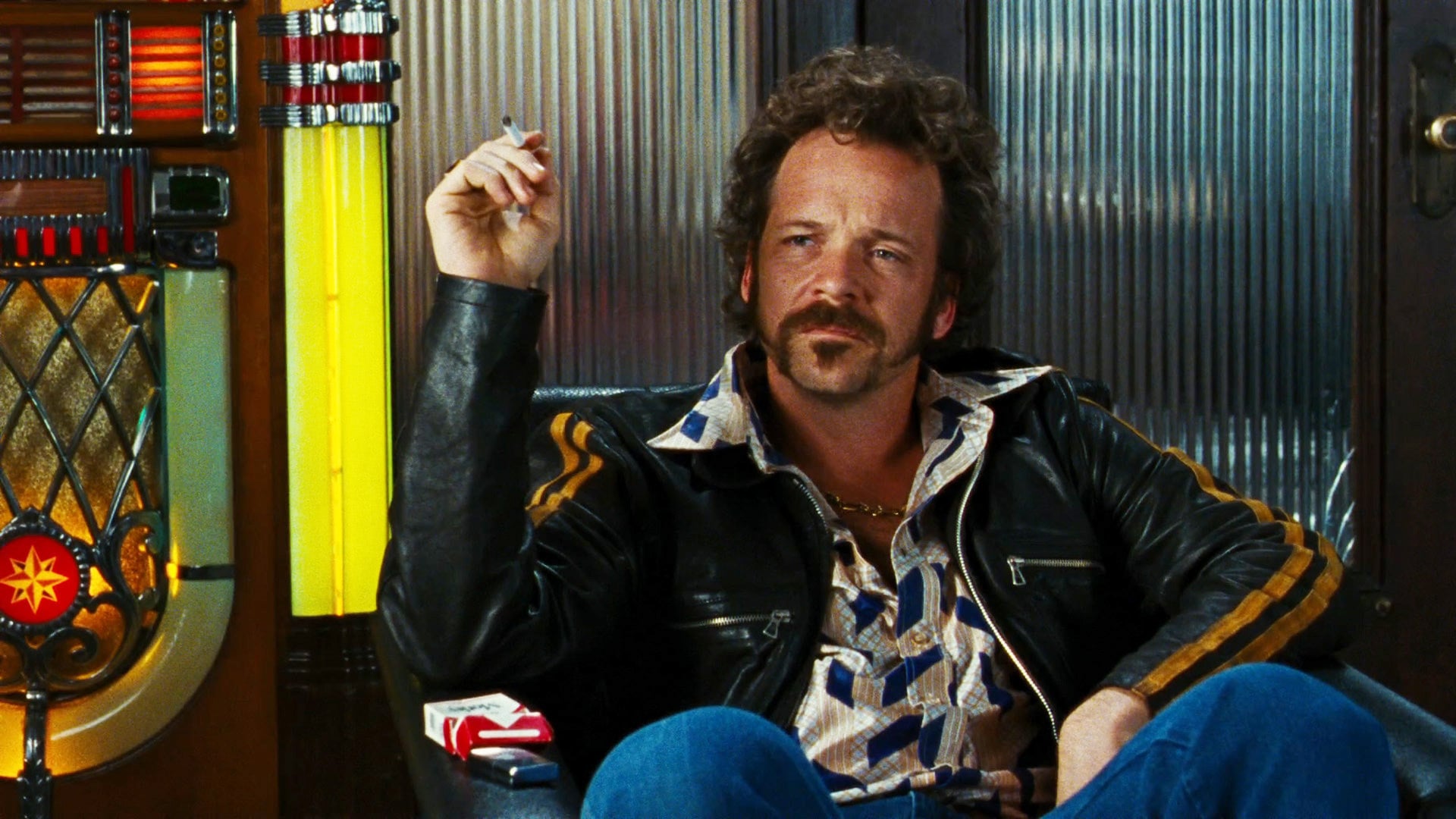
Peter Sarsgaard in LovelaceYes, teenage Cantara made out in early 70s Minneapolis with males who looked and dressed exactly like this. Peter Sarsgaard in Lovelace (2013).


One of the first things Peter did, after we were introduced and he gave first Mister Grumble then me a firm friendly handshake, was try to engage us in a conversation about Melungeons. “You know,” he told us mock-confidentially, “Elvis was a Melungeon.” I evinced surprise and interest—I’d never heard the term before, ever—and Peter obviously was about to launch into a carefully-considered patter about Melungeons, when Maggie came over to fetch him. He smiled at us a dazzling smile, excused himself and trotted off with her.

So for now, enough of Peter and on to the movie he was in: Lovelace, a 2013 indie based on the book Ordeal by Linda Boreman aka Linda Lovelace, which is chiefly about her experience making the influential porn classic Deep Throat (1972). As a movie it doesn’t play too badly; some hack wrote the script, but the same politically savvy gay filmmakers who produced/directed The Life and Times of Harvey Milk, Howl, The Celluloid Closet, etc evidently had a lot of artistic control over this project. So there’s quite a lot of fooling around with the narrative structure and other arty bullshit like that, but it’s not enough to hide the fact that there’s really no core idea or message. Not to mention there’s not a lot of entertainment value, either… Nope, in this package there’s absolutely nothing clever, insightful, sensitive, or aesthetically satisfying—all screen values, incidentally, which would NOT be out of place in a porn movie.

Peter was good, but Peter’s always good at playing soft-spoken villains. What really interested me was Hank Azaria’s portrayal of one of my directors, Gerard Damiano. A small role but well-executed. Mr Damiano himself was soft spoken, I remember, and very patient. His was the last word on the set. Everyone respected him. He also paid me a compliment I immediately put into my mental jewelry box, and there it’s stayed ever since…

Part 1 “Full Dress” here.
Part 2 “Zombie Love Slave” here.
Part 3 “Hot Tub” here.
Part 5 to come…

EXTRA! Here’s Peter in the miniseries Wormwood, with a free link to HP Albarelli’s fascinating, terrifying book about Dr Frank Olson and the CIA

EXTRA EXTRA! Here’s my rendering “Penilingism” on DeviantArt


FULL DRESS // A gifted mesmerist—a sinister composer—a naive young conductor from the north…inspired by an episode from the life of Rachmaninoff // DOWNLOAD FREE BOOK POSTER

Andre Rieu and The Johann Strauss Orchestra on Tour in North America 2023; Plus the Entire Concert in Maastricht, 2018

“Emotions are the key. Everybody is welcome to my concerts. We open our hearts for the audience and the audience opens their hearts for us. Every night my orchestra and I see people dancing and singing in the aisles, enthusiastic and carefree. Together we spend evenings that we do not forget. When people write to tell me that they need two weeks to come down after my concerts, it makes me the happiest man in the world!”

Love in Maastricht André Rieu 2018The complete annual summer concert of the greatest festival orchestra in the world, The Johann Strauss Orchestra, led by Andre Rieu, in the town square Vrijthof in their home town of Maastricht, The Netherlands, 7 July 2018. Above Maestro Rieu: An audio recording of the entire JSO in Maastricht 2018 concert.


From their rousing entrance to the tune of “76 Trombones” by Meredith Willson (that’s two l’s, thank you) to their invariable sign-off pieces: the Maastricht city anthem; Strauss Sr’s “Radetsky March”; “An der schönen blauen Donau” (of course); (no Shostakovich’s Jazz Waltz No 2 this year, though—here’s the 2010 performance on YT); “Can’t Help Falling in Love” (from “Plaisir d’amour” by Jean-Paul-Égide Martini, 1784); Austrian composer Robert Stoltz’s “Adieu, mein kleiner gardeoffizier”; and the Rocco Granata standard “Marina” (played every year at the San Gennaro Festival in Little Italy, NYC), there’s two hours here of sheer delight, not to mention drinking and dancing. It’s always a special afternoon when I get to play the entire Maastricht concerts for me and Mister Grumble, I open a bottle and dance around the room and he grins and drinks. Just like in our old commune back in San Francisco in the 70s.

The program (with comments, if any, as they come to me):

  • 0:02 : 01. “76 Trombones” / Meredith Willson
  • 5:38 : 02. “Old Comrades” (Alte Kameraden) /  Carl Teike
  • 10:25 : 03. “Granada” / Ernesto Lecuona
  • 15:47 : 04. “Tiritomba” / Guglielmo Cottrau
  • 20:20 : 05. “Nessun Dorma” / Giacomo Puccini
  • 27:07 : 06. “Snow Waltz” (Schneewalzer) / Thomas Koschat
  • 34:39 : 07. “Pie Jesu” /  Andrew Lloyd Webber
  • 41:18 : 08. “Olé Guapa” / A Malando
  • 47:40 : 09. “You’ll Never Walk Alone” / Rodgers & Hammerstein
  • 53:45 : 10. “Clog Dance” / Traditional
  • 56:21 : 11. “Trompeten Echo” / Slavko & Vilko Avsenik
  • 57:41 : 12. “Anton aus Tirol” / Vili Petrič
  • 1:00:33 : 13. “You Raise Me Up” / Josh Groban
  • 1:08:05 : 14. “Lara’s Theme” / Maurice Jarre
  • 1:12:27 : 15. “Meadowlands” (Poliushko Polie) / Lev Knipper, Viktor Gusev 
  • 1:16:24 : 16. “Kalinka” / Ivan Larionov
  • 1:20:12 : 17. “Caro Nome” / Giuseppe Verdi
  • 1:29:05 : 18. “On the Beautiful Blue Danube” (An der schönen, blauen Donau) / Johann Strauss Jr
  • 1:36:21 : 19. “Amigos Para Siempre” / Andrew Lloyd Webber
  • 1:41:44 : 20. “Radetzky March” / Johann Strauss Jr
  • 1:44:26 : 21. Strauss & Co. (medley) / Strauss Jr, Franz Lehar, etc
  • 1:47:54 : 22. “Libiamo” / Giuseppe Verdi
  • 1:52:28 : 23. “Zorba’s Dance” (Sirtaki) / Mikis Theodorakis
  • 1:56:04 : 24. “Macarena” / Los del Río
  • 2:00:18 : 25. “La Bamba” / Ritchie Valens
  • 2:02:32 : 26. “Can’t Help Falling In Love” / Peretti-Creatore-Weiss (from “Plaisir d’amour” by Martini)
  • 2:05:39 : 27. “Het Wilhelmus” anthem of Maastricht / Adrianus Valerius
  • 2:07:40 : 28. “Maastricht, City Of Jolly Singers” / Armand Preud’homme 
  • 2:10:28 : 29. “Adieu, Little Captain Of My Heart” (Adieu, Mein Kleine Gardeoffizier) / Robert Stoltz, Ralph Benatzky)
  • 2:14:11 : 30. “Marina” / Rocco Granata

As for their North American tour, it’s selling out fast, but here’s the itinerary: The US routing begins 12 Sep at Chicago’s Credit Union 1 Arena at UIC. Stops include Detroit’s Little Caesars Arena, Elmont NY UBS Arena, and Boston’s TD Garden. The Canadian dates start 21 Sep in Quebec in Centre Vidéotron, followed by gigs in Montreal, Ottawa and Toronto. More info at https://www.andrerieu.com/en/am2023.


FULL DRESS // A gifted mesmerist—a sinister composer—a naive young conductor from the north…inspired by an episode from the life of Rachmaninoff // DOWNLOAD FREE BOOK POSTER