“June Is Bustin’ Out All Over” from Rodgers & Hammerstein’s Carousel, Played by The John Wilson Orchestra, Conducted by John Wilson, BBC Proms 2010

There was one number in the entire JWO Salute to Rodgers & Hammerstein at the Proms that was worth a damn—only one, but it’s a doozy.

john-wilson-rock-star-1

June Is Bustin’ Out All Over
from Carousel (20th Century Fox, 1956)
Richard Rodgers, Oscar Hammerstein II
Rodgers & Hammerstein at the Movies
Warner Classics, 2011

An impressive list of orchestrators went into the making of this film musical number, including Nelson Riddle, Earle Hagen (“Harlem Nocturne” for Ray Noble in 1940; then That Girl Theme; The Dick Van Dyke Show Theme; and The Andy Griffith Show Theme, with Herb Spencer) and John Williams; you can hear the layers and layers of gorgeous sound in bonny John Wilson and his Orchestra’s rendition.

This clip is from the BBC Proms at the Royal Albert Hall, 2010, but really, listen instead to the cut above from The JWO’s 2011 recording. It’s really ravishing.


FULL DRESS // A gifted mesmerist—a sinister composer—a naive young conductor from the north…inspired by an episode from the life of Rachmaninoff // DOWNLOAD FREE BOOK POSTER

My First Music: In Praise of My First Record Stash—6 Great American Songbook Songs “Co-written” by Billy Rose (1899-1966)

From December 2018: I got my first record collection when I was 3 1/2. We had just moved into a little bungalow in Northeast Minneapolis and the previous owners had left a stack of old, old 45s and 78s—Patti Page, Rosemary Clooney, Nelson Eddy, Rudy Vallee etc etc which my mother, heaven bless her, let me keep for myself to play on my kiddie phonograph. This, friends, was my first true introduction to The Great American Songbook. But wasn’t until I started working at ASCAP (at 18) where I had to learn the names of the melody and lyric writers the name “Billy Rose” came popping up (year is date of recording):

Rudy Vallee Would You Like to Take a WalkAbove: Would You Like to Take a Walk? by Harry Warren, Mort Dixon, and Billy Rose, sung by Rudy Vallee.


FULL DRESS // A gifted mesmerist—a sinister composer—a naive young conductor from the north…inspired by an episode from the life of Rachmaninoff // DOWNLOAD FREE BOOK POSTER

Erich Wolfgang Korngold’s Symphony in F-sharp—John Wilson Conducting the Sinfonia of London (Chandos, 2019)

I was an admirer of Korngold ever since I played violin in The Snowman in the orchestra in junior high (reduced score of course; here’s the full score of the Entr’acte), then as a solfeggist at ASCAP in NY around the time RCA was coming out with Charles Gerhardt‘s definitive recordings of Captain Blood, The Sea Hawk, Robin Hood, etc. Then years later in San Francisco I inherited a friend’s collection of Andre Previn and the London Symphony Orchestra, which included Korngold’s Symphony in F-sharp.

Maybe it was from associating the Previn recording with my friend’s death, but I grew to detest the sound of late Korngold. He began to sound false to me—the result, I reasoned, of all those corrupting years in Hollywood. And Previn was his perfect interpreter, of course, two Hollywood minds as one, you might say. Doesn’t, in fact, the first movement sound like a medley of The Ten Best TV Cop Show Themes and Their Underscorings? And then the ringer in the Adagio: The Private Life of Elizabeth and Essex (John Wilson+Sinfonia of London), so recognizable from the movie.

Elizabeth and Essex Warners 1939
Bette Davis portrays Queen Elizabeth, Errol Flynn her faithful but ambitious lover in this sumptuous costume drama. Warner Bros, 1939


The complete THE PRIVATES LIVES OF ELIZABETH AND ESSEX is available to watch here


And so I was content to continue in this apprehension, until Chandos came out last week with a new recording of Korngold’s symphony, played by the newly re-formed Sinfonia of London and conducted by—wait for it—John Wilson. By now, I think I’ve made my feelings clear about John just a little. Whenever he gets really irritating though there’s one thing that I do: I make myself remember the times my bonny lad has absolutely astonished me. The first time was fourteen, fifteen years ago in a screening room in LA when the band from nowhere just ripped into that hack hit “Beyond the Sea” and made it truly soar. The second time was a few years later when I heard the sound, THE EXACT SOUND!!!, of that ultra-Judy number from Meet Me In St Louis“The Trolley Song”, only bigger, more vibrant, more—present.

This is the third time. Who would have thought that a smaller, tighter orchestra, conducted by someone coming in without preconceptions but with a determination to follow through with the composer’s intent, could make a composition sound like an entirely different composition? John said somewhere once that he endeavors to give each musical piece he “takes on board” its correct coloring (which I might believe if he weren’t so maddeningly inconsistent) but here he does the remarkable: Where Previn colors all over the place, trying to make the music into something it’s not, John colors very little. Rather it sounds like, as I say, he actually worked out the composer’s intent to carry him through, and it’s pretty clear that Korngold meant for Symphony in F-sharp to take its rightful place in the Great Central European Repertoire, with its traditional wealth of tonal expressiveness.

So why oh why do some people insist this piece is movie trash? Is it because of that handful of notes from E+E? I swear to God I didn’t hear any other filmic callbacks, and I’m pretty good at catching tunes. But so what if there were? Korngold, unlike the majority of movie composers, retained legal possession of his studio work, which gave him the freedom to rework any of his past themes and phrases as he saw fit. He certainly wasn’t thinking of the flicks once he returned to Europe. Maybe his attachment to these notes was purely sentimental. We’ll never know. It’s a mystery, and I choose to believe that John, consummate musician, respects that mystery.

Anyway John, my signal, my flame, as you’ve done with so many other composers, thanks for leading me back to Erich Korngold. It’s a wonderful recording, a keeper, now the standard against which I’m judging every Korngold Symphony in F-sharp out there (and there are a lot of them, not just Previn’s, as you know), and I would’ve bought it even if I weren’t crazy in love with you.

I Moderato
II Scherzo Allegro
III Adagio Lento
IV Allegro Finale

NOTES for Korngold: Symphony in F (Chandos, 2019) can be found here.


FULL DRESS // A gifted mesmerist—a sinister composer—a naive young conductor from the north…inspired by an episode from the life of Rachmaninoff // DOWNLOAD FREE BOOK POSTER

Two Horror Queens: Composer Elisabeth Lutyens (1906-1983) and Actress Veronica Carlson (1944-2022)

She was eaten by cannibals, bitten by Dracula, and raped by Victor Frankenstein. I adore her.

I am talking of course about English model-turned-actress Veronica Carlson, the most delectable of all of Count Dracula’s victims. Her movie career wasn’t long, but she made a lasting impression on countless adolescents in the 60s, many of whom, now grown, still look forward to watching Dracula Has Risen from the Grave for a really good stroke session.

Hammer, the film studio where Carlson did her best-known work, worked wonders when it came to dignifying luridness, which is what you’d expect from the Brits, wouldn’t you? The British were never sexier than in the 60s. I miss that.

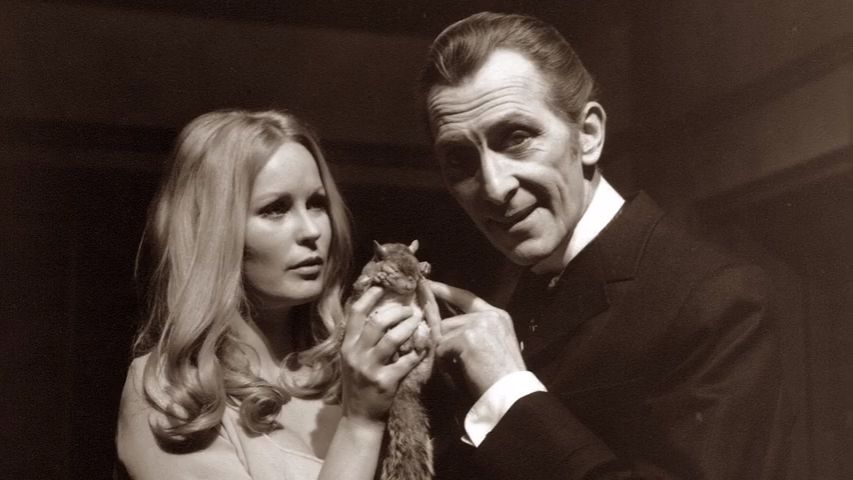
Veronica Carlson, Peter Cushing.jpgIt’s Veronica Carlson’s deeply sexy love-trance gaze at kindly Peter Cushing that makes this publicity pic spring to life. Photo session was done following shooting of their utterly gratuitous, dramatically unfeasible but vigorous rape scene in Frankenstein Must Be Destroyed (1965, Terence Fisher, dir), which made the most of the gorgeous Hammer star’s drawing power.

As for Elisabeth Lutyens, she tells her own story in this short interview with the BBC. Her work for Amicus films is best exemplified by her theme for Dr Terror’s House of Horrors, above. But this short piece is much more to my liking and demonstrates her superior musical gift.

 “Lament of Isis on the Death of Osiris”
composed by Elisabeth Lutyens, 1969


FULL DRESS // A gifted mesmerist—a sinister composer—a naive young conductor from the north…inspired by an episode from the life of Rachmaninoff // DOWNLOAD FREE BOOK POSTER

A Laughs and Tenderness Break: Molly Picon Sings “Oyfen Pripetchik” in Car 54, Where Are You?

We certainly all need some tenderness and a couple laughs right now. Below, the wonderful, luminous Molly Picon—who worked with legendary actor-producer-director-impressario-rival-to-Jacob-Adler-Stella’s-dad-model-for-Max-Bialystock-grandfather-of-Michael-Tilson-Thomas Boris Thomashevsky—sings “Oyfen Pripetchik” (MM Warshawsky 1848–1907), an enduring, evocative song from the past that everyone at a certain time, in a certain place, seems to have known the melody and all the words to. From season 2, episode 6 of the TV comedy masterpiece, Car 54, Where Are You? (Entire episode on my YT channel here. And really, dig the punch line ending.)

Below, a lovely rendition from Israeli singer Chava Alberstein.

Oyfn pripetchik brent a fayerl,
Un in shtub is heys.
Un der rebe lernt kleyne kinderlekh
Dem alef-beyz.

Zet zhe kinderlekh,
Gedenkt zhe, tayere, vos ir lernt do.
Zogt zhe nokh a mol un take nokh a mol:
"Komets-alef: o!"

Lernt kinderlekh, lernt mit freyd,
Lernt dem alef-beyz.
Gliklekh is der Yid, wos kent die toyre
Un dos alef-beyz.

Molly Picon in Car 54 Where Are YouCould you say no to this woman?


FULL DRESS // A gifted mesmerist—a sinister composer—a naive young conductor from the north…inspired by an episode from the life of Rachmaninoff // DOWNLOAD FREE BOOK POSTER

Three Songs from the Great Yiddish Songbook: “Bei mir bist du shoen” Sung by the Barry Sisters; “Rumania Rumania” Sung by Tosca; and “Lekhayim” from the 2018 Yiddish Fiddler On the Roof

I have a heavyweight posting coming so here’re some nice tunes to tide all of you over:

“Bei mir bist du shoen”
by Jacob Jacobs and Sholom Secunda (1932)
sung by the Barry Sisters

“Rumania Rumania”
by Aaron Lebedeff (1925)
sung by Tosca Donati

“Lekhayim”
from Fiddler On the Roof (Grey dir, 2018)
Entirely in Yiddish
by Jerry Bock and Sheldon Harnick (English, 1964)
translation by Shraga Friedman
Complete cast album here

Boris and Bessie Thomashevsky.jpgBoris and Bessie Thomashevsky, because the guy refuses to leave.


FULL DRESS // A gifted mesmerist—a sinister composer—a naive young conductor from the north…inspired by an episode from the life of Rachmaninoff // DOWNLOAD FREE BOOK POSTER

Adam Pounds’s Symphony No.3, Inspired by the Farkakte Lockdown and Dedicated to My Beloved John Wilson and His Sinfonia of London

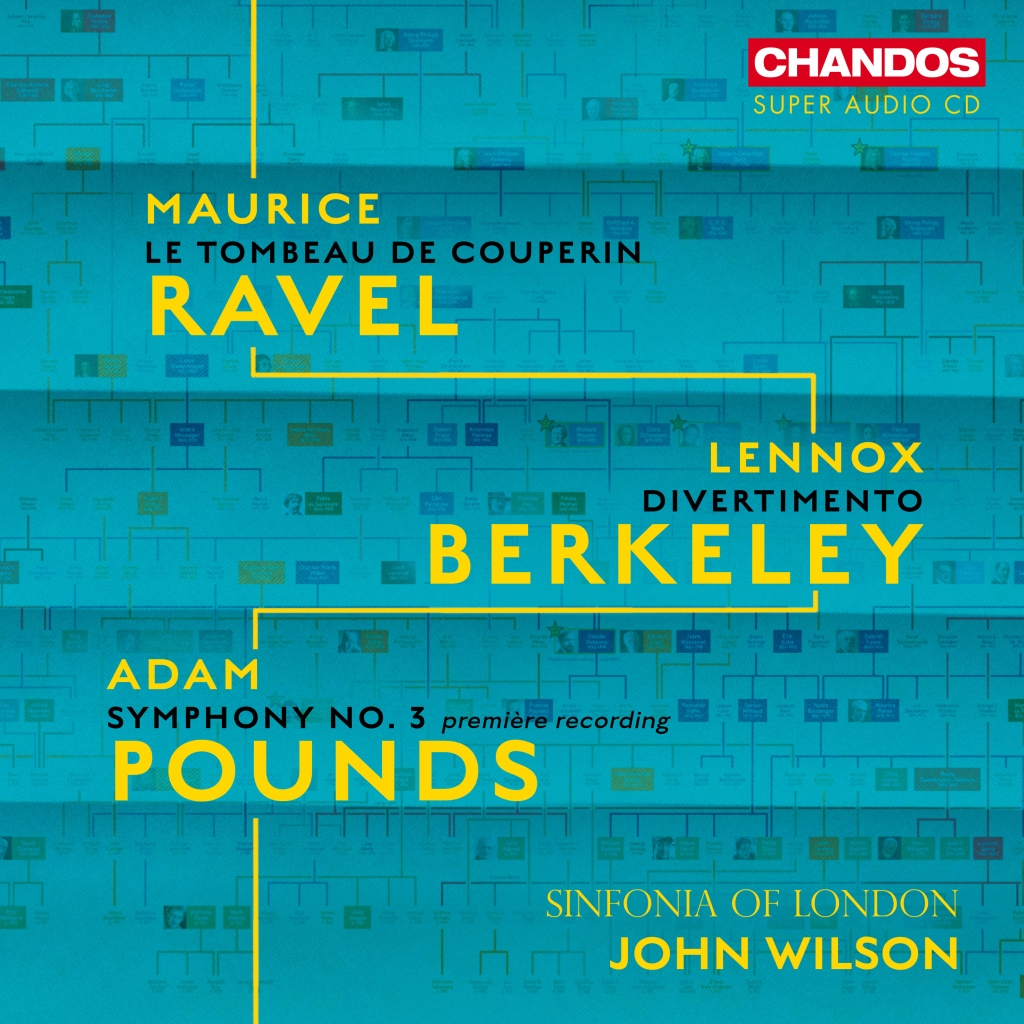
From February 2023: The three composers whose works appear in this album are interconnected—Ravel was a mentor to Lennox Berkeley, and Berkeley to Pounds.


Adam Pounds studied privately with Berkeley in London during the late 1970s, and in his own music has perpetuated the firm commitment of the two earlier composers to clarity and accessibility in everything they wrote.* His Third Symphony was written in 2021 and is a response to the national [UK] lockdowns in 2020 and 2021 prompted by the COVID-19 pandemic. Pounds states that the piece captures the ‘sadness, humour, determination and defiance’ which everyone faced at this time—not least musicians. Scored for relatively modest orchestral forces, the work is dedicated to Sinfonia of London and John Wilson, who give the work its world première recording.

*I’ve read this twice, and I still don’t know what the hell it means.


FULL DRESS // A gifted mesmerist—a sinister composer—a naive young conductor from the north…inspired by an episode from the life of Rachmaninoff // DOWNLOAD FREE BOOK POSTER

To Beloved Conductor John Wilson: Eugene O’Neill and My Old Boss, Classic Film/Stage Director Rouben Mamoulian

From December, 2018. John Wilson, fire of my loins: You are a true musician, you command the finest magical mechanism Western Civilization has ever invented: the symphony orchestra, and you do this for a living. All life is asking you to do is to groove on it, and the fact that I’ll be continuing to make love to you long distance indefinitely.

Now, there are far more interesting exercises in the world of Schenkerian analysis  (kidding, kidding!) than one huffy American ex-porn actress taking the piss out of a popular middle-ranking, BBC-scripted, English conductor… If it weren’t for the fact that ex-porn actress happens to have fallen in love with aforementioned Conductor and longs for him regularly. Therefore she takes Conductor’s pronouncements a little more seriously, a little more discerningly than she would, say, the pronouncements of her own musical compatriots—Alsop, Tilson Thomas, Mauceri etc… Additionally, Conductor reveals in his public statements more about himself than I think he’d prefer, John.

So as much as I’d enjoy ragging you for the impudent (and ultimately self-revealing) remarks you made about Mrs Bernstein and Mrs Coates, I really should finally get down to the one single thing (aside, of course, from your tearass tempi, your overuse of percussion, your rushing of singers, your astonishing lack of color in certain critical pieces) that has bugged me since the day I first encountered it: your juvenile dismissal of my old boss, film/stage director Rouben Mamoulian, and his creative contribution to the original 1943 production of Oklahoma! Now, I know you were only riffing off info you got from some book or Andre Previn, who likely socialized with The Old Man when they were both at MGM. But, as I mentioned in an old posting, of all his stage and screen work The Old Man liked to talk about, the one he liked to talk about the most was Oklahoma! And I turned out to be his perfect audience, because early on I’d confessed to him that I was a big Rodgers & Hammerstein fan. (Filipinos are big Rodgers & Hammerstein fans, for obvious reasons.)

But before I get to the point about Oklahoma! I have to tell you a side—though relevant—story about Mamoulian and Eugene O’Neill.

John and MamoulianRouben Mamoulian and John Wilson at around the same age (40), 80 years apart.


MAMOULIAN’S AND MY EUGENE O’NEILL STORY

This is the second story Mamoulian ever told me back in 1978 when he was 81 and I was 23, which he told me in a way that was flattering as hell, which was he didn’t ask if I knew who Eugene O’Neill was, although I did say “Wow” at the mention of the name, so he might have sized up my interest that way, and just went right into the story.

Seems that when he was living an emigre’s life in New York, trying to make a go of it in stage work, he scored his greatest career triumph to date: The Theater Guild wanted him to direct a play by Eugene O’Neill. Now, O’Neill had already won the Pulitzer and he’d already had several successes, not to mention his other new play, Strange Interlude, was already generating a lot of pre-opening night buzz, so we’re talking King of 1928 Broadway here. O’Neill agrees to meet Mamoulian in his hotel room (that is to say, O’Neill’s hotel room. It seems like the best stories about O’Neill take place in hotel rooms) to talk over any directorial concerns O’Neill, the playwright, might have, and if he has any advice to give this youngster concerning his play.

“Actually, Mr O’Neill,” says Mamoulian, trying to sound like himself at thirty, you know, the brash but confident whiz-kid, “I know exactly how to fix your play.”

“You will change not a word. Not a word!” says O’Neill. And here The Old Man doesn’t bother to actually imitate O’Neill, although in time I heard him do some good impressions of other people, mostly actors.

“Look here, Mr O’Neill,” says young Mamoulian, opening the bound script of Marco Millions that he brought with him. “I can show you exactly where the speeches slow the play down, and where we can achieve the same ends using action. Here—” And here The Old Man imitates taking a blue pencil and gleefully slashing a diagonal line across a rejected page like editors do— “—and here—” He goes on to recreate his turning the pages of the script one at a time— “and here—here—here—” with a slash! slash! slash! And all the time I’m thinking with a kind of growing horror: You CUT Eugene O’Neill!!!?

“But in the end,” Mamoulian assures me, “he saw that I was right, and we got along splendidly.”

But that’s not the end of the story. About a year after Mamoulian and I go our separate ways, I get a chance to attend opening night of Marco Millions at Berkeley Stage Company up in the Bay Area, as the plus-one of some guy I was seeing. This was around the time BSC was on its “classics” kick, making it clear in news and ads and publicity sheets that this wasn’t just any old O’Neill revival, this was an extra-special homage to the master playwright of our great theatrical heritage. Scenes cut from the 1928 production had been restored in order that this fruit of O’Neill’s genius be presented intact and full; Mamoulian’s name was hardly mentioned.

Well, I watch this big lumbering thing, right through the parts that dragged on and on with their interminable speeches about the redistribution of wealth and so on, and I’m thinking, this must be where he cut, here— Then here— And here  And almost like he’s whispering in my ear “See? See?” I realize that The Old Man was right to make the cuts, and that Marco Millions probably could have been a fine piece of theater if they’d stuck to the original opening night version.

But I swear, it was not on my mind to argue this during lobby talk after the curtain. The big thing on my mind was that I had the perfect story to share at this particular time, in this particular space, and yeah, I wanted to share it. I was with the guy who brought me, a cokehead freelance lighting designer who was always hitting up people for jobs. Together we went up to the artistic directors, a married couple, my date immediately starting in with the whole buttering up thing, you know, You look fabulous what have you been doing to yourself, etc etc etc.

I break in with something like, “You know, I have a great story about this play I got straight from (and here I made sure to stress the second syllable like he preferred) Rouben Mamoulian and how he worked with—”

And here the guy, my date, takes me aside and mutters as urgently but tenderly as is possible for him, “Sweetheart, would you please shut up while I’m talking business.”

Reader, I did.

So everyone, this is the first time—the very first time—in thirty-eight years I’m telling this story.

And you, Tom Stocker. Just for that, I regret having given you the most explosive blowjob of your life, the one that made you howl like a wolf.


FULL DRESS // A gifted mesmerist—a sinister composer—a naive young conductor from the north…inspired by an episode from the life of Rachmaninoff // DOWNLOAD FREE BOOK POSTER


Ravel’s Daphnis et Chloé Now in the Hands of My Beloved John Wilson

From November 2023. As promised by John in “My Beloved Conductor John Wilson’s Lockdown Listening List: Keely Smith, Teddy Wilson, Ravel, Walton, Elgar, Brahms, Ireland, Debussy, Peter Ackroyd; Plus Yusef Lateef”: Once it became apparent that we would all be spending our days at home, I decided to embark on a project I had been putting off for years: correcting all of the many thousands of errors in Ravel’s masterpiece, Daphnis et Chloe. I soon became thoroughly absorbed in this rather epic task and ended up completing a brand new edition of the whole ballet which I will be recording next year for Chandos.

Well, here it is. Very promising indeed. (Thousands, huh?)


Part 01 // Part 02 // Part 03 // Part 04 // Part 05 // Part 06 // Part 07 // Part 08 // Part 09 // Part 10 // Part 11 // Part 12 // Part 13 // Part 14

EXTRA! John Discusses Maurice Ravel with Francois Dru!

EXTRA EXTRA! This schlemiel named Hurwitz hates this recording and loathes John. “Of course it’s sexless,” he fumes. “Look who we’re dealing with!” Hilarious.


FULL DRESS // A gifted mesmerist—a sinister composer—a naive young conductor from the north…inspired by an episode from the life of Rachmaninoff // DOWNLOAD FREE BOOK POSTER

Just for My Beloved Conductor John Wilson for His Upcoming 52nd Birthday: The Story at Last of How My Filipino Immigrant Parents Met and Married

Looking ahead to May 25, 2024John, I have three stories in my repertoire I’ve been saving all these years for that one special person. Not Mister Grumble, not Mamoulian, certainly not Steve Gyllenhaal. You. You read the first one, the story of how I met agent-turned-producer Michael Linnit and had my first orgasm at the St Regis. This is the second. (The third is the story of how I got my job as Night Solfeggist at ASCAP. I’ll tell that one this summer.)

My mother at 19 looked just like this movie star when the Japs occupied Manila. You figure out that part of her story.

I’m writing it now when I have a few minutes here and there. Check back between when you finish up with the Royal Scottish National Orchestra and before Glyndebourne. I’ll start it on your birthday. I’m still in love with you and want to give you nice things. Mahal kita, mahal ko.

[see “To My Beloved John Wilson, Who Shares His May 25th Birthday with My Dad; Or, Don’t Call Me a Person Of Color, I’m a Product Of Empire, 1”]

[more of My Dad, Who Shares a Birthday with My Beloved John Wilson]

FULL DRESS // A gifted mesmerist—a sinister composer—a naive young conductor from the north…inspired by an episode from the life of Rachmaninoff // DOWNLOAD FREE BOOK POSTER

Conductor John Wilson Among the Women of Glyndebourne’s 2019 Cendrillon; Plus a Couple of 2-Degree Connections to TV’s Frasier, 2023; and John’s Attitude Toward His Female Singers in General

Connection number one: The star of the classic TV show Frasier, Kelsey Grammer, starred in Man of La Mancha at the London Coliseum in 2019. His co-star in that show was popular British TV actor Nicholas Lyndhurst, who played his Sancho Panza and now plays his “old Oxford pal” on the new Frasier show. The Joe Darion-Dale Wasserman-Mitch Leigh stage musical was co-produced by venerable (and gorgeous then, gorgeous still and always) talent agent-turned-producer Michael Linnit, who gave me my first orgasm one July night in 1973 at the St Regis Hotel in New York City, New York.

Connection number two: Also in the cast of the Coliseum’s La Mancha was soprano Danielle de Niese. De Niese’s married to the chairman of the Glyndebourne Festival Opera. Just like late Met mezzo Maria Ewing who was also married to a bigwig (and not just any old bigwig but the hoity-toity SIR Peter Hall which made her a lady, Lady Hall), the ladies like John well enough. And he likes them well enough.

Even “exotic” ladies, as my bonny John described Detroit-born Maria Ewing. Danielle de Niese is a mix of Dutch/Sri Lankan; Ewing’s mix Dutch/African. (I am, if anyone’s interested, a mix of Filipino/Catalonian/Chinese/Irish—Eurasian, in other words, like these fellow lovelies.)

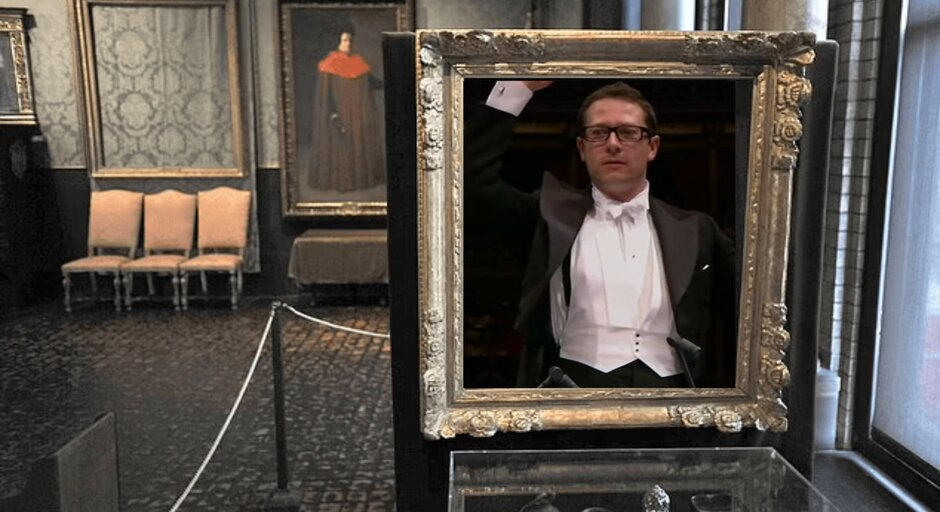
So should this make me jealous? Ridiculous! Pay no attention to the painting in my gallery.

Oh, who am I kidding? Hold my jacket, Vinny. [more after dinner, making Romanian goulash…]

Okay, I’m back. The trick to making good Romanian goulash, by the way, is to let the carrots boil long enough to get soft as stew. Cheap paprika is fine to use but dump it in, it’s never strong enough for the recipe.

Now to fighting for the man I love. After satisfying myself thoroughly, body and soul, with that very lively fantasy (taking place—this is where it went in my head—on the Mean Streets of the Lower East Side—between Vinny the Sardine’s kid sister Teresa, a girl sporting a crucifix and a great right hook—and a bottle blonde puttana, calls herself Lolita) I need to point out John’s propensity for let’s say not being at one with his female singers.

I have here, case in point, a young one named Sierra Boggess in her rendering of that classic song of girl power we all sang while bounding youthfully down the street—from the BBC Proms, 2010: “I Have Confidence”. You stay and listen. I can’t even listen all the way to the end, John and his O just drown out pobrecita, who I have enough sympathy for already, as back in 2018 she had to play the fall guy in the BBC’s cockamamie plan to appear racially woke—while being able to stock their shows with free, unseasoned talent from the local inner city arts school (a very common tactic in the States) for that West Side Story debacle of theirs.

In fact, this subject is making me so mad I need to sweeten the moment—so I’ve decided to sic one of the girls on my darling… Which one will it be? Petula…? Dusty…? Okay, here’s a song by a particular girl singer I get a particular kick out of: side B of “To Sir, With Love”Neil Diamond’s “The Boat That I Row” sung by Lulu! I’m singing this song dancing to your picture, mi amor.


John Wilson Glyndebourne 1Above John at Glyndebourne, 2019: “Vous êtes mon prince charmant” from Act III of Jules Massenet’s comic opera.

Now, about the 2019 Cendrillon: At the intermission talk with Cendrillon‘s director Fiona Dunn, my beloved John Wilson, mezzo Kate Lindsey, and soprano Danielle de Niese, the topic of debate was, What should Prince Charming look like in the 21st century?


Says John to the lovelies pictured above: “I think having Prince Charming as Massenet stipulated, it fits beautifully within the whole kind of sonic picture of the whole thing. It’s not a piece that you could say fits on one musical plane, it’s got lots of colors. It’s one of the most colorful pieces he ever wrote… When I said I was doing this piece to people, they would say, Oh yeah, that’s a nice light sort of sweet little piece. It’s not a sweet little piece, it’s a big piece, there’s always another layer to get to and there’s always more detail to explore, always more depth every time. It’s not lightweight…”

EXTRA! The most John Wilsonish piece in Cendrillon.

“Marche des princesses”
from Cendrillon, Act IV
Jules Massenet, composer
Academy of St Martin in the Fields
Neville Marriner, conductor
Capriccio, 1997


FULL DRESS // A gifted mesmerist—a sinister composer—a naive young conductor from the north…inspired by an episode from the life of Rachmaninoff // DOWNLOAD FREE BOOK POSTER

On Conductor John Wilson’s Full Dress and The First Porn Movie I Ever Did, 1

From 2019: For those of you who know that, as well as being a retired porn actress, I also write porn for pleasure (actually genteel erotica but you know and I know it’s porn, lady porn, but PORN), Full Dress being a riff on my old boss Rouben Mamoulian’s classic The Song of Songs—you know, the one where Marlene Dietrich has a rich would-be composer for a husband and a young, sensitive, bespectacled conductor for a lover, inspiring them both to artistic heights through her Mighty Marlene Power. Oh, baby. This is the movie that inspired me to emulate you in my youth.

But just so you don’t go on thinking this is some kind of fanblog (really, I’m not a fan*, just crazy in love with the bloke below) I thought I’d spend a posting to tell you all how I got my first gig in pictures.

John ExposedAbove John’s arousingly exposed suspender: Nina Simone sings Cole Porter’s “All of You” just for my wild Geordie lad.


This happened in San Francisco—in the 70s a paradise for the sexually adventurous—and coming after the time I worked as classic film director Rouben Mamoulian‘s amanuensis, which was after the time I posed nude for a blind sculptor in St-Paul-de-Vence, which was after the time I danced topless in a mob-run bar in Red Hook, which was after the time I was the night solfeggist at ASCAP

So anyway. One lovely summer evening about six weeks after I hit the city I went with a (legit) actress friend to a house party up on Potrero Hill, mostly because she enticed me with the information that the party would be featuring a hot tub. (Am such a pushover for hot tubs.) Well, at the party there was this cute but obvious older guy from London (trimmed ginger beard, open shirt, bead bracelet—no one goes California like the English) named Paul, who owned the house and who invited me seulement for a session of coke+quaaludes and a nice soak later, after all the other guests have left. Then he gave me his card. (This was only the second time a man ever gave me his business card before we had sex, and it wouldn’t be the last)…

Part 2 “Zombie Love Slave” here.
Part 3 “Sausalito Hot Tub” here.
Part 4 “Lovelace” here.

*No, really, I’m in love with John but he plows through Gershwin like a bull moose and treats Bernstein like Bernstein’s Saruman and he’s Frodo. How could any red-blooded American woman countenance such effrontery to our national treasures?**

**He does, however, conduct Elgar and Vaughan Williams like an angel.


FULL DRESS // A gifted mesmerist—a sinister composer—a naive young conductor from the north…inspired by an episode from the life of Rachmaninoff // DOWNLOAD FREE BOOK POSTER

“They Call the Wind Mariah” by Lerner + Loewe Sung by the Smothers Brothers, Rescuing a Fine Song from the Smelliest, Most Offensive Movie Musical Ever

Of course there’s no “h” in the actual title but I’m putting it in anyway to alert singers to the long vowel because the money-grubbing whore who wrote the lyrics to this Broadway musical standard didn’t give two shits for singers.

Above: After some silliness, the boys deliver a splendid rendition of the Frederick Loewe standard, “They Call the Wind Mariah” from Paint Your Wagon (Broadway, 1951)

I, however, have a lot of affection and admiration for Berlin-born-and-trained composer Frederick Loewe, who wrote the most tuneful, singable melodies on Broadway, up there with Richard Rodgers and Jerome Kern. Loewe was right not to want to have anything to do with the big-screen disaster, Paint Your Wagon, which plowed on without him (Paramount, 1969), messing up Josh Logan, Paddy Chayefsky(!), Jean Seberg, Lee Marvin, Clint Eastwood, et al, in its trail…

The only way to read the 1969 film (and I don’t recommend watching it for pleasure ever ever ever, not even for yummy Clint) is to look at it like a late-60s hippie festival, complete with trees, mud, and crazy sex. (You know, like Woodstock…) The absolutely unreal pluralism of the background characters—Jews, Italians, whites (but no blacks), Chinese dressed in brocade with their wives(!?) all living in this dirty mining camp (a dirty mining camp where men politely doff their hats to white women) peacefully together—is another hippie fantasy, with a dollop of Chayefsky the liberal (of Marty and Network fame) added.

The one good thing in this pile of offal is the song, “They Call the Wind Mariah”, sung incongruously by Harve Presnell; but beautifully and hauntingly here by, of all people, the Smothers Brothers, the shining jokester-balladeer heroes of my youth. (Adding to their luster: as wartime US Army brats, they spent part of their childhood in the Philippines.)

Here’s hoping you haven’t watched/heard Paint Your Wagon. If you have, and the Andre Previn interpolations made you (like me) sick*, here are two lovely selections from the pen of Frederick Loewe, rendered by my bonny John Wilson and his various orchestras:

*…And that blustering Hollywood chickenshit should’ve punched Woody Allen in the nose.


FULL DRESS // A gifted mesmerist—a sinister composer—a naive young conductor from the north…inspired by an episode from the life of Rachmaninoff // DOWNLOAD FREE BOOK POSTER

Valentine’s Day 2024 for My Bonny Lad Across the Ocean, Conductor John Wilson

February 14. Greetings of the day, my love. This is my gift to you this year: A sexy song by Erik Satie, plus a mashup of you conducting Vaughan Williams’s “Sea” Symphony in Birmingham with the classic print by Hokusai (1760-1849), “The Great Wave off Kanagawa”, which is actually getting some likes over at my DeviantArt gallery.


Hosukai and John Wilson

Above the mashup of Hosukai + John conducting Vaughan Williams’s “Sea” Symphony, find counter-tenor Yoshikazu Mera’s exquisite rendering of Erik Satie’s cafe melody, “Je te veux”.


Ars gratia artis. Or art for the sake of the artists*. I love you today and all days.

*Ars propter artificum.

FULL DRESS // A gifted mesmerist—a sinister composer—a naive young conductor from the north…inspired by an episode from the life of Rachmaninoff // DOWNLOAD FREE BOOK POSTER