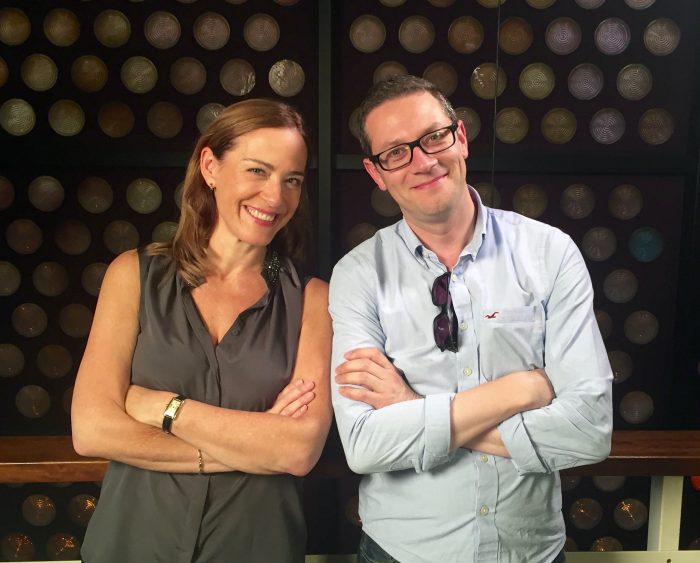
Here’s French hornist/podcast interviewer Sarah Willis’s 2016 interview with John and key members of his own eponymous orchestra where his technique in bringing out “The Hollywood Sound” is discussed. Discussion of his string technique with Sarah and JWO’s first violinist starts at 5:40.
From August, 2018. Cantara, former ASCAP solfeggist and 70s porn actress turned memoirist, has fallen hopelessly in love with a man at the other end of the world, an English, middle-ranking orchestra conductor—who plays, on the side, Golden Age of Hollywood music and The Great American Songbook—by the name of John Wilson.
So what is it about him?* I’ve only been aware of his existence since 30 April and in love with him since 4 May, 2018; since then my feelings have been an insane mixture of tenderness, gratitude, annoyance, and lust. The tenderness I understand: I’ve spent enough time in Hollywood to understand the position he’s in… As far as gratitude, here’s his concert version of “The Trolley Song” using the original 1944 orchestration(!)— thank you thank you thank you, John. Even the raging lust I get.
But whenever John gets himself in the way of the music it drives me nuts. It’s crystal clear to me the times he does this because I’m in love with him, dammit, and because he’s a musician I pay attention to the music. Truth to tell, the only times John really gets himself in the way are when he’s conducting his own hand-picked group which is dedicated mostly to music from Golden Hollywood & The Great American Songbook, and cannily named The John Wilson Orchestra.
Whether he gets himself in the way indeliberately or on purpose I cannot entirely tell, but I’m starting to. With a little patience he isn’t that hard to read, my bonny John Wilson. After countless times listening to his recordings and broadcasts; pouring over his interviews; watching him conduct (in video clips, mainly from the annual BBC Proms); watching him conduct other orchestras besides his own (ditto); and, most important, learning to separate the showman from the musician, I’m starting to understand his type of intelligence and his musical capability, which is actually pretty sizeable. His ear (the way he hears things, not his purported perfect pitch) is intriguing and his industriousness is admirable. I am definitely not buying into the PR excess—he is not “a superstar”, “a guru”, “charismatic”, “legendary”, “a conducting icon” or, God help us, as proclaimed by the BBC, “the nation’s favorite” (!!!). But his musicianship at times is kiiind of brilliant.
* Update 10 August 2019: I’ve just read up on what it is about him, and now I’ve got science to back me up. It’s John’s fault.
Classic Repertoire, English Romantics Division – Creditably conducted Walton, Delius, Elgar, Britten; deep affinity for Ralph Vaughan Williams (it’s that Sehnsucht, my bonny)
Film Music – Creditably conducted a program of “British Film Music” for the 2007 Proms; transcribed by ear complete MGM “lost” movie musical scores including The Wizard of Oz, Meet Me In St Louis and Singin’ In the Rain, resulting in 350+ (John’s count as of 2016, although his count confusingly goes up or down in successive interviews) pieces of programmable material (for the Proms, for example)—many of which are now of course part of The John Wilson Orchestra repertoire—while the complete scores are now available to orchestras worldwide for symphonic and live-to-screen concerts
Big Band/Big Swing – In his early 20s John cut his teeth on this type of music, starting with his stints conducting his Royal College (he’s a 1994 alumnus) / Royal Academy colleagues in the fancy palm courts of the hotels Grosvenor House and Royal Park (Times music critic Clive Davis gave the young students a “golden”—John’s word—review) plus Pizza On the Park, actually a swanky cabaret, and The Boatyard, a trendy restaurant in Essex; recorded 8 dance/swing albums for Vocalion; nominated for Grammy 2006 for the soundtrack of the biopic Beyond the Sea(which is really the first time I heard The JWO but didn’t know it)
Jazz – John has absolutely no idea what jazz is, yet recorded a thoroughly awful and dishonest album with Richard Rodney Bennett entitled Orchestral Jazz
Broadway and The Great American Songbook – DON’T get me started here. I’m blogging about this below.
All the rest is just Cantara trying to sort out where bonny John fits into her inner life. Which as it turns out is in every nook, every cranny…
Cleansing my aural memory of John Wilson’s recording of Legrand’s “Chanson de Maxence” (in English clumsily rendered as “You Must Believe in Spring” or some such) in his awful 2000 album, Orchestral Jazz, with Anne Sofie van Otter‘s 2010 version (Brad Mehldau, pianist). Bonny John conducts his eponymous orchestra in an arrangement by Richard Rodney Bennett, who had absolutely no feel for this song. With such a strong melody (reminiscent of Fauré) and strong lyrics, all it needs is a strong emotive singer and a backup piano. I note with some distress that John himself did some other arrangements in this album, particularly for “Miss Otis Regrets”. With no lyrics! What the hell good is such a hilarious song without the words???
Je l'ai cherchée partout j'ai fait le tour du monde
De Venise à Java de Manille à Angkor
De Jeanne à Victoria de Vénus en Joconde
Je ne l'ai pas trouvée et je la cherche encore

Je ne connais rien de lui et pourtant je le vois
J'ai inventé son nom j'ai entendu sa voix
J'ai dessiné son corps et j'ai peint son visage
Son portrait et l'amour ne font plus qu'une image
John and The JWO are okay, but just okay. I suppose when he was 28 my bonny’s loftiest ambition was to be the next Sidney Torch.
I don’t think a clip exists, but 3 Preludes was on the program of The John Wilson Orchestra’s 2015 BBC Proms show Salute to Sinatra—yes I swear, that was the theme of that show which featured Seth MacFarlane, on account of he can sing like Brian the Dog. The connection is that the version my clever John and his orchestra played is the Nelson Riddle arrangement of Gershwin’s 3 Preludes, Nelson Riddle having been one of Frank Sinatra’s most important musical collaborators. Such a stretch, pet.
But here’s Riddle’s arrangement…and here’sGeorge Gershwin himself. Compare and contrast.
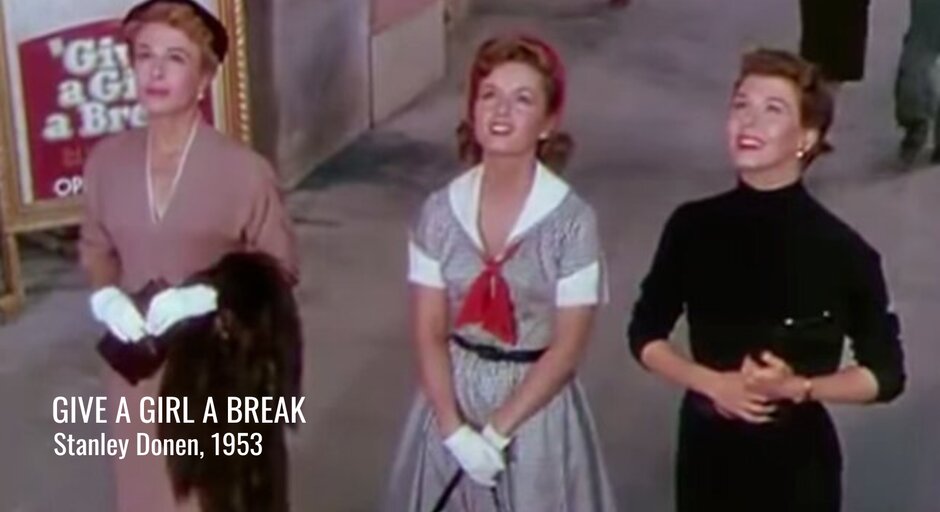
Give a Girl a Break (trailer here)is a US 1953 musical comedy film starring Debbie Reynolds and the dance team of Marge and Gower Champion. Helen Wood, Richard Anderson, Kurt Kaszner and a young Bob Fosse have featured roles. At only 88 minutes, Give a Girl a Break shows residual elements of the big project it started out to be, with a passable score by Burton Lane and Ira Gershwin, direction by Stanley Donen, and musical direction by Andre Previn.
Above Marge, Debbie and Helen: The overture to the 2012 Proms My Fair Lady, with John conducting The John Wilson Orchestra in his own arrangement of Andre Previn’s orchestration of the film score.
The Philippines have never won the gold in 97 years until now—consequently, we get to hear The Philippine National Anthem (Julián Felipe-José Palma, 1899; lyrics below) played at the Olympics for the very first time. So I went over to YT to find a good version of the national anthem (which I once used to be able to sing not only in English but Tagalog learned phonetically) and I found THIS on YT and it’s—it’s—well, it’ll make you want to swell with pride if you’re a true Pinoy. Really. It’ll knock your socks off. For all you others: This is a very tuneful, very singable national anthem entitled “Lupang Hinirang” and it’s placed very dramatically and effectively in this short produced by the big broadcast company in the PI.
Yes, that’s Lapu-Lapu beheading Magellan at 00:20. You have to understand, we are a romantic but fierce people
Bayang magiliw Perlas ng silanganan Alab ng puso Sa dibdib mo’y buhay
Lupang Hinirang Duyan ka nang magiting Sa manlulupig Di ka pasisiil
Sa Dagat at bundok sa simoy At sa langit mo’y bughaw May dilag ang tula At awit sa paglayang minamahal Ang kislap ng watawat mo’y tagumpay na nagniningning Ang bituin at araw niya’y kailanpama’y di magdidilim
Lupa ng araw ng luwalhati’t pagsinta Buhay ay langit sa piling mo Aming ligaya nang pag May mang-aapi
With 2 meals a day included it came out to $33 a week. You read that right. A place in Greenwich Village, breakfast and dinner, for thirty-three dollars a week. Try to imagine the mischief I got into with all the money I had left over from my weekly paycheck from my first job as a solfeggist at ASCAP, that it’s summer in NYC, it’s 1973, I’m eighteen, cute as a button and old enough to drink, and gorgeous men are everywhere. And imagine too that I’m singing a song (in my heart and sometimes aloud while bounding down the street) that every American girl of my generation inspired by Julie Andrews sang:
I have confidence in confidence alone
Besides which you see I have con-fi-dence in meeeeeeeeeeeeeeeeeee
On three out of your last five birthdays, awful things happened in my country that couldn’t be ignored (the worst happening on your 48th in my own old neighborhood) so I’m sorry I didn’t have anything amusing to post after your 47th. Because you share the same day of birth as my father (you were born the year he died) I had thought what I’d be doing is alternating birthday congrats to you with memories of my dad, like this one…
Well, that didn’t work out. Things and events are crowding so fast…and I can’t catch up to the connection—association—context of it all fast enough…
But there is one thing I want you to remember through all this global mishegoss: I’m still in love with you as much as I ever have been. In fact the more I learn about you, the more it makes me love you. Even through your clunkers, John, John / Glorious John.
If you were my boyfriend and you had a struggling rock group, there’d be posters on every lamppost in San Francisco. But you (and your people) must have figured that out by now.
This nine-minute medley sung by Julie Andrews and Carol Burnett, called “History of Musical Comedy”, is a variety-show tour de force enough for the first six minutes; then at 6:00 it rises to high art in the most affecting soprano duet in the repertoire of American lyric theater.
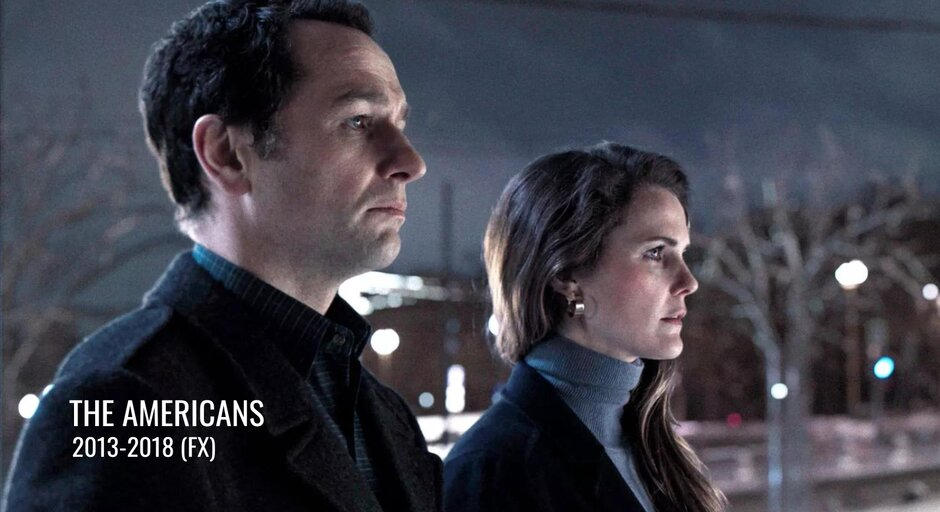
Nadezhda: Who knows what would have happened here? I probably would’ve worked in a factory…managed a factory. (Mikhail nods) You might’ve…hm. (he glances at her; she glances at him) Maybe we would’ve met… On a bus… (he smiles slightly; she looks out at the night landscape) …They’ll be okay.
Mikhail: They’ll remember us. And…they’re not kids anymore. We raised them.
Nadezhda: (nodding) Yes.
Mikhail: (beat) Feels strange.
Nadezhda: (looking at him) привыкнем.
(He looks at her; together they look out at the lights of nighttime Moscow)


 John and The JWO are okay, but just okay. I suppose when he was 28 my bonny’s loftiest ambition was to be the next

 Above my old abode:


 From 6 Romances by Pyotr Tchaikovsky: No.6
  "I'll Be Dead Before You Break My Heart"