Ah, my second favorite stroke picture. (Third one here. First one here.)
 Above Tim Curry, Patricia Stephens nee Quinn, Nell Campbell, Richard O’Brien: The complete soundtrack of Rocky Horror.
Ah, my second favorite stroke picture. (Third one here. First one here.)
Above Tim Curry, Patricia Stephens nee Quinn, Nell Campbell, Richard O’Brien: The complete soundtrack of Rocky Horror.
This is what I mean when I say that John Wilson, Conductor has invaded every nook and cranny of my inner life. I hadn’t thought of Mamoulian in years until I recently came upon an excerpt of a concert conducted by John in Glasgow, September 2011. The program was Music to be Murdered By with the BBC Scottish Symphony Orchestra.
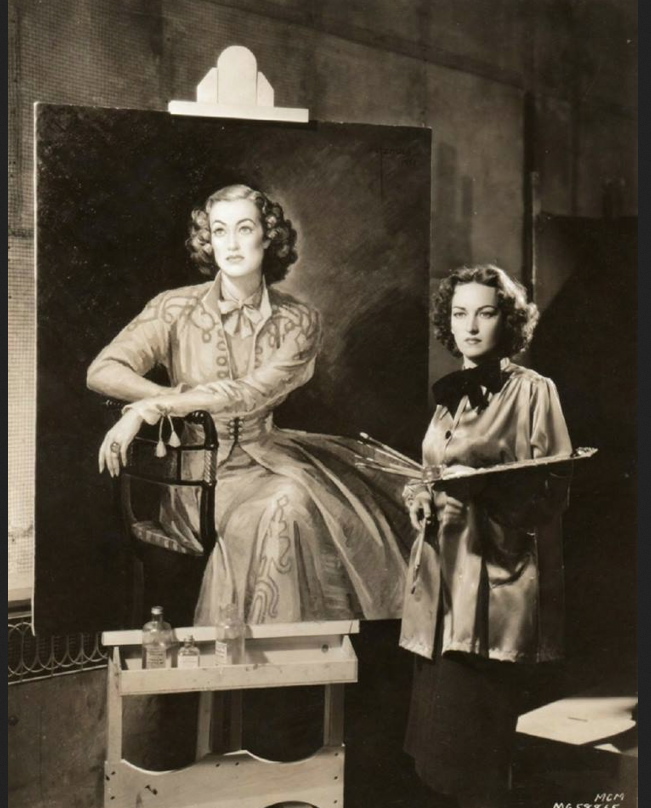
Azadia Newman Mamoulian next to her painting of Joan Crawford for The Last of Mrs Cheney (1937). Azadia’s famous portrait of Laura (that is to say, her portrait of Gene Tierney portraying the character, Laura) hung in the Mamoulians’ bedroom. How she got Crawford to resemble herself rather than the other way around, is a feat of illusionry I still marvel at. Above: My beloved John conducts the Sinfonia of London in Raksin’s Laura, orchestrated by the composer.
“You know I directed Laura,” said Mr Mamoulian to me matter-of-factly one day as we sat in his alcove-cum-study.
Now, I had seen the movie Laura several times—on TV and in the art house—and I remembered practically all the credits, which included one for Otto Preminger, Director…but no Mamoulian. But here was The Old Man sitting knee to knee with me, announcing right out that he was (what’s the Variety word?) the helmer of that glamorous but nutsy picture with Gene Tierney.
So what did I do? I was twenty-three. I was on a job. I nodded.
He sat back, took a couple of puffs from that awful cigar of his and smiled wistfully. “You know, Gene introduced me to my wife.”
“Oh, that’s wonderful,” I said. That would be Azadia, who Mamoulian called Zayde (a giggle, as zayde means grandfather in Yiddish); she was a woman I never saw except once. She was always in the Other Room.
[more later]
A very nifty, lively, jazzy modernist piece written by Constant Lambert (The Who manager Kit Lambert’s dad) in 1927. Australian virtuoso Eileen Joyce, who famously played the heart-wrenching Rachmaninoff in the film Brief Encounter (entire film here), is at the piano here. County Antrim-born Jean Allister, contralto soloist, joins her with the BBC Symphony Orchestra and the BBC Chorus. At the podium is Sir Malcolm Sargent.
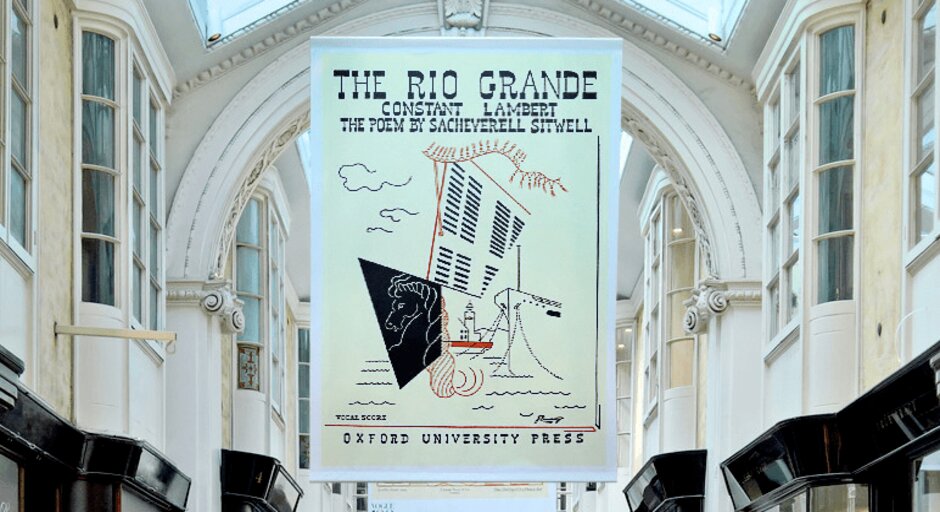
Composer-novelist Anthony Burgess, in his autobiography Little Wilson and Big God (Burgess’s original name was John Wilson; his middle family name was Burgess and his confirmation name was Anthony) wrote,“Lambert, who admired Duke Ellington and proclaimed his harmonic roots in Frederick Delius (who in his turn had taken them from Debussy), was a fearless reconciler of what the academies and Tin Pan Alley alike presumed to be eternally opposed. I was present at that first performance, and so was my father. And, in 1972, on a plane from New York to Toronto, I found myself sitting next to Duke Ellington, who spoke almost with tears of the stature of Lambert, admitted that he had learned much from both Delius and Debussy, and expressed scorn for the old musical division, which had been almost as vicious as a colour bar. He had lived to see it dissolve and jazz become a legitimate item in the academic curricula.” [More Burgess on Lambert here.]
Why yes, I am a Crazy Ex-Girlfriend fan, and thank you for asking.
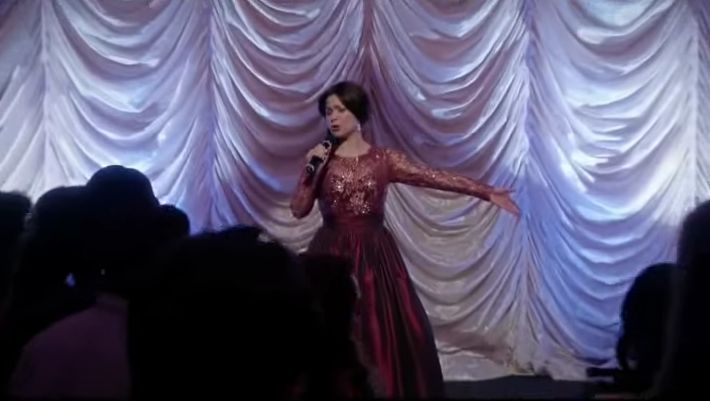
Season 1, episode 18, 2016. Lea Salonga, as heroine Rebecca Bunch’s object of romantic desire Josh Chan’s singing-star aunt, sings a lovely but so over the top Disney Princess Song. This is before all hell breaks loose in seasons 2 and 3.
Between 2000 and 2005 John recorded 8 albums for the venerable jazz/swing/dance band label Vocalion. Whereas four months ago I had none, I now have 6 of them. I have that awful Orchestral Jazz he did with Richard Rodney Bennett; his 2 albums of Angela Morley’s work; his Paul Weston and his Geraldo (see “Geraldo Among the Filipinos, 1963”); and I just ordered Dance Date.
There are two other albums I haven’t gotten yet: One is with a pleasant but unimaginative crooner named Gary Williams (who I suspect was the chap who enabled John to increase the size of his orchestra—“He just turned up one day at my door with a pot of money and said, ‘Will you put together a great big orchestra for me to sing to?’ And that was the start of it,” said my blinky winsome John in a 2011 interview at the BFI) but it doesn’t sound interesting enough to drop fifteen bucks on.
But this one, Lessons In Love, sounds perfectly gorgeous, the little I heard—it’s classic Songbook stuff—and I’m dying to have it. It’s Lance Ellington’s strong clear vocals and fundamental John Wilson Orchestra through and through. Trouble is, it apparently went through a limited pressing so available copies run from 115 American bucks upward. How can a record only 13 years old be a collector’s item already??
Lance Ellington (listen to his “It Don’t Mean a Thing If it Ain’t Got That Swing” from the show Ellington Sings Ellington) is the son of English bandleader/singer Ray (no relation to Duke) Ellington, who I know only as that weird singer on The Goon Show who mangled my favorite Charles Trenet song, “Boum”, even though I yelled at him through the computer screen not to do it. Lance is great, though. He teamed up with John and Orchestra for their 2014 Cole Porter album doing the song “Now You Has Jazz” and that album won the Echo Klassik Music Without Borders Prize. (My beloved’s big smile at 4:23.)

Susie Myerson to Mrs Maisel in Season 1, Episode 6 of The Marvelous Mrs Maisel:
Susie: Miriam, he just sold you some line ’cause he wants to get in your pants.
Midge: He does not want to get into my pants.
Susie: He wants to fuck you!
Midge: He wants me to work with him. He says we’ll be like Nichols and May… Nichols and May don’t fuck.
Susie: Nichols and May totally fuck!
Midge: That’s not what he says.
Susie: I walked in on them once in the bathroom here. Even their fucking was hilarious!
EXTRA: Find the NICHOLS AND MAY playlist on my YT channel here
Extra Extra! And read Vanity Fair’s 2012 exclusive interview “The Reunion of Nichols and May” here
The producer of my first movie took this on his patio near the hot tub. Sorry, but he kept the nude shots.
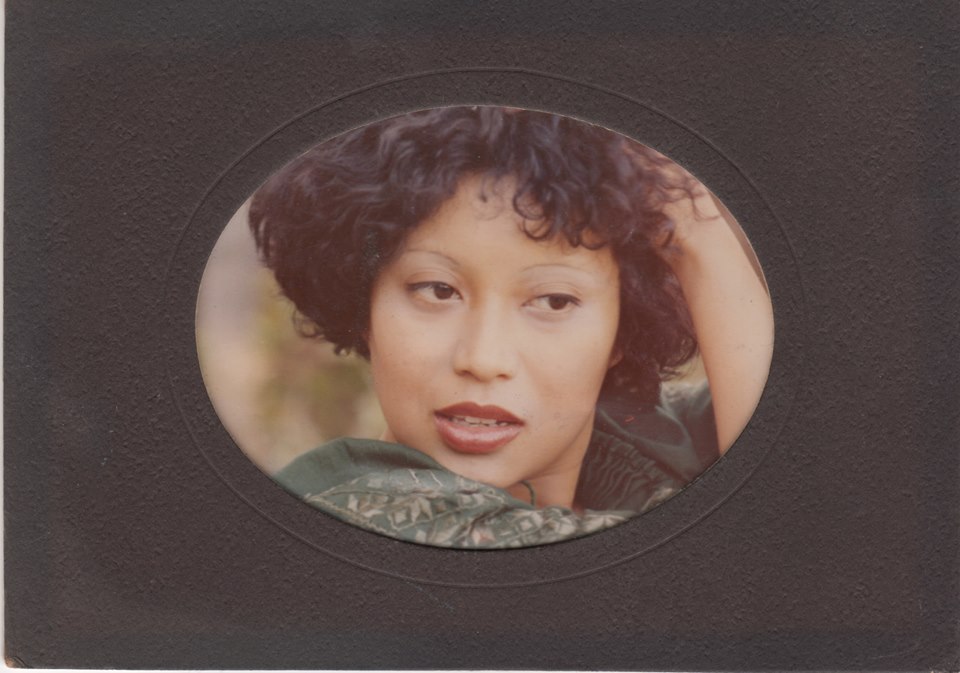 My youthful attempt to emulate Marlene Dietrich in Blonde Venus
PS – If you’re looking for my id, here it is.
If this were a Joan Crawford movie she’d have given him the damn gold cigarette case by now.
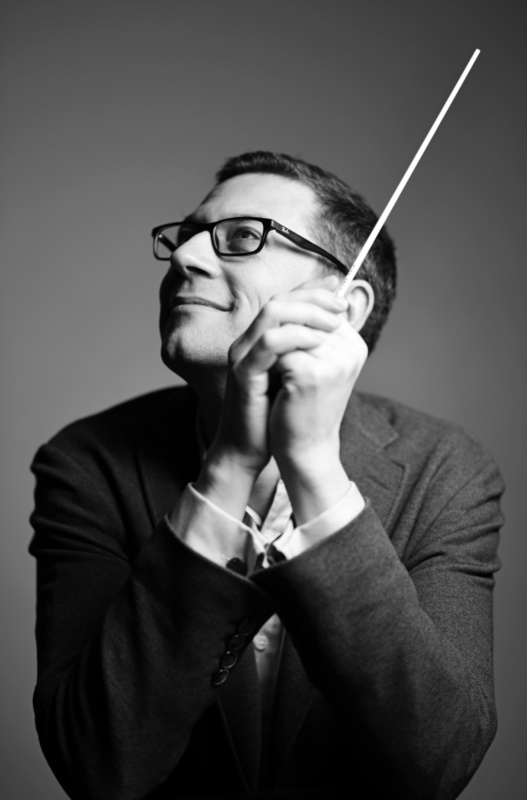 Portrait of John Wilson by Sasha Gusov
Trekdom’s favorite de-Borged hottie Seven of Nine sings the entire number “It Can’t Be Wrong” by Max Steiner, lyrics by Kim Gannon. Music was culled from the classic Now, Voyager.

Addendum 29 September 2019: Friend Kurt Thometz, owner of Jumel Terrace Books in Harlem, sent me the link to the chicken version of this song, a Warner Bros classic cartoon of course…
The Castro Theatre was our neighborhood picture palace back in San Francisco. Went to dozens of movies there, sometimes with Mister Grumble (when he still had his sight), sometimes with the The Kid, sometimes with both: King Kong, Casablanca, The Garden of Allah, The Miracle of Morgan’s Creek, that movie Steve’s son was in called Brokeback Mountain, etc etc etc. But the organ was always the best part.
San Francisco, open your Golden Gate
You'll let no stranger wait outside your door
San Francisco, here is your wanderin' one
Saying I'll wander no more
 Here’s David Hagerty between evening shows giving the best of The Mighty Wurlitzer and ending (starting at 8:17), as he always does at every performance, with an inspiring rendition of the official anthem of my spiritual birthplace, “San Francisco” (Bronislaw Kaper and Walter Jurmann, lyrics by Gus Kahn, 1936).
But before Seven of Nine on Star Trek: Voyager, the real Sinatra made a big hit of this tune.

Could you say no to this boy? Above Frankie, his hit: “It Can’t Be Wrong” by Max Steiner (after Now, Voyager), lyrics by Kim Gannon.
From legendary San Francisco journalist Herb Caen’s column, 1995:
Fast forward through World War II to Al Williams’ Papagayo Room in the Fairmont Hotel. It’s 2 a.m. Al’s place is the hangout on the late shift. Mexican food in the middle of the night? We were young and indestructible. Frank was on his own now and headlining at (again) the Golden Gate. The critics weren’t impressed with “Frankie,” as they called him, to his disgust, but the schoolgirls were cutting classes to catch his shows and I was giving him sincere plugs. At the Papagayo Room on his closing night, a burly broken-nosed guy in a polo coat came to my table and said, “You Caen?” When I nodded warily, he slipped me a small package, said, “Frank says t’anks” and disappeared. The package contained a solid gold Dunhill lighter. It was the first but not the last time I would be reminded of Sinatra’s penchant for extravagant gifts…
Here’s “Overtures and Preludes”, episode 1 of season 4 of the Young People’s Concerts (which I remember watching new!). This one particular playing—at this particular time and place—with this particular freshness and energy—is my standard against which all other Candide Overtures that ever were or ever will be are judged.
Happy 100th, Lenny.

The on-demand streamcast on BBC3 was actually pretty good—straightforwardly sung, acted and played; no John going meshugena with the tempi like he did two weeks ago with his own orchestra’s “concert” version of West Side Story. (In contrast, you do not mess around with the London Symphony Orchestra.) And is that the venerable UK-based American actor Kerry Shale doing the narrating?
 Above: “New York, New York” from the 2015 Broadway production of On the Town. All album cuts available for listening/download here.
As it was in West Side Story two weeks ago, I am theorizing that the terrifying foot-stomping in the audience that occurred when my lovely John stepped forward to take his bow at the end was started by fellow classmates of the youth chorus onstage, and not a biker gang.
The entire BBC 2018 Proms ON THE TOWN is available to watch here
For their show at the 2011 BBC Proms, called Hooray for Hollywood, John and The JWO begin here with an overall satisfying medley of tunes from the picture—inconveniently called the “Hooray for Hollywood” overture—tunes selected, arranged and orchestrated by my self-satisfied darling himself. Starting with John’s cribbing from Ray Heindorf’s execrable arrangement (that hard downbeat!) of the Gershwin brothers’ 1919 “Swanee” (Jolson turning in his grave), it does get better: “Lullaby of Broadway” by Al Dubin and Harry Warren, very nifty and swingy; Rudy Friml and Herb Stothart’s 1924 “Indian Love Call”, a lot more lyrical and moving (he included the birds and the waterfall!) than you remember it (especially when leader Andrew Haveron takes the soulful melody); Jerry Kern and Yip Harburg’s glorious 1944 “Can’t Help Singing” (written for Deanna Durbin); Kern and Ira Gershwin’s 1944 “Long Ago and Far Away” (Howard McGill on tenor sax and Matthew Regan on piano—I’ve never heard it played any lovelier): Frank Loesser’s 1950 “Guys and Dolls” done in Big Swing style; then, in a weird leap, “Chim-Chim-Cheree” by the Sherman brothers, 1963 (for which our John cribs 2 bars from Shostakovich’s Jazz Waltz No 2); and ending with “Hooray for Hollywood” from 1937 by Richard Whiting (who wrote “On the Good Ship Lollipop”) and Johnny Mercer.
Hooray for Hollywood
Where you're terrific if you're even good
Where anyone at all from Shirley Temple
to Aimee Semple
is equally understood
Go out and try your luck
you might be Donald Duck
Hooray for Hollywood
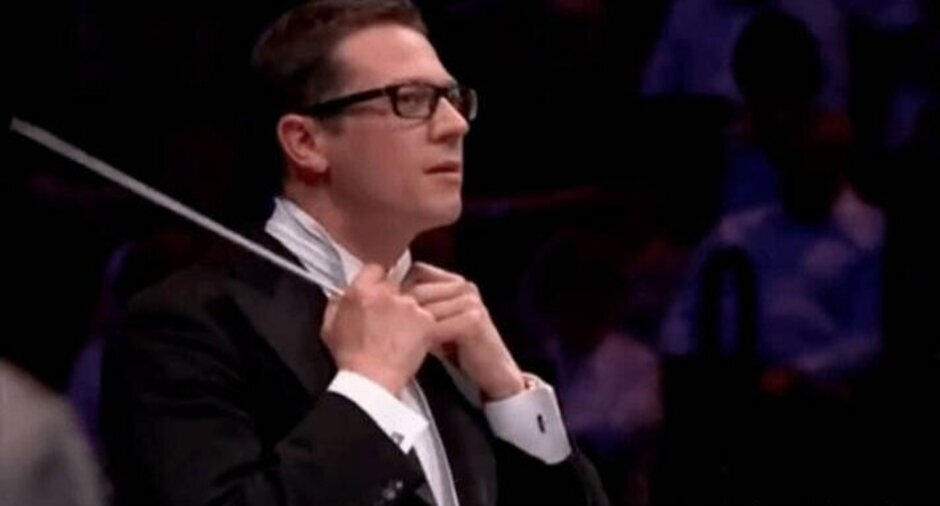 Dates are of composition, not the date of the movie. Because it contains John’s own actually-pretty-good arrangement it’s one of my favorite numbers of The JWO (although I would’ve swapped the timpani for a little chord coloring at the beginning of the “Swanee” melody). He seems to have nailed down the Andre Previn sound in his strings, which is okay by me. Plus extra points @7:40, where my self-satisfied darling shimmies like a brazen hussy yet again.
 "I'll Be Dead Before You Break My Heart"