This is the group my beloved John Wilson wished a happy birthday to, and it’s a truly worthwhile one: The Royal Northern Sinfonia has an outstanding record in community outreach in the northeast of England. Plus they play from an exquisitely good repertoire. It’s pleasing to think of my John with musical memories like these. I hope he gets as much pleasure from them as I do remembering the Minnesota Orchestra when I was a teenager in Minneapolis during the Vietnam War era.
Bradley Creswick at the upstairs hall at The Sage, the Royal Northern Sinfonia’s permanent home in Gateshead, on the south side of the river from Newcastle. That’s the Tyne and the Tyne Bridge out the window.
Royal Northern Sinfonia is a British chamber orchestra, founded in Newcastle upon Tyne and currently based in Gateshead. For the first 46 years of its history, the orchestra gave the bulk of its concerts at the Newcastle City Hall. Since 2004, the orchestra has been resident at The Sage, Gateshead. In June 2013 Her Majesty Queen Elizabeth II bestowed the title “Royal” on the orchestra, formally naming it the Royal Northern Sinfonia.
The vid here (screenshot above) doesn’t have the entire Vaughan Williams, so here’s my Tyneside lad conducting this exquisite piece:
“The Lark Ascending” Made in Britain, album Ralph Vaughan Williams, composer Royal Liverpool Philharmonic Orchestra John Wilson, conductor Avie Records, 2011
I knew Chesley in San Francisco when I was working (when not working in a porn movie) as second electrics at the old Eureka Theatre (the good one, the one that produced David Rabe, Trevor Griffiths, Caryl Churchill etc) and he was a stage critic, composer and nascent playwright. He had been a fan of a show Mister Grumble and I were lighting at the time called The Rosy Black Life, and eventually we ended up following him to New York and lighting some of his own shows there at venues like the Three Dollar Bill Theatre in Chelsea. He was The Kid’s godfather.
Portrait by Rick Gerharter
In tonight’s (1 June 2019) music series called Nightcap curated by composer John Corigliano members of the New York Philharmonic will perform Bob Chesley’s art song, “Autumn”, in their program Music of Conscience, which focuses on young composers who died of AIDS.
Here’s a blast from the past. When The Kid was still in my belly, Mr Grumble and I managed to get the sublet on a 3-room apartment in the East Village, which we upgraded a few months later to a 4-room with renewable 2-year lease for $250 a month. Yes. Only two hundred and fifty smackers a month. Which means we could make it on theatrical gigs and more-than-occasional temp work, even after paying $60 a week to Maxine Wilkes, God bless her memory, for taking him every weekday, 7:30am – 6:00pm, to play/be fed/hang out with her other charges and the rest of her large brood in their enormous 8-room $110(!) a month apartment in the Campos Plaza project 3 blocks away. That project, I recall, had the cleanest, best-kept playground in the neighborhood (not stinky like the one in Tompkins Square Park, for example) and little one learned to walk, then run, in that yard. Was grateful to Our Lady every day to be able to bring the Bograt over to such a nice place—warm, messy, safe, and good-hearted.
Anyway, on the weekends we had him all to ourselves, and would take The Kid—Boggy, his name was then—around with us bar-hopping. Trendy Holiday Lounge on St Mark’s and Downtown Beirut on 2nd… Vazac Hall on Avenue B, which made an appearance on Edward Woodward’s TV show The Equalizer… And that other Polish bar over on 7th, the Blue & Gold. All with the greatest jukeboxes… [more later]
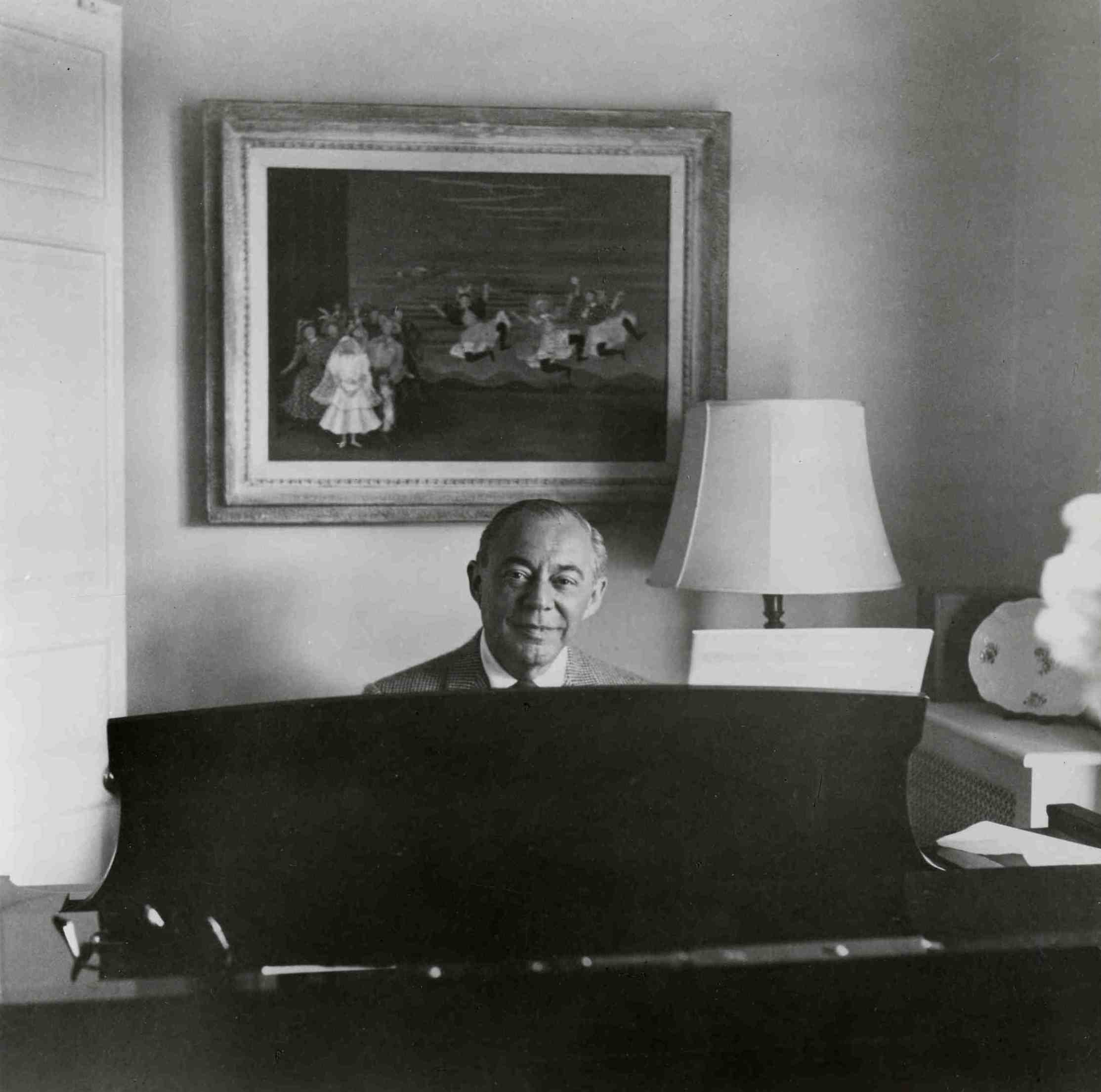
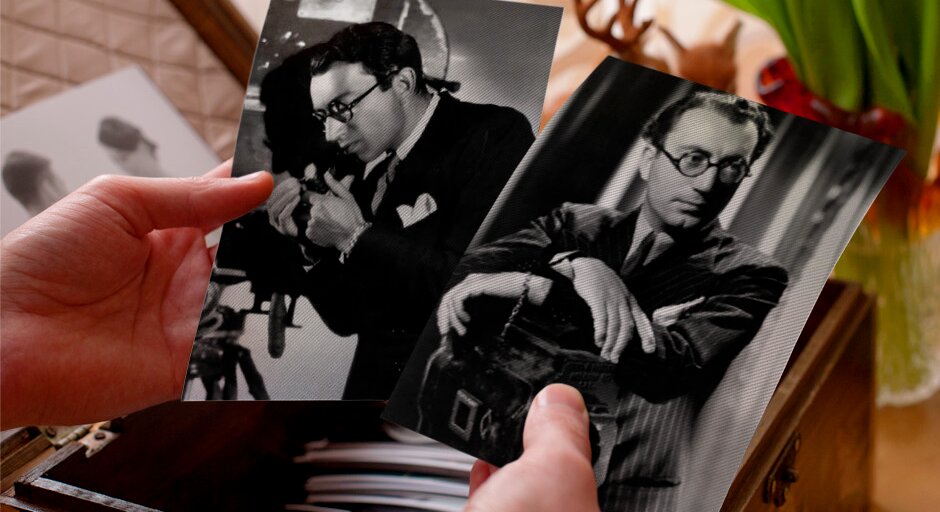
It was a late morning about six weeks into my work assignment and The Old Man hadn’t arisen yet, so there I was in the salon with nothing to do except quietly wait for his appearance and his orders for the day (which letters to answer, which bills to pay, which people to call, etc) before getting down to the primary purpose of my being there, which was, in the agency’s words, “to assist Mr Mamoulian in the writing of his memoirs”. None of that memoir writing actually did transpire in the nearly nine months I was with him, other things did, but let’s not jump ahead. Unsupervised, I was forbidden to handle/read books from his voluminous library, but you know what? He never expressly told me not to play the piano, that big black shiny intriguing baby grand in the middle of the room, and I couldn’t resist. Could you?
There wasn’t a sound coming from any part of the house, although I could faintly hear Henry the daily handyman moving his wheelbarrow out in the yard. I’d had enough of examining in painstaking detail the boring watercolors and Russian icons on the wall. I sat down on the bench.
Sense memory kicking in… At that point it was the closest I had gotten to this humongous piece of furniture. I remember the smooth feel of the wood as I ran my fingers on it, gently lifting up the fall board to get to the keys. The piano was a Steinway. That is, I remember it as a Steinway, because I don’t remember it not being a Steinway. I put the fingers of my right hand down in place and began, ever so softly, to tap out the first tune that came into my mind, which happened to be the waltz from Carousel. Three, four bars in I thought I heard a rustle from the back of the house and stopped cold, put the fall board down and stood up.
This was the first time my eye was caught by something on the right side of the music rack, some sort of writing actually carved into the wood of the music shelf that lay flat in the cabinet of the piano near the tuning wrench. It was in cursive—and it was a name:
Richard Rodgers
It still gives me goosebumps to remember I actually did that. When The Old Man finally did get up an hour later, I was sitting back at my desk in his alcove-cum-office, pretending to read one of the cheap Hollywood magazines I brought to pass the time, although my mind was still on the bars I’d played and where the bars were going musically, and I think I was humming. I must’ve been humming. Because as he came into the alcove I heard Mamoulian exclaim, “Hey, that’s from Carousel.”
I looked up. Caught! I was about to apologize when he spoke again, this time it seemed almost wistfully. “You know, I directed that.”
I said softly, as if it were an apology, “I know.”
At that moment our relationship started to take a different turn.
The audience didn’t even need the words to get the humor in this bit, so well-known is this song from The King and I (Broadway 1951, film 1956). From somewhere in the mid-50s on Jack’s TV show.
Season 1, episode 15, 1982. Said Donna Bowman of the AV Club: “You’ll Never Walk Alone” [in the episode] took me totally aback. I can’t think of very many sitcom moments that hit that exact tone. I kept waiting for the punchline, and there’s no doubt that we’re intended to smile at the parade of patrons mumbling along under Diane’s leadership, but Carla’s reception of the gesture transforms it into the sincere expression of support that was intended. When we see her continue up the stairs, the camera following her through the window, it’s a moment that reassures the audience in a very specific way. We know Carla’s children’s welfare is actually really important, the moment says. Carla’s, too. These people are trying to do a good thing. We’re going to let them do it. You can imagine a million jokes that would undercut that message for the sake of a laugh. But they don’t come. It’s like a Good Housekeeping seal of approval for our emotions: “Invest with confidence.”
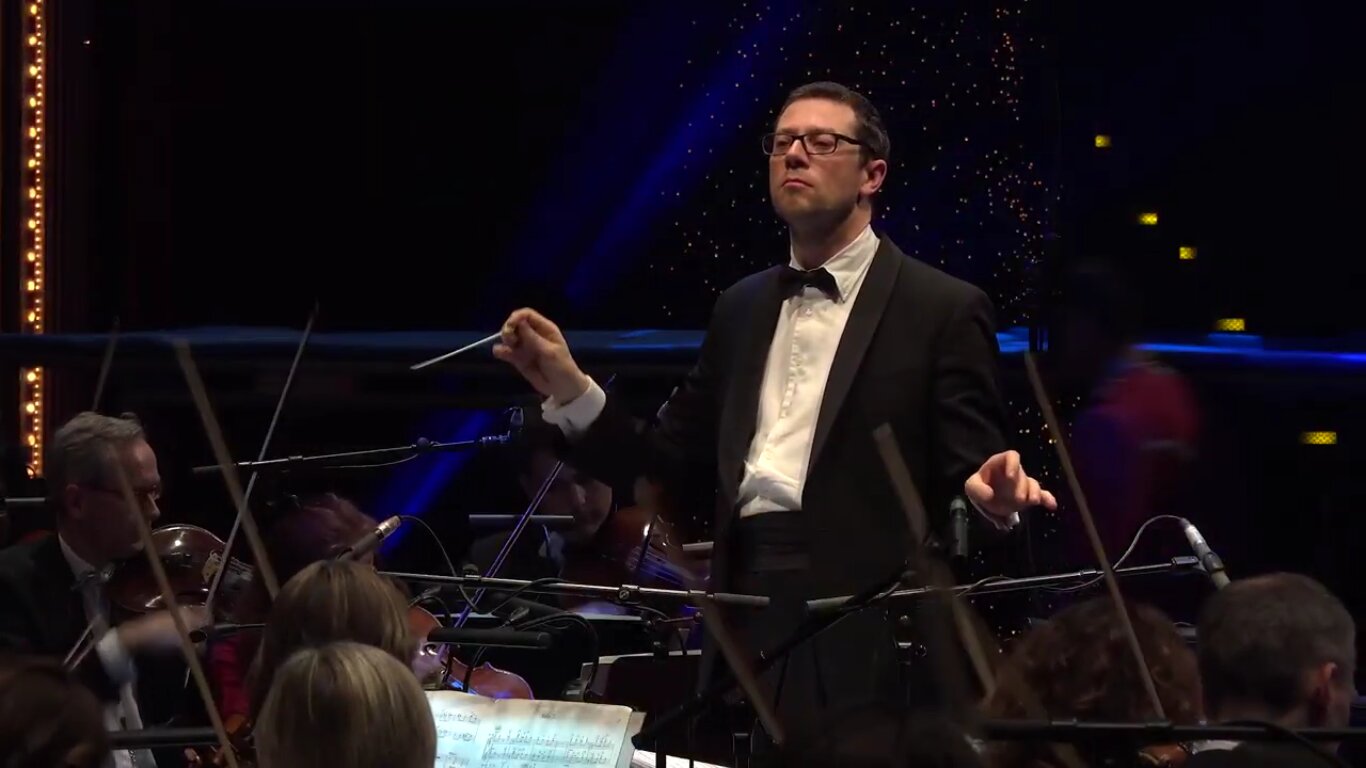
Above: A bright clever orchestral medley that riffs on Gershwin and Porter (sort of), arranged by John and played by the Deutsches Symphonie-Orchester. From the YT promotional video.
I’m still finding it mighty strange that John was born on the same day as my father’s final birthday, in 1972—on the 25th of May, which would make them both Geminis—but somehow it starts to make sense: There’s John of the BBC and Eric Coates and Ralph Vaughan Williams and the tra-la-boomy-boom that makes up English music; and then there’s John of the big-shouldered swaggering sweating bombastic vibrant American tune book. One (when he plays it well) makes me want to cook him a nice lamb stew with pearl onions swimming in the rich gravy; the other (again, when he plays it well, which is almost always) makes me want to—well, I was in The Business, you know, use your imagination.
Low Fell Lad Makes Good. Above: the Arlen-Kohler standard “Get Happy” was written for Ruth Etting but popularized by Judy Garland in the film, Summer Stock (MGM, 1951).
Only don’t be too sure which is which. Like I said, John almost always plays the music of his own country and heritage well, with a deep feeling that’s irresistible; whereas when he works out the great American tunes it turns out more often to be hit-and-miss, with many many many more misses than hits.
But oh! When he does hit!
When bonny John and his orchestra play “Get Happy” or “The Trolley Song” or “June Is Bustin’ Out All Over” or the MGM Jubilee Overture—or the absolute best of the lot, “Slaughter On Tenth Avenue“—it’s total heaven, and I’m not the only one to say this. Subtlety is not this lad’s forte when it comes to the American popular repertoire. But when John goes big, bright, busy and loud when the number actually calls for it, screams out for it, it’s so damn satisfying when he does it and does it brilliantly that I want to—how can I put this?—do something for my darling in gratitude…make him a nice meal…fatten him up a little… (Ess, kind, ess!)
For right now, though, I’ll settle for a natter on a quiet afternoon with you John, rather not in London, maybe when you get up to Gateshead again, mi amor, back to The Angel of the North…
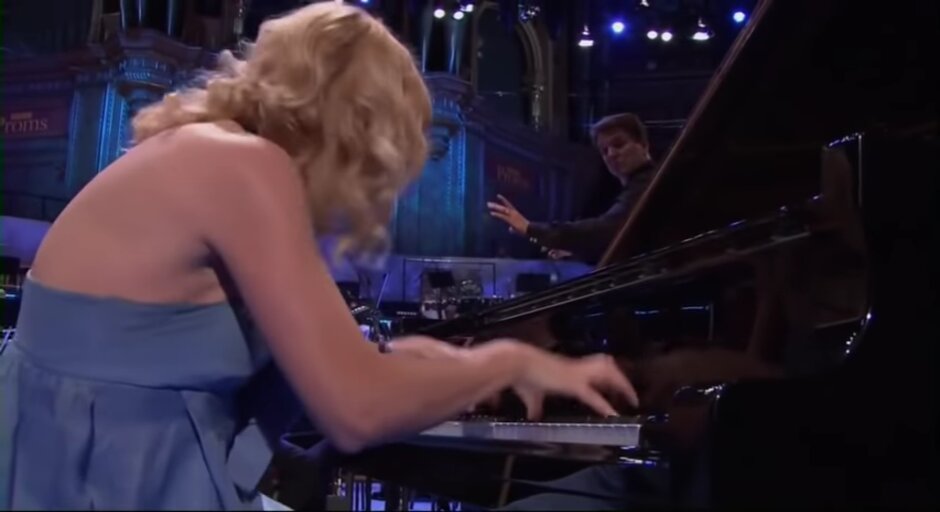
I love watching how Lockhart, official Guest Conductor of the BBC Concert Orchestra, scrupulously keeps in sync with not just his orchestra but with his soloist. It’s also a delight to watch at the beginning of the clip Lisitsa curtsying almost shyly to leader Cynthia Fleming.
Valentina Lisitsa, who started out as a YouTube sensation 12 years ago and is now counted as one of the foremost keyboard interpreters of the Eastern European Romantics, gives an intensely satisfying performance here of Addinsell’s “Warsaw Concerto“. The concerto was written for the movies—for, specifically, the 1941 movie Dangerous Moonlight, in which Polish concert pianist Anton Walbrook becomes a fighter pilot for the RAF, falls in love, gets amnesia, and composes some music. The movie, although a success from a propaganda viewpoint, was considered a potboiler by critics, and even the astute Anthony Burgess, who was an army sergeant and nascent composer himself at the time, looked down on the “Warsaw Concerto” as a cheap imitation of Rachmaninoff. Intellectual snobs have derided the piece, but it’s lingered in the memory for lo these many years, and is only now taking its permanent place in the Classic Repertoire.
For that we have to thank composer/film music restorer Philip Lane. It was to Lane that the musical estate of Richard Addinsell was entrusted and, like composer/orchestrator William David Brohn for Prokoviev’s Alexander Nevsky (Abbado with the LSO + full score here on YT) and my beloved John Wilson, Lane took on the task of reconstructing by ear written scores for film music whose manuscripts had been destroyed through carelessness or war. (Some suggest that the “Warsaw Concerto” was entirely the work of Addinsell’s orchestrator, Roy Douglas, who died in 2015 at the age of 107.) Addinsell’s—or Douglas’s—”Warsaw Concerto” was one of them. As Lane writes:
“The process of reconstruction does not get easier, but some films are more difficult than others. The biggest enemy is the combination of dialogue and sound effects over the music, and occasionally there are seconds of complete inaudibility when guesswork has to replace authenticity. The greater the composer, the more difficult the work, on the whole, since the melodic and harmonic language tends to be more adventurous. In the case of recent scores there are usually soundtrack CDs devoid of extraneous sounds to work from, but despite the change in status of film music, present day composers still mislay their scores. I have reconstructed music by Jerry Goldsmith, Randy Edelman and James Horner in the last year alone. If the composers are still alive I obviously encourage them to do the reconstruction themselves. So far, they have declined for various reasons.”
“The process of reconstruction does not get easier, but some films are more difficult than others. The biggest enemy is the combination of dialogue and sound effects over the music, and occasionally there are seconds of complete inaudibility when guesswork has to replace authenticity. The greater the composer, the more difficult the work, on the whole, since the melodic and harmonic language tends to be more adventurous. In the case of recent scores there are usually soundtrack CDs devoid of extraneous sounds to work from, but despite the change in status of film music, present day composers still mislay their scores. I have reconstructed music by Jerry Goldsmith, Randy Edelman and James Horner in the last year alone. If the composers are still alive I obviously encourage them to do the reconstruction themselves. So far, they have declined for various reasons.”
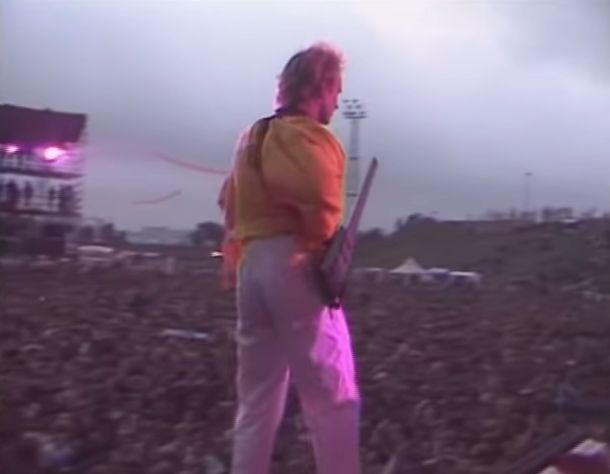
If I hadn’t fallen so hard for Geordie-born-and-bred John Wilson, Conductor I’d never have been delving into All Things Gateshead and I never would have stumbled onto a bootleg recording of this show by English progressive rock group The Police, which was the very show Mister Grumble and I missed in New York when we were just setting up household in the East Village and I was heavily pregnant. Great music, great energy, and the sound is impeccable.
From Playbill.com, 2008: Conductor, arranger and musical scholar[!] John Wilson will bring his 58-piece orchestra to the Shaw Theatre August 20-23 for That’s Entertainment!, an evening of music and song that celebrates the great MGM musicals.
The John Wilson Orchestra will perform original orchestrations and scores, many of which have been newly reconstructed by Wilson himself, to pay tribute to some of America’s greatest composers and songwriters, including George Gershwin, Irving Berlin, Cole Porter, Harry Warren, Jerome Kern and Richard Rodgers as well as the great Hollywood arrangers Conrad Salinger, Johnny Green and Nelson Riddle. The evening will feature music and songs from some of Hollywood’s best-loved MGM musicals: High Society, Singin’ in the Rain, An American in Paris, Ziegfeld Follies, Meet Me in St. Louis and The Wizard of Oz. Special guest vocalists are Matt Ford, Rachel Weston and Gary Williams.
As a conductor, Wilson works regularly with the Hallé, City of Birmingham Symphony, Royal Liverpool Philharmonic, BBC Scottish and BBC Concert orchestras. He is a frequent guest conductor in Europe: Recent visits have taken him to the RTE Concert Orchestra in Dublin, and to Scandinavia, Iceland and Bulgaria. Last year he made his Australian debut in Melbourne and Adelaide and his London Philharmonic debut at the Royal Festival Hall. He is also a musical arranger for film, radio and TV, where his credits include orchestrating Sir Richard Rodney Bennett’s score for the BBC production of Gormenghast, which won the Ivor Novello Award for Best Film Score; Howard Goodall’s score for the BBC/HBO film The Gathering Storm about Winston Churchill; and the soundtrack for Kevin Spacey’s Beyond The Sea biopic of singer Bobby Darin, which gained my brilliant, bonny John a Grammy nomination. He has also worked with Sir Paul McCartney and has orchestrated and conducted several of Sir Paul’s compositions with the London Symphony Orchestra.
He has also reconstructed the orchestrations of the major MGM musicals High Society, Singin’ in the Rain, The Band Wagon, and An American in Paris. In January he gave the first European performances of his orchestrations of The Wizard of Oz with the Royal Liverpool Philharmonic, synchronized with the film.
From 22 December 2019. 41 years ago in Beverly Hills I was sitting in the alcove-cum-office that I shared with my boss, The Old Man, Rouben Mamoulian. It was late afternoon, the Friday before Christmas weekend, and I was eager to get back home to my boyfriend Sol and our little room behind Musso & Frank. But there were a few more things to do before I could leave.
The Old Man reached behind him on his desk for a volume that had a paper bookmark in it and asked me to read aloud. I found the place and began; it was a poem I’d never read before, called “Fern Hill”:
Now as I was young and easy under the apple boughs
About the lilting house and happy as the grass was green,
The night above the dingle starry,
Time let me hail and climb
Golden in the heydays of his eyes,
And honoured among wagons I was prince of the apple towns
And once below a time I lordly had the trees and leaves
Trail with daisies and barley
Down the rivers of the windfall light.

And as I was green and carefree, famous among the barns
About the happy yard and singing as the farm was home,
In the sun that is young once only,
Time let me play and be
Golden in the mercy of his means,
And green and golden I was huntsman and herdsman, the calves
Sang to my horn, the foxes on the hills barked clear and cold,
And the sabbath rang slowly
In the pebbles of the holy streams.

All the sun long it was running, it was lovely, the hay
Fields high as the house, the tunes from the chimneys, it was air
And playing, lovely and watery
And fire green as grass.
And nightly under the simple stars
As I rode to sleep the owls were bearing the farm away,
All the moon long I heard, blessed among stables, the nightjars
Flying with the ricks, and the horses
Flashing into the dark.

And then to awake, and the farm, like a wanderer white
With the dew, come back, the cock on his shoulder: it was all
Shining, it was Adam and maiden,
The sky gathered again
And the sun grew round that very day.
So it must have been after the birth of the simple light
In the first, spinning place, the spellbound horses walking warm
Out of the whinnying green stable
On to the fields of praise.

And honoured among foxes and pheasants by the gay house
Under the new made clouds and happy as the heart was long,
In the sun born over and over,
I ran my heedless ways,
My wishes raced through the house high hay
And nothing I cared, at my sky blue trades, that time allows
In all his tuneful turning so few and such morning songs
Before the children green and golden
Follow him out of grace,

Nothing I cared, in the lamb white days, that time would take me
Up to the swallow thronged loft by the shadow of my hand,
In the moon that is always rising,
Nor that riding to sleep
I should hear him fly with the high fields
And wake to the farm forever fled from the childless land.
Oh as I was young and easy in the mercy of his means,
Time held me green and dying
Though I sang in my chains like the sea.
After I read the entire poem out loud he sat back in his chair with a dreamy look and, pointing to a passage, asked me to read it again.
And then to awake, and the farm, like a wanderer white
With the dew, come back, the cock on his shoulder: it was all
Shining, it was Adam and maiden...
And here he sat up and whispered fiercely, “A cock on his shoulder…” And here he leaned over and, laying a hand on my knee, directly looked into my face and said urgently, “Yes, yes! That is what it was like! When I was a boy in Armenia…” And I want to tell you his eyes were glistening a little bit when he said that but I’m afraid to be mocked for cheap sentiment. But yes, yes, The Old Man had tears in his eyes when I read him “Fern Hill”.
So that was his Christmas present to me (plus a few extra dollars Christmas bonus) and it’s a Christmas present I want to give to you, John, not just because I’m in love with you and want to give you nice things, but because I want you to know something about the man you made such a careless remark about and why I’ll be spending some time upholding his memory and reputation.
Everyone else, a very Merry Christmas and Other Assorted Holiday Cheer.
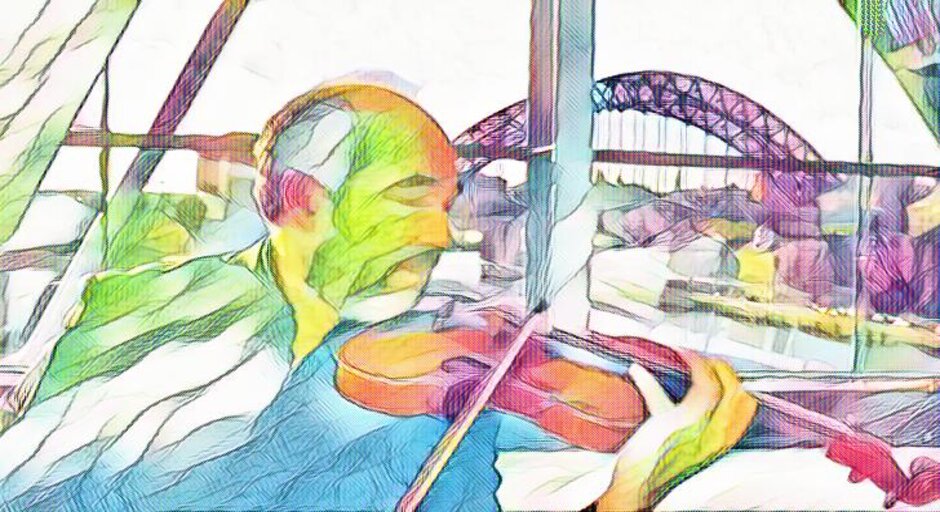 Bradley Creswick at the upstairs hall at The Sage, the Royal Northern Sinfonia’s permanent home in Gateshead, on the south side of the river from Newcastle. That’s the Tyne and the Tyne Bridge out the window.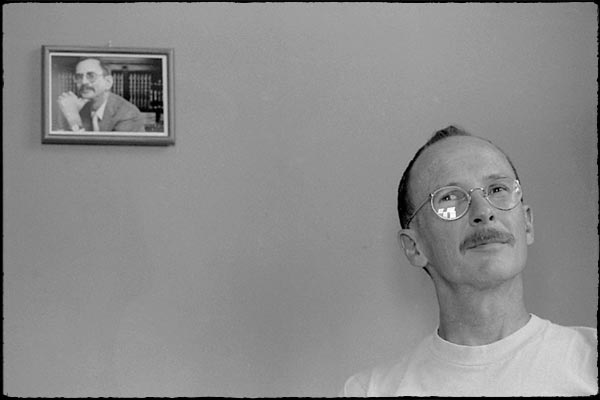



 Above: A bright clever orchestral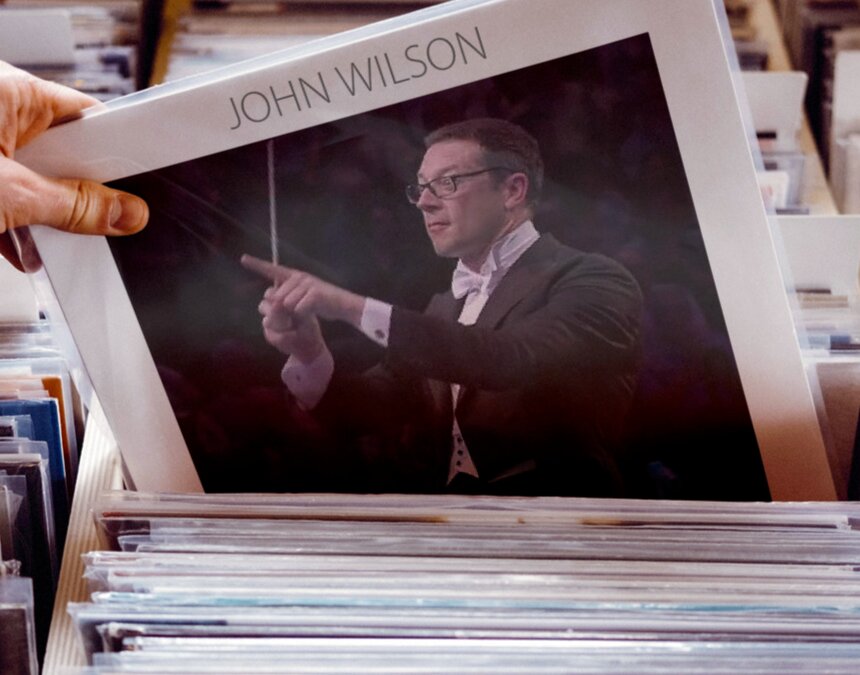
 Touching to catch a (private?) glance at Sting—
 "I'll Be Dead Before You Break My Heart"