Another love song to you,John Wilson my darling, my bonny, my Tyneside lad. In Alice Doesn’t Live Here Anymore (Warner Bros 1974), Scorsese’s fourth feature, my favorite actress in the world Ellen Burstyn plays Alice Hyatt, a New Mexico housewife suddenly widowed and left without means of support, who decides to try to return to her childhood home of Monterey, California and make a go of it again as a professional singer.
When you’re awake
The things you think
Come from the dreams you dream
Thought has wings
And lots of things
Are seldom what they seem
Weak and breathy as her voice is, she keeps the tune and the beat throughout the entire song—Scorsese has her sing the entire song, with intro—and something about the way Edna Rae (Burstyn’s original name) sings (imitating Peggy Lee above) appeals to me so much I come back to this scene again and again. Maybe it’s that her through-line is surprisingly strong. By the way, you do notice the sheet music for Oklahoma! on the piano…
My beloved John conducted the National Youth Orchestra of Great Britain (who The Guardian described as “a fearless young army on the move”) in “The Pines of Rome” by Respighi in Leeds in 2015; and in Glasgow, where he’s been the Associate Guest Conductor for several years, with the BBC Scottish Symphony Orchestra in 2018. Now he’s rounding out his association with this perennial orchestra piece with a wonderfully crisp and sparkling new recording from Chandos with the new Sinfonia of London.
I classify this under My First Music because I first heard this symphonic poem in a broadcast of a Young People’s Concert. Leonard Bernstein conducted, the NY Philharmonic played. Listen for the feet of Roman soldiers along the Appian Road, my affectionately-remembered rabbi of music suggested. I think I was 11.
Great to see my bonny back in the saddle, beard and all. This is the first concert of a series of 3 by the Philharmonia which was underwritten by a private family trust and partnered with Classic-FM.
As I once pledged, I will go almost anywhere my beloved conductor John Wilson leads me; and so it was a remark of his that led me to this movie, which in the mid-90s was an estimable hit in the UK, though not so much here in the States. When asked by The Telegraph about his early musical influences, said John, “Brass bands. Coming from a working-class background, the tradition of amateur music-making was important to me…”
There’ve been a couple of other, better known (in the US) British films, The Full Monty and Billy Elliot (here’s Billy’s angry dance), which also address the economic/unemployment crisis in Britain that, back in the 80s, did its part to whittle away at arts education throughout the country, particularly in the north. Like I said, my beloved conductor‘s remarks in recent interviews about his early influences started me thinking not only about his musical but general education growing up in Gateshead in the 80s. I’ll take this on in an upcoming post. The contrasts / similarities between his musical influences and school training—as a northern Brit through most of the 80s—and mine—as a midwestern American in Minneapolis through the mid 60s-early 70s—I find worth examining, and not just because I’m hopelessly in love with the bloke.
For now, this is what I take away from anecdotal evidence like Brassed Off and John’s childhood memories: The British, in general, seem to be more used to the sound of brass ensembles than Americans. Now, we like to think we know all about brass ensemble music because, being Americans, military marches and Sousa seem to stalk us everywhere we go in this great land of ours. But really, it’s not the same kind of music. I’ll discuss this in my review.
But let me just say this here: I will try to cut John a little more slack when it comes to his choices in orchestration for The Great American Songbook. I mean, if that’s really the way he hears it in his head…
Here’re my two connections to musician-composer Carlos Santana and his music. One, The Kid attended Santana’s alma mater, Mission High, in our neighborhood the Mission across from gorgeous Dolores Park, where he used to cut classes and take his girlfriend of the moment, wouldn’t you? And two, Santana’s “Evil Ways” was the last number in the live lesbian love act I used to do years earlier with the other girls employed by Katherine (wife of “History of the Blue Movie” Alex) de Renzy, bless her rapacious little heart. Eight shows a day. Tickets ten dollars, and this was 1979. We got visitors from everywhere, sailors and Japanese businessmen and tourists from the hotels. Katherine pushed the Screening Room as a classy joint, classier even than the better-known O’Farrell Theatre up the street, but apples and oranges. I guess naked pillow fights are better suited to some tastes.
The screenshot below doesn’t show where the laughs begin. The screenshot below shows the setup for the BIG REVEAL—leading to the longest studio laugh on American TV.
If you remember viewing it first-run, as I did, you will recall that thrill of being in on the “joke”. And you will most definitely know that—as perfectly and wittily as it is tied to its time and place—this joke will never land ever, ever again.
A few notes on episode 1, season 3: This was filmed just before the classic MI:OS, when G Morris was making the transition from LA disc jockey to actor. M Dillard was already a familiar face on television at this time. The episode was written by the comedy team of B Persky and S Denoff, who went on to create the TV show That Girl.
Earle Hagen’s Dick Van Dyke and Lionel Newman(!)’s Dobie Gillis themes have got to be in my opinion the swingiest, finger-poppingest themes in the history of TV, topping even Mancini’s Peter Gunn, because of their superior melody lines. The version above is just okay, but I would looove to hear the snap and slide my beloved John Wilsonwould put into either of these short pieces like he did with his 2006 Grammy-nominated “Beyond the Sea“. Quel dommage, he’s on to finer things now, my bonny is.
By the way, I owe my interest in swing to London-based composer / Royal College alum (1991-93) / YT maven David Bruce—in particular his lecture on swing theory, which set my head back on straight. Thanks, David!
John! John! I FINALLY figured out why you blocked me on Facebook a year ago, and it has nothing to do with the fact that I saw you in your undershirt.
No, it’s because in that review I wrote on Amazon of your chum’s book (and it was an 800-word, favorable, 4-star review, let’s not forget) I made a casual reference to that classical music site, SlippedDisc. That was it, wasn’t it?
Okay, I’ll cop to the poor joke. Not to my valid assertion, but to the poor joke.
But honey, I got it. Your misunderstanding was entirely my fault. And I want to apologize—like I say, I finally realized that whiff of “scandal sheet” might have put you off. You see, about 12 years ago, after a certain personal relationship of mine had been exposed (never found out the rat) and cunningly misinterpreted by the burgeoning so-called i-press, besides having to deal with the fallout in actual life, I also got decorticated for 4 DAYS RUNNING (four horrible, horrible days) on that notorious site Gawker, which in its heyday was pretty much the NY/Hollywood equivalent of SlippedDisc—only cruder, crueler and much more damaging—so I know what it’s like to be ducked in the swamp, so to speak. Would not wish that muck on my worst enemy.
But really, here’s how I know about SlippedDisc: About a year before I even noticed you, I’d been following the story of the outrageously dishonorable firing of English, Oxford-trained conductor Matthew Halls up in the boonies in Eugene, Oregon, once a small mellow city where I had had the pleasant experience of producing a San Francisco-based cabaret show (called The Rosy Black Life), but has since fallen into disrepair and racially-underlined civic unrest. I was interested because I recognized Halls’s name from my album of the Goldberg Variations (Halls is also a world-class harpsichordist, and my ears have always perked up to the sound of an interesting harpsichord ever since Vic Mizzy first played his own instrument in his own famous composition) and became fascinated and disgusted. Don’t want to go into the whole story here, but it broke on SlippedDisc and that’s why that site was the first thing which came to mind when I wanted to make a punch line.
Anyway John my love, just wanted to clear that up. I’m looking forward to your first online concert and will try to send you another psychic energy shot [UPDATE: Done 11 Jul 2020 23:30 UK time] before you video record. Meanwhile, Ella will tell you how I really feel about you.
“All the Things You Are” The Jerome Kern Songbook Oscar Hammerstein II, LYRICIST Ella Fitzgerald, vocalist Nelson Riddle, conductor-arranger Verve, 1963
Lucas Richman is a FB friend I share with Michael Seal because Richman’s brother Orien produced my old (ex-)friend Steve Gyllenhaal‘s last directorial effort, but also because I heard “In Truth”. If you love the kind of music my beloved John is famous for conducting, you will loooove this sensually and emotionally satisfying concerto.
Got to run out to pick up my heart pills so I’ll finish my train of thought about John’s musical upbringing in the 80s a little later. Meanwhile here’s my posting, from 2018, about the very thing Andrew Haveron introduced John to: “The Hollywood String Quartet and the Hollywood Sound“.
Disappointing to hear that John won’t be doing Britten’s The Turn of the Screw at Wilton’s Music Hall in London this month. So, to cheer everybody up, here’s the full 2-hour program of my John and The John Wilson Orchestra at the Proms, 2013. That’s Jane Monheit, John, and Matt Ford below.
SONG MEDLEY (YT): – “An Affair to Remember” (from the 1957 film; 20th Century Fox) / Harry Warren, Leo McCarey (the film’s director), Harold Damson – “Something’s Gotta Give” (from Daddy Long Legs; 20th Century Fox, 1955) / Johnny Mercer – “Young at Heart” (from the 1955 film; Warner Bros) / Johnny Richards, Carolyn Leigh – “It’s Magic” (from Romance On the High Seas; Warner Bros, 1948) / Jule Styne, Sammy Cahn – “The Tender Trap” (from the 1955 film; MGM) / Jimmy Van Heusen, Sammy Cahn – “My Foolish Heart” (from the 1949 film; Samuel Goldwyn/RKO) / Ned Washington, Victor Young – “Three Coins in the Fountain” (from the 1954 film; 20th Century Fox) / Jule Styne, Sammy Cahn – “Love is a Many-Splendored Thing” (from the 1955 film; 20th Century Fox) / Sammy Fain, Paul Francis Webster – “That’s Amore” (from The Caddy; Paramount, 1953) / Harry Warren, Jack Brooks – “Que Sera, Sera” (from The Man Who Knew Too Much; Paramount, 1956 / Jay Livingston, Ray Evans – “All the Way” (from The Joker is Wild, 1957; Paramount) / Jimmy Van Heusen, Sammy Cahn
A Place In the Sun (suite from the 1951 film; Paramount) / Franz Waxman
I must’ve seen this movie four, five times when it first came out, when matinees were cheap, and what kept calling me back—besides the lovely, lush, immersive experience of just sinking back into an engaging and sensually-satisfying film in an air-conditioned theater in the middle of smelly, sticky, hot Manhattan—was, of course, the music. I really, really dug the score, just like I really dug the score of Walton (mostly)’s Battle of Britain (@1:20), a few years earlier, and went back matinees to go hear it again and again. Which doesn’t mean I like all of Richard Rodney Bennett; I think I’ve gone to almost every other movie he did a score to and can’t remember the music to any of them.
But this one I could whistle for years, decades, afterwards, and the only thing that brought it back to mind recently was—yes! yes!—falling in love with my bonny conductor John Wilson. Because of his association with Bennett, you see. Oh, they owned a house together or some such relationship [download PDF of Feb 2020 issue of Gramophone here], but that’s not what I’m talking about. Back when John was 28, he and Bennett—and The John Wilson Orchestra!!!—got together to record, as I mentioned in an earlier posting, an abomination called Orchestral Jazz. So I’m figuring that anything my bonny lad knows about jazz has to’ve come from this guy, and the trouble is, I really can’t find anything that would lead me to believe Bennett knew anything at all about jazz, except that he once partnered with jazz singer Claire Martin, and she’s the real thing.
Directed by Sidney Lumet, whose first film was about another dozen people meting out justice, 12 Angry Men (United Artists, 1957). Above Jean-Pierre Cassel: “The Orient Express”, for which the composer heavily cribbed from Ravel’s “La valse”. Composer Richard Rodney Bennett on piano, Marcus Dods conducting the Orchestra of the Royal Opera House, 1974.
But when it comes to purely orchestral music, Bennett shows that he knows a thing or two, Royal Academy graduate that he is. I’m glad, because his complete score for the film Murder on the Orient Express (Paramount, 1974) is probably the last example of a type of music they call over there English Light Music, which flourished on and off for about a hundred years since the 1870s, and is defined by easily accessible melodies and lush, decorative orchestration. In other words, music that’s delicious to hear and easy to digest. And while Murder has slightly campy touches, Bennett essentially knew who his audience was, and what they wanted.
It was just the other night I had a fever dream, running a 101-degree temperature and twisting the sheets, not longing for my beloved John Wilson this time, but trying to fight off an infection. When I finally made it into sweet sweaty sleep I was immediately taken into a strange scenario where, for God knows what reason, I was expected to conduct, with no rehearsal, Australian composer Brett Dean’s tribute to the doomed Soviet cosmonaut Vladimir Komarov, in front of an audience of 200-800 (the crowd kept stealthily increasing), among whose number were members of the orchestra I couldn’t tell apart and no one was helping me. Being a dream, there were other factors and factors conspiring to keep me from conducting the damn piece: the string section turned into one fella carrying a zither that turned into a floor harp; the stage manager was nowhere to be found and I was expected to run the lights as well; no one would give me a copy of the score. When I yelled out, “Okay, who’s got the tinfoil?” it was then I woke up.
Self-taught French composer Emmanuel Chabrier wrote this enduringly scrumptious piece in the early 1880s, the orchestration sounding more like something post-WWI. Yet it was composed during the height of La Belle Epoque. This was the last piece (a reduction, of course) I ever played on the violin in my junior high school orchestra, before switching a couple years later, at 16, to Voice at the University of Minnesota.
Lastly, a word about the strings in the fourth movement. Yup, there was that “John Wilson Orchestra shimmer”, that famous wrist vibrato anyone who’s ever picked up a fiddle recognizes and has to have come to terms with fairly early in training. We used to wonder if it made our playing actually sound better, and it depends. The Russians and Mittel Europeans used it a lot a hundred years ago. Some call this type of playing now “period playing”. My old boss, Rouben Mamoulian, called this style of playing “crying violins”. He claimed it was his idea to use it in the musical Love Me Tonight, in the “Isn’t It Romantic” sequence.
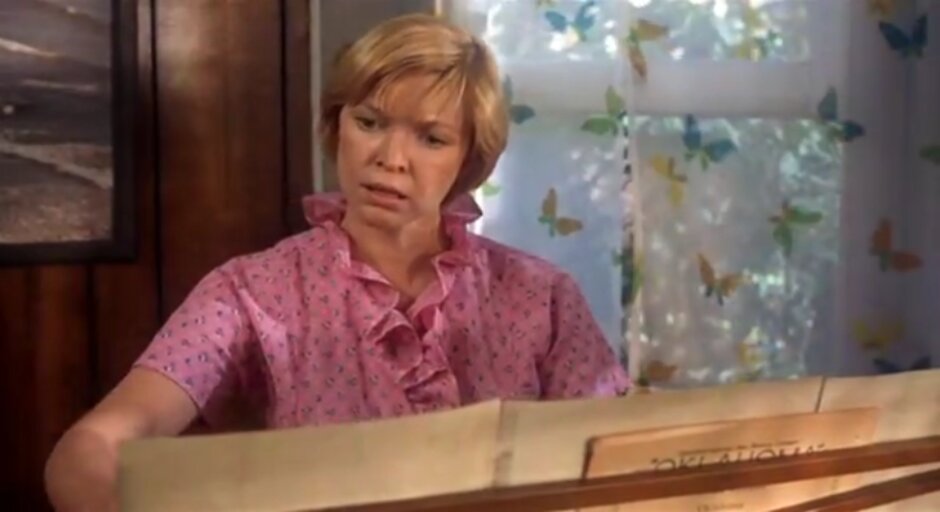 Weak and breathy as her voice is, she keeps the tune and the beat throughout the entire song—Scorsese has her sing the entire song, with intro—and something about the way Edna Rae (Burstyn’s original name) sings (imitating Peggy Lee above) appeals to me so much I come back to this scene again and again. Maybe it’s that her through-line is surprisingly strong. By the way, you do notice the sheet music for Oklahoma! on the piano…
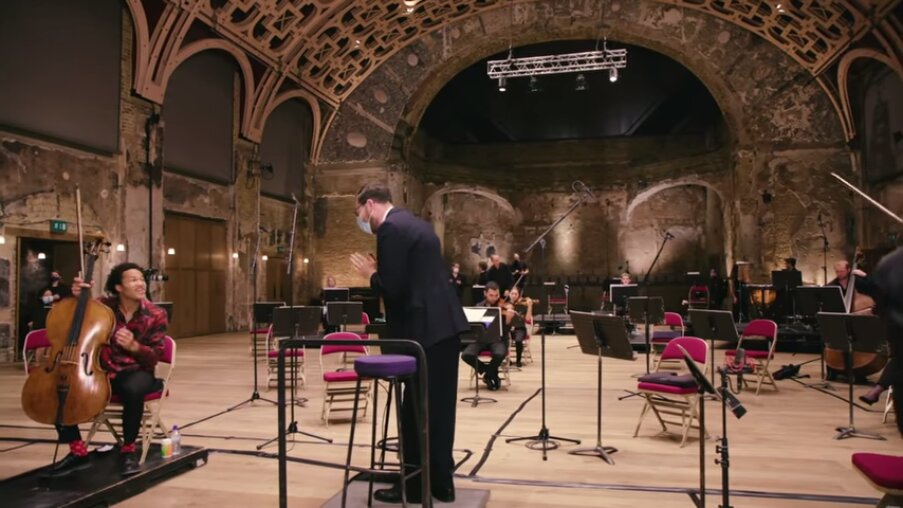 Above the Great Hall at the Battersea Arts Centre, July 2020: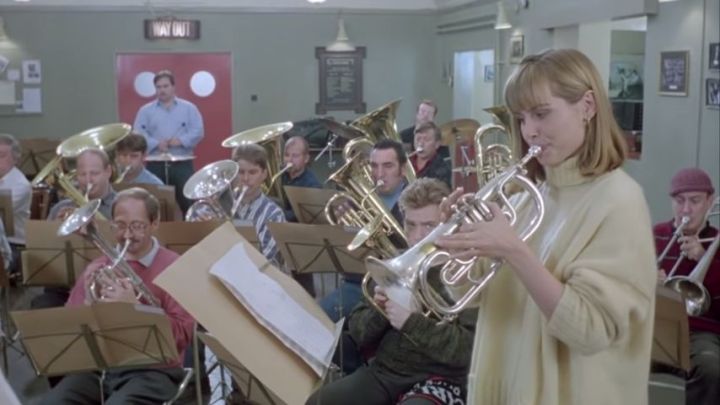
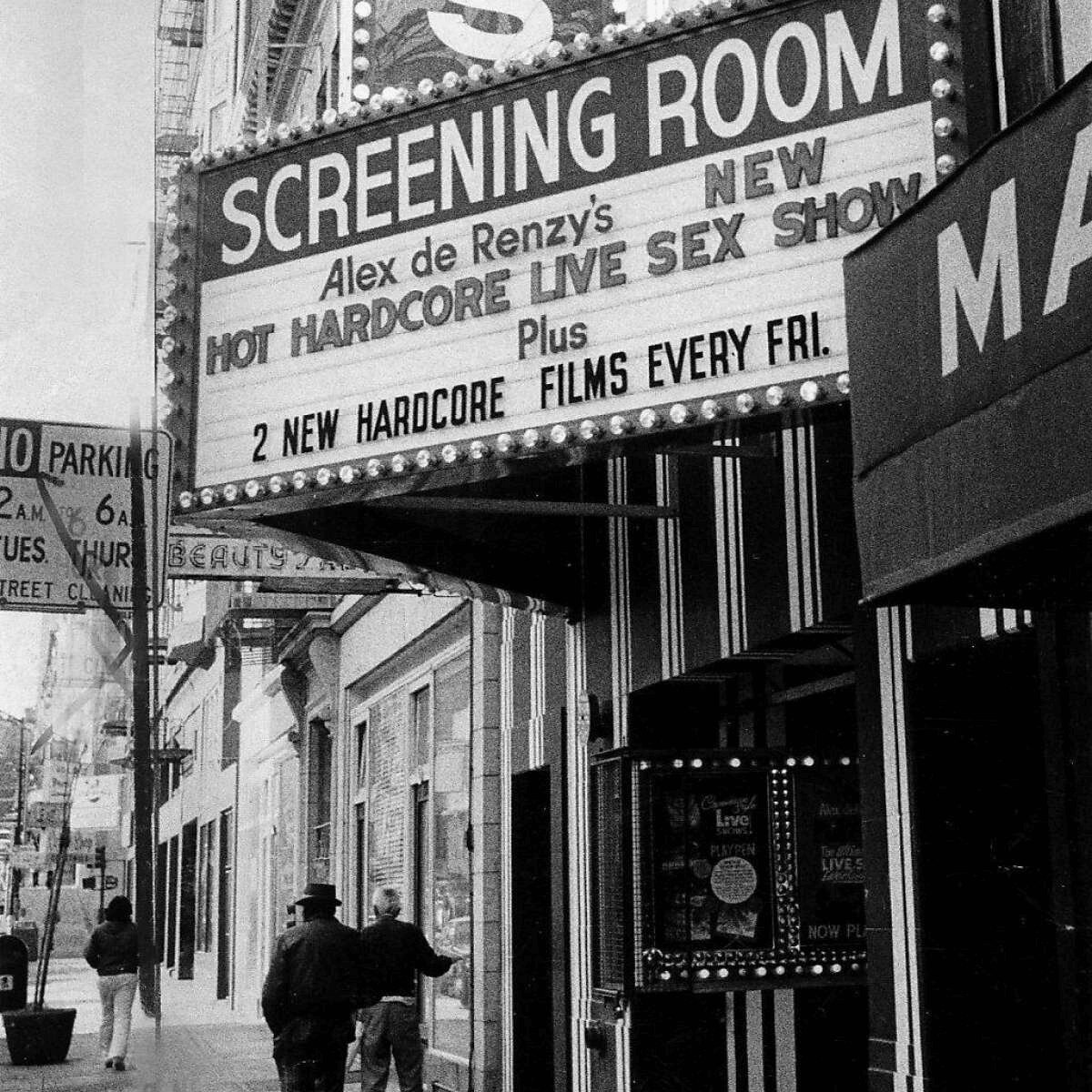 Above my old workplace, “Evil Ways” from the album Santana, 1969. Find Tito Puente’s “Oye Como Va?” played by Santana (from the album Abraxas, 1971) in my posting
  Above:
  Above John: “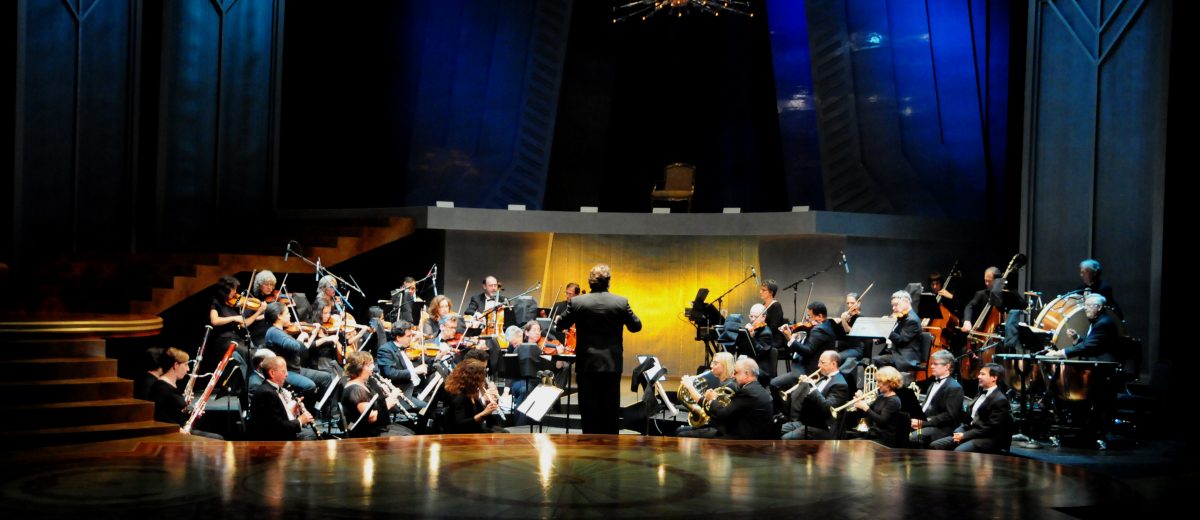


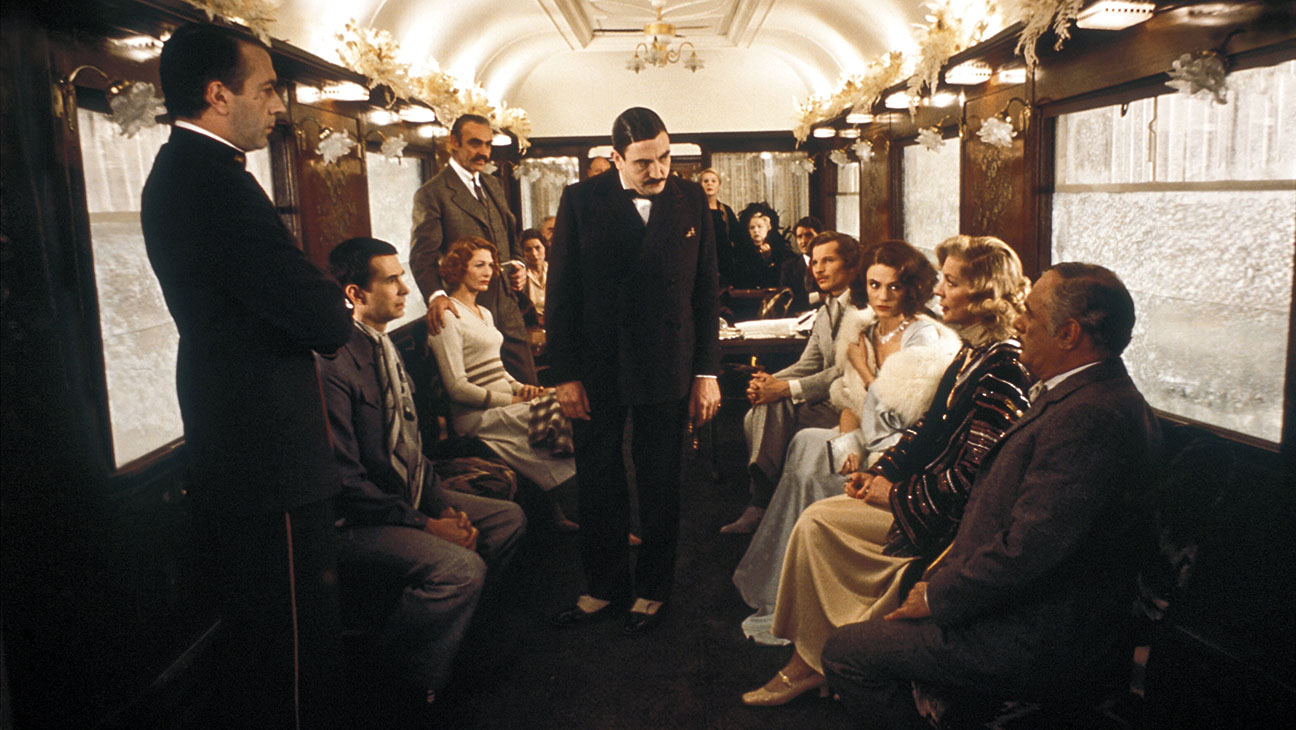 Directed by Sidney Lumet, whose first film was about another dozen people meting out justice, 12 Angry Men (United Artists, 1957). Above Jean-Pierre Cassel:
  Filipina nude painted by Fernando Amorsolo y Cueto, 1960, just for
  Above John:
 "I'll Be Dead Before You Break My Heart"