If you can get over to Belgium, this’ll be almost as good as the The John Wilson Orchestra at the BBC Proms. Performing at the 5 year-old, acoustically perfect, 2000-seat Queen Elisabeth Hall in Antwerp, the Antwerp Symphony Orchestra under John’s baton will be offering a Saturday evening filled with old favorites:
6 September, 2021. Labor Day. (Bosses 2 – Labor 1) I suspect a few people in the UK might lately be visiting here as part of their Monday morning getting-into-gear ritual, so apologies for the lateness of this new posting, but I had to make the potato salad. Mister Grumble likes my potato salad.
Another reason for the delay: I needed to see what John was wearing for this radio concert, because the work clothes my bonny chooses to wear for any particular program always convey a meaning to me—so I had to wait for his picture (forget the bullshit reviews) to come out in The Guardian or The Independent… As you can see below, he was attired in a simple concert tuxedo, which I truly hope was comfortable. (Still wore his lucky cufflinks, though.)
Above: Erich Korngold’s Symphony in F, Conducted by John Wilson and played by the Sinfonia of London, BBC Proms, September 2021.
The importance of John Wilson’s white tie and concert tailcoat. This is what I couldn’t determine during the early days of my passion for John: Whenever he wore the tailcoat at the Proms conducting The JWO, his fancy showtunes orchestra, I wondered, was it because he was following in the historically deep tradition of maestros (Bernstein, Barbirolli etc) in dignified full dress…or was it just part of the show? So when John eschewed the tailcoat for his very important 4 September “Viennese” concert at the Royal Albert—where he could have so easily camped it up—this is what his choice said to me:
This music is serious. This presentation is serious. Spectacle doesn’t apply here. Sentimentality doesn’t apply here. Pay attention to the music! An assured, masterful bit of programming—not just some splashy entertainment, but a true, potentially life-changing encounter with Art. For only ten bucks a bottom-price ticket, I understand. I hope you Brits appreciate what you have.
John, dearest: It was only quite recently that I decided the satisfaction I get, devising interesting fantasies about making love to you in full dress (in my imagination we’re both in our work clothes, you in your tailcoat, me in my sarong), belongs best in a particular narrow stream of writing that has nothing to do with the way I regard you in real life: as a fellow artist I’d enjoy exchanging energies with. So, hooray for your concert blue suit, your concert tuxedo, your rehearsal T-shirt, all of which remind me that an actual human being strives and pulses behind the baton to create something beautiful.
Which brings us to the concert program. I don’t know the Berg so I’ll let that one alone, except to say the soprano has a nice strong tone. The Zemlinsky encore? You clever lad. Your Ravel waltz is as tight as when you conducted it at the Royal College, here even more ravishing coming from a fuller orchestra. I’d also get a kick reading your markings for Strauss’s Die Fledermaus Overture—have never quite heard those musical values brought out before. Very yummy.
The third movement of Erich Korngold’s Symphony in F. The Mister and I have exchanged a few strong words on this subject; however, since one cannot talk reason to a woman in love, I’m not going to include his remarks here. It’s a wonder that this single movement can bring out such contentiousness among people, even in someone like Mister Grumble, who wouldn’t’ve given a fig for Korngold if I hadn’t rediscovered Korngold through mywanton passion for conductor John Wilson andall the music that surrounds him. Even Leonard Bernstein and his protegee, John Mauceri, couldn’t agree: read my earlier post ”Leonard Bernstein Hears Korngold’s Symphony in F-sharp for the First Time”… [going off to make dinner, spaghetti with chicken-tomato sauce, back asap]
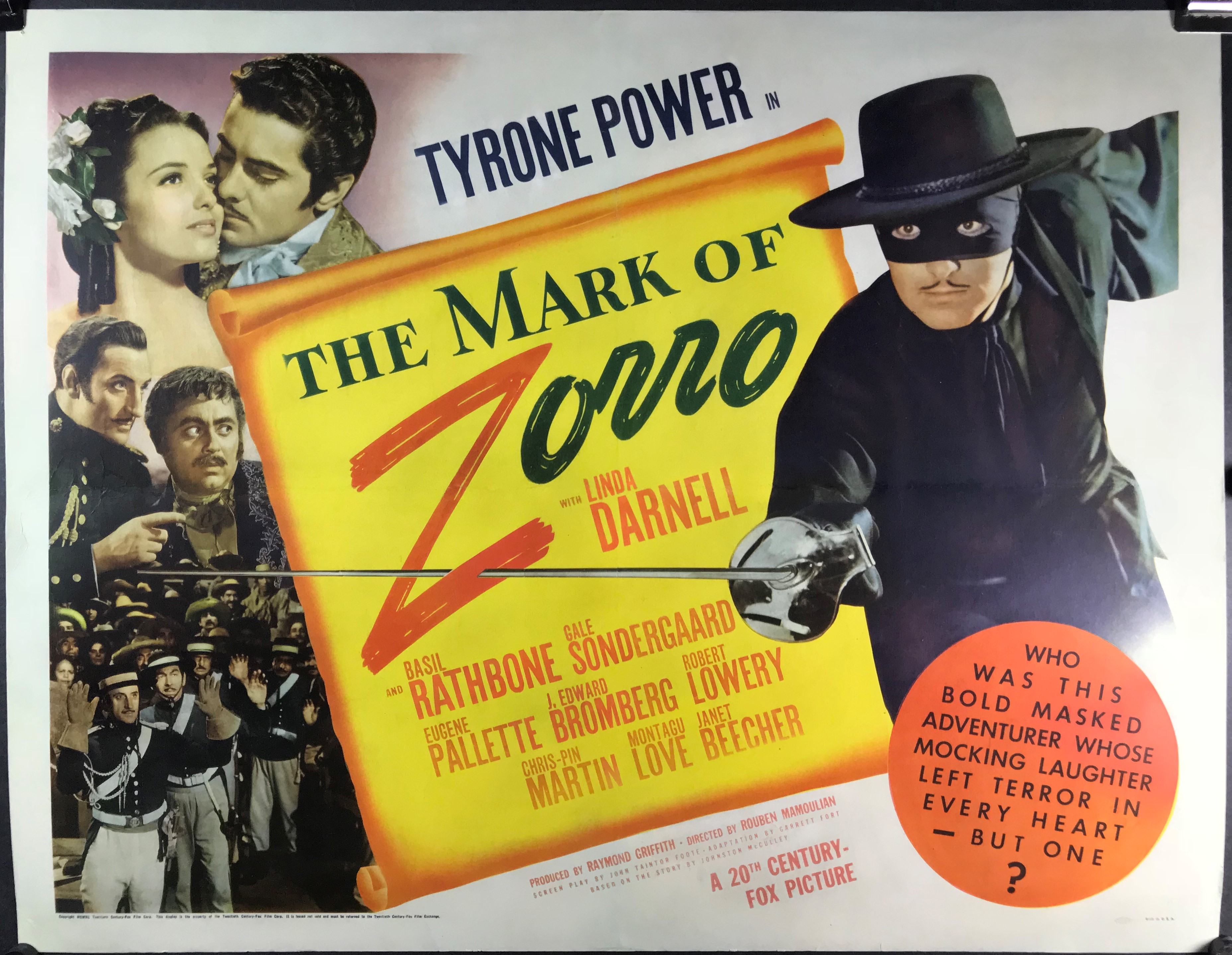
A weekend doddle before I start the big book. The first day I went to work for Mamoulian, he asked me outright if I knew any of his movies. I told him yes, this one. Which all of you probably know like I do, from TV. (Catch it here.)
For you fans, here’s the program for my bonny‘s 4 September, 2021 concert:
Johann Strauss II: Die Fledermaus Overture (!!!) / O happy the audience who experiences this Viennese treasure at the Royal Albert with a full orchestra conducted by my beloved John
John: I think with Light Music generally one of its primary requirements is to ‘land in the listener’s lap’. It has to have a direct route to the listener’s emotions. You mention the Haydn Wood London Landmark Suite… In the 1930s from about 1933 onward, with Eric Coates’s London Suite, there was a sudden vogue for London—it was an illusory London, but it was very useful for these composers who wanted to express these sort of picture-postcard scenarios in music… Eric Coates did that very effectively with his London Suite in 1933. Now, why did people suddenly start copying Coates? It’s because it was enormously successful… It sold 400,000 copies of the 78 [record] and suddenly of course dollar signs started flashing in front of the publishers’ eyes.
And these three that we’re going to hear tonight are incredibly different individually. What should the listeners be expecting to hear?
John: The tunes are good. Particularly the last movement, “The Horse Guards—Whitehall” which was used as a signature tune for a long-running radio show [Down Your Way, 1946-92]… That’s obviously got a jaunty, horsey aspect to it… The first, “Nelson’s Column”, has a sort of quality nautical aspect to it… And the middle movement, “Tower Hill”, has a sort of thread of tragedy running through it. It’s never profoundly tragic, it’s all a kind of…as I keep saying earlier, a kind of picture postcard, a sort of 1930s-1940s sort of illusory version of what these places represent.
What are the sort of challenges you come across as a conductor when conducted and preparing music like this?
John: You know, there are a time when there was no division between light music and serious music. But with the advent of broadcasting and seaside orchestras there was a new market for composers who specialized in that field… And the challenge as a conductor is that you have to get off the page the immediacy of the music, the directness of the melodies and the rhythms, so I think on common levels of snap, articulation, fervor, all those things to bring these pieces to life… It’s, I think, from a player’s point of view, it’s often more than you might actually think. Part of the secret of this music’s success is that it never outstays its welcome. Which means as a player you have very little time to establish yourself. You’ve got to be in the zone and you’ve got to kind of deliver immediately. I mean, you know, I’ve been doing this stuff here with this orchestra for a lo’ of years, so they’re quite familiar with not only the style but what it is I like, so it’s all very happy music making.
The 19th episode of the 8th season of the long-running Korean-wartime sitcom M*A*S*H entitled “Morale Victory” (clip available on my YT channel) is mostly pretty silly—but! Get through all the A-story shenanigans and there’s a surprisingly tight and moving B-story about a wounded soldier/concert pianist which culminates in a 3 1/2 minute scene that always makes me cry. David Ogden Stiers (Juilliard, ’72) plays Dr Winchester and James Stephens plays his patient.
(Winchester wheels David into the squalid hut that is the officers+enlisted club) David: What are we doing here, doctor? I don’t want a drink. Winchester: Good. Because you’re not gonna get one. (Wheels him close to the piano) David: What the hell is this all about? Winchester: Please, David. (from manila envelope takes out sheet music) I’m sure you’ve heard of these, eh? David: (glances at them) Pieces for the left hand. Of course I’ve heard of them. What are you suggesting now? That I make a career out of a few freak pieces written for one hand? Winchester: Not at all. I won’t make any pretense about your physical ability to play concerts. That’s not my point. Are you familiar with the story behind the Ravel? David: No, and I don’t really— Winchester: It was written for an Austrian concert pianist named Paul Wittgenstein. He lost his arm during the First World War. He embarked on a long search to commission piano works for the left hand alone. Composer after composer turned him down. But he refused to give up. Finally, he found Ravel who, like him, was willing to accept this great challenge. (Beat; David considers this) Winchester: Don’t you see? Your hand may be stilled, but your gift cannot be silenced if you refuse to let it be. David: Gift? You keep talking about this damn gift. I HAD a gift! And I exchanged it for some mortar fragments, remember? Winchester: Wrong! Because the gift does not lie in your hands! I have hands, David. Hands that can make a scalpel sing. More than anything in my life I wanted to play. (sighs) But I do not have the gift. I can play the notes, but I cannot make the music. You’ve performed Liszt, Rachmaninoff, Chopin. Even if you never do so again, you’ve already known a joy that I will never know as long as I live! Because the true gift is in your head and in your heart and in your soul. Now, you can shut it off forever, or you can find new ways to share your gift with the world, through the baton, the classroom, the pen. (points to sheet music) As to these works, they’re for you, because you and the piano will always be as one. (Winchester sees a spark of interest in David and moves him closer to the keyboard. With a look of determination, David begins to play the Ravel. Winchester’s face registers intense emotions, including joy)
Here are 5 easy cooking recipes I wrote down just for you, John my love, after remembering you mentioning cooking sausages for your best friend*. The dinners below, besides being tried and true and easy-peasy, are plain, nourishing, tasty, cheap, quick, satisfying, and don’t require fancy kitchen equipment or expensive ingredients:
Five elements make Gateshead a uniquely potent locus on the spiritual plane: 1) the Kolel in Bensham, the world’s most important center of esoteric Talmudic scholarship; 2) the Sage symphony concert hall on the River Tyne, which because of its particular physical manifestation is blessed by Sarasvati; 3) the underground cable hub; 4) the Angel of the North, a huge guardian structure overlooking Low Fell, the working class neighborhood where my beloved grew up (see above); 5) the city’s long history of UFO sightings and alien visitations. Above the Angel: “The Blaydon Races” (Geordie Ridley, 1862) sung by Jimmy Nail, Tim Healy and Kevin Whately for the Sir Bobby Robson Foundation. “Ah me lads, ye shudda seen us gannin’ / We pass’d the foaks upon the road just as they wor stannin’ / Thor wes lots o’ lads an’ lasses there, all wi’ smiling faces / Gannin alang the Scotswood Road, to see the Blaydon Races…”
NEWCASTLE LAMB STEW
½ lb boneless lamb, cut small
1 large potato 8-12 oz, peeled and cut into small pieces
2 medium carrots, peeled and sliced (though carrots are not traditional)
1 large onion, peeled and chopped
1 tsp salt
½ tsp pepper
1 tsp dried thyme
4 cups liquid, preferably beef, lamb or pork broth; otherwise, water or combination water+broth totaling 4 cups
2 tbs cooking oil, margarine, butter or other desired fat
Saute lamb pieces and onion in fat until lamb starts to brown and onions begin to soften. Add remaining ingredients. Bring to a boil, cover, and cook for 30-45 minutes or until lamb and vegetables are tender. If desired, adjust seasonings. If desired, thicken consistency with a paste made from water+flour or water+cornstarch or other thickener. Add paste to pot and cook over high heat, stirring constantly until mixture is smooth and gravy is of desired thickness.
Serves 2, or 1 with leftovers.
GATESHEAD SAUSAGE STEW
½ lb good quality smoked sausage such as Polish or garlic, left whole or cut into 2 pieces or sliced
½ lb potatoes, peeled and cut up
½ lb cabbage, cored and sliced to cole slaw consistency
1 large onion, peeled and chopped
4 cups beef broth, fresh or tinned (no boullion cubes or powder, please!)
Salt and pepper to taste, depending on type of sausage used
Combine all ingredients to a large pot, bring to boil and cover and cook on medium heat for ½ hour or until all vegetables are tender.
Serves 2, or 1 with leftovers.
GEORDIE CHICKEN CURRY
2 cups cooked diced chicken or tinned boneless chicken (note: leftover roast or boiled chicken may be used)
1 onion, peeled and finely chopped
2 cups chicken broth, tinned or fresh (note: if you have boiled chicken for this recipe, use the broth in which it was boiled)
1 cup tinned peas
2 tsp curry powder
Salt and pepper to taste
Combine chicken broth and onion in saucepan and boil until onion is just tender. Then add chicken meat and peas. Add salt, pepper and the 2 tsp curry powder or more if spicier dish is desired. When mixture is heated through, add flour or cornstarch paste (note: see Newcastle Lamb Stew above) to mixture, stirring constantly until desired thickness. Serve on bed of plain boiled white rice with side of mushy peas and mango chutney if desired.
Serves 2, or 1 with leftovers.
TYNESIDE MINCE AND MASH
For the mince:
4 oz ground beef, pork or lamb or 2 cups minced beef, pork or lamb (note: roast or boiled leftover meats may be used; if using fresh ground meat, saute with onions, adding a little oil if meat is quite lean, then add remaining ingredients)
1 cup minced onion
2 cups meat broth
1 tbs Worcestershire sauce
Salt and pepper to taste
Bring all ingredients to a boil and when onion is soft and raw meat is cooked add thickening paste (see above).
For the mash:
1 lb potatoes, peeled and cut up
Boil potatoes in separate pot in water until very soft. Drain potatoes thoroughly, add 2 tbs butter or margarine and mash thoroughly with masher or large fork. When mixture is thoroughly mashed whip it with a large spoon, adding more or margarine if desired until mash is very thick and smooth. Transfer mash to serving plate and top with mince. Serve with boiled Brussels sprouts if desired.
Serves 2, or 1 with leftovers.
WEE BONNY JOHN’S SIMPLE FISH AND CHIPS
For the fish:
½ lb firm whitefish filet such as cod, snapper or perch
Cut filet into 4 2-oz pieces.
For the batter:
1 cup flour, seasoned with salt, pepper and dried dill weed
¼ tsp baking soda which has been dissolved
in 1 tbs vinegar
Stirring constantly, add sufficient water to make a thick batter.
For the chips:
½ lb potatoes, peeled and sliced into chips of desired size
In a pot or deep skillet heat vegetable oil to high heat. Add chips and fry until golden brown. Remove chips from oil and drain on newspapers.
Dip fish in batter to coat and immediately fry in remaining hot oil for 2-3 minutes or until underside is brown; then turn fish with slotted spatula and fry for 1-2 minutes more. When fish coating is brown and firm remove fish from oil and drain on newspapers with chips. Serve with boiled carrots in parsley butter.
For the carrots:
8 oz carrots, peeled and sliced
Boil in water until tender. Drain carrots and remove from pot. In drained pot add
4 tbs butter or margarine
1 tsp minced parsley
1 tbs minced chives
1tsp dried dill weed
Melt butter and stir until herbs and butter are evenly mixed, then add reserved cooked carrots and toss in parsley butter for about 5 minutes until carrot slices are evenly coated.
To serve, place fish, chips and carrots on serving plates and sprinkle fish and chips with salt and malt vinegar.
Serves 2. It doesn’t keep.
*If you mean bangers, the best way to cook them is to prick them so they won’t explode, then fry them gently in lard or bacon fat.
UPDATE 12/25/20 Just uploaded: Alan Robson’s Grisly Trail of Newcastle/Gateshead. Haven’t decided to keep it yet so if you want this grab it now. Robson’s walking tour spiel (a Night Owls feature) is incredibly crude, cruel and bloodthirsty, but it appeals to the 12-year old in me. If nothing else, this guy Robson’s accent is pure Geordie and he speaks slowly and distinctly, so I understand everything he’s saying except most local references. Oh! And he does mention The Dead Alien of Bensham!
After Kevin (whose family attended Mass at the same church in Wilmington as Joe Biden’s) took me to this Jules Feiffer-penned movie playing at a local Manhattan arthouse he had me re-enact it. We kind of looked like this. Oh, I got him there.
Louise: I don’t think we’re going to have any trouble tonight. Jonathan: You don’t? Louise: No, I don’t. Jonathan: Are you sure? Louise: You wanna bet? Jonathan: How much? Louise: A hundred? (he takes bill from pocket, gives to her; she puts it away) Jonathan: You sound pretty sure. Louise: You’re a kind of man…why shouldn’t I be sure? Jonathan: What kind of man am I? Louise: (slowly, seductively, kneeling between his legs) A real man. A kind man. I don’t mean weak kind the way so many men are. I mean the kindness that comes from an enormous strength… From an inner power so strong that every act, no matter what, is more proof of that power… That’s what all women resent. That’s why they try to cut you down. Because your knowledge of yourself and them is so right, so true, that it exposes the lie which they, every scheming one of them, live by. It takes a true woman to understand that the purest form of love is to love a man who denies himself to her. A man who inspires worship. Because he has no need for any woman. Because he has himself. And who is better, more beautiful, more powerful, more perfect… You’re getting hard. More strong, more masculine, more extraordinary, more robust… (smiling) It’s rising. More viral, dominating…more irresistible… (happy laugh) It’s up. In the air.
Trenet-Lawrence arr Dick Behrke / Beyond the Sea [https://bit.ly/jwobeyond1]recorded by my darling and his O and vocalist Kevin Spacey for the Warner Bros film at Pinewood Studios, 2003; a 2006 Grammy Award nominee in the Best Compilation Soundtrack Album for Motion Picture, Television or Other Visual Media category (producer Phil Ramone)
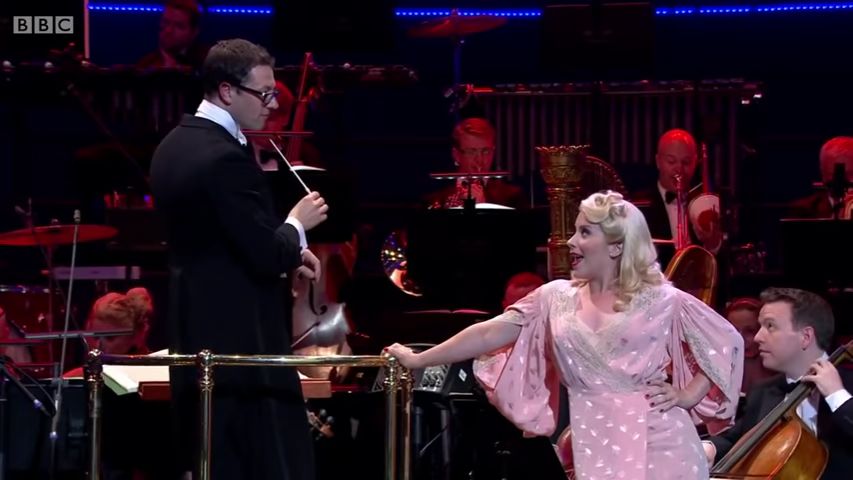
John and O don’t always perform semi-staged fully-voiced musicals badly at their BBC Proms appearances at the Royal Albert Hall—their 2012 My Fair Lady was pretty much all right, no shenanigans there (pronounced The Guardian, “John Wilson’s adapted score—which borrows from Andre Previn’s movie arrangement—adds a sparkle to even the most drearily expository songs: the flutes somehow sound cheekier, the brass ruder, the strings zingier”). And in fact their 2014 Kiss Me Kate was as it was meant to be: big, sexy and playful. Winsome John even gets a speaking part!
Now, we all know about “Too Darn Hot” with its descriptions of nice normal congress (“I’d like to sup with my baby tonight / Play the pup with my baby tonight”) and “Tom, Dick or Harry” with its lyrics “I’m a maid mad to marry and would take double quick / Any Tom, Dick or Harry, any Tom, Harry or Dick” and the lilting refrain “A-dick-a-dick dick dick, a-dick-a-dick dick dick”…
But did you ever stop to think about the song “Always True to You in My Fashion”? Which was one of my party pieces years and years ago (alternating with “I Cain’t Say No” from Oklahoma). I’ve given it some thought and what I worked out is this: Lois isn’t just your ordinary sex supplier—no, she specializes in those extra-special somethings that make a man (well, certain men) happy and willing to pay top dollar for them. Not to mention that in every verse she pretty much announces her rates for rough stuff, plus a type of sex play I could never get into:
There’s a madman known as Mac Who is planning to attack If his mad attack means a Cadillac, okay!…
I would never curl my lip To a dazzling diamond clip If a clip meant “Let ‘er rip!” I’d not say nay…
There’s an oilman known as Tex Who is keen to give me checks And his checks I fear Means that sex is here to stay…
…ending always with the last line, “But I’m always true to you darling in my fashion / Yes I’m always true to you darling in my way.” Which to me is the number-one indication she keeps it hot with her boyfriend because with him it’s, like I said, nice normal congress. You know, vanilla. But with her clients? As you may recall I was in The Business, where scenarios abound. (Remember Basingstoke?) All this to say it amuses me to no end to watch Lois size up within two seconds The Conductor, cunningly portrayed by my beloved John Wilson. Because I know exactly what’s going on in her head, in descending order:
Recorded at the Duke’s Hall, Royal Academy of Music, 2 July 2021. Found the donation window, incidentally. Back in January, 2020 after we heard John conducting them in Tchaikowsky I said to Mister Grumble, ‘That was as good as any small-city orchestra in the US. I’d’ve paid cash money for this,’ and darned if the RAM didn’t just make my life a little easier. Here it is.
To continue from my earlier posting, “My Beloved John Wilson Appointed to the Henry Wood Chair of Conducting at the Royal Academy of Music and Conducts the RAMSO in Arnold Schoenberg’s ‘Verklärte Nacht’ (1899) at Snape Maltings, 6 June 2021”: We talked over beers, Mister Grumble and I, about John’s energy, among other things, a couple of weeks ago. After we toasted Bloomsday, he gave me his take on John and John’s music. Mister G isn’t as enamored of John Wilson’s enormous and varied repertoire—from Broadway tunes to Rachmaninoff to Turnage—as I am, but he has many good things to say about my beloved conductor’s basic character. I described to him (my angel baby is blind) how differently John looks and acts when he’s with the RAM, or the Sinfonia of London or the Royal Northern Sinfonia. Less tense, more in control, more in his element—happier. Plus he doesn’t sweat as much as on the stage of the Royal Albert. ‘Then this is where he belongs,’ said Mister Grumble.
More! THEMEThe Great Adventure (CBS, 1963) I remembered this theme note for note and was thrilled to find episodes of the series on YT again. Though I strongly suspect it was Richard Rodney Bennett who wrote this from his random notes
O sieh, wie klar das Weltall schimmert! / Es ist ein Glanz um alles her / Du treibst mit mir auf kaltem Meer / doch eine eigne Wärme flimmert von Dir in mich von mir in Dich… ~Richard Dehmel
Above my beloved: Leopold Stokowski conducts the 1943, final and most popular composer’s edit of the string orchestra version of this exquisite one-movement sextet based on Richard Dehmel’s poem. (The 1924 version was conducted by Edward Clark of the BBC in Newcastle that year.) Find the Hollywood String Quartet’s version here.
It was not a revelation, I knew John was going to be wonderful and the orchestra was going to be wonderful. I’d heard the “Mars” part of Holst’s The Planets that he conducted in Leeds with the National Youth Orchestra of Great Britain (see John above wearing the bright blue NYOGB hoodie) and was impressed with its energy. RAM trumpet Rebecca Toal (heard in Brett Dean’s “Komarov’s Fall”) had this to say about my dear one:
“John is particularly generous with his energy and he’s so committed. I think I’ve done one project with him before, and both times he’s just thrown himself into the projects. It’s so nice to have people come in from the outside and completely splash their energy everywhere and leave you feeling on a high and motivated, even after they’ve left.”


 Above:
  Above Mister Personality:
  Above: Eric Coates’s “Cinderella: A Phantasy” recorded by my darling John Wilson with the Royal Liverpool Philharmonic Orchestra, 2006.

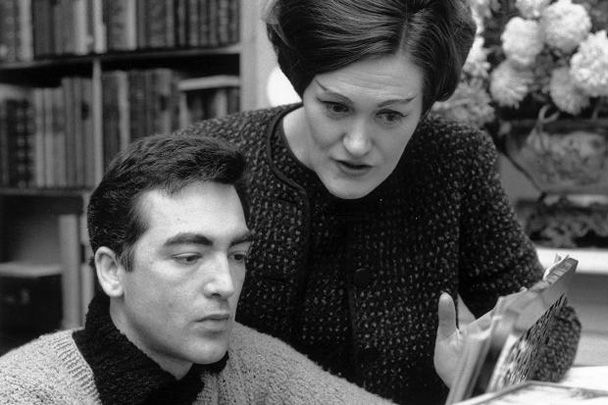 Australian-born conductor Richard Bonynge and soprano Joan Sutherland; they married in 1962.
 Five elements make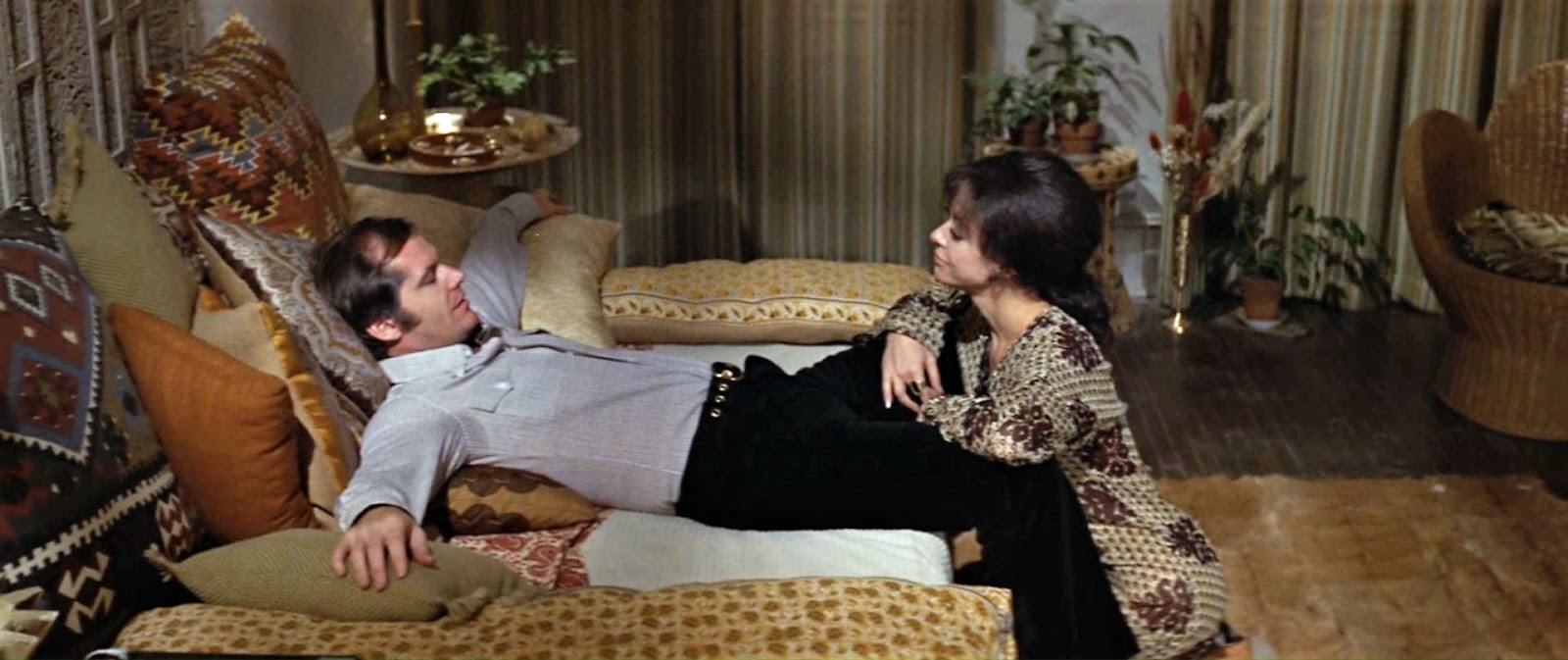



 "I'll Be Dead Before You Break My Heart"