Imagine Ida Rubenstein, who commissioned this late work from the old man, dancing to it in private…not to her lover, but to the portrait of her lover, to which she can be just as revealing as she pleases…
I see you like this, John, and I’m a puddle of goo. Above: My number one stroke song. In case you missed it, you mooks, that’s Bolero up there, Maurice Ravel’s 1928 one-movement orchestral piece, played by the Sinfonia of London and conducted by the man of my dreams, John Wilson, for Chandos records, February 2022.
Back in October 2019, on extremely short notice, my brilliant, bonny John Wilson substitute-conducted the state-run radio orchestra of Ireland, RTE, in a program of Brahms’s Variations on a Theme by Joseph Haydn, Robert Schumann’s Violin Concerto in D minor, and Dvořák’s quite listenable Symphony No 8 in G major.
Pinch-hitting for a sick colleague in Glasgow a month later, John conducted Brahms’s Haydn Variations, as well as Dvořák’s crowd-pleasing Symphonic Variations.
But it’s John’s performance of Britten’s Serenade for Tenor, Horn and Strings that really made me sit up. Written by Benjamin Britten for his live-in sweetie Peter Pears—who sang it (above) in 1943—Serenade, with its unlikely musical combination, is a remarkably rich work, just the kind of music that John should be involved in at this point in his career. Of course he conducted it splendidly in Glasgow.
From The Herald, April 2017: What does Englishness mean in early 20th century orchestral music? Is there a discernible sense of national identity woven through the symphonies of Elgar, Walton and Vaughan Williams, the tone poems of Holst and Bax and Delius? And if so, does it mean the same thing when we hear it now as it did then? These are contentious opening gambits. In 2017, in Scotland, in Britain, in Europe, we should know better than to prescribe any essentialising nationalistic attributes to a disparate group of artists. Yet for conductor John Wilson there is something in it, just not in any flag-clutching way. “The connection I can make with national identity is that there’s something about the melancholy of this music which is actually at the heart of the English character,” says John. “That’s what I respond to. That longing for something that was probably never there in the first place. It’s a peculiar English romance.”
John Wilson is the BBC Scottish Symphony Orchestra’s new associate guest conductor, taking over the role that Andrew Manze held from 2010 to 2014. He’s planning to use his position as an advocate for 20th century English, as well as American, music. Next week he’s in Glasgow to conduct Britten’s Serenade for Tenor Horn and Strings with tenor Ian Bostridge and horn player Christopher Parkes. Also on the programme is Elgar’s Third Symphony—a score that was unfinished until 1997, when composer Anthony Payne completed it using Elgar’s abandoned fragments. The aspects of struggle, doubt and nagging melancholy that linger just under the surface of so much of Elgar’s music are all there in the symphony, but they are made doubly poignant by the thwarted potential of a work that could have changed the scope of English orchestral music. For Wilson, Elgar’s finest moments equate to the musical clout of Beethoven.
Wilson is best known as a conductor of light music. He founded the John Wilson Orchestra in 1994, when he was just 22, and since then his dedication to the music of Hollywood’s golden age has achieved a two-way thing. On the one side, he has enticed fans of light music into the concert hall, and on the other, his attention to detail and the calibre of the musicians in his hand-picked band (including BBCSSO violinist Greg Lawson) have brought new status to music once dismissed as gushy and camp. If the classical music world now shows respect for the film scores of vintage MGM musicals, that shift in attitude can be largely attributed to nearly 25 years of period-performance championing by Wilson.
By branding his specialist orchestra with his own name, Wilson designated which repertoire he would be most widely associated with. Yet although he will always stand up for light music, in his various other conducting ventures he’s keen to emphasise that his passion extends to other repertoire. “I didn’t study MGM musicals at the Royal Conservatory of Music, I studied conducting,” he says. “I got a reputation for doing light music because that got all the publicity, but really light music was my dessert.” He smiles. ”I’ve always taken dessert seriously. As Karajan said, ‘light music was my medicine.’”
Wilson was born in Gateshead and grew up without anyone telling him what qualified as proper music and what should be considered naff. “The whole light music repertoire belonged to a couple of generations above me,” he told me. “This was the music they danced to, courted to, got married to. A lot of people have a nostalgic connection to it. Some of my professors were sniffy because they were too close to it, because it was the pop music of their youth and therefore something to be scorned at, but that doesn’t exist for my generation. We can see that a Cole Porter song is as serious in its craft as a Brahms symphony.”
Besides his admiration for the BBCSSO’s musicians (“am I allowed to say they are even better than I remembered? These dazzlingly good string principals”) Wilson says he was drawn to his new Glasgow position because this orchestra’s management never pigeonholed him as an MGM guy when others in the industry did.
“I first conducted the BBCSSO donkey’s years ago”—it was 2002—“doing light music and Christmas classics, that kind of thing. Then they kept asked me back to do interesting work that reflected my musical development. They weren’t always trying to shoehorn me into what everyone else thought I did exclusively. As I broadened my repertoire, they were happy to let me explore that. That’s why the relationship has lasted and why I’ve kept coming back.”
Now he’s looking forward to regular Glasgow visits for radio broadcasts and recordings for the Chandos label, starting with the music of Richard Rodney Bennett: “There’s a whole body of really eloquent fine music there that needs recording,” he enthuses. Next season his concert programmes include Elgar’s Cello Concerto and Walton’s First Symphony; Copland’s Appalachian Spring and the Third Symphony by American composer Roy Harris. In past interviews he has told me that his Desert Island Discs choices would include the Elgar symphonies, the Vaughan Williams symphonies and possibly American music by Copland, John Adams and Harris: next season he’ll be doing well by his wish list.
And, of course, there is next week’s billing of Elgar and Britten. “I can’t speak for anyone else,” Wilson says, “but I play these English programmes because I think that English music needs advocates. For years it was the province of a handful of English conductors, and when they died it went a little bit into the wilderness. I’m keen for it to come out of its old-fashioned straight jacket and to be seen for what it was, which was the flowering of a national school. It’s not just pretty pastoral wanderings.”
“Oddly enough,” he adds, back on the national identity train of thought, “some of the occasional pieces of Walton or Elgar might carry political implications, but they were never meant to be the great music of these composers. These were world composers and they knew it, even if the world at the time didn’t. They expressed global human sentiment. Vaughan Williams is a towering figure in terms of the great human statements—his Ninth Symphony and Sea Symphony are blazing visionary works for all of humankind. There’s a certain amount of reclaiming that needs to happen. There you go: does that amount to a mission statement?” ~Kate Molleson
How’s this for a coincidence? The man who gave my bonny John Wilson—then a struggling young conductor of 23—a wristwatch that belonged to his father was the same man who authored Rizal: Philippine Nationalist and Martyr (download book here), a well-researched, well-regarded Oxford Press bio of the legendary hero of the Filipinos, Dr Jose Rizal (1861-1896).* Something about you obviously touches the hearts of old men, John. The man’s name was Austin Coates (1922-1997), son of the English light music composer, Eric Coates (1886-1957). (Download his “Dancing Nights” conducted by my beloved John Wilson with the BBC Concert Orchestra here.)
Novelist Rizal modeled the heroine of his first novel, Noli Me Tangere, after his distant but constant lover. Maria Clara represents the Ideal Filipina: beautiful, feminine, loving, faithful, pious and true; she also gives her name to our traditional dress.
It was Leonor’s letters, letters filled with love, sweet reminiscences, and encouragement, that kept Rizal going throughout his years in Europe, first as a lonely medical student, then as a crusading novelist. I can feel the exquisite pain of their long-distance romance when I hear the song above.
*Pinoy alert! The complete TV bio-series in Tagalog, Illustrado, is on the GMA channel on YouTube and can be accessed here.
From Gramophone.com, September 2016: “I’ve always been fascinated in the byways of music,” says conductorJohn Wilson, picking up the score to Aaron Copland’s Second Symphony and half-studying the typeface while he talks. “Back at college when all my friends were getting in a lather about Mahler, I was more into Lord Berners and bits of Walton that people hadn’t heard for years.”
Wilson is a self-styled anomaly in the conducting world. He’s utterly serious about light music, cheerfully and loquaciously Geordie in a profession that traditionally trades on pomp and grand personas. He’s as fastidious about authentic performance practise as any baroque specialist, but the repertoire to which he applies those principles of original instrumentation and historically informed interpretations is one that only recently earned enough clout to make it into the Proms. If the classical music world now shows respect for the film scores of vintage MGM musicals, that shift in attitude can be largely attributed to two decades and counting of championing by Wilson himself. Because since founding the John Wilson Orchestra in 1994, his dedication to the music of Hollywood’s golden age has achieved a two-way thing: on the one side he has enticed fans of light music into the concert hall. On the other side, his attention to detail and the calibre of his hand-picked band have brought new status to music once dismissed as gushy, camp and saccharine.
By giving his own name to his own specialist orchestra, Wilson determined the repertoire that he would be best associated with. And yet in his other conducting positions—Principal Conductor of the Royal Northern Sinfonia and the RTÉ Concert Orchestra Dublin, newly appointed Associate Guest Conductor of the BBC Scottish Symphony Orchestra—he is keen to emphasise his aptitude for broader repertoire. “I always took an interest in that exciting time after the First World War,” he tells me by way of example. “And I probably have the biggest satisfaction from getting my hands on Brahms.” His desert island conducting choices? “Oooh, I’d take the Elgar symphonies, the Vaughan Williams symphonies, possibly American music by Copland, John Adams, Roy Harris.” His latest recording is the second in a series of Copland orchestral works with the BBC Philharmonic for Chandos. There isn’t much trace of light music in the jagged edges and sharp punches of the Second Symphony, the Organ Symphony or the Symphonic Ode.
Wilson maintains that there has never been a division in his mind between music that is ‘light’ or music that is ‘serious’, but accepts that isn’t the case for everyone. “The root of my passion is my love of songs,” he says. “Songs of Britten or Ireland or Cole Porter. Ella and Frank singing Gershwin. I just assumed it would all be part of my repertoire and I never put anything in a ghetto. So when we [the John Wilson Orchestra] did our MGM Prom in 2009 and a telly audience of 3.5 million saw that real seriousness of research had been applied to those scores, I think that’s when I felt a big shift in attitudes. My orchestra had spent 15 years learning how to play that music. I put together the performing editions just as any musicologist would prepare Handel or Vivaldi. Maybe it was because it was the the Proms, maybe because it was an orchestra full of incredibly serious players, but somehow we managed to get a lot of people who wouldn’t normally go near that repertoire to sit up and listen.”
Wilson was born in Gateshead on Tyneside in 1972—which, if you do the maths, made him just 22 when he founded the John Wilson Orchestra. “The whole light music repertoire belonged to a couple of generations above me,” he says. “This was the music they danced to, courted to, got married to. A lot of people have a nostalgic connection to it. Some of my professors were sniffy because they were too close to it, because it was the pop music of their youth and therefore something to be scorned at, but that doesn’t exist for my generation. We can see that a Cole Porter song is as serious in its craft as a Brahms symphony.” That’s the kind of bold claim that earned him a few raised eyebrows as a student of composition and conducting at the Royal College of Music, where a couple of teachers told him he should be immersing himself in “proper” compositional techniques.
But even then he already knew exactly what he wanted to get from sitting through those classes in advanced orchestration, exactly what repertoire he wanted to use those tools to excavate. “I’ve produced all my own parts for the Strauss waltzes with all the repeats written out. Heck—I just made the print bigger and suddenly orchestras enjoy playing them because it’s not a panic trying to find which bloody repeat to play!” Wilson is pragmatic about such unromantic things as notation size and syntax. “If the music is printed too small,” he shrugs, “half of your brain gets used up just trying to decipher the stuff. I want my players to be totally involved in the the music. The librarian of any orchestra,” he adds, “is a crucial figure. Unsung heroes.”
We’re talking at MediaCity in Salford, where Wilson has just conducted a lunchtime concert with the BBC Philharmonic and is preparing for an afternoon session recording Copland’s 15-minute Second Symphony of 1933, also known as the Short Symphony. This is not the populist, generous Copland of Appalachian Spring, Rodeo or Fanfare for the Common Man—repertoire included on the first instalment of the Wilson/BBC Phil Chandos series. About that first disc, Gramophone’s reviewer wrote that “Wilson secures superb playing from the BBC Philharmonic… the three ballets receive strongly characterised interpretations, as piquant and affecting in the slower passages as they are punchy and ebullient in the faster ones.”
Now Wilson describes the music on the second disc as “hard as nails” and “totally uncompromising” in comparison. “He had created this instantly identifiable sound—the ‘wide-open spaces’ sound that we all know and love. Nobody had done it before and suddenly loads of other American composers started imitating him. But he was also a proper composer, ferociously accomplished, who developed ideas out of very small cells. He had worked hard as a student of Nadia Boulanger to get his technique into shape. He worked hard every day of his life, and he knew about concision. The Second Symphony is compact and concise, which is never a bad thing… He stops once he’s said enough!”
Wilson is sanguine about the particular challenges of bringing this compact, astringent score to life. “I’ve been trying to analyse what makes it quite so difficult,” he says. “There are plenty of pieces with changing time signatures and rhythmic complexities: that’s meat and drink to orchestral players. But with Copland’s Second Symphony there isn’t a single extra note in the score. It’s like Mozart or Rossini or Mendelssohn in that it’s got to be so perfect for it to work. There’s nowhere to hide.” He looks up and grins. “It’s the musical equivalent of standing in the middle of Oxford Street in your underpants!”
But should this music sound perfect? Has one side-effect of Copland’s wide-open-spaces popularity been a performance tradition that flattens out the edges, softens the harshness? “Possibly,” Wilson acknowledges. “And actually you do want a bit of tussle. We need to play the music in until that tussle becomes something we can do with conviction and style rather than with difficulty. But no, I don’t think that these pieces—the Ode, the Variations, the Second Symphony—I don’t think they’ve been played enough for any performance tradition to have been built up. I’m hoping that by recording them now we can be new advocates.”
Since lunchtime Wilson has changed out of concert dress and into his civvies—jeans, Adidas trainers, untucked checked shirt, thick-rimmed square black glasses. That casualness transfers to the way he works with the orchestra, too. During the session he is brisk, friendly, funny, courteous. He doesn’t waste time and he seems to know what he’s looking for: a sound that is bright and punchy, rhythms that are super-crisp and projection that is sharp-edged, almost metallic. He also seems to know how to get it quickly, with a minimum number of instructions. The physical gestures he makes are notably low key, and when the music hits a catchy rhythm he begins to wiggle. He talks with a smile but he doesn’t crack many jokes.
He’s not an incessant stopper, either: he lets the orchestra play for a good five minutes before interrupting. “Legato, eloquent, bright,” he tells the strings. “But make sure the sound is switched on. It lacks a little ardour. It’s all rather surface. the sound needs more weight.” He reaches a passage where the violins and violas divide desk-by-desk. “We need very fast, very narrow vibrato on each note. Really brilliant. What you just did? That was fine, but it sounded just ordinary.” Later he looks for the sweet spot of clarity and charm. “Can it be marcato and still melodious?” he asks. “Can it be legato and still have clean definition on the lines?” He turns to the violins: “go for a really high-risk top note. A bit of scratch and strain in the sound will do no harm at all.”
During the break I ask whether the lushness and brightness so audible in the first of his Copland discs for Chandos influence the sound he is going for in the Second Symphony. “Sure, a little,” Wilson replies. “Probably most of all in the slow movement. Though I don’t think of it as a luscious sound so much as a very clean sound. The way he scores with gaps in between high notes, low notes and middle notes… We’ve been talking a lot about gaps. So much of his rhythmic trickery comes where you don’t play. He’s brilliant at conjuring exciting rhythms with gaps.”
It is fascinating listening to Wilson work on thorny mid-century symphonic repertoire while bearing in mind his bent for MGM heritage. Does he hear any parallels himself? Does the style he’s developed with the John Wilson Orchestra filter into the work he’s doing here? “Well, Copland was born in 1900 and raised in Brooklyn. There’s no chance he could have not absorbed influences from Harlem, from Gershwin. It’s all there in the music. Put it this way: if I’m conducting a Fred Astaire dance routine, those rhythm have to be executed with great style. The string playing has to be faultless, delivered with real ardour and perfection. The brass playing has to have a certain swagger. It has to be cleanly articulated with a ton of accents. And none of those characteristics would do any harm in Rodeo—they wouldn’t do much harm in The Rite of Spring, either. Basically we’re talking here about playing with commitment.”
And what about the Americanness of the sound, I ask. Regardless of whether each Copland score has gathered its own performance tradition, does Wilson try to capture attributes of a quintessentially American orchestral sound? “Possibly,” he replies. “Copland’s ballet scores are best known in the New York Philharmonic versions conducted by Leonard Bernstein. The thing that stands out to me there is the trumpet sound: totally ballsy—that supreme confidence of all the New York brass playing right down the line, so super-confident and spirited but refined, too, not just a load of machismo. There’s a certain vigour to those Wild West pieces, a certain swagger. Which is not the first adjective you’d use to describe British brass playing. Here we specialise more in gentleman brass playing: warm, neat, very accurate.”
The aim, he stresses, is not to try to imitate that vintage American sound, “but there are stylistic parameters that we have to try to fulfil. It would be a mistake to play these pieces in a completely British way—we have to just go for it. And actually, Copland doesn’t give us much choice. He marks down very clearly what he wants, which means that with a lot of this music we’re leaving the arena of personal taste and entering into being either right or wrong. With the symphonies, if we play 90 percent of what’s on the page then most of the work is done for us. Then we get the luxury of refining the sound, taking the music to places it has never gone before.”
Meanwhile Wilson is also taking his own audiences—the following he has built via his John Wilson Orchestra—to places they have never gone before. I suggest that the gentler start to the Copland series might have helped to lure in some listeners and he laughs. “Well, there is a responsibility there,” he says. “People are paying money so it is really important not to betray their trust and go too far. In general I hope I can programme in a way that takes the audience places they’ll enjoy when they’ll get there. The language of a Judy Garland song is exactly the same as the language of a Rachmaninov symphony, so I feel great about making that leap. Navigating from MGM musicals to Korngold film scores to Copland’s marvellously thrilling Organ Symphony? Sure, that is a nice little trip! And if we play with enough conviction, if we are totally convinced ourselves, then I am sure that people are happy to come with us.” ~Kate Molleson
John mi vida— It may be likely that we’ll actually meet up sometime or another, since I give not only to the Academy but to the College as well (although I’m thinking of becoming a Friend of the College this year because one, Pru and Emma at the main office have been very kind, and two, I’d like to visit the RCM’s brand-new museum), and so perhaps my few dollars might wangle me an invitation to one of those “Meet the Fellows” wine-and-cheese thingies you as a Fellow are encouraged to attend. If that happens, how about coming over and saying hi to me? I won’t bite. I forgave you for Oklahoma! a while ago.
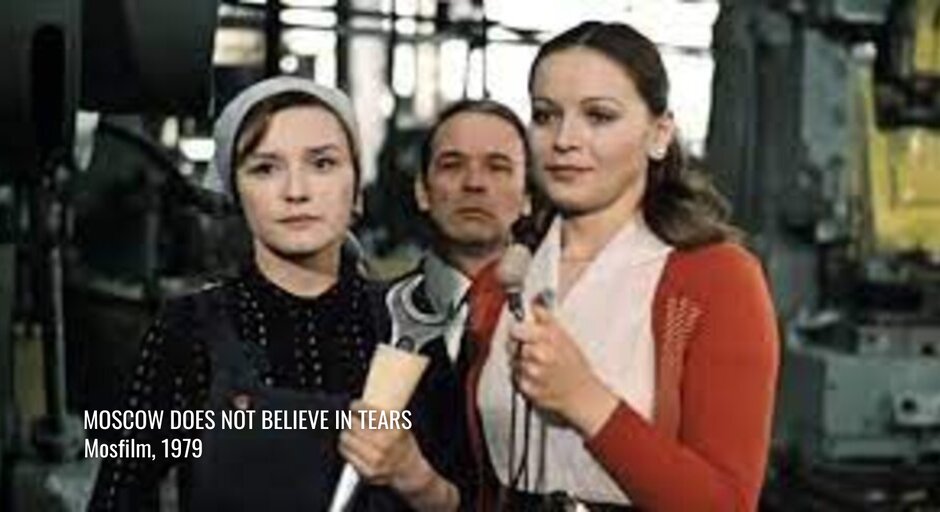
So there they were, three generations of women: 2 born in the Old Country (Claudia-goddamn-veteran-of-goddamn-Stalingrad, and Nadezhda, born to postwar privations) and 1 born in the New (Paige, our Typical American Pesky Teenager) watching this amiable story of romance in the Workers’ Paradise, 1981 Oscar winner for Best Foreign Film, Moscow Does Not Believe in Tears.
A perfect moment that encapsulated the experience of almost all immigrant families in America, not just Russian spies.
Lest we forget the source of our lately grief, this is Steve’s one and only book, which my small press published in 2006. The poems were good. The poet was a schmuck. And I say that in deference to his lovely (ex-)wife, Naomi, to whom he dedicated this slim volume of confessional free verse. I wrote about this in my nutty memoir A Poet from Hollywood, available for free in pdf download here.
Naomi, why do you purposely fail to believe me??? I turned the meathead down! Twice!! Above Stephen and Peter Sarsgaard (yes, that’s the back of Peter‘s head): Hugo Alfven’s “Swedish Rhapsody” arranged-conducted by Michel Legrand and played by his orchestra.
The dedication by Jamie Lee Curtis (she’s Jake‘s godmother so she did Naomi a favor by writing this for Steve, who was in a jam—well, just read about it here) is pretty adorable and for that sake I might try to hunt up the pdf galley and upload it here.
EXTRA! Not that he deserves the attention, but here are three of Stephen’s poems, recited by the idiot himself:
I like to post short little items like this when I’m in the middle of big writing, which is where you find me now. This tune was tremendously popular in the jukeboxes of the Castro, circa late 1970s, before and after AIDS first hit. So ubiquitous was Jane Olivor’s rendition novelist Armistead Maupin couldn’t ignore it—this was the song that brought Michael “The Mouse” Tolliver to tears in the first volume of Tales of the City. Put this on and there isn’t a dry eye in the room, whether you’re thinking of a dead lover or a living one. I think of both.
Above: “Some Enchanted Evening” written for the 1947 stage musical South Pacific, music by Richard Rodgers, lyrics by Oscar Hammerstein II. A song has lyrics, John my love. This is how I speak to you.
That however you live
There's a part of you always standing by
Mapping out the sky
Finishing a hat
Starting on a hat
Finishing a hat
Look, I made a hat
Where there never was a hat


 No, not
 Above pic of John accepting the
 Above: The full audio of
  I’ve decided that our
  For Dream Girl #1: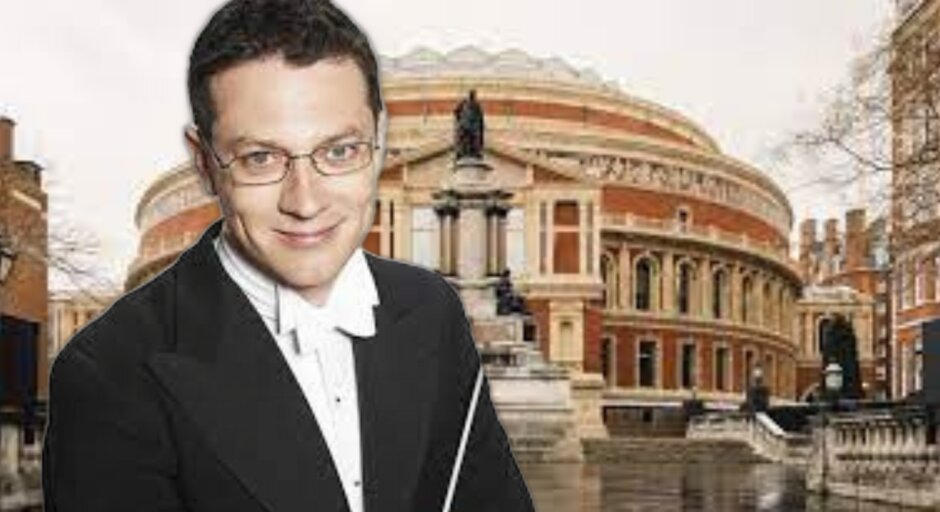


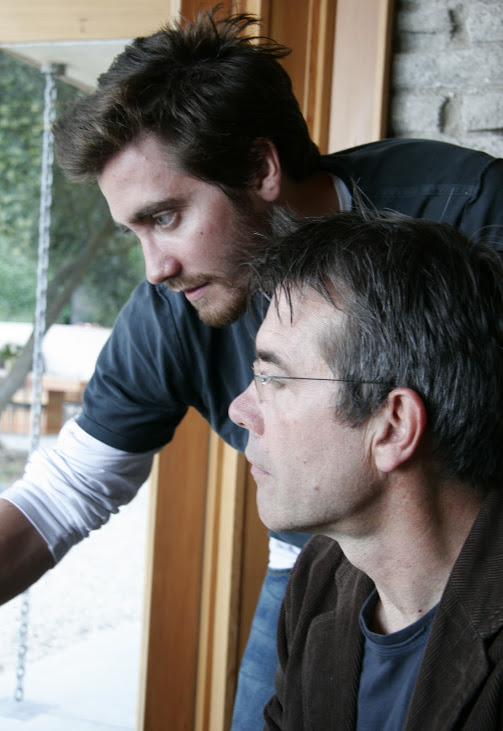 Taken by Oscar-winning cinematographer Robert Elswit (Waterland, Paris Trout) one Sunday afternoon May 2006.
  "I'll Be Dead Before You Break My Heart"